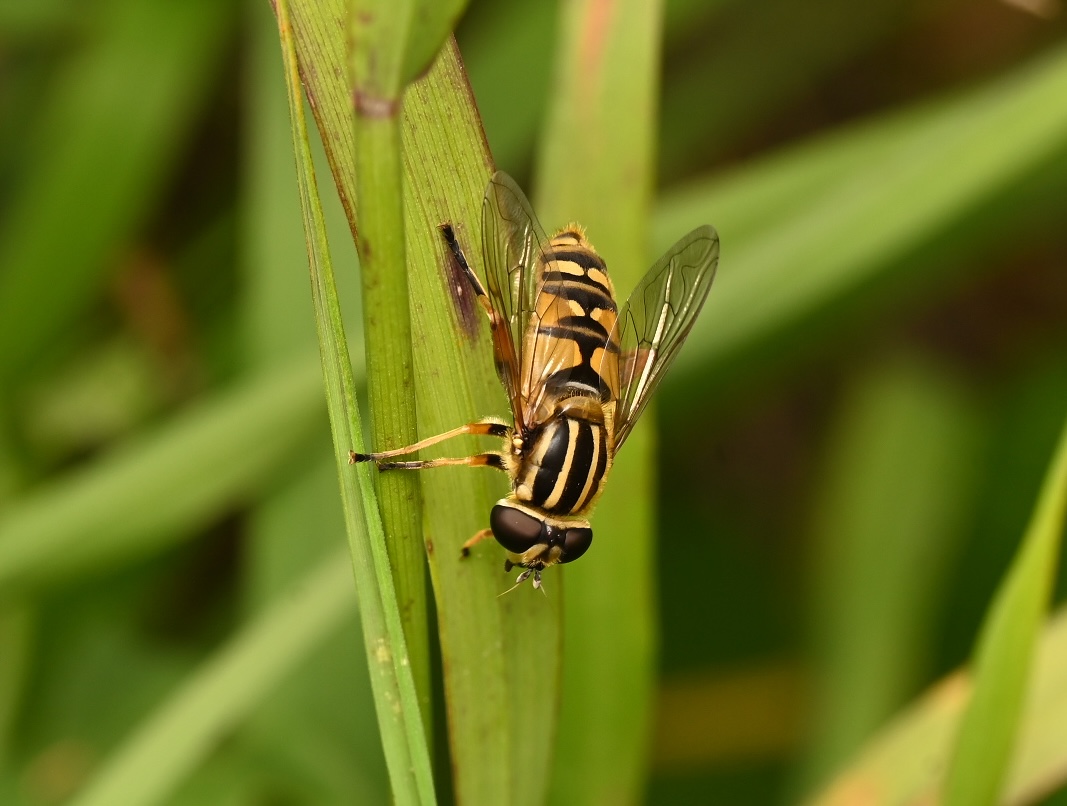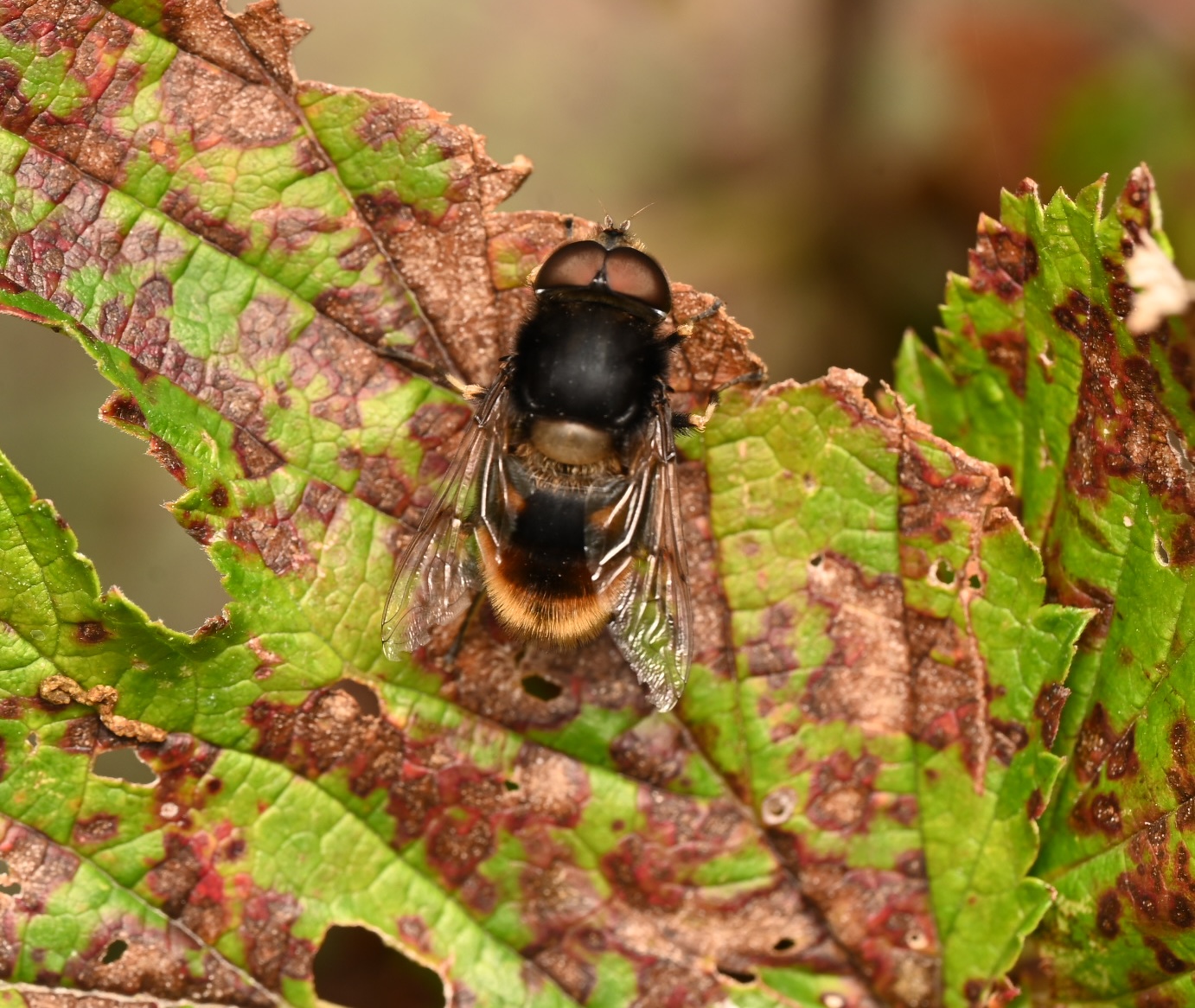
At first glance, you would easily mistake the furry dronefly (Eristalis intricaria) for a plump bumblebee. Measuring an impressive 11 to 14 millimeters long, this master of mimicry wears a dense coat of fuzzy hair and a warm yellow-orange plate on its back, giving it the perfect disguise to ward off hungry predators. While females typically sport a snowy white tip at the end of their abdomen, males show off a darker reddish-brown tail. Thriving around damp woodlands, marshes, and tranquil lake shores, these skilled aerial acrobats hover effortlessly over wild blossoms to sip nectar and spread pollen. Below the water’s surface, their aquatic larvae—famously known as “rat-tailed maggots”—live in shallow mud, using a remarkable telescoping tube like an underwater snorkel to breathe fresh air! I encountered this large male on the shores of a postglacial lake near Barkarby, Sweden. Sadly, after securing just one quick photo, the startled fly zipped off into the sky, denying me a second chance!