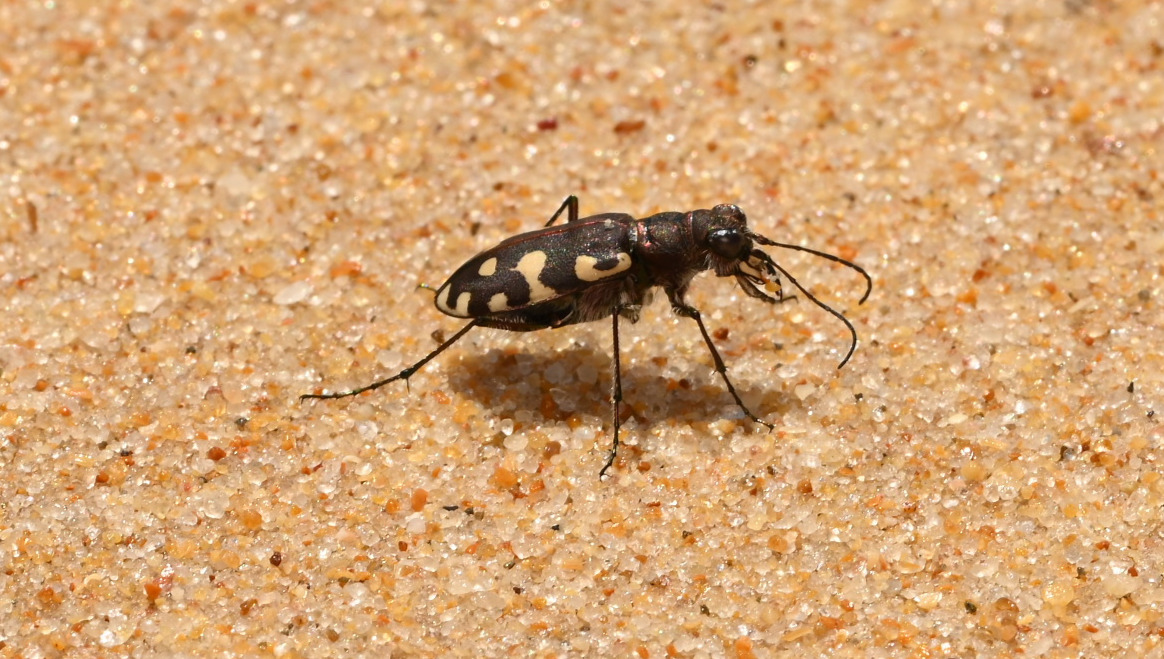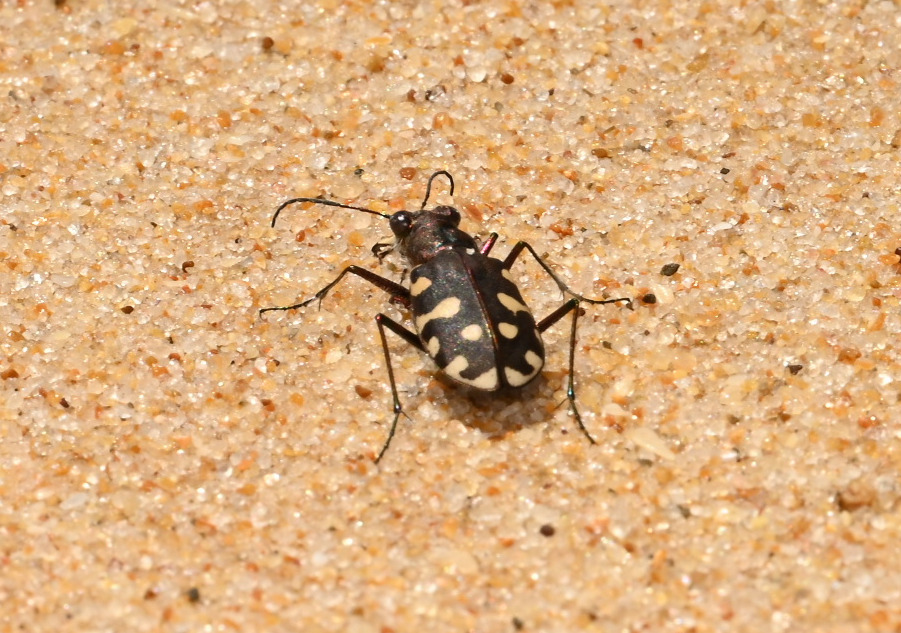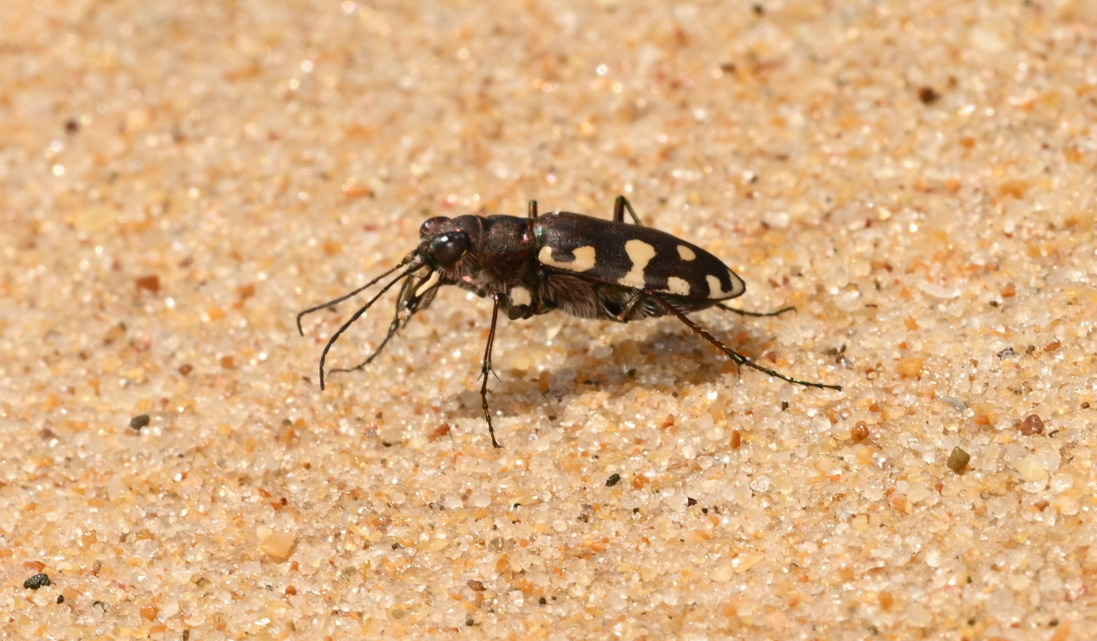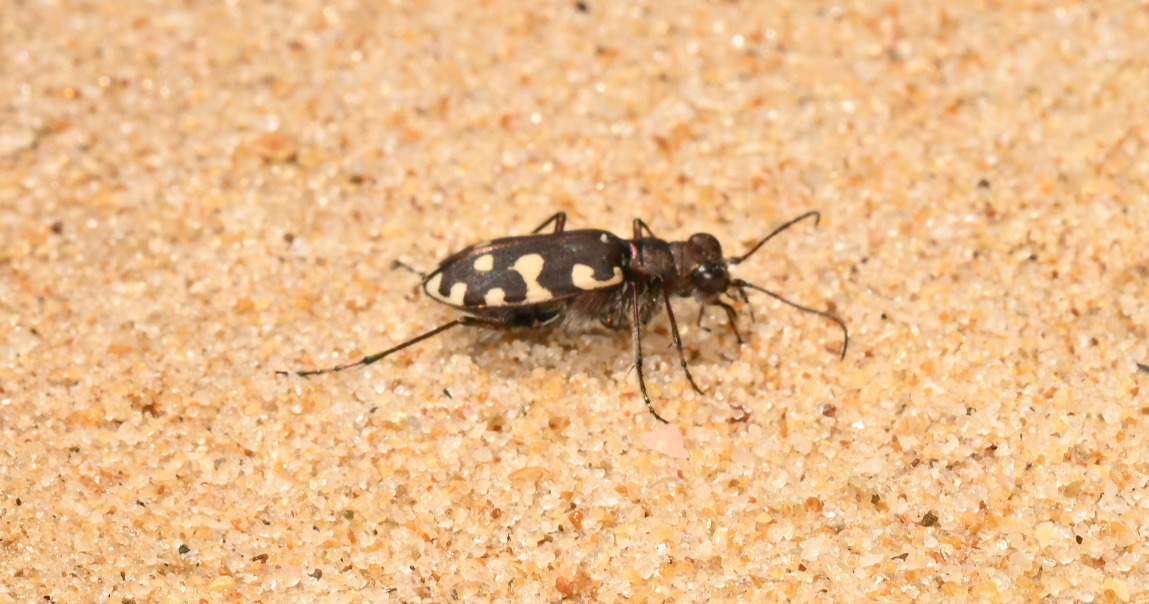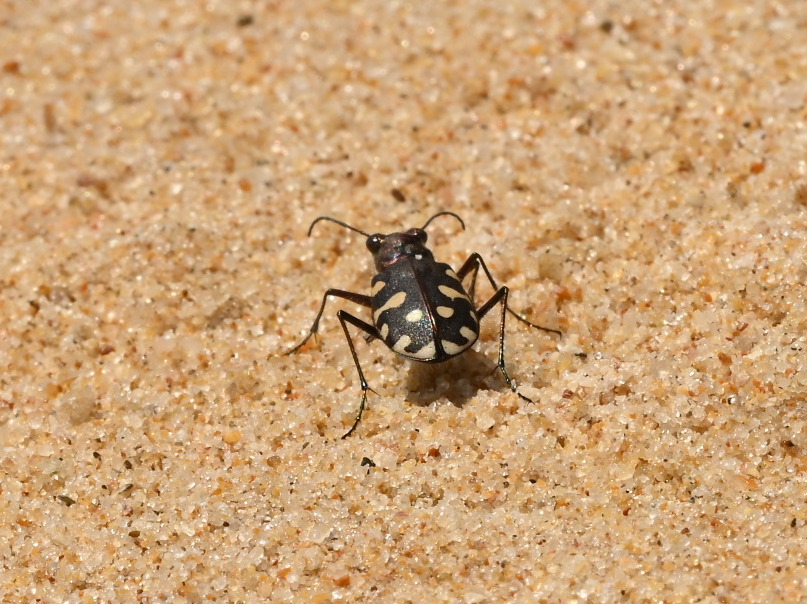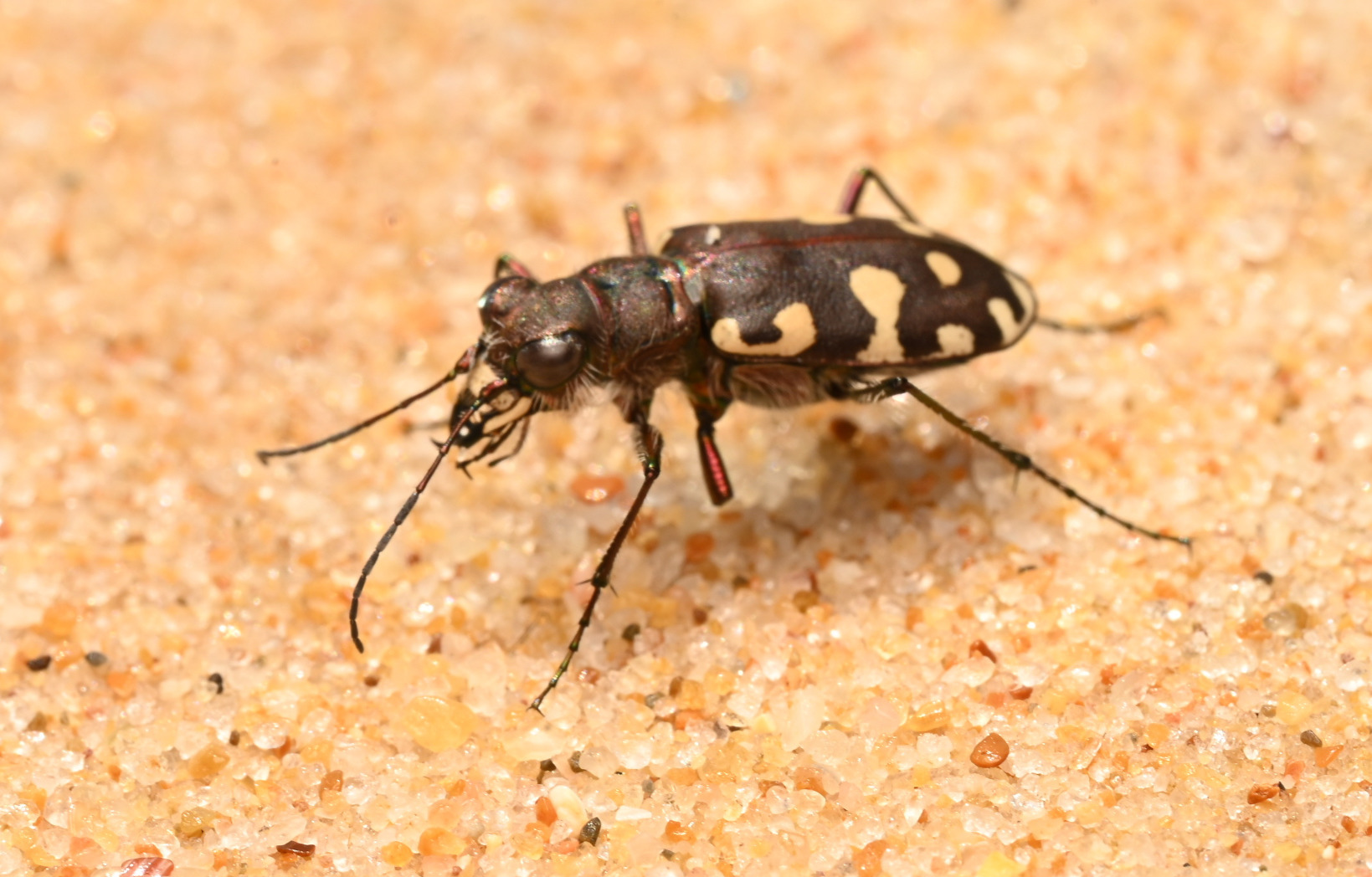
Tiger beetles are absolute marvels of the insect world. They are the quintessential predators—perpetually in motion, switching effortlessly between bursts of speed on foot and short rapid flights. Guided by large eyes providing a wide field of view, they use their formidable, scissor-like mandibles to seize prey in the blink of an eye. On the sun-drenched beach of Ilha Deserta in Faro, Portugal, thousands of coastal tiger beetles (Calomera littoralis) were actively patrolling the shoreline, where the ocean constantly deposited bits of organic matter. It was a mesmerizing dance: as each wave receded, a wave of beetles rushed onto the freshly exposed, glistening sand to forage, only to take flight seconds later just as the next wall of water came crashing in. Capturing them was a true test of endurance. I spent over an hour lying completely flat and motionless on the sand. Finally, my persistence paid off; a few individuals paused just long enough for me to get my shots—perhaps momentarily curious about the strange, unmoving shape that had suddenly become a part of their territory.