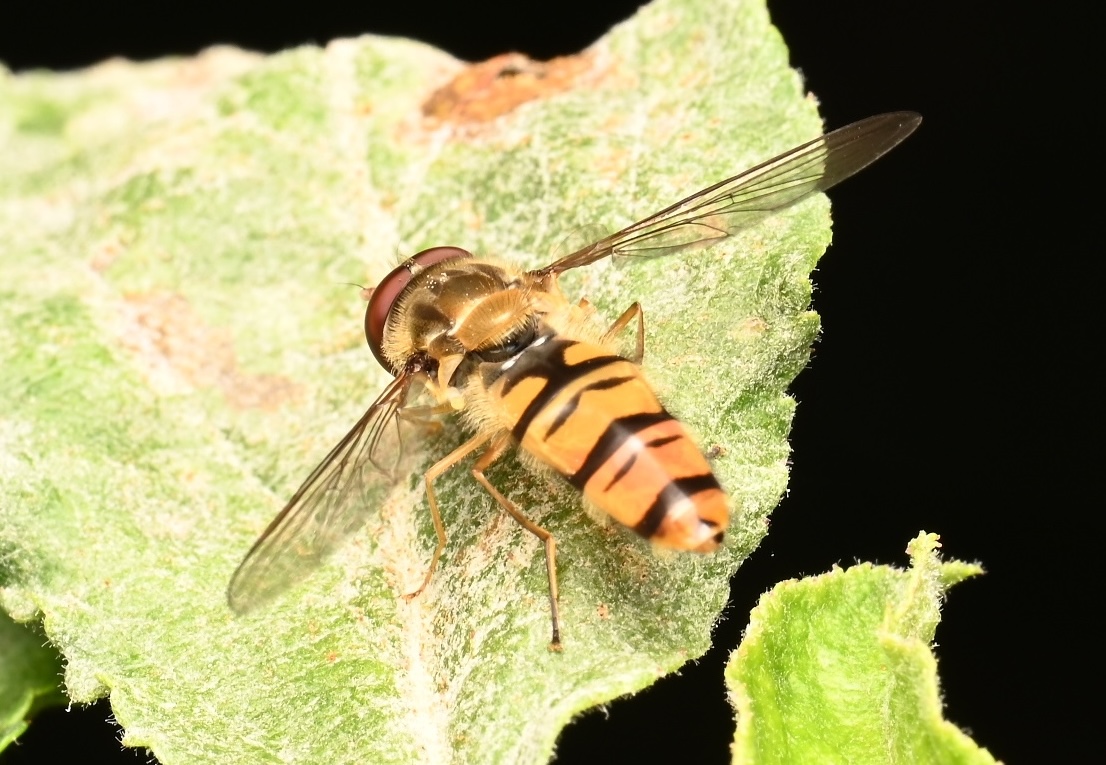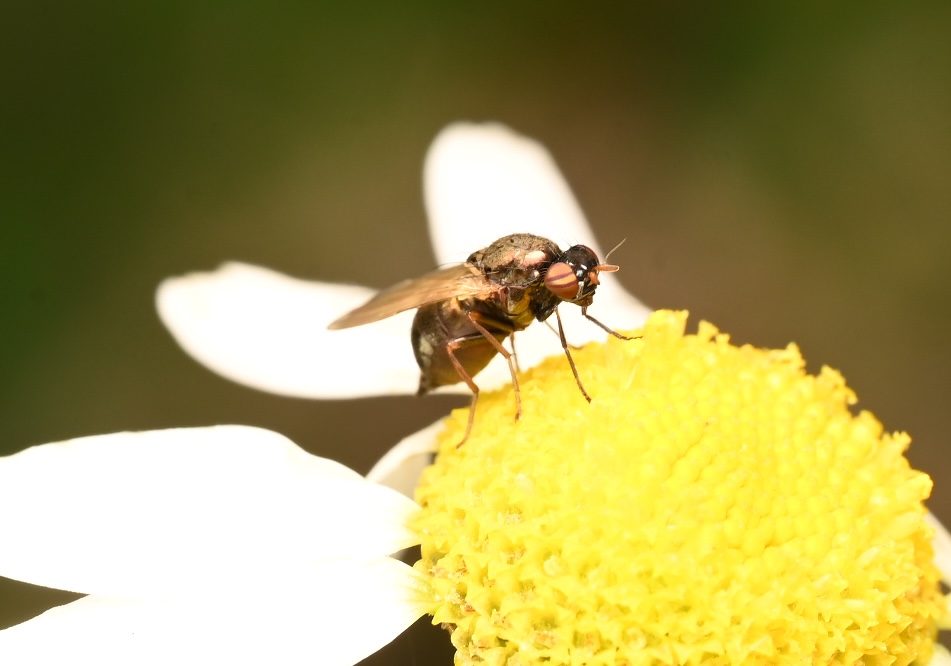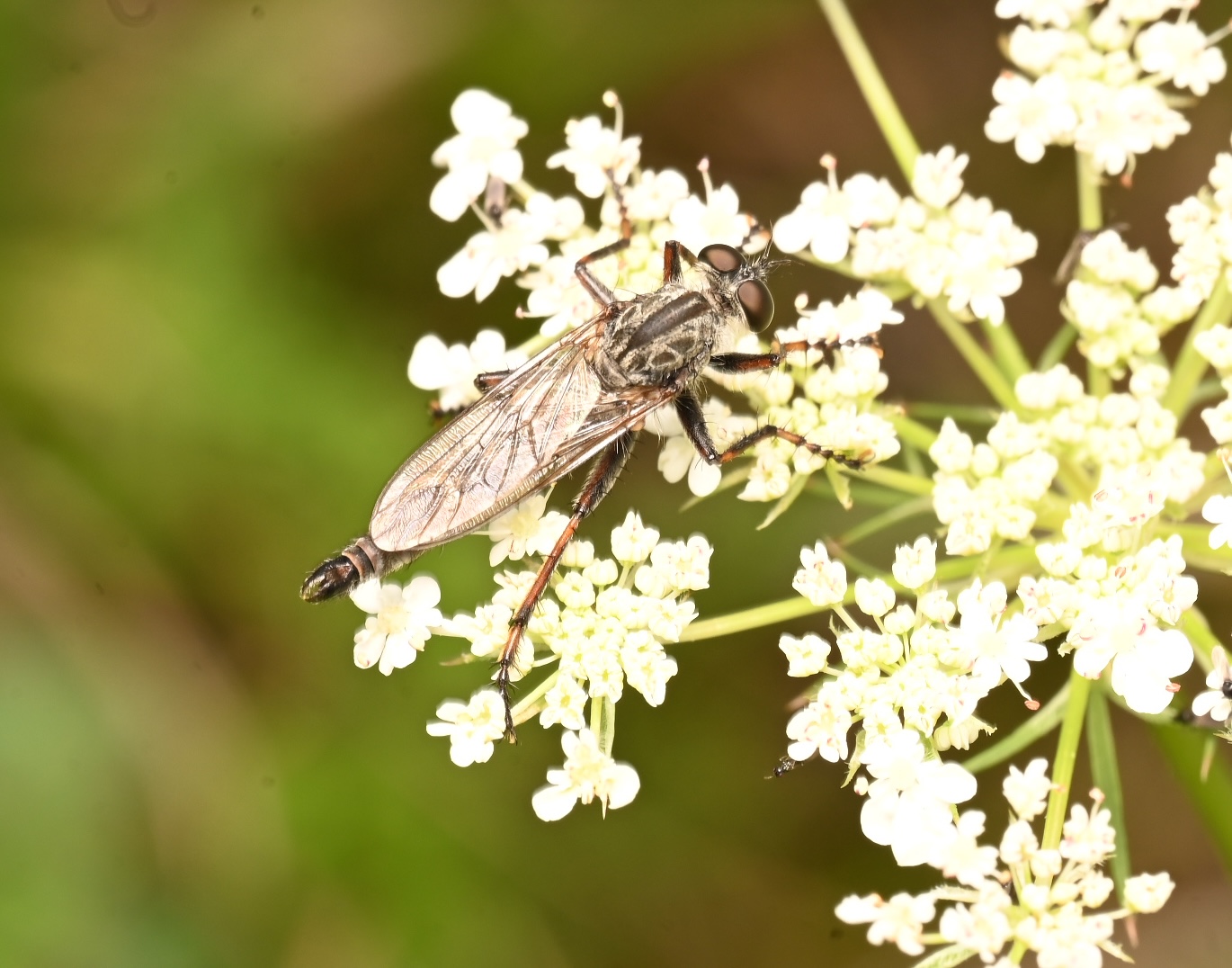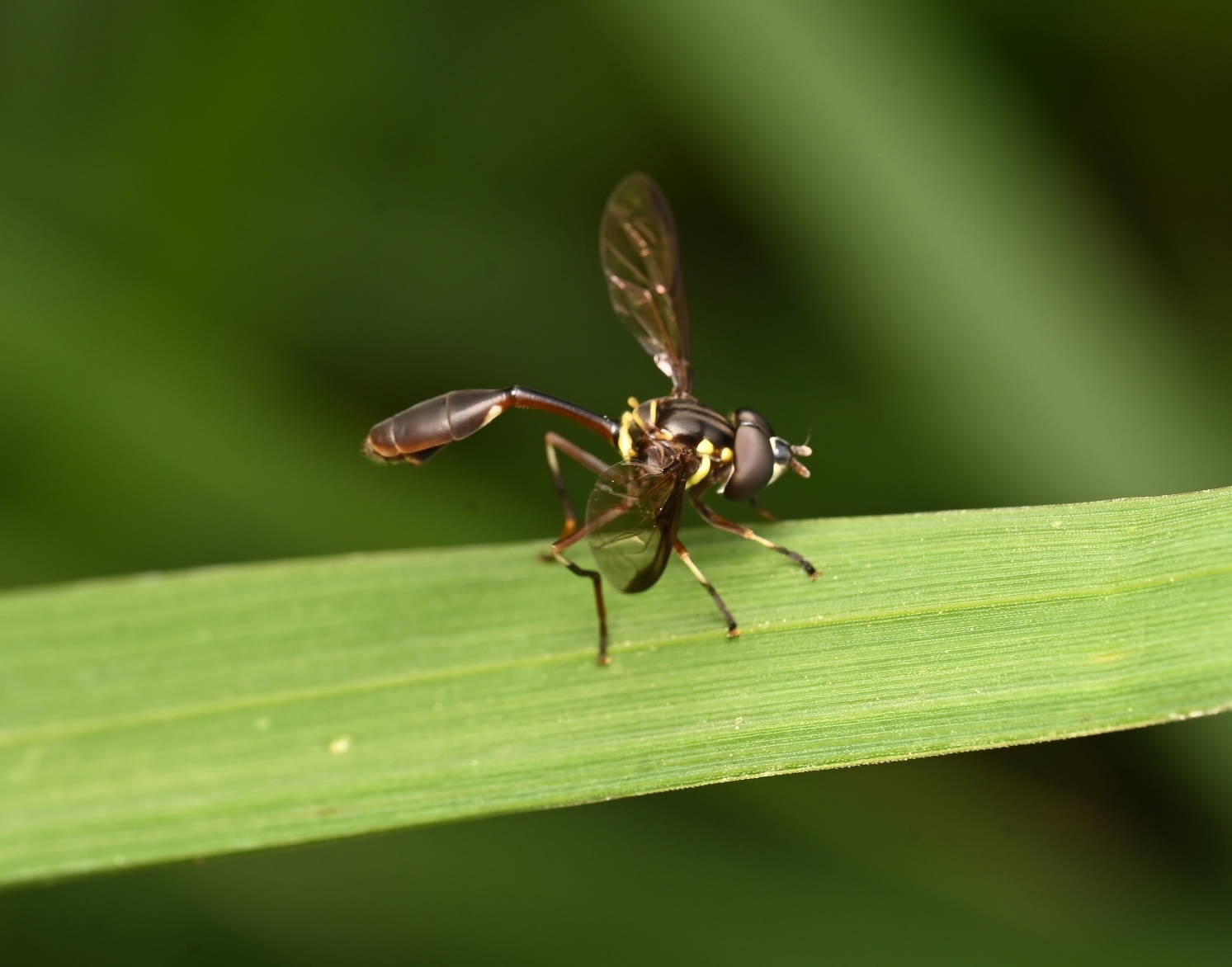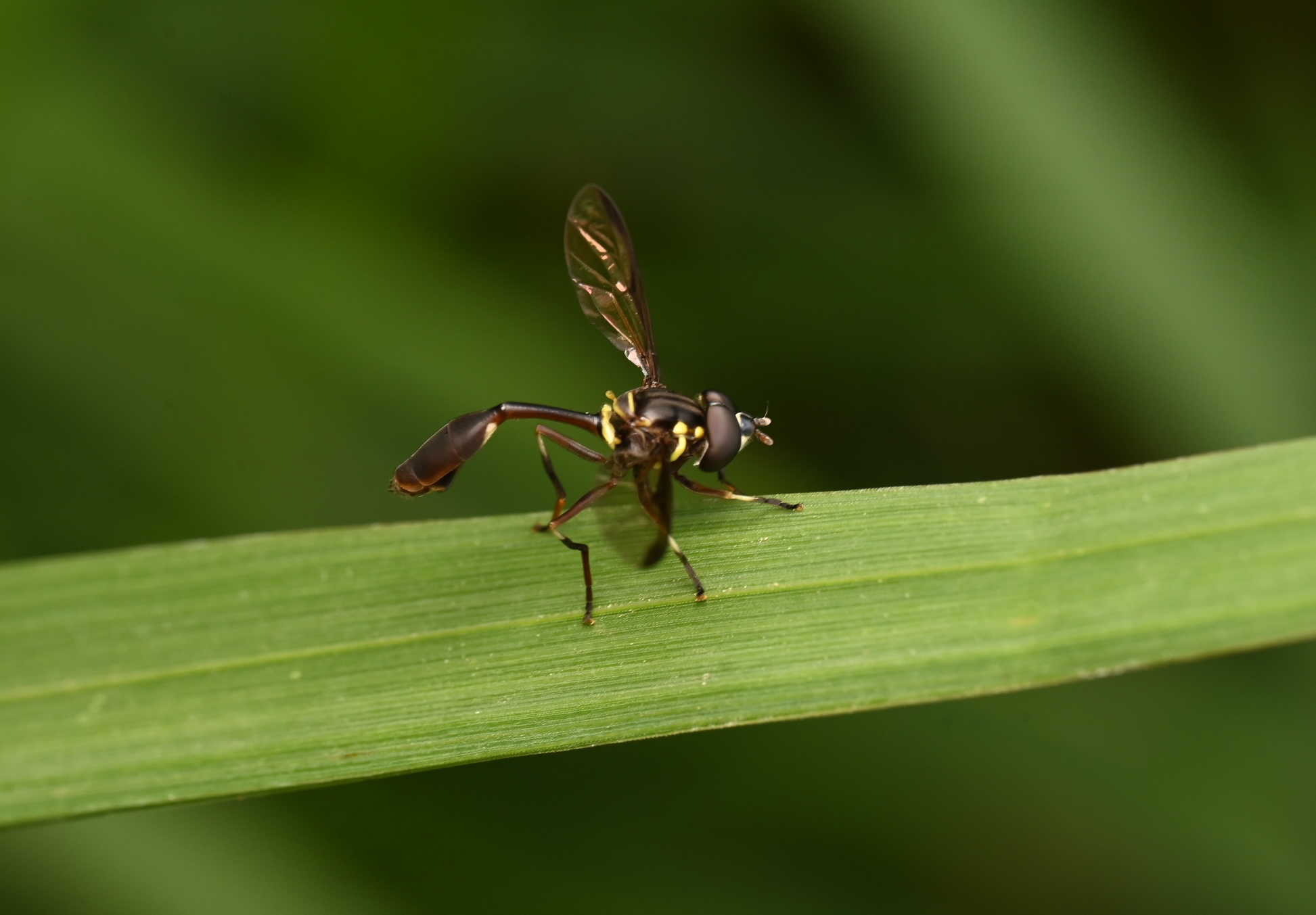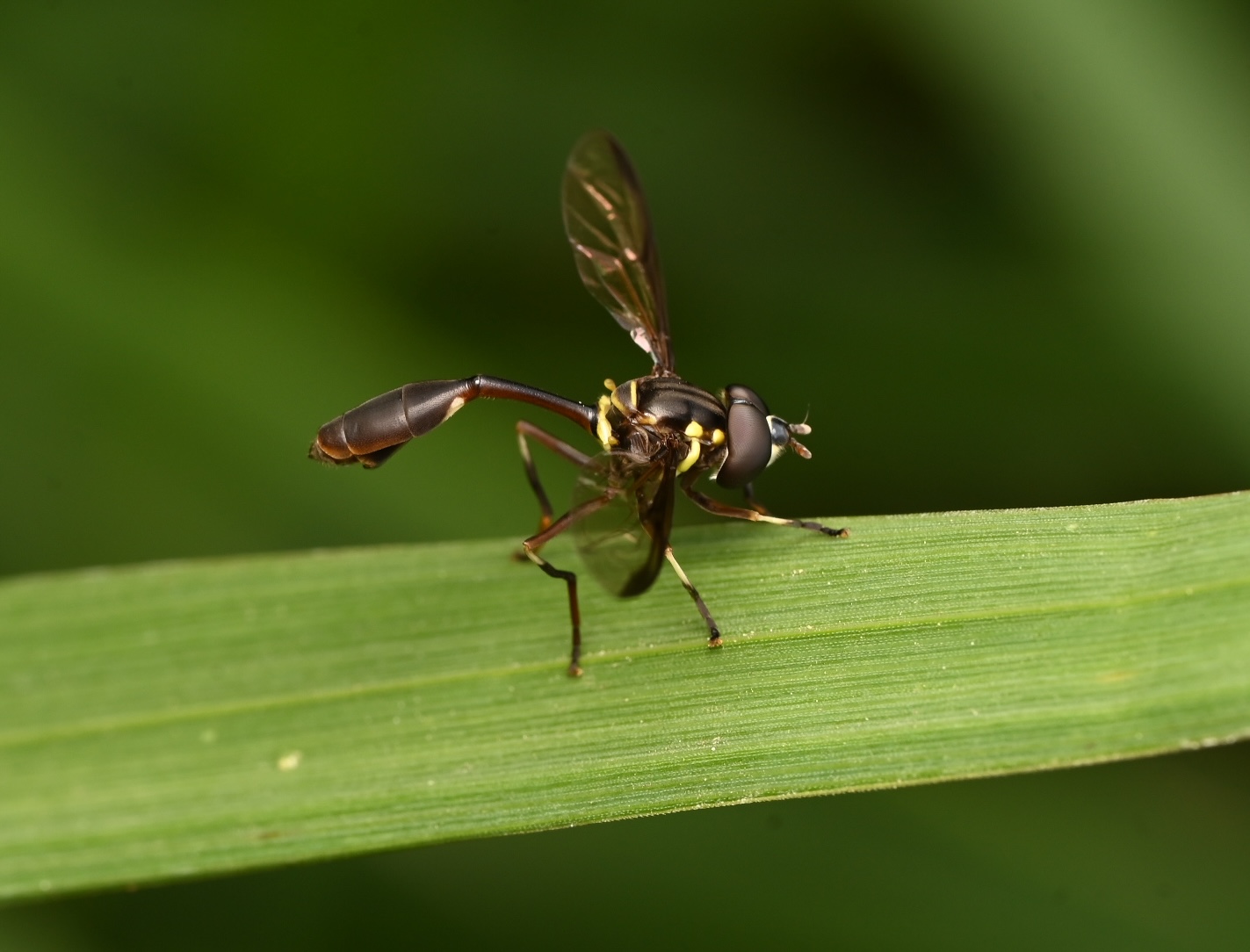
Hoverflies—also known as flower flies (Syrphidae)—are masters of deception, closely mimicking stinging bees and wasps to ward off predators despite being completely harmless. Ranking as the world’s second-most important pollinators after wild bees, these insects are vital to stabilizing ecosystems, while their voracious larvae serve as highly effective, natural pest controllers. Among them is Salpingogaster nigra, a hoverfly species native to the New World, primarily within the Neotropics. While the adults feed peacefully on nectar and pollen, their larvae develop through three distinct instars as specialized predators of spittlebugs— notorious agricultural pests. Mated females are highly attuned to the distinct odor of the protective foam produced by spittlebug nymphs, laying their eggs directly inside these nests to provide their offspring with an immediate food source. I crossed paths with this surprisingly cute hoverfly in Nanegalito, nestled within Ecuador’s stunning Mindo Valley.