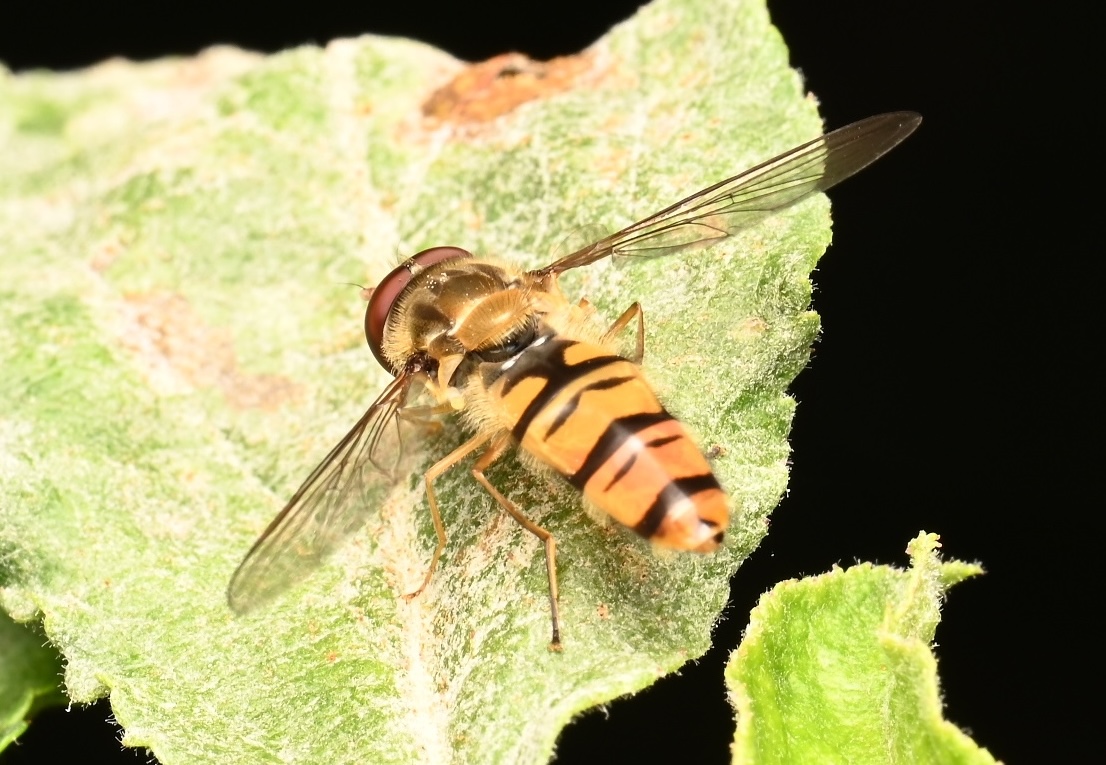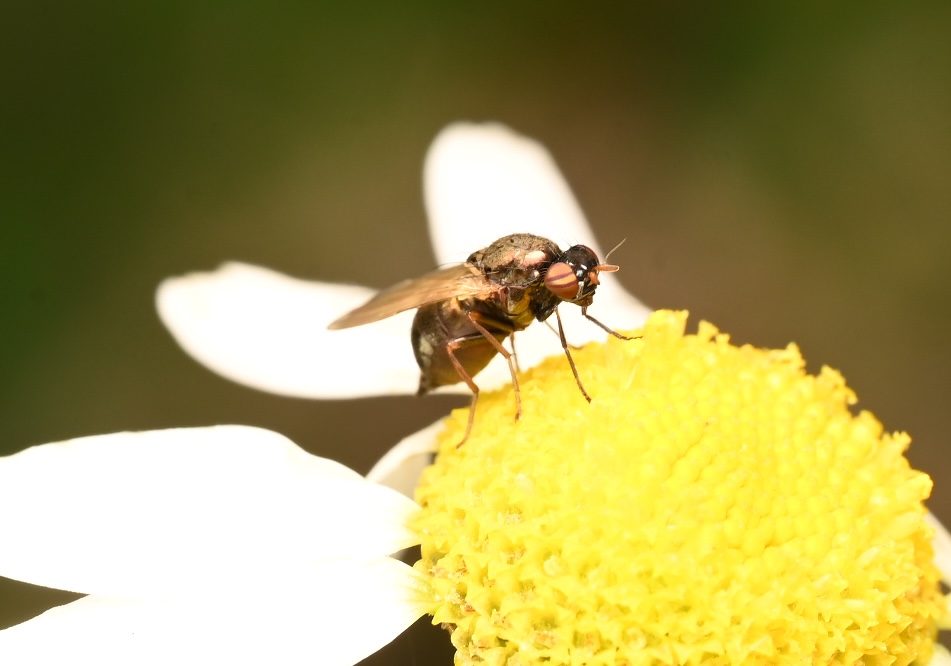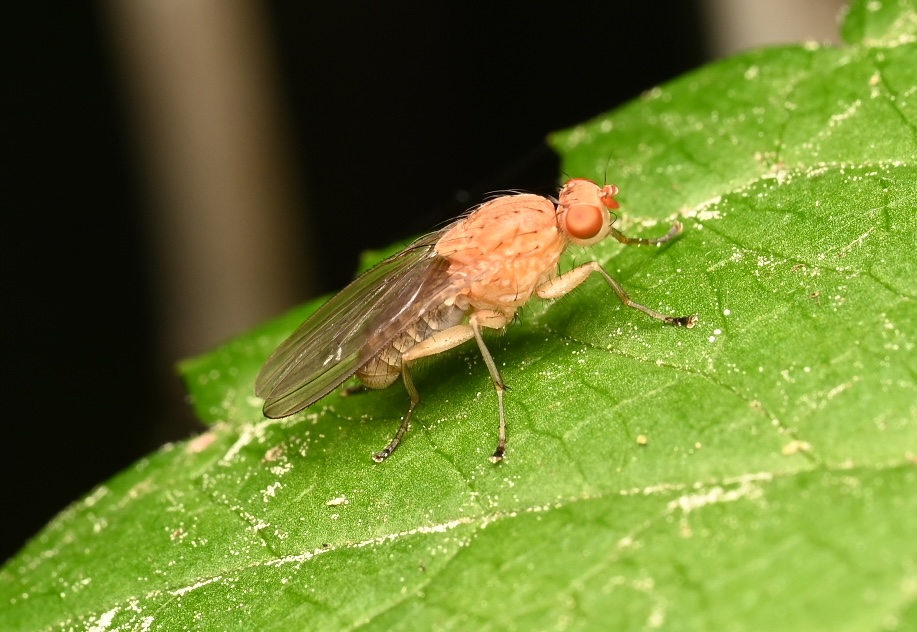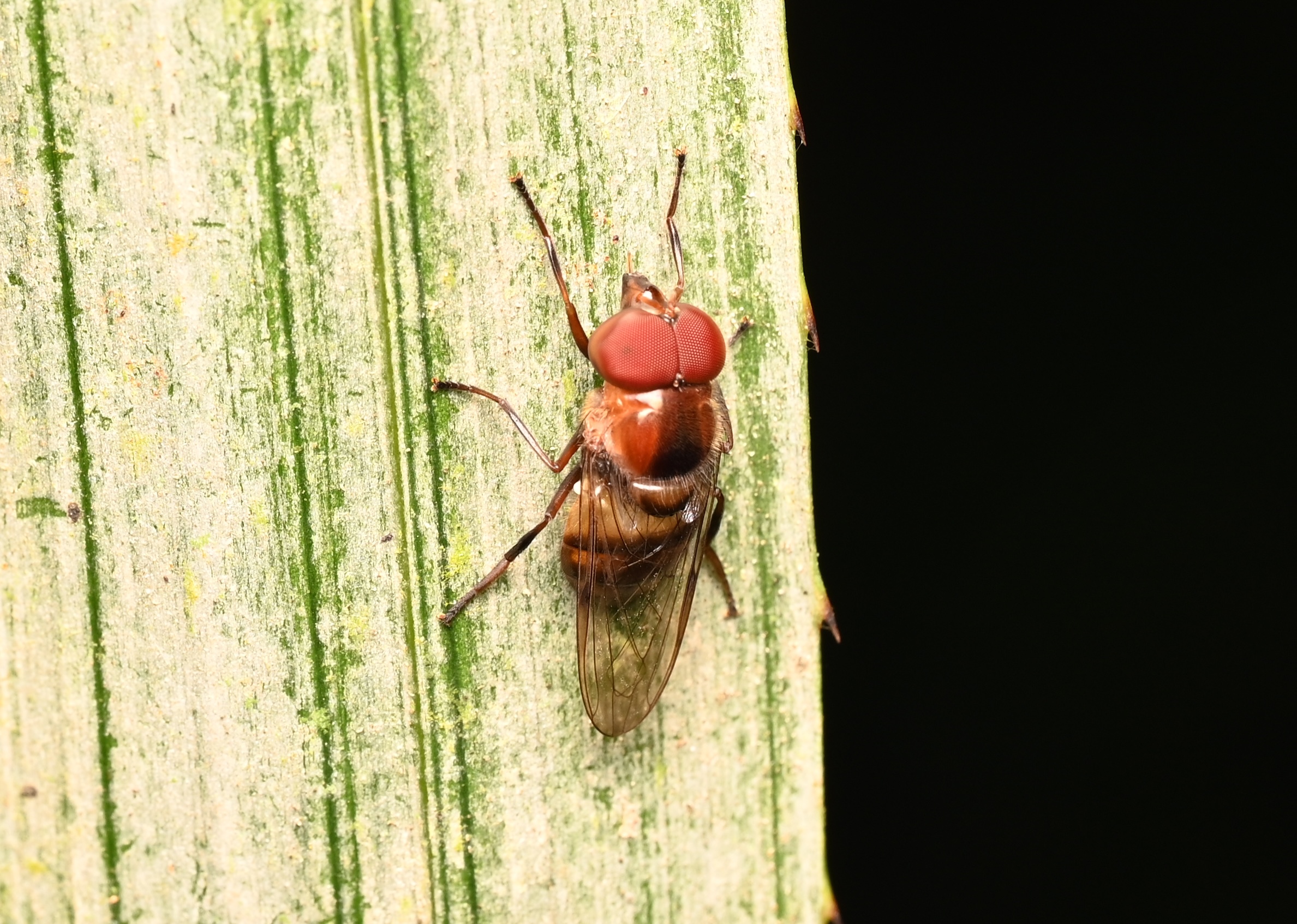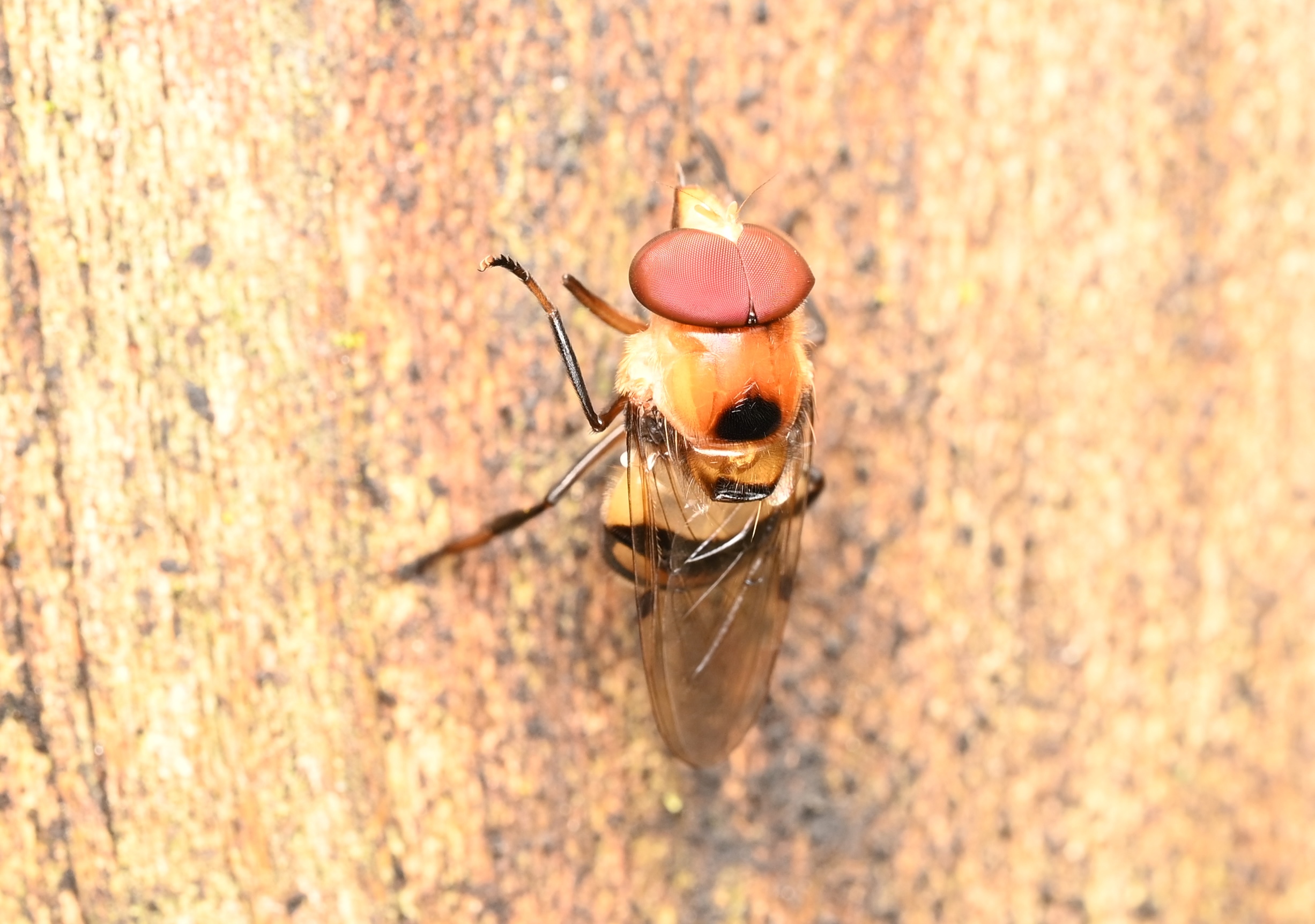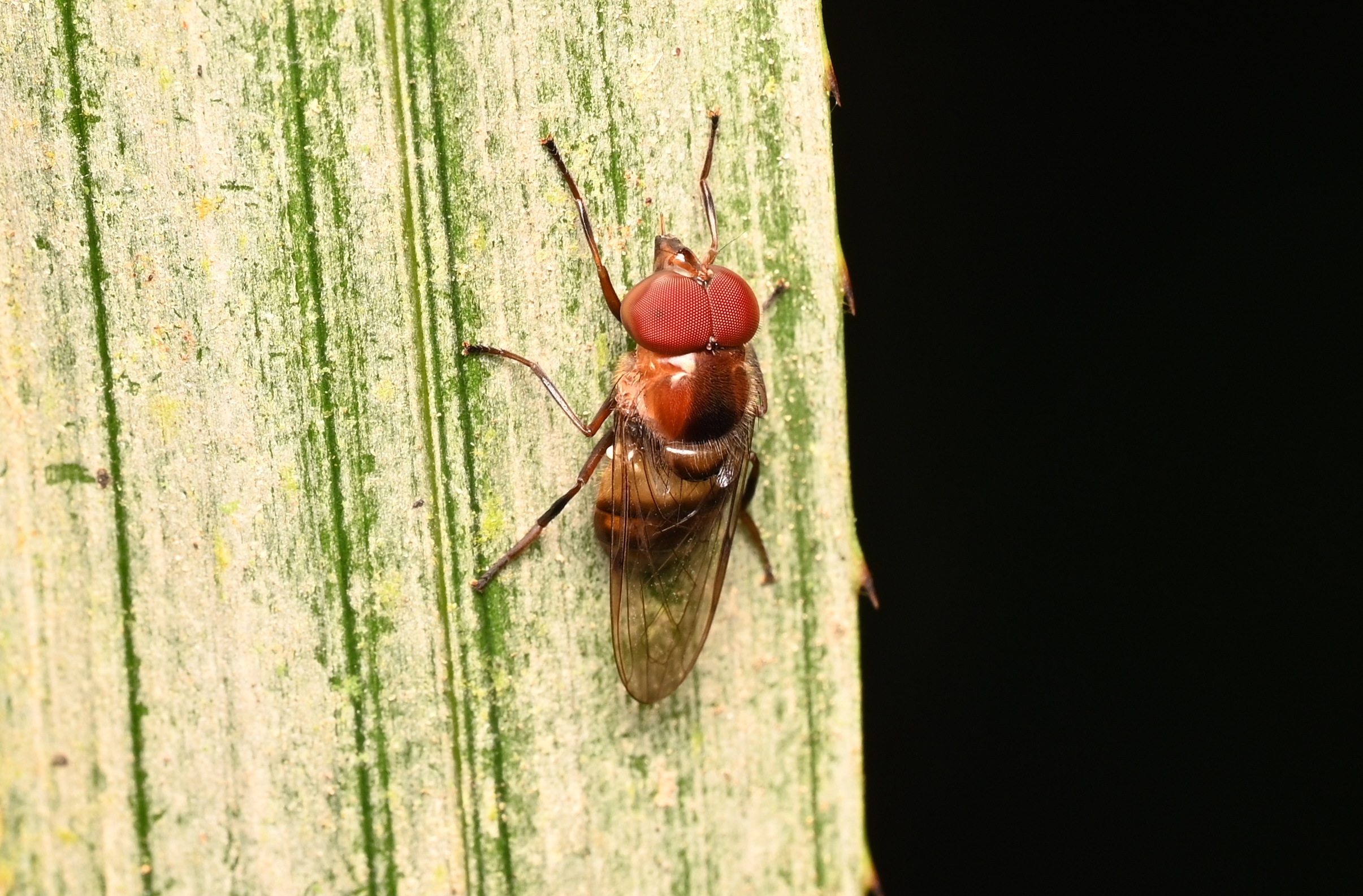
Hoverflies, also called flower flies or syrphids, make up the insect family Syrphidae. As their common name suggests, they are frequently seen hovering gracefully or sipping nectar at flowers. Within this family, Rhingia is a distinctive genus easily recognized by its prominent, elongated snout. This specialized anatomy enables them to reach deep into the tubular parts of flowers that other hoverflies simply cannot access. Interestingly, the life cycle of Rhingia hoverflies is deeply tied to cattle; adult females lay their eggs on foliage directly overhanging or near fresh cow pats. Once hatched, the larvae drop down to live and feed inside the manure, where their dark-brown coloration provides excellent camouflage. I encountered this fascinating fly on a farm in La Concordia, Ecuador.