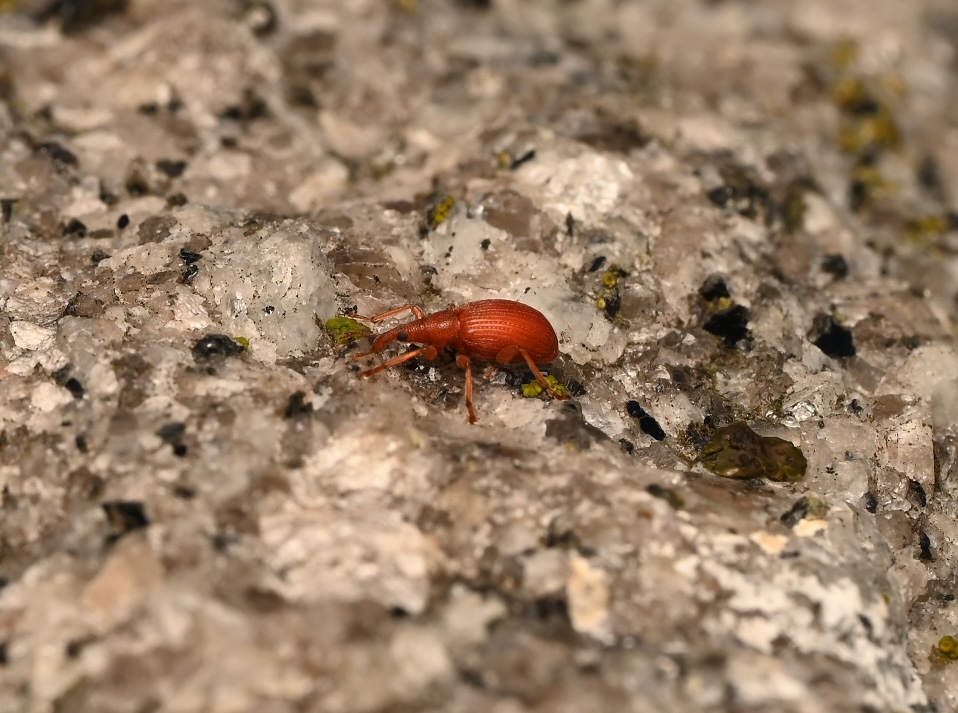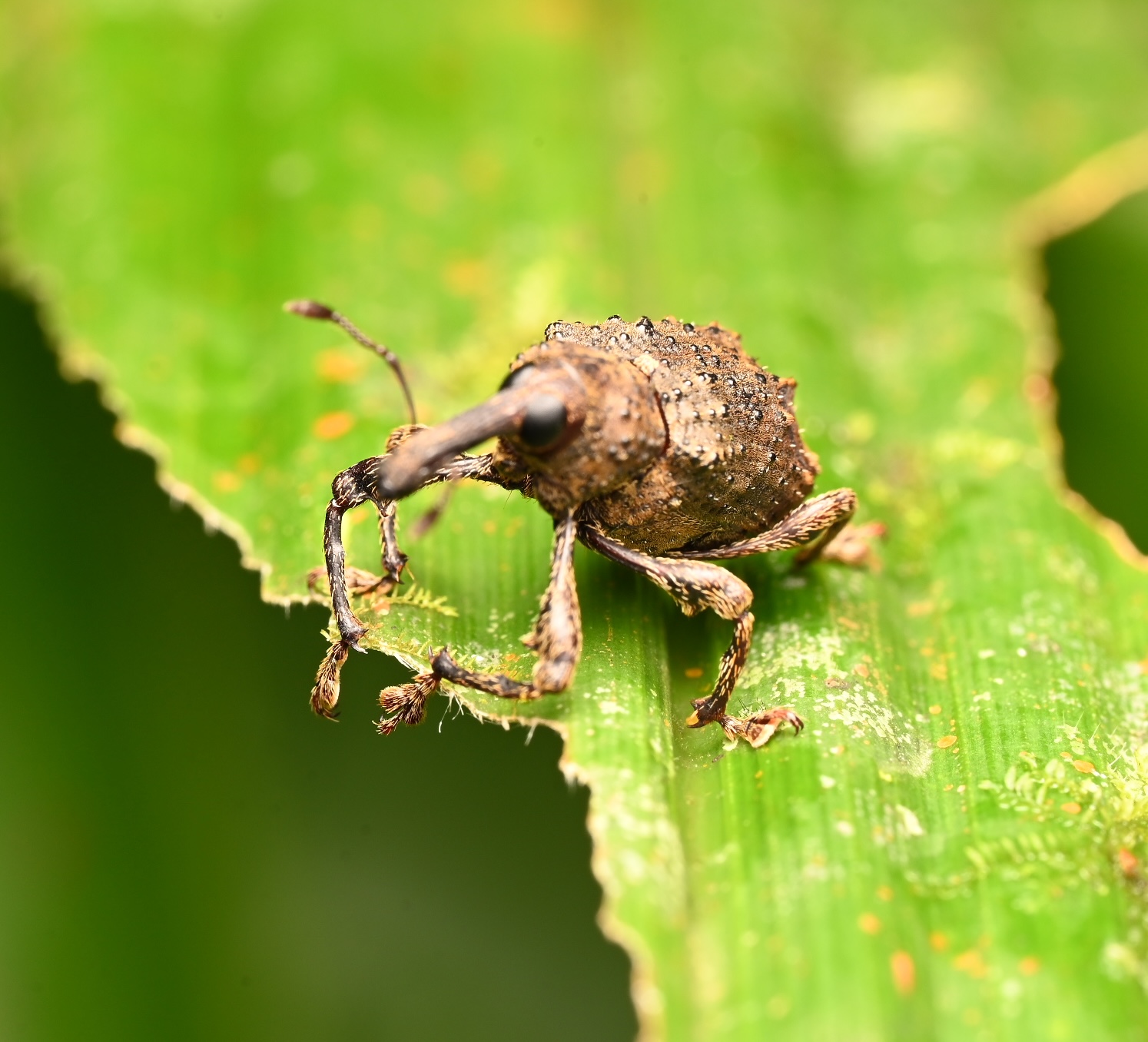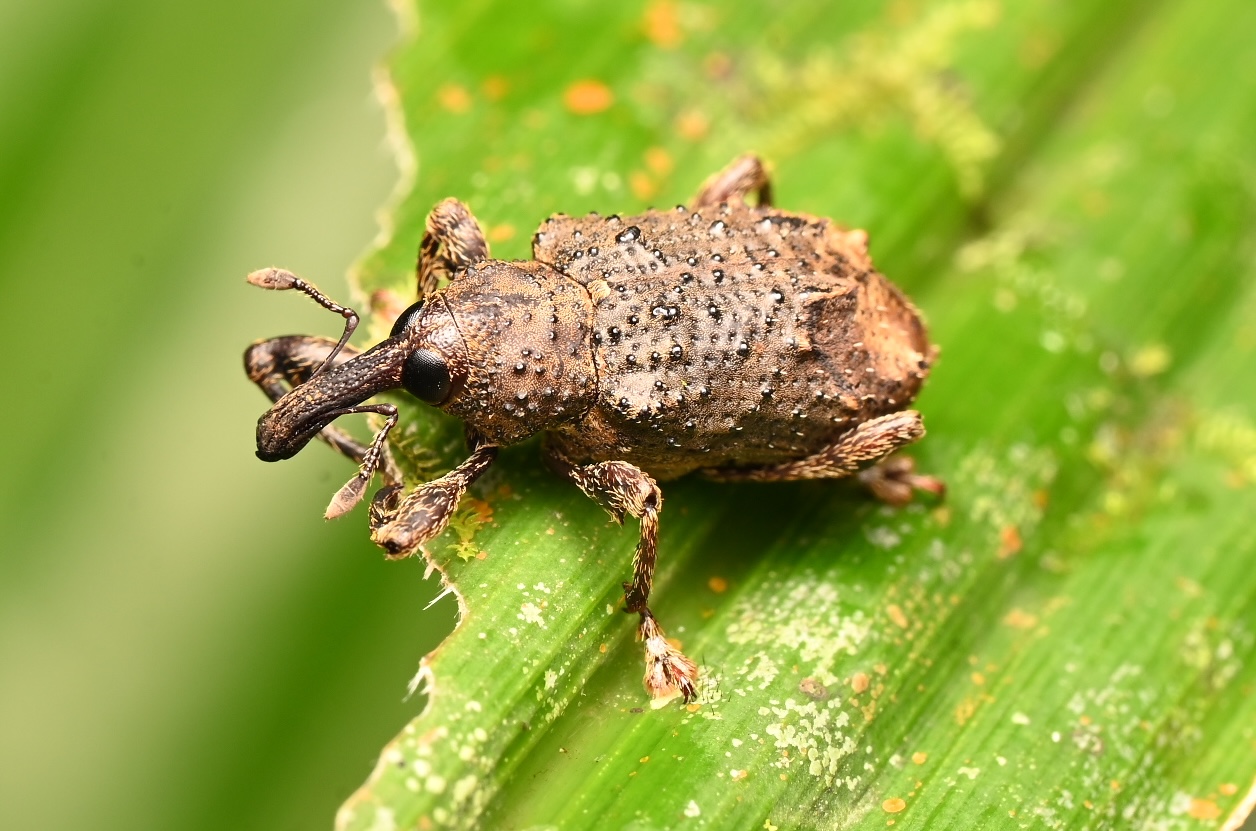
The genus Heilus belongs to the true weevil family (Curculionidae) and is native to the Neotropical regions of South America. These distinct snout beetles use their elongated rostrum to bore into host plant tissues—a trait that makes species within Heilus difficult to distinguish both from one another and from the closely related genus Heilipus. To lay her eggs, the female uses her rostrum to drill a precise cavity into bark, stems, or wood, depositing a single, small, whitish egg deep inside. She then seals the hole with sap or frass to protect it from desiccation and parasites. Once hatched, the larva spends several months burrowing through subcortical tissues, utilizing specialized gut enzymes to digest the tough plant matter as it progresses through four instar stages. I stumbled upon this intriguing little beetle while exploring a city park in Puyo, a vibrant town on the edge of the Ecuadorian Amazon.