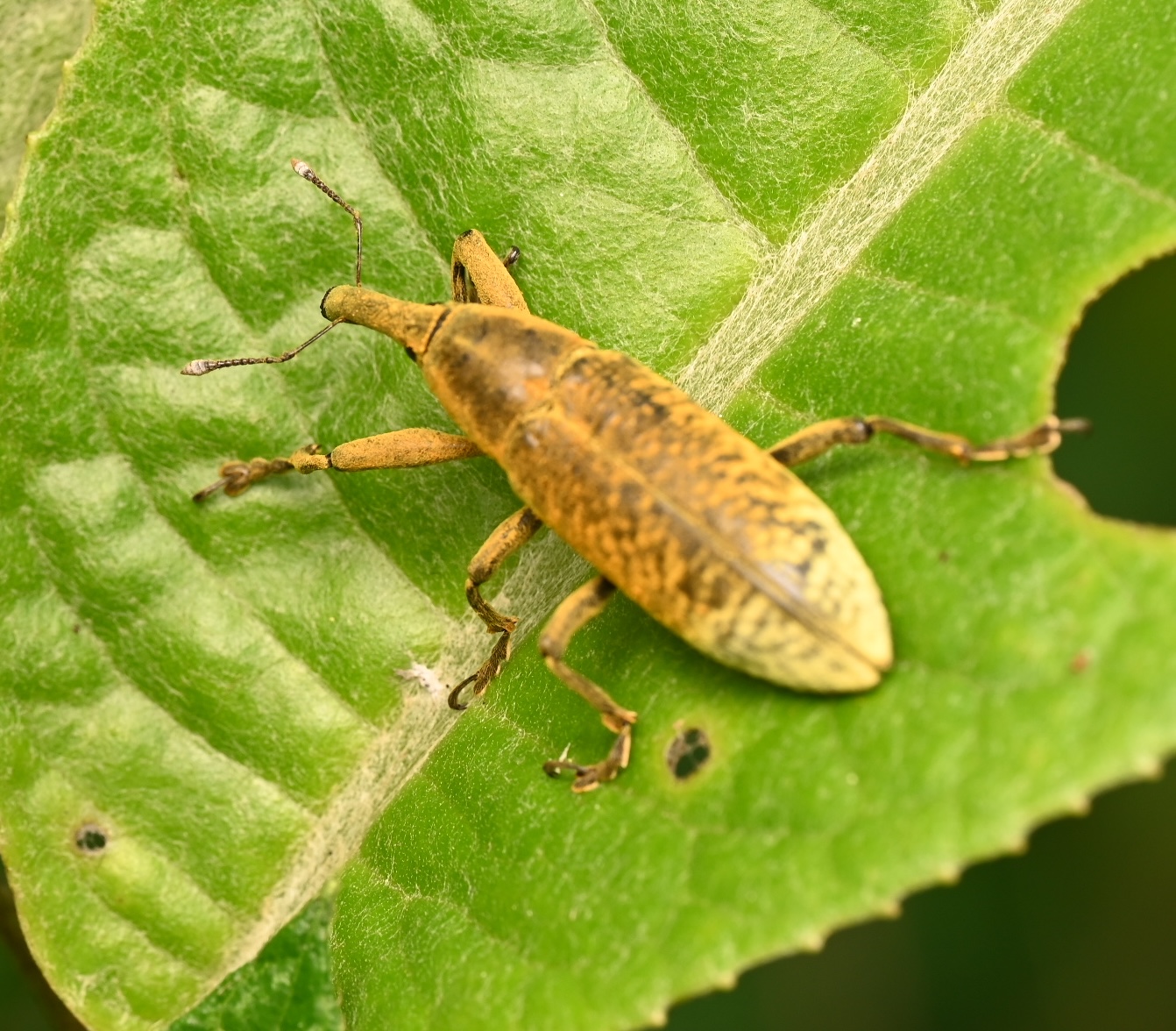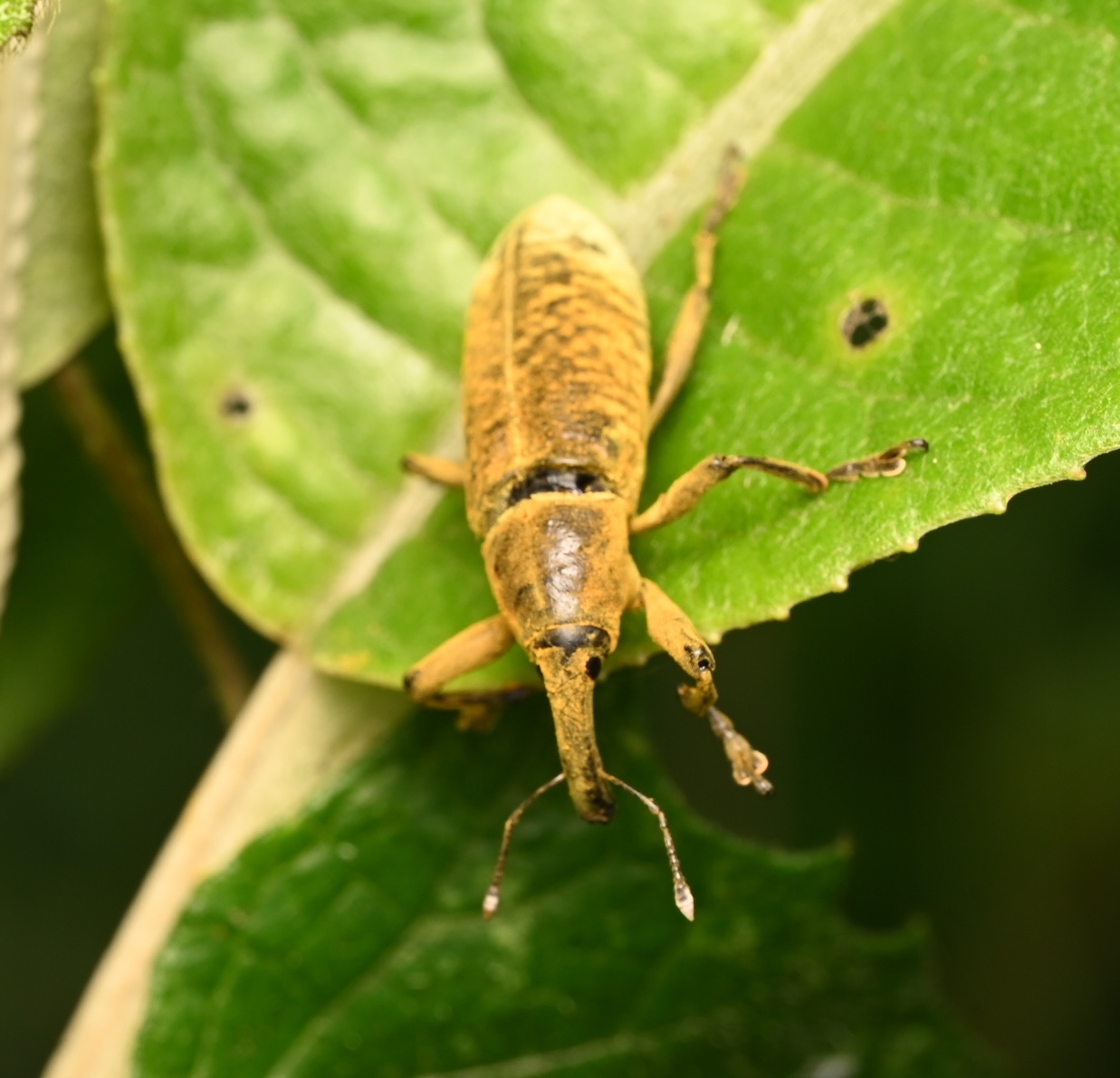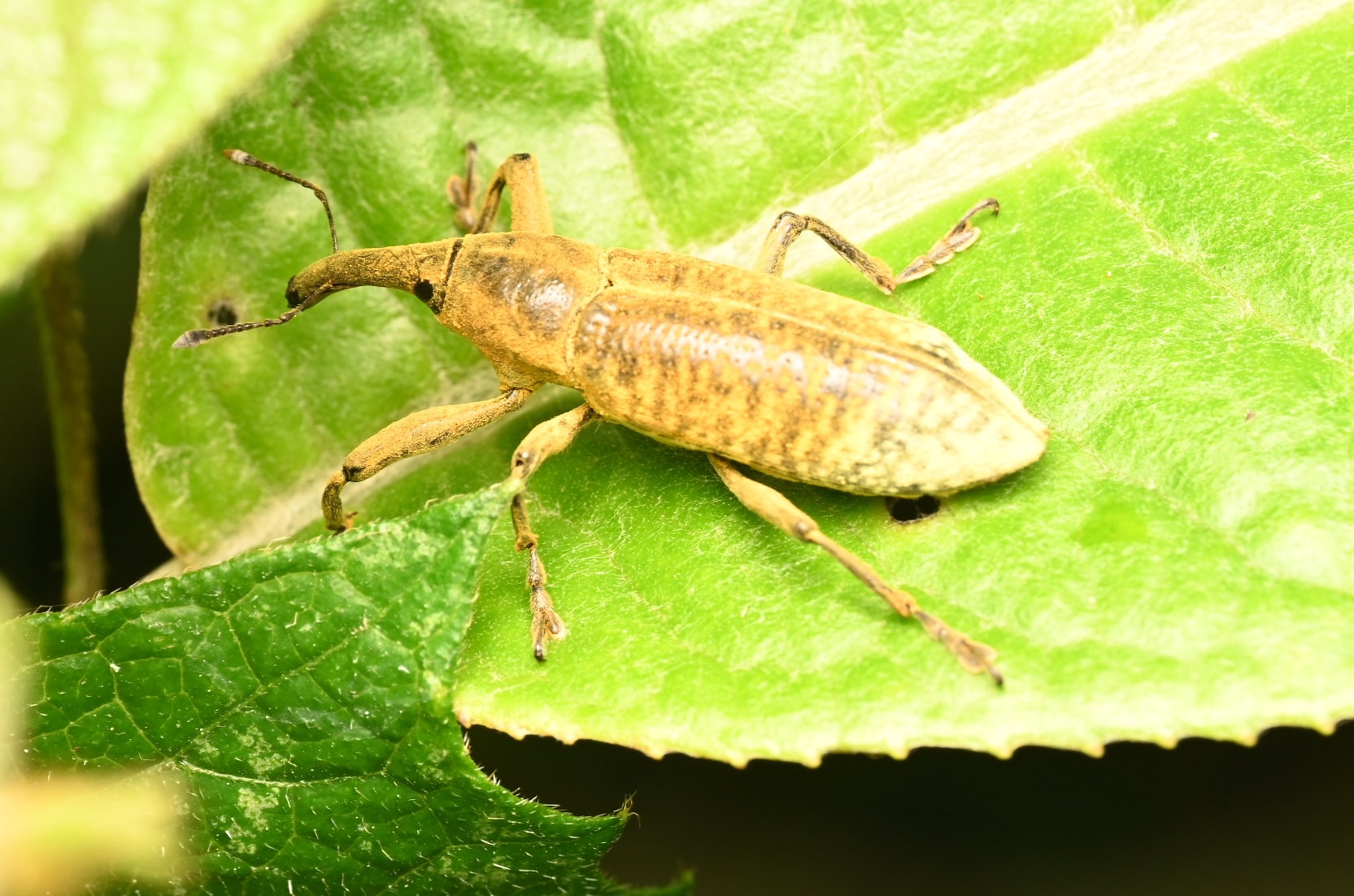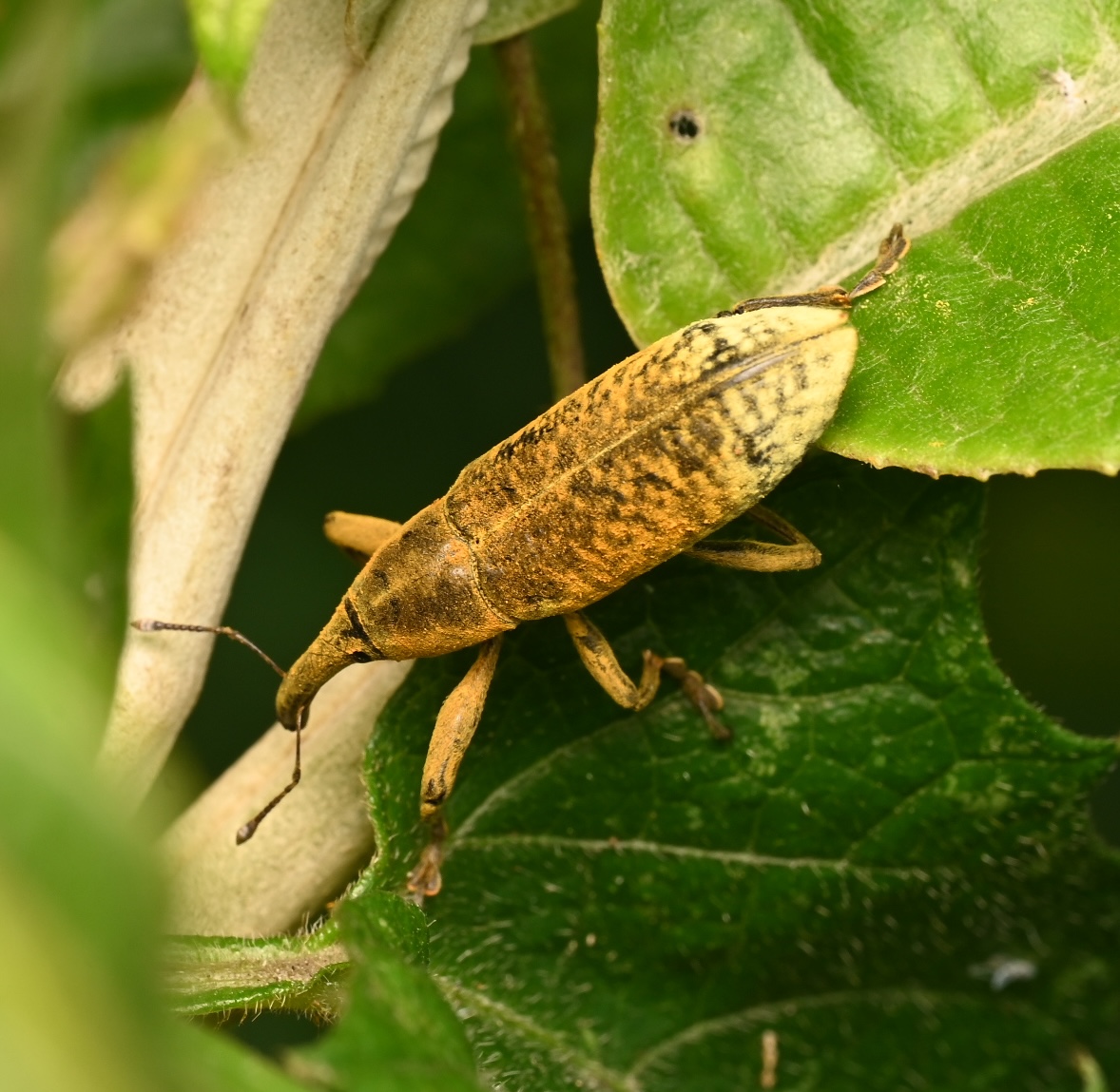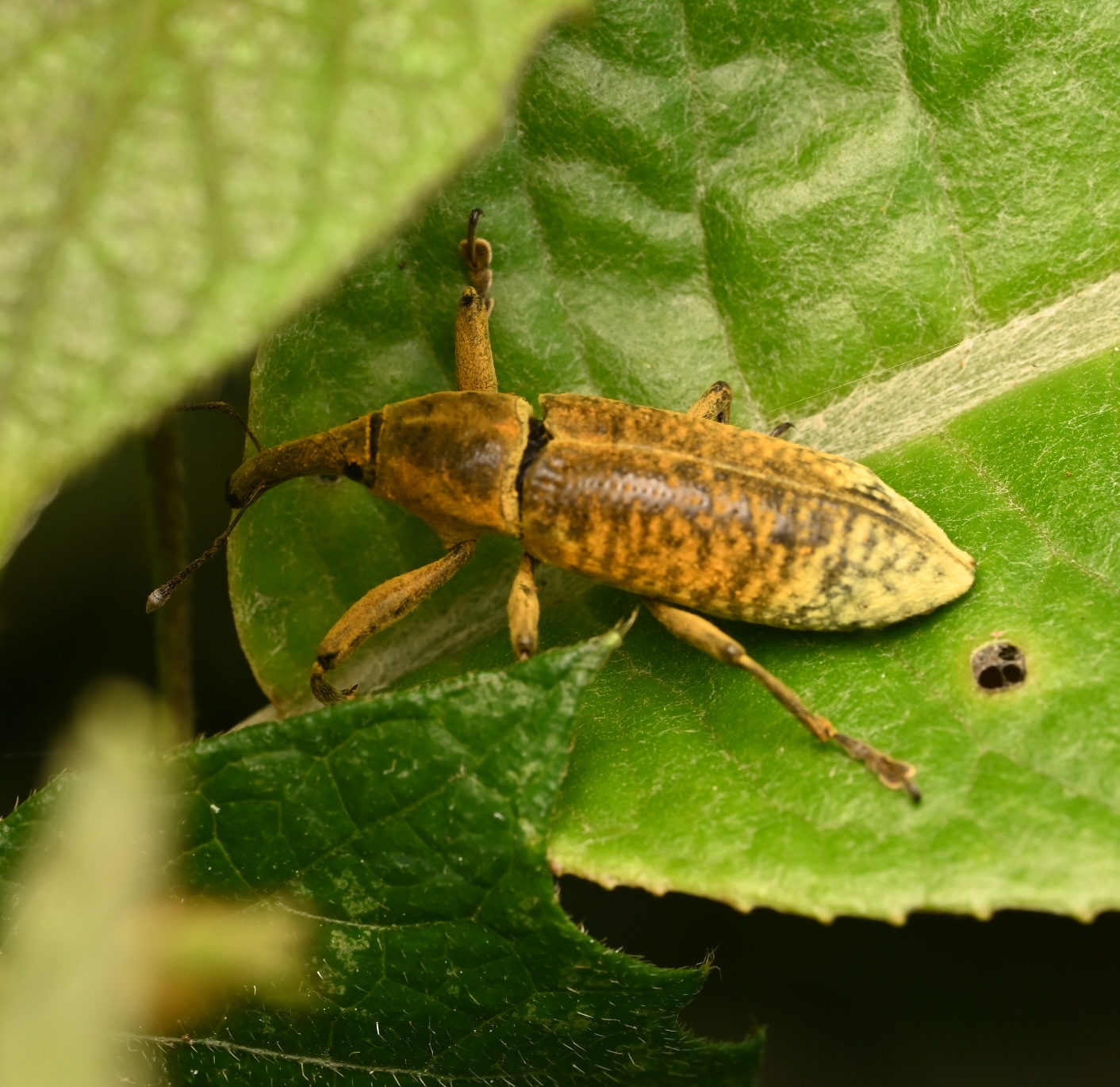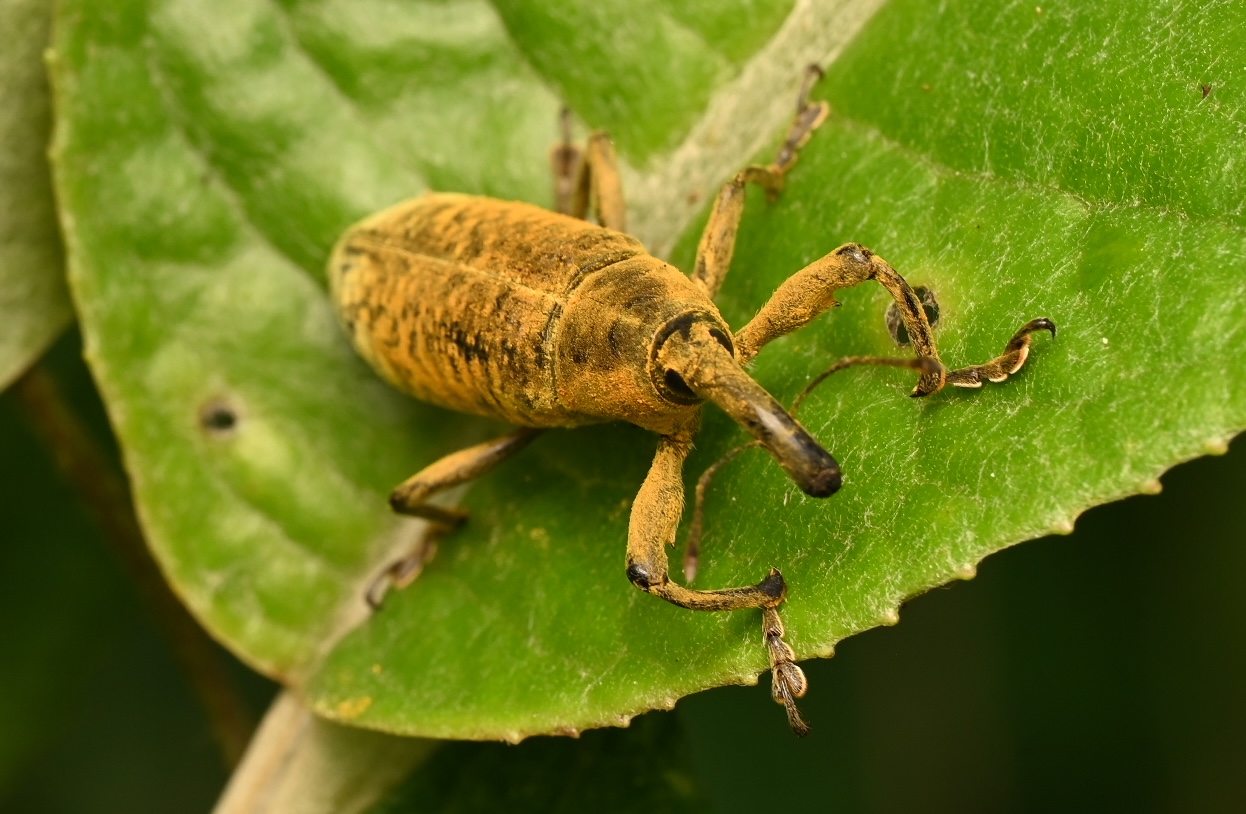
The genus Lixus is a widespread and hyper-diverse group of true weevils within the family Curculionidae. First described in 1775, this massive genus comprises nearly 1,000 species worldwide. Characterized by their remarkably elongated snouts and robust, cylindrical bodies, these beetles are ecologically vital and exhibit fascinating physical adaptations. In many Lixus species, the female’s snout is noticeably longer and smoother than the male’s—an evolutionary trait that allows her to bore deep into plant stems to safely deposit her eggs. I encountered a gorgeous, large (3.5 cm) specimen in Nanegalito, a lush village nestled in the cloud forest region near Mindo, Ecuador, just a one-hour bus ride from Quito. The beetle was beautifully coated in a delicate, powdery wax secretion, a pristine layer of pruinescence that earns these insects their popular nickname: “powdery weevils.”