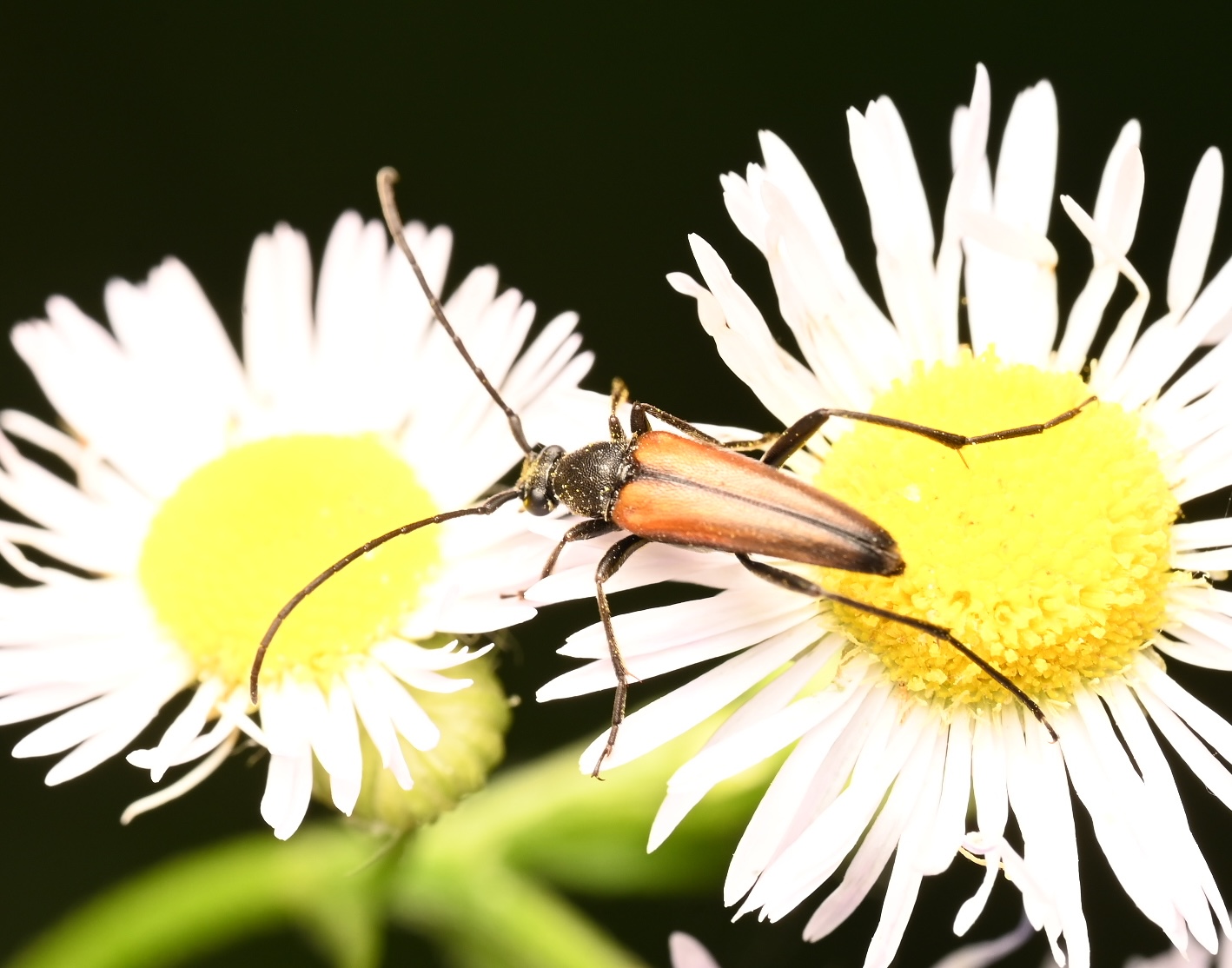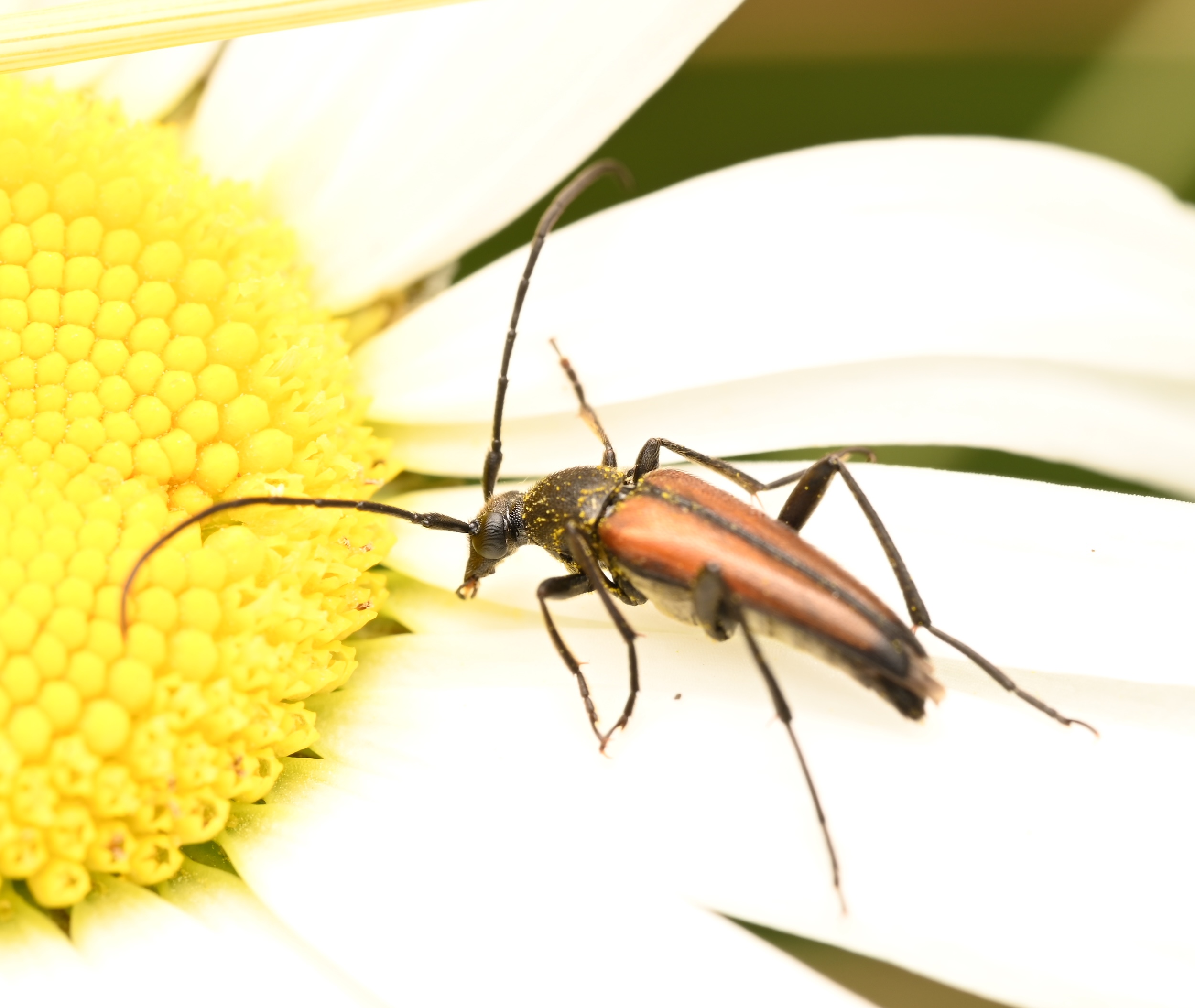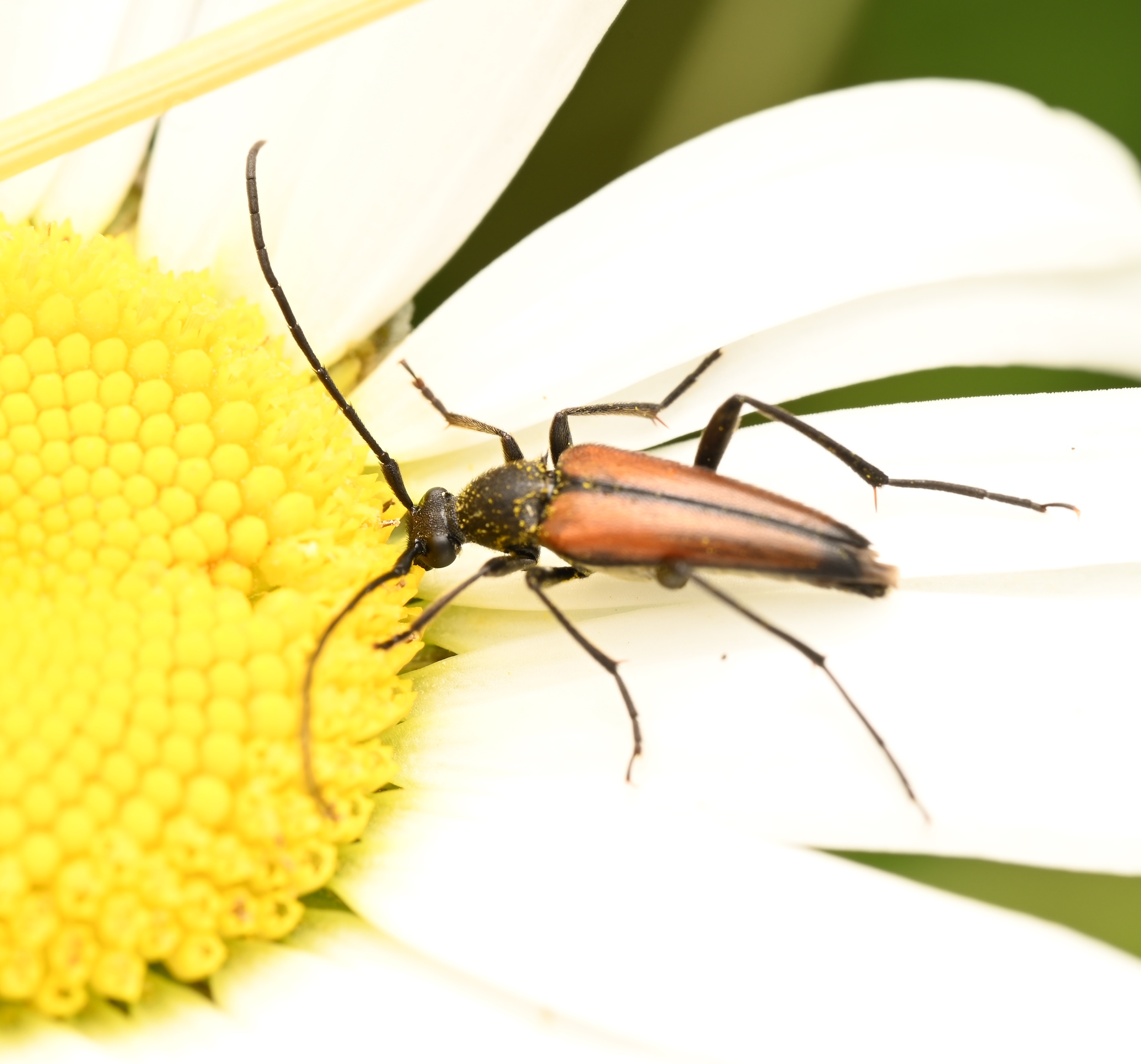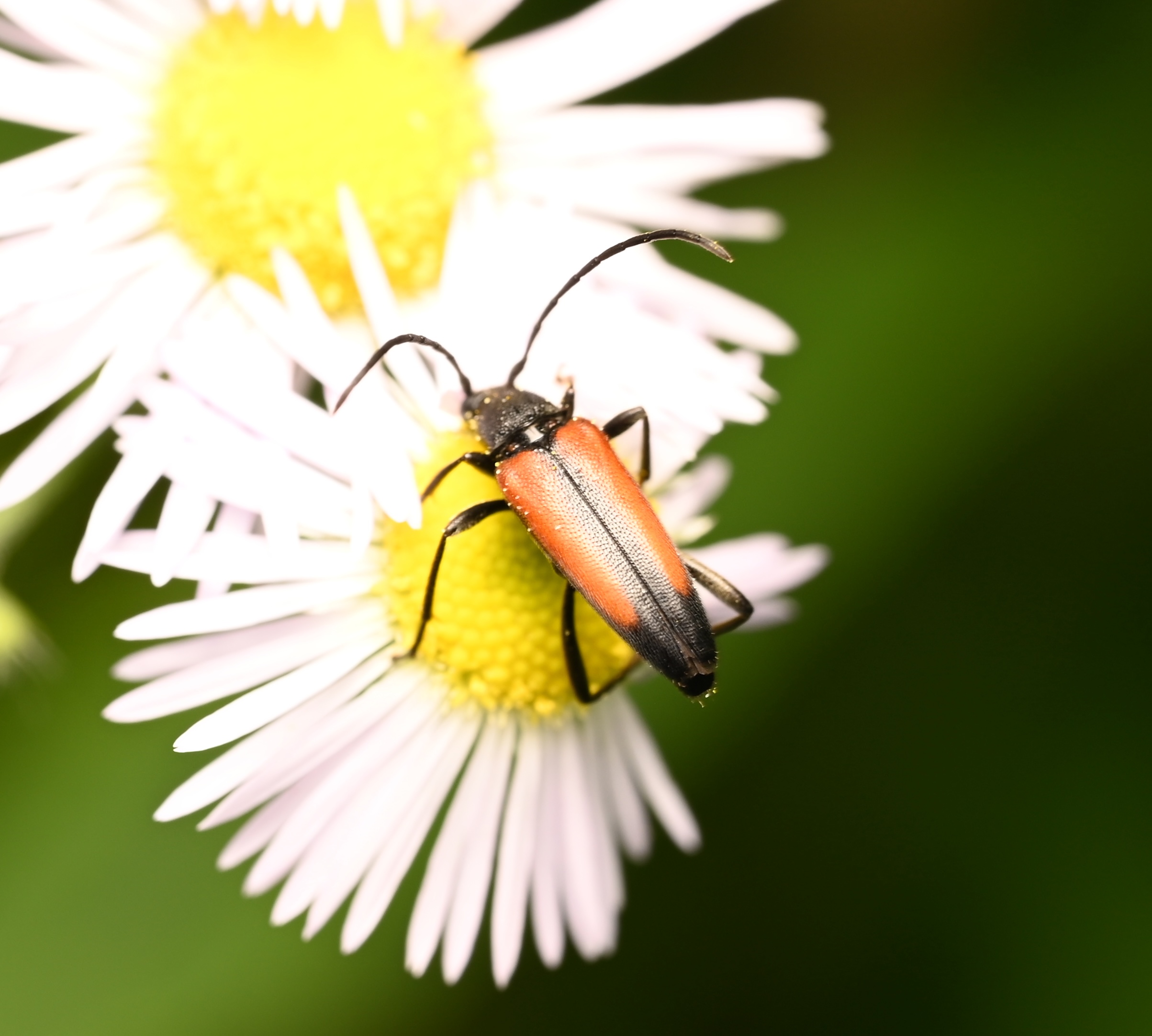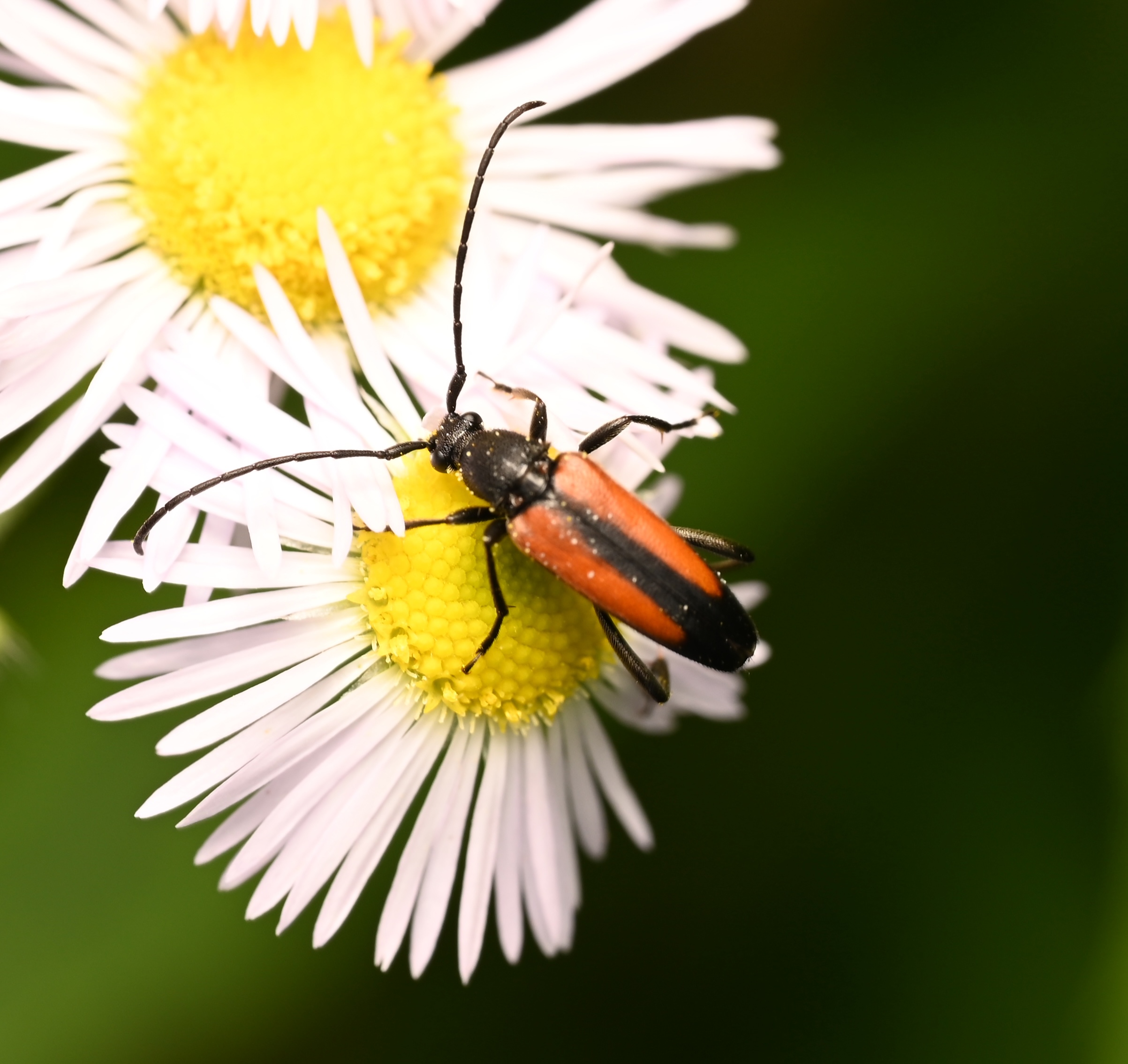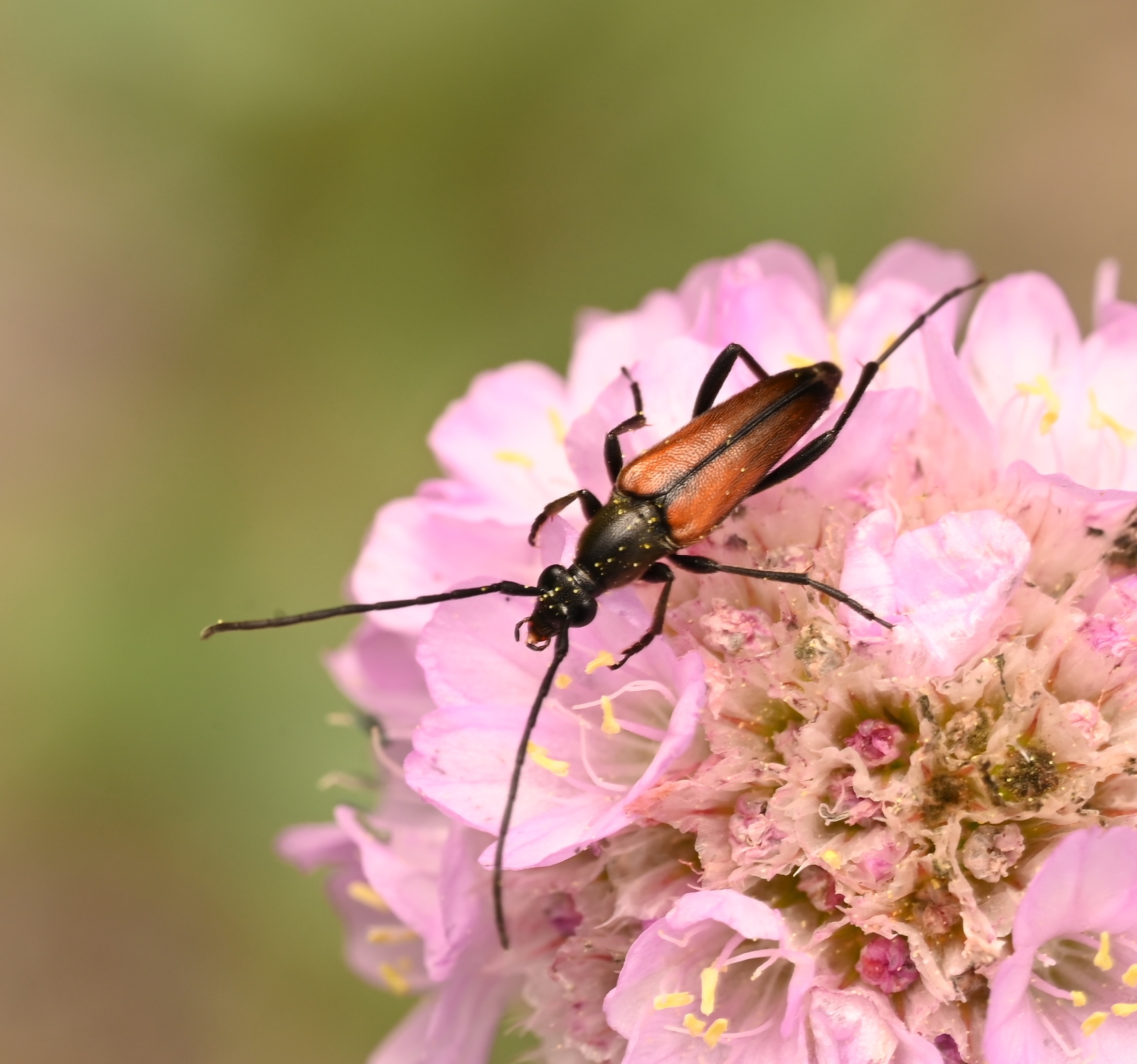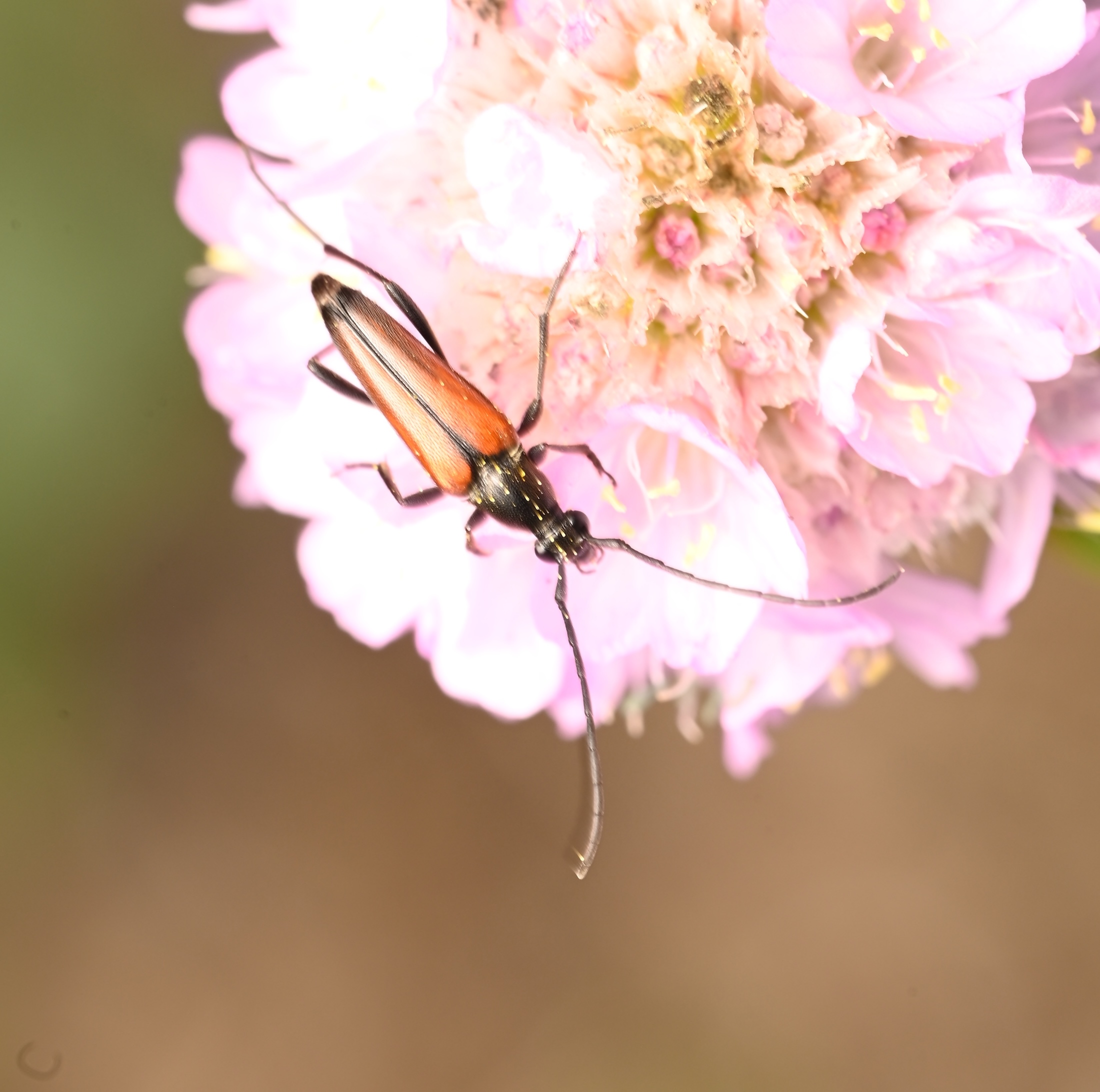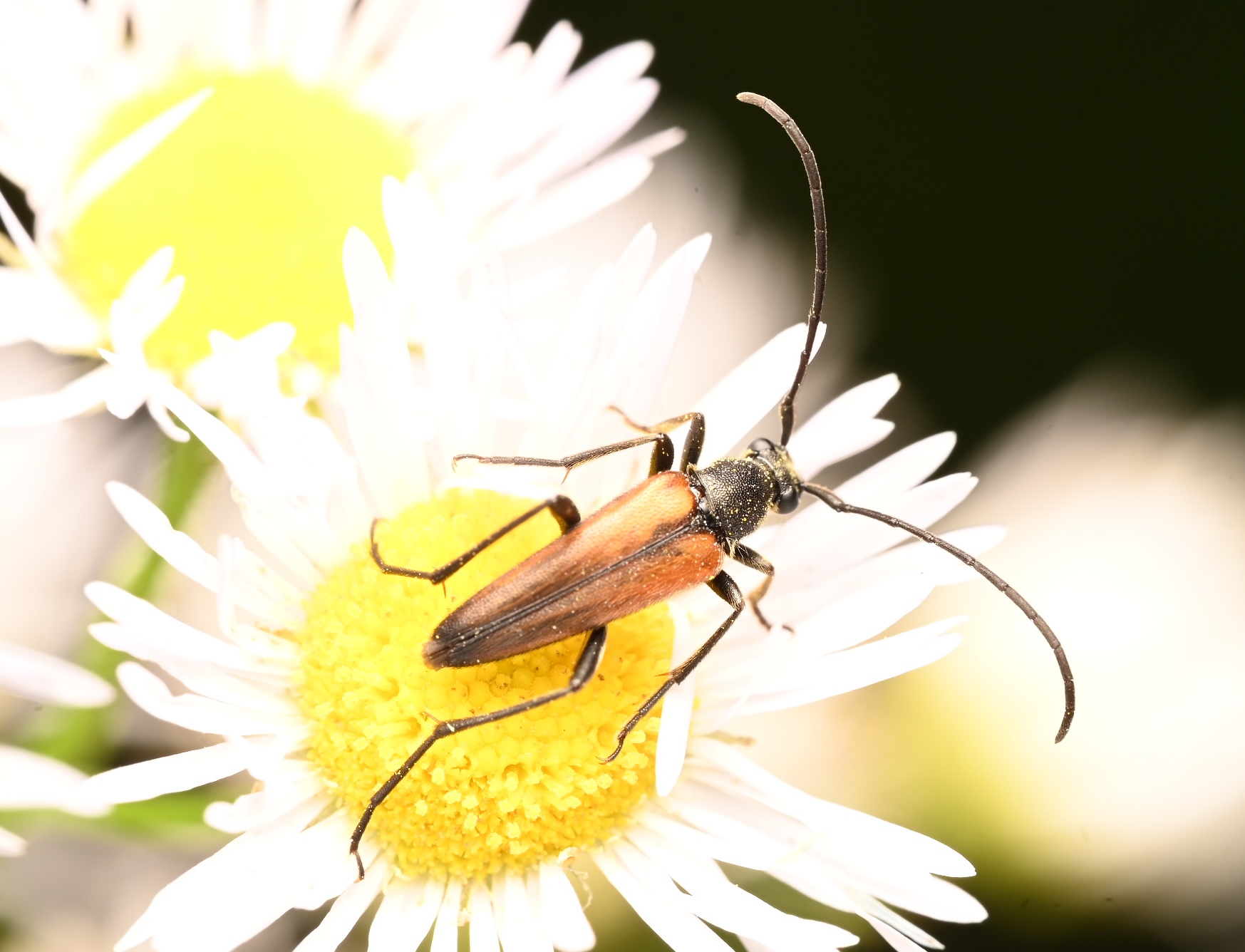
The black-striped longhorn beetle (Stenurella melanura) is a widespread European species belonging to the flower longhorn subfamily. Measuring just 6 to 11 millimeters in length, this beetle exhibits noticeable sexual dimorphism. Males are generally smaller with yellowish-brown elytra (wing covers), whereas the slightly larger females sport bright reddish-brown elytra with a distinct, thick black stripe running down the center. Following copulation, a male will frequently remain mounted on the female’s back for an extended period; this mate-guarding behavior effectively prevents rival males from approaching or mating with her. While their larvae develop inside the decaying, damp deadwood of both deciduous and coniferous trees, the adults emerge between May and September. They are highly active diurnal flyers, commonly serving as vital pollinators while foraging for nectar and pollen on a wide variety of forest blooms. I encounter these striking little longhorns every summer in both Poland and Sweden.