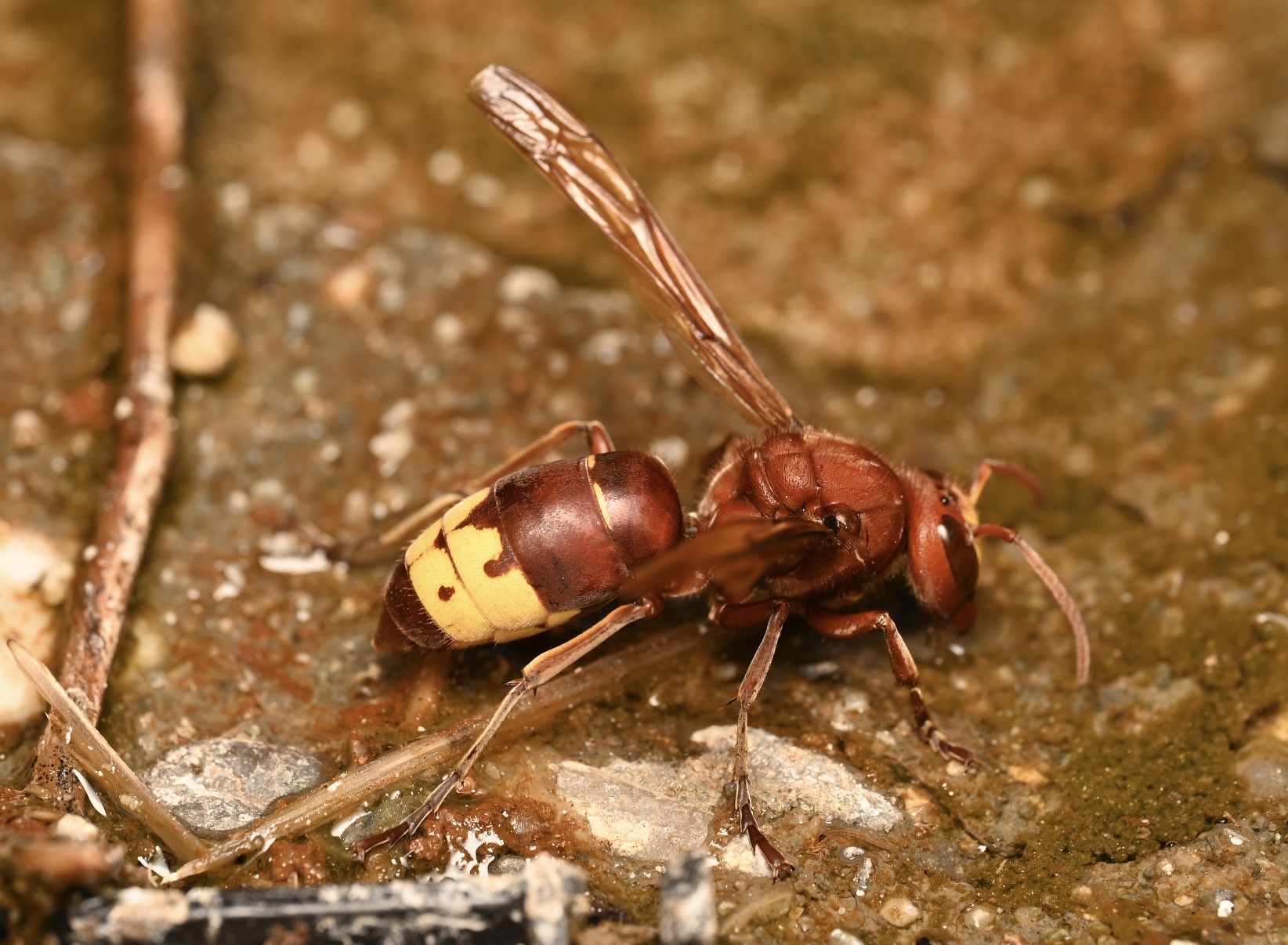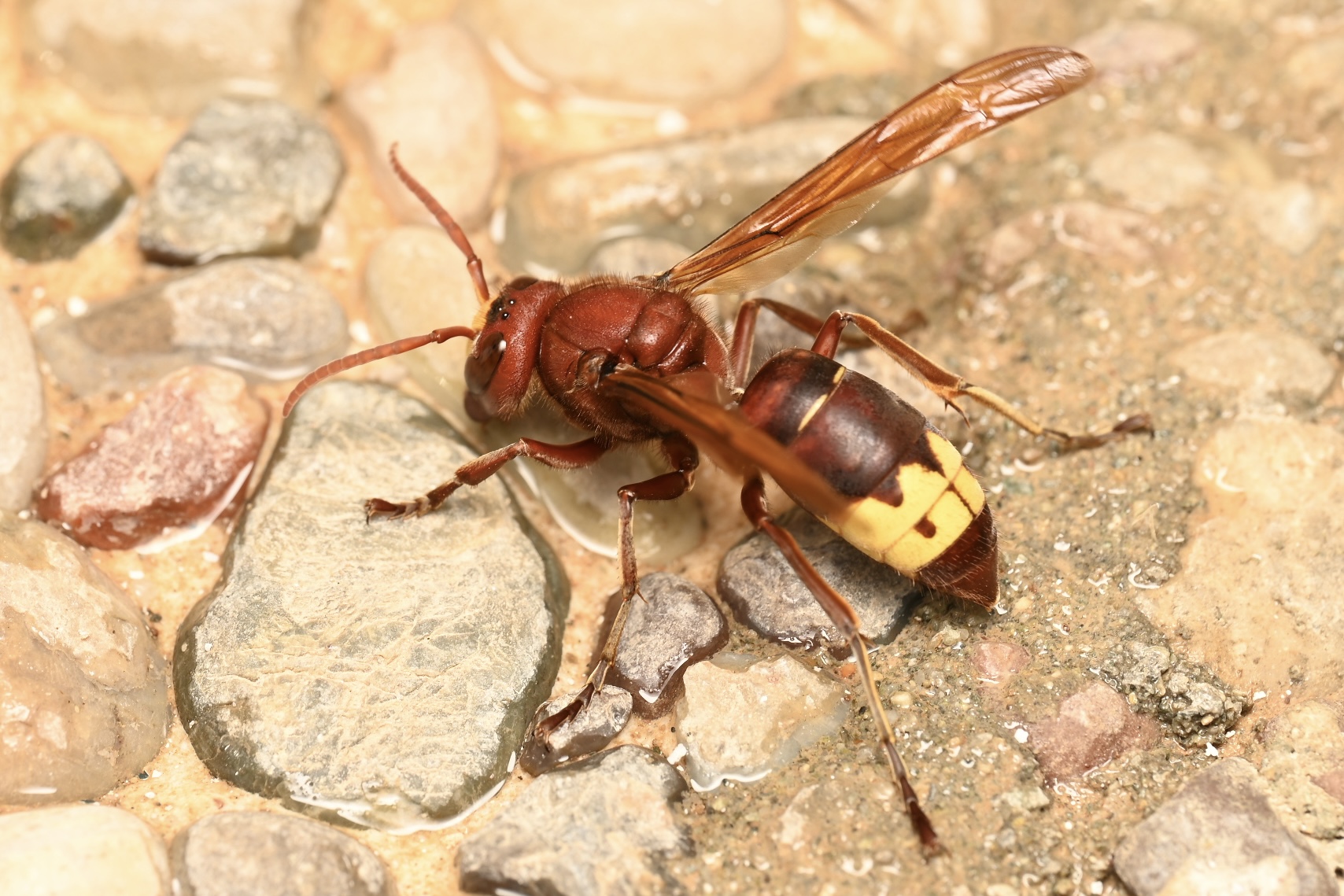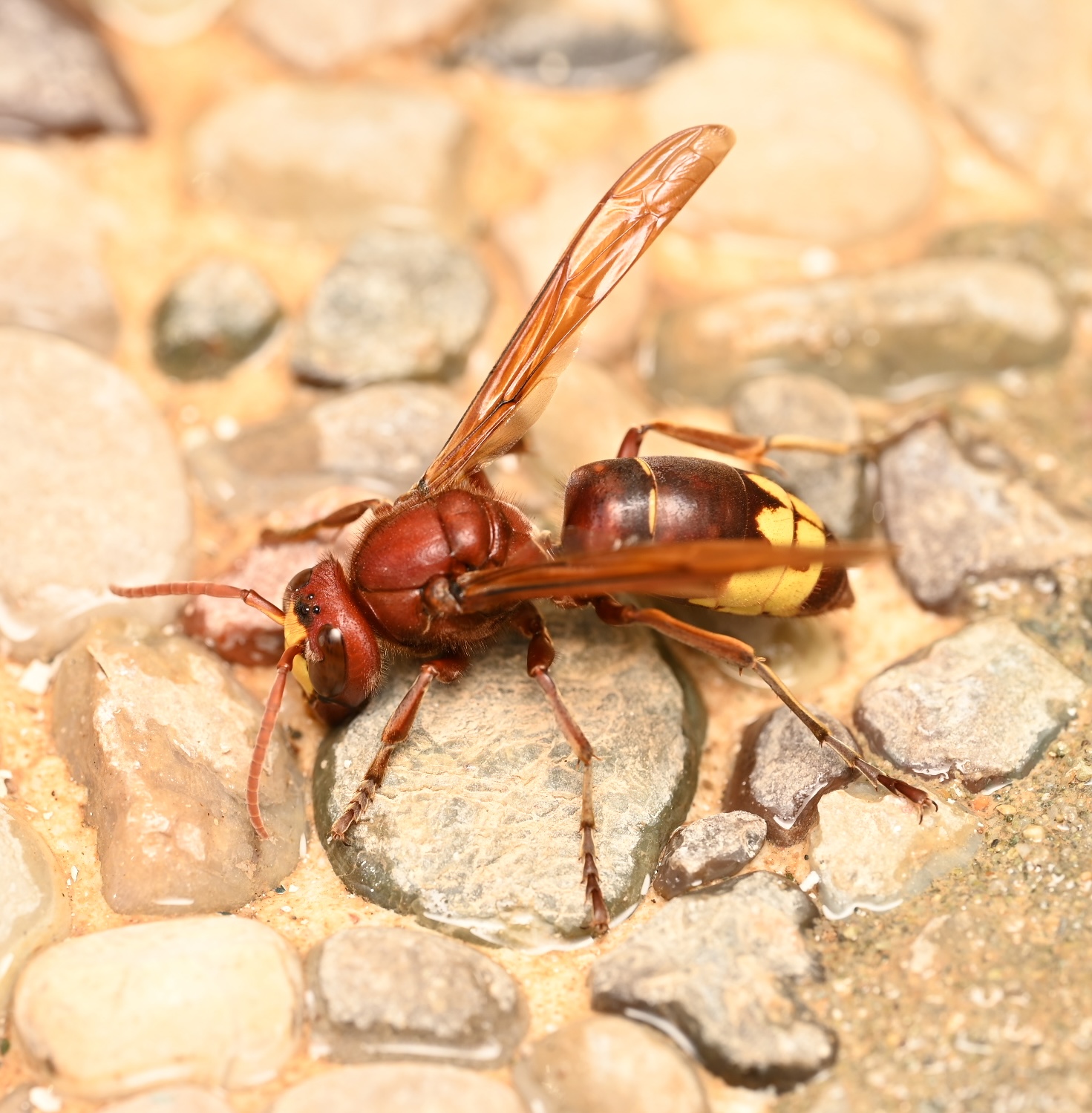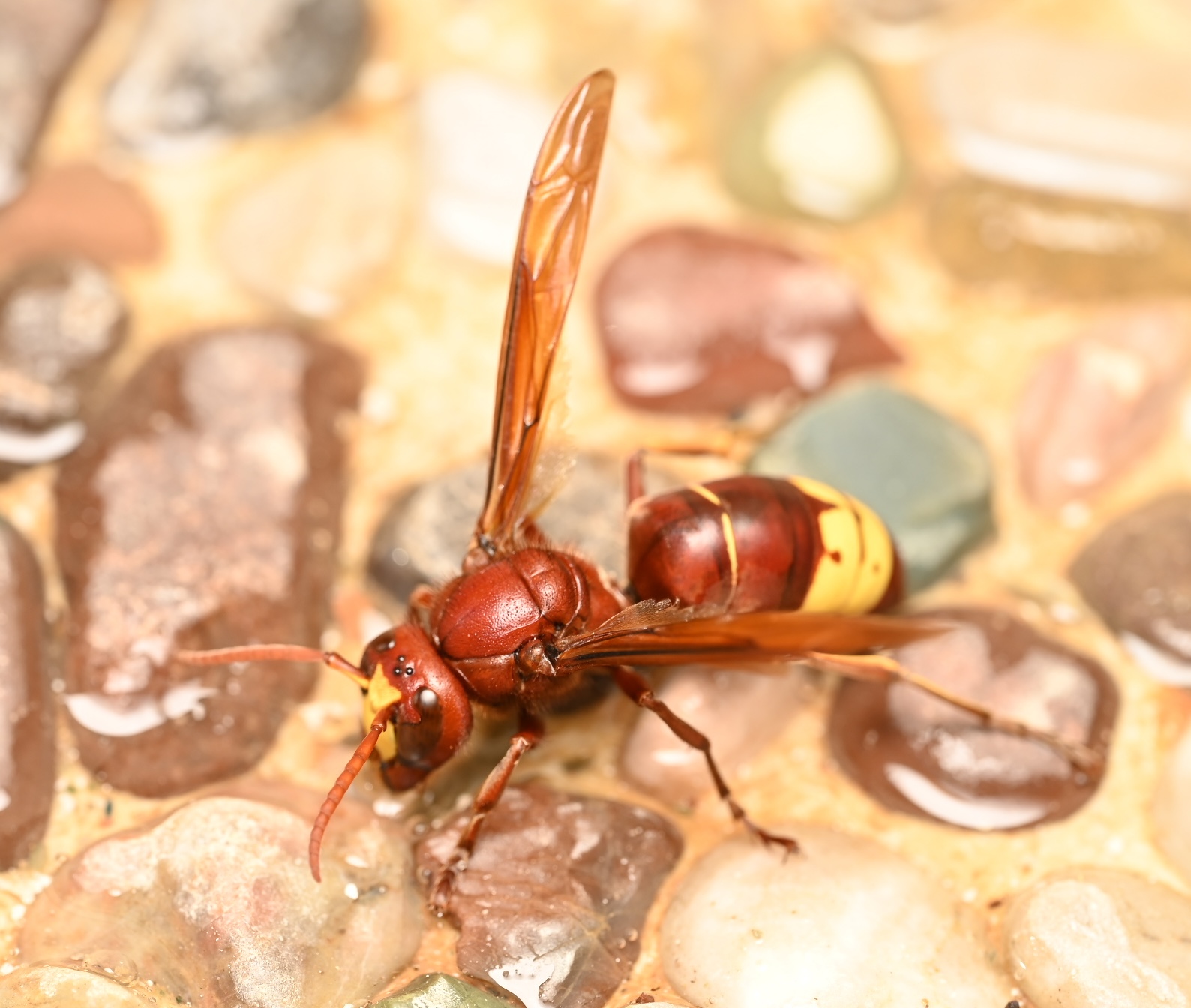
Meet the Oriental hornet (Vespa orientalis), a fascinating, reddish-brown social insect native to the warm, dry climates of North Africa, the Middle East, and parts of Southern Europe. While most hornets prefer the cooler hours of dawn or dusk, these guys are uniquely adapted to peak at high noon. In fact, they are practically solar-powered! Their exoskeleton contains a yellow pigment called xanthopterin that absorbs sunlight and converts it into electrical energy. On top of that, specialized electromagnetic receptors on their abdomens act as a high-tech internal compass. Scientists believe this system helps them detect gravity, making them absolute masters at excavating underground nests. Deep inside these colonies, the larvae scrape their mouthparts against the comb walls, generating a rhythmic acoustic signal to demand food from adult workers. Unfortunately, their favorite meal happens to be honeybees, making them a destructive threat to pollinator populations—and an increasingly problematic invasive species in Southern Europe as they expand their range with climate warming. I spotted several of these hornets frequently visiting the historic Anargyrios & Korgialenion School of Spetses (AKSS). They were drawn to water leaking from an air conditioning unit at the back of the old building. Shooting in the blinding, midday sun was a massive challenge, but because they kept returning to the exact same spot, it turned into the perfect testing ground for tweaking my camera settings.