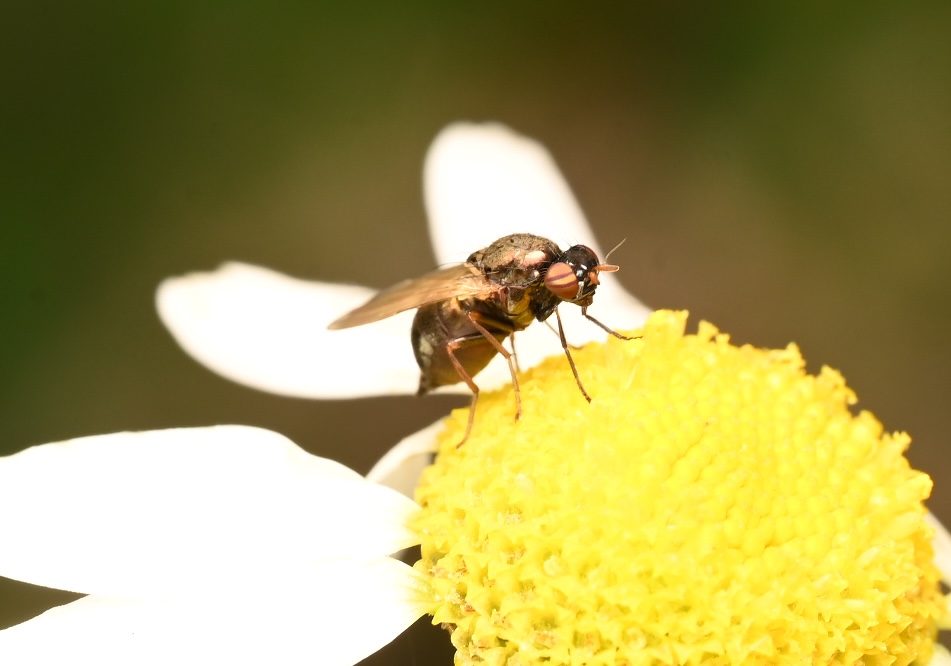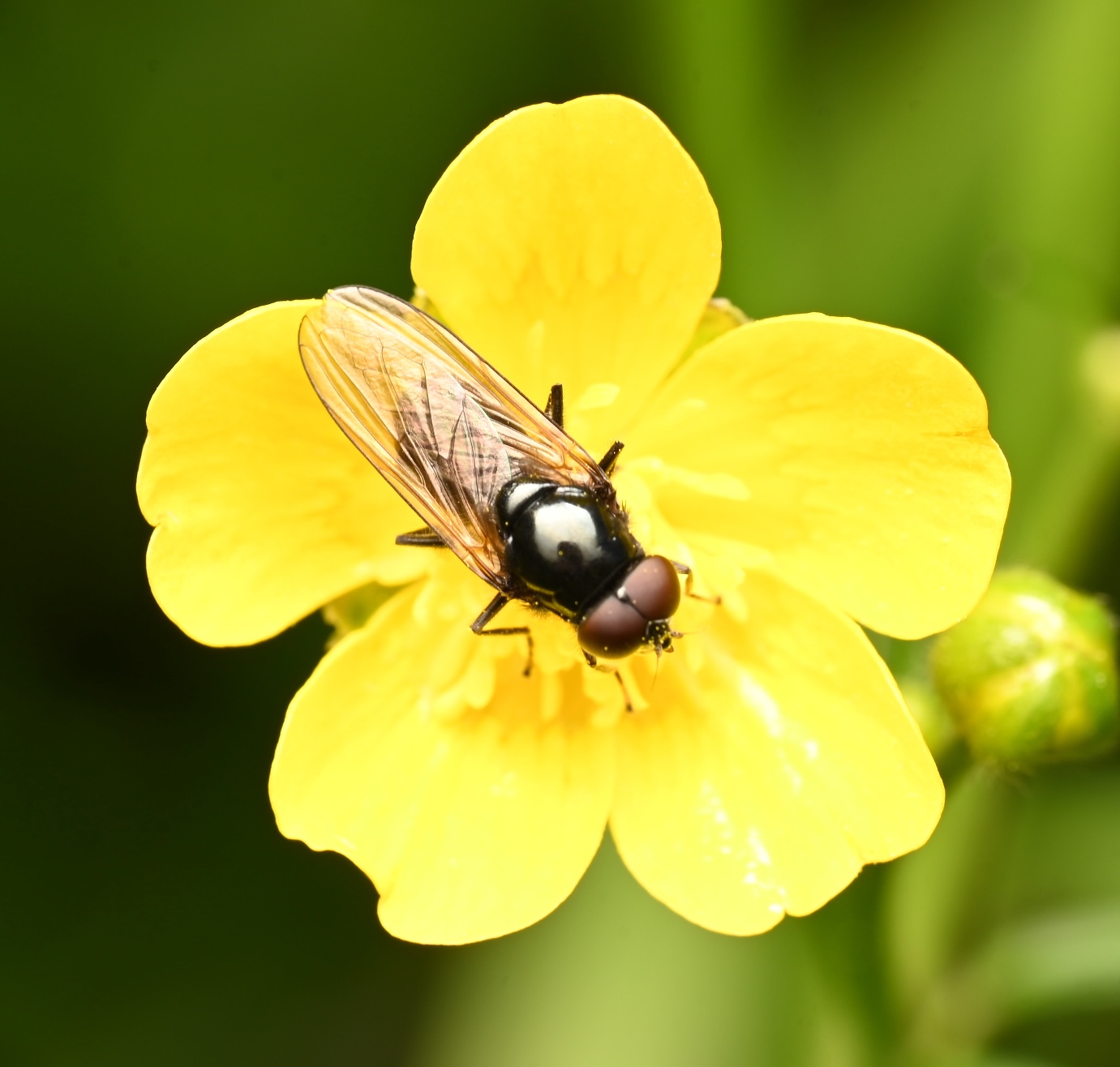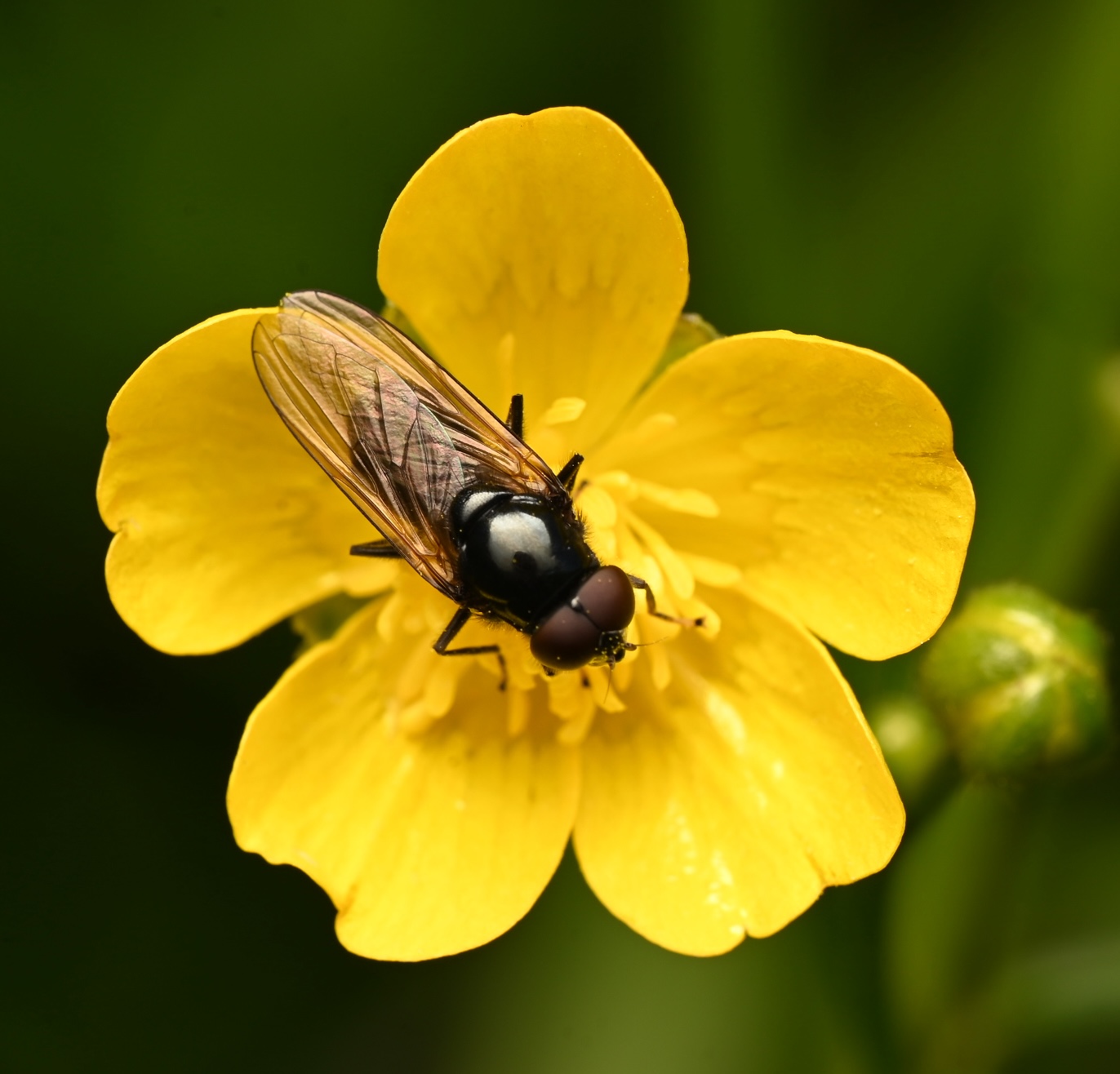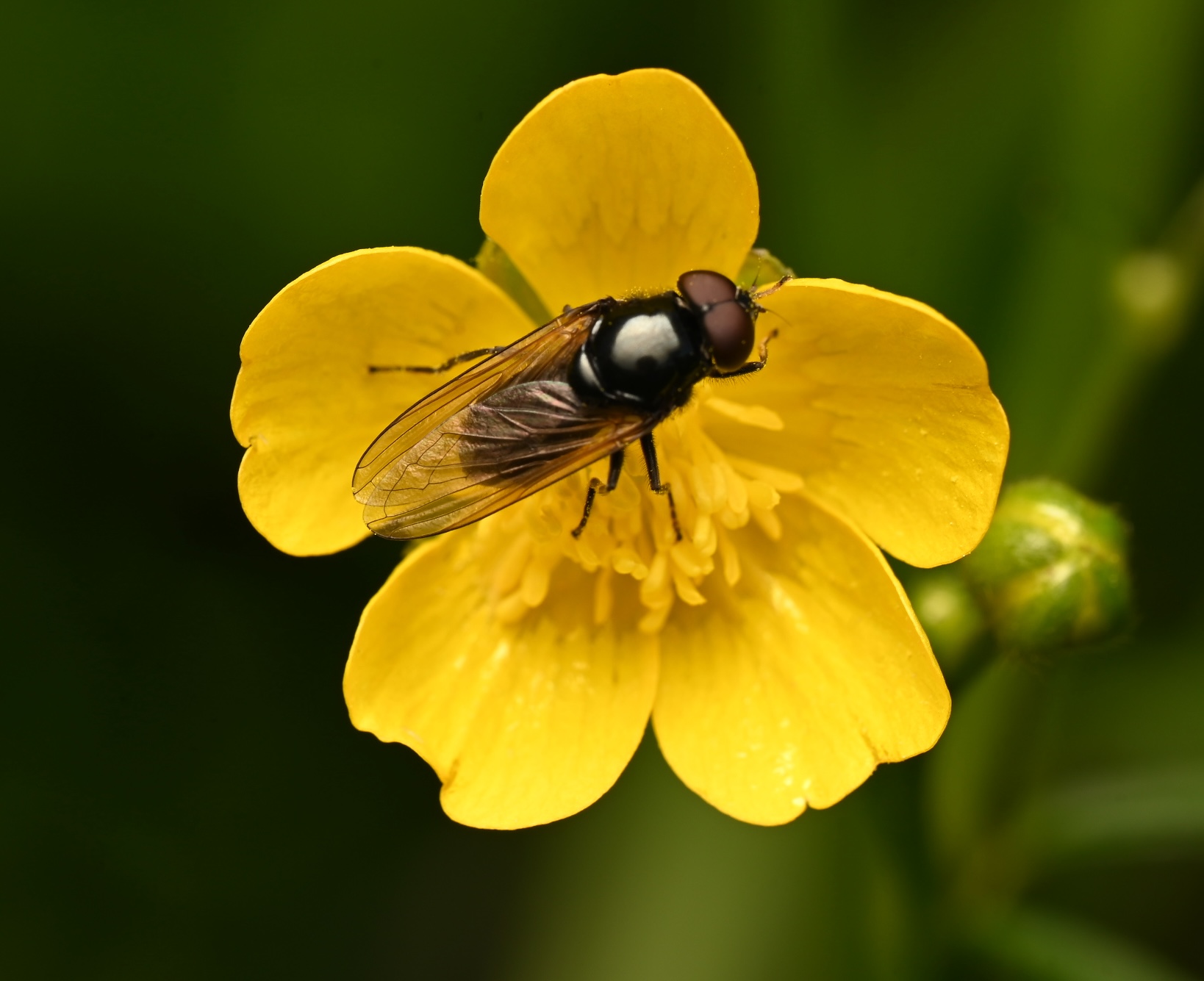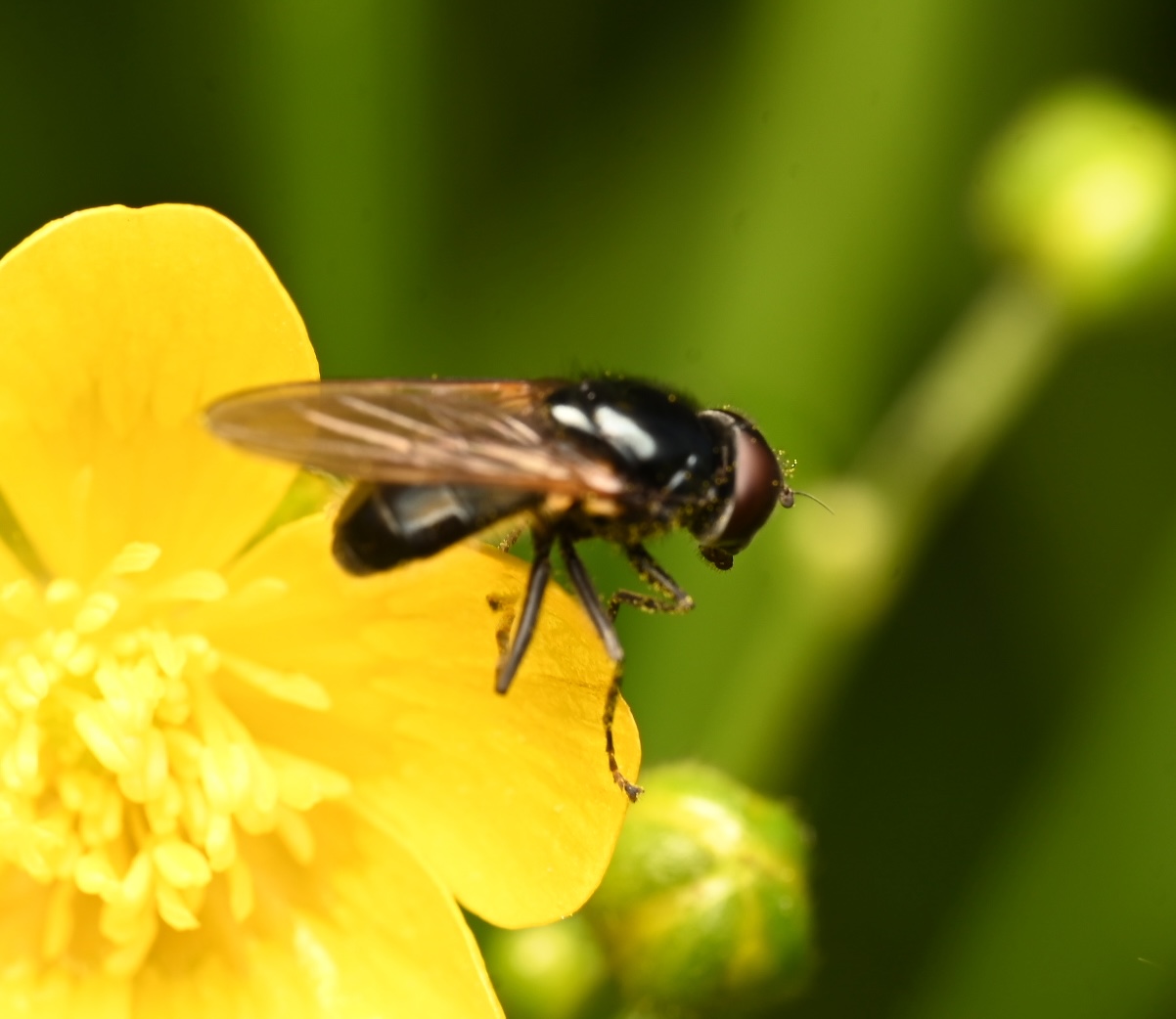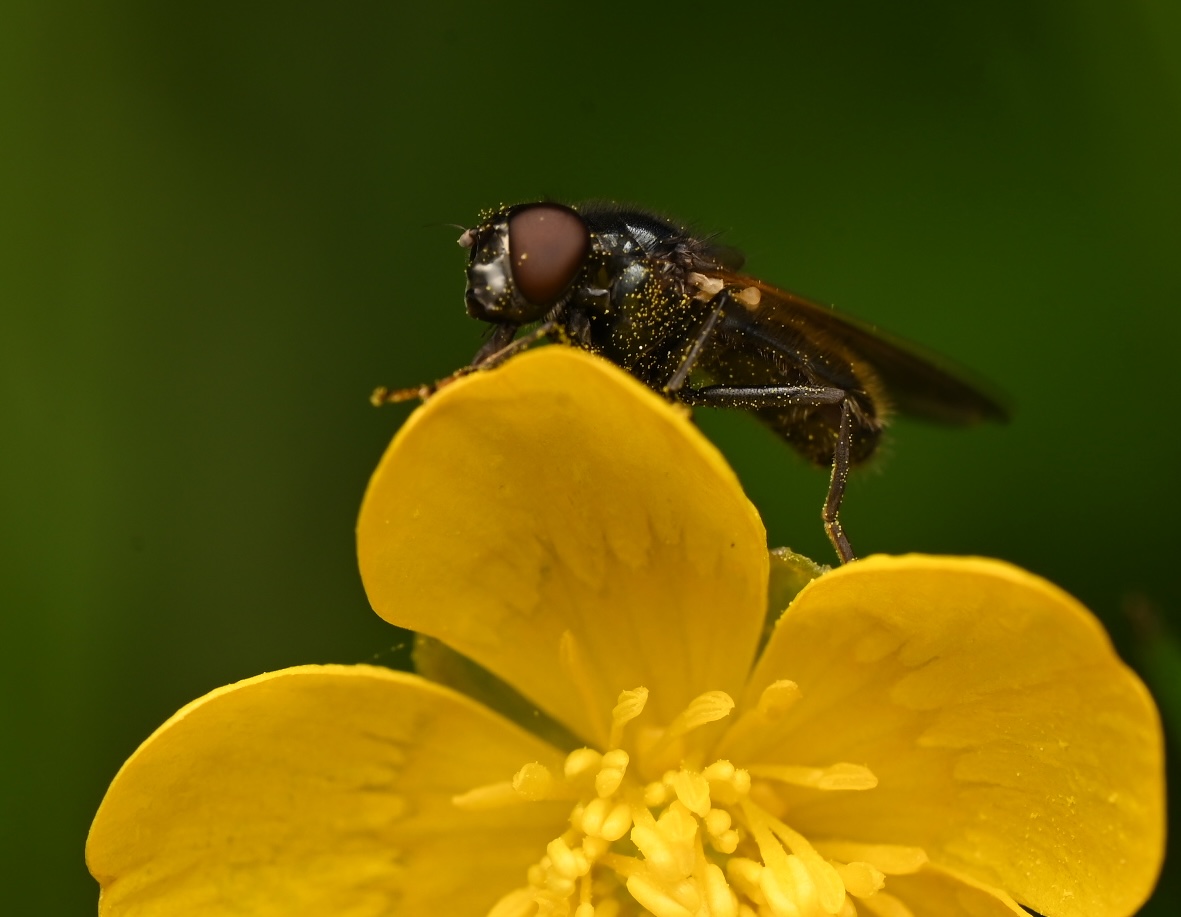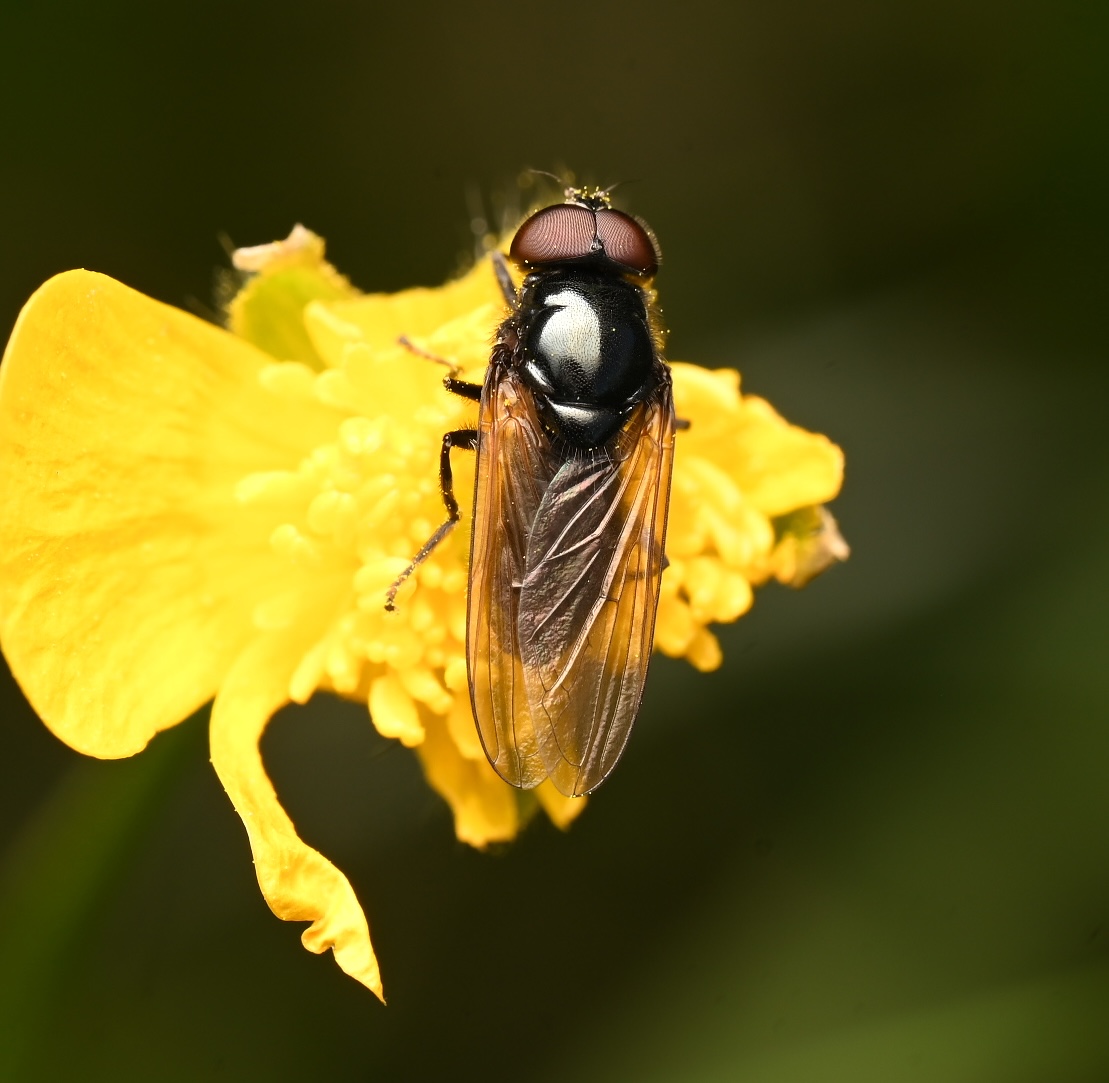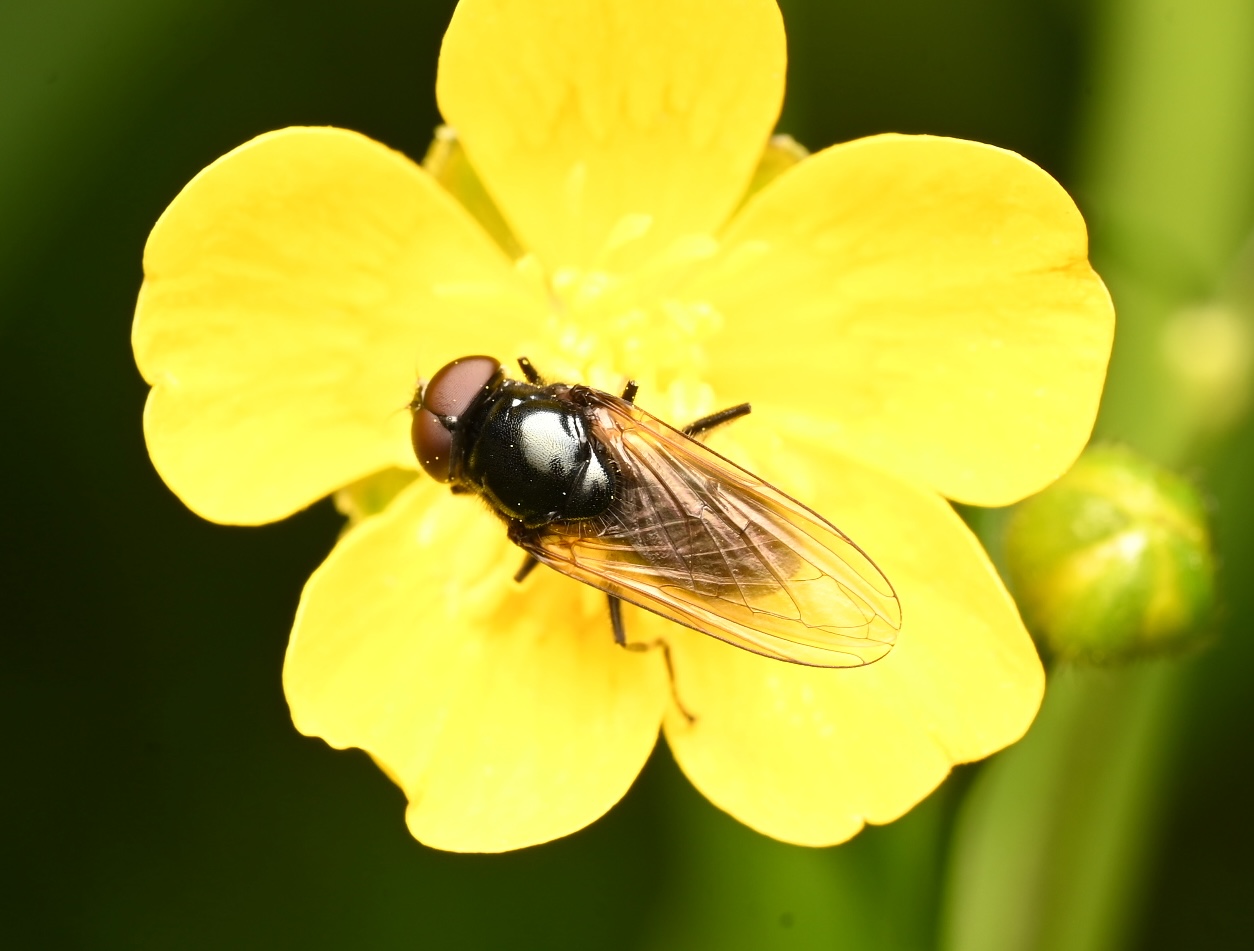
Meet the buttercup blacklet (Cheilosia albitarsis), a common European hoverfly that trades the flashy, wasp-like stripes of its cousins for a sleek, minimalist aesthetic. Unlike many generalist hoverflies, this species is a hyper-specialized partner to the buttercup. Its larvae develop strictly within the rootstocks of creeping and meadow buttercups, while the adults emerge to forage almost exclusively on their pollen and nectar—making them incredibly effective, dedicated pollinators. Measuring 7.5 to 9 mm, the males boast a glossy, deep black body accented by a charming morphological quirk: distinctive pale white to yellowish segments on their front and middle feet, giving the illusion of tiny socks. I crossed paths with this delicate, dark-armored fly in a quiet woodland patch along Sweden’s east coast, pulling over during a long stretch of cycling to catch my breath. I caught it working directly on a bright buttercup flower—the very plant that sustained its youth beneath the soil. Capturing the insect’s high-contrast, metallic sheen set against the rich, glossy yellow petals was the ultimate reward for taking a moment to slow down on the trail.