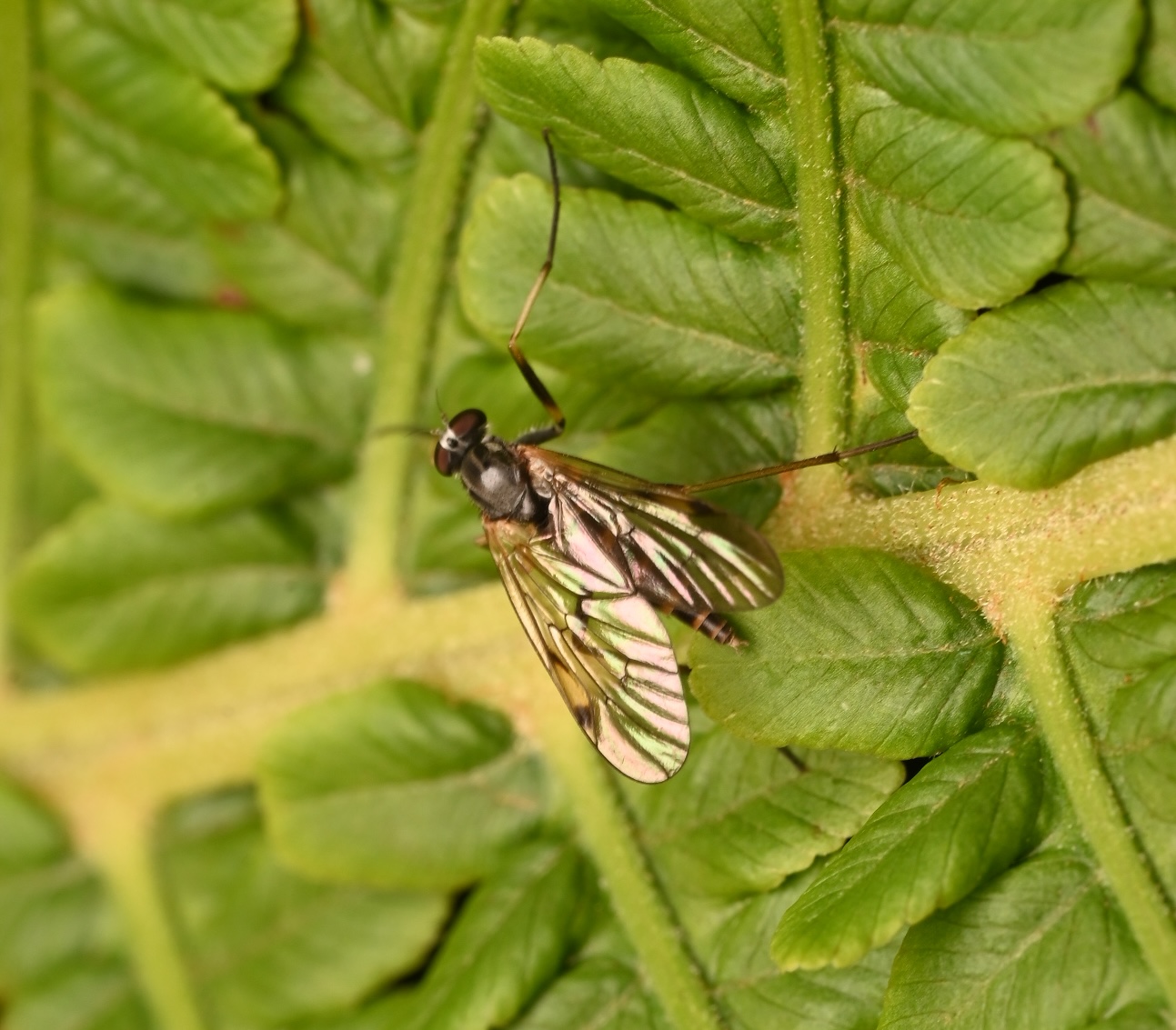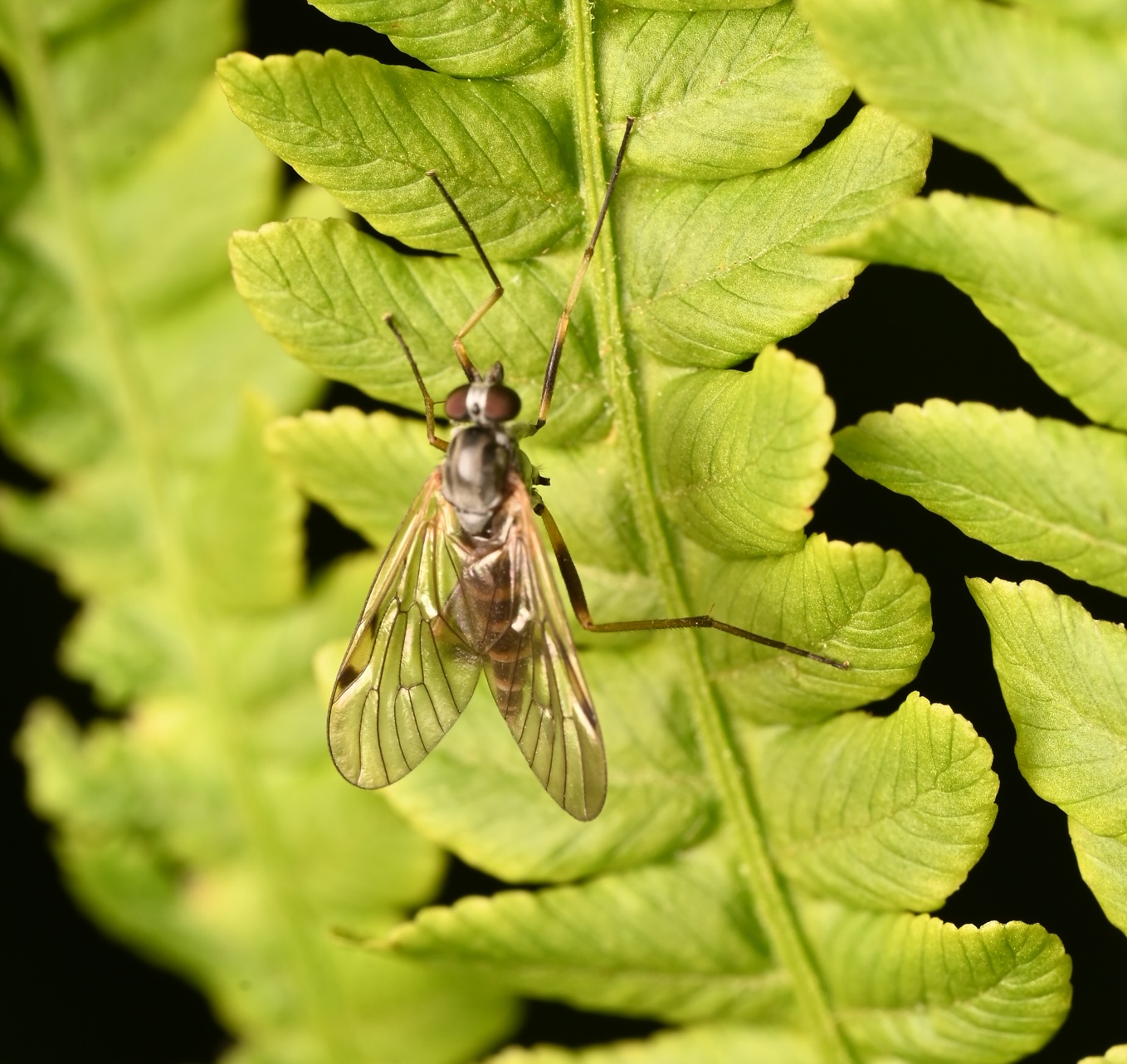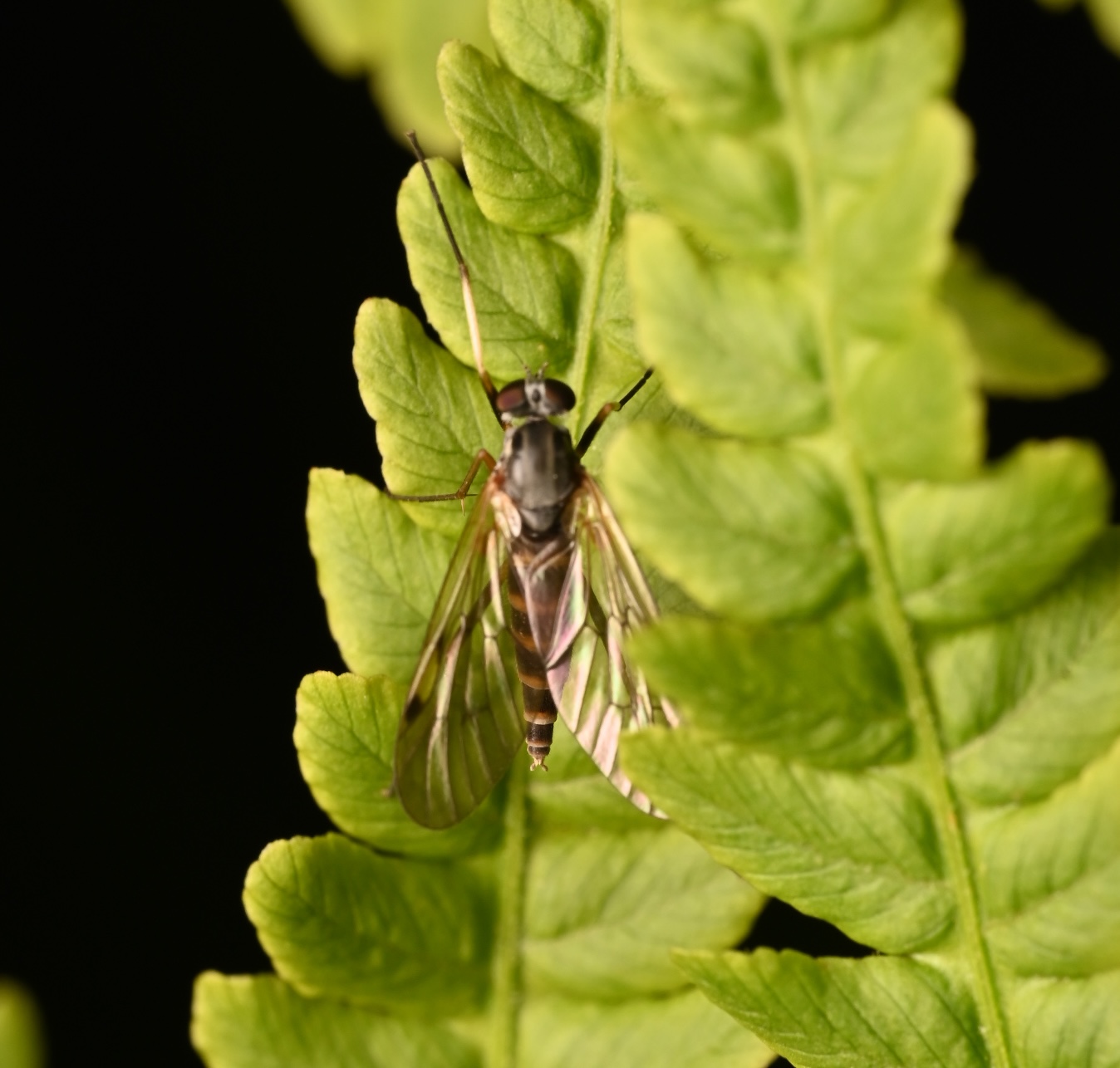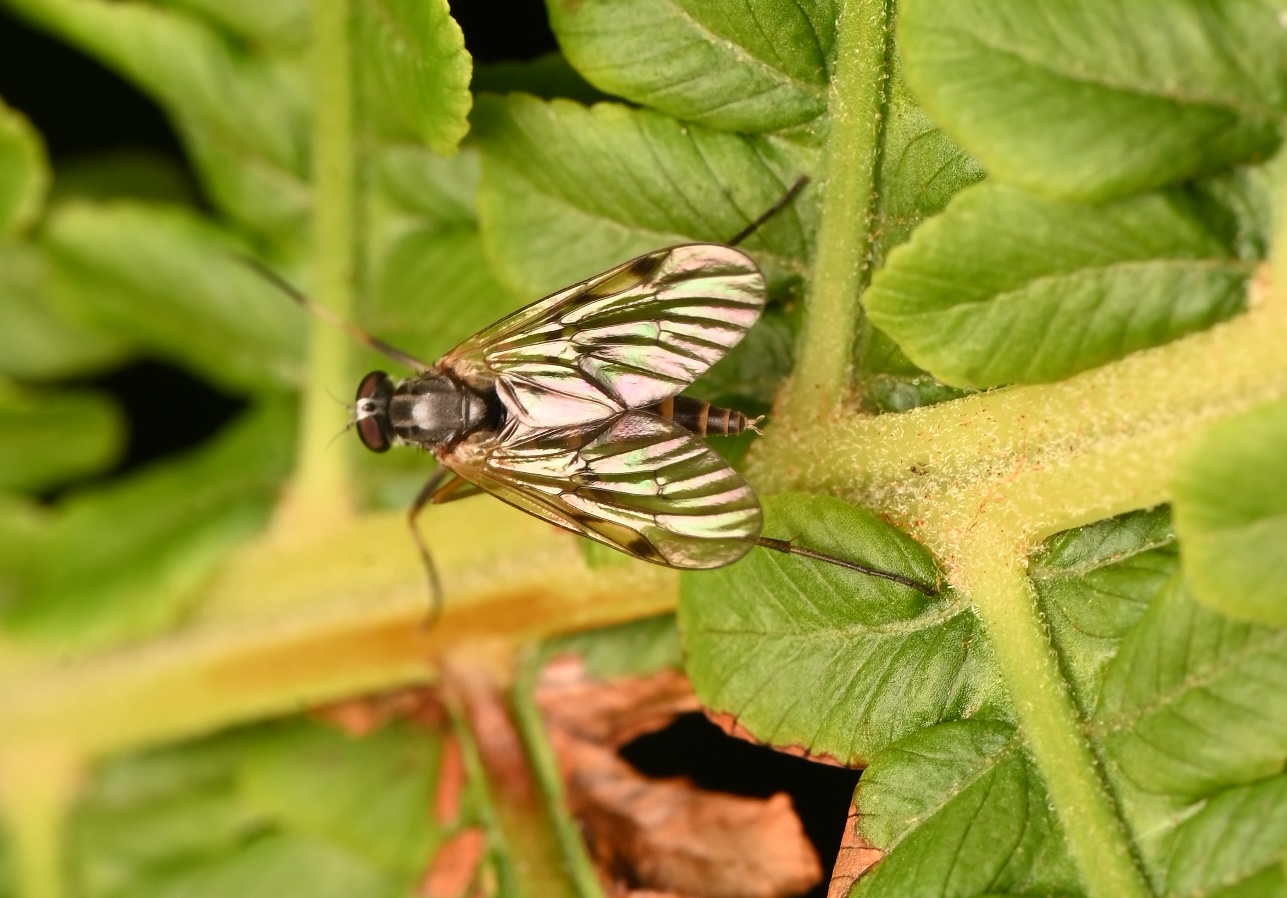
Meet Rhagio maculatus, a fascinating member of the snipe fly family (Rhagionidae) first described by the renowned entomologist Charles De Geer in 1776. True to the classic habits of its genus, this predatory fly spends its days perching head-downwards on sunlit tree trunks and fence posts, waiting patiently in this vertical stance to ambush passing insect prey. With exceptionally long, slender legs, it cuts a strikingly spindly silhouette against the bark. The sexes showcase a dramatic visual contrast: males possess massive, touching compound eyes (holoptic), while the females sport widely separated eyes (dichoptic) across a much broader face. Unlike some of their blood-sucking cousins, the adults of this species feed strictly on smaller insects or nectar, while their subterranean larvae hunt down invertebrates in moist soil. I encountered this impressive female at a riverside campsite in Finland, crossing paths with it just as I was wrapping up my long bicycle tour along the Baltic coast.