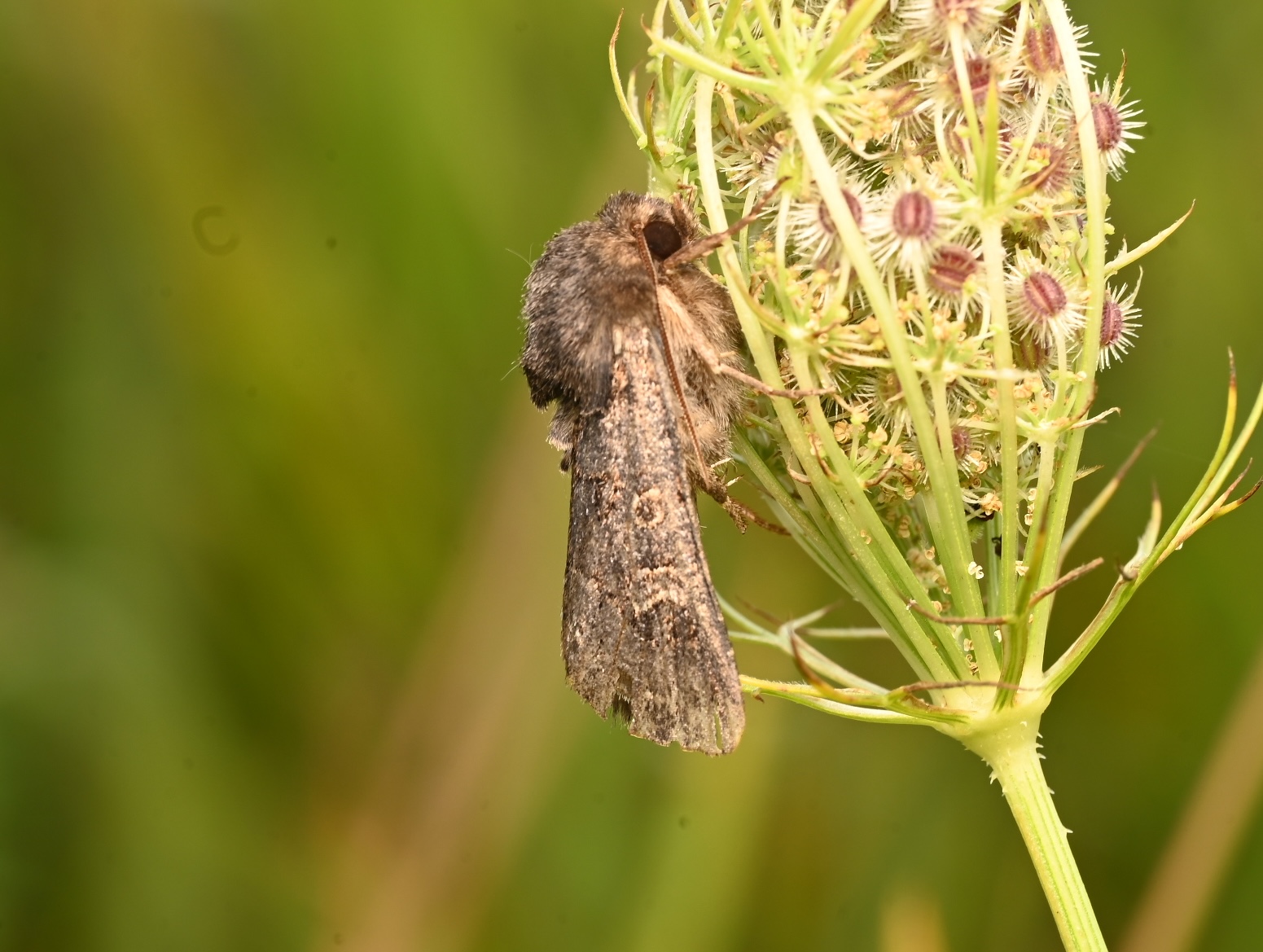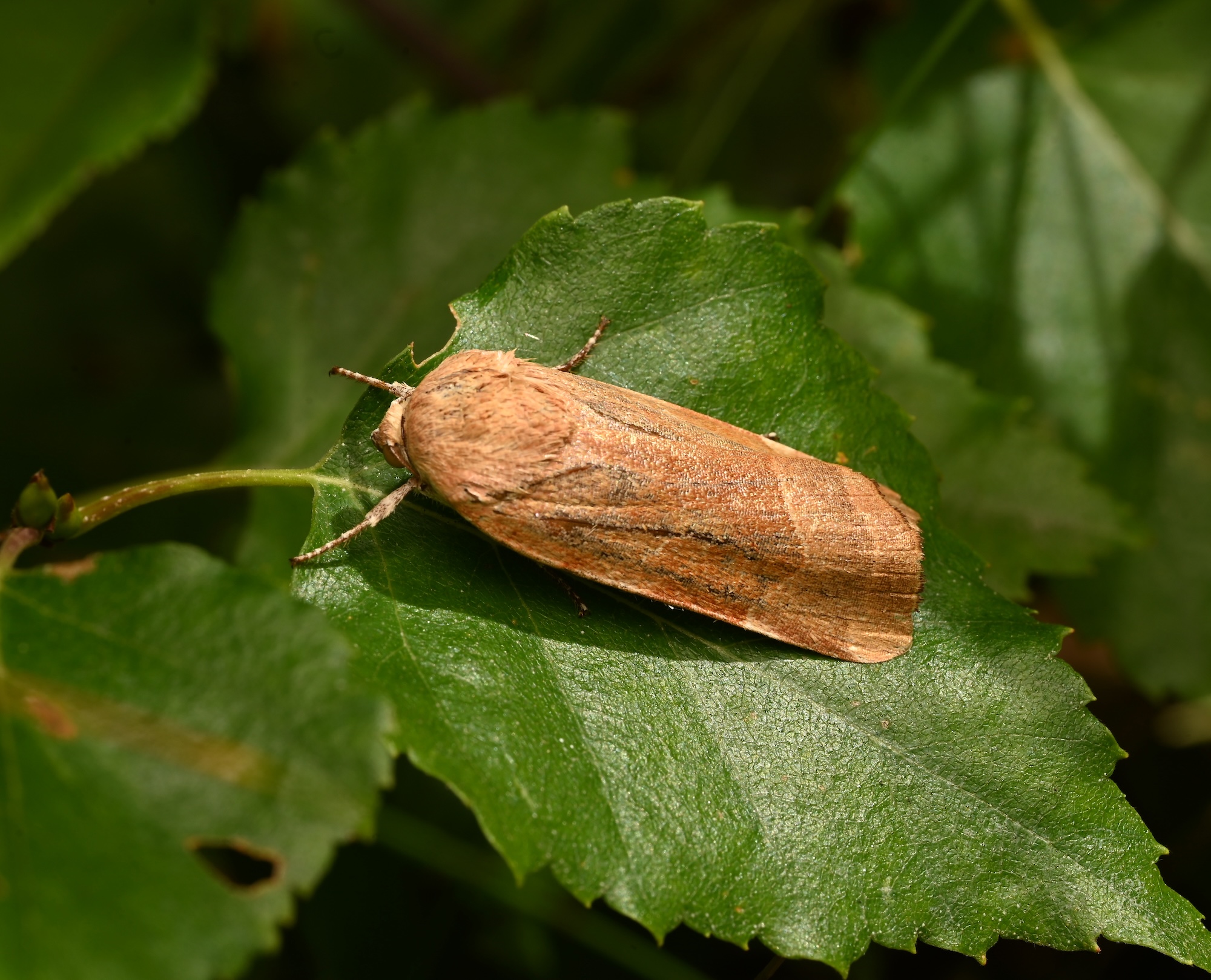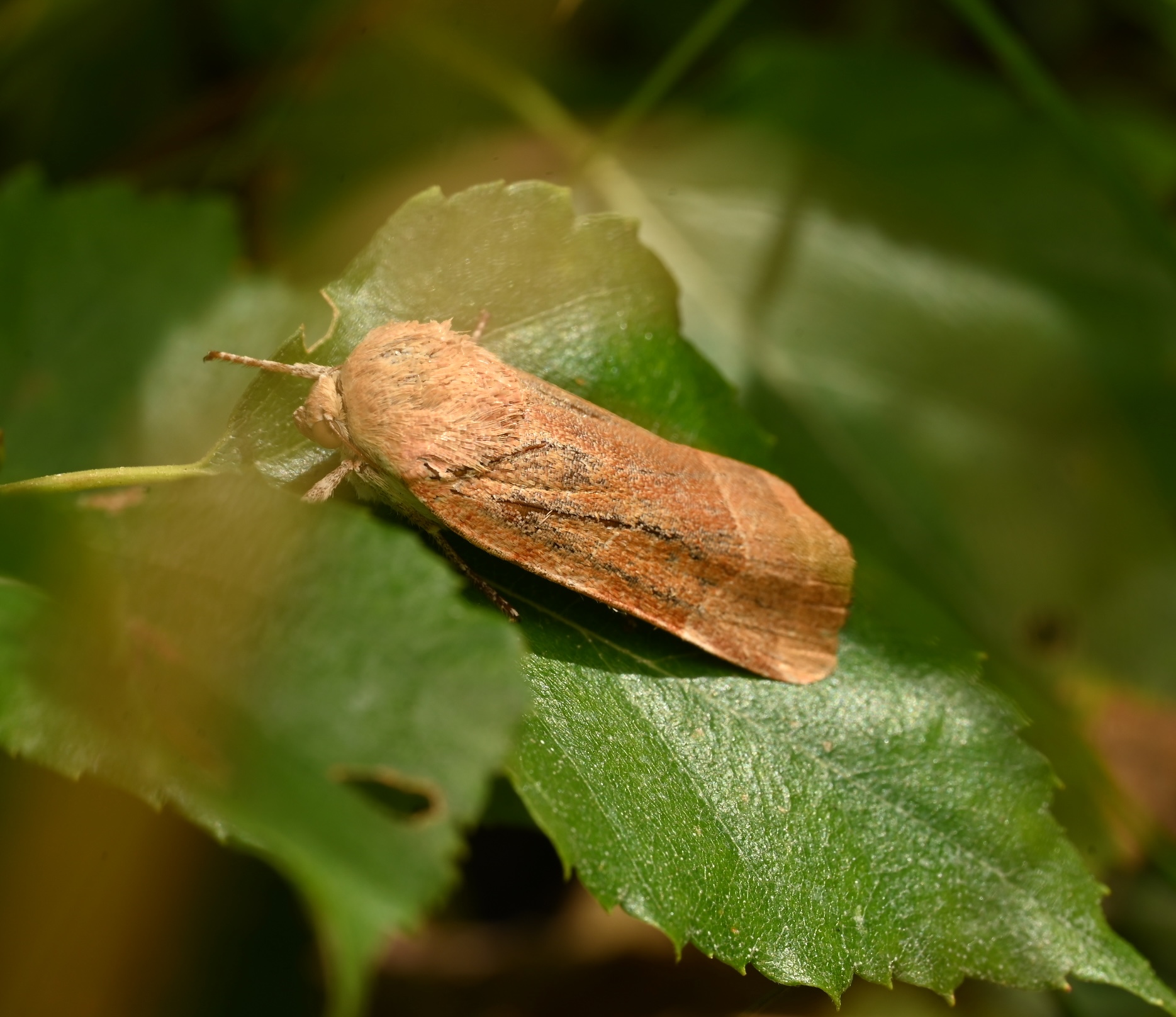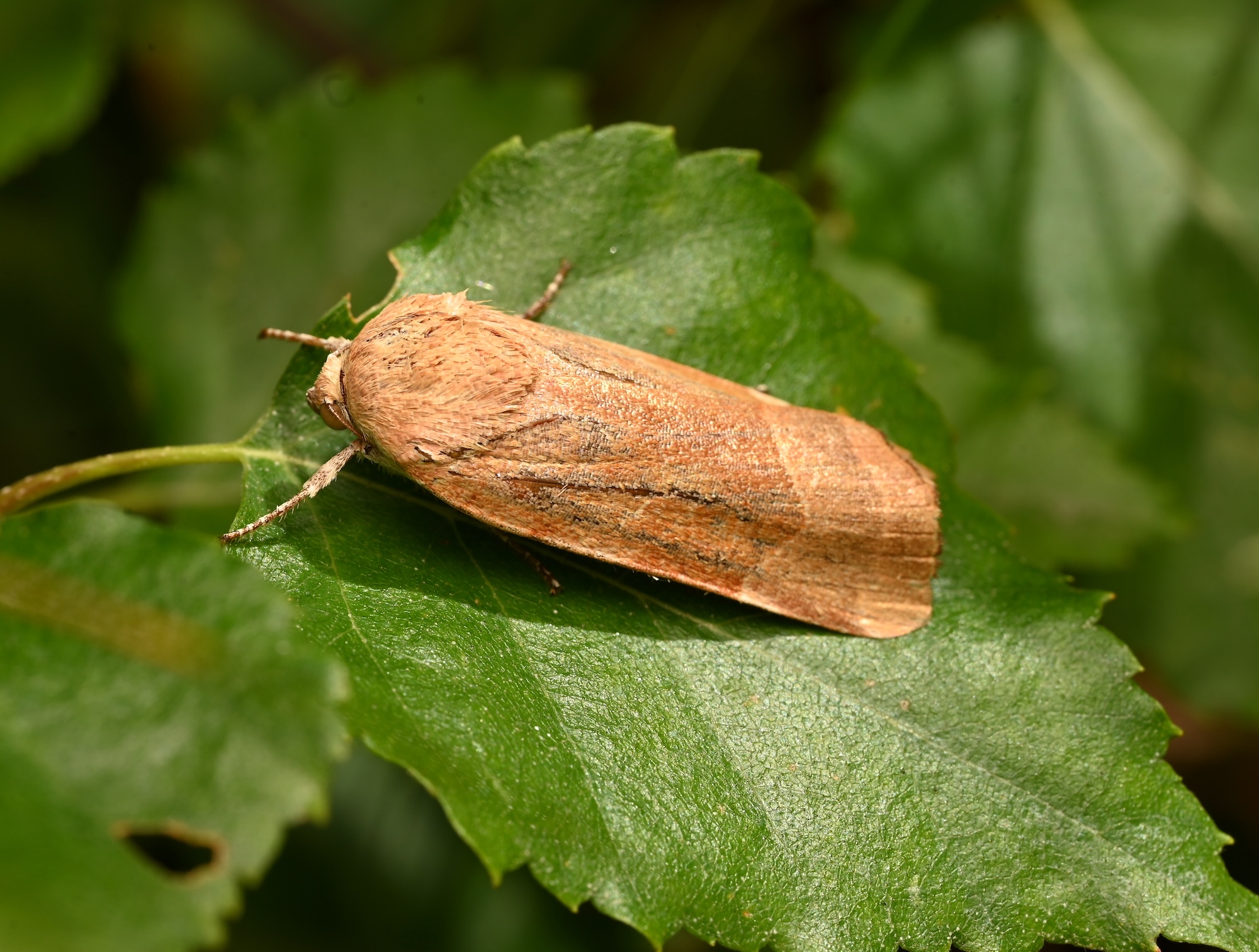
At first glance, the broad-bordered yellow underwing (Noctua fimbriata) looks like a quiet master of shadow and bark. Measuring an impressive 45 to 55 millimeters across its wingspan, this large moth wears a cryptic upper coat that varies by sex—males sport dark olive-green or deep brown forewings, while females display warm, reddish-ochre tones. But beneath its drab top wings lies a dazzling surprise: a pair of vibrant, sun-orange hindwings trimmed with a broad, ink-black border! If a bird startles the moth during its daytime rest, a sudden flash of orange startles the attacker, giving the moth critical seconds to fly to safety. Flying throughout late summer, adults sometimes take a mini “summer nap” (aestivation) during hot spells before visiting night-blooming flowers and ripe fruit. Their tough caterpillars spend winter tucked near the ground, feasting on birch and sallow when spring arrives. I spotted this magnificent, large female resting quietly during the daytime right at the edge of a forest close to Barkarby, Sweden!