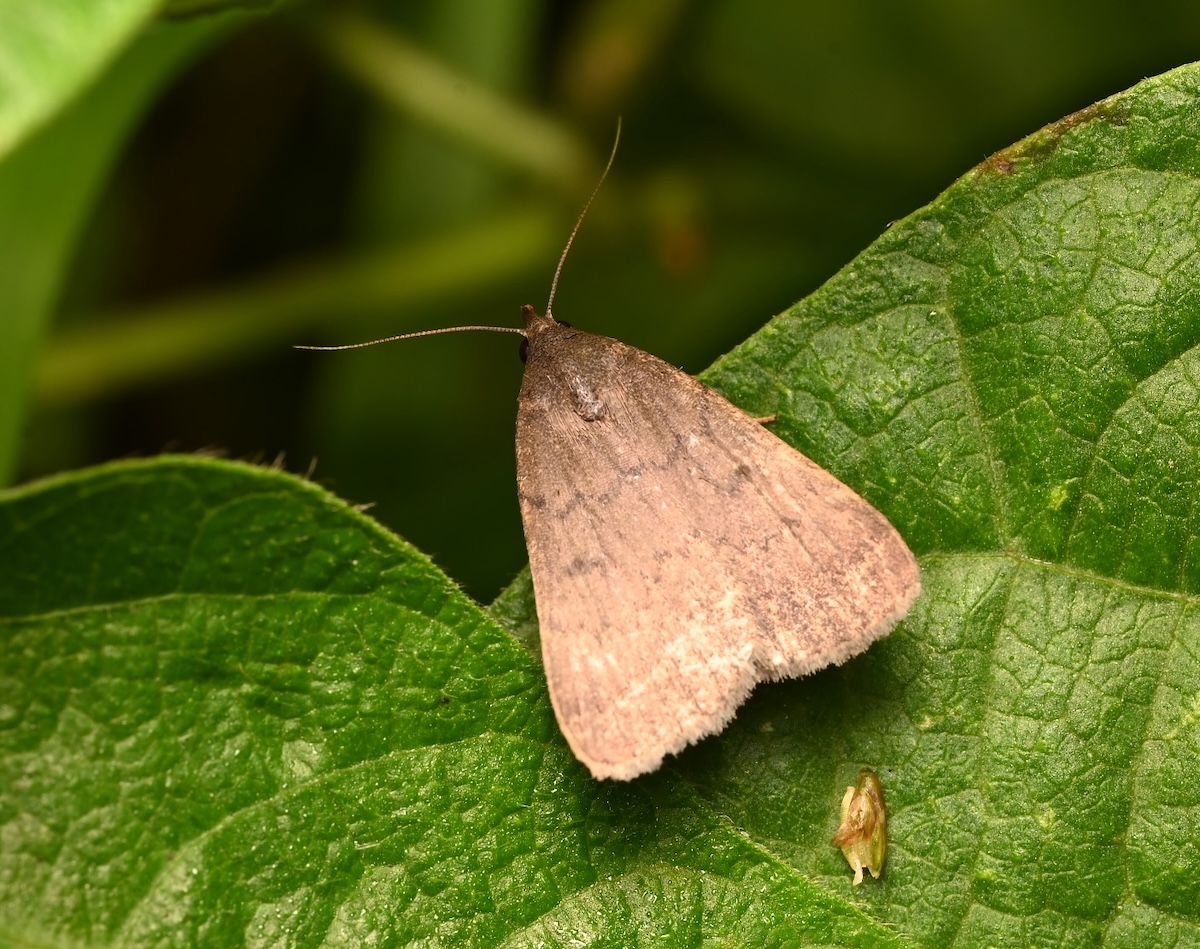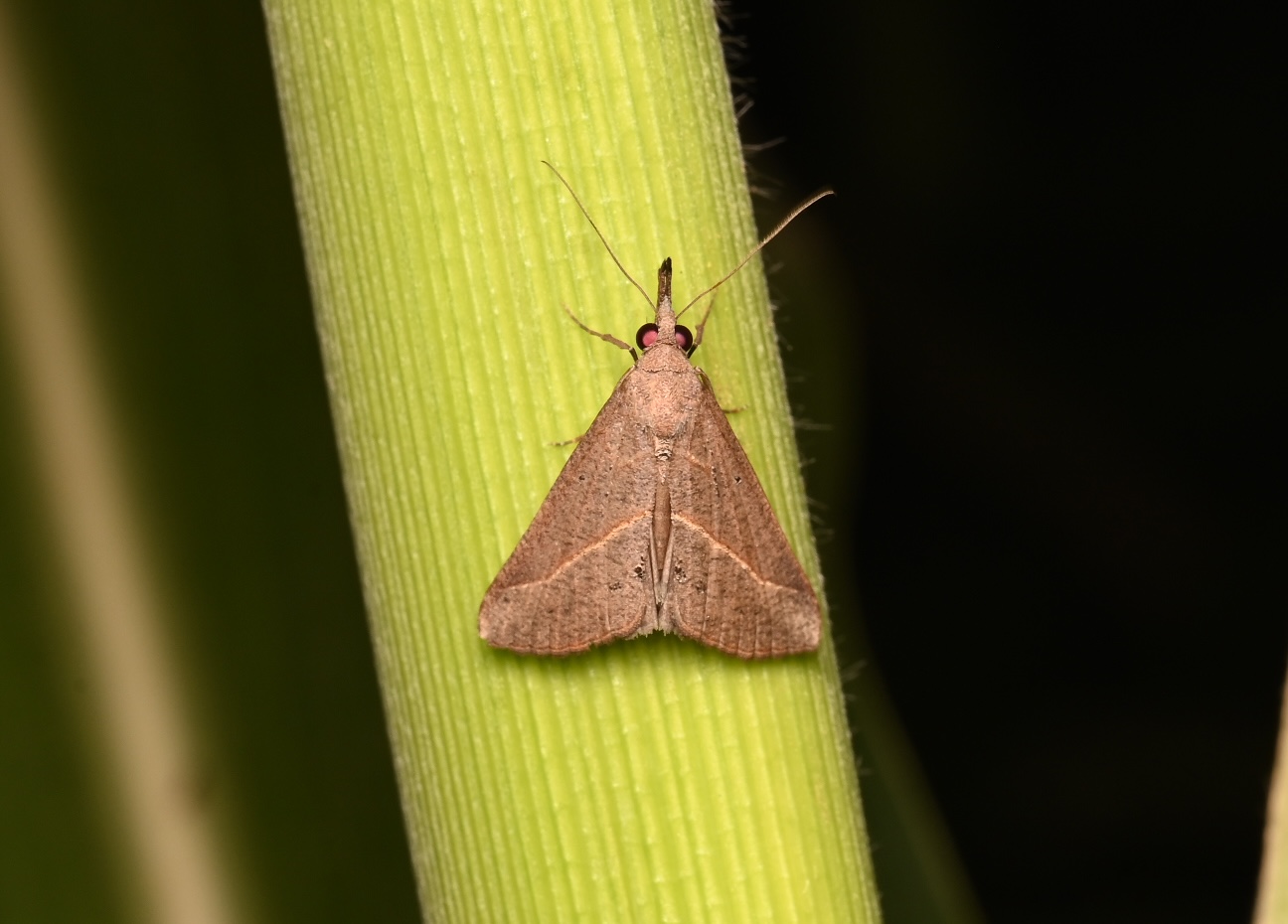
Named after the Greek word for “beard,” moths in the genus Hypena are instantly recognizable by the elongated sensory mouthparts jutting forward from their heads like a tiny beak! Measuring a modest 20 to 30 mm across, the simple snout (Hypena simplicalis) is a master of stealth. When resting, it sweeps its triangular, two-tone wings tightly back over its body into a sleek delta-wing silhouette, vanishing against tree bark and leaf litter. Originally described from South Africa in 1852, this globetrotting species spans across sub-Saharan Africa, Asia, Australia, and islands throughout the Indian and Pacific Oceans. While the adults are notoriously picky and rarely visit sweet sugar baits, their caterpillars are active leaf-feeders with a surprising palate—munching happily on tropical dayflowers and even common sweet basil! I met this elegant little moth resting quietly in a meadow behind my hotel in Bunia, Democratic Republic of Congo, during a humanitarian mission—a subtle, charming encounter with a master of camouflage!