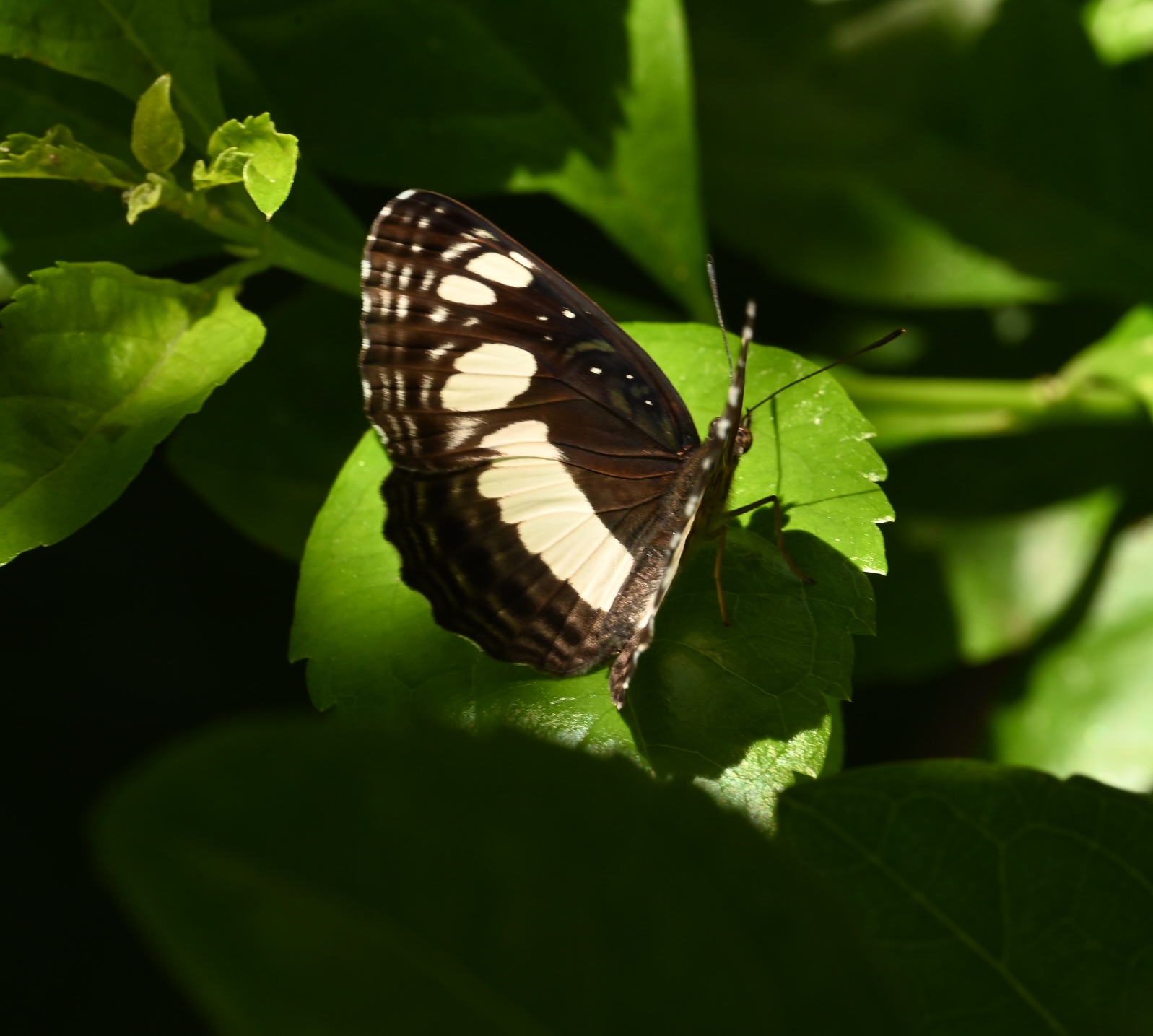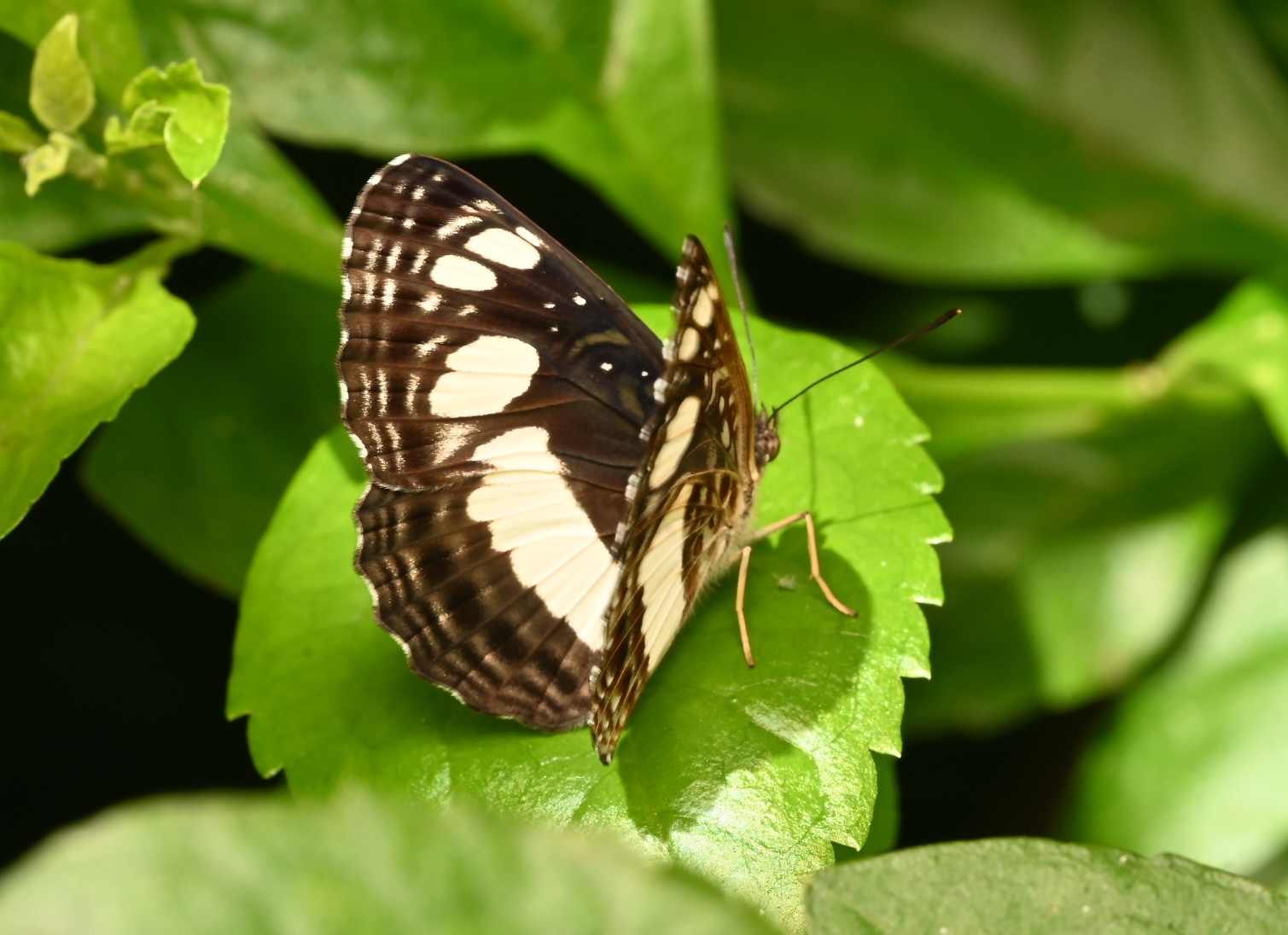
Described in 1833 by French entomologist Jean Baptiste Boisduval, the spotted sailer (Neptis saclava) is a graceful brush-footed butterfly in the family Nymphalidae and subfamily Limenitidinae. Native to Madagascar and widespread across sub-Saharan Africa, these butterflies earn their evocative “sailer” moniker from a distinctive aerial flight pattern: a few rapid, energetic wing beats followed by a stiff-winged glide, frequently punctuated by brief pauses to rest on foliage in forests, woodlands, and sunny riverine edges. Ecologically, their larvae are polyphagous herbivores that feed on a diverse array of host plants, ranging from native shrubs like Acalypha glabrata and Combretum bracteosum to agricultural and weedy species such as the castor bean (Ricinus communis), Australina, and Pilea. I had incredible luck surprising one of these majestic butterflies and managed to capture a couple of photos during a brief, few-second rest between its sweeping flights in Bunia, Democratic Republic of Congo!