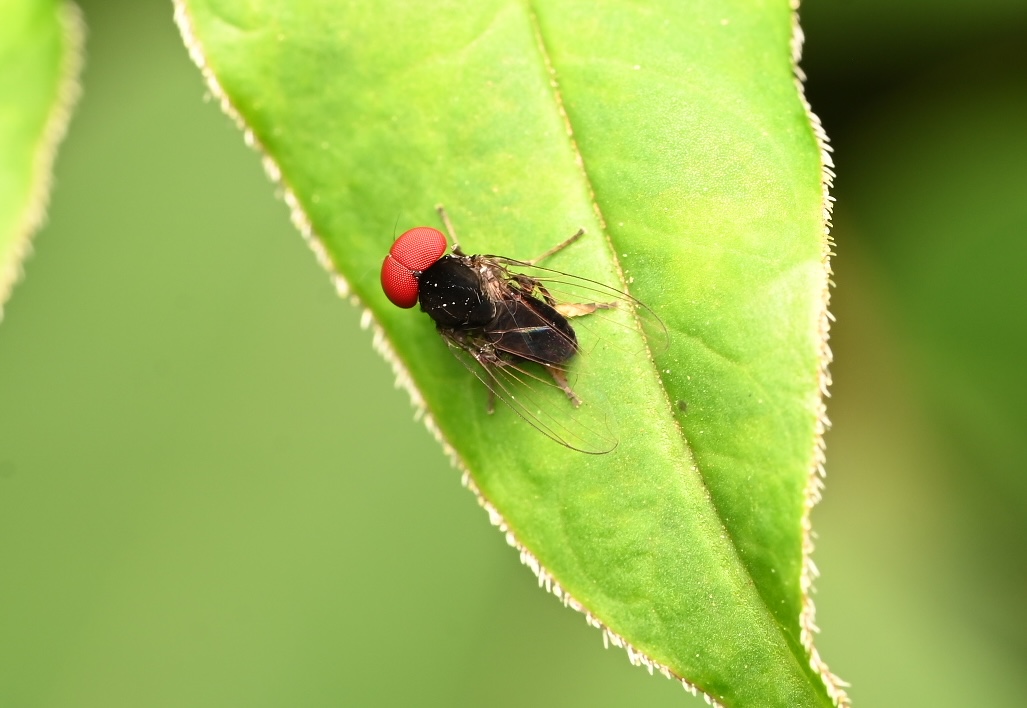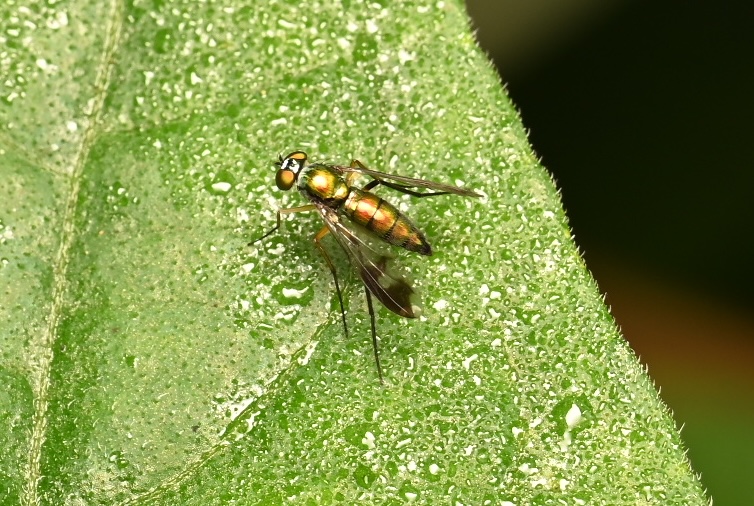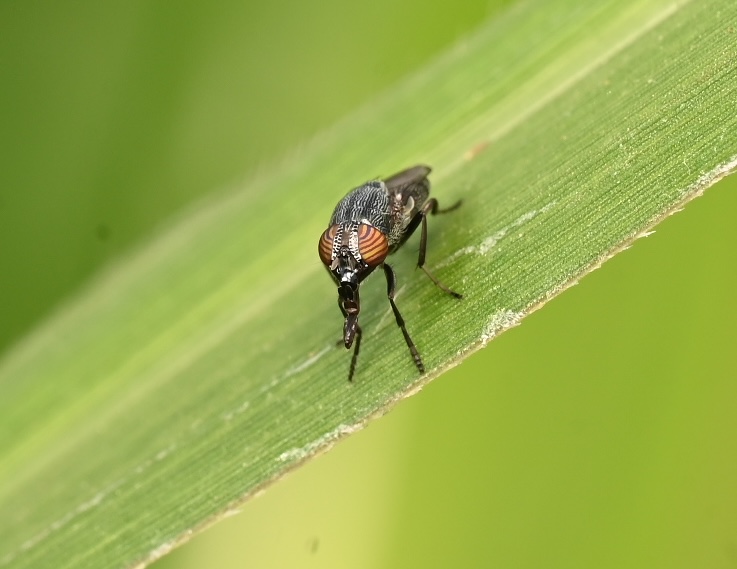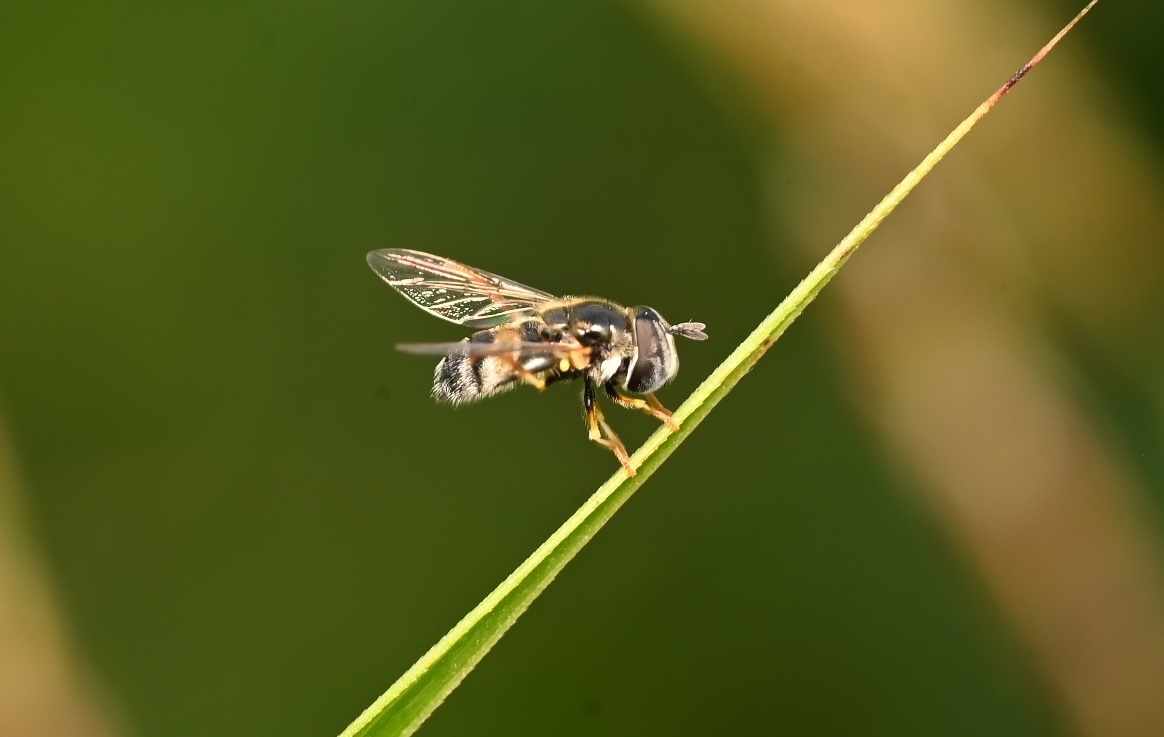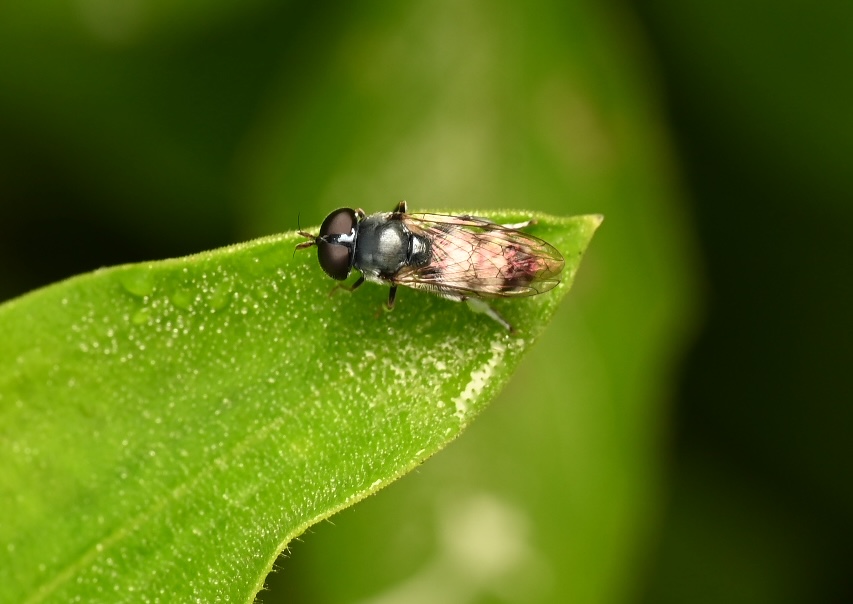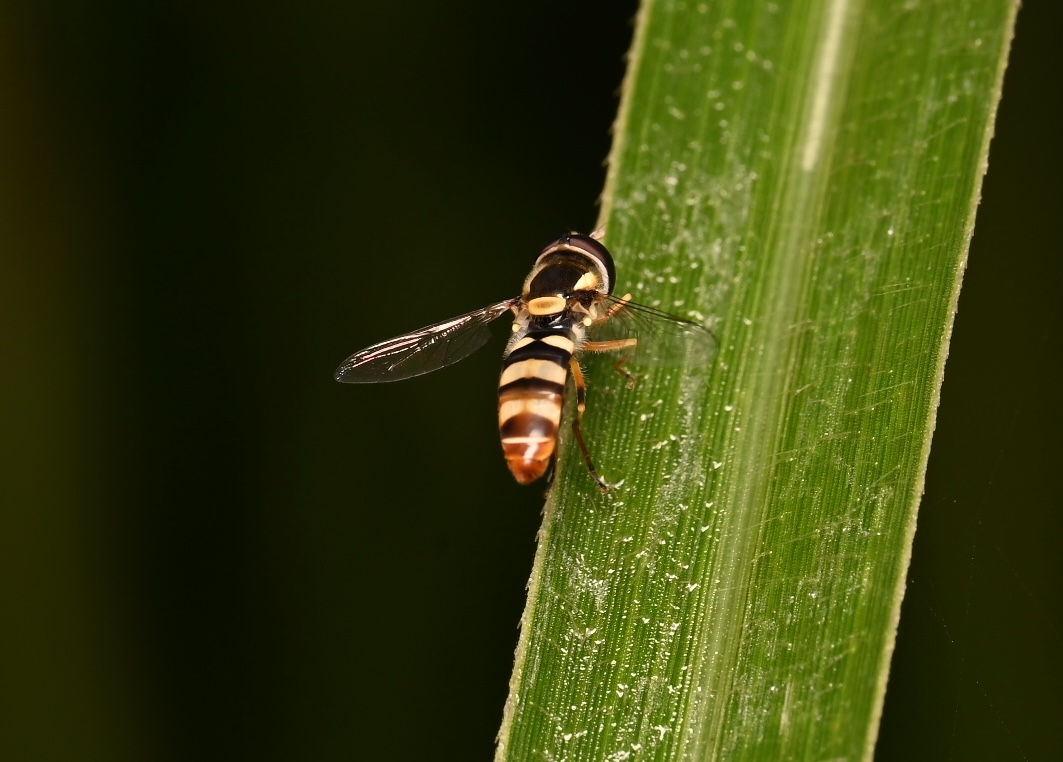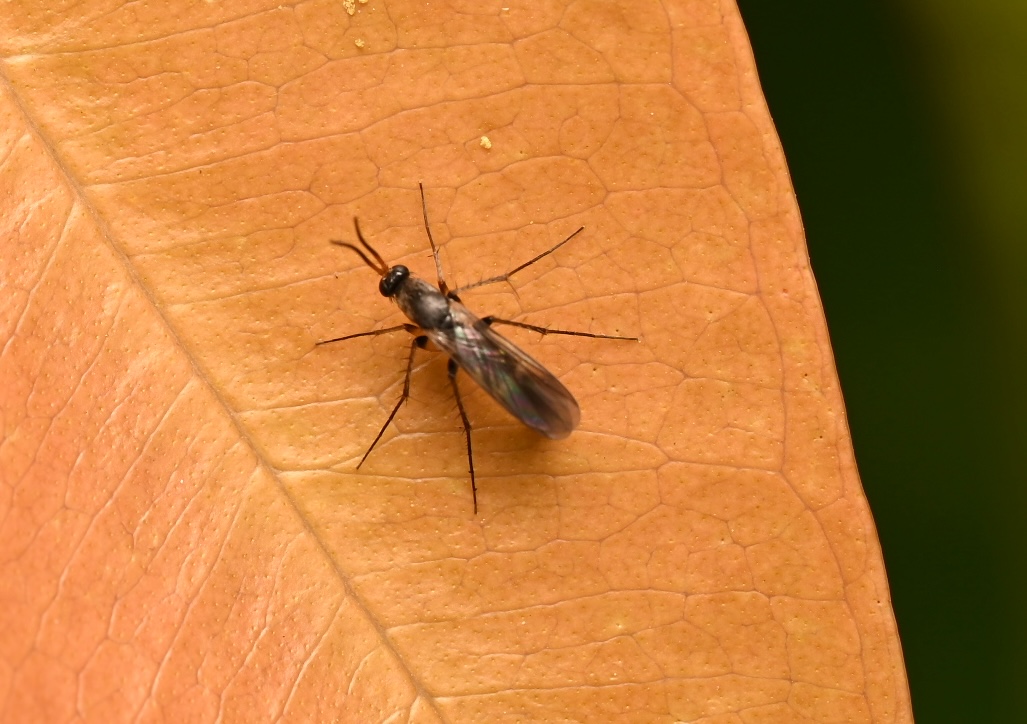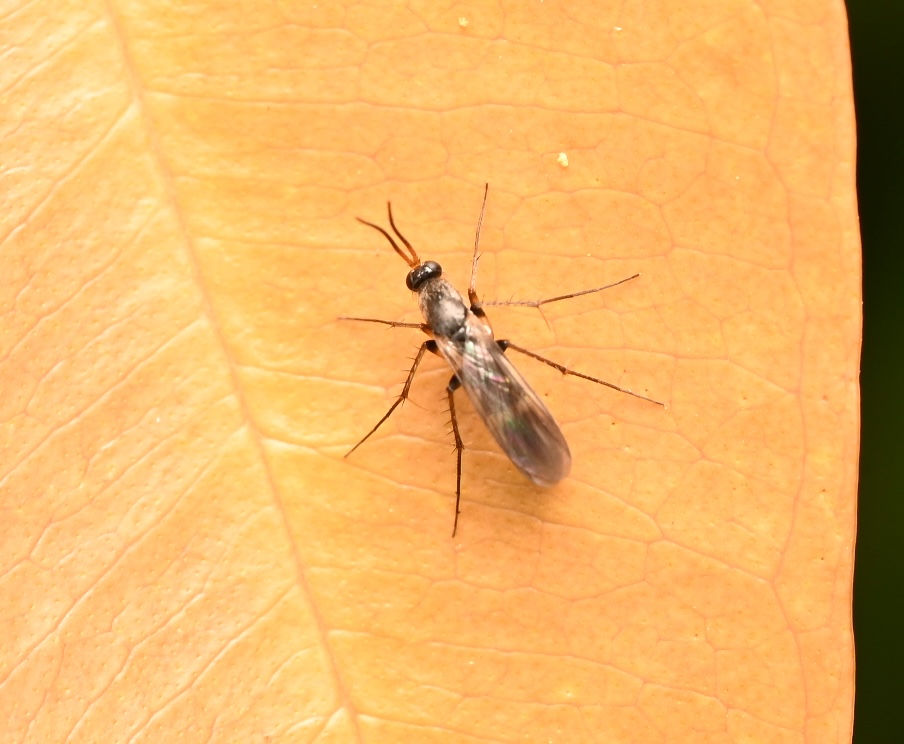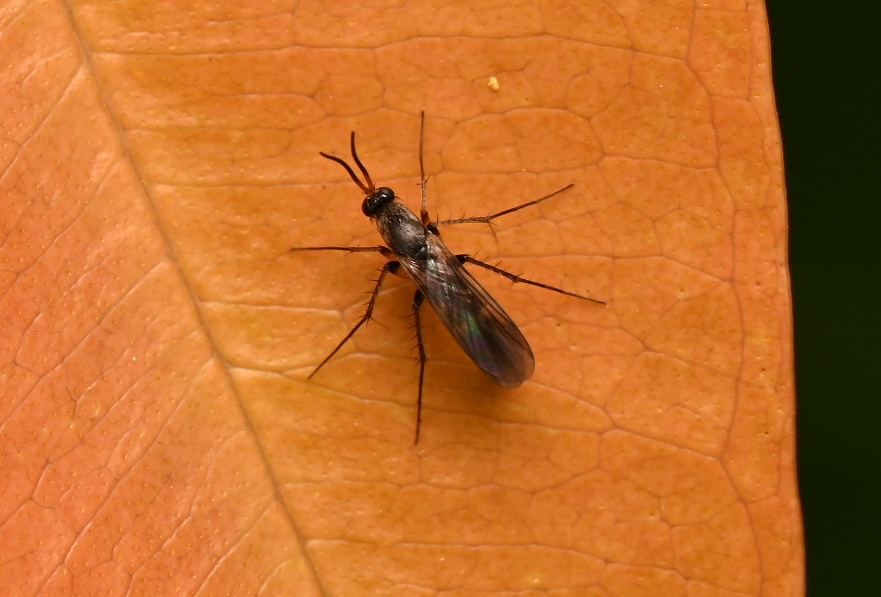
Belonging to the tiny fly genus Manota within the tribe Manotini (fungus gnat family Mycetophilidae), these insects carry deep evolutionary roots extending all the way back to the Cretaceous period, with fossil evidence showing they diversified alongside early woodland and humid microhabitats. Unlike pest fungus gnats found in household potted plants, Central African Manota species thrive in damp, undisturbed tropical forest leaf litter, decaying wood, and subterranean fungal mycelium networks. Their delicate, maggot-like larvae play an essential role in woodland decomposition by feeding directly on forest fungi, fungal spores, and decaying organic matter on the dark forest floor. I met this tiny fly in the garden of an office building where I worked during a humanitarian mission in Bunia, Democratic Republic of Congo—a reminder of the ancient, microscopic wilderness hiding right beneath our feet amidst daily life!