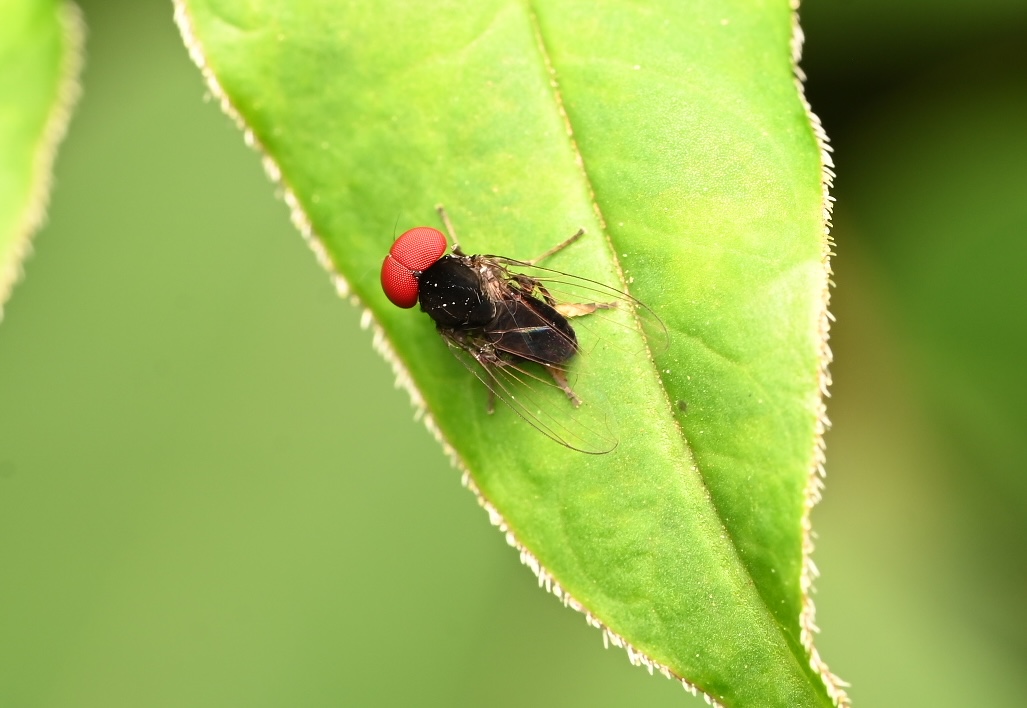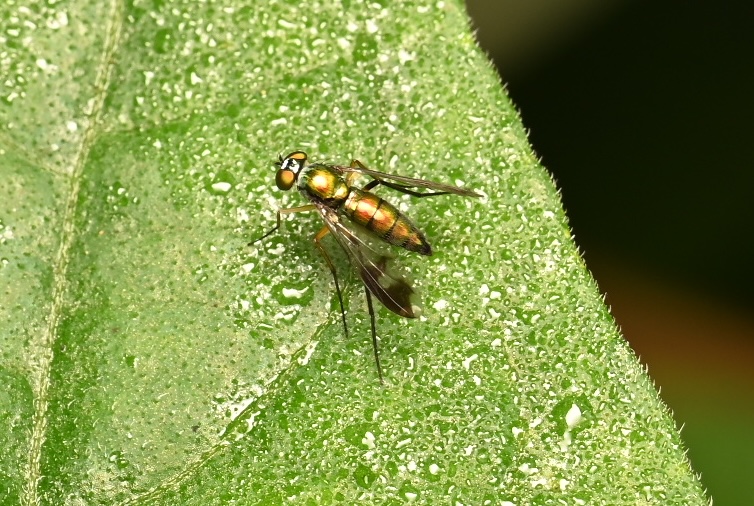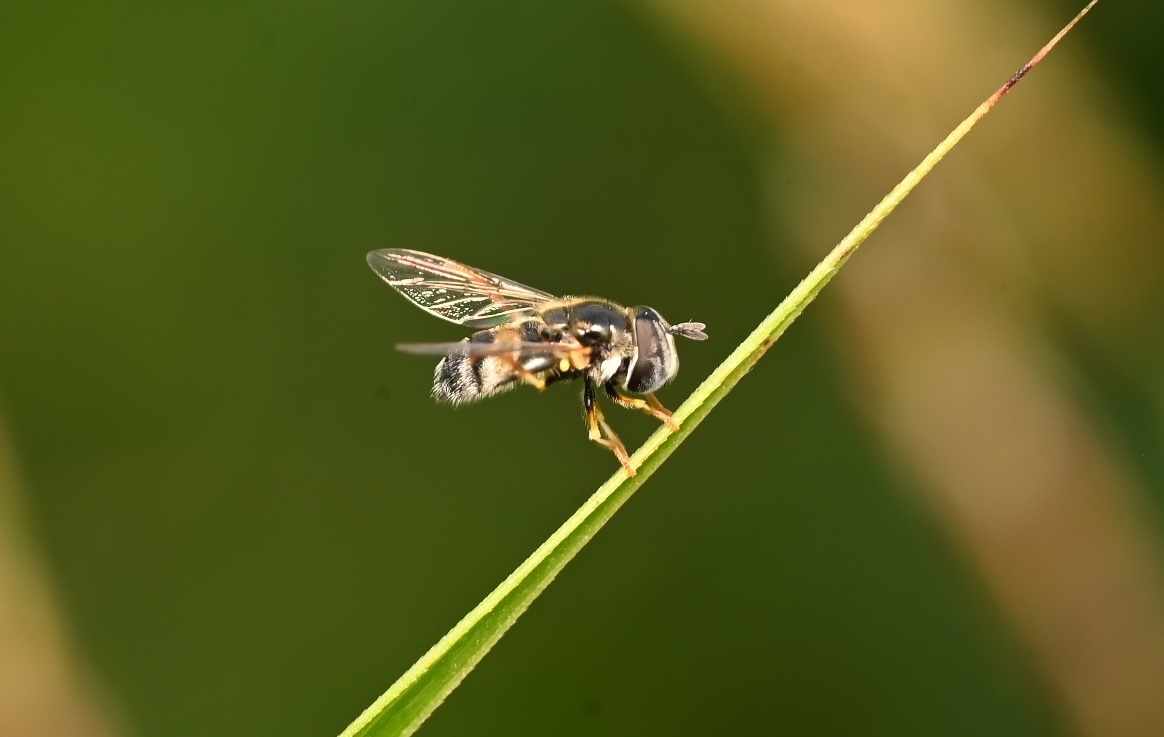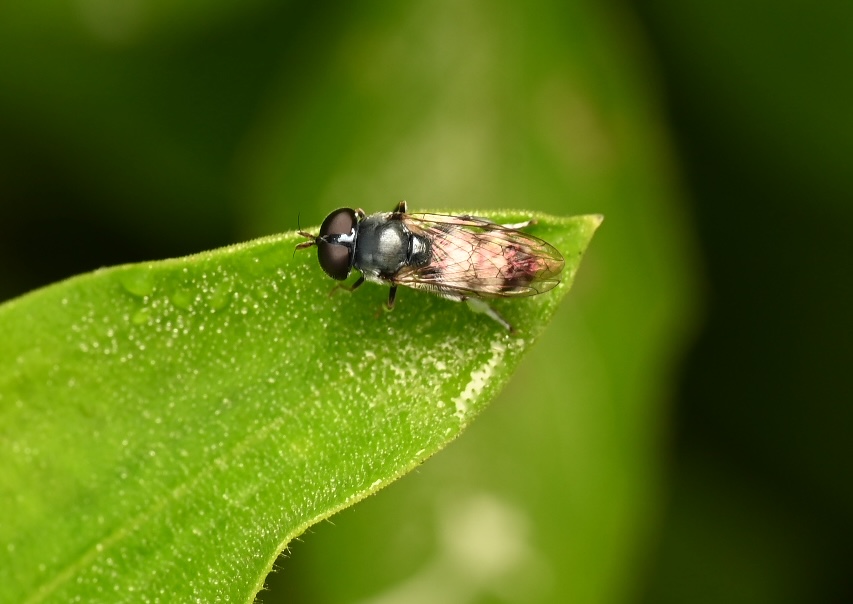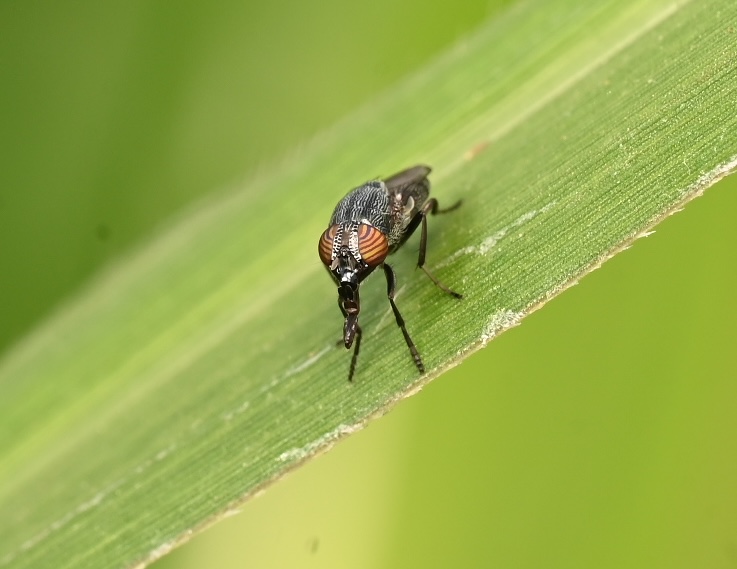
Within the blowfly family, members of the tribe Rhiniini—known as nose flies—stand out for a protruding lower face, often striped compound eyes, and a lifestyle far removed from carrion. Instead of breeding on dead animals, females of genera like Rhinia and Stomorhina lay eggs near ant hills, termite mounds, or soil freshly dug up by insect-eating mammals such as aardvarks, where larvae develop as scavengers, predators, or parasitoids—and even predate grasshopper eggs. Mainly native to the Afrotropical, Oriental, and Australasian regions in wild and rural habitats, adult nose flies visit wildflowers for nectar and pollen as pollinators rather than acting as household or sanitary pests. I spotted this slim, striped-eyed fly on a small meadow behind my hotel in Bunia, Democratic Republic of Congo, capturing just a couple of test shots from one angle, while hoping our paths cross again!