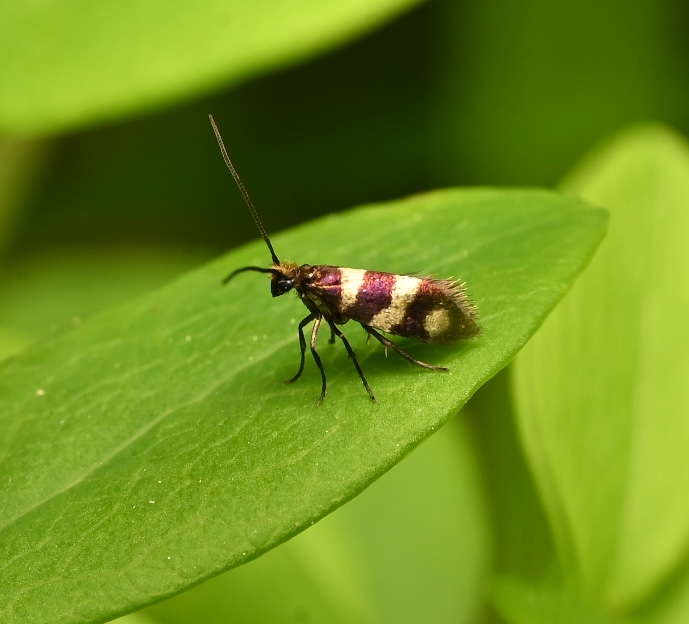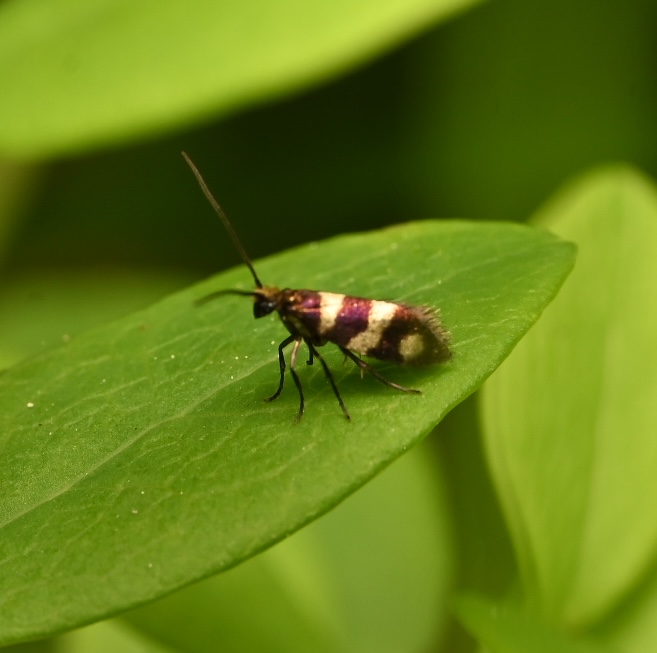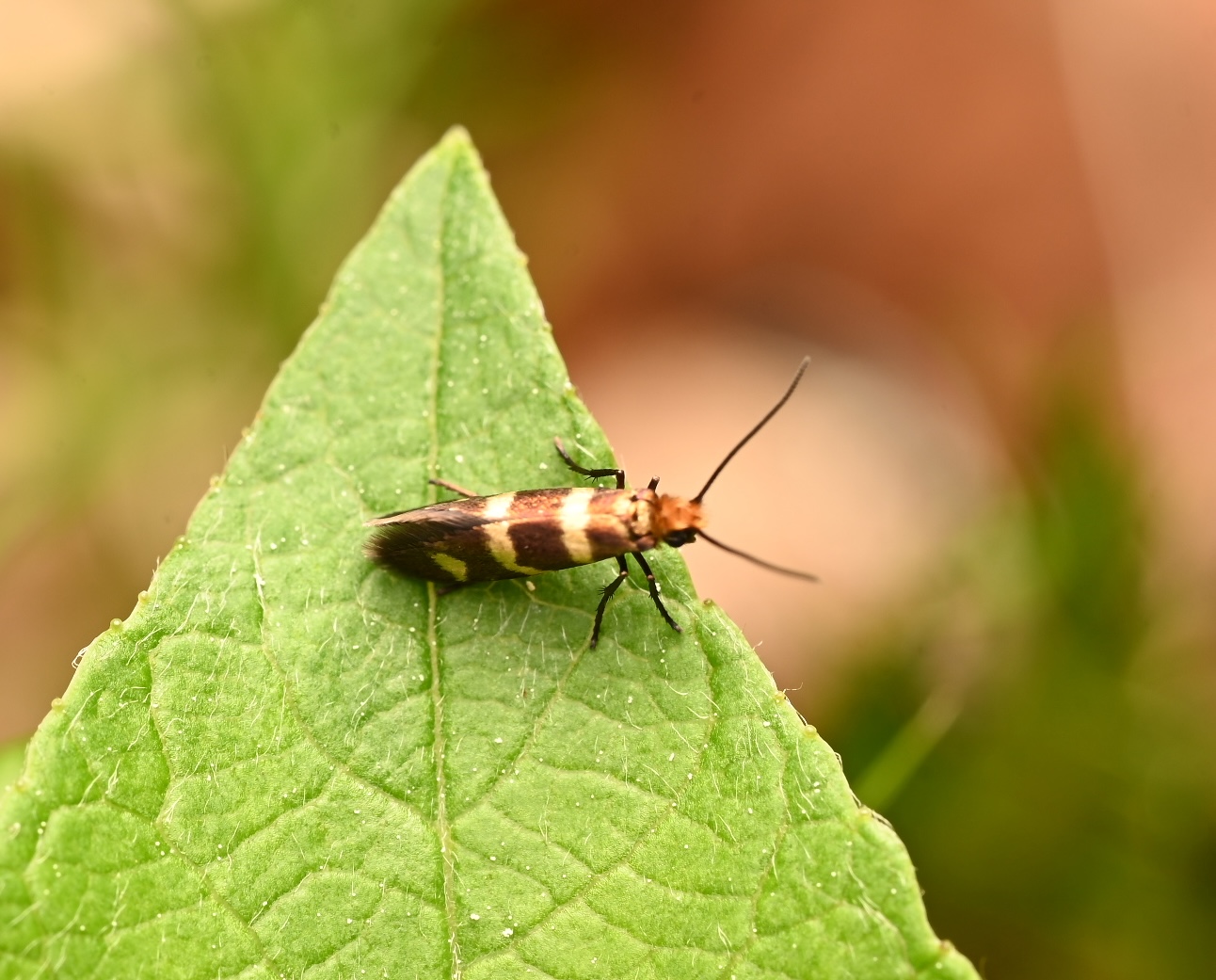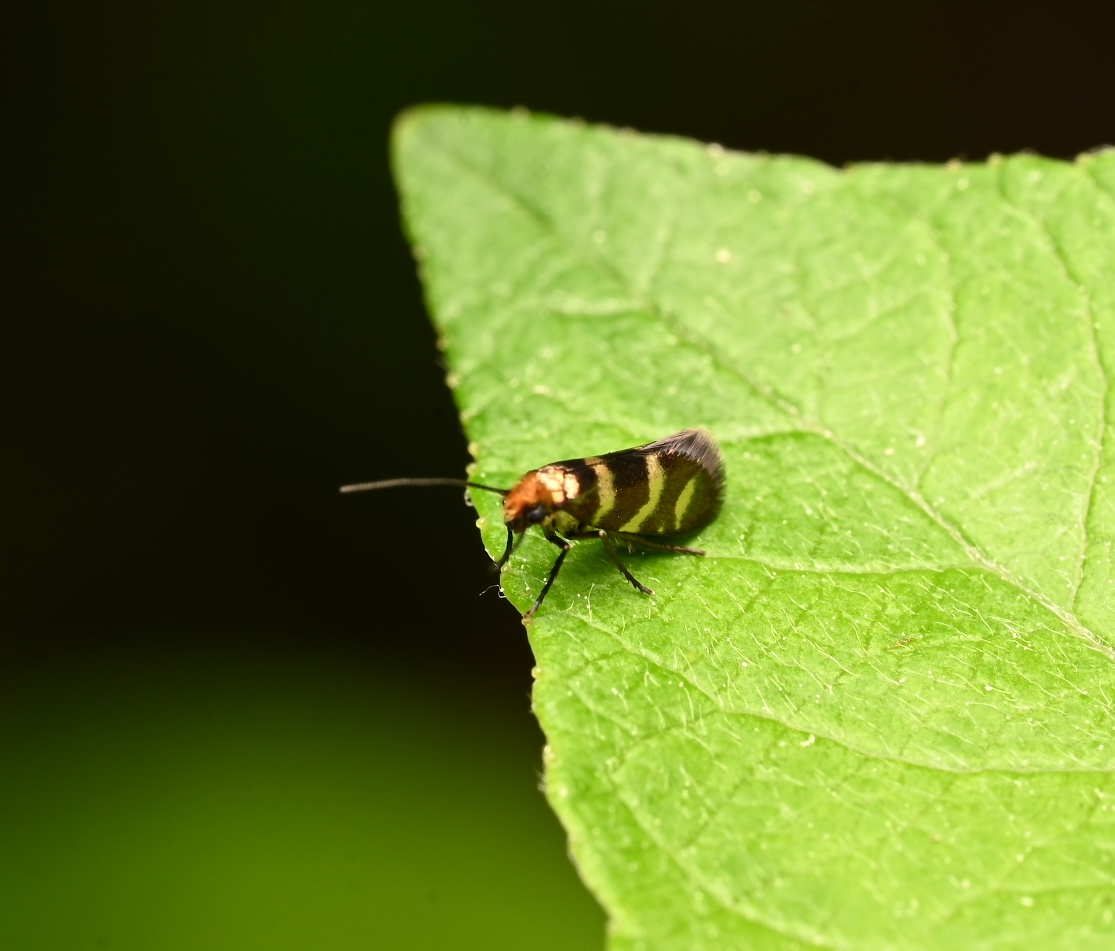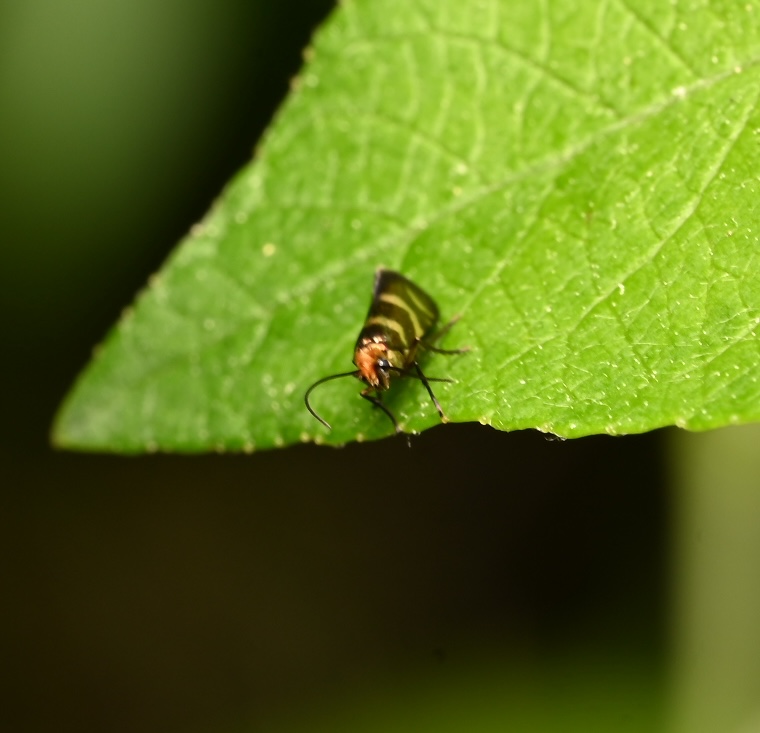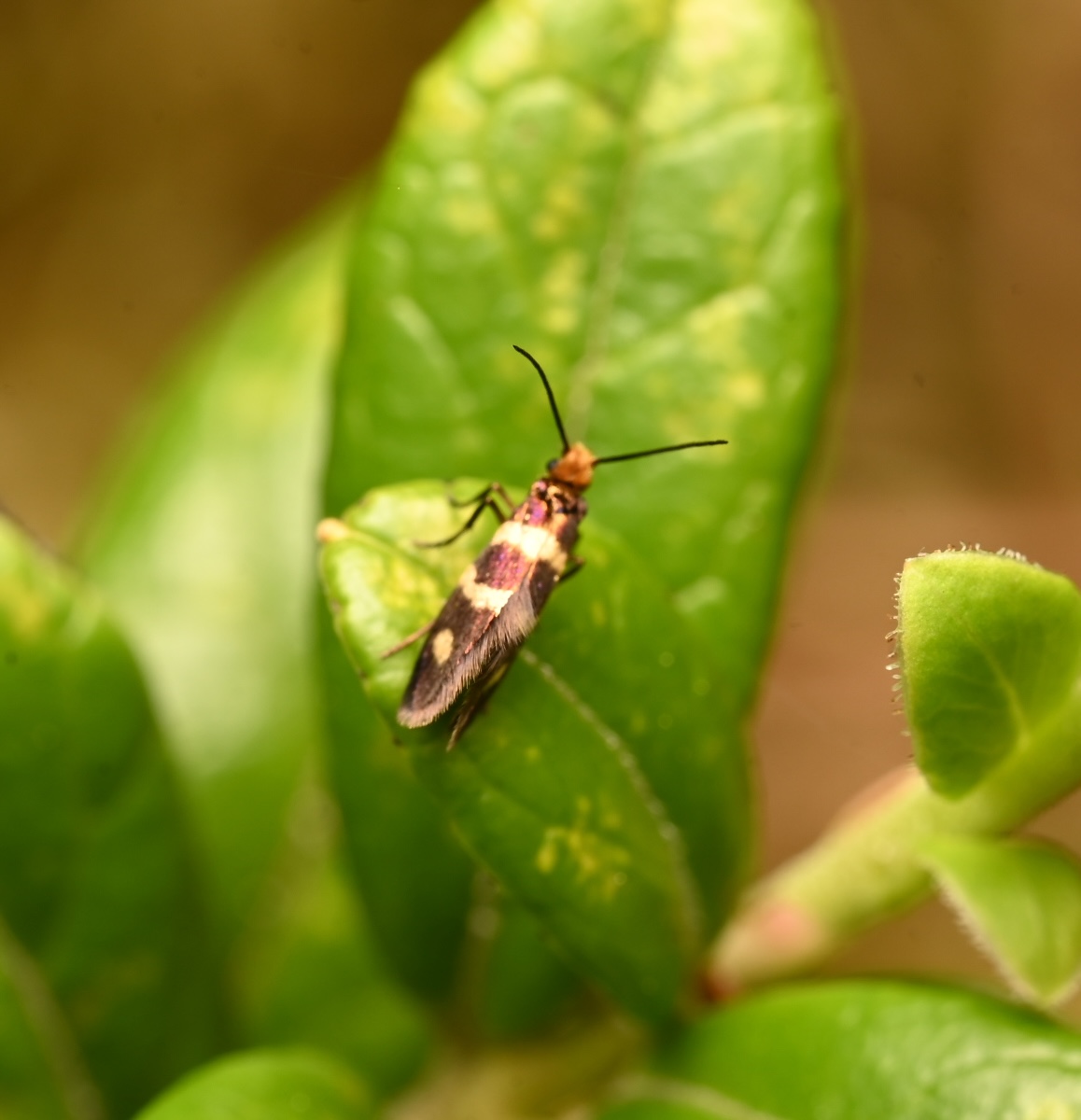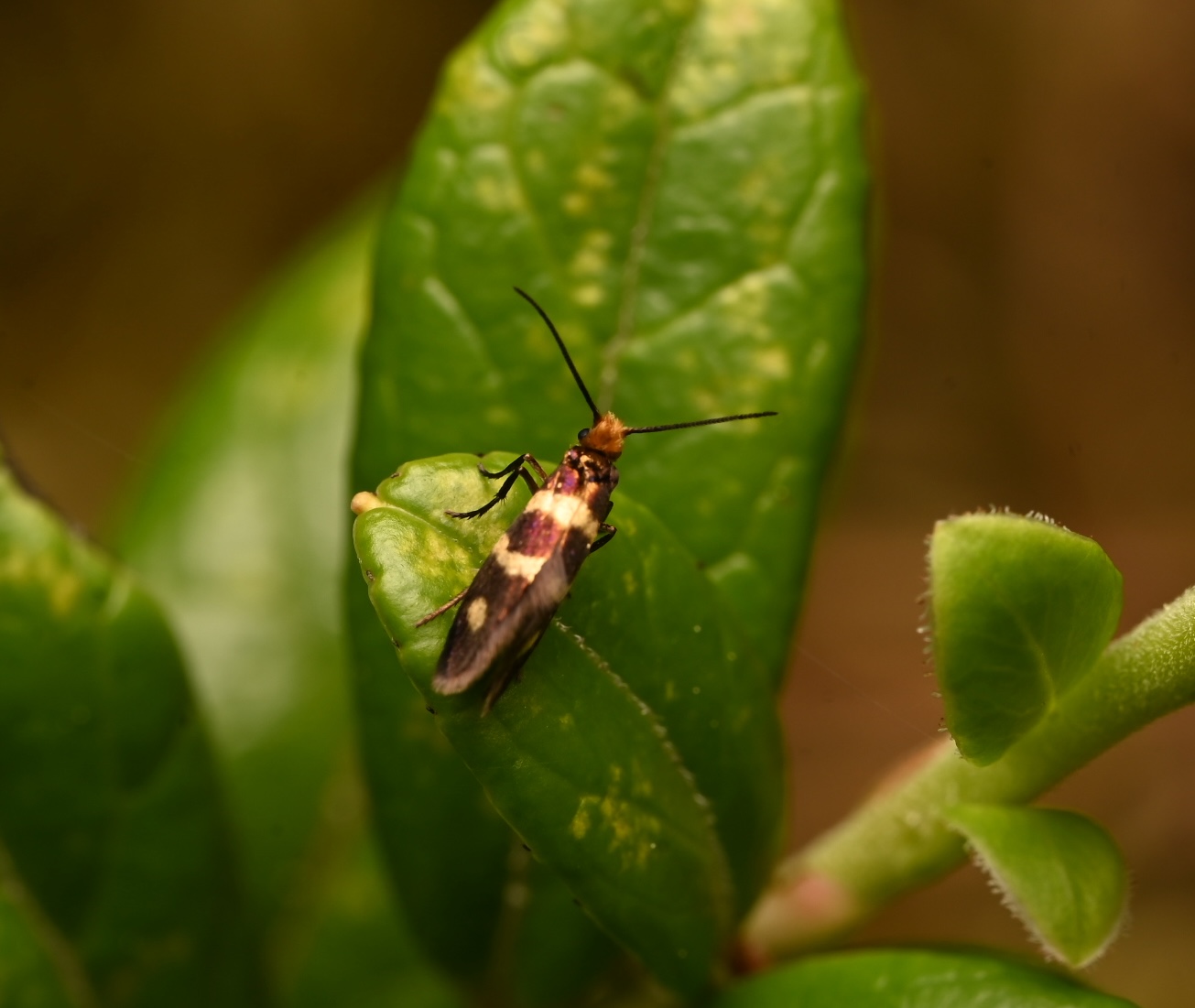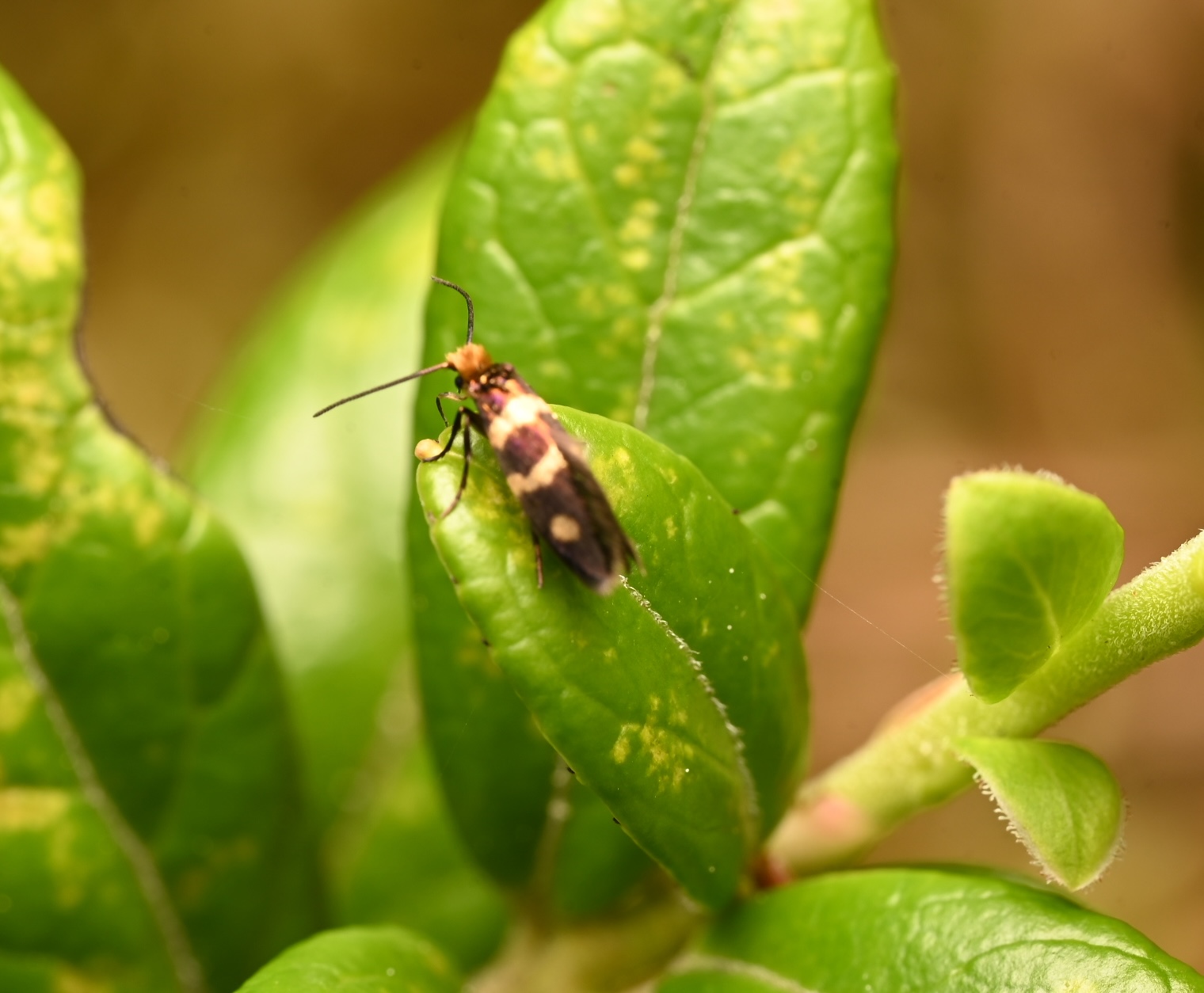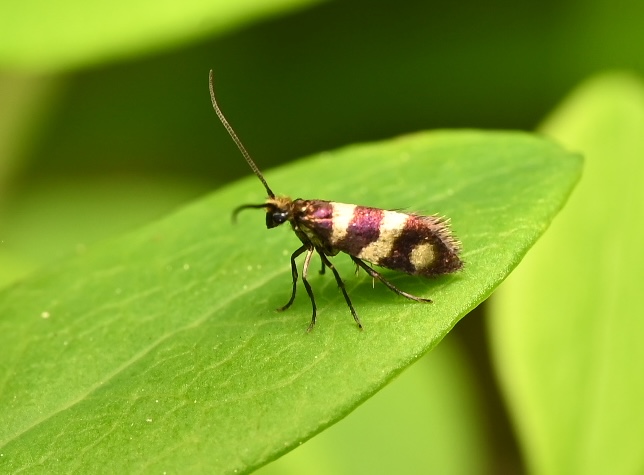
Meet the yellow-barred pollen-moth (Micropterix aureatella), a tiny, day-flying jewel belonging to the family Micropterigidae—the most primitive living lineage of Lepidoptera, with a fossil record stretching back to the Jurassic. Often hailed as “living fossils,” these miniature moths lack the curled, straw-like proboscis of modern butterflies, possessing functional chewing jaws instead. Measuring a mere 9 to 11 millimeters in wingspan, this species features striking, metallic bronze-purple forewings adorned with two golden bands and an oval spot. They thrive in the damp, acidic woodlands and heathlands of the Palearctic, where adults actively chew the pollen of sedges and bilberries. While the adults dance in the daylight, their secretive larvae remain shrouded in mystery, hidden deep within leaf litter where they are believed to feed on tender young bilberry leaves. During my bicycle tour along the Gulf of Bothnia in June 2026, I spotted these ancient gems in three different forested areas across Sweden and Finland. Given their microscopic size and constant movement, it took me well over 100 attempts to finally lock focus and secure a few prized, tack-sharp shots.