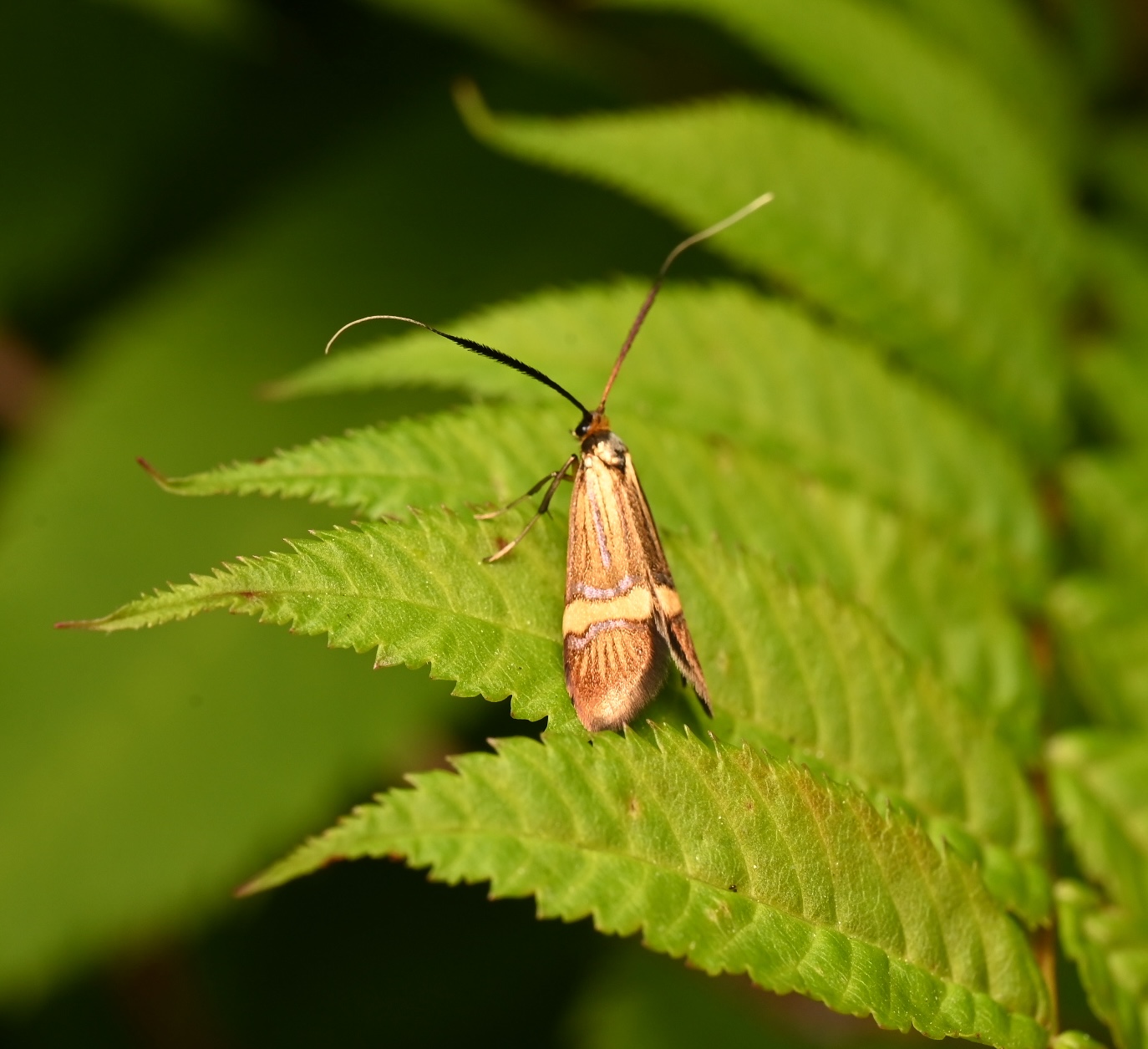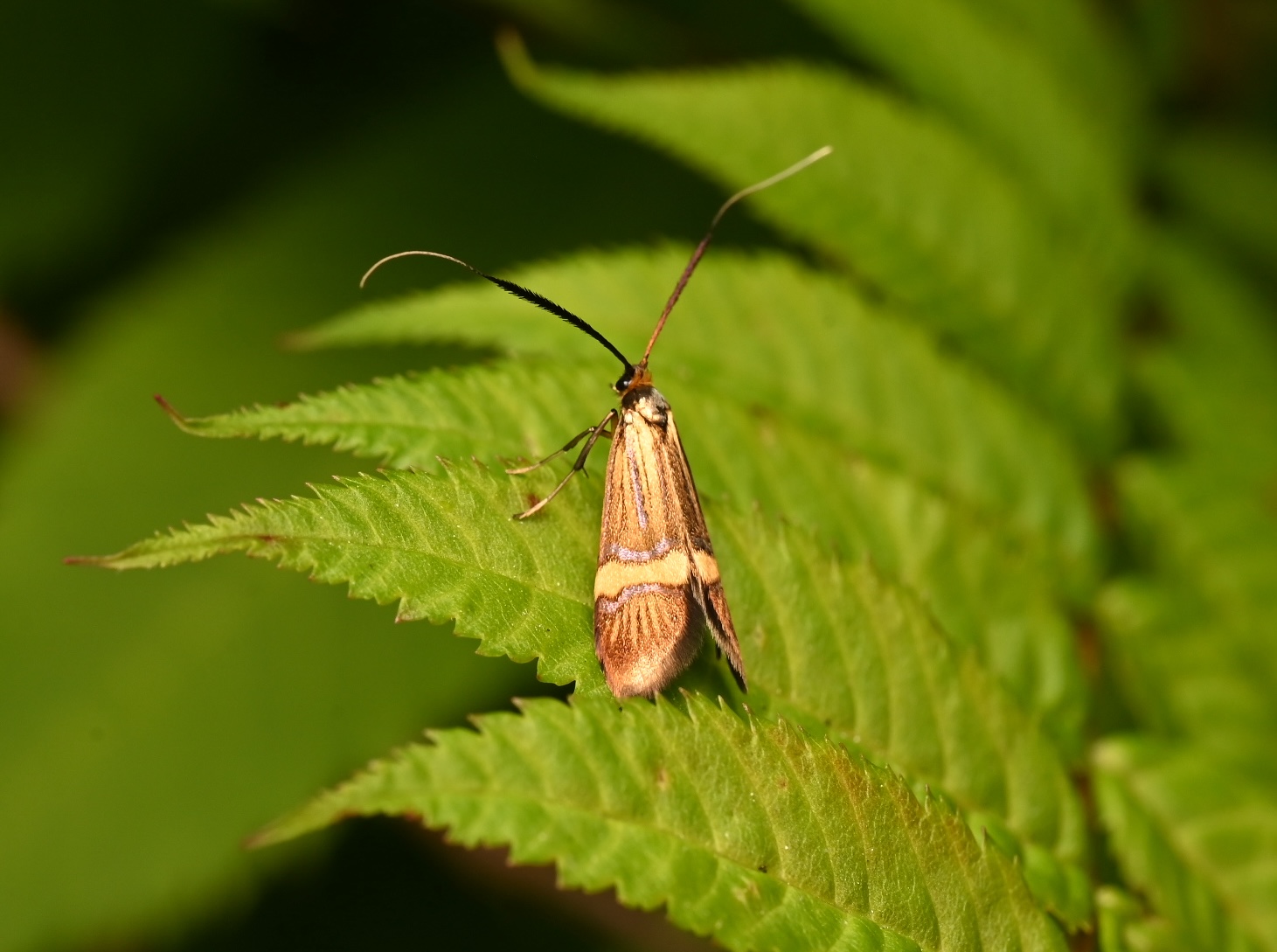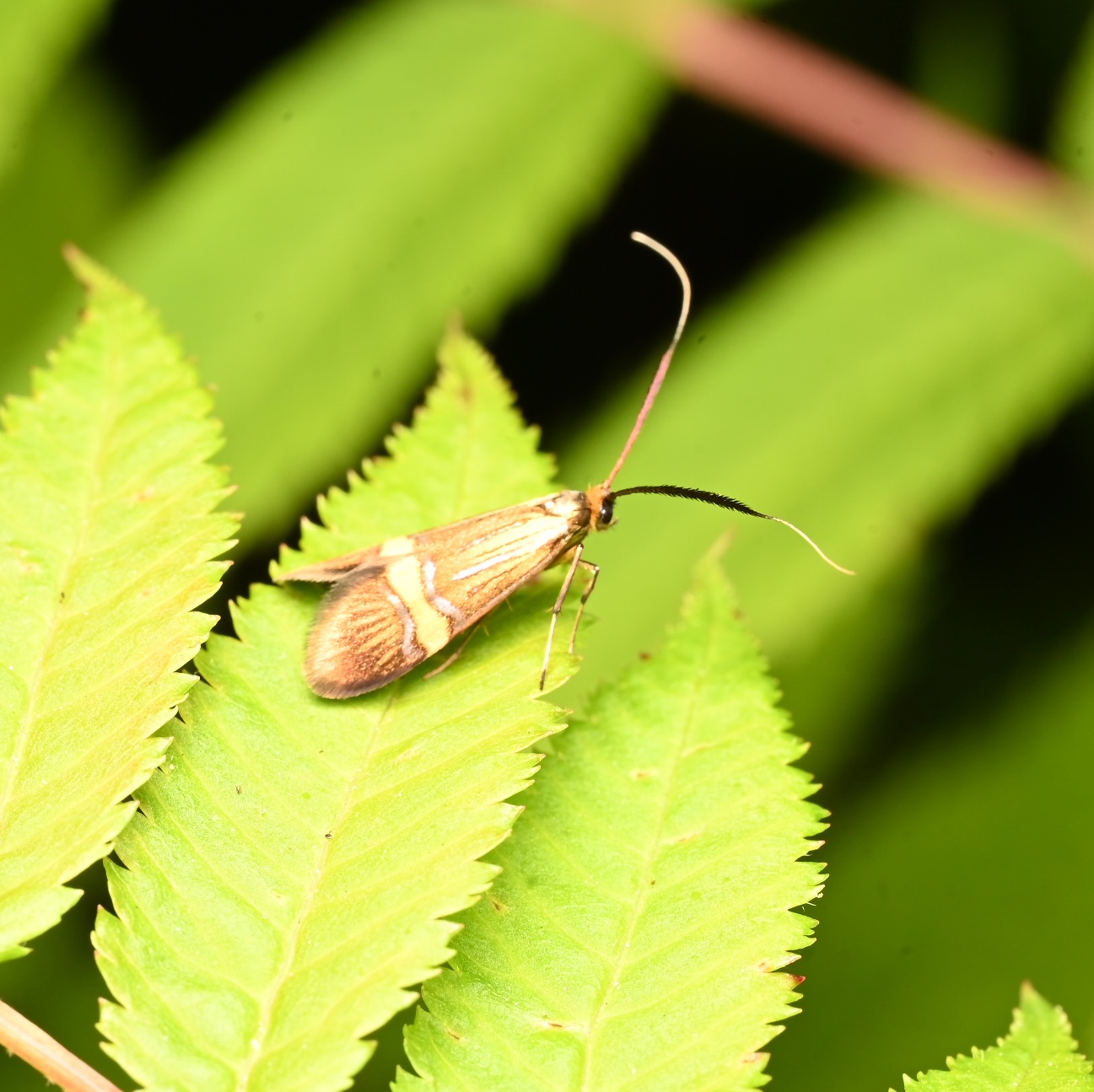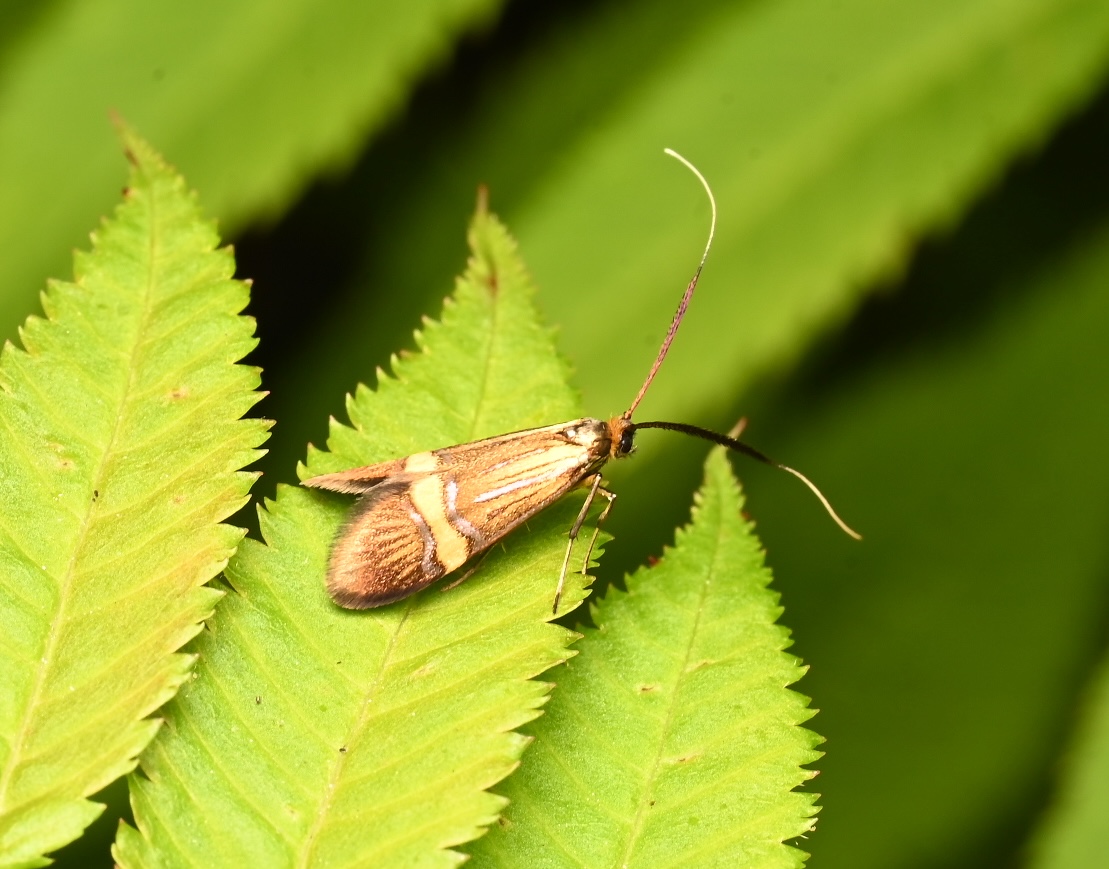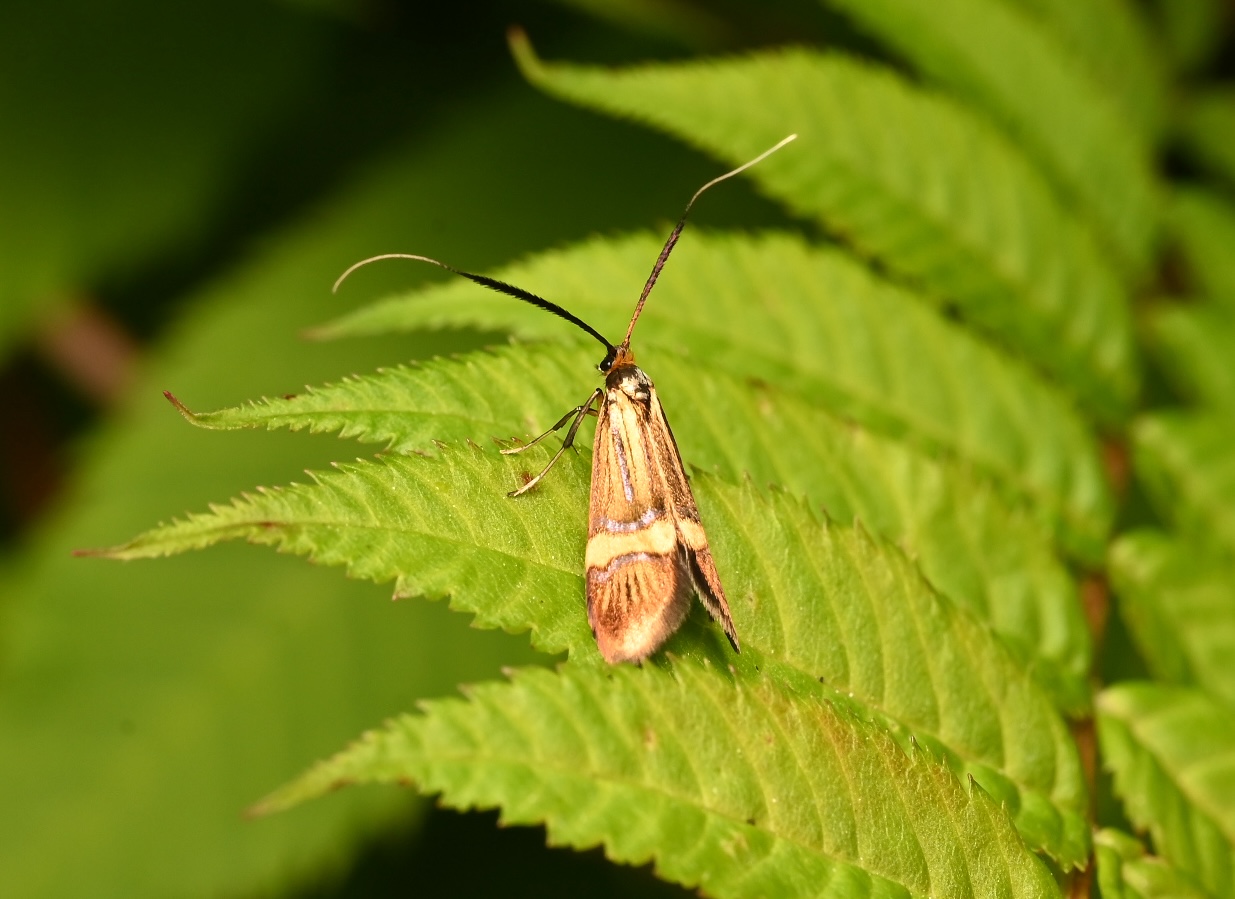
Meet the yellow-barred long-horn moth (Nemophora degeerella), a striking, jewel-toned resident of temperate European woodlands that looks like it flew straight out of a fairy tale. Active entirely by day rather than by night, these diurnal moths are highly prized by nature enthusiasts for their shimmering golden-bronze and violet-streaked wings. Telling the sexes apart is incredibly easy: the males sport mind-bogglingly elongated, thread-like antennae that can reach up to five times their body length, using them to perform mesmerizing, swirling communal courtship dances in shafts of dappled woodland sunlight. The females, by contrast, wear much shorter, thicker antennae that are jet-black at the base and tipped in clean white. As larvae, they possess a fascinating architectural survival trick. Living on the forest floor, they collect fragments of fallen leaves to construct a flat, portable, bivalve-like protective case. They carry this clever camouflage wherever they crawl, safely sheltering inside it to overwinter. I had the pleasure of crossing paths with this lovely female longhorn moth in a residential area in Finland, providing the perfect, rewarding final highlight at the end of my long-distance bicycle tour along the Gulf of Bothnia.