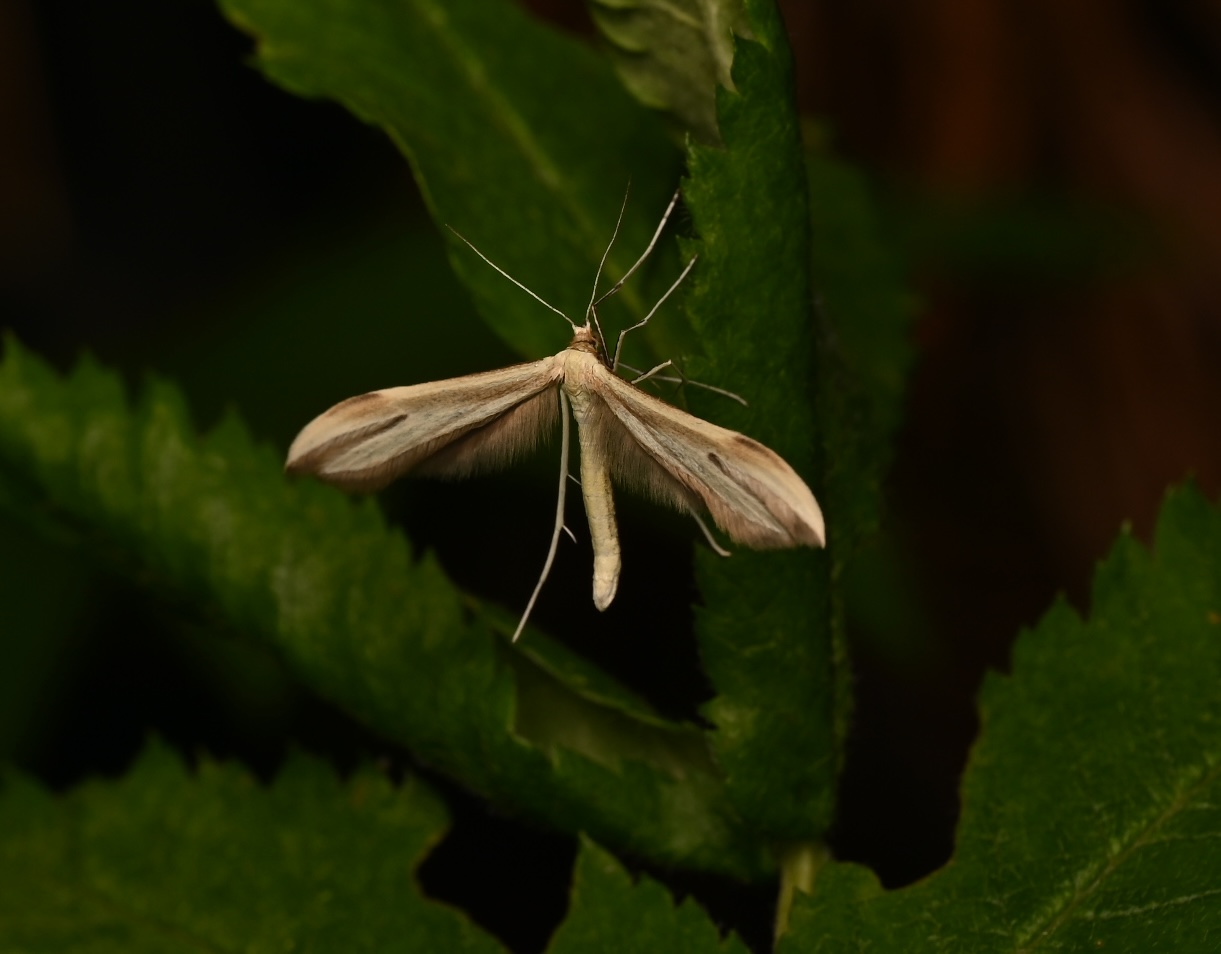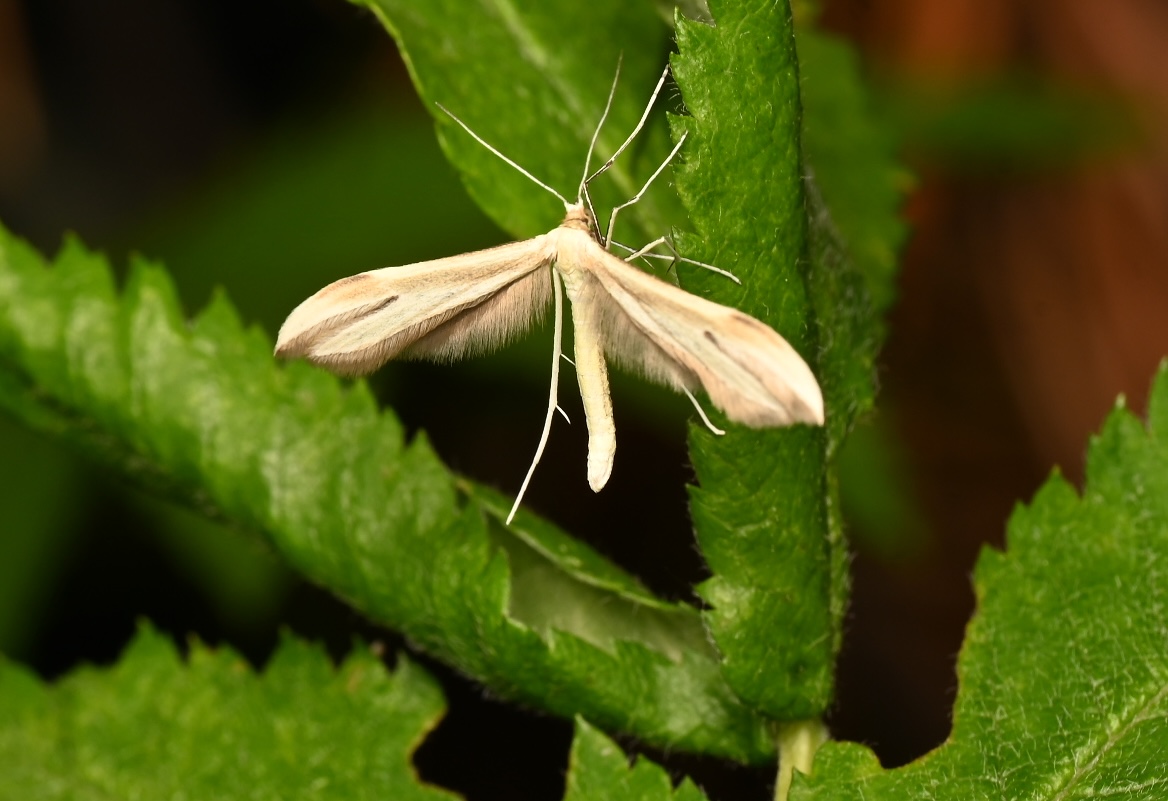
Hellinsia is a massive genus of plume moths (Pterophoridae), boasting over 340 species worldwide. They are famous for their unique, feather-like split wings and a signature T-shaped resting posture that resembles a tiny airplane. Most adults fly after dark, fluttering around in the twilight or being drawn to artificial outdoor lights. Their caterpillars have diverse lifestyles: depending on the species, some roll leaves while others act as stem borers. Most feed on specific host plants within the daisy family (Asteraceae), such as goldenrods (Solidago) and hawkweeds (Hieracium). During evening walks around Swedish campsites or taking rest breaks during my bicycle tour along the Baltic Sea in June 2026, I often noticed their erratic, ghostly flight patterns in the evening air. Approaching them without startling them proved exceptionally difficult, but patience paid off! On one occasion, I managed to sneak close enough to capture a few beautifully sharp photos that I’m truly proud of.