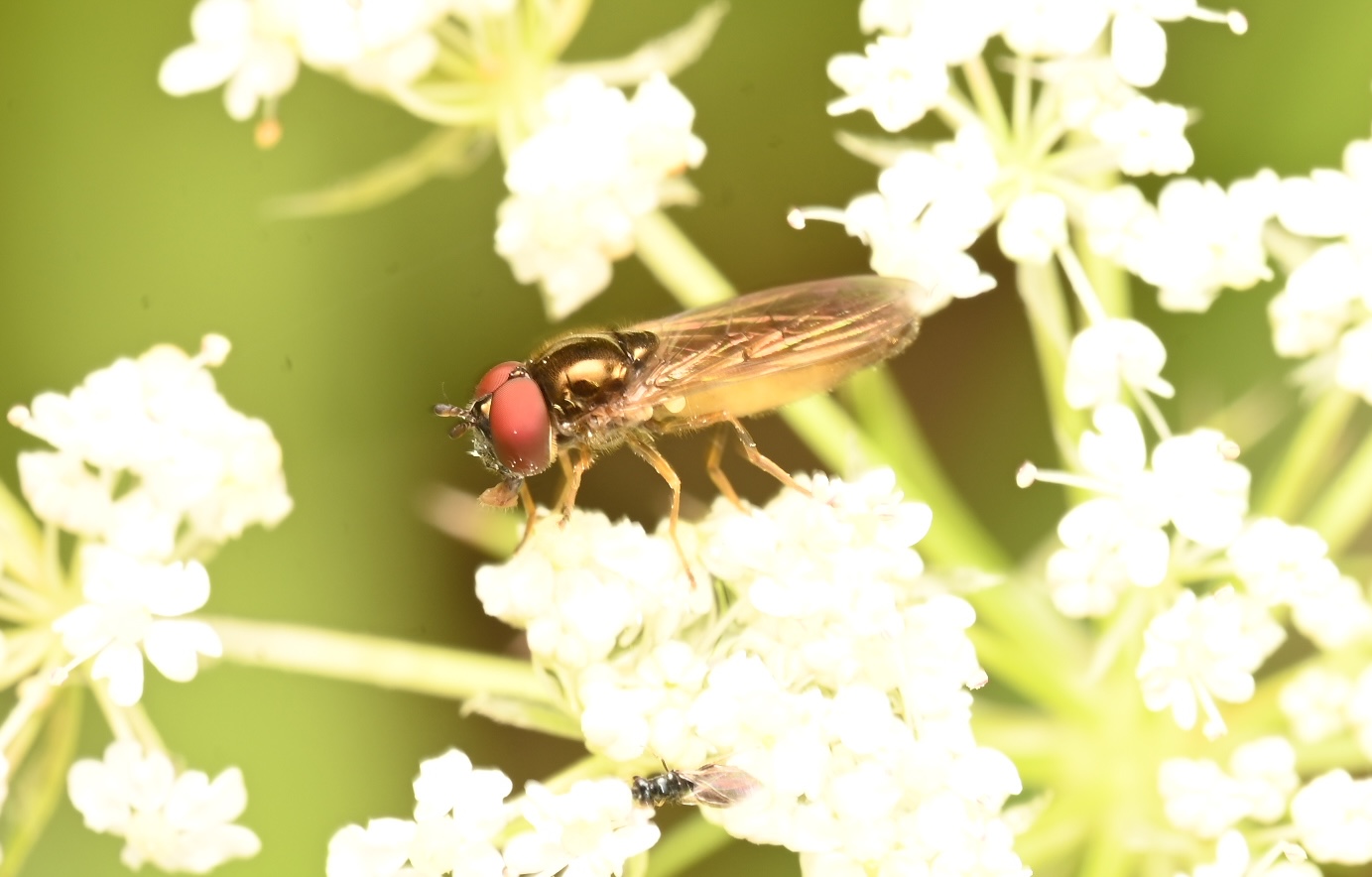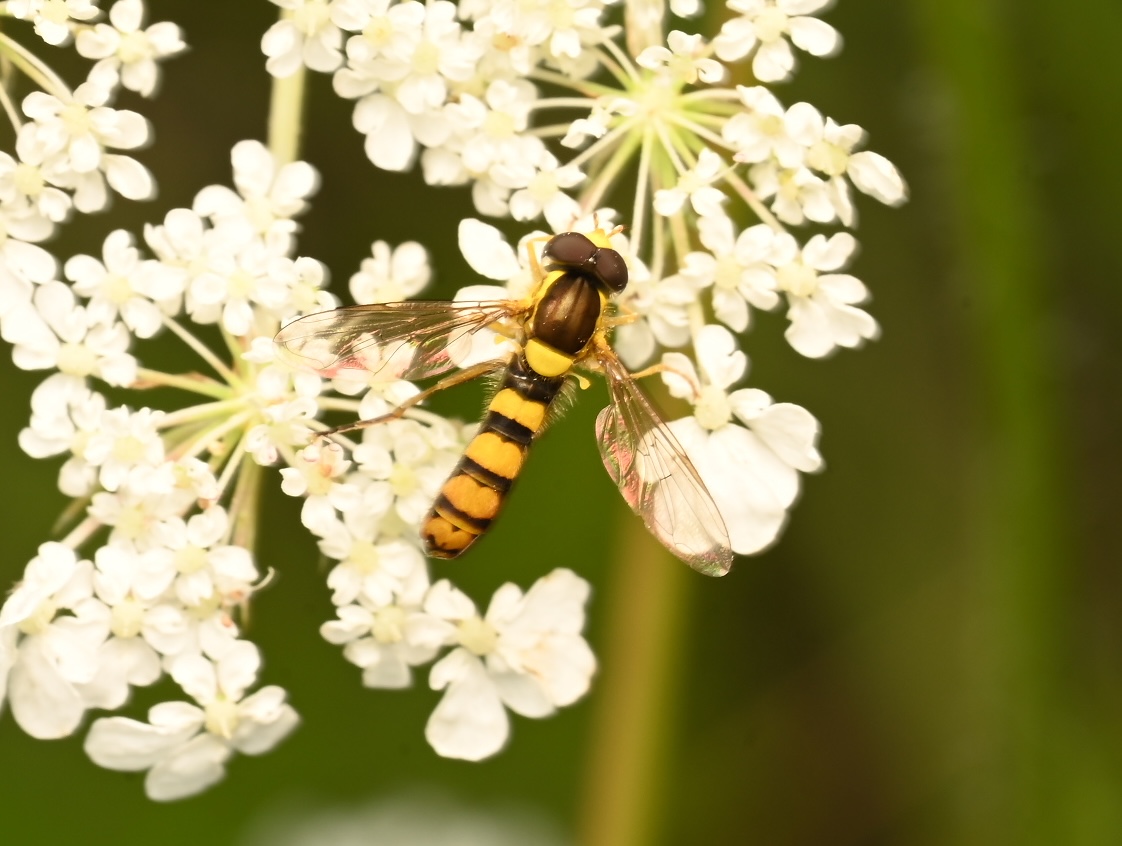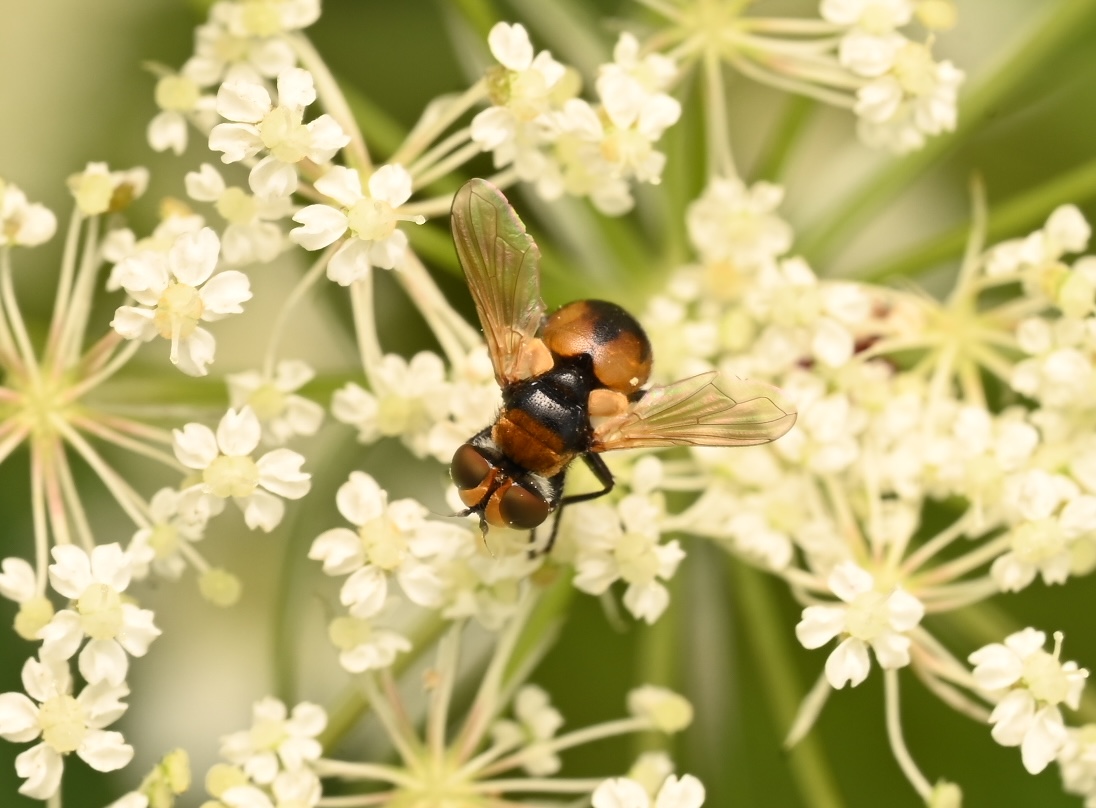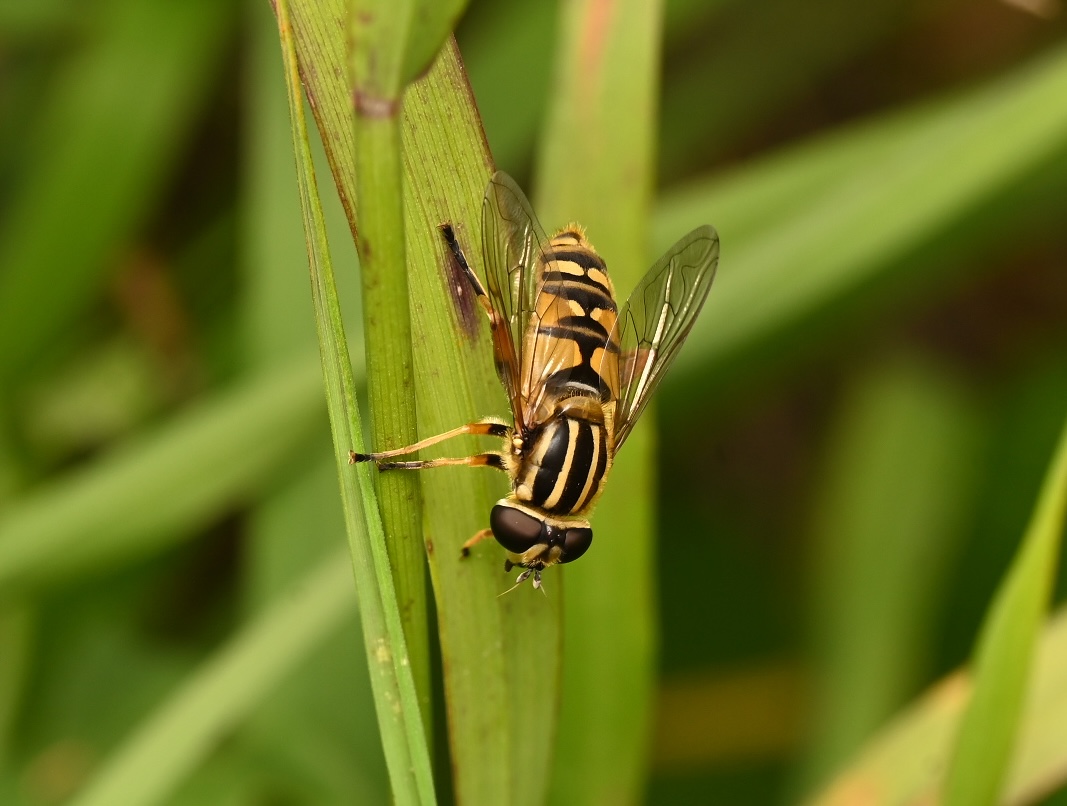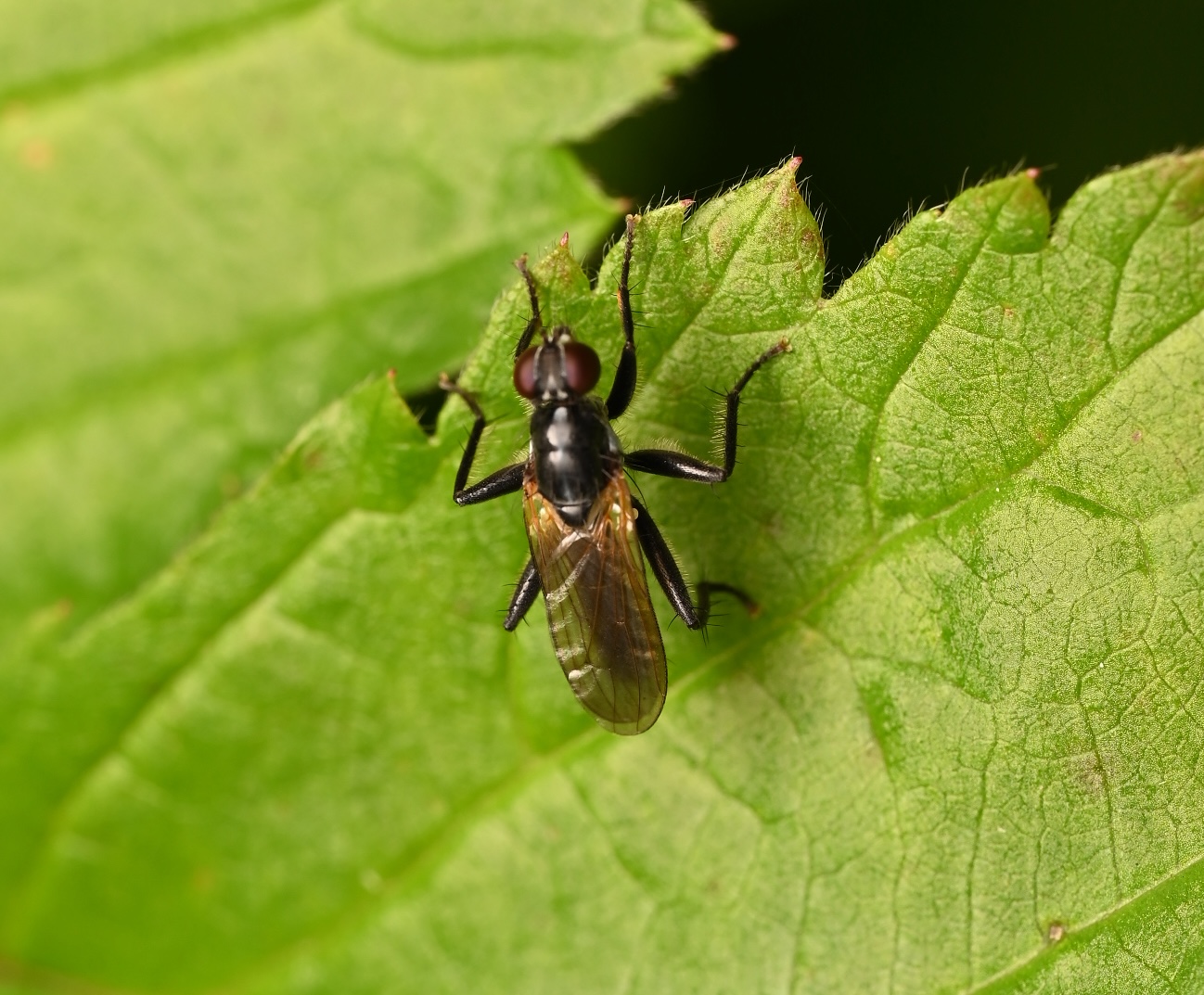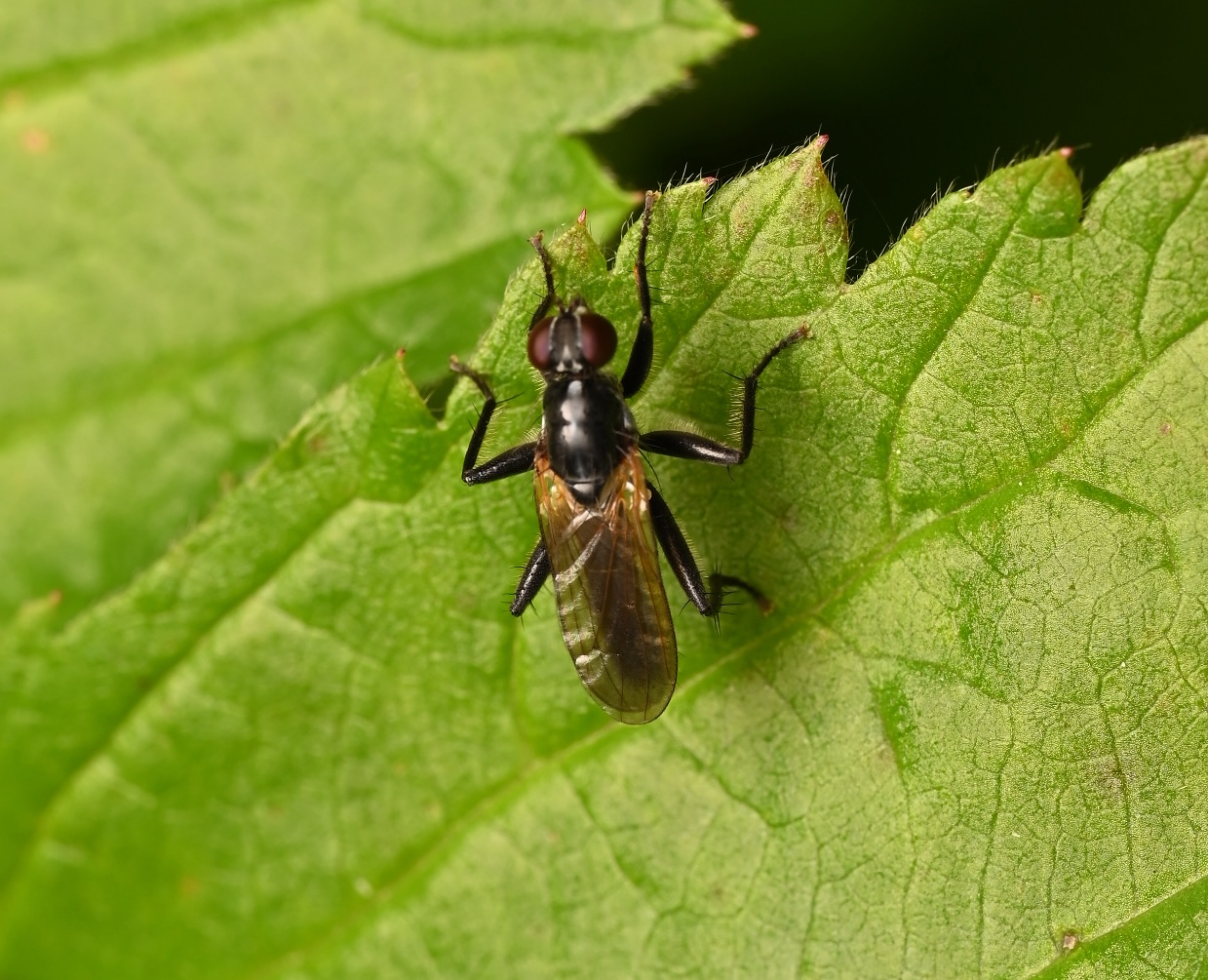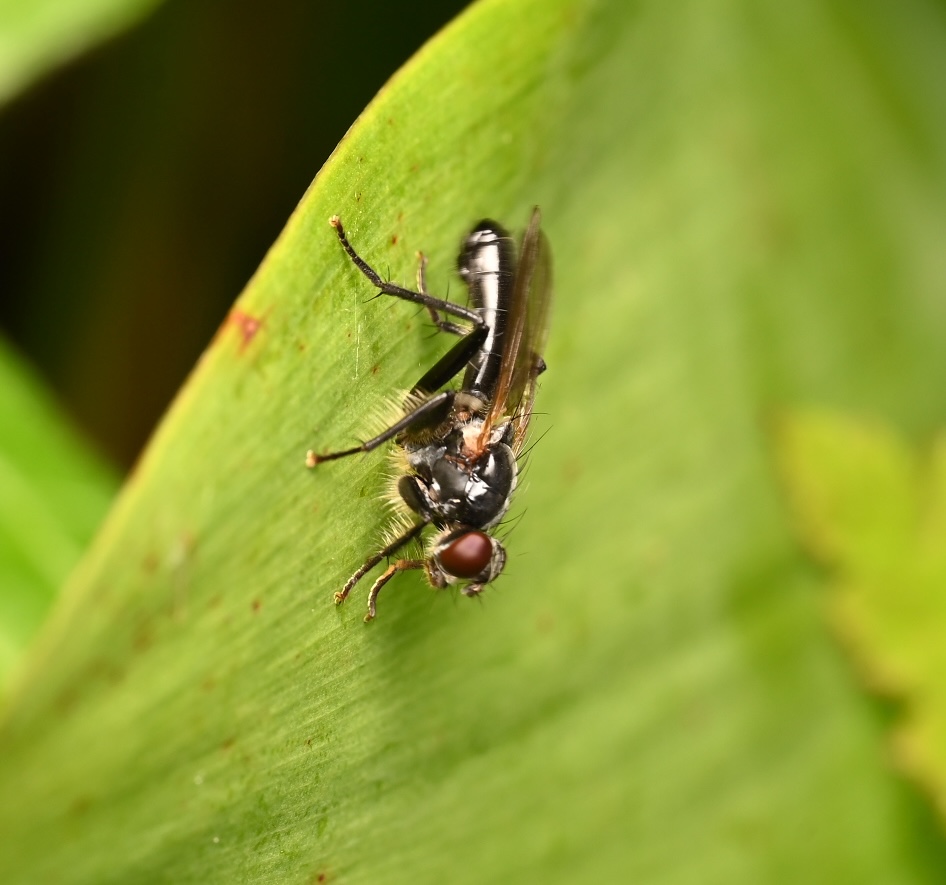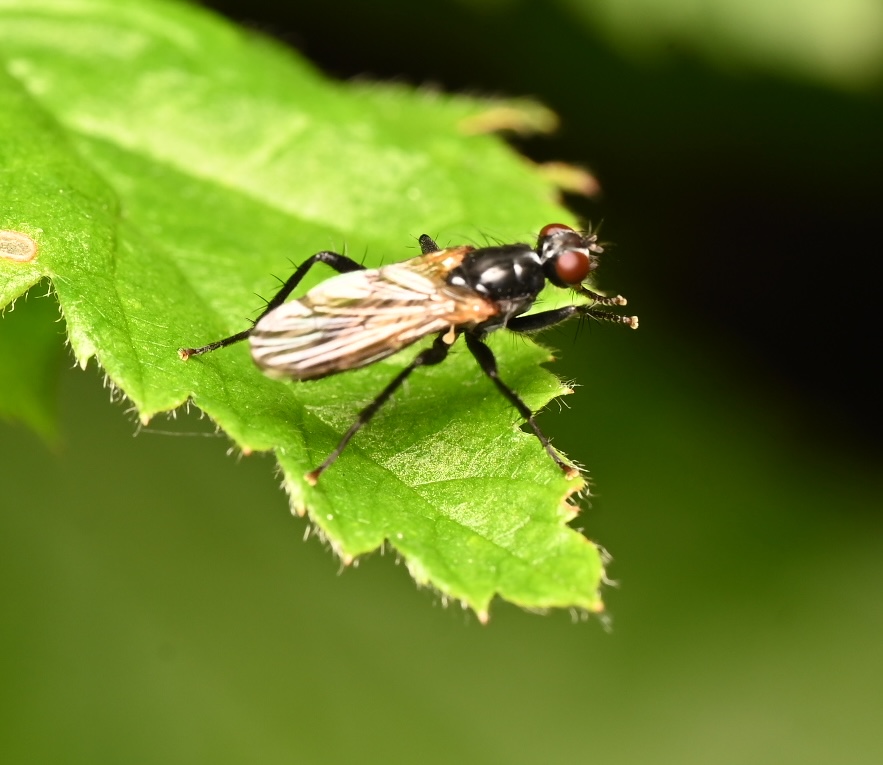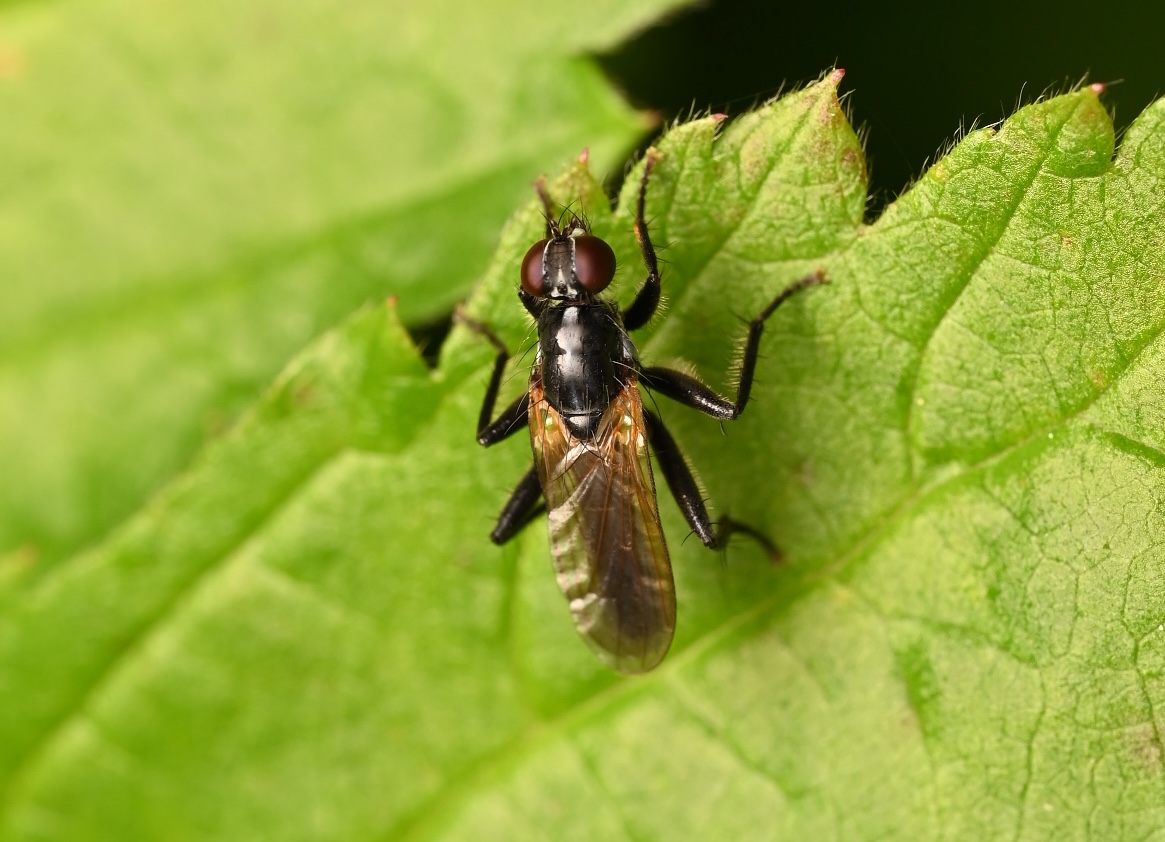
Cordilura ciliata is a striking, glossy black fly belonging to the dung fly family (Scathophagidae), easily recognized by its silvery head stripe, yellow-tinged wings, and the distinctive yellow hairs lining the legs of males. First described by German entomologist Johann Wilhelm Meigen in 1826, this wetland specialist is active from late spring through early autumn across sedge-rich fens, marshes, reedbeds, and damp woodlands. Instead of flying long distances, it is usually seen actively scurrying over low-lying vegetation. While its larvae develop as internal stem-miners inside wetland monocots, the adults are agile predators of smaller insects as well as frequent flower visitors. I encountered a few of these shiny hunters actively patrolling their undergrowth territories in a forest in Järfälla, Sweden.