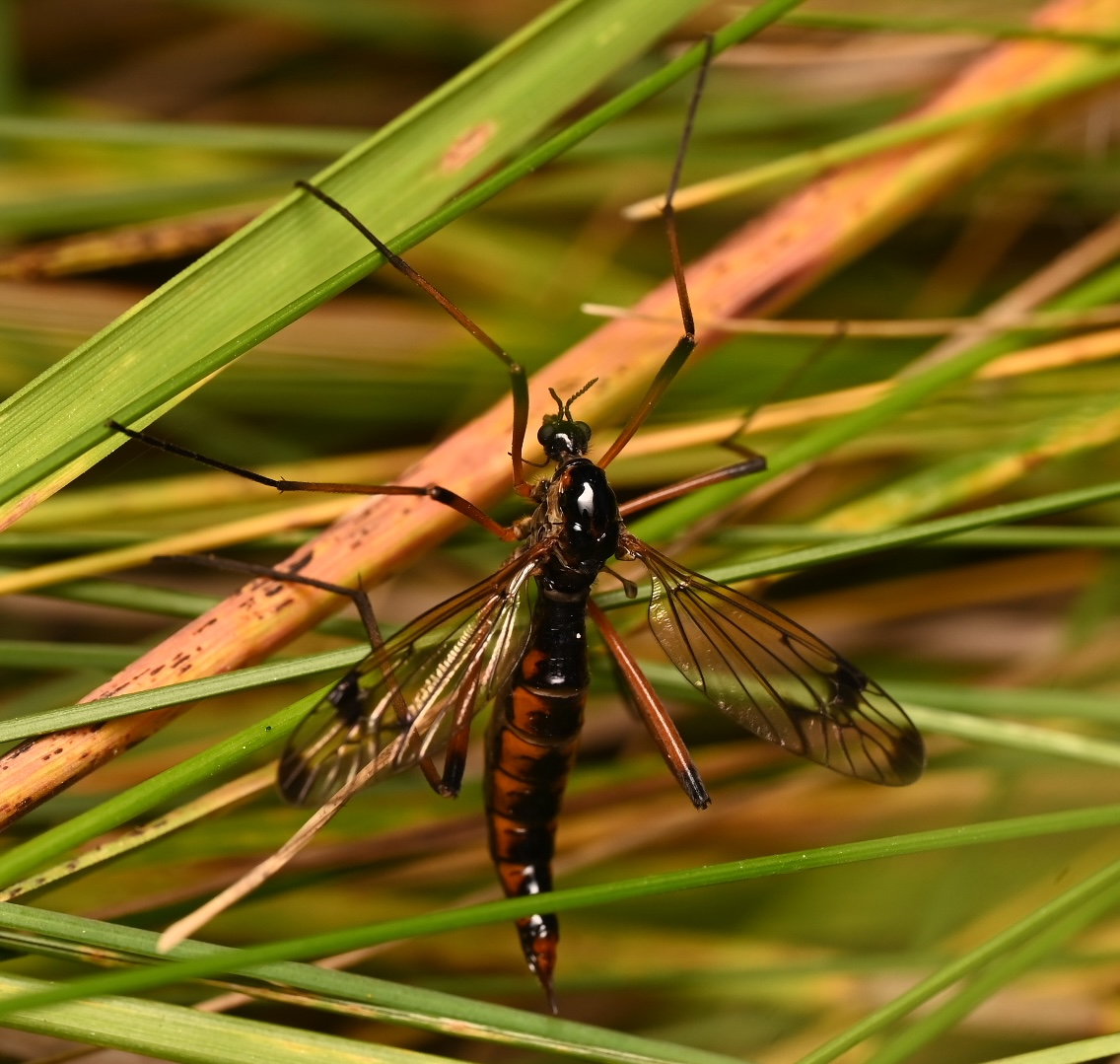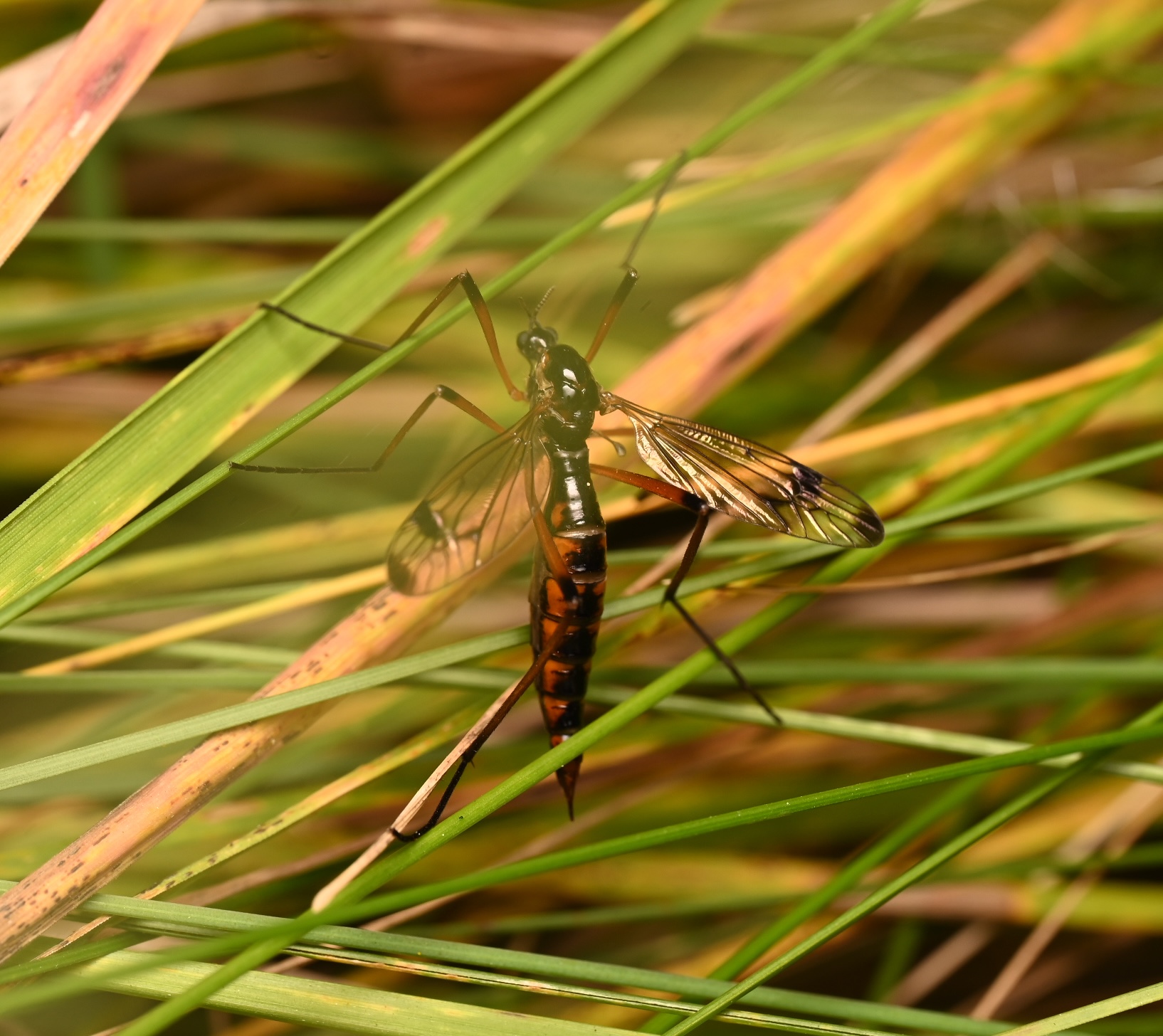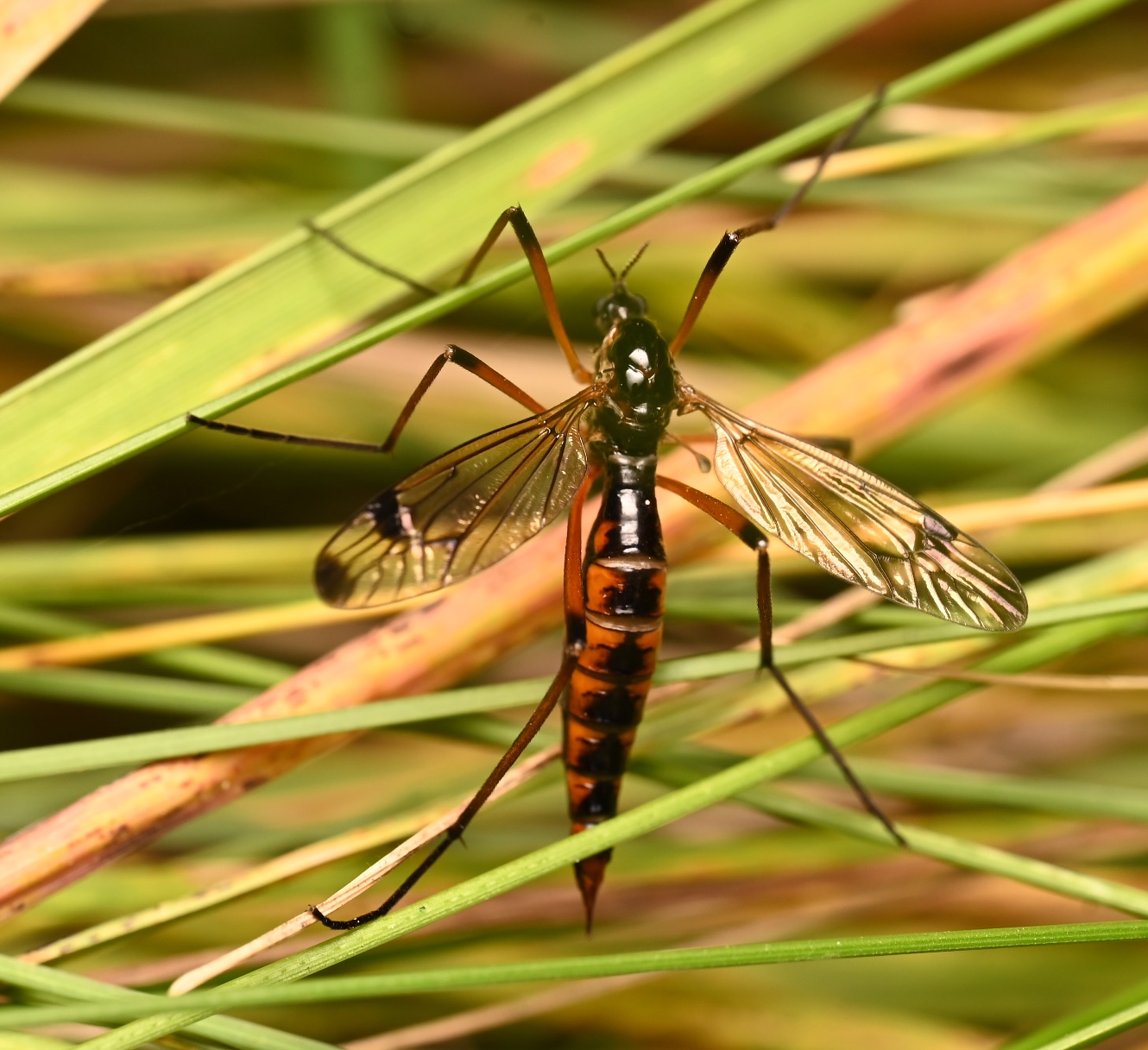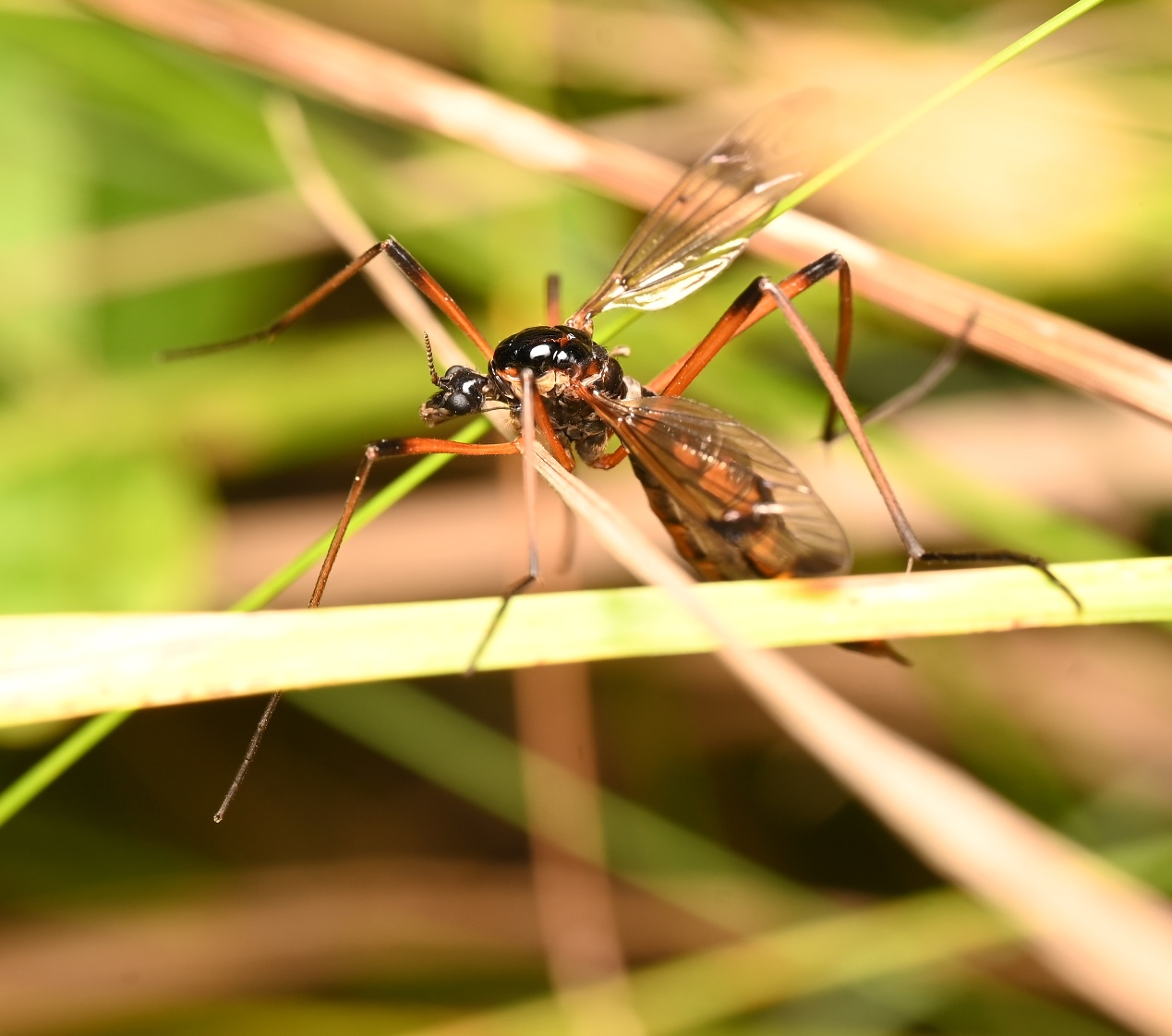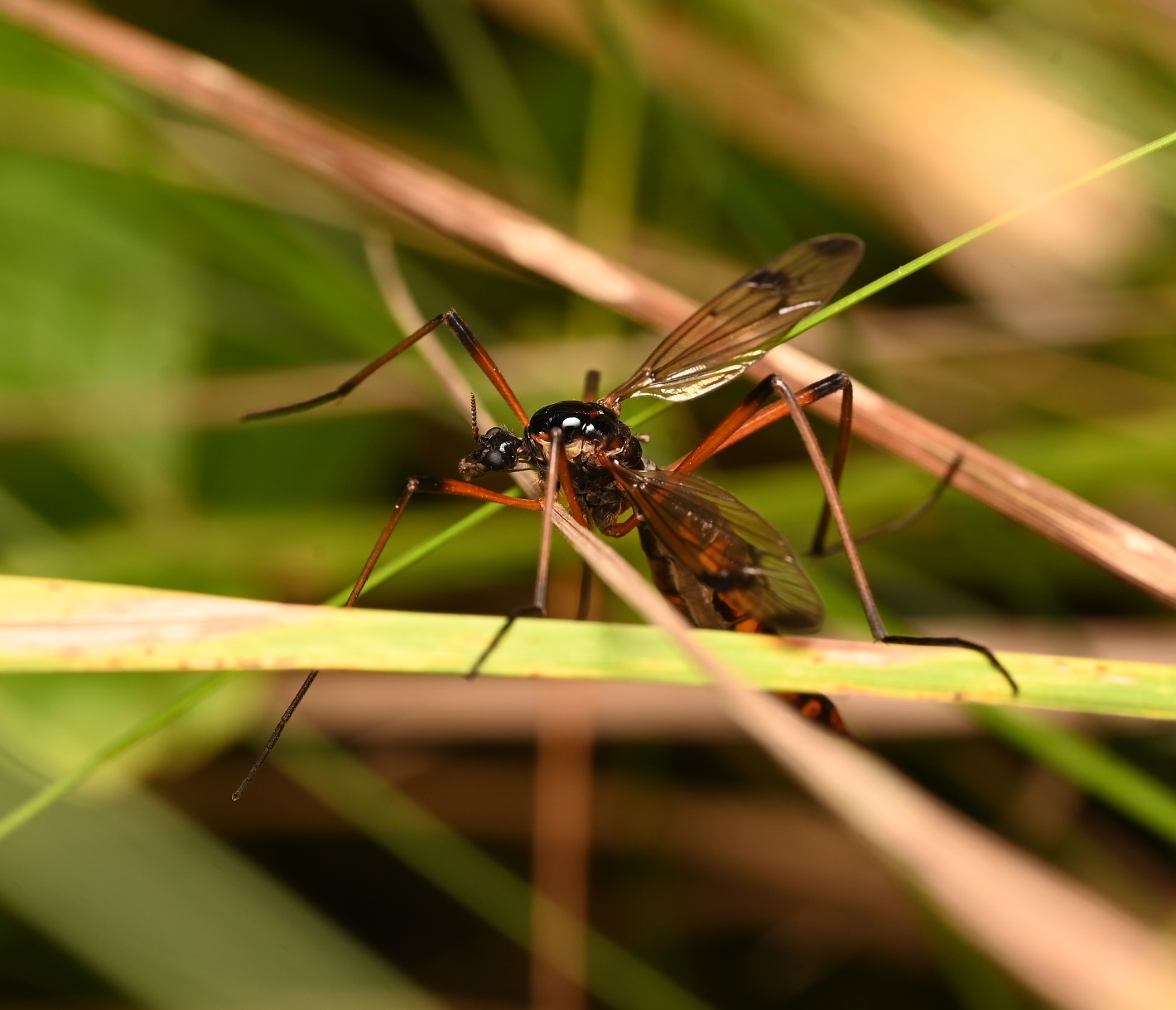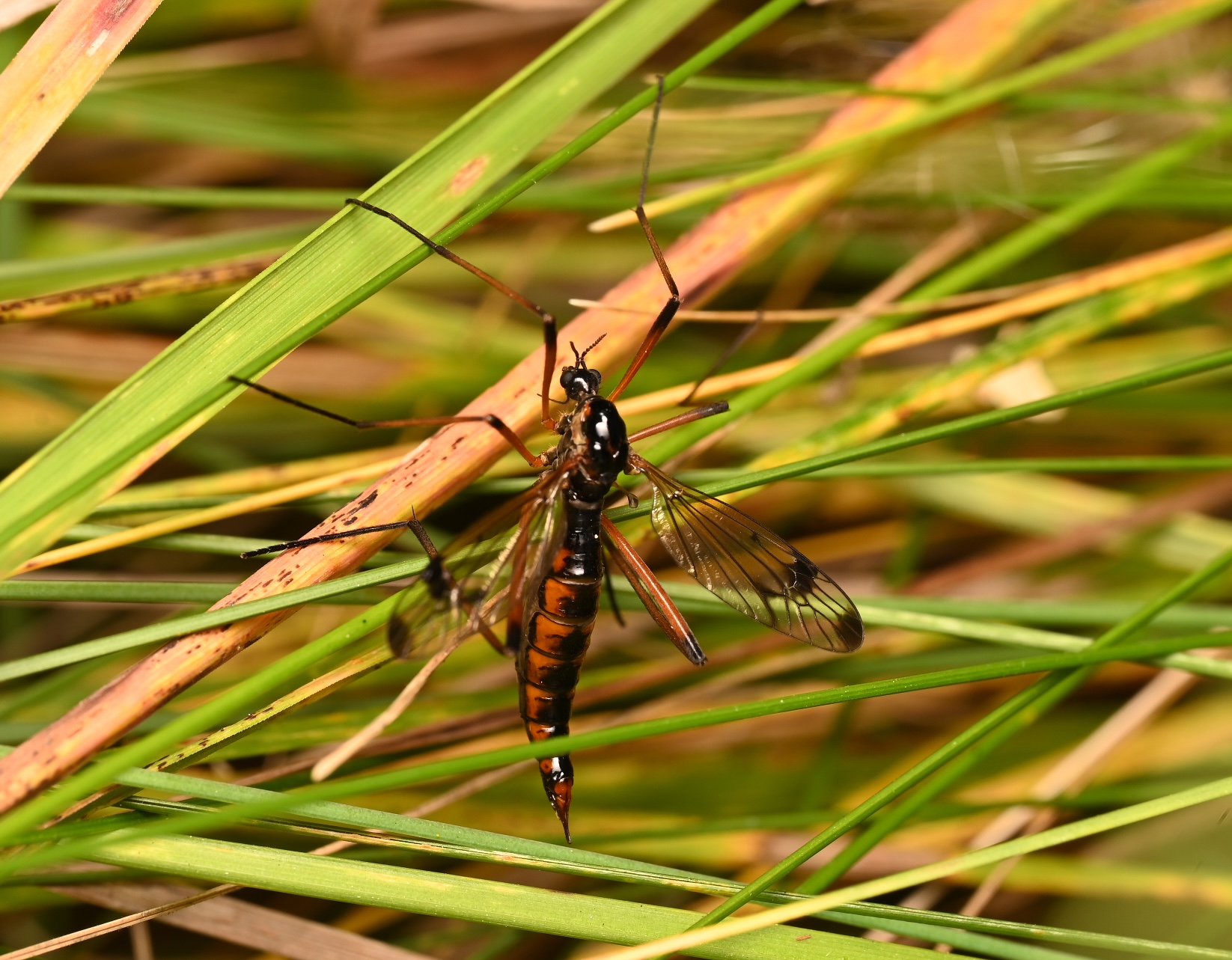
The twin-mark comb-horn (Dictenidia bimaculata) is a striking species of crane fly known for its shiny black-and-orange body, wings marked with two distinct dark spots, and—in males—elaborate, comb-like antennae. Found across the Palaearctic realm, these harmless insects rely heavily on old-growth or decaying woodlands. Males use their elaborate, feathery antennae to sense female pheromones floating in the air. Each wing features two prominent dark brown spots: one near the middle stigma and a smaller one right at the tip. While males have entirely black abdomens, females sport bold orange side markings that mimic stinging wasps to deter predators. Their larvae are saproxylic, living inside and feeding on decaying standing timber, tree stumps, and rotting logs. Because they depend on dead wood to complete their life cycle, encountering them is usually a sign of a healthy, ecologically stable forest. While I was sitting in a meadow within a patch of woodland near my house in Barkarby, Sweden, a mid-sized female clumsily flew past and landed right in front of me. Unfazed, she even clambered over me for a brief moment.