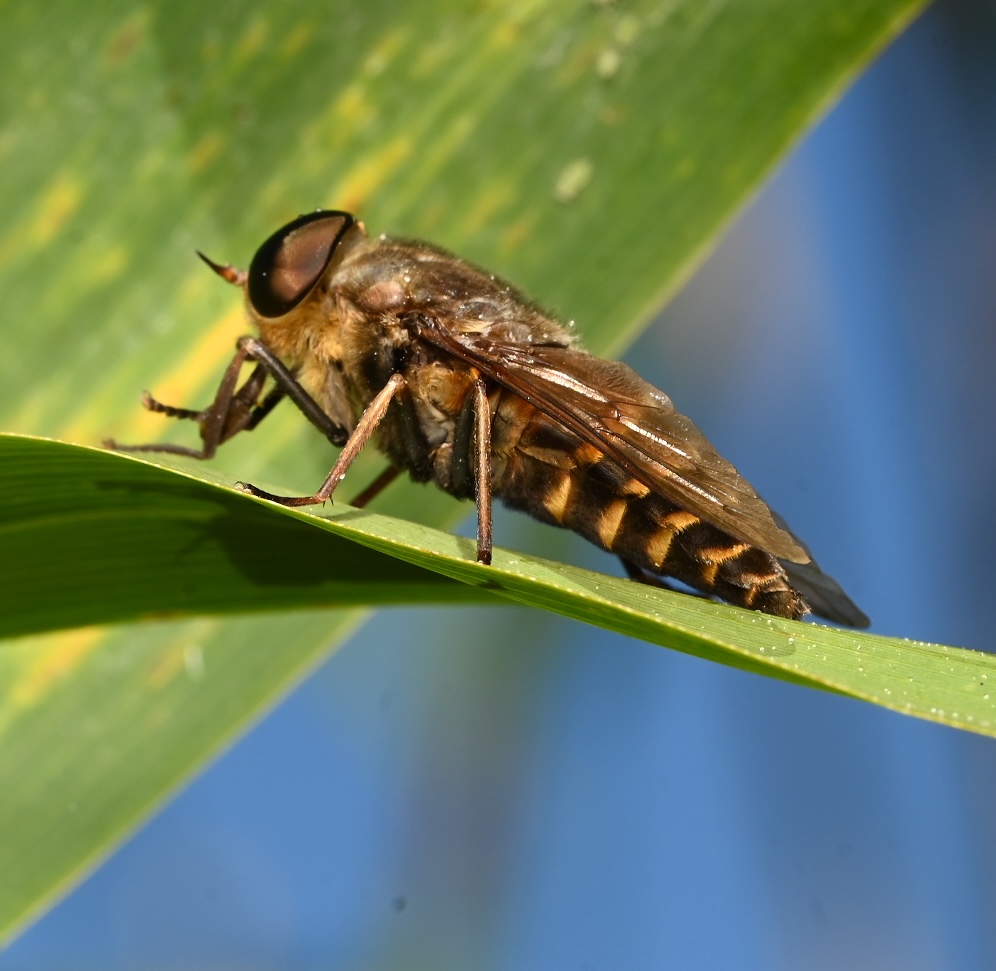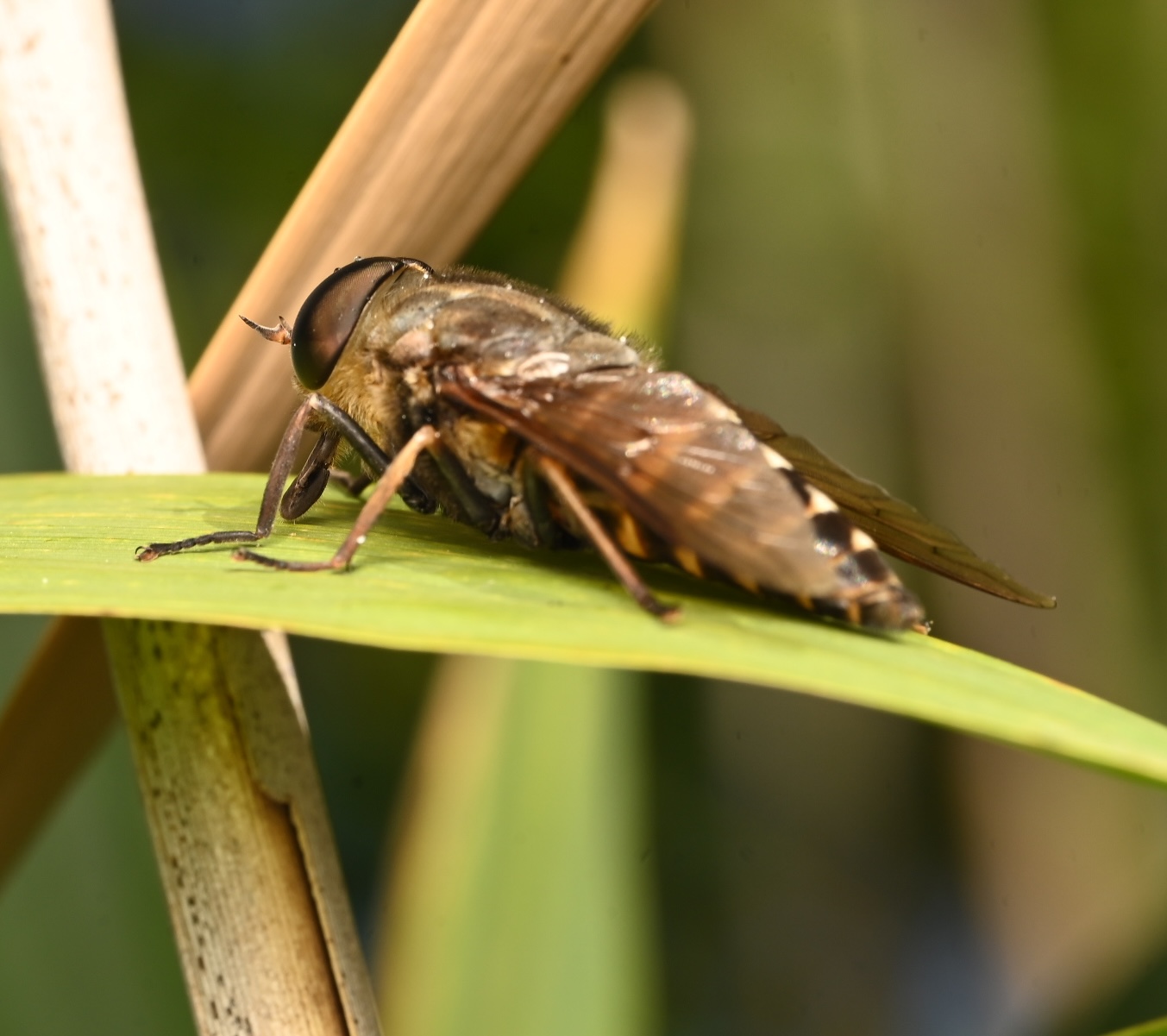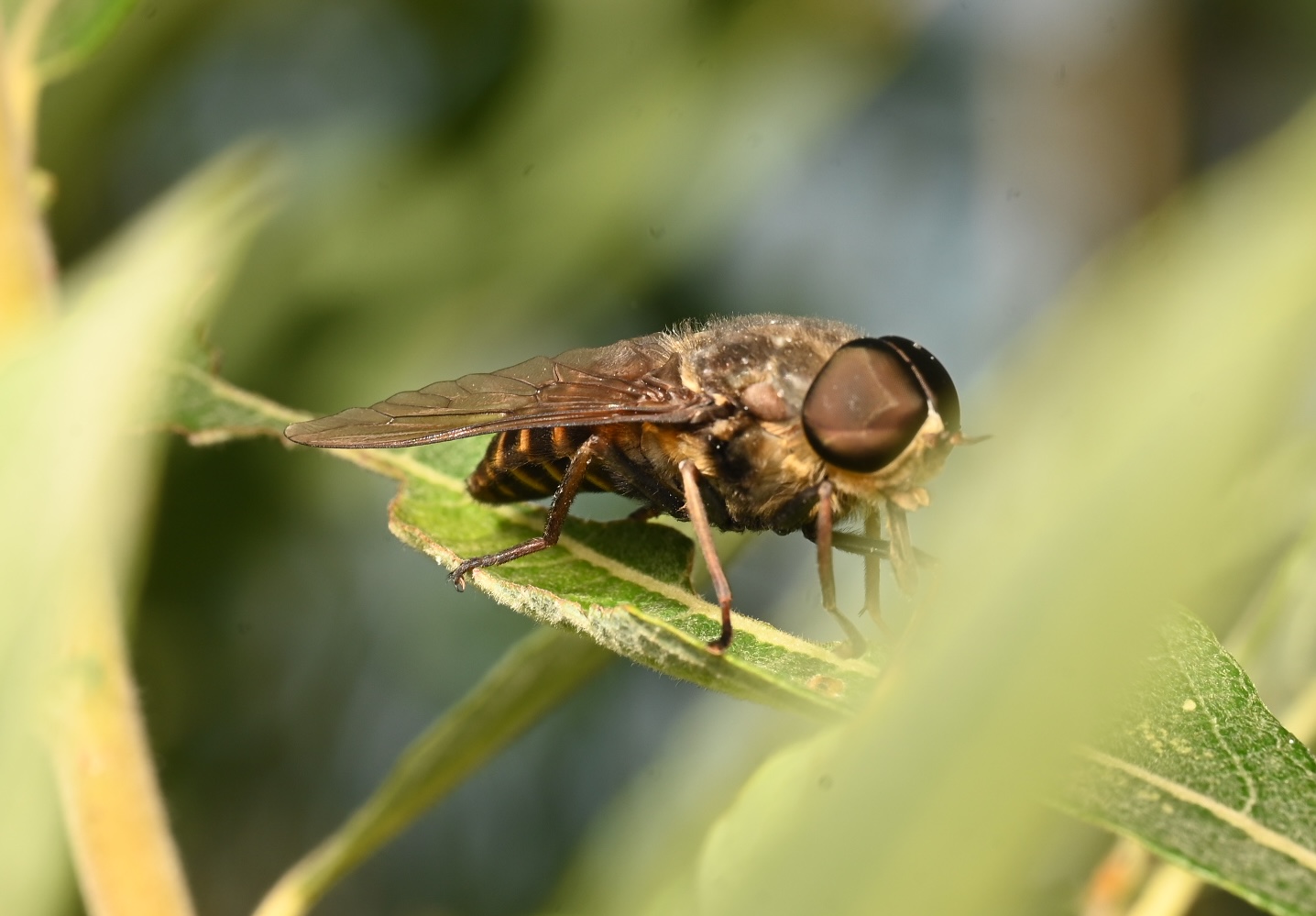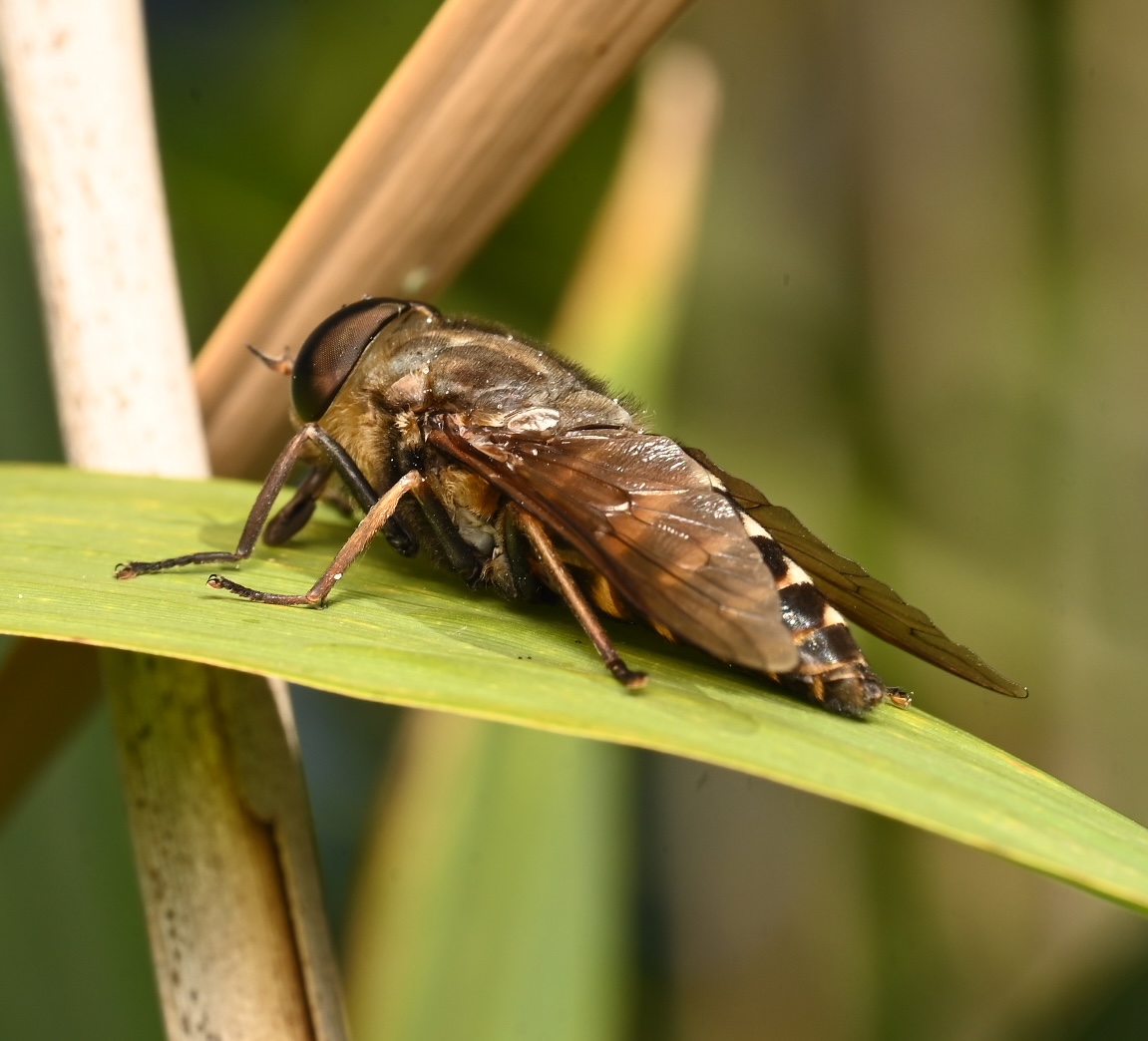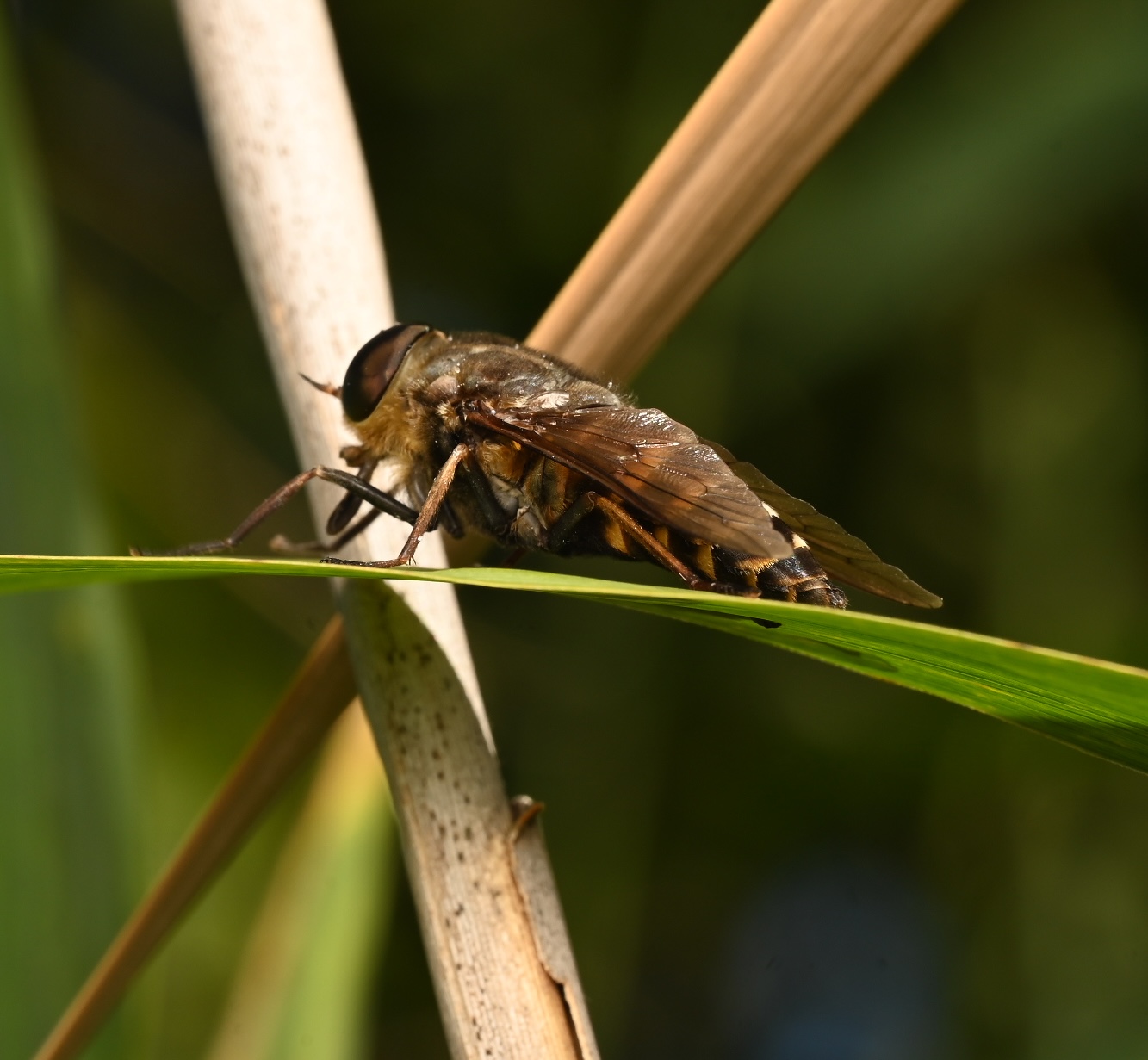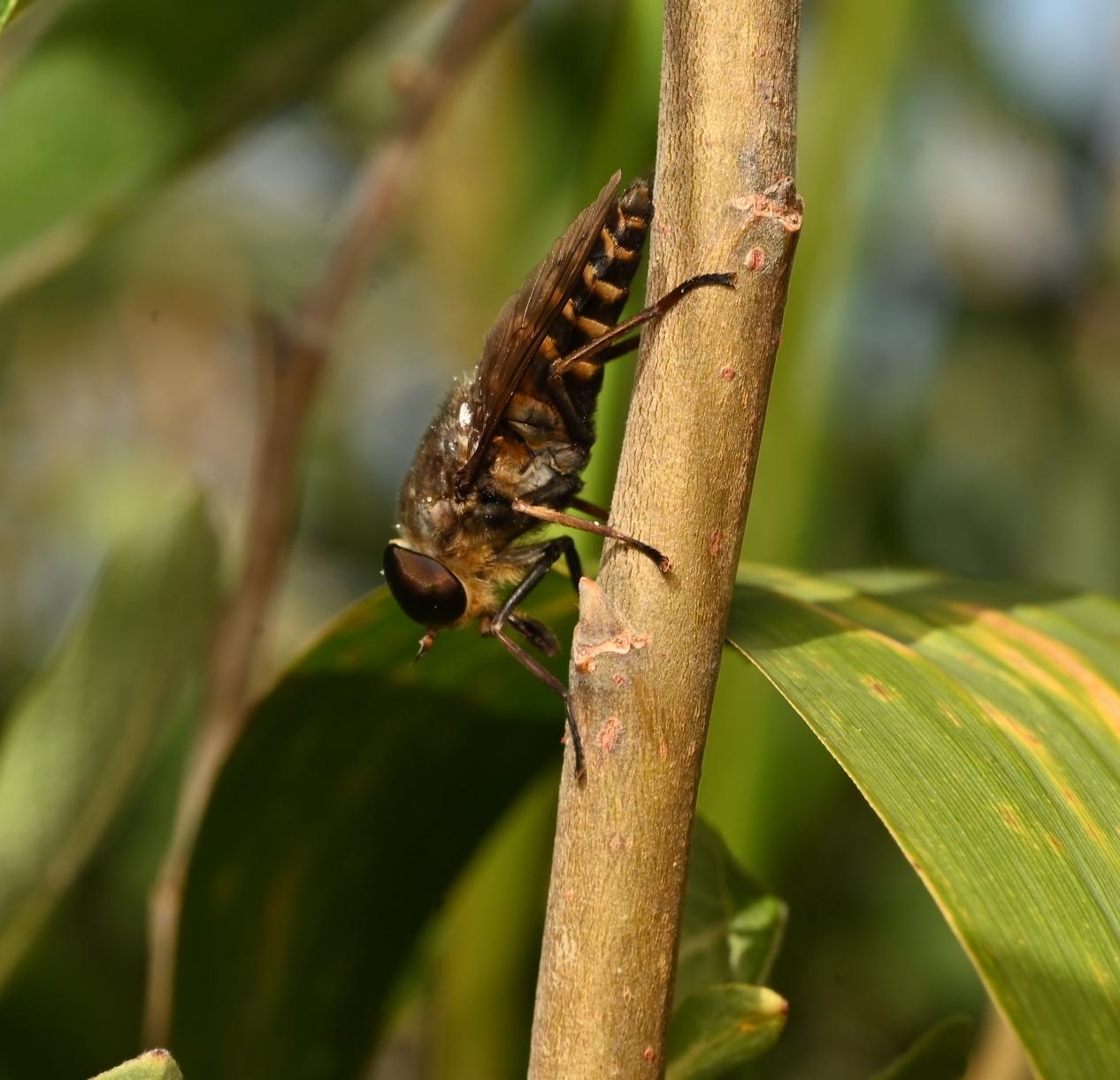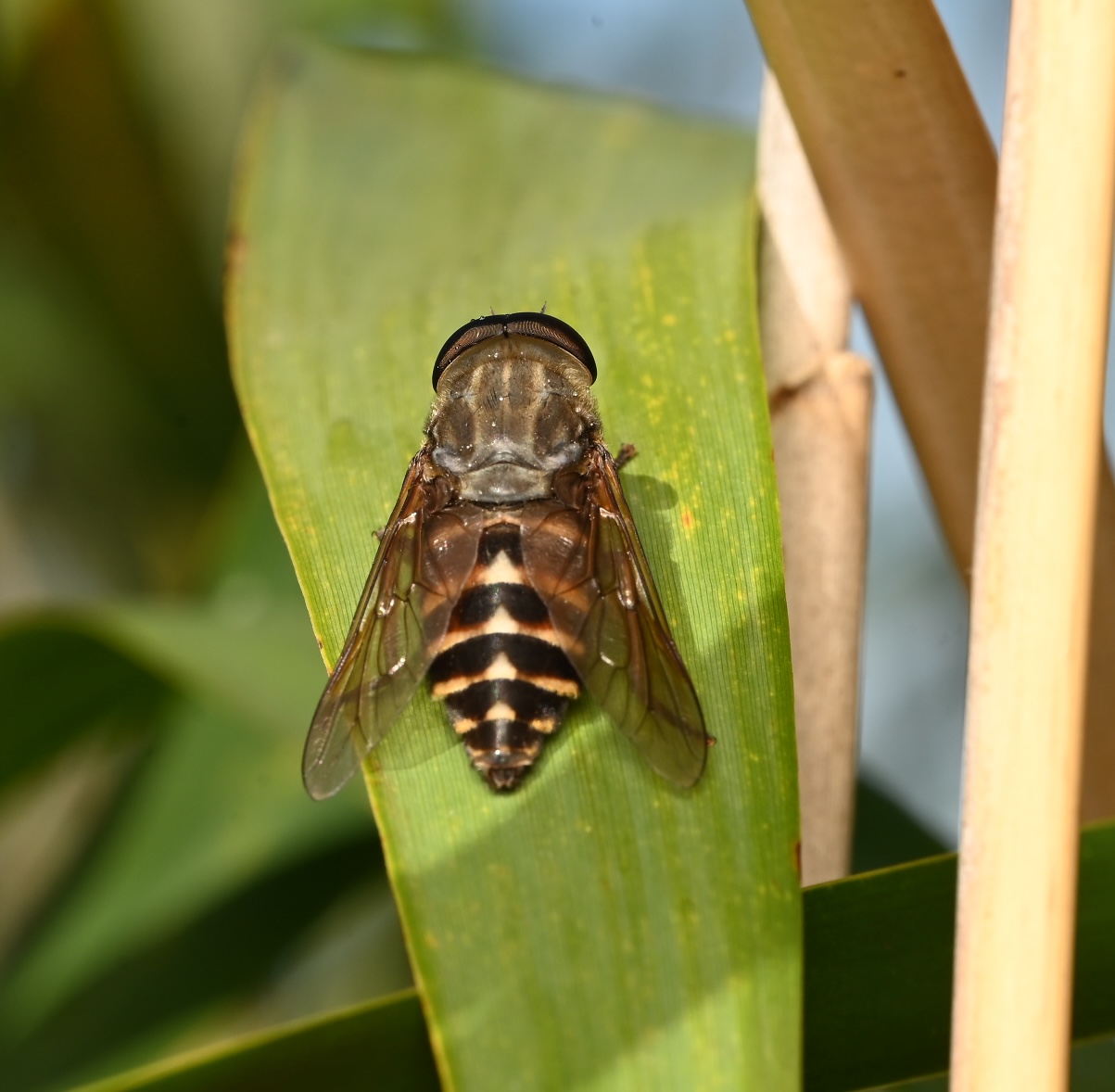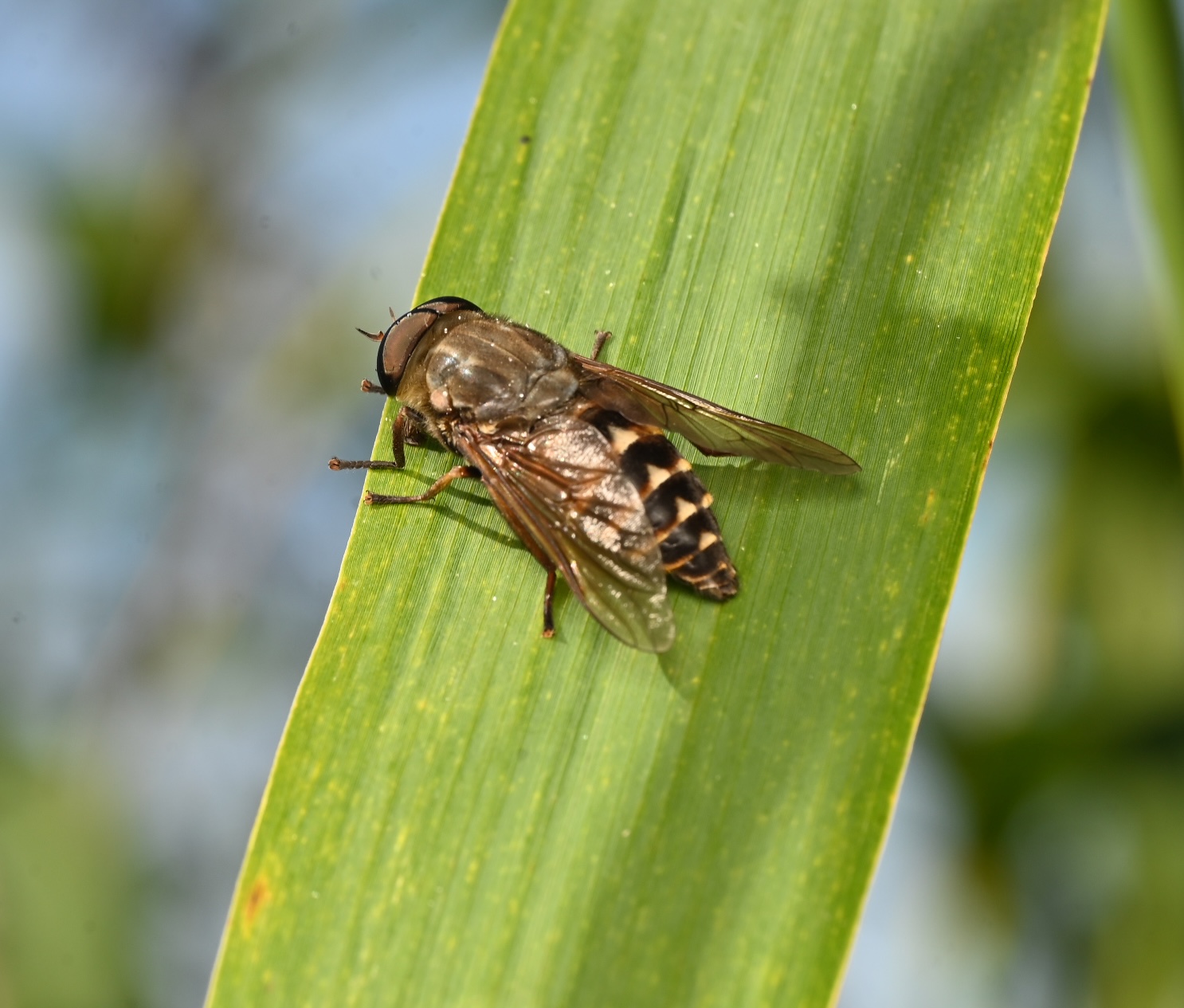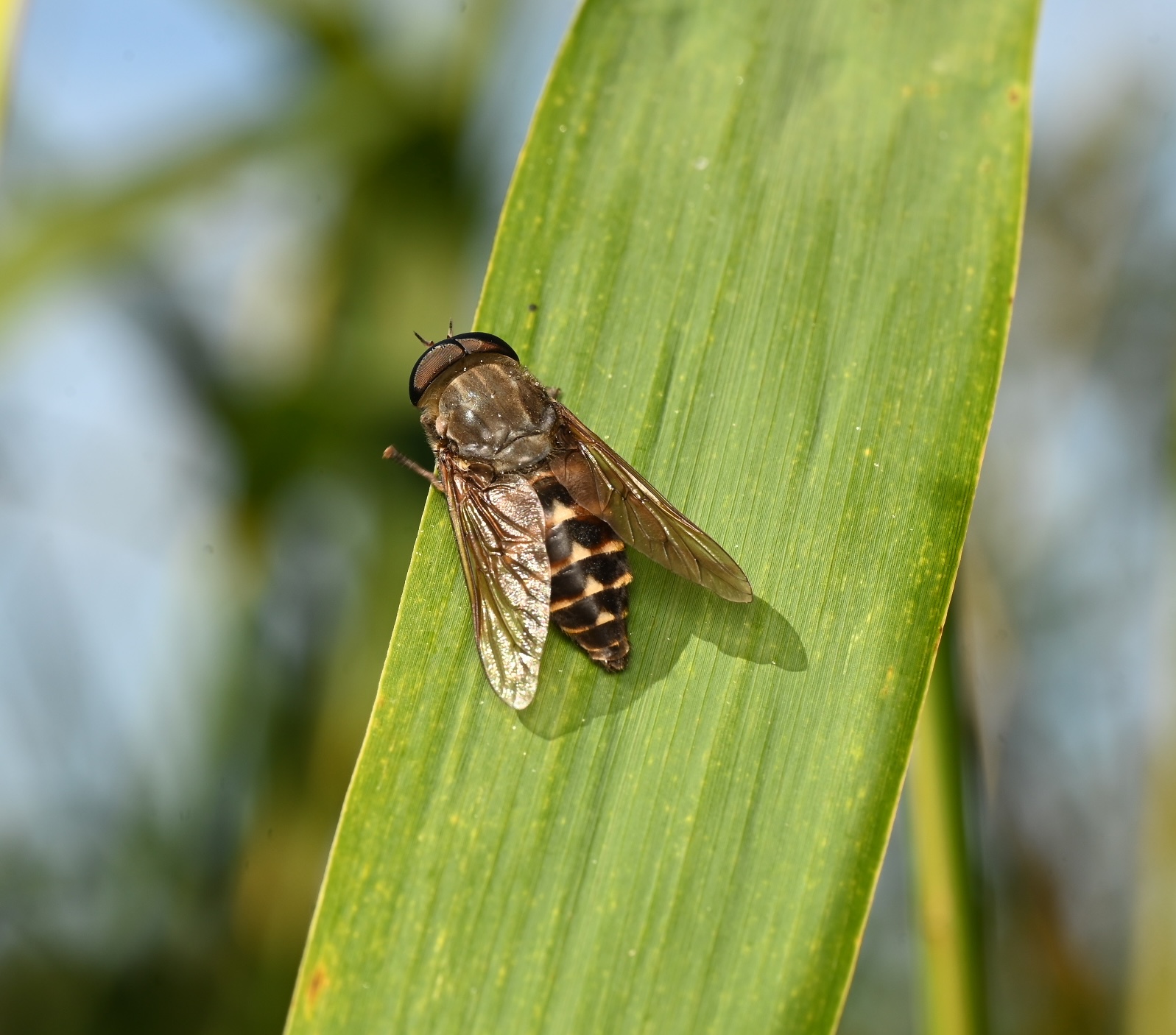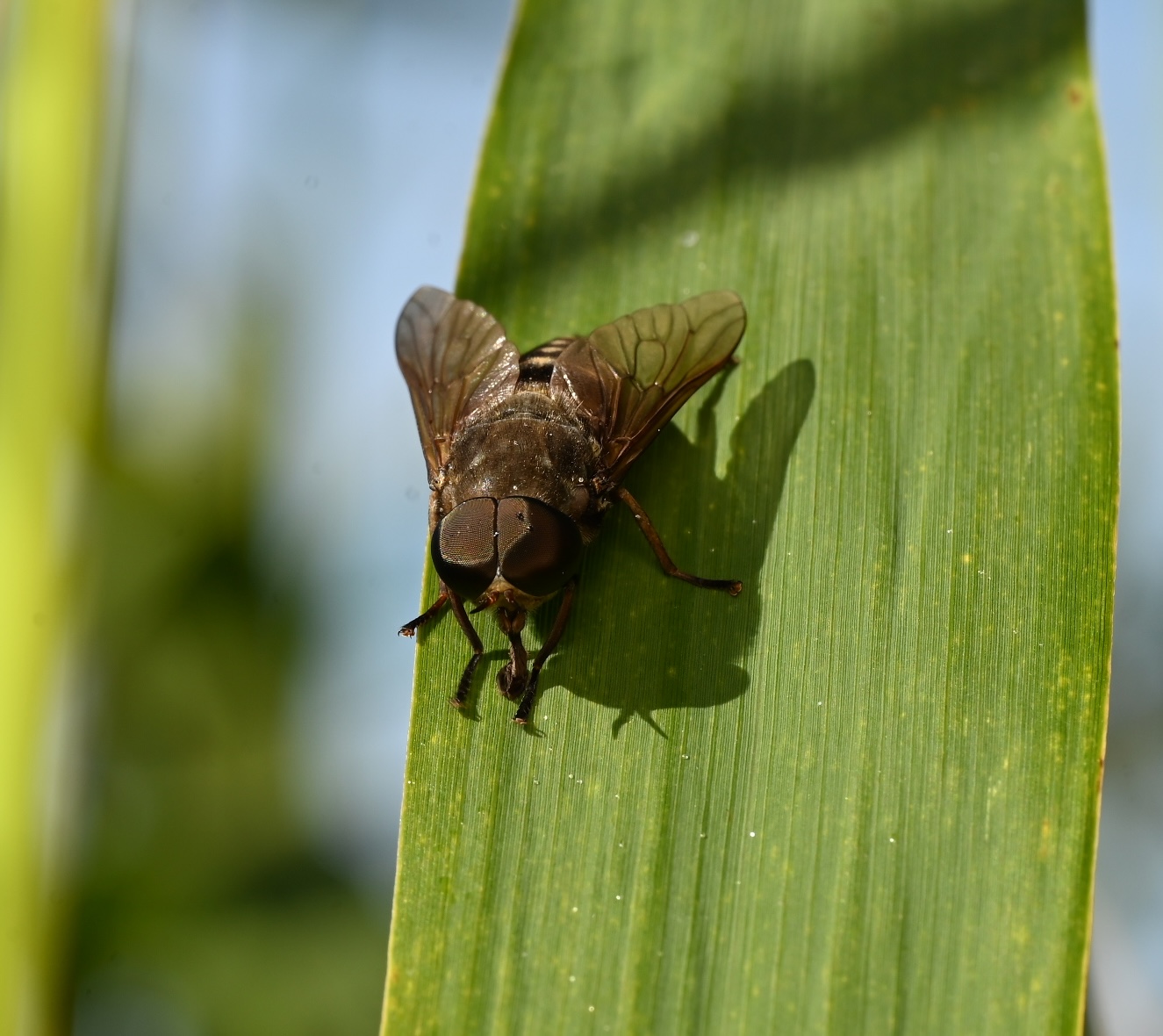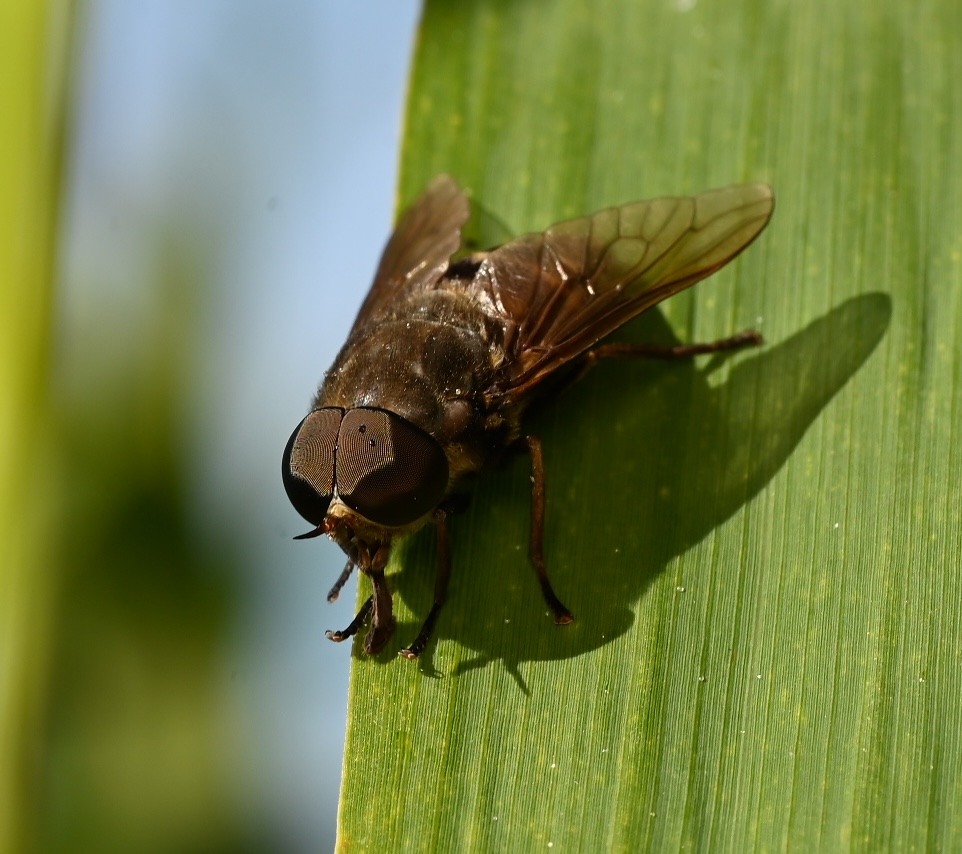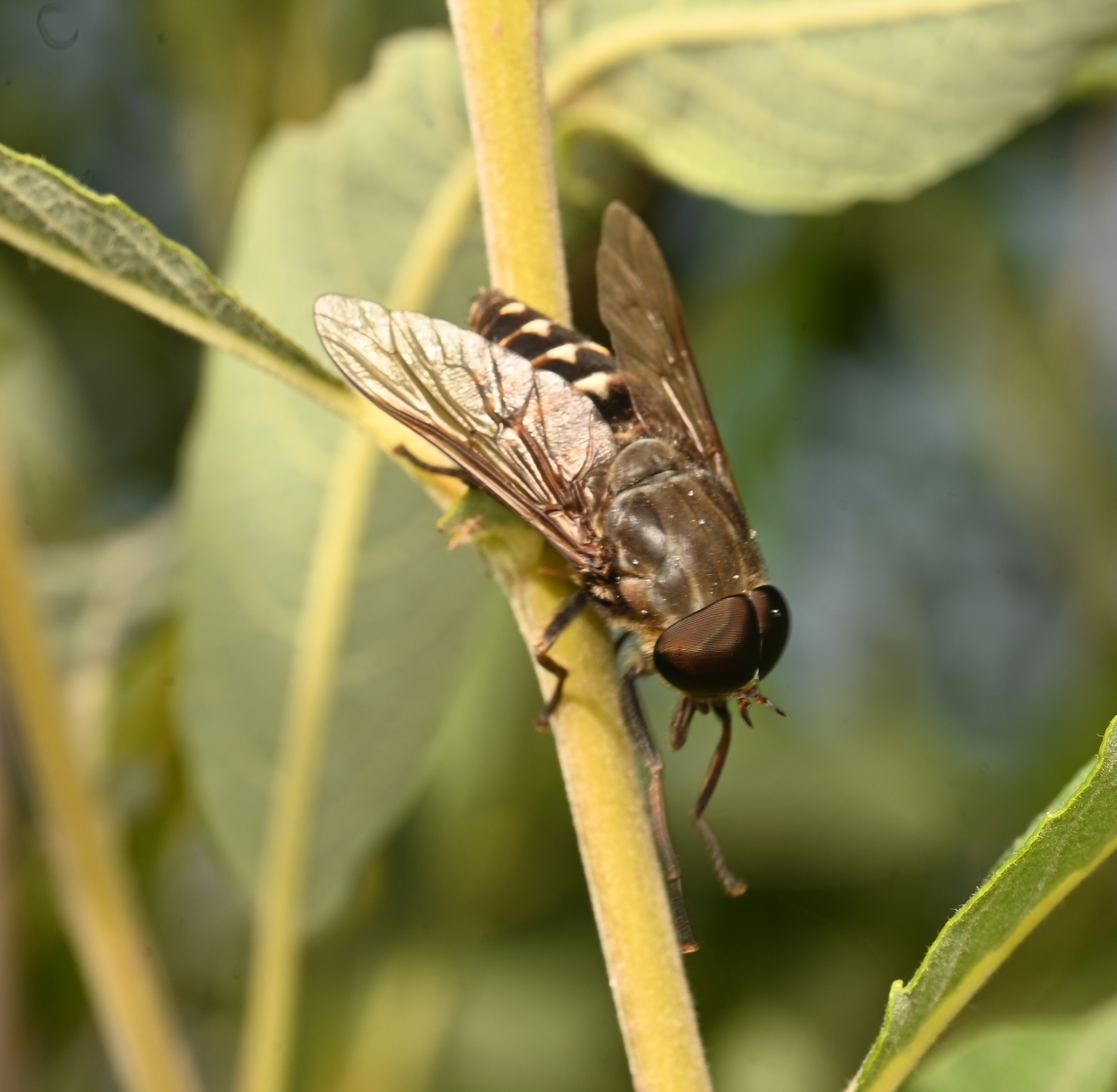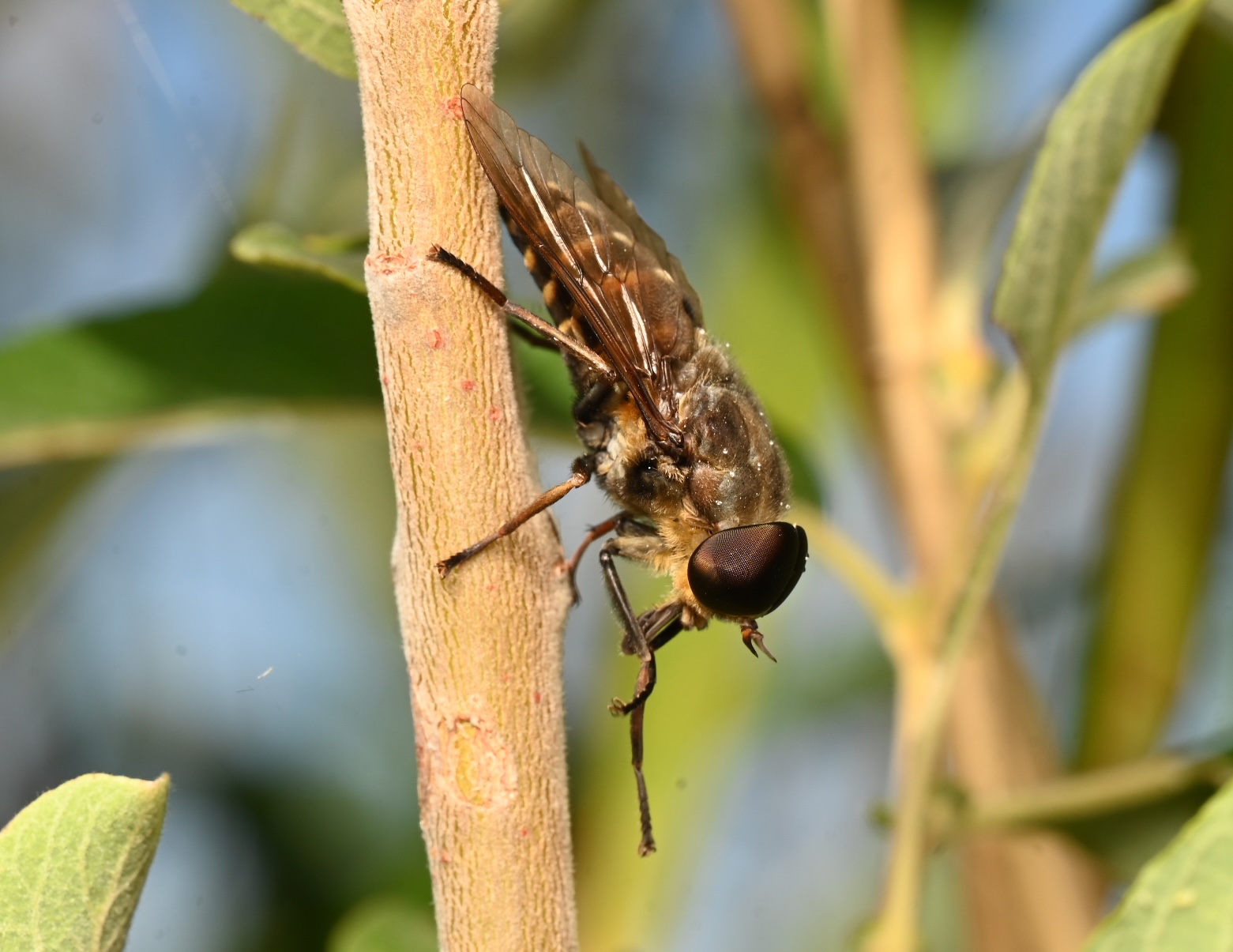
The dark giant horse fly (Tabanus sudeticus) is the heaviest fly species in Europe, growing up to 30 millimeters long—roughly the size of a queen bumblebee. Its heavy, muscular wings create a distinct, deep buzzing drone in flight, and unlike many other horseflies, its large eyes are a uniform dark brown rather than brightly patterned. While females require blood meals to develop their eggs—typically targeting large livestock rather than humans—males are entirely harmless nectar feeders. The sexes are easily distinguished by their eyes: females have a visible gap between them, while males’ eyes meet at the top of the head. I encountered an enormous male resting along the edge of a post-glacial lake in Sweden’s Västra Järvafältets nature reserve. I was surprised to see such an enormous fly casually walking across tall grass, and licking water and nectar from the foliage. Observing this gentle giant made me reconsider a childhood grudge sparked by painful horsefly bites.