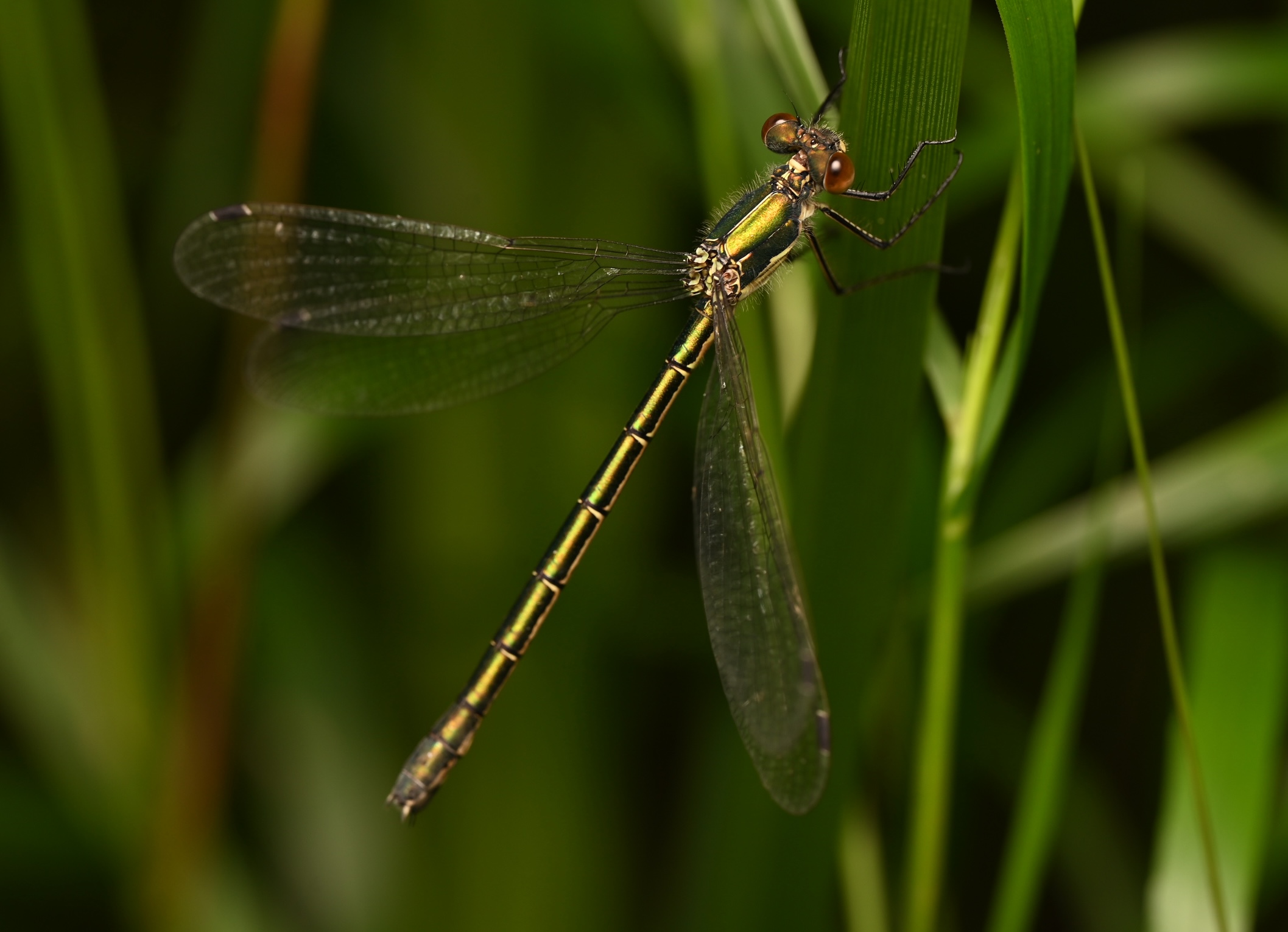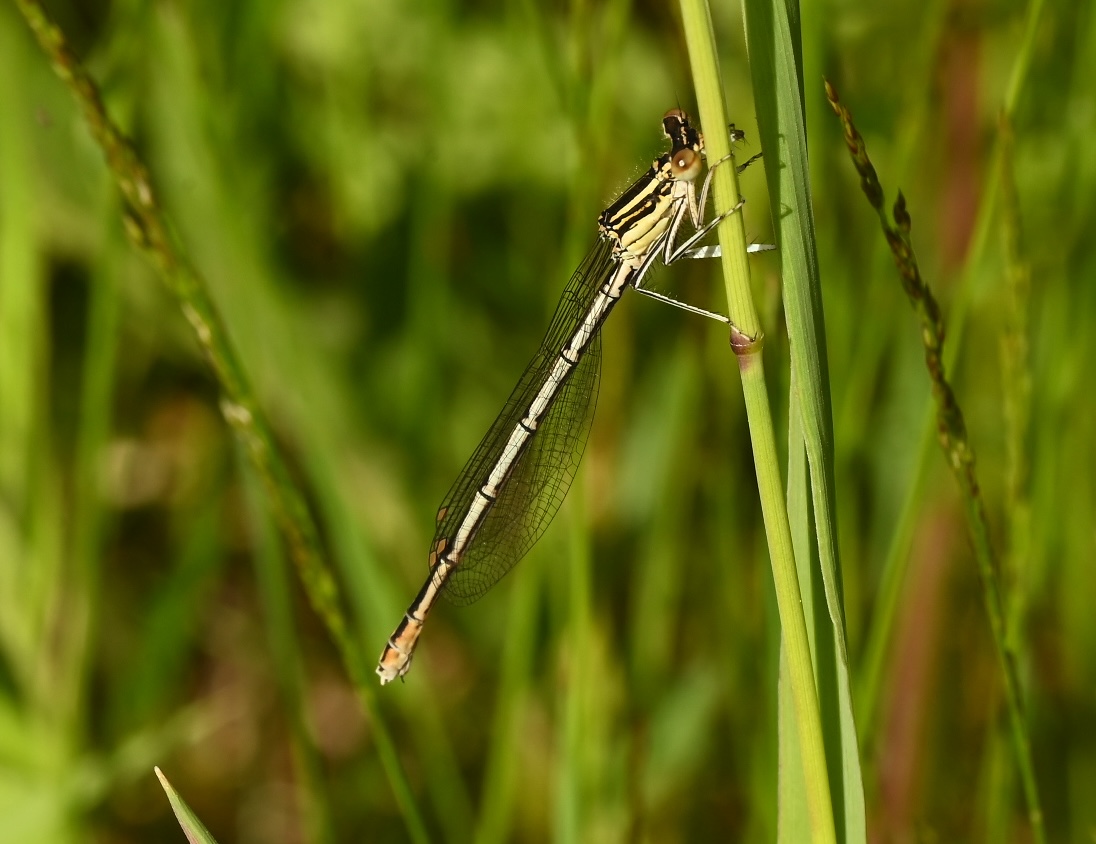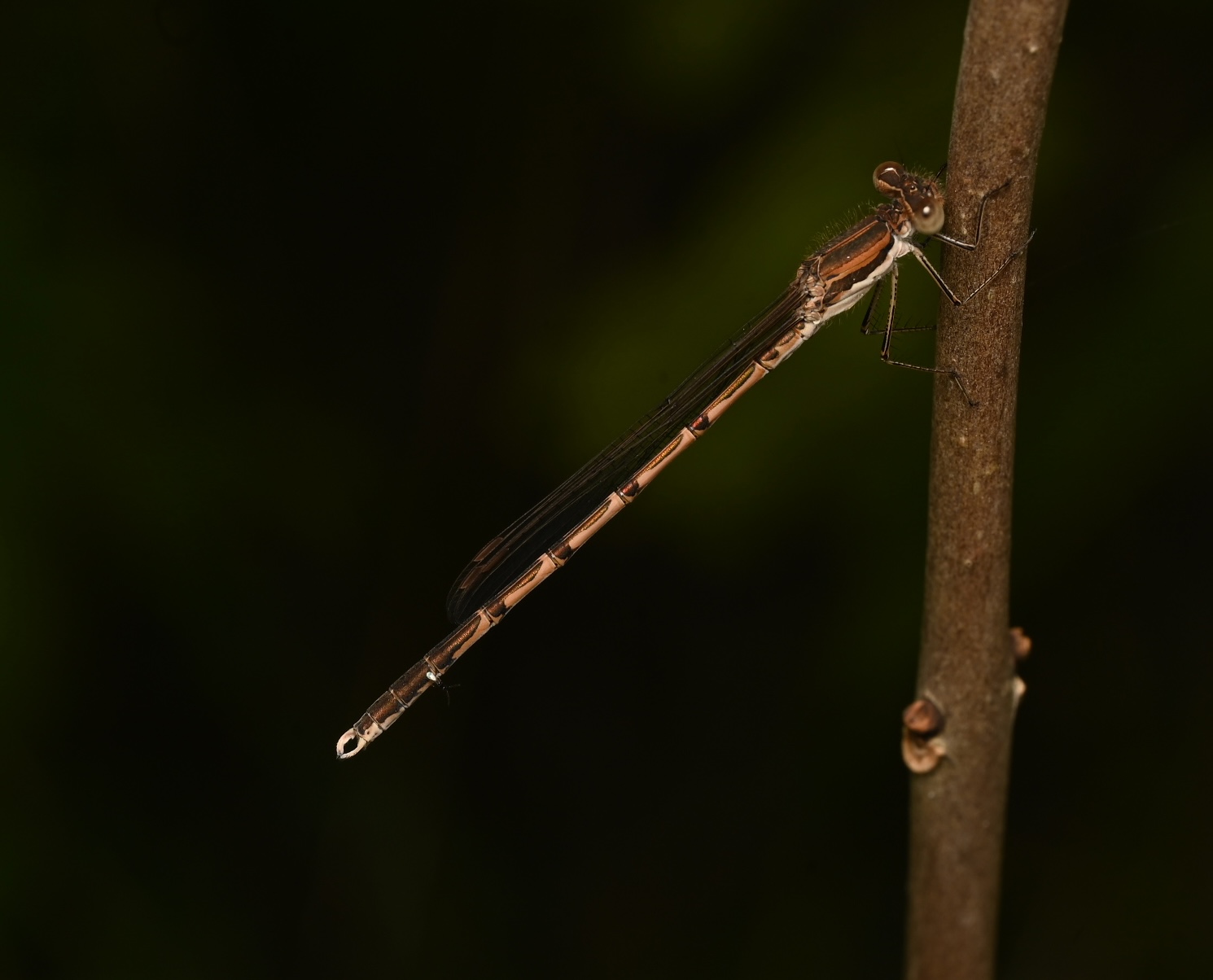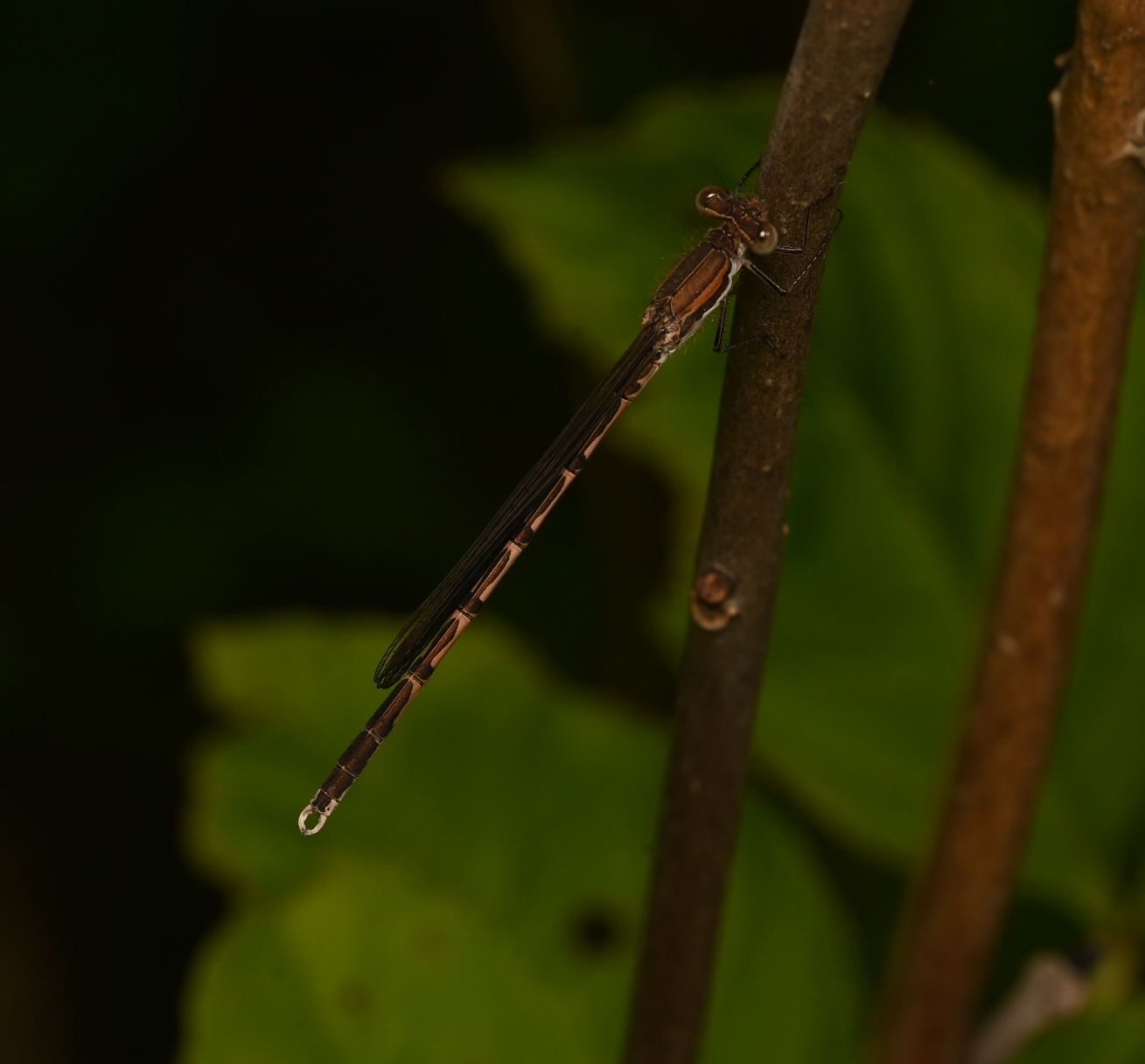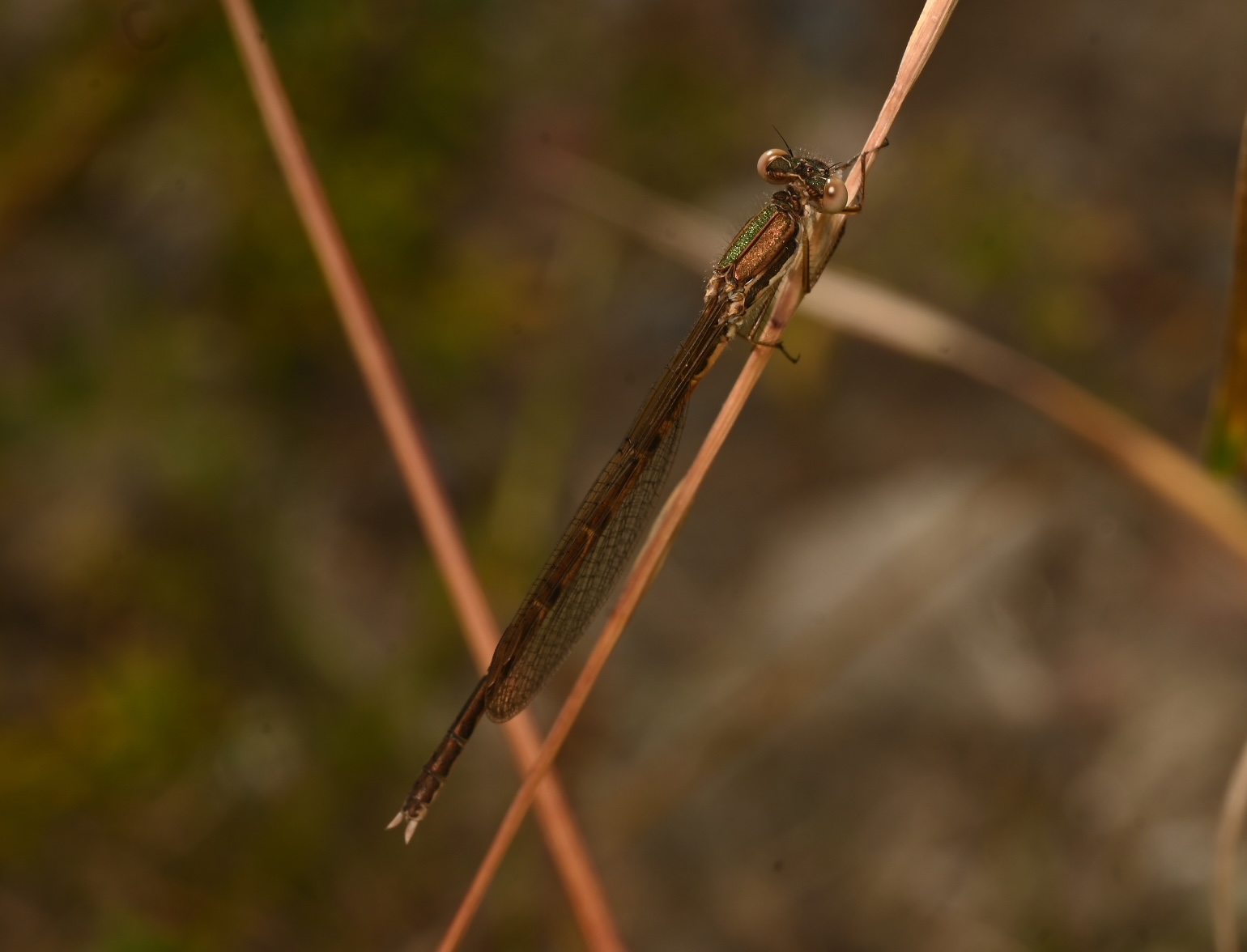
Measuring 34–39 mm, the common winter damselfly (Sympecma fusca) trades the brilliant blues and reds of typical dragonflies for drab, copper-brown camouflage. This earthy color palette allows it to blend seamlessly into dead grass and reeds. Notably, it is one of only two Odonata species in Europe to survive the cold months as a fully grown adult—a feat that allows it to be seen flying in every season of the year. In autumn, adults leave their aquatic breeding sites to hibernate in dry, sheltered spots like leaf litter, heathlands, and forest edges. Unlike other spreadwing damselflies, this species rests with all four wings folded tightly together along one side of its abdomen. Having emerged in late summer and endured the frost, these resilient insects finally reproduce the following spring. I was fortunate enough to encounter this stunning survivor at a few spots during a sunny afternoon walk around Akalla, Sweden.