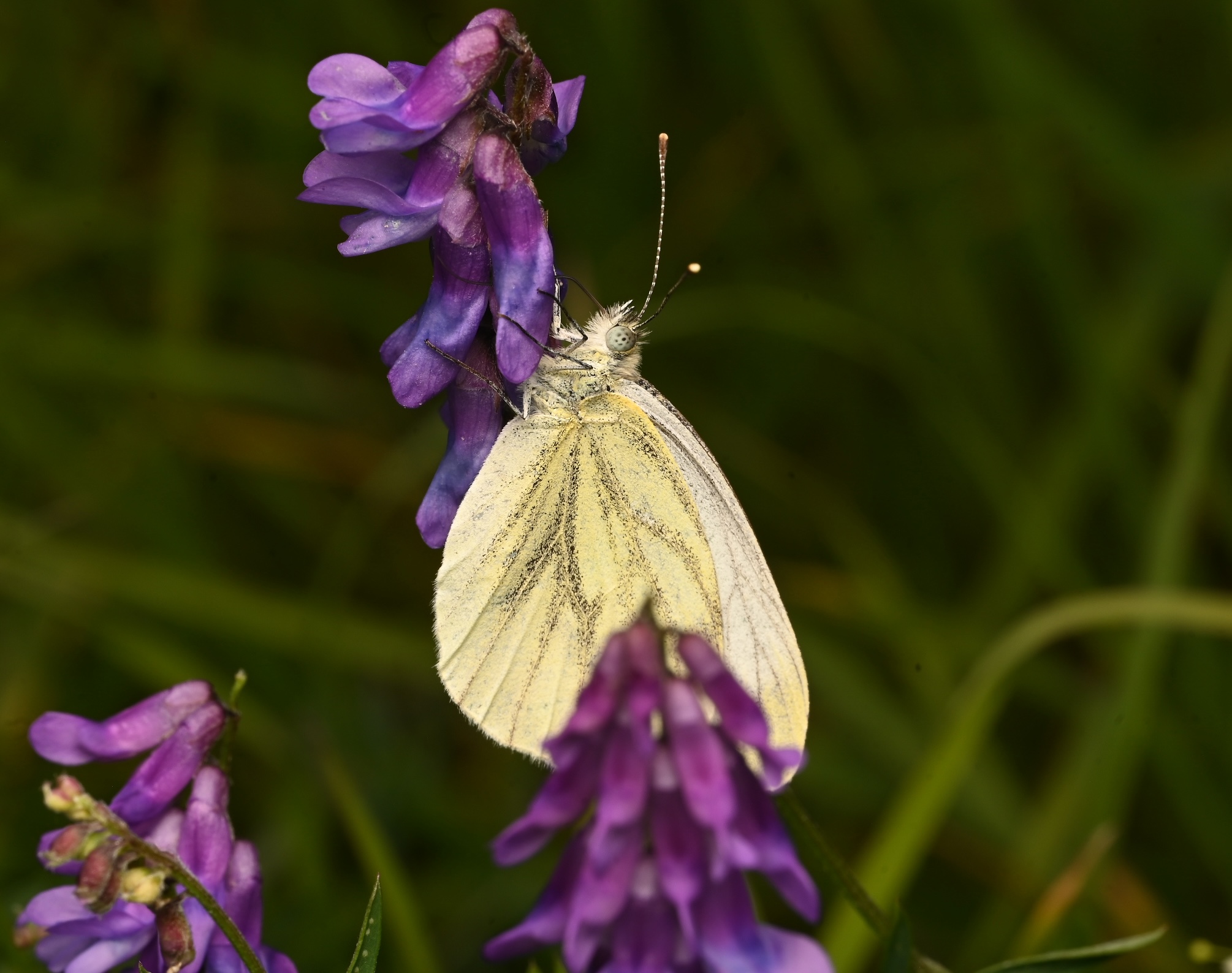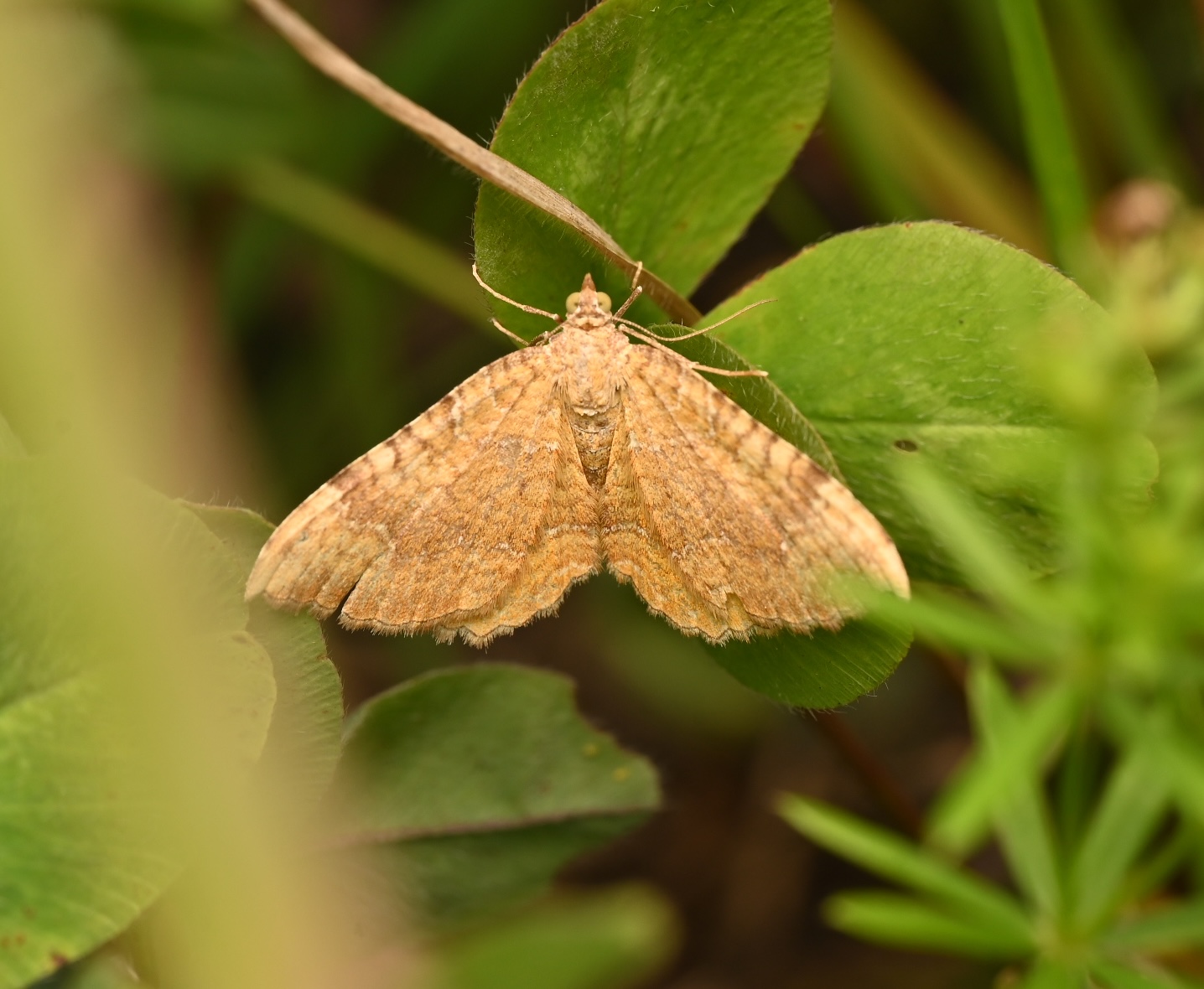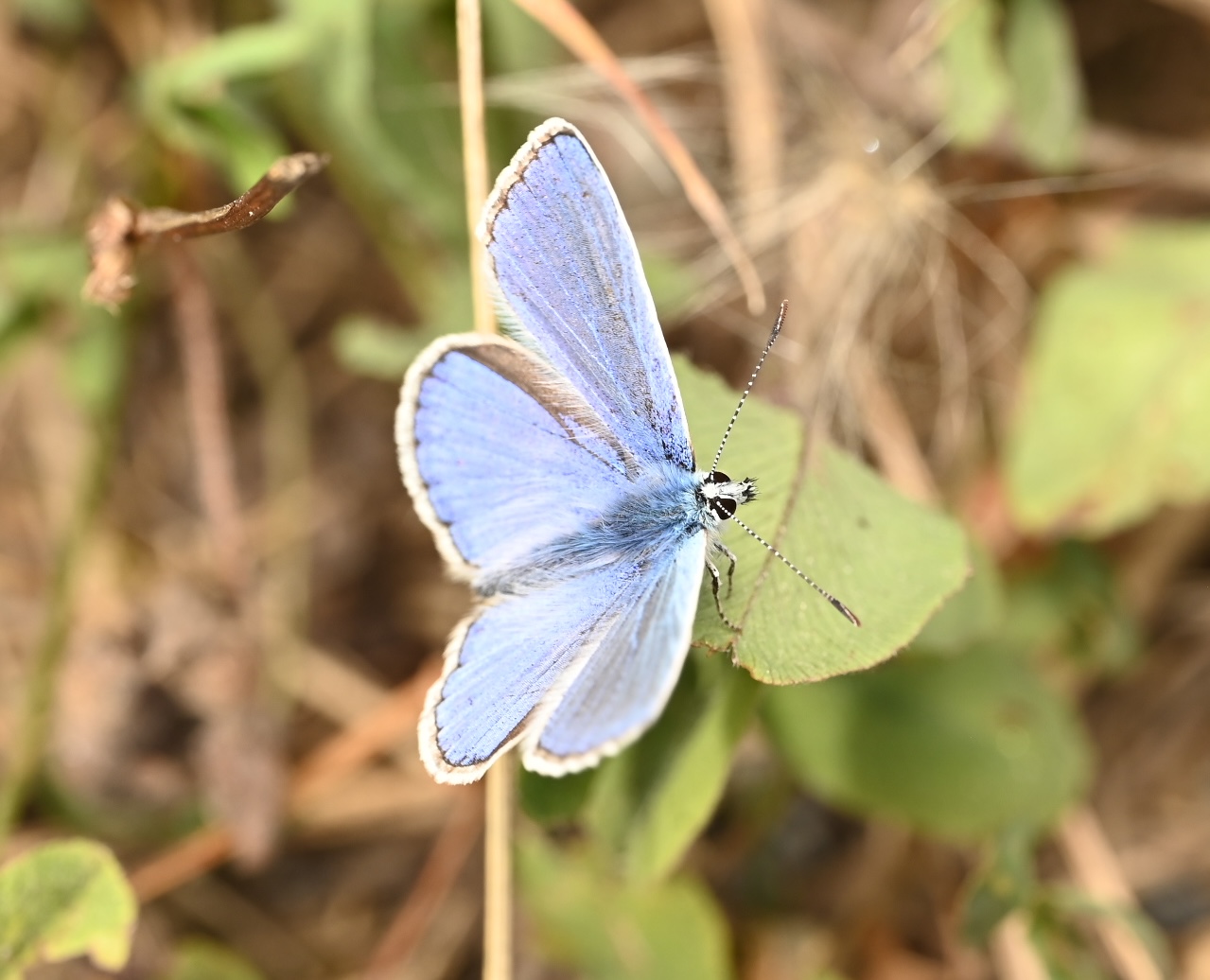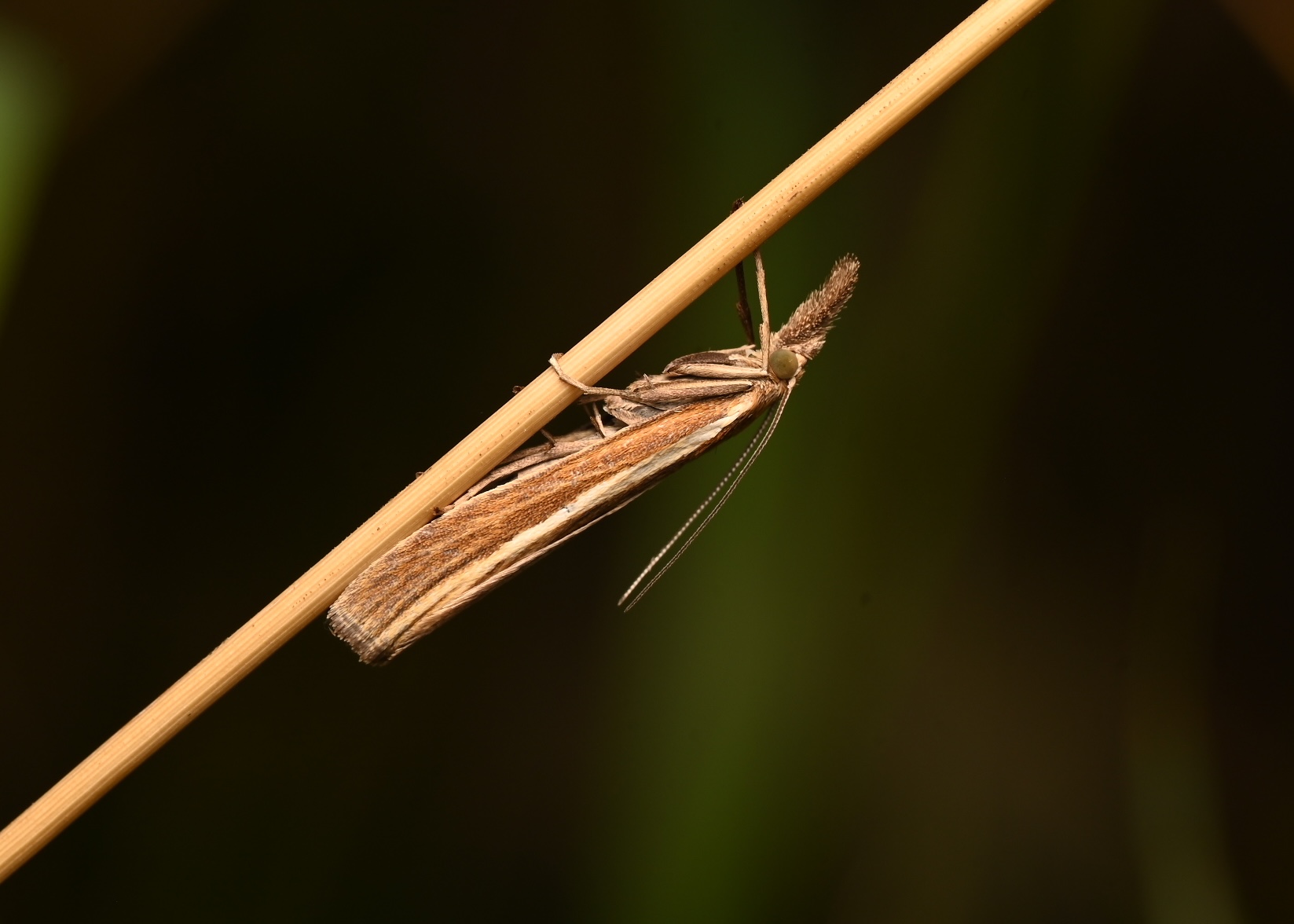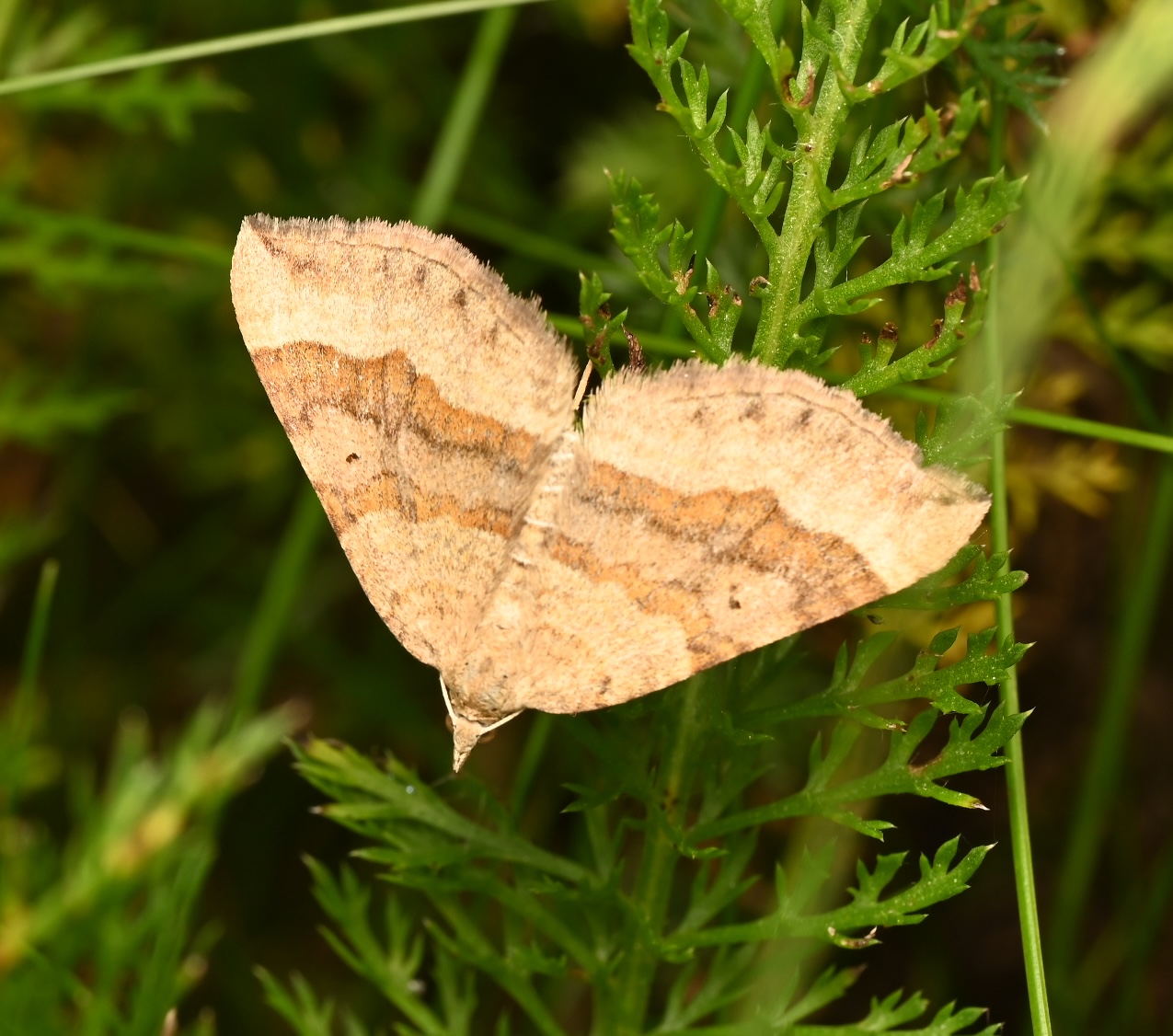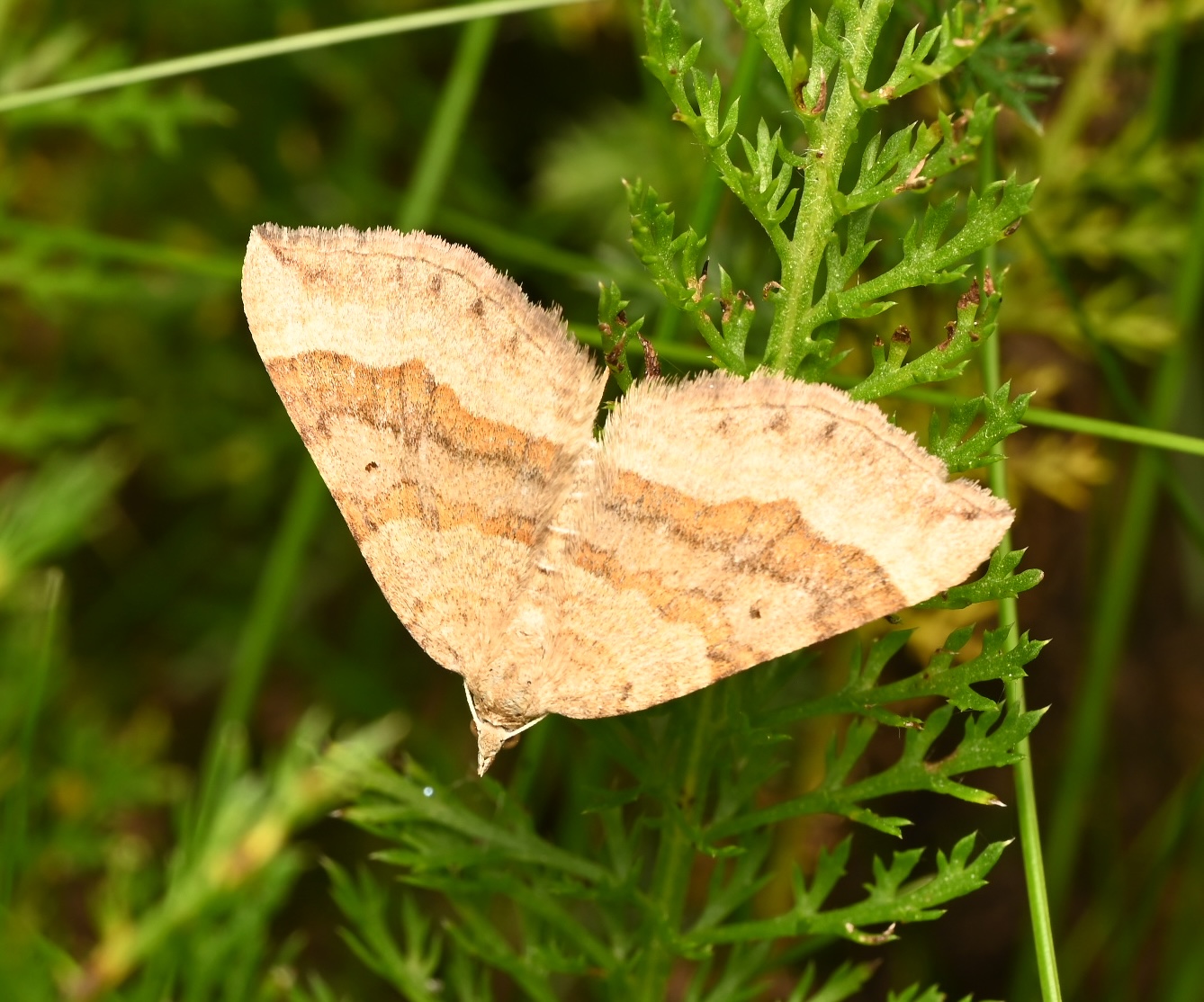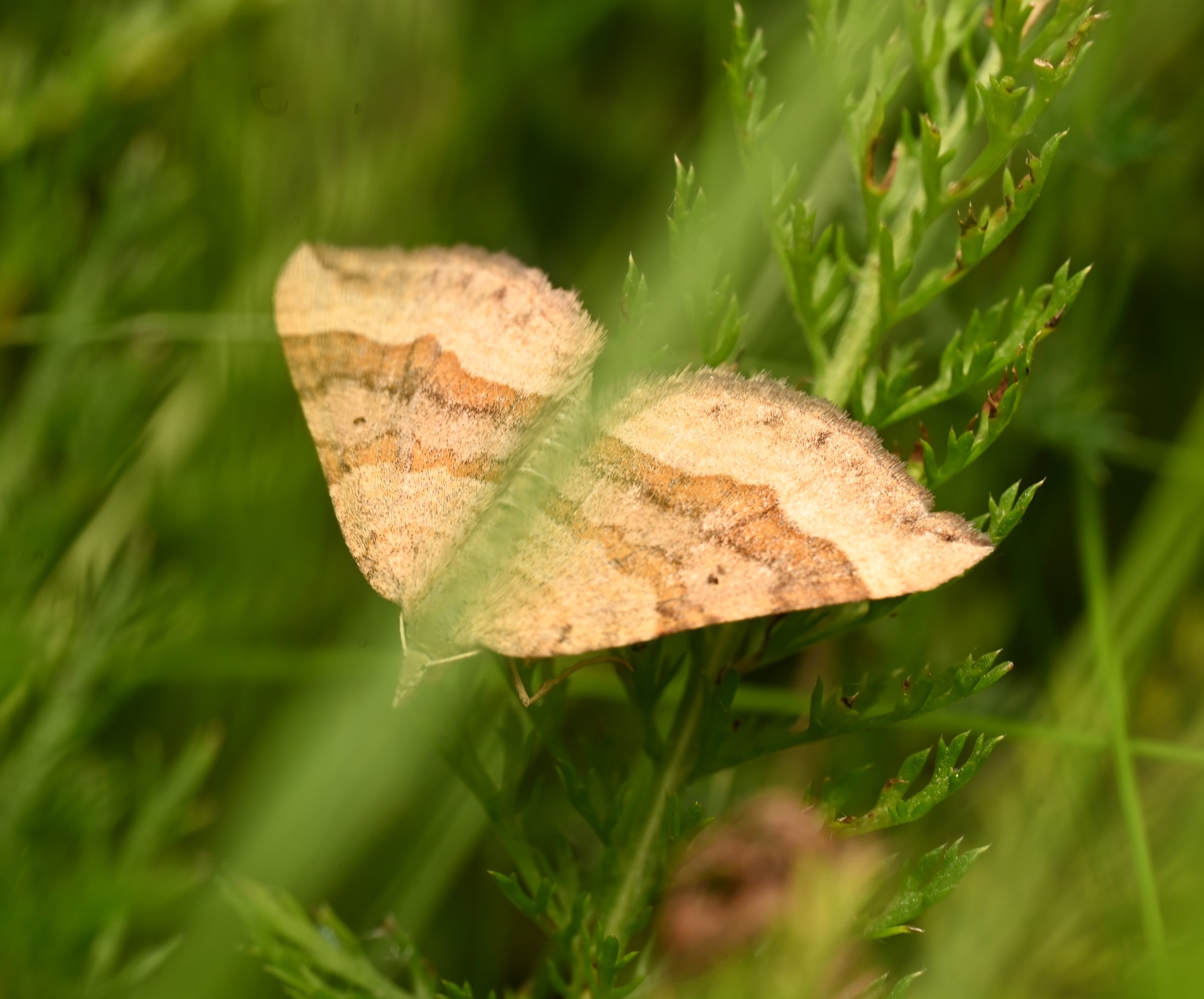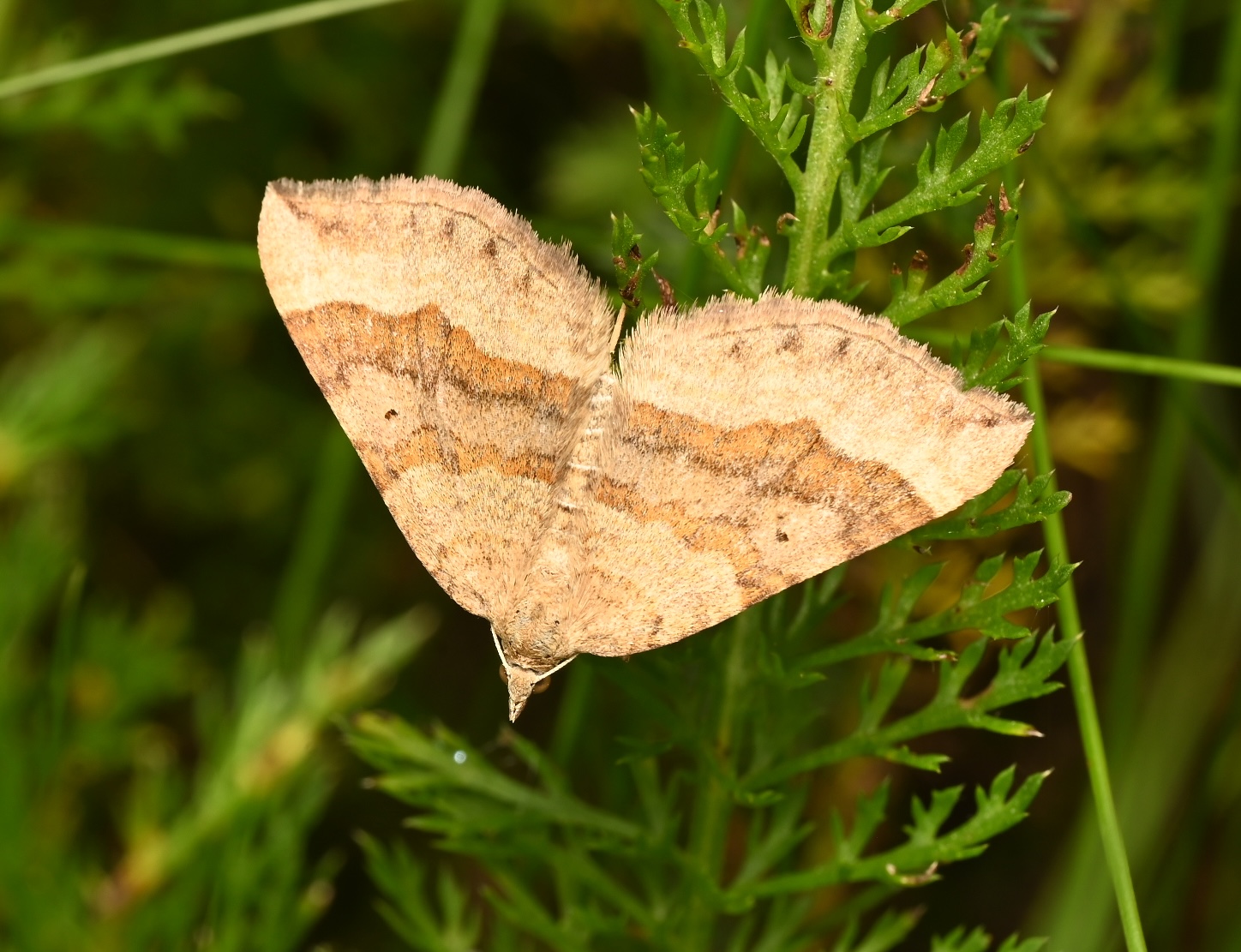
First named by Carl Linnaeus in 1758, the shaded broad-bar (Scotopteryx chenopodiata) is a grassland moth with a 25–30 mm wingspan. It is easily identified by its forewings—ranging from pale ochreous to deep coffee brown—marked by a prominent, dark central cross-band with a paler inner border. While not strictly a day-flying moth, it is easily flushed from low vegetation if you brush past its habitat during the daytime. In the 18th century, British entomologists gave this species a quirky nickname because it was so overwhelmingly common in tall grass that it constantly got trapped in their nets by accident while they were hunting for rarer insects. Its caterpillars feed exclusively on low-growing legumes, particularly species of vetch (Vicia) and clover (Trifolium). Although I have crossed paths with this moth in meadows across several European countries, I only finally managed to capture a few photos during a walk near Akalla, Sweden.