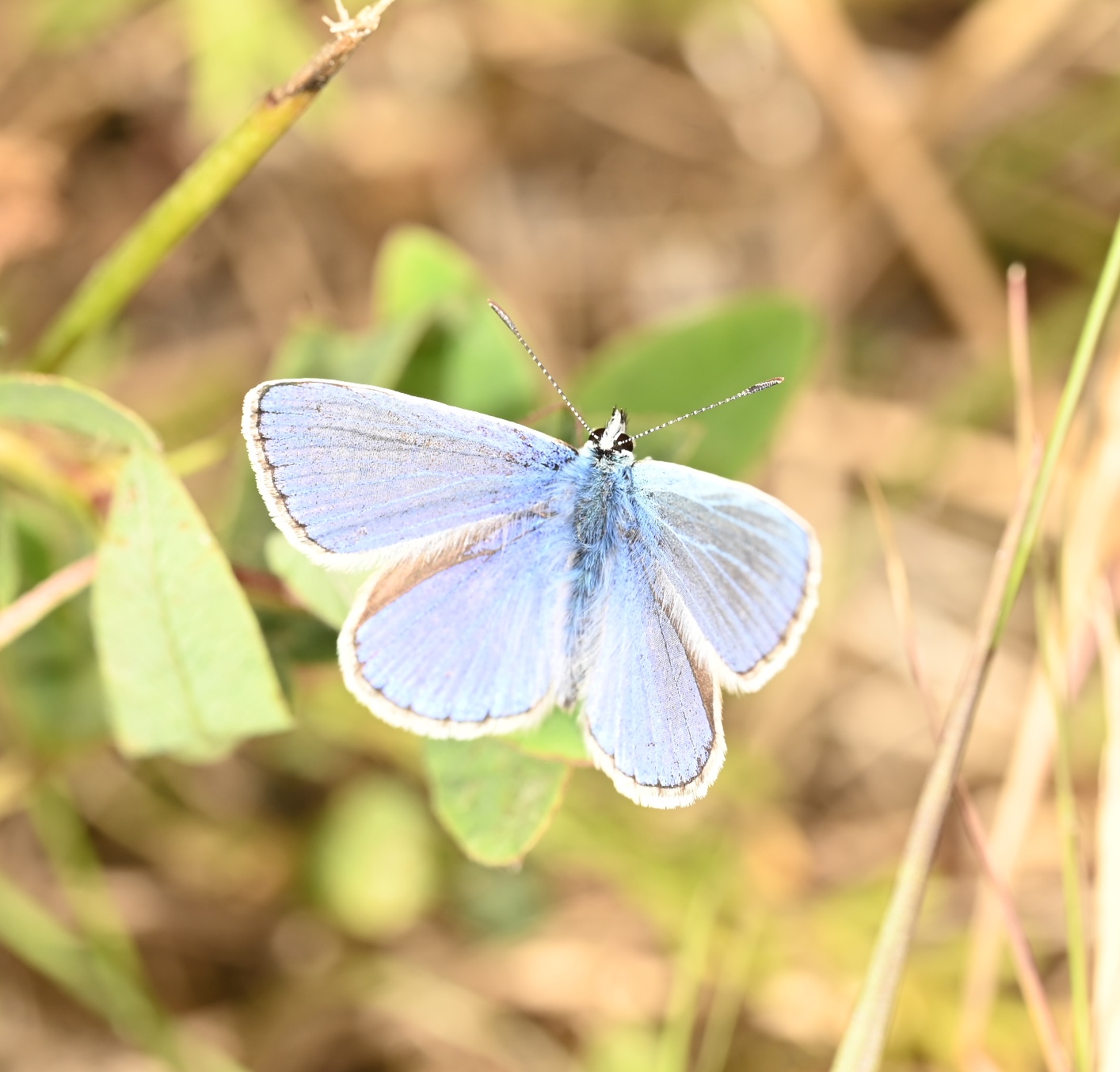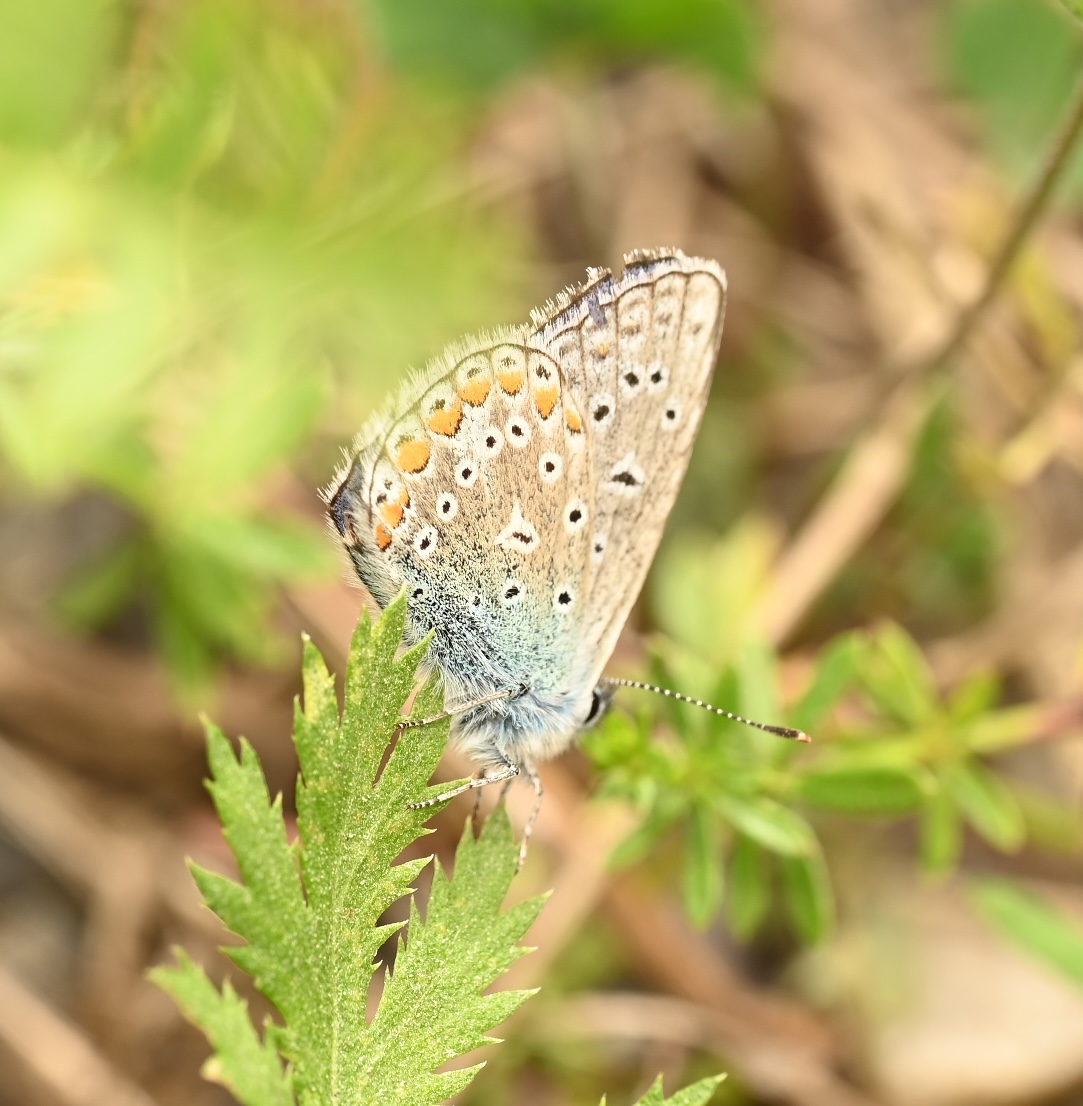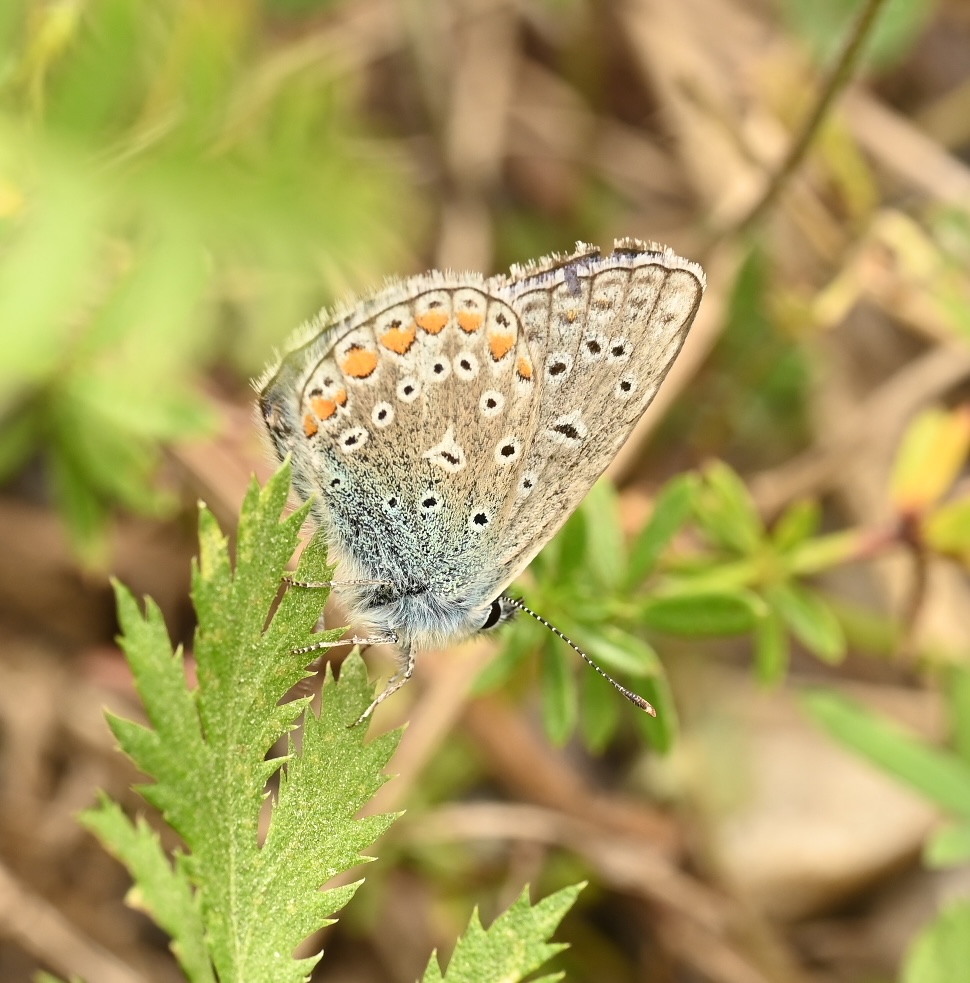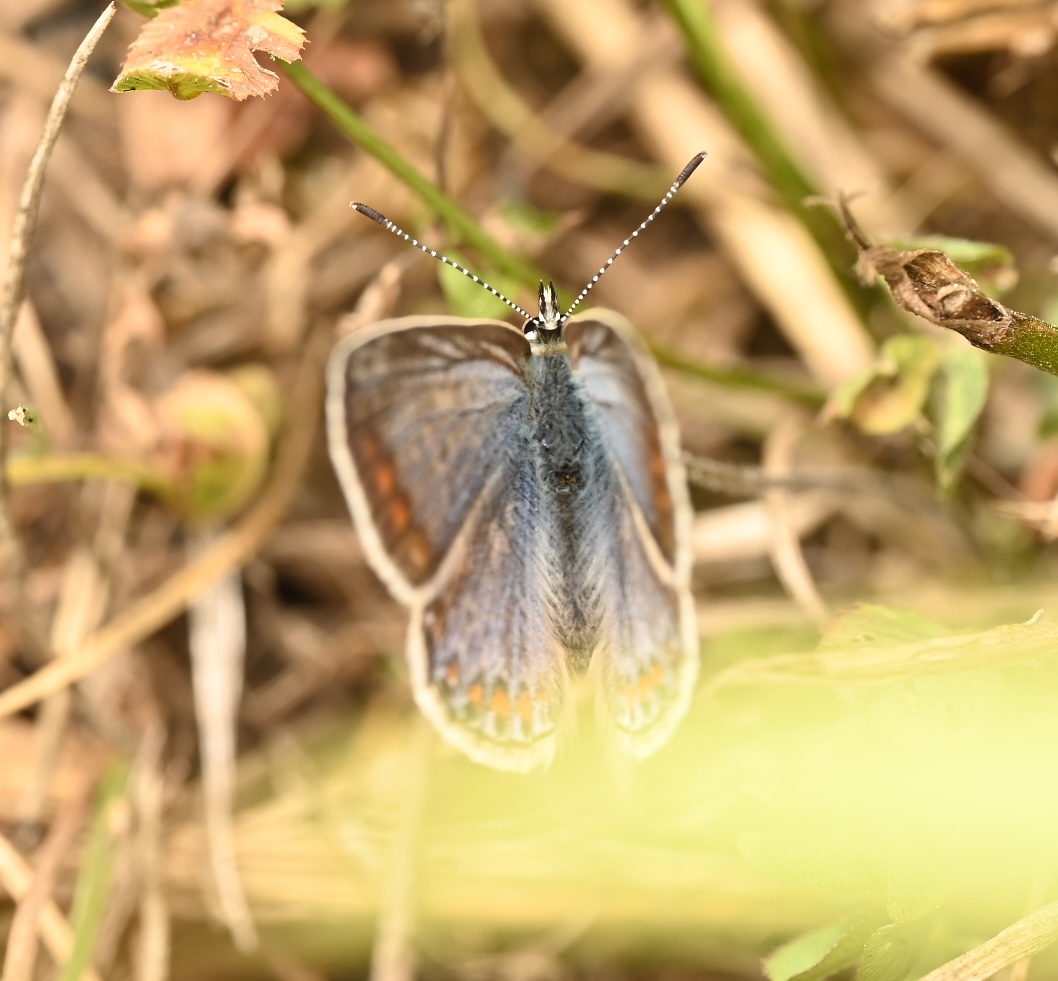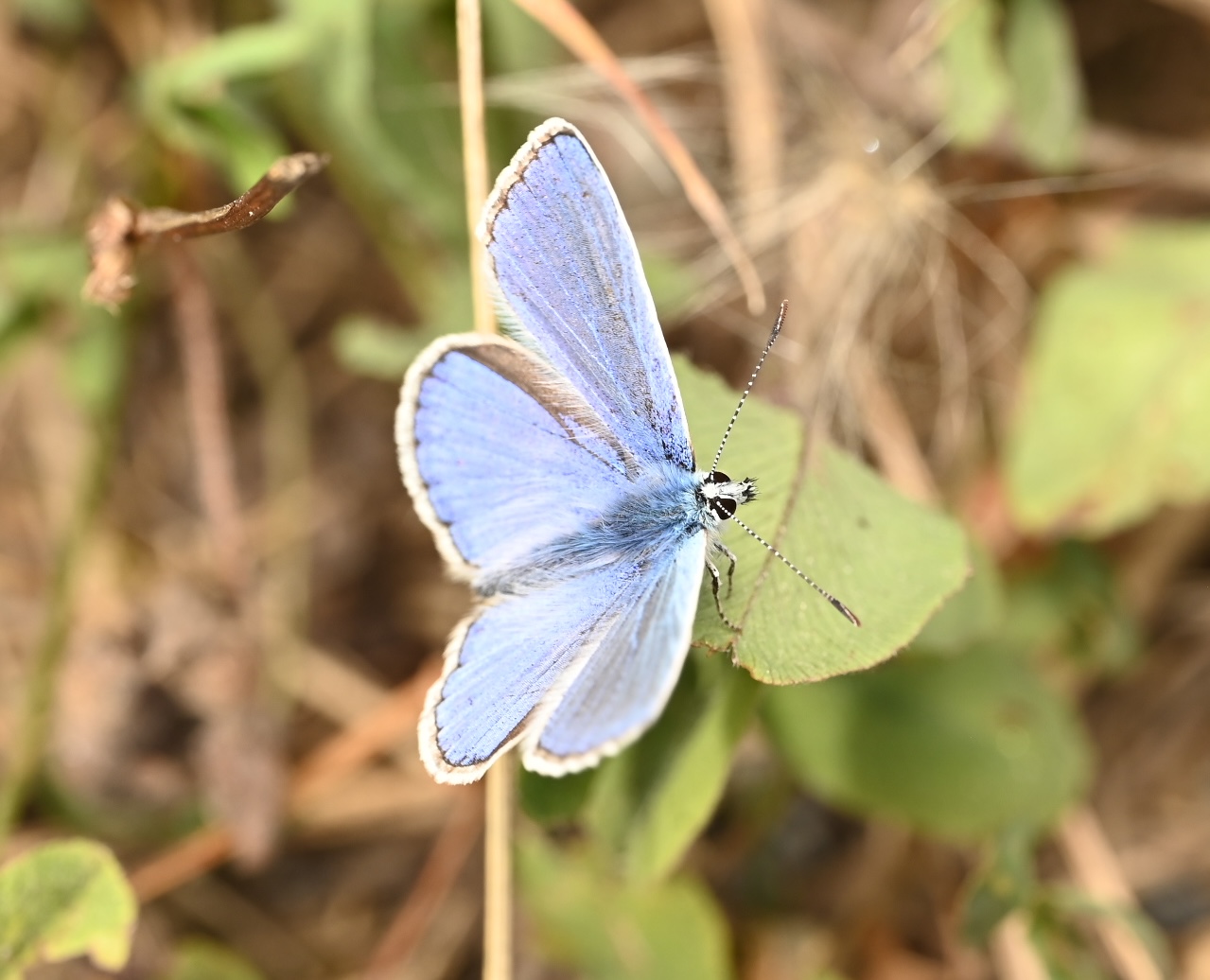
The common blue butterfly (Polyommatus icarus) is a small, widespread insect with a 28–36 mm wingspan that thrives across Europe, Asia, and North Africa. Males feature brilliant, iridescent lilac-blue uppersides bordered by a delicate black rim. Females are typically brown, though depending on the region, they can display a heavy dusting of blue or even appear mostly blue. Their life cycle involves a fascinating partnership: the slug-like, pale green caterpillars engage in a mutualistic relationship with ants, which tend and protect them in exchange for sweet secretions. Feeding primarily on legumes like bird’s-foot trefoil and white clover, the larvae also serve as the overwintering stage in colder regions. During a sunny afternoon walk on the outskirts of Akalla, Sweden, I encountered hundreds of these vibrant butterflies fluttering through the grass. It took a great deal of patience, however, before a few camera-friendly males finally let me get close enough to take photos.