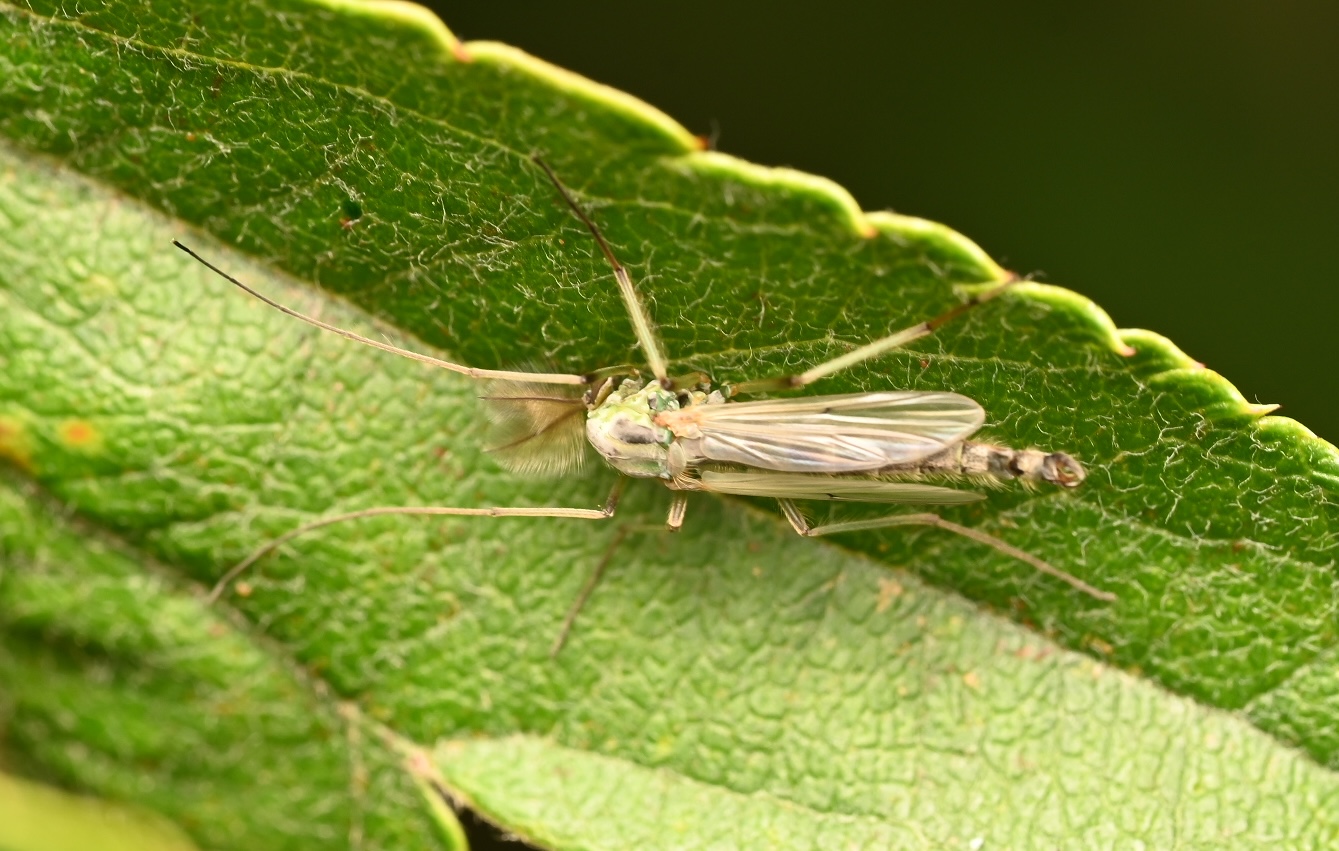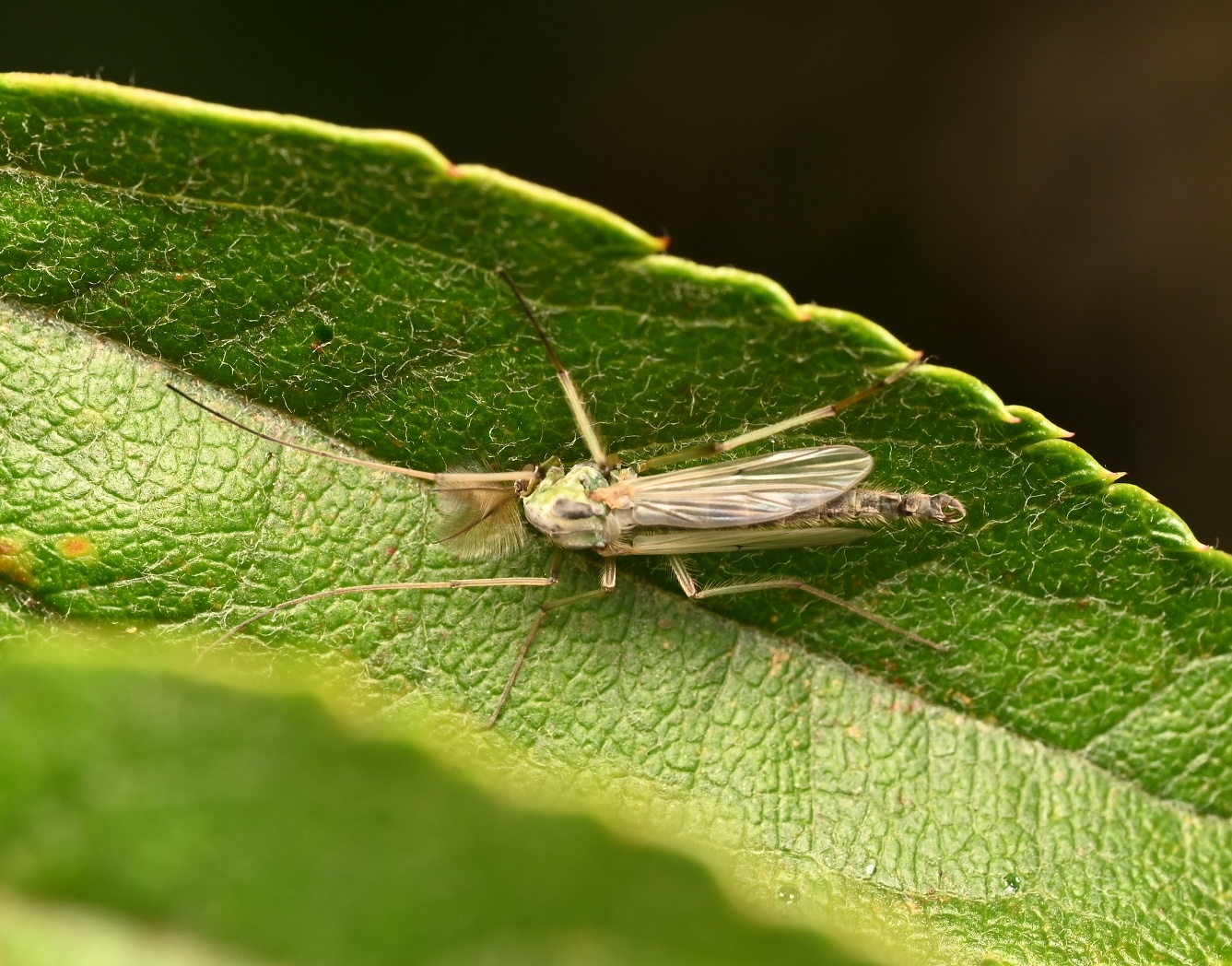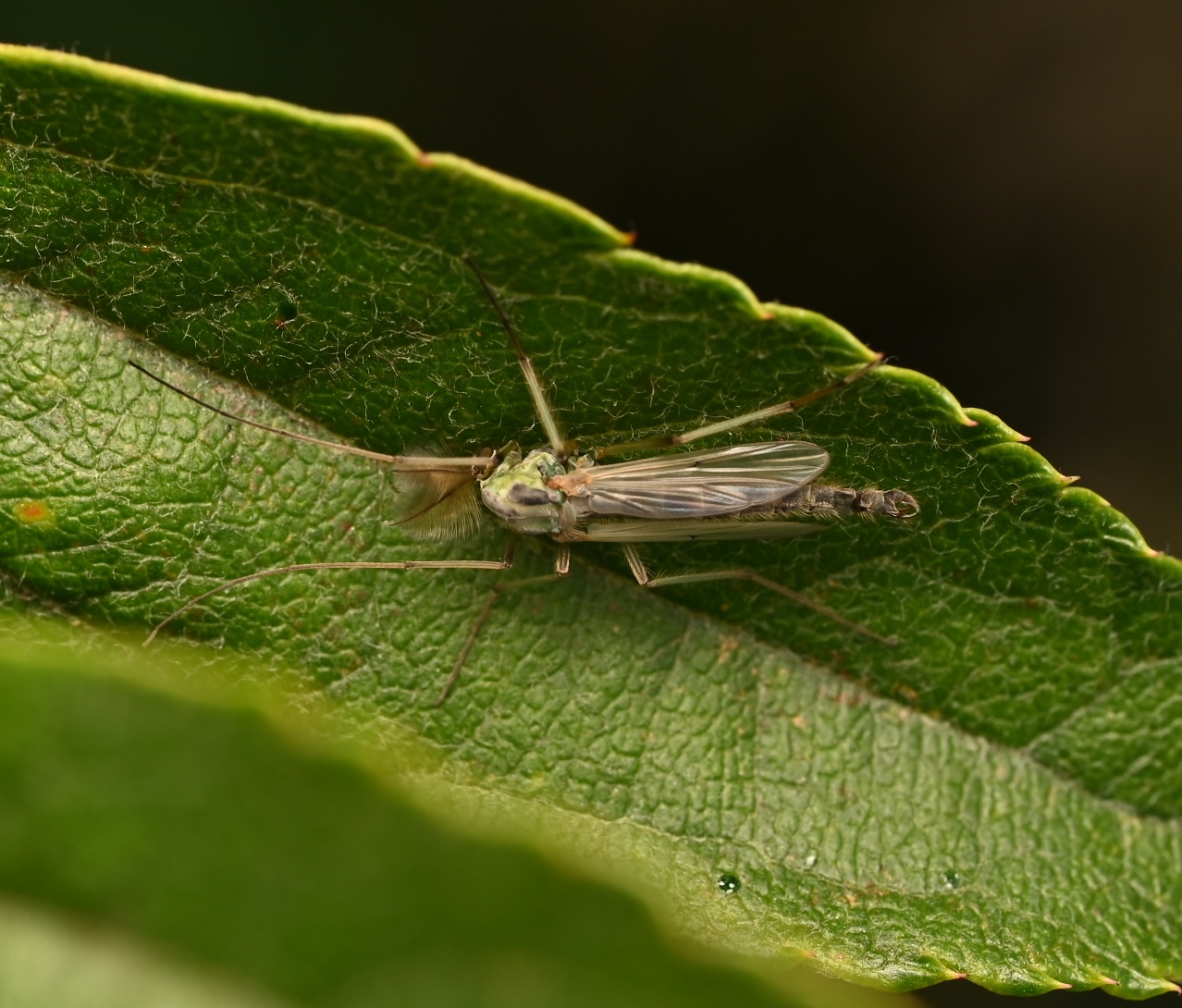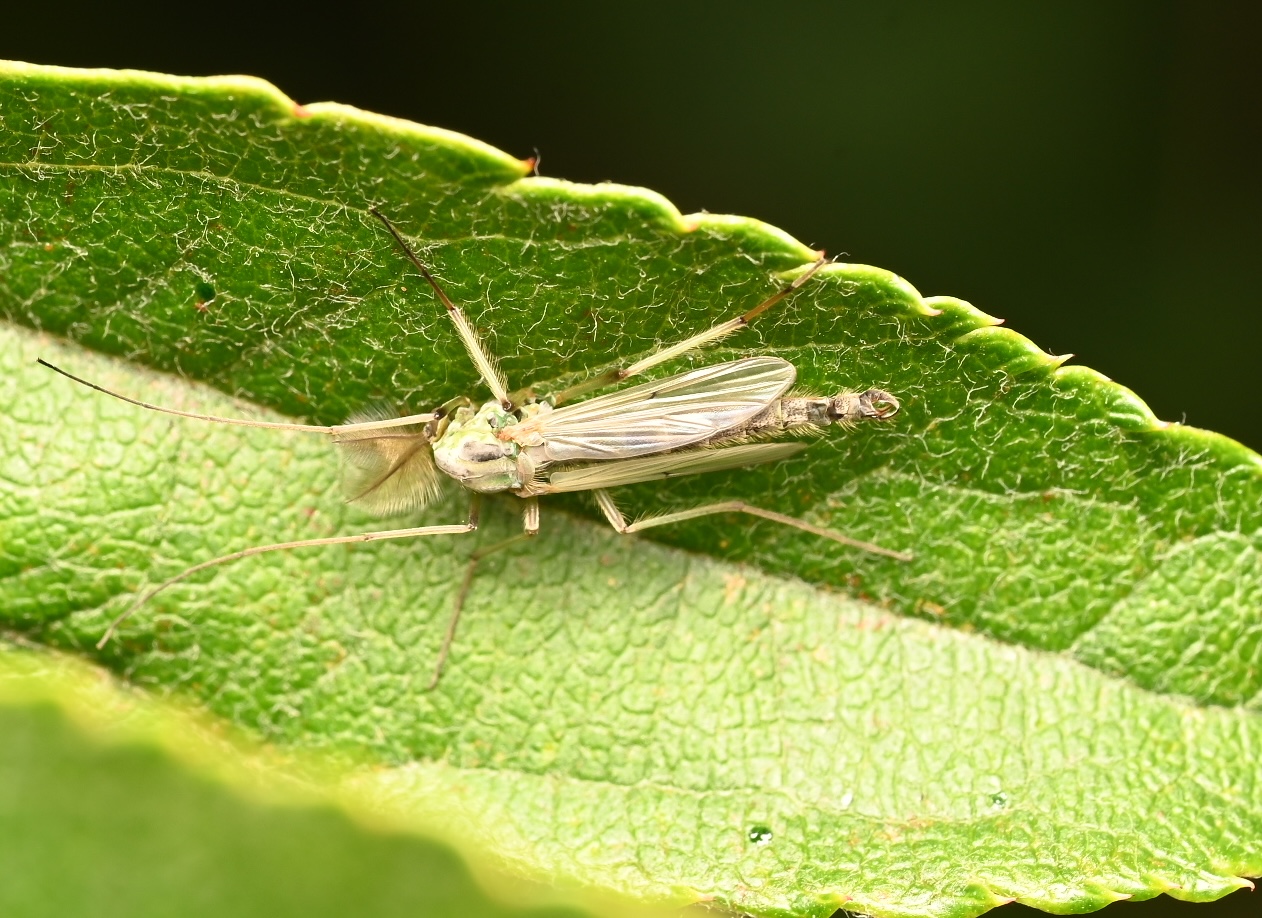
Camptochironomus is a subgenus of non-biting midges belonging to the vast family Chironomidae. Their aquatic larvae are rich in hemoglobin, which gives them a striking bright red color—earning them the common name “bloodworms”—and allows them to thrive in low-oxygen sediment. Inside these muddy depths, the larvae construct silken tubes and pump water through them to filter out micro-organic particles. As adults, their role shifts entirely: lacking functional mouthparts, they do not bite or feed, living only briefly to mate. Paleontologists and ecologists track their presence and fossilized head capsules in lake beds as natural indicators of past climates and modern water quality. I encountered this large male—complete with ultra-long front legs and magnificent, feathery antennae—in a city park just a few blocks from my home in Barkarby, Sweden.