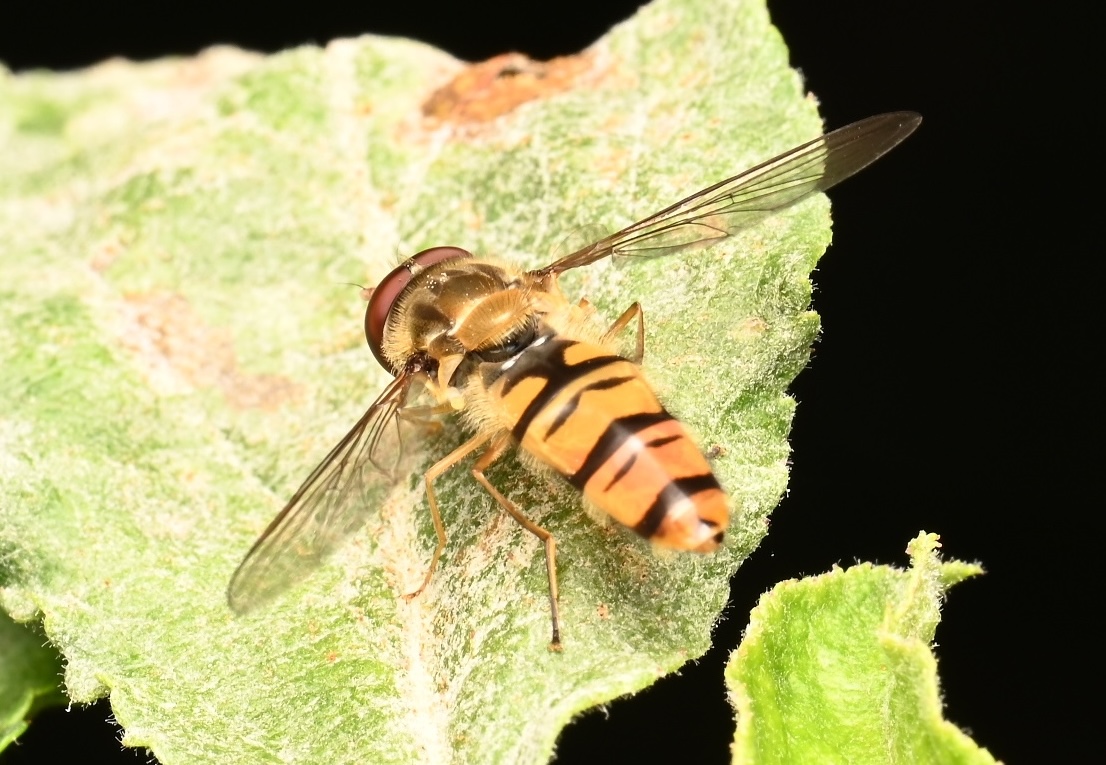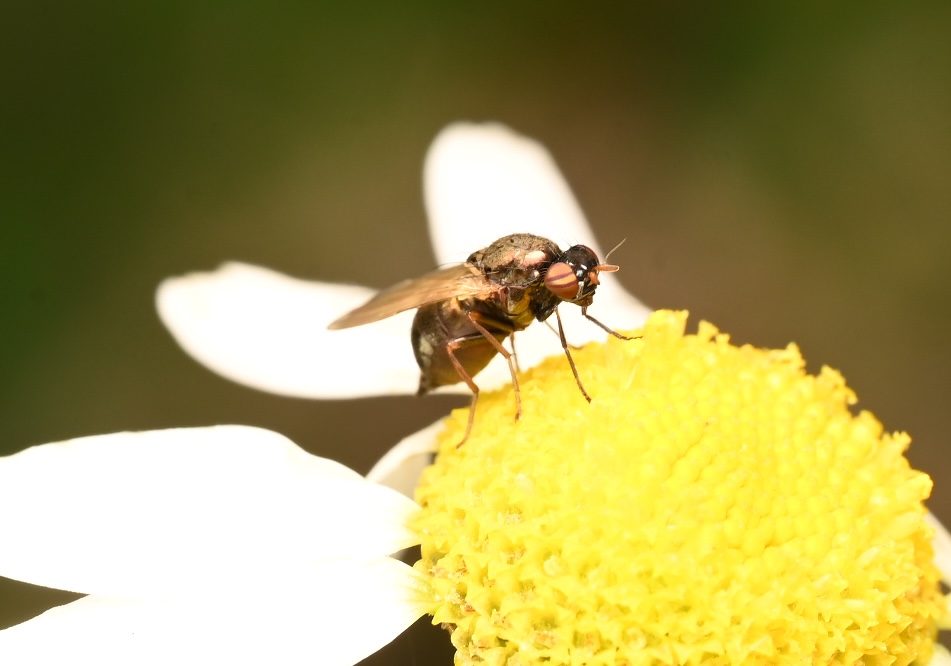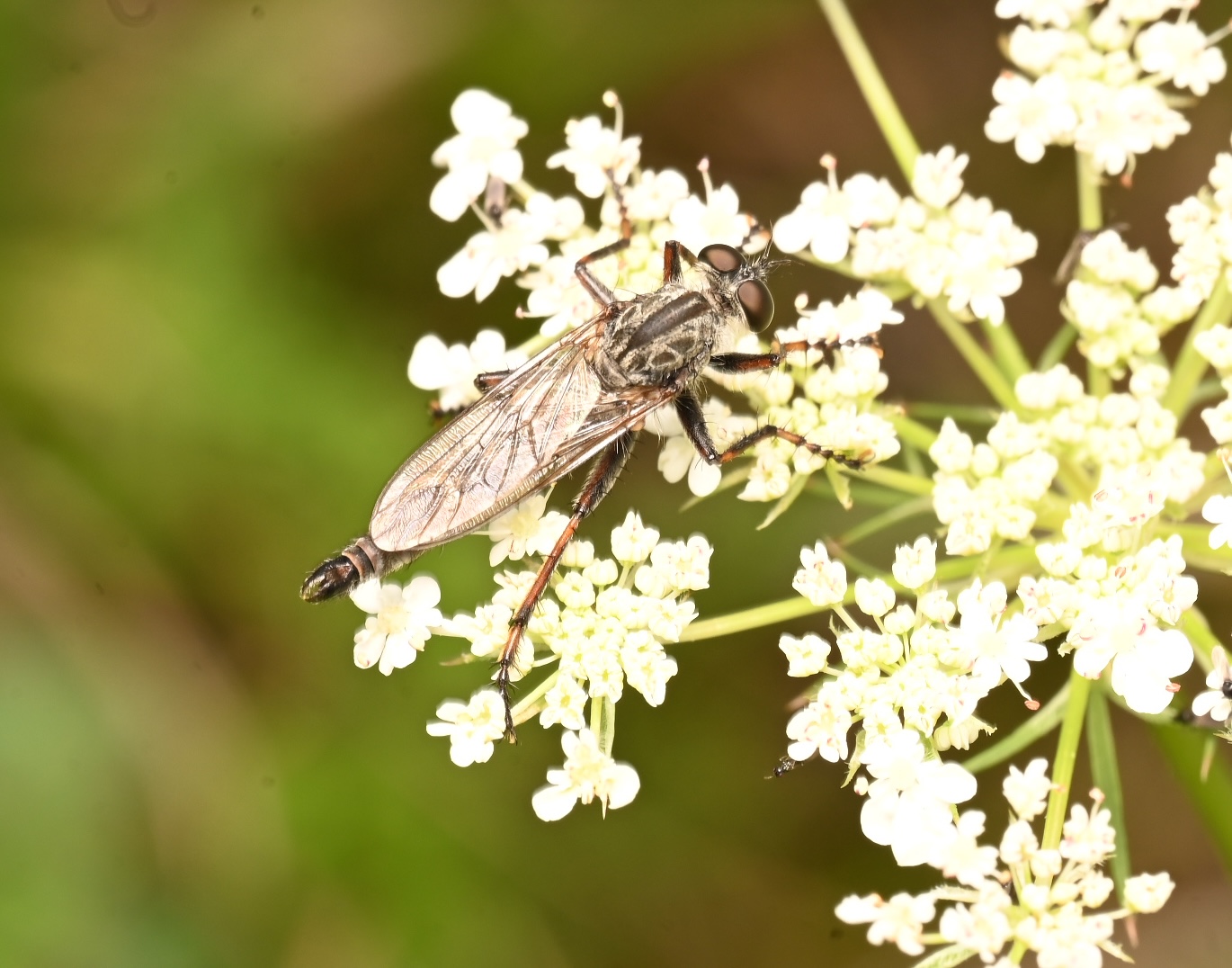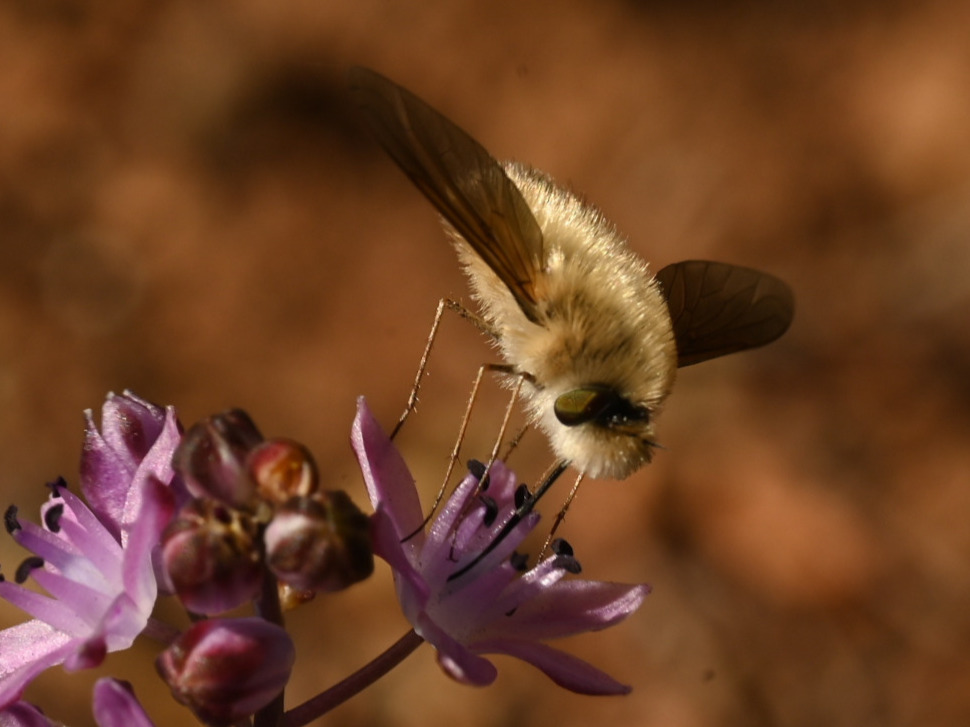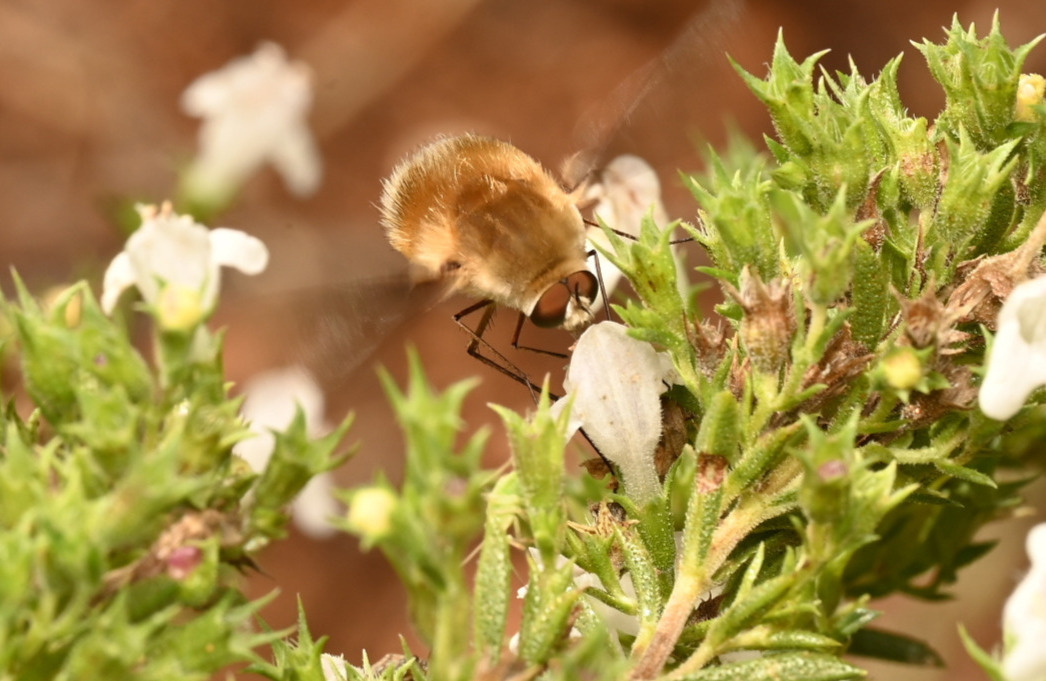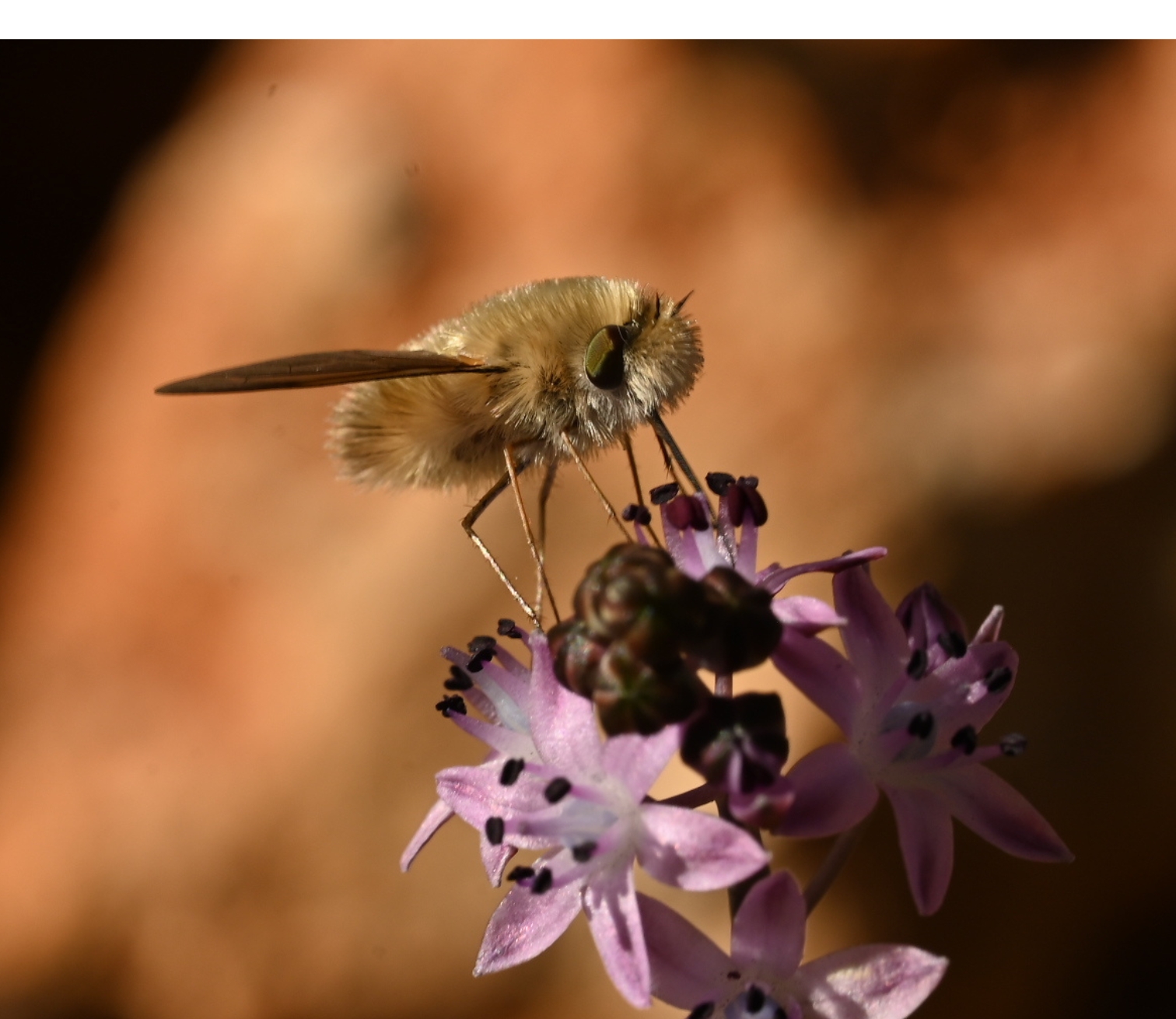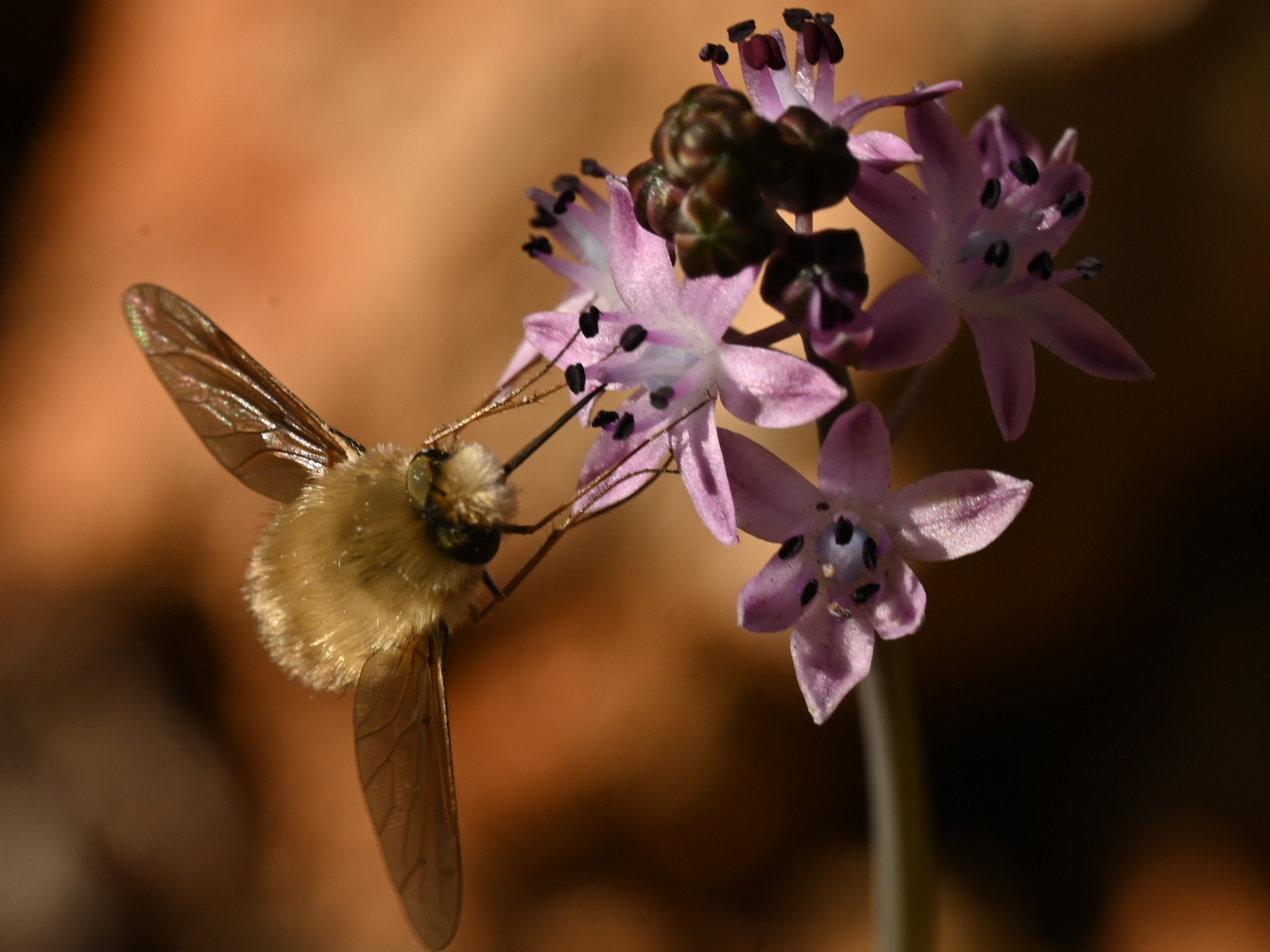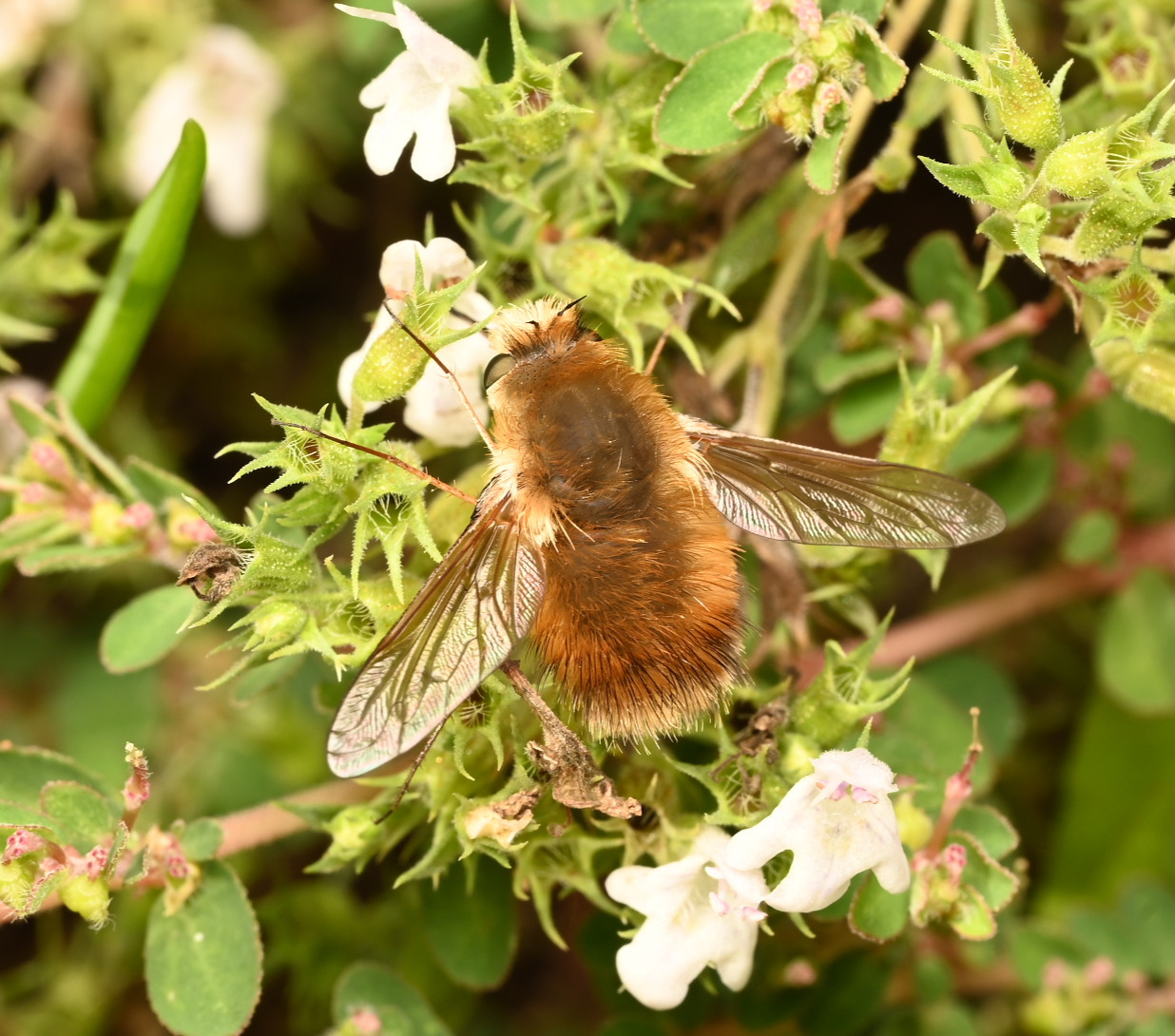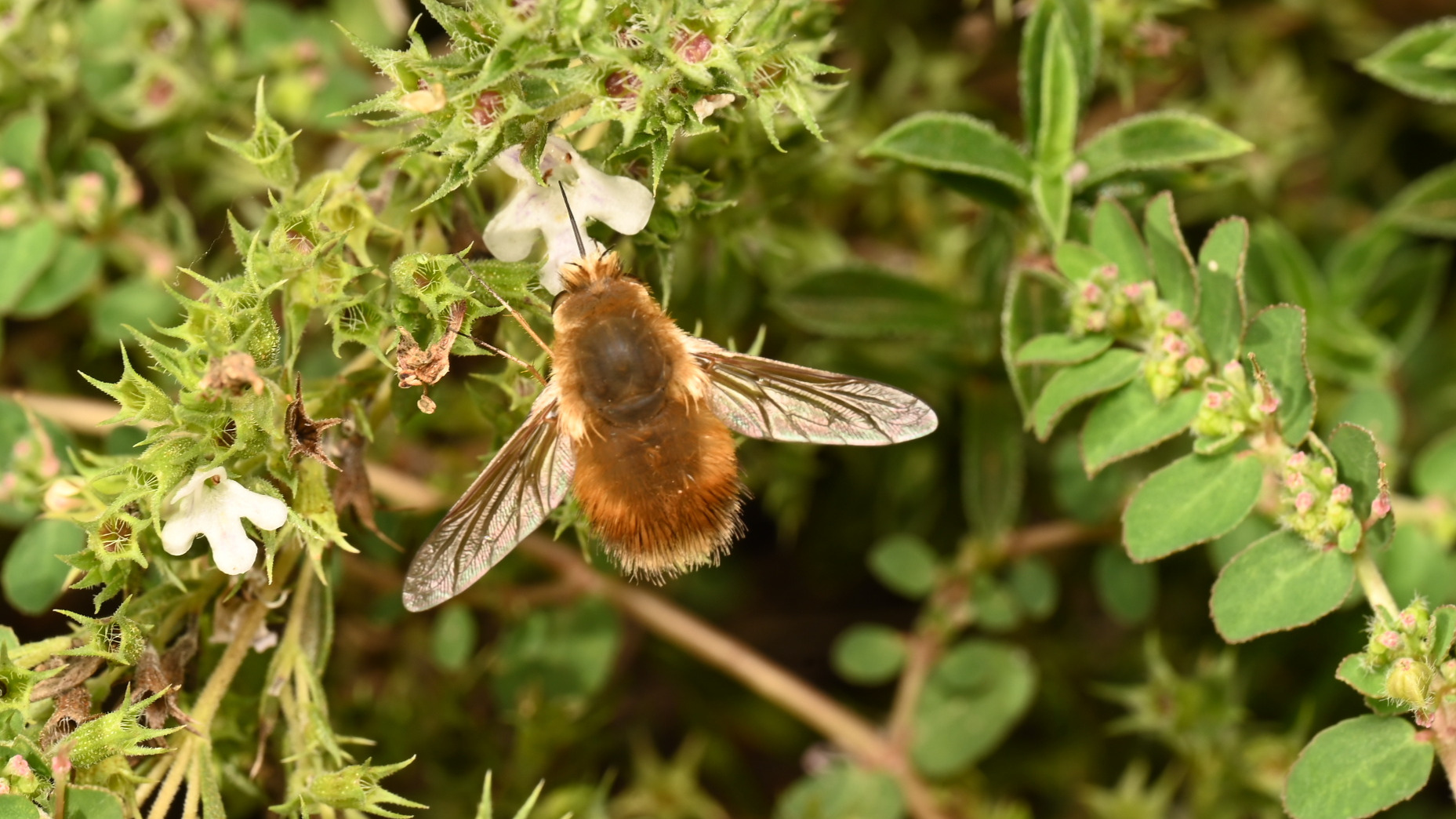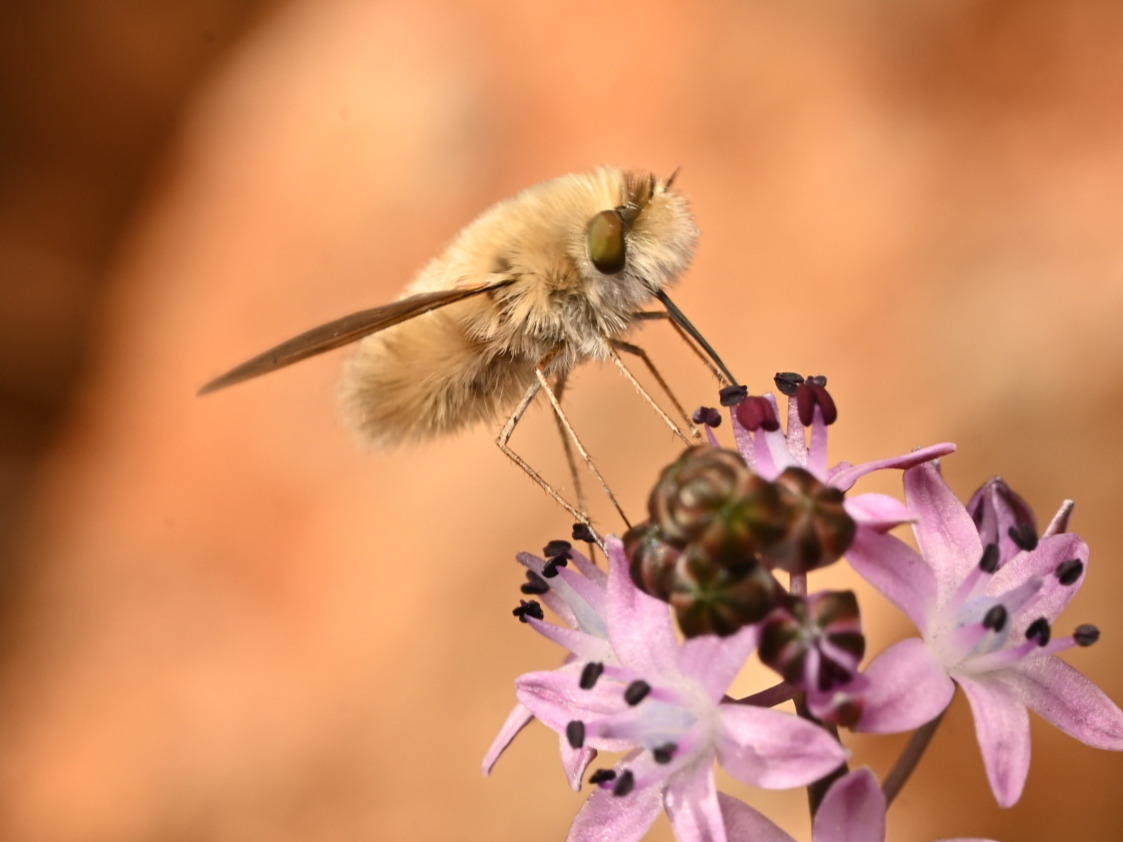
Meet Anastoechus, a genus of remarkably fluffy, nectar-feeding bee flies (family Bombyliidae) celebrated for their bee-like mimicry and their role as specialized predators of grasshopper eggs. Their dense, furry coats trick potential predators into mistaking them for stinging bees, offering them built-in protection. As they move very fast and hover over blossoms and insert their long proboscis deep into the nectar, they look remarkably like tiny hummingbirds. Yet while adult flies feed exclusively on flower nectar and pollen, their underground larvae act as voracious predators, consuming grasshopper egg pods. During a sunny weekend on the Greek island of Spetses, I dedicated hours to capturing these elusive speedsters on camera. It was a true test of patience—standing completely still, waiting for one to finally dart into my frame or pause just long enough for the shutter to click. In the end, persistence paid off. I managed to secure a few shots I’m genuinely proud of, showcasing razor-sharp detail set against a beautifully soft, creamy background bokeh.