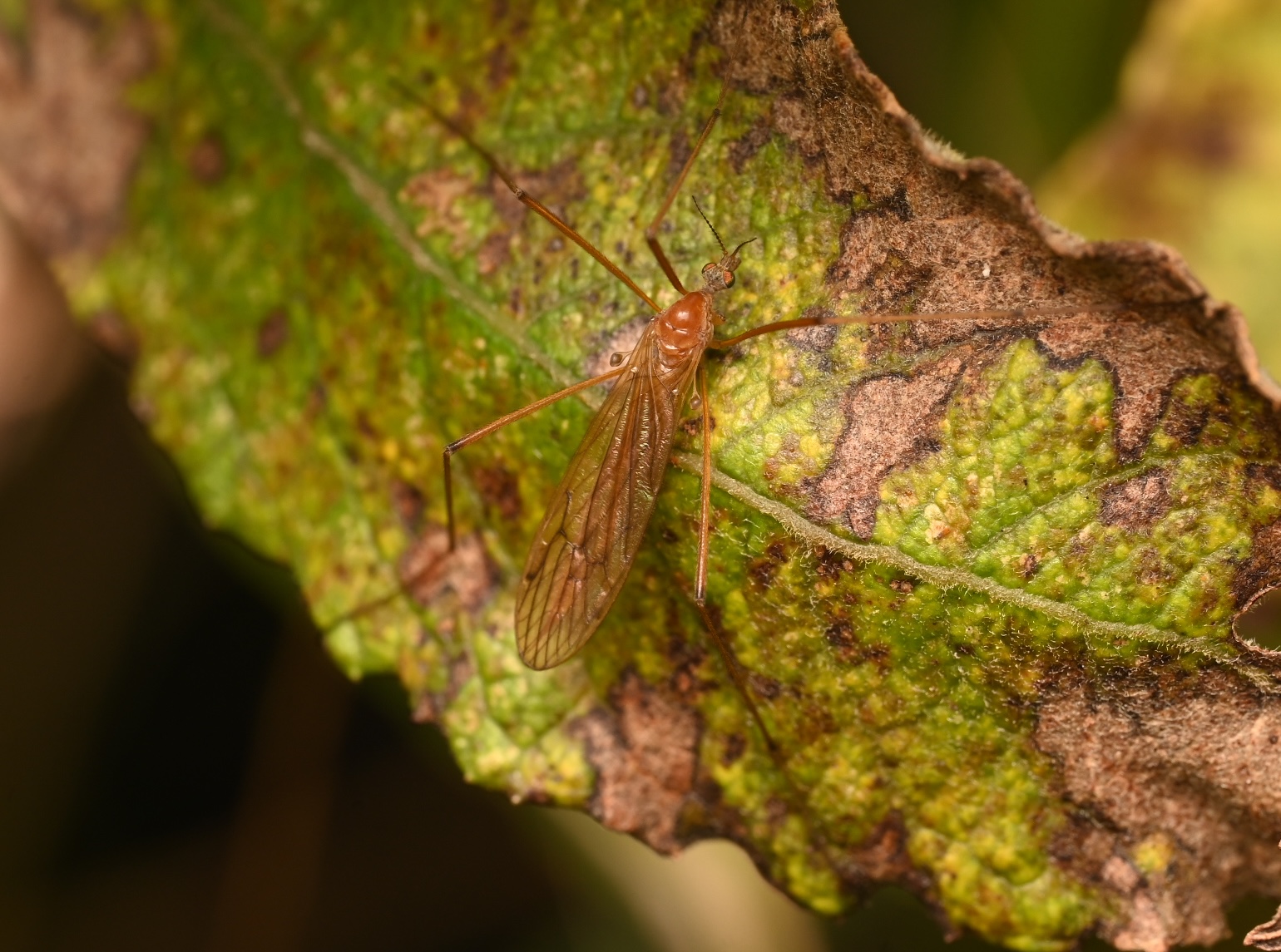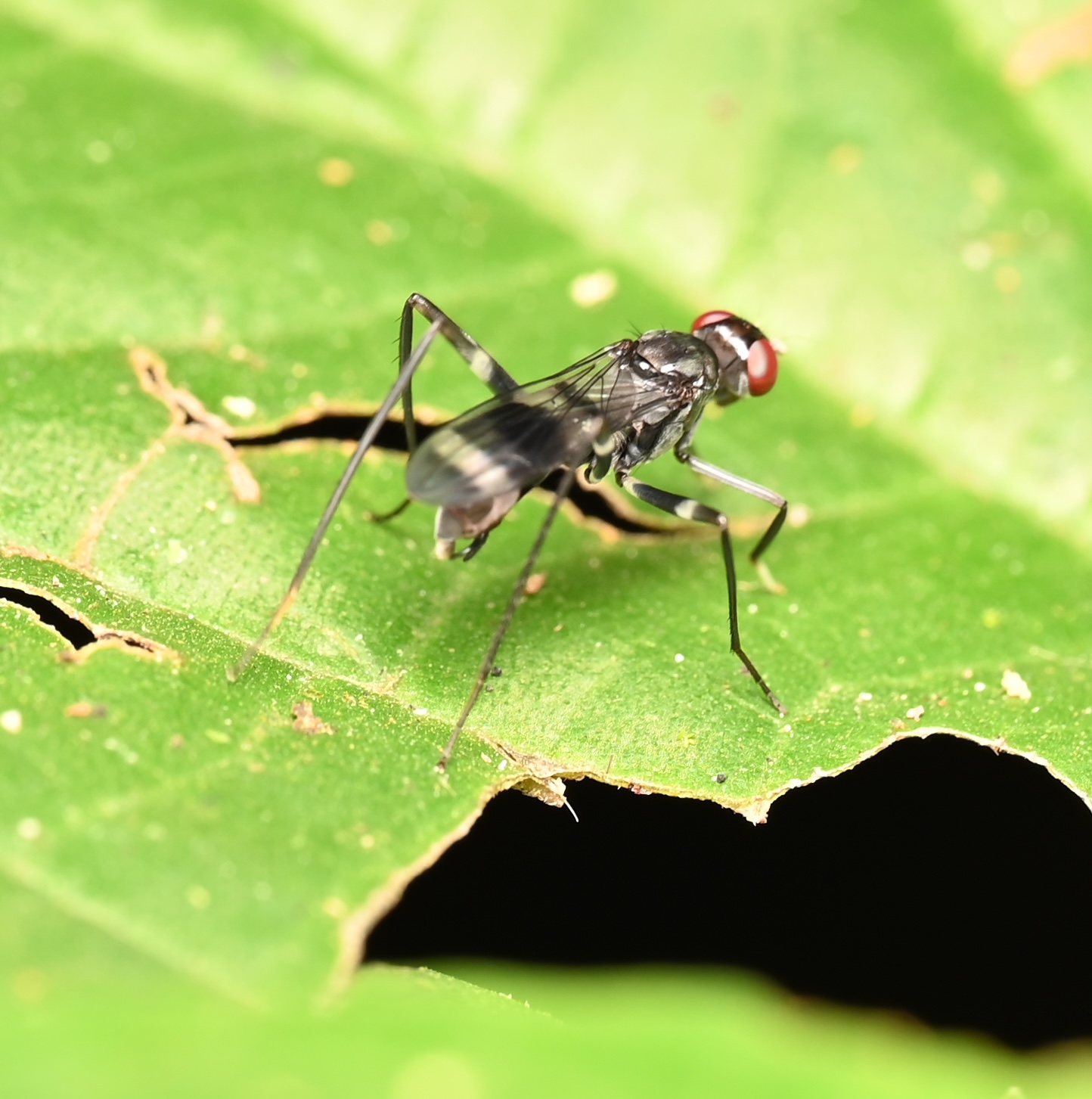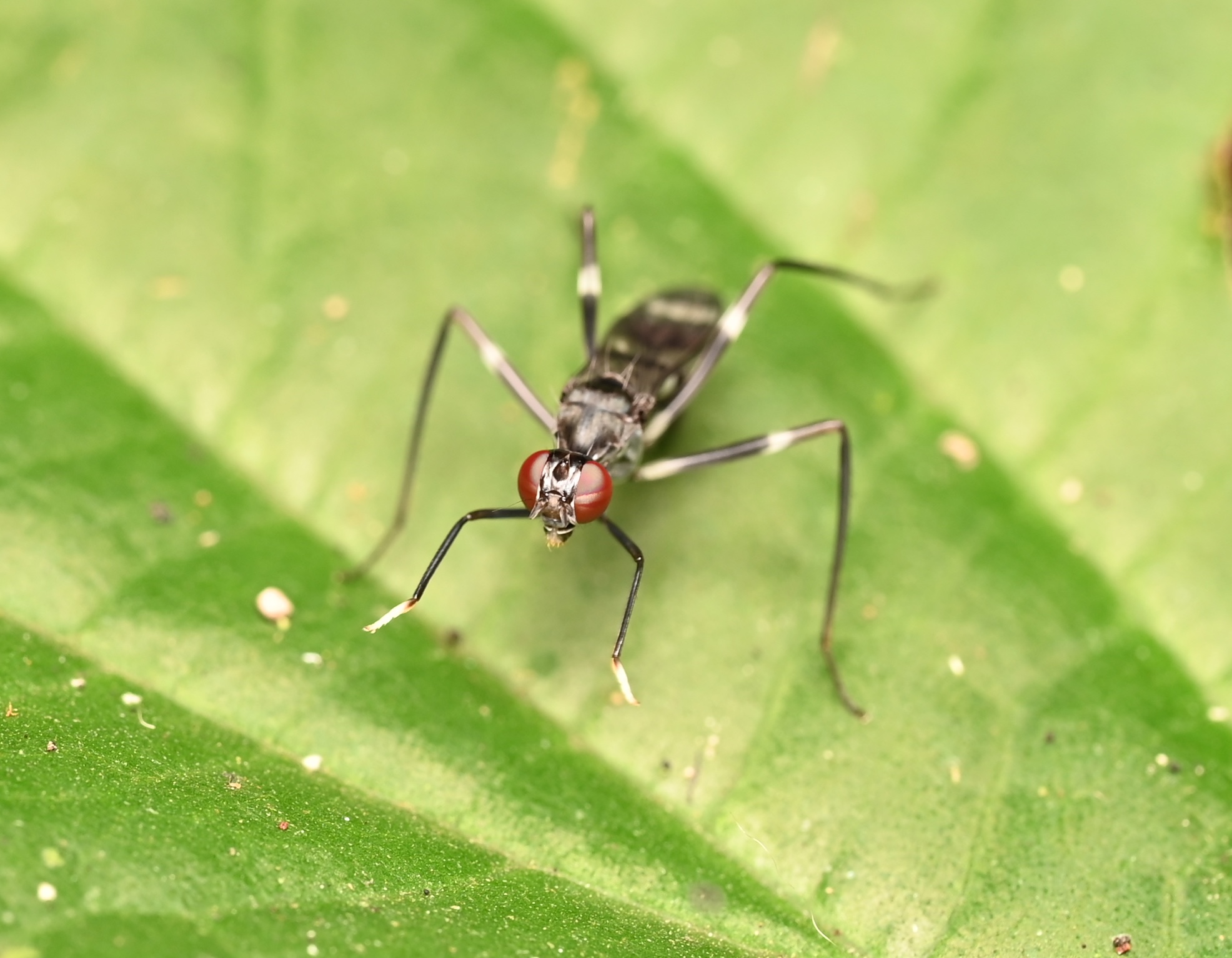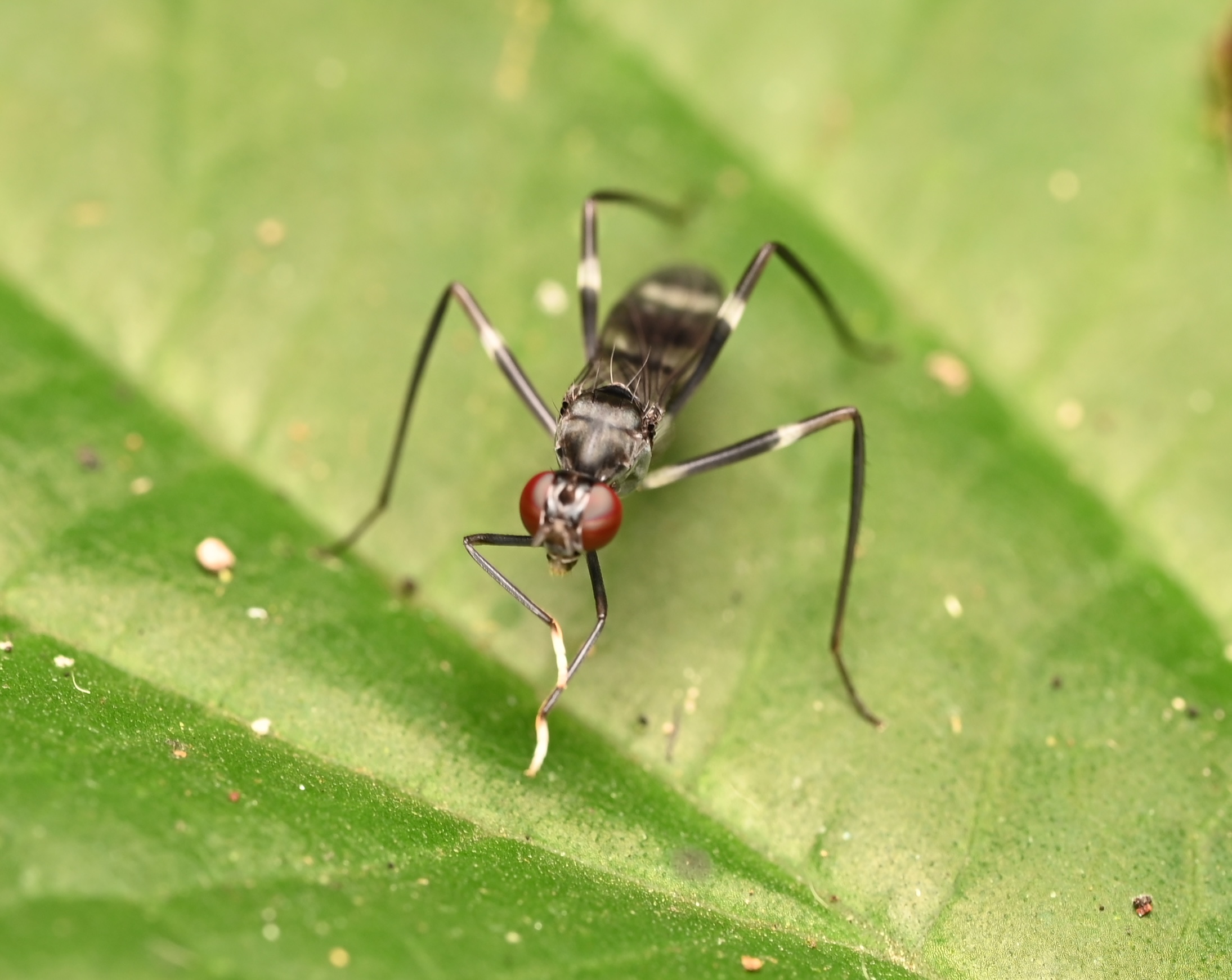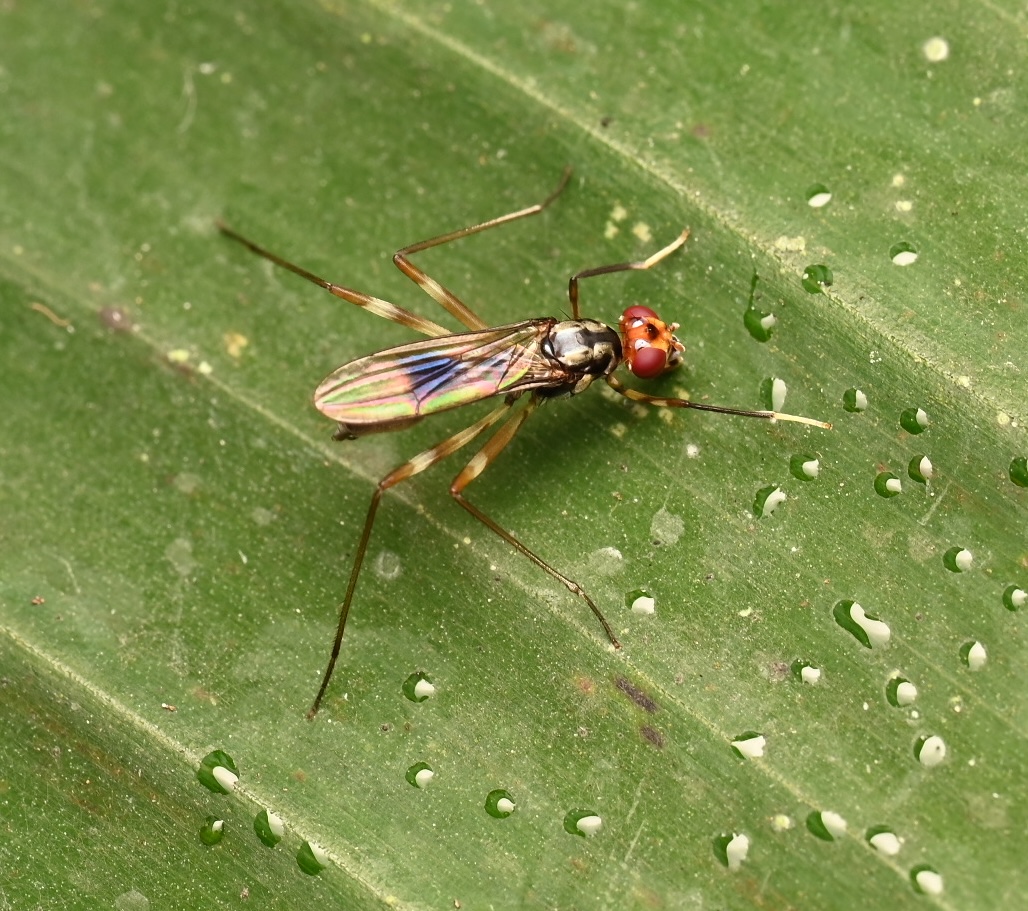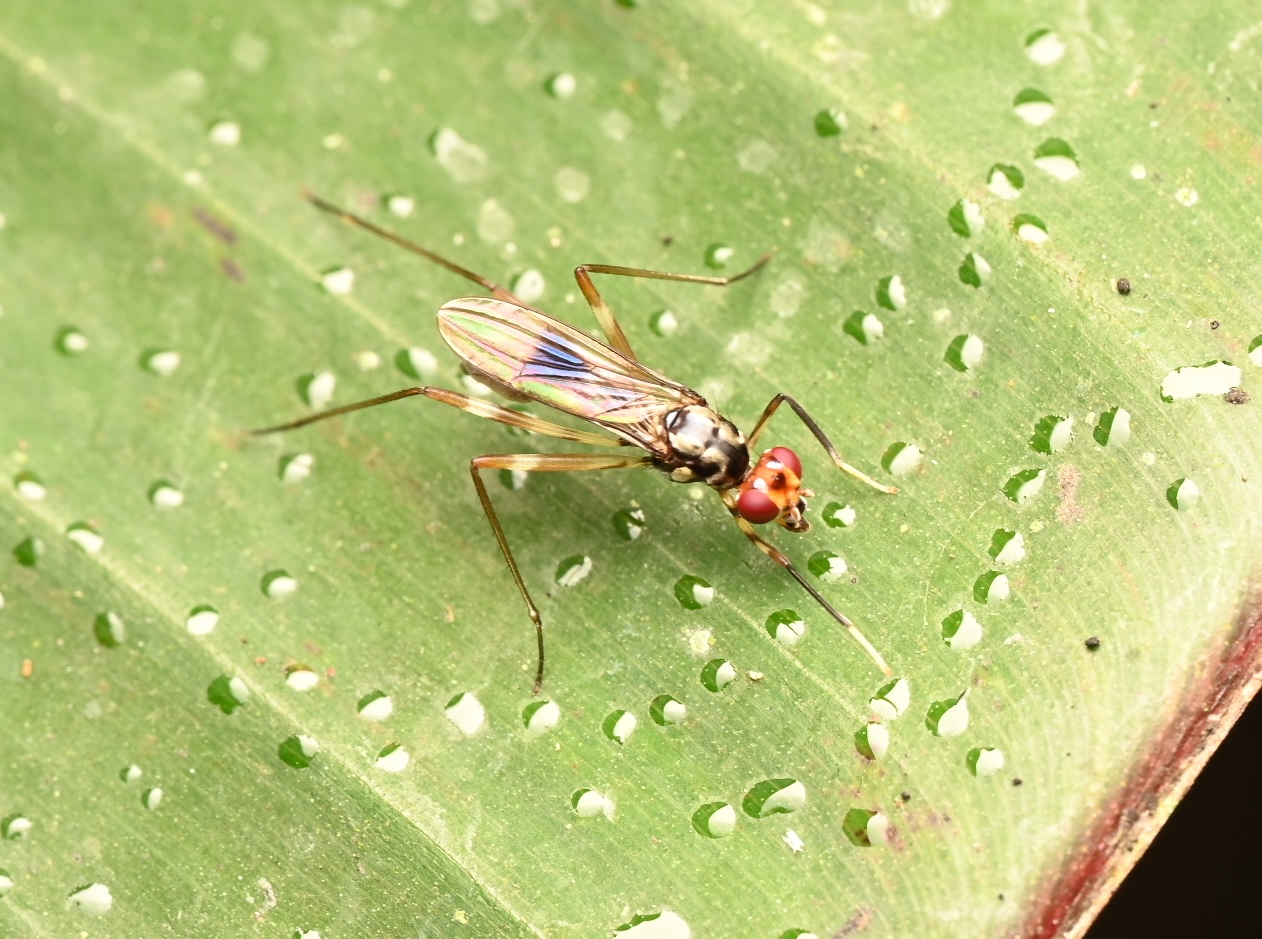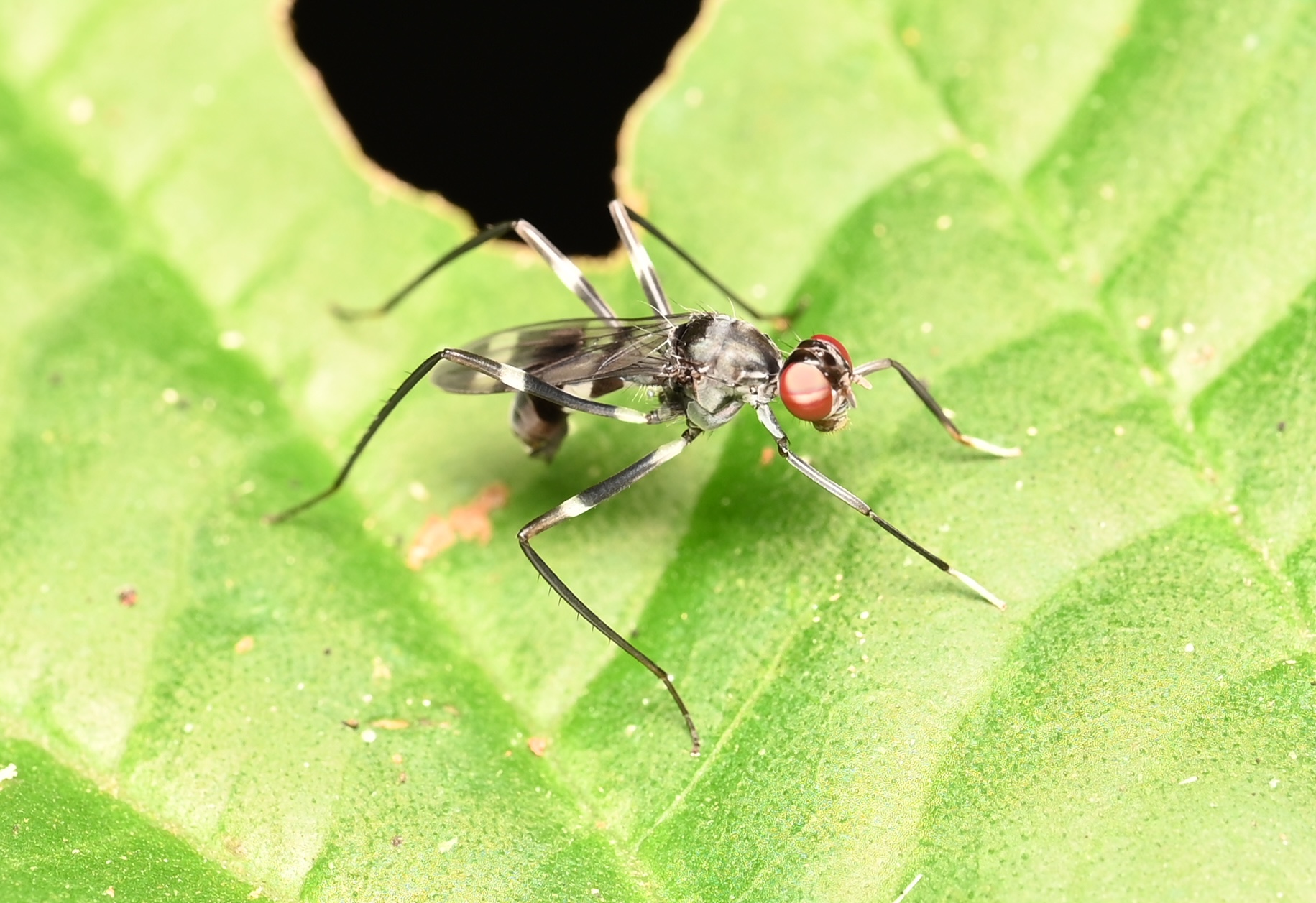
The genus Cardiacephala belongs to the fascinating world of Neotropical stilt-legged flies (family Micropezidae). True to their name, these insects feature extraordinarily long, thread-like legs, which they frequently wave in the air to mimic the erratic, high-strung movements of tropical ants. However, their true spectacle lies in their courtship. When a male approaches a female, he performs an elaborate ritual: swaying his body dynamically from side to side, dipping his abdomen to touch a leaf, and flashing the brilliant, iridescent colors on his tail end to win her over. If successful, he mounts the female and immediately offers a liquid droplet directly to her proboscis—a nutritious nuptial gift to keep her occupied before and during mating. I was fortunate enough to spot this charming stilt-legged fly during two consecutive summer visits to the La Perla protected forest in Ecuador’s Santo Domingo province, once in 2024 and again in 2025.