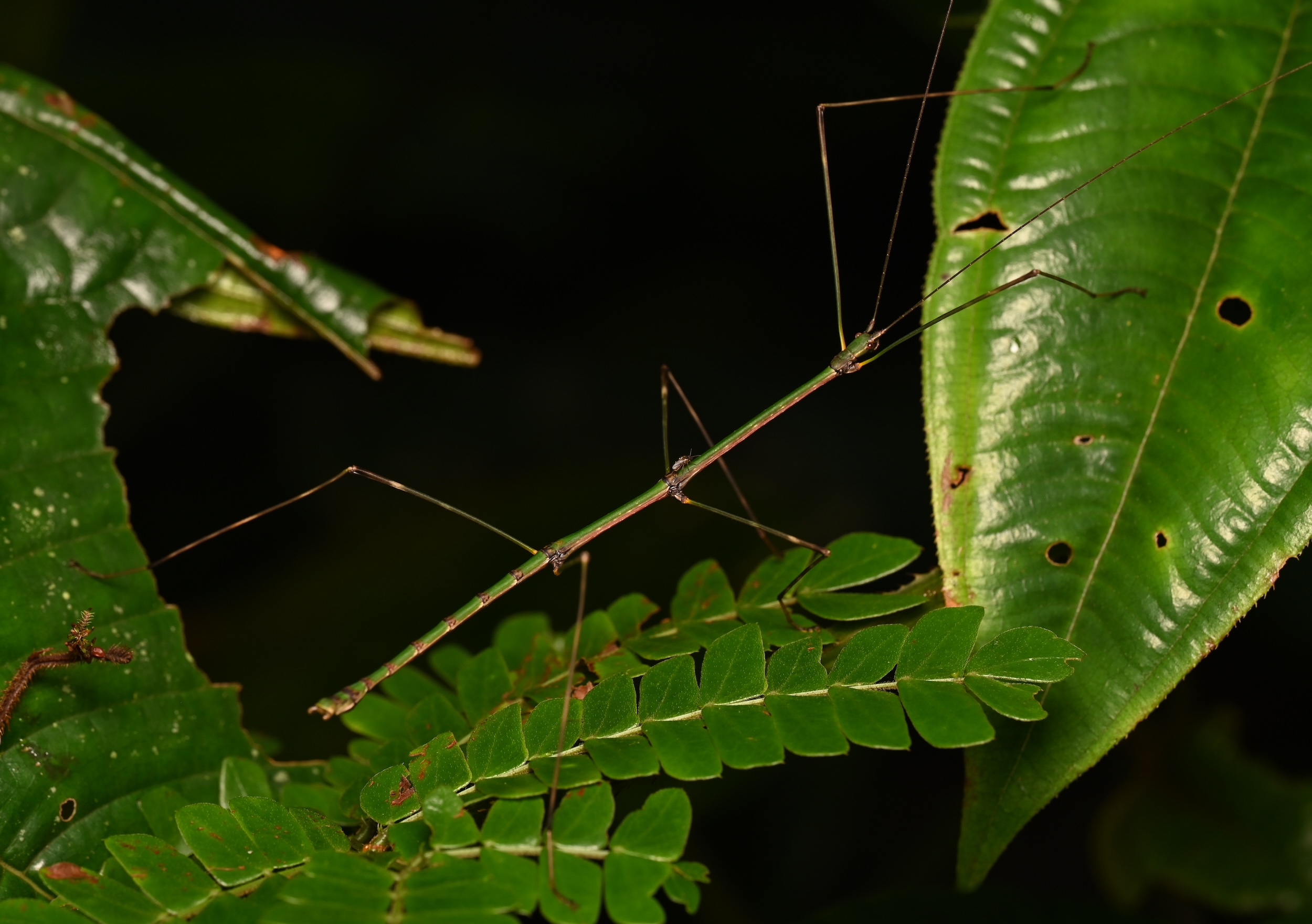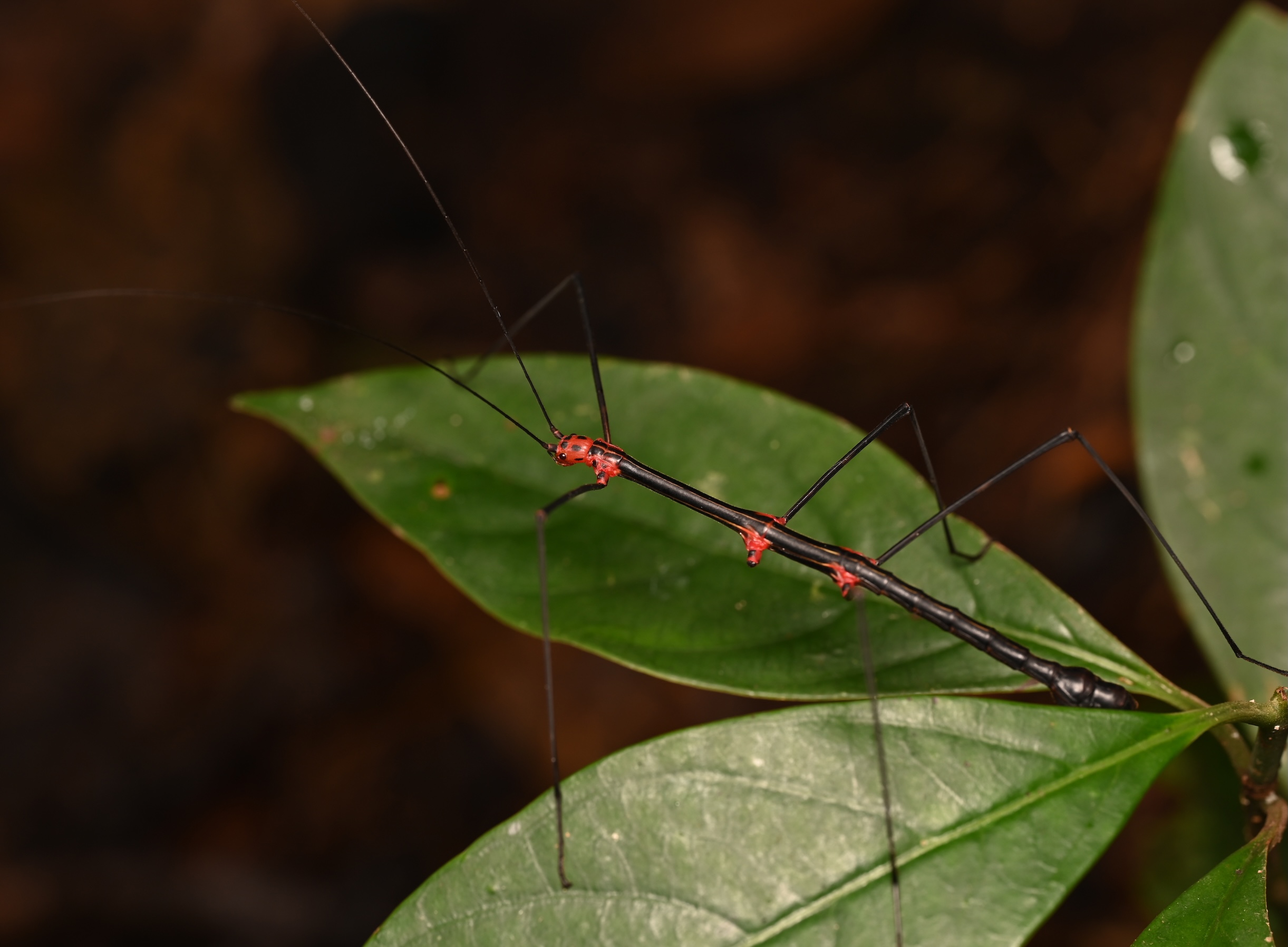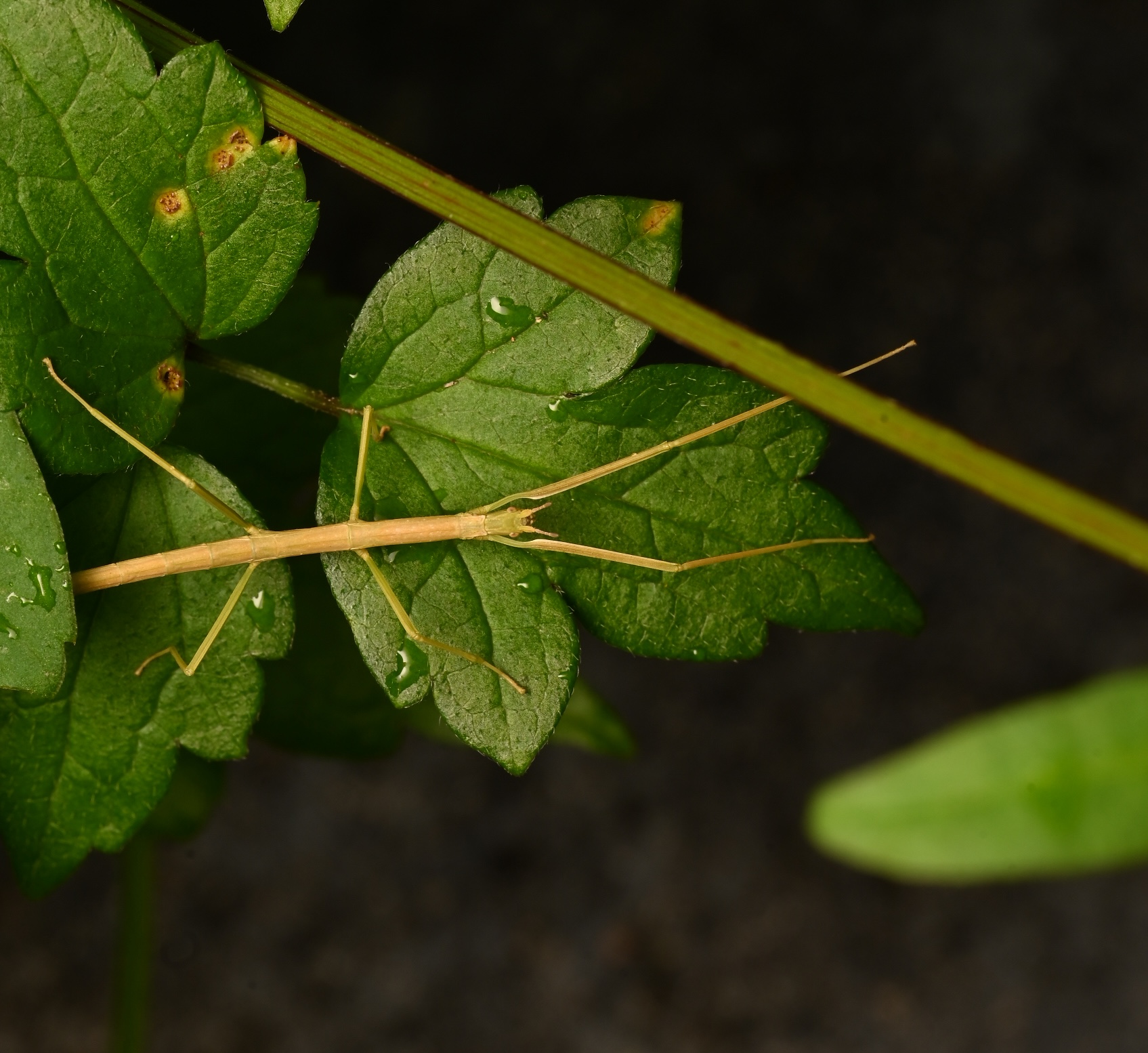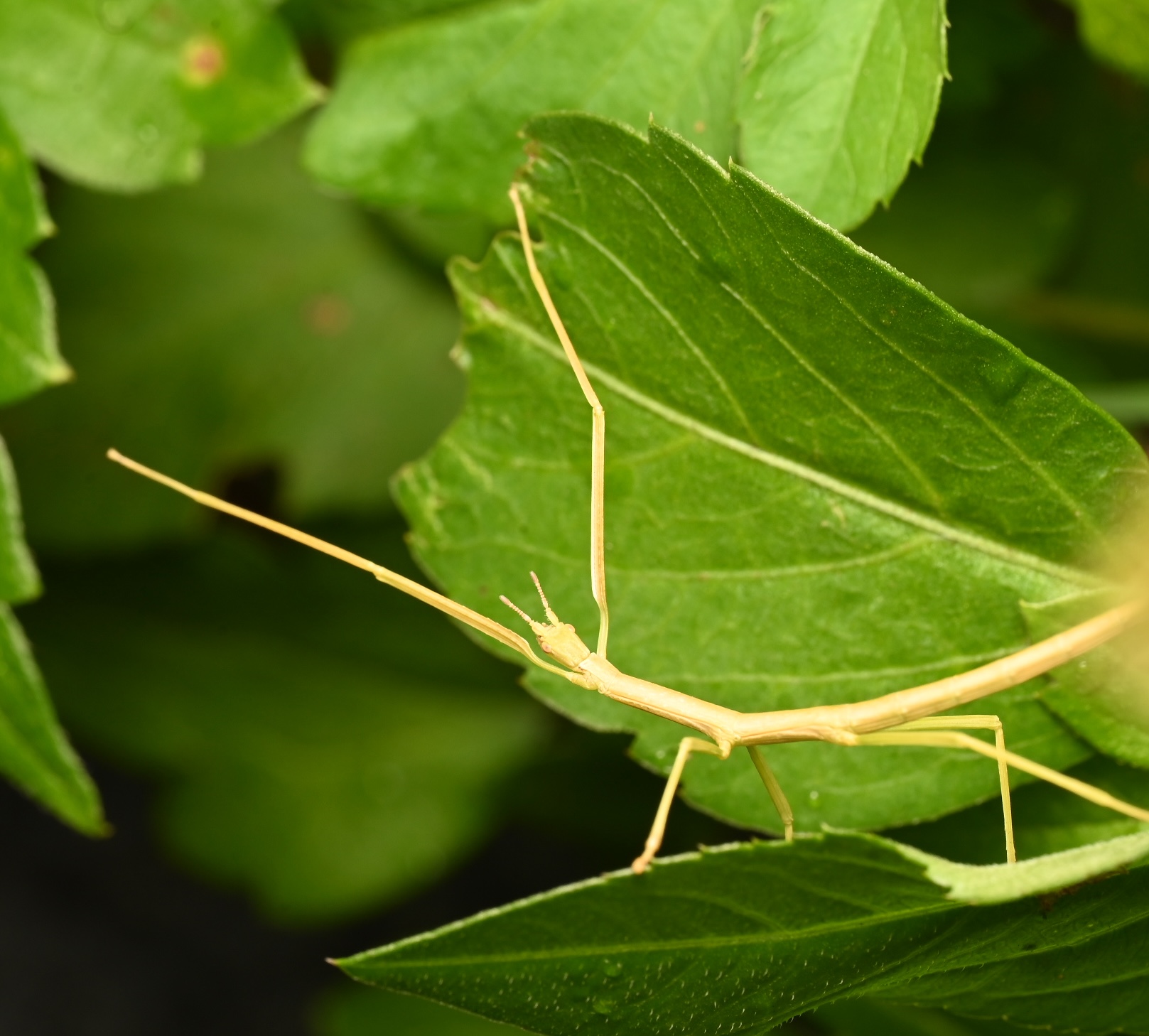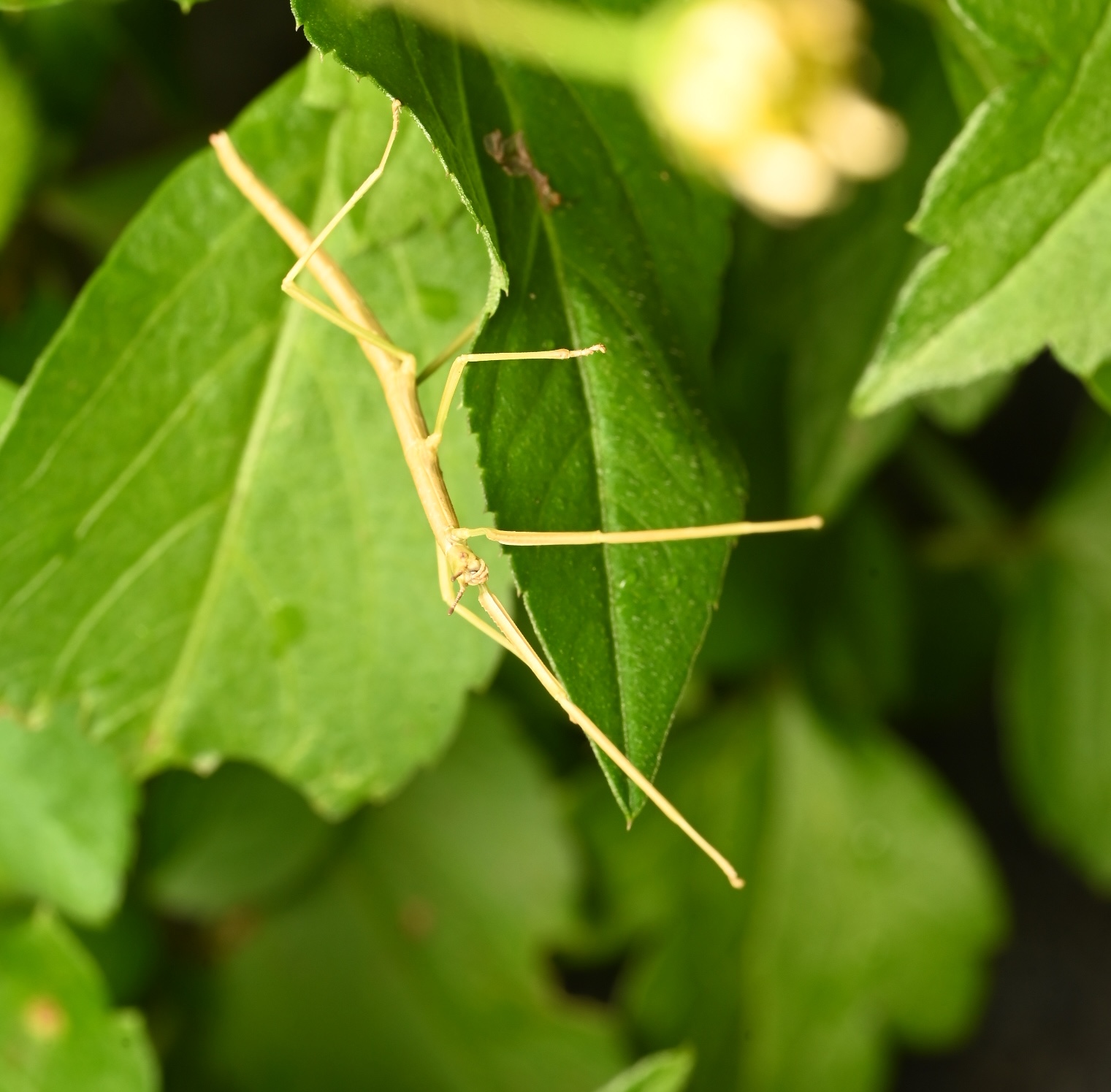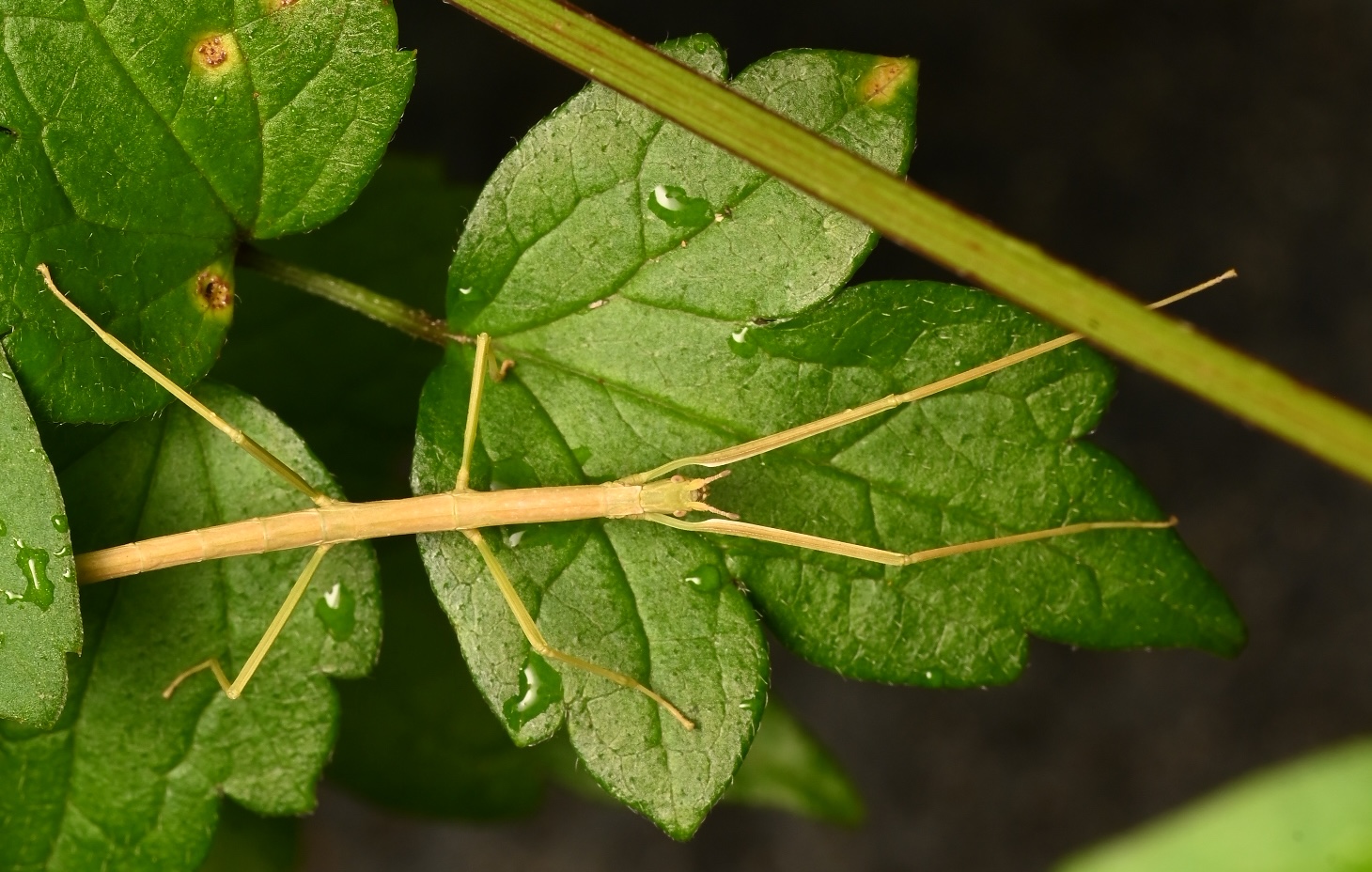
The Mikado walking stick (Ramulus mikado) is a slender, wingless stick insect native to East Asia, famous for its extreme reliance on obligate parthenogenesis. Populations are so overwhelmingly female that only about 10 males have ever been documented—and genetic research shows that even when rare males attempt to mate, they fail to deliver functional sperm, rendering their efforts a biological formality. Despite being completely flightless, these insects have managed to colonize vast distances across East Asia. Their hardy, durable eggs can pass unharmed through the digestive tracts of birds, allowing them to ride hitchhiker-style to new locations. Furthermore, the eggs can undergo double embryonic dormancy (diapause), surviving both scorching summer heat and freezing winter cold before hatching. I barely noticed this small stick insect in an Okinawa park because it looked completely identical to a tiny branch. Only when it finally shifted did I recognize that familiar shape!