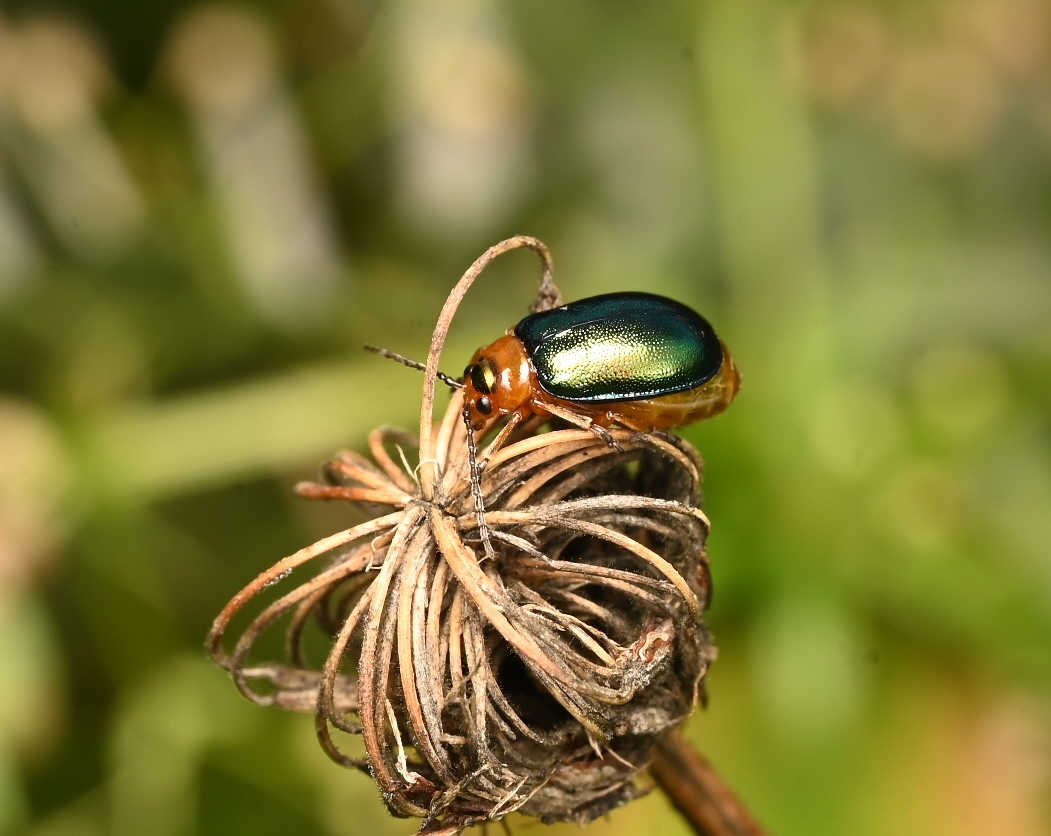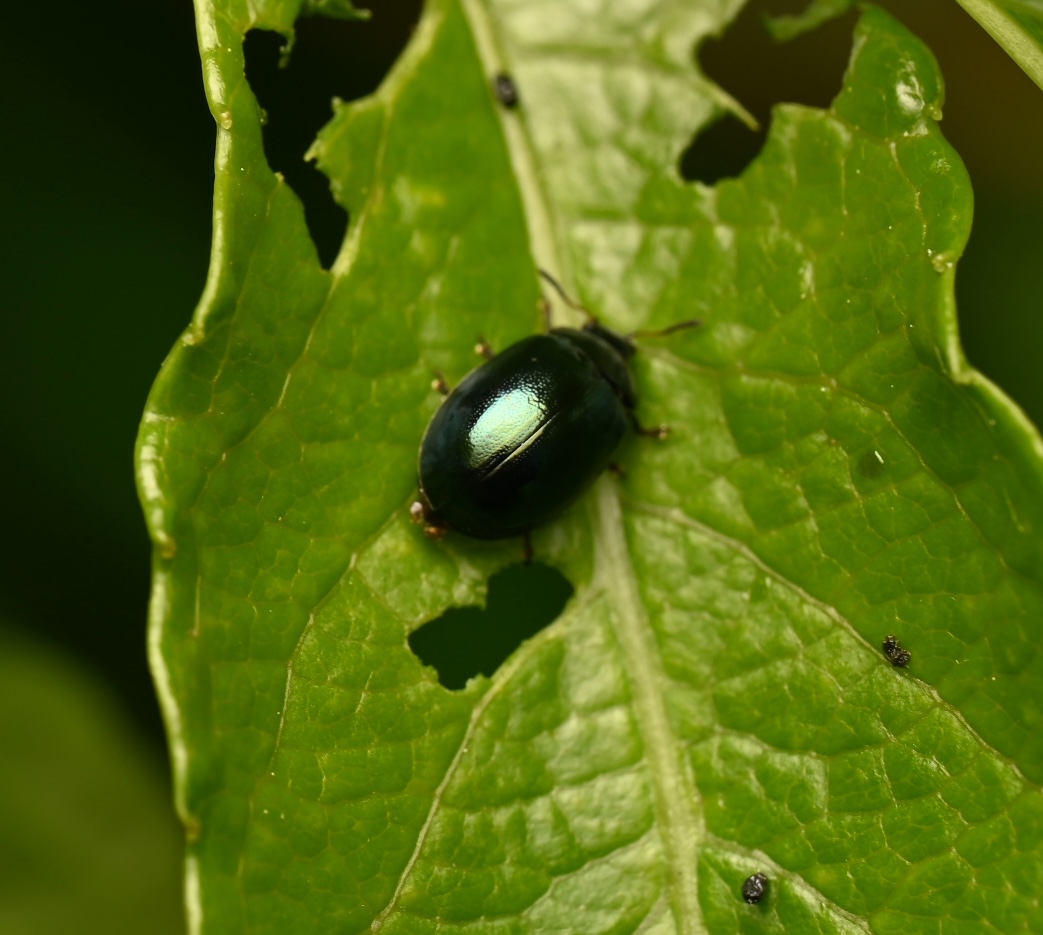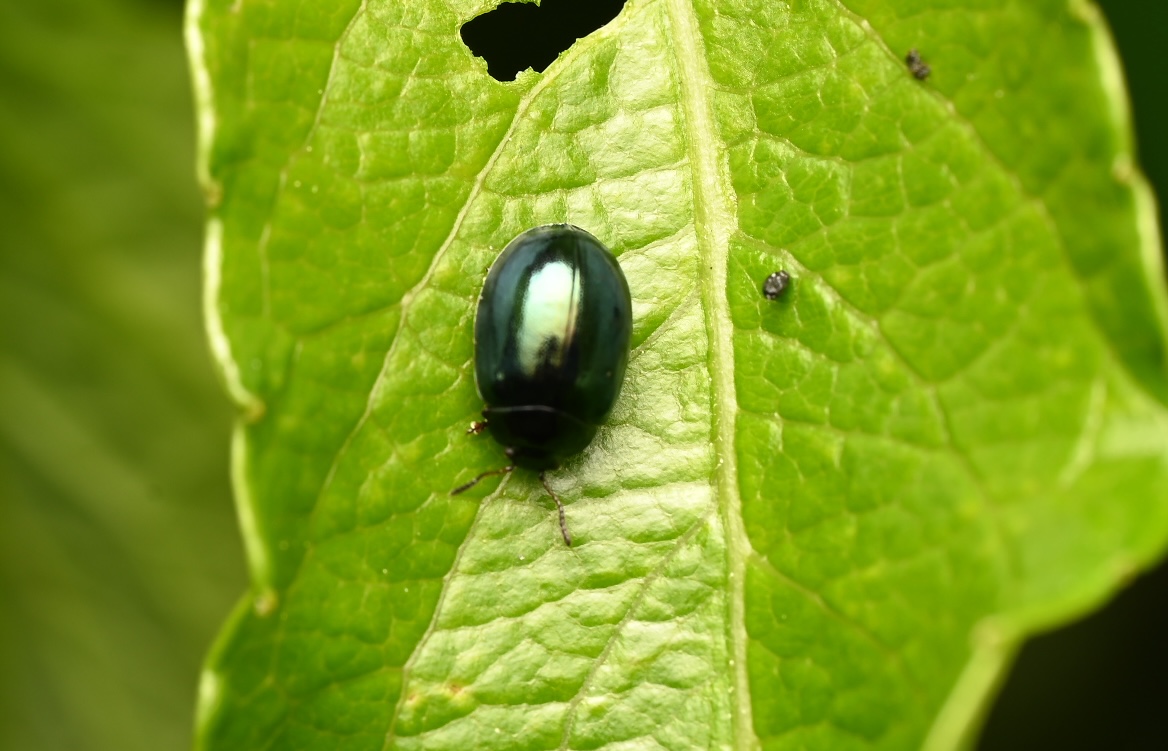
The willow leaf beetle (Plagiodera versicolora) is a brilliant, metallic insect renowned for its iridescent sheen, chemical defenses, and distinctive skeletonizing feeding habits. Its lustrous elytra shift between shades of deep blue, vibrant green, and glossy black depending on the angle of the light. To deter predators, the larvae possess specialized glands that secrete a pungent chemical repellent. While adult beetles chew full holes through foliage, the gregarious larvae cluster on the undersides of leaves to feed, stripping away the tender green tissue while leaving only the tough structural veins behind—a process known as skeletonizing. Their diet consists primarily of willow, poplar, and cottonwood trees. I encountered this charming, microscopic powerhouse during a bicycle touring trip through Finland.