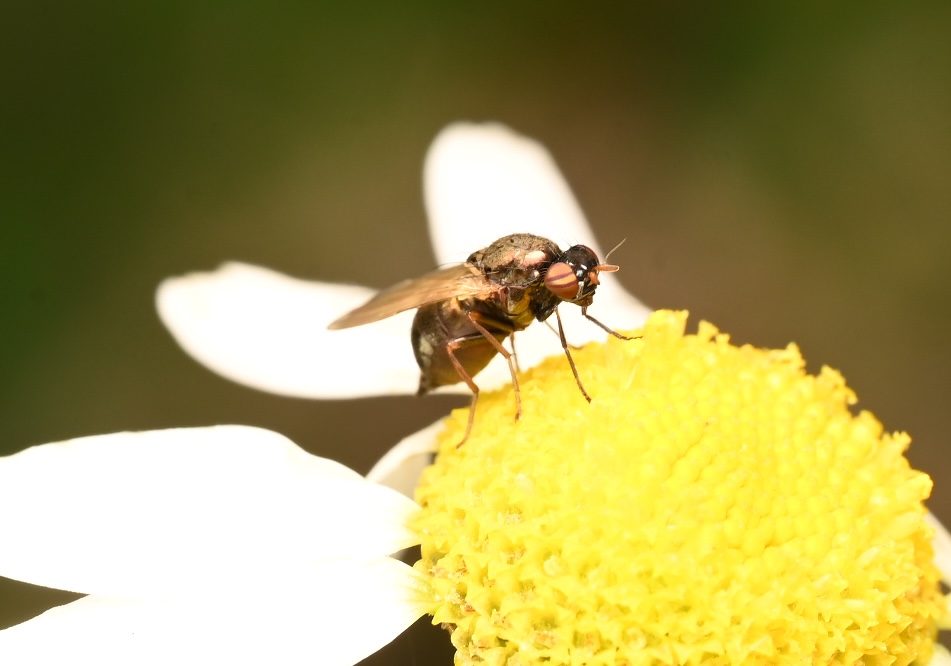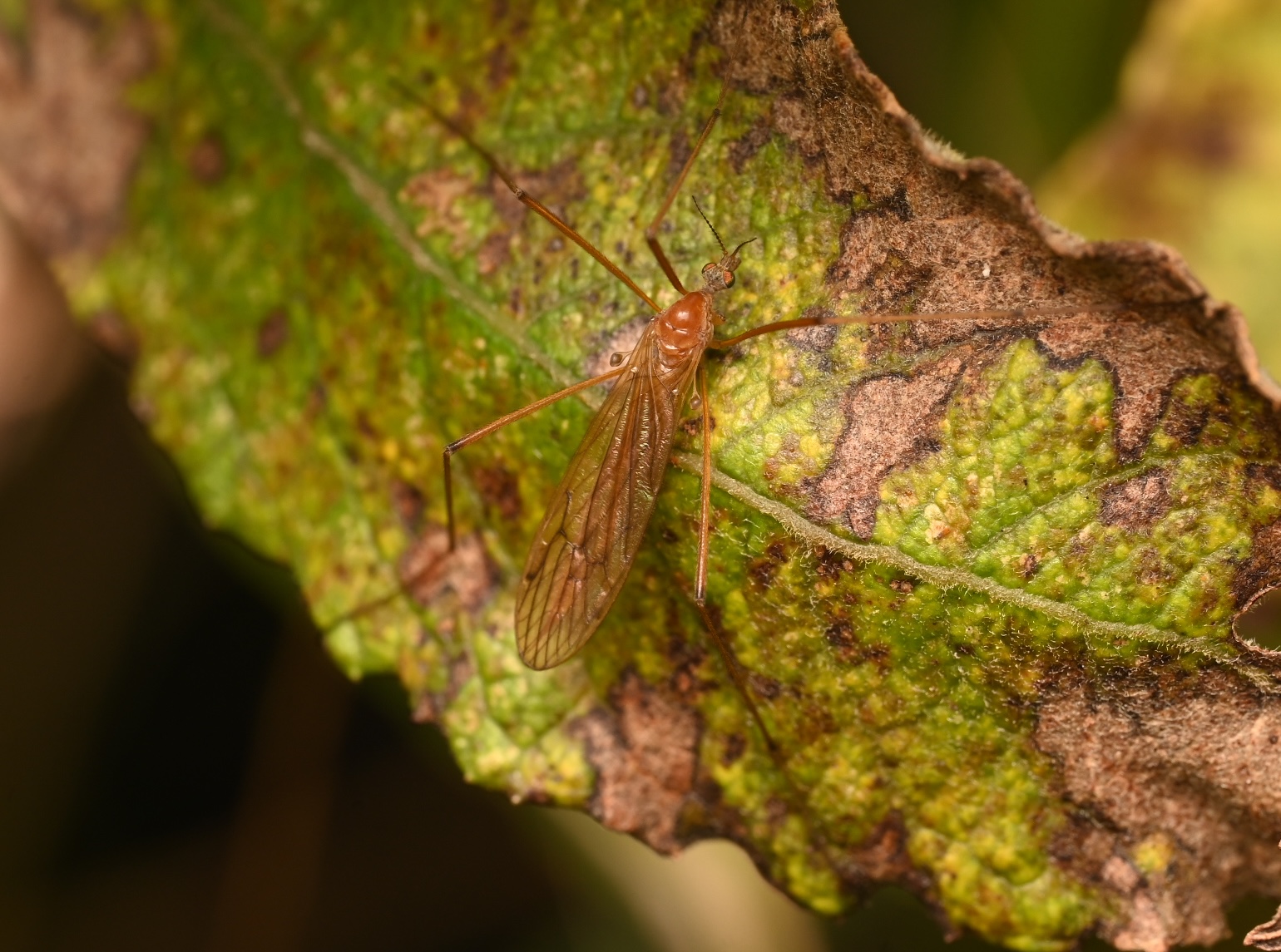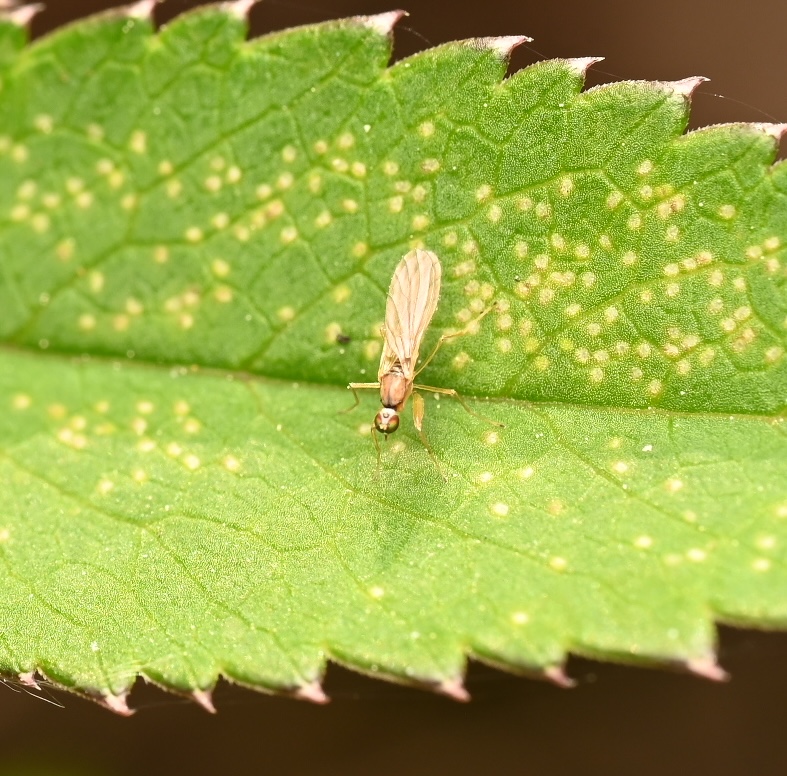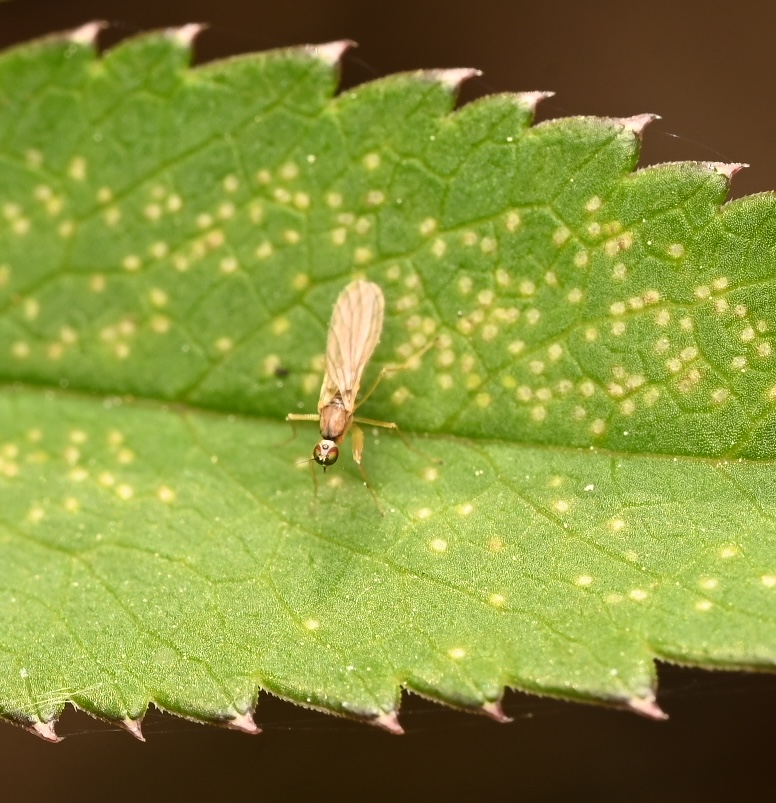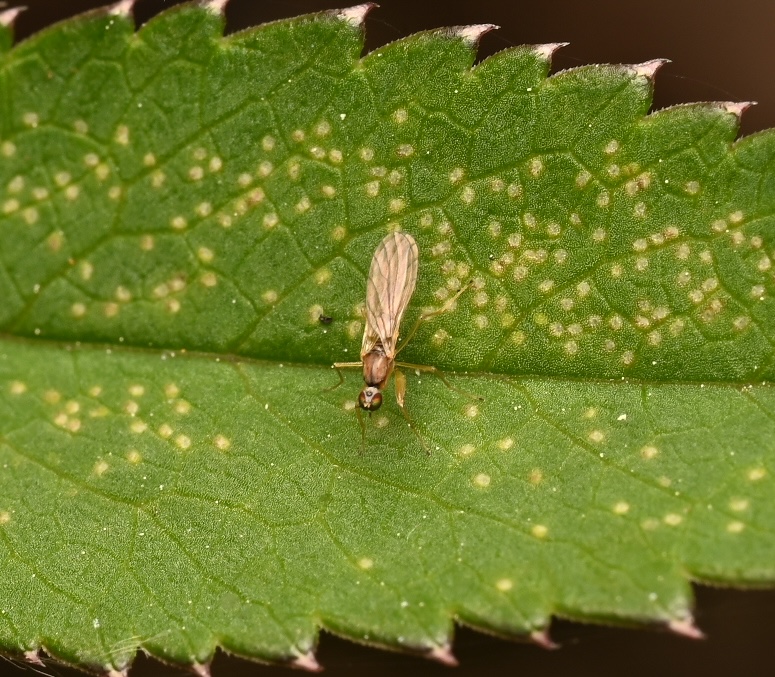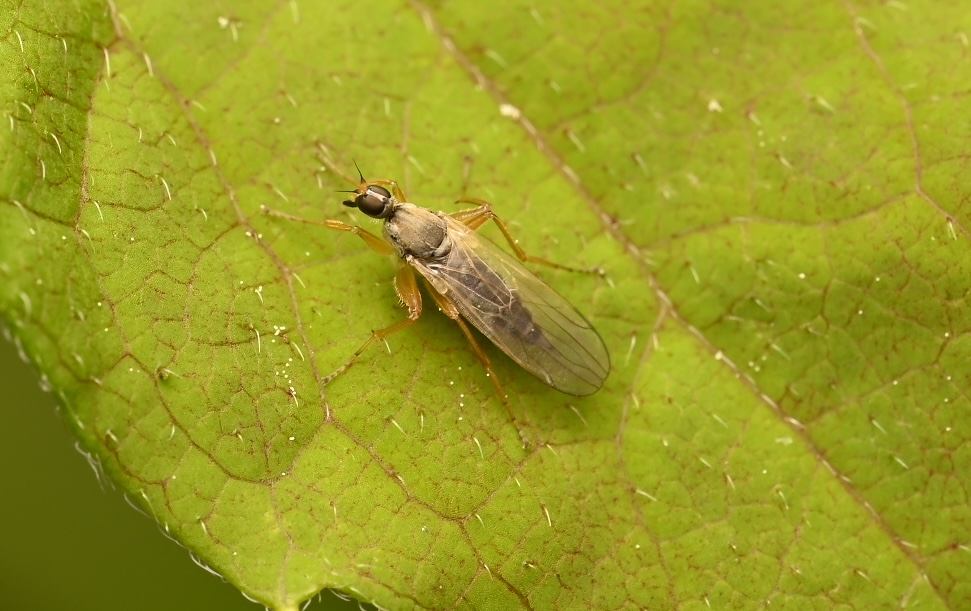
Meet Platypalpus, a massive, globally distributed genus of dance flies within the family Hybotidae, boasting over 580 described species. These diminutive adults are voracious predators, using modified legs to snatch midges and aphids right out of the air or ambush them on leaves. The defining anatomical trait of this genus is a remarkably thickened mid-femur studded with rows of microscopic, sharp black spines, which functions like a barbed trap to pin down struggling prey while the fly feeds. With over 200 species in Europe alone, identifying these flies to an exact species is famously difficult, requiring experts to map minute bristle patterns under a microscope. True to their family name, they engage in intricate, synchronized aerial swarms to court mates. During a bicycle tour along the coast of Sweden and Finland, I crossed paths with a particularly elusive specimen whose pale-brown coloration blended seamlessly with the forest foliage, turning what should have been a standard shoot into a highly challenging game of macro hide-and-seek.