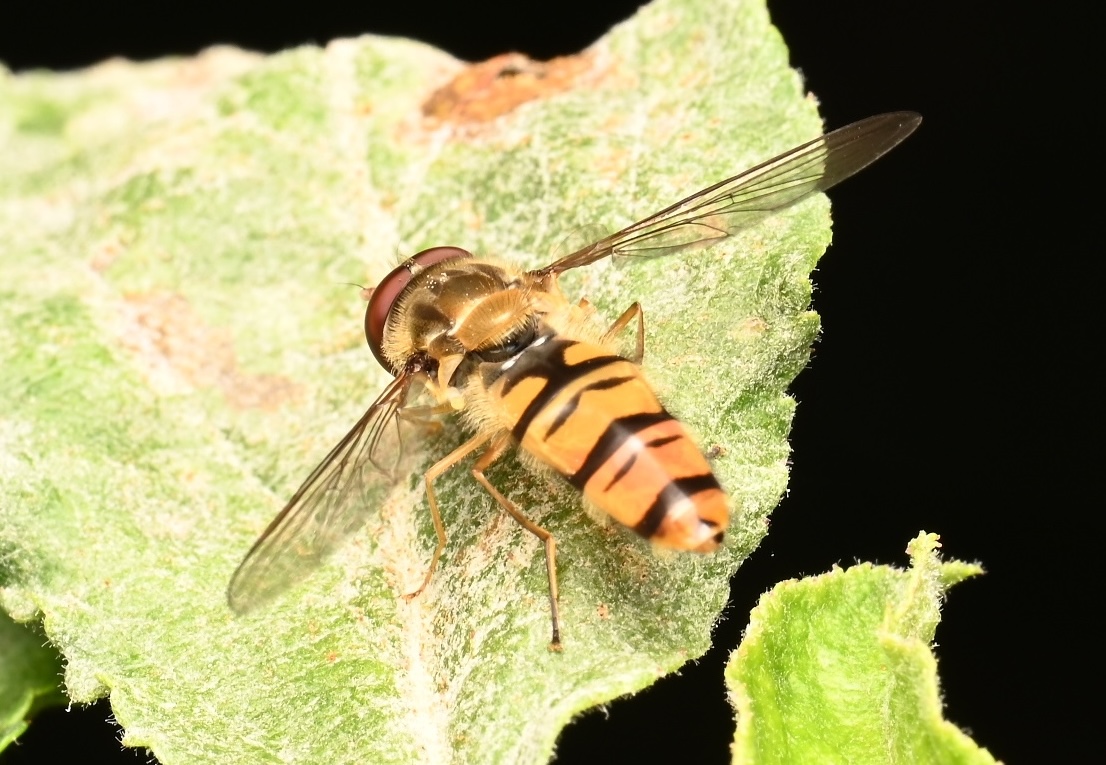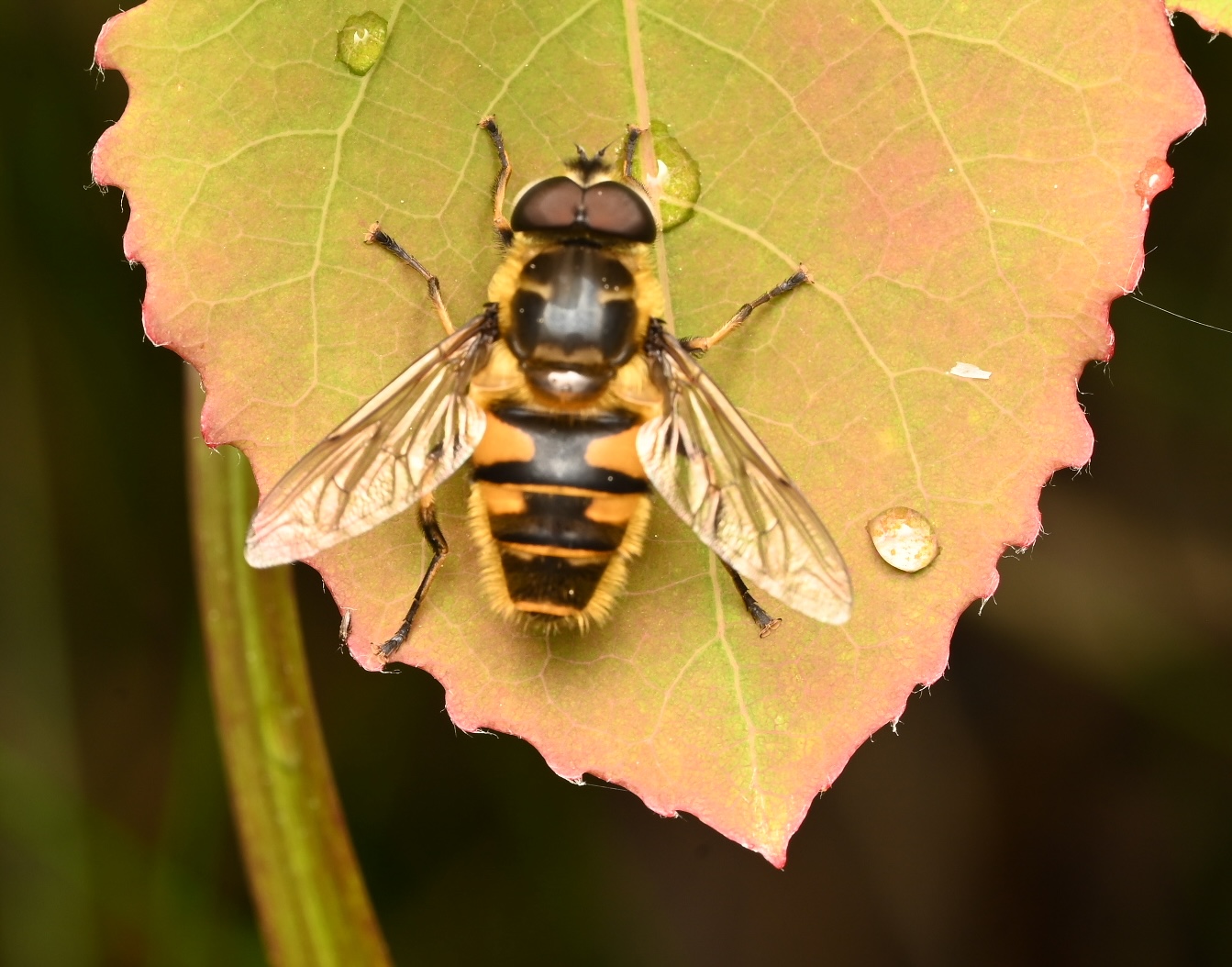
The yellow-haired sun fly (Myathropa florea) is a widespread European hoverfly often dubbed the “Batman fly” due to a distinct mark on its thorax resembling the iconic superhero logo. Fringed with soft, golden-yellow hairs, this vital pollinator uses specialized vibrating organs called halteres to freeze mid-air or dart effortlessly between sunbeams as it feeds on nectar from ivy and bramble. Its reproductive cycle is just as remarkable. Females lay eggs in stagnant, water-logged tree rot-holes. The aquatic larvae, known as “rat-tailed maggots,” breathe underwater using an extraordinarily long, telescopic siphon that functions like a snorkel. If pushed to the surface, these buoyant larvae can actively expel air to dive back down to safety. I crossed paths with this fascinating hoverfly in a lush Swedish meadow. I managed to capture only a single frame before the camera flash startled her into the air. While I’m thrilled to have landed the shot, I’m certainly hoping for a rematch!