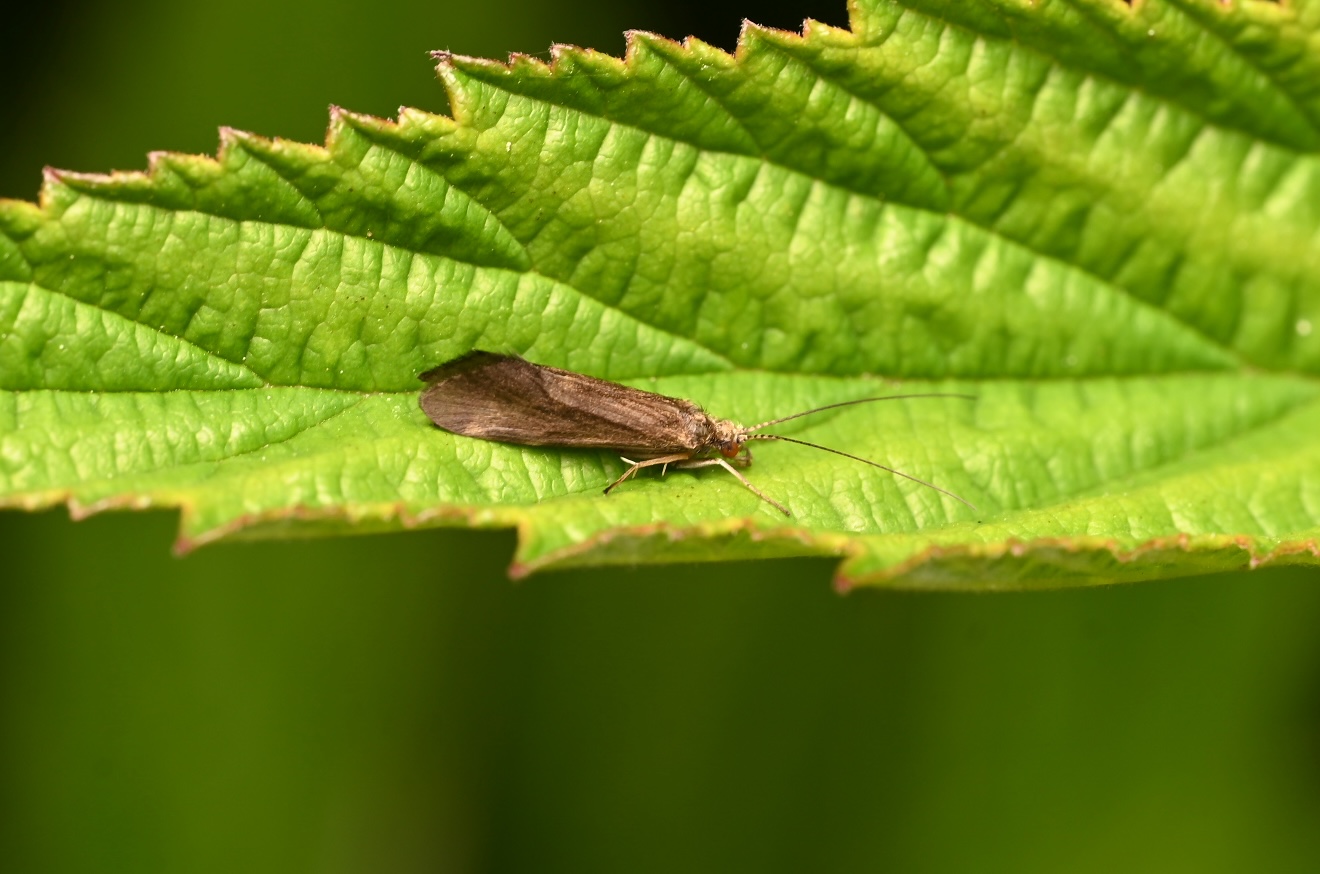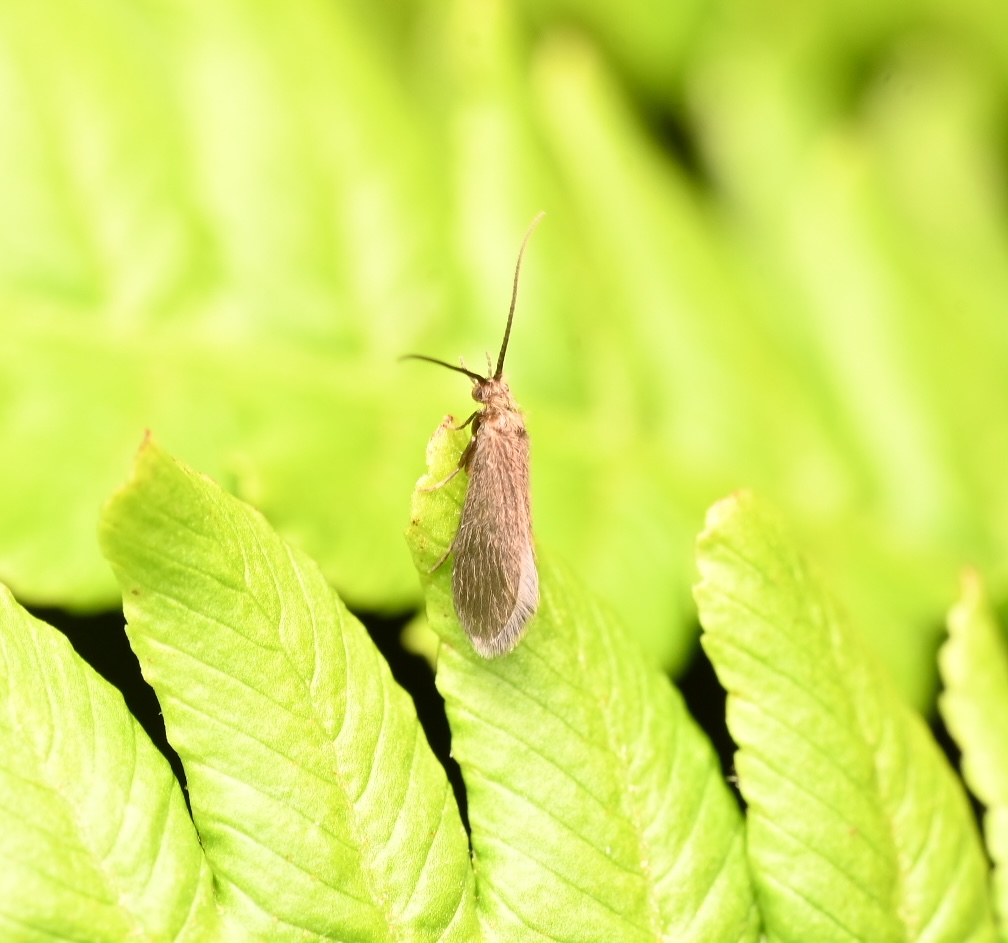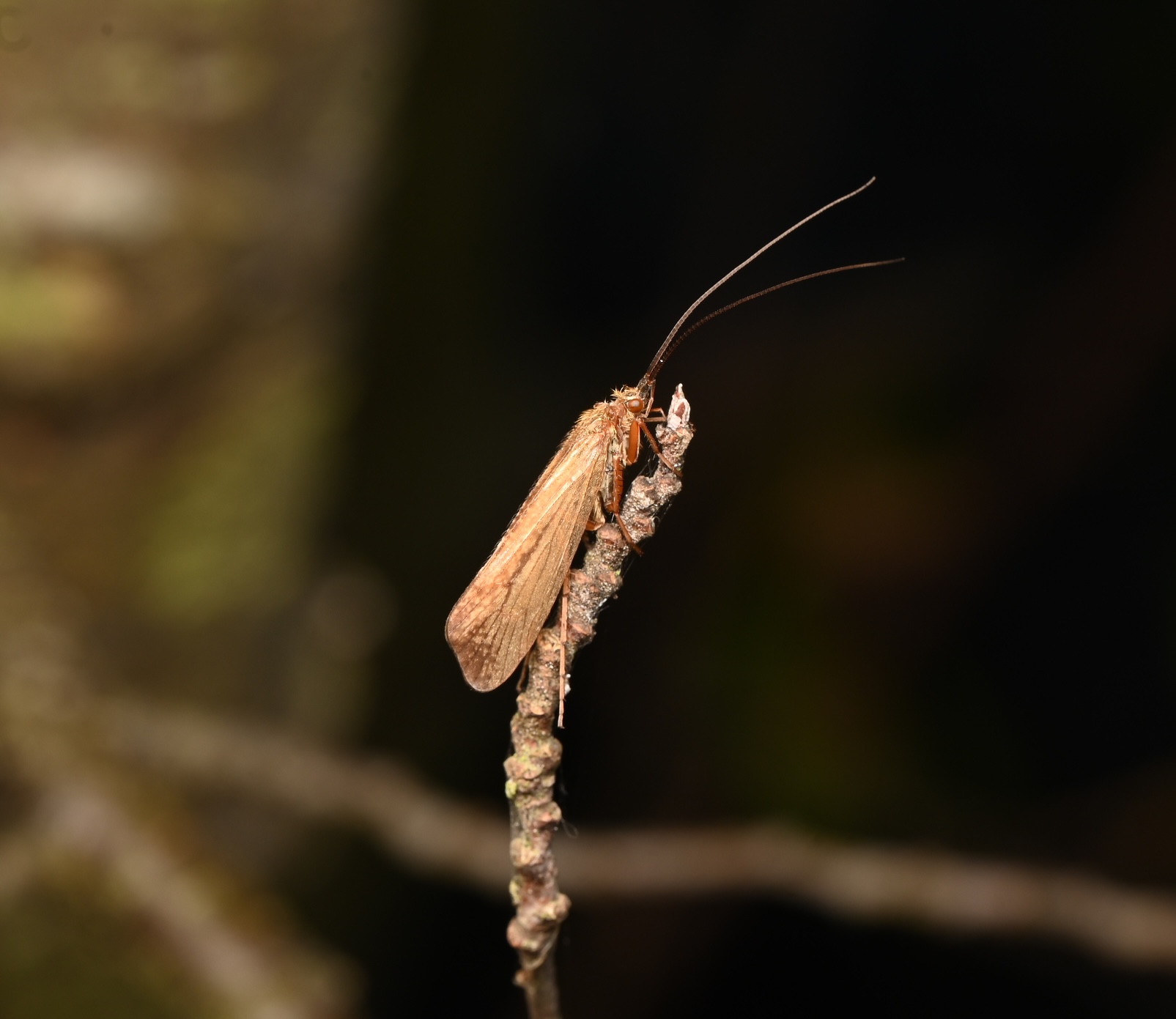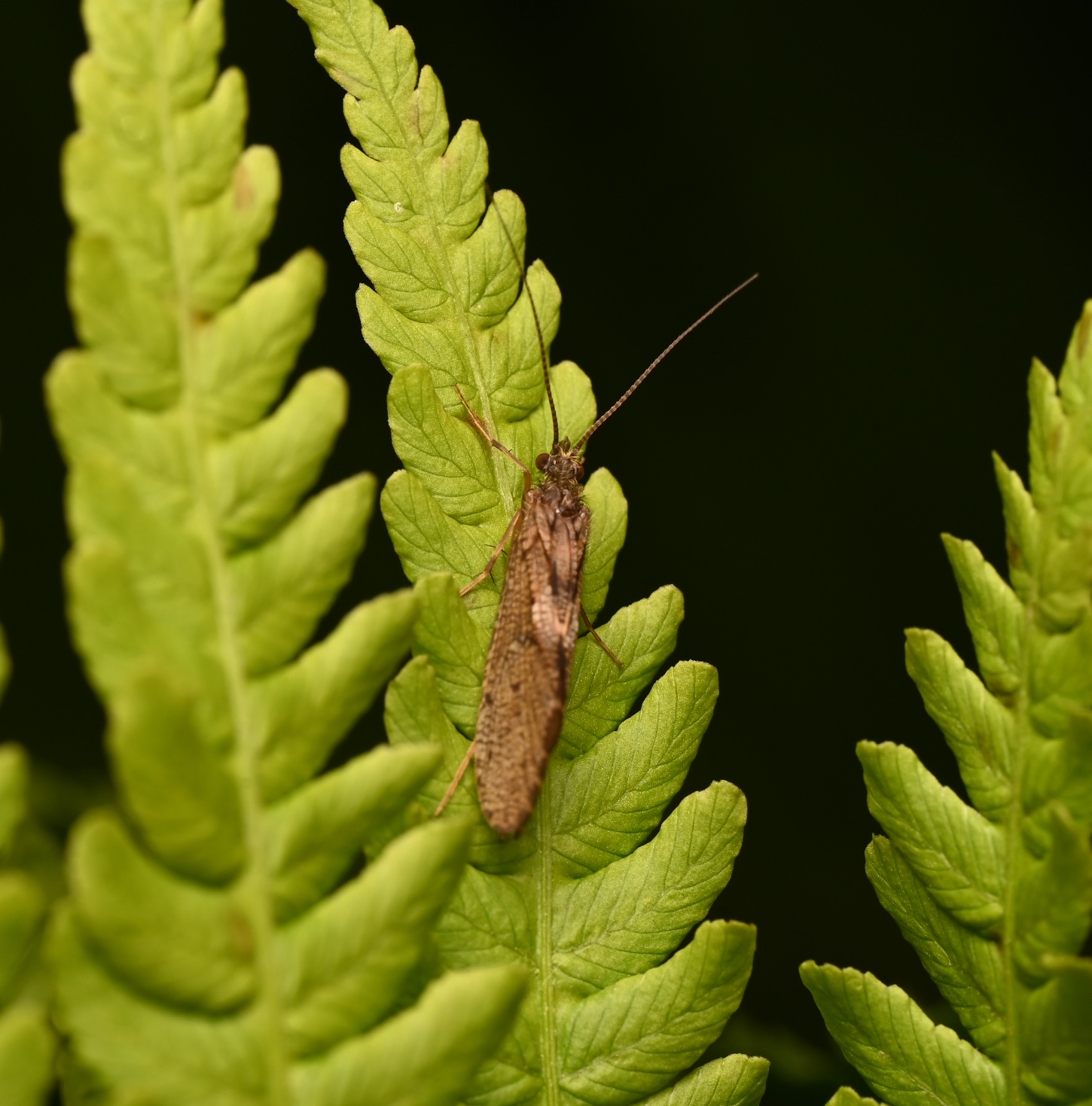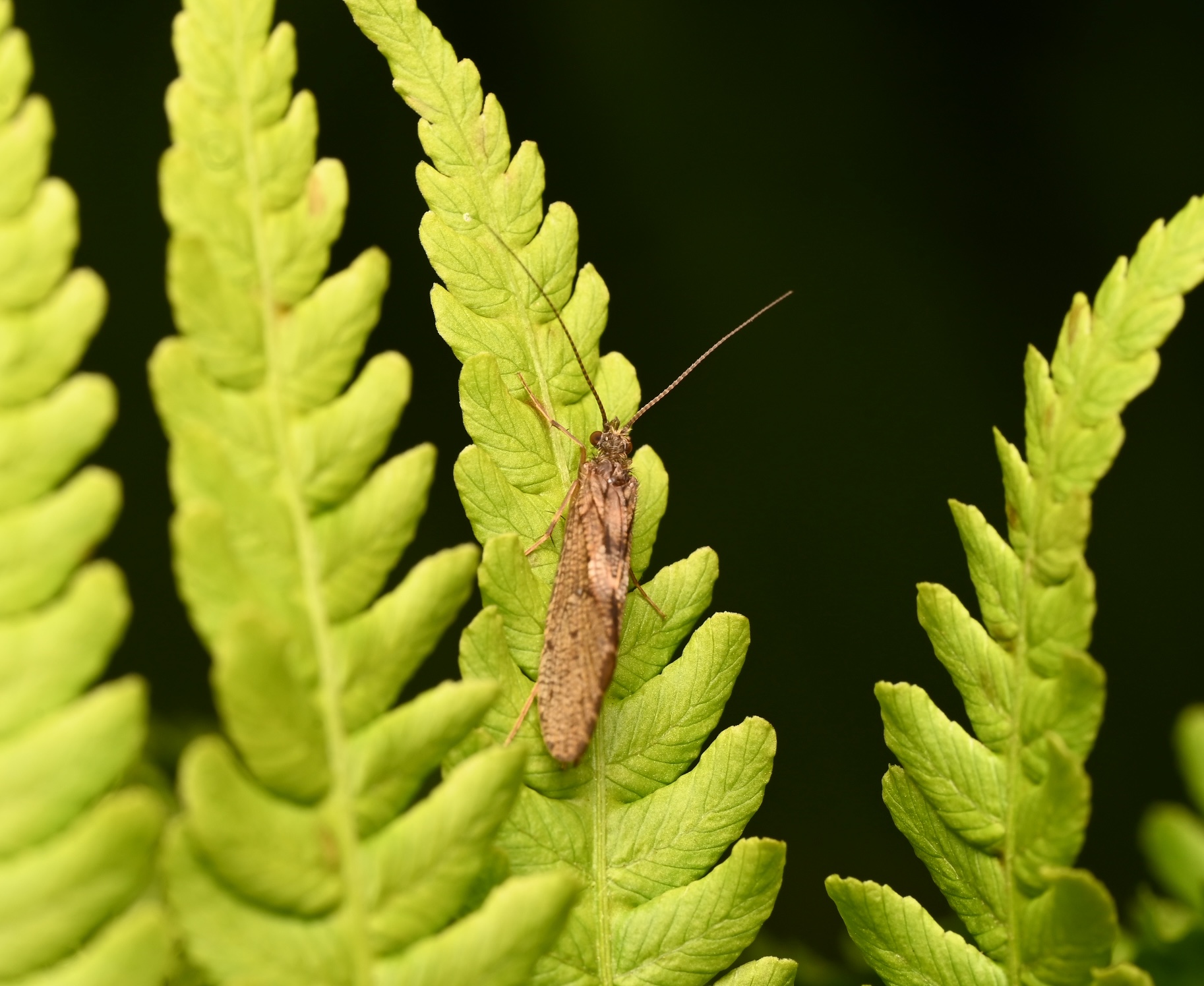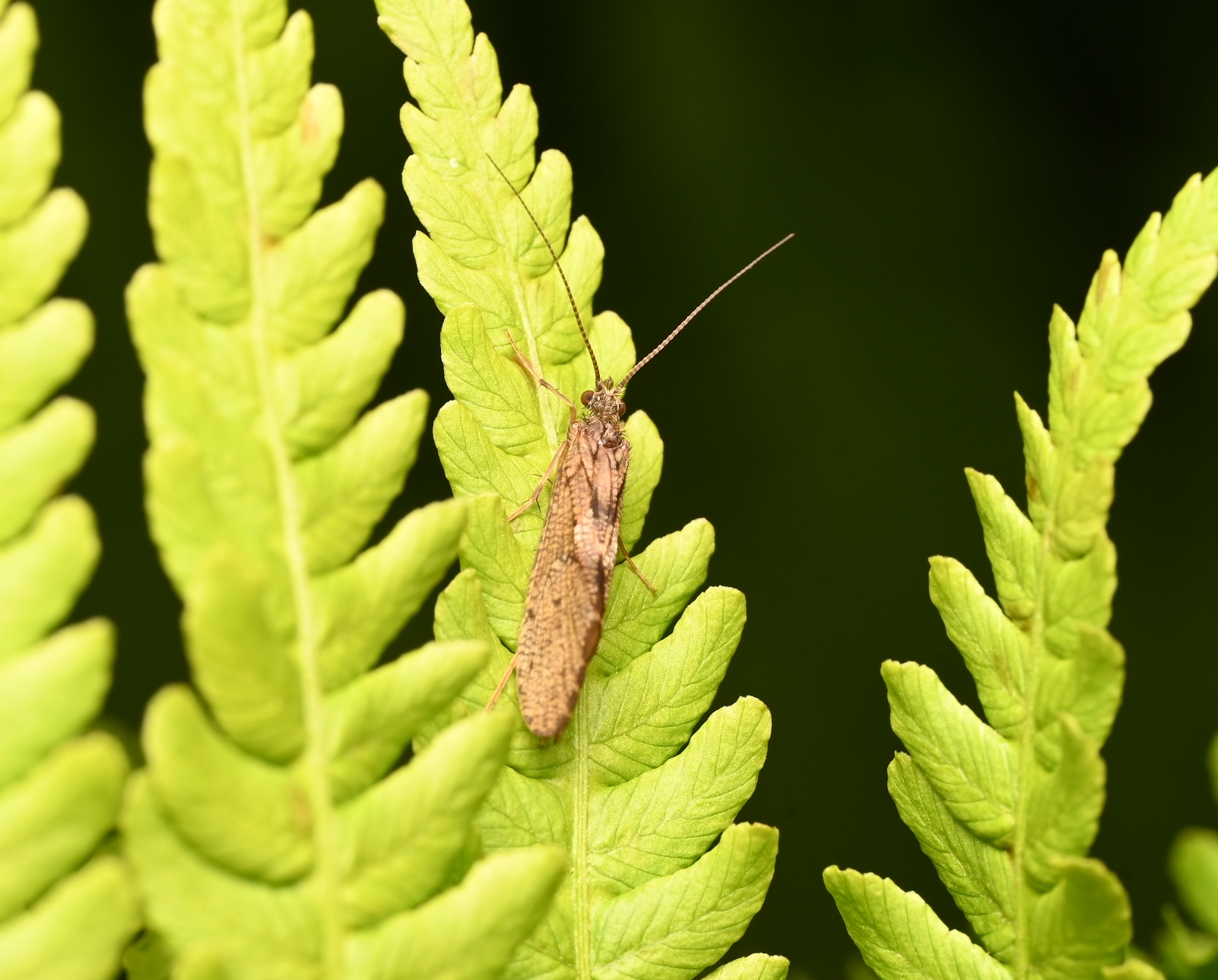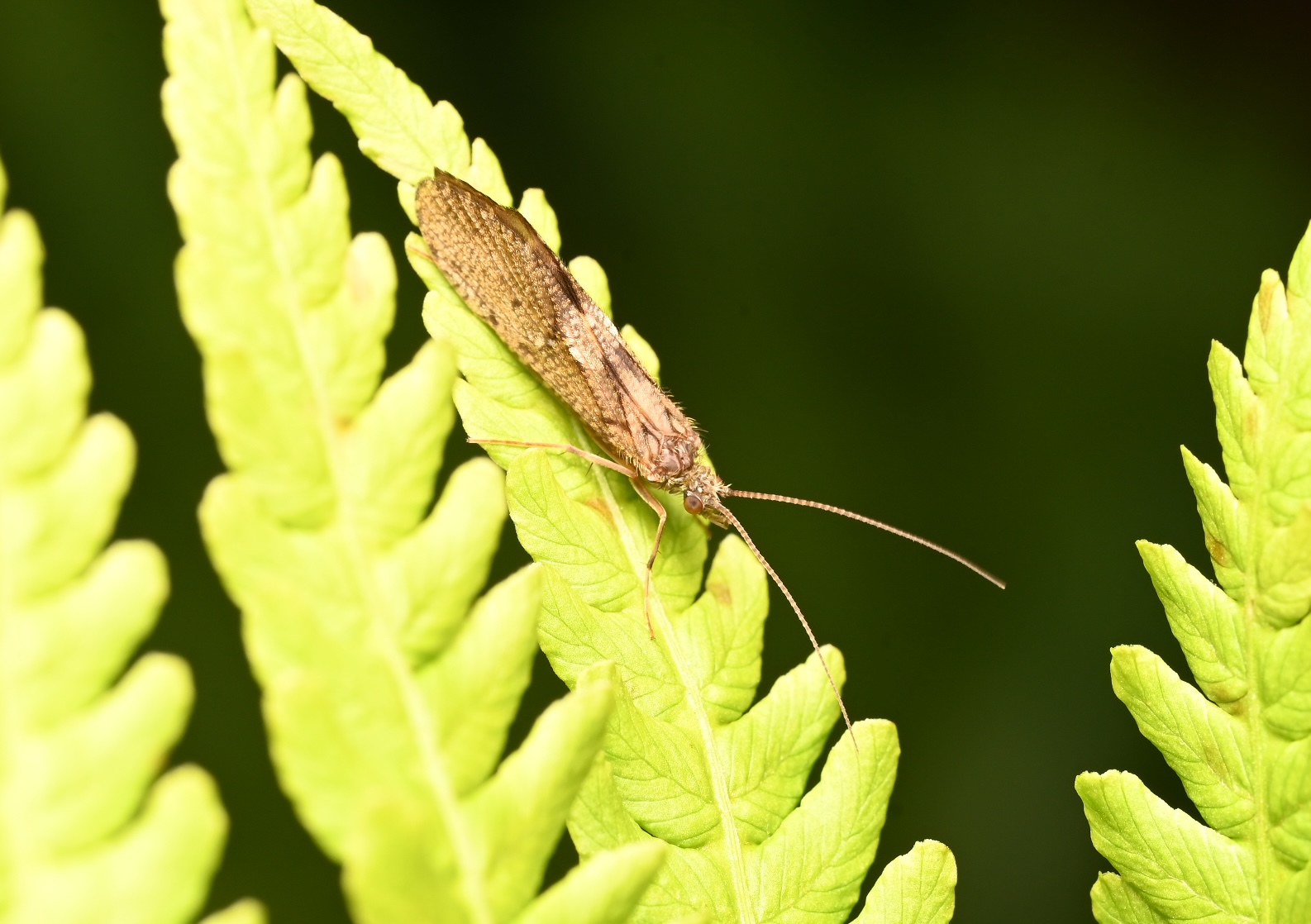
Meet the mottled sedge (Glyphotaelius pellucidus), a widely distributed caddisfly native to the woodlands of Europe and North America. This species has evolved a brilliant, weather-responsive survival mechanism for its offspring. Instead of laying eggs directly in the water, the female deposits gelatinous egg masses onto overhanging leaves. When heavy autumn rains arrive and fill the dry seasonal pools below, the jelly-like mass liquefies, safely dripping the newly hatched larvae directly into the rising water. As underwater architects, the larvae build exceptionally artistic protective cases, cutting out uniform circles from decaying leaves to assemble a flat, masterfully camouflaged shield. Subterranean grazers, they feed primarily on the rich networks of bacteria and fungi breaking down the leaf tissue. I crossed paths with this remarkable insect at a riverside campsite in Finland. Amazingly, this was one of three different species of caddisfly I observed while at this campsite, after a month of photographing moths while traveling in Sweden and Finland.