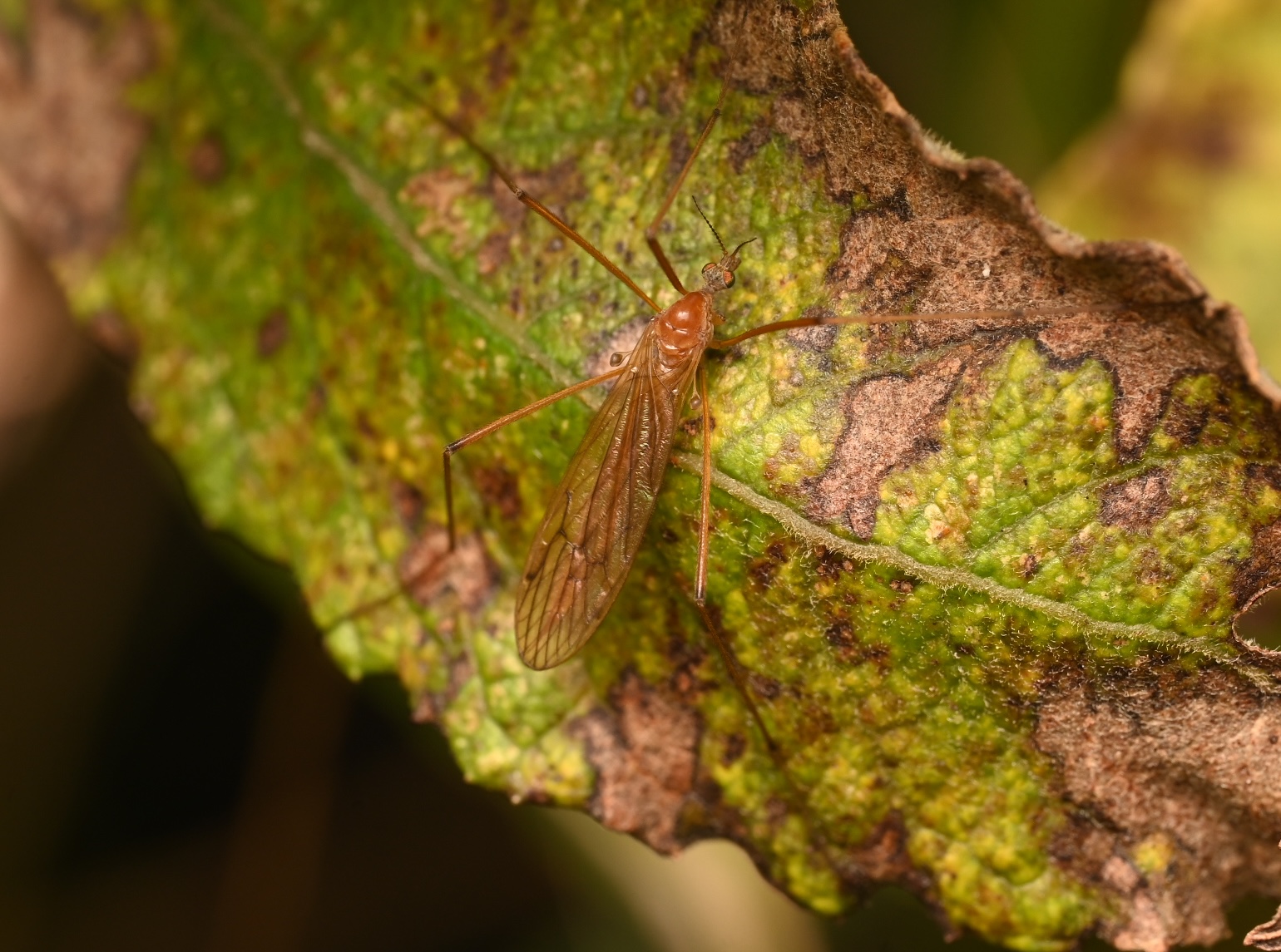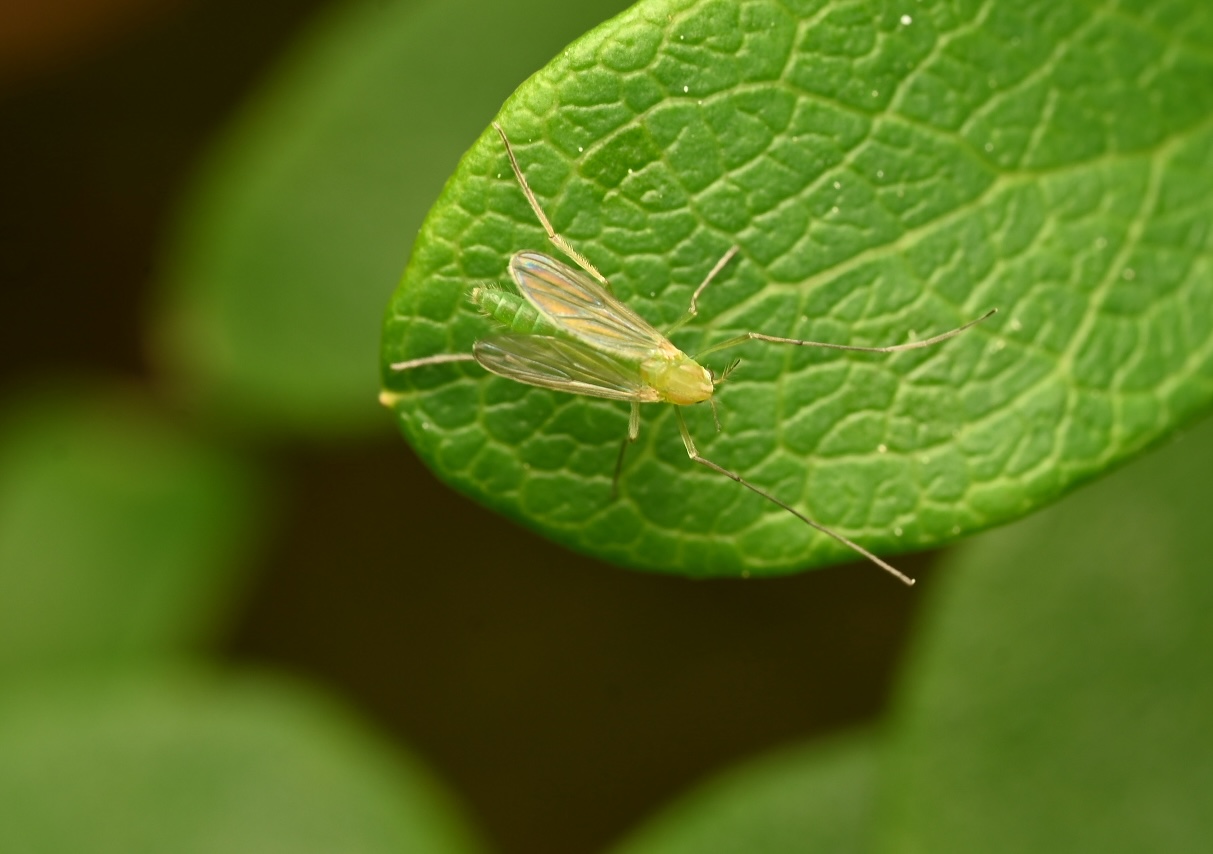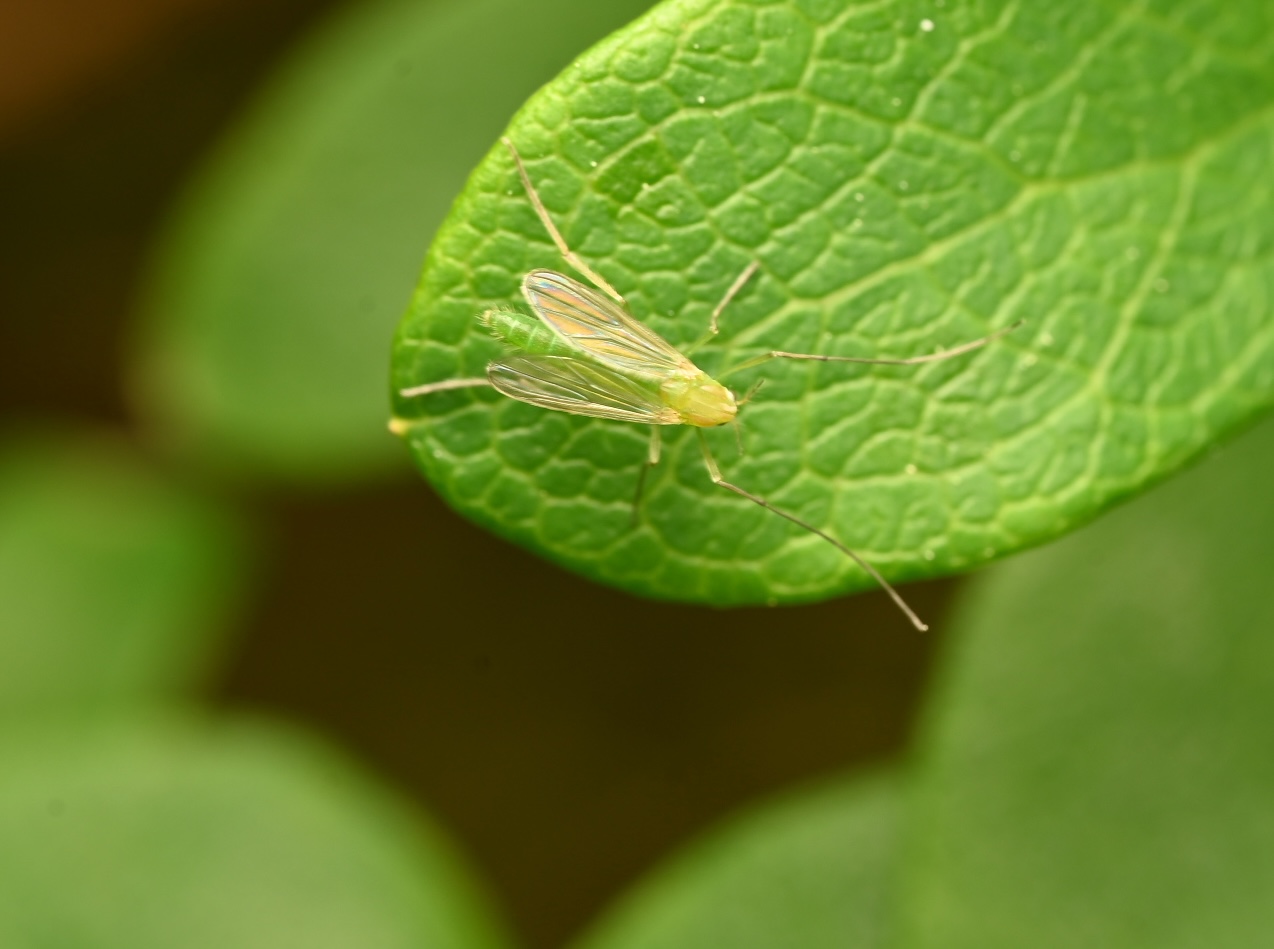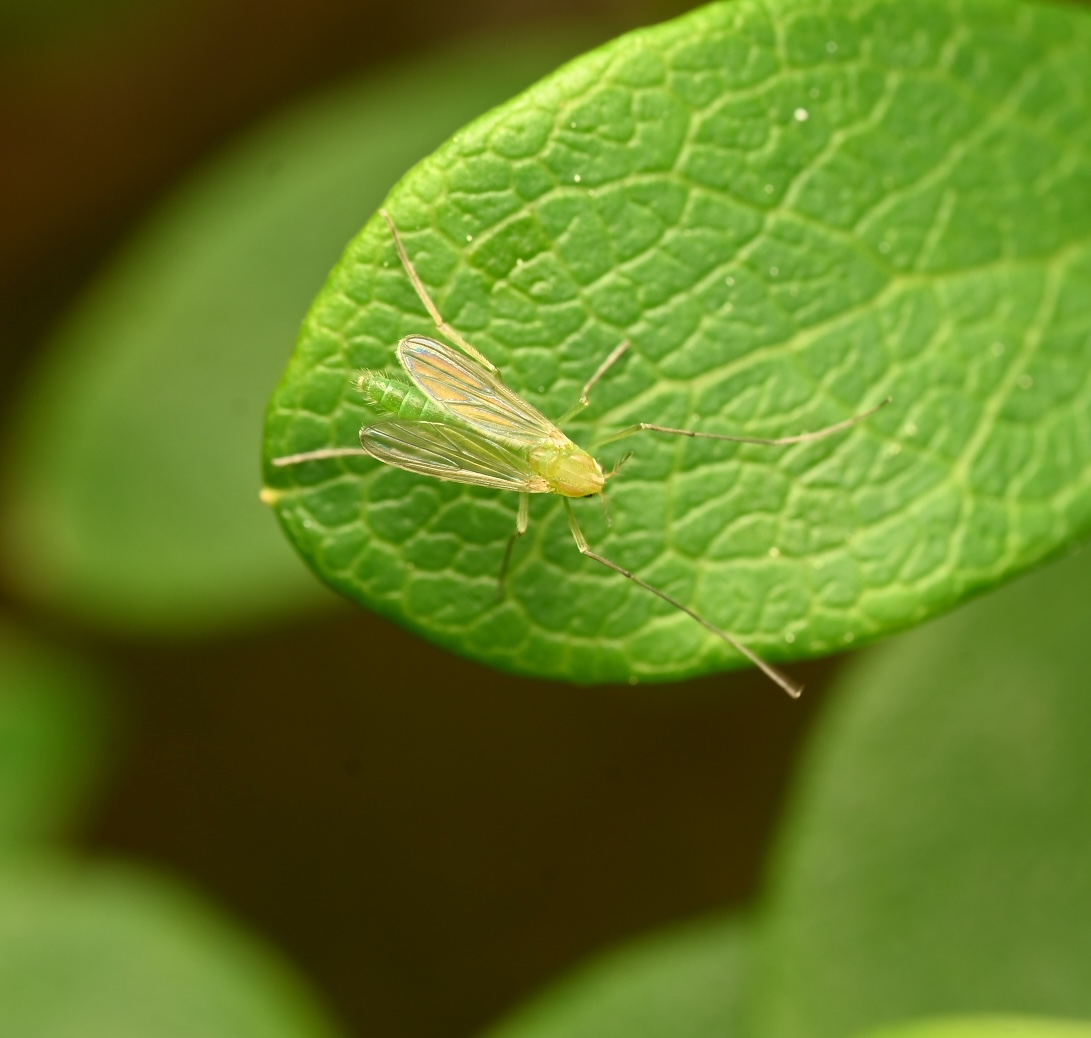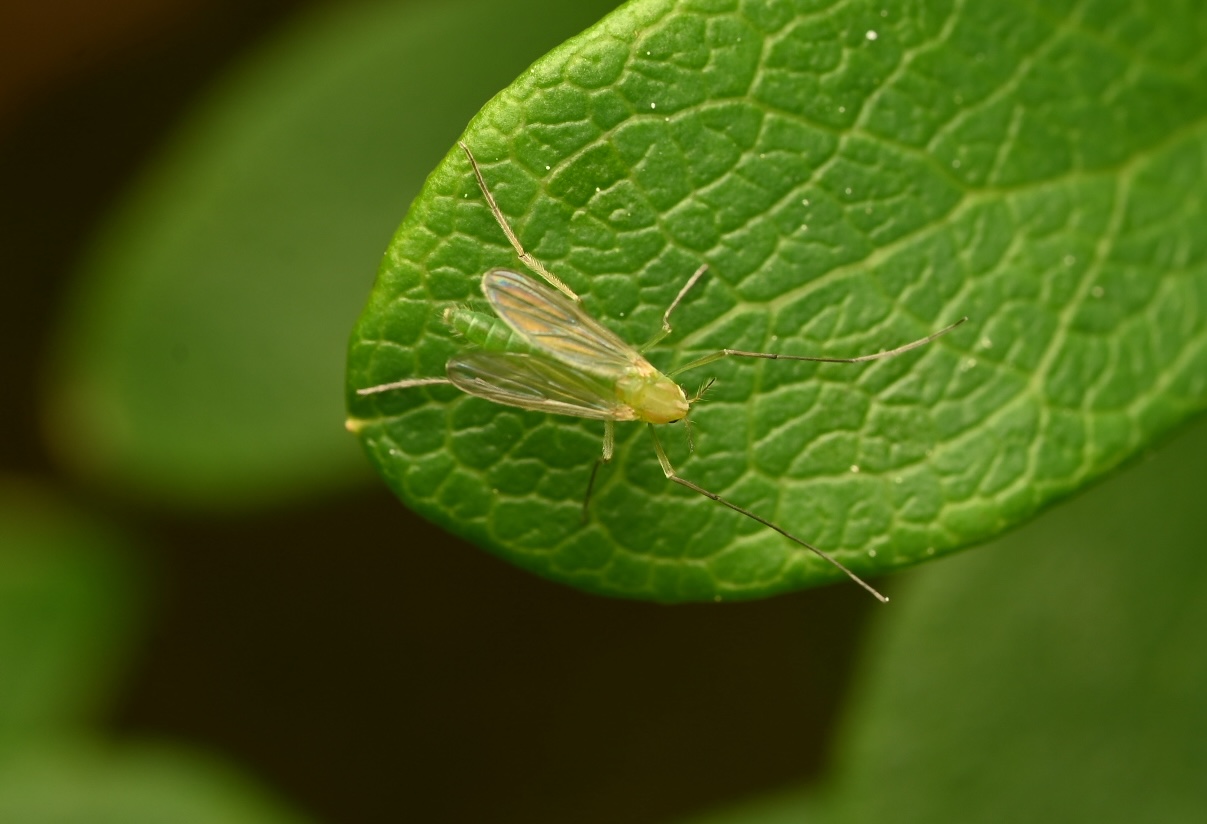
Meet Chironomus, a globally widespread genus of non-biting midges often called “blood midges.” While they superficially resemble mosquitoes, these delicate insects are entirely harmless. Their larvae, known as “bloodworms,” produce high concentrations of hemoglobin, allowing them to thrive in hypoxic, muddy lakebeds where they construct silk-lined tubes. When resting, adult midges characteristically raise and vibrate their elongated front legs—a unique behavior that inspired their genus name, which stems from the Greek word cheironomos, meaning “one who moves the hands.” Beyond their role as vital ecological indicators for water quality, these midges are famous for forming massive, buzzing mating swarms. Yet, the adults live for only a few fleeting days and never feed. I crossed paths with this beautiful midge at a Finnish campsite. Its striking, semi-transparent green body blended so perfectly with its leaf perch that locking a crisp, tack-sharp focus became an incredibly rewarding macro challenge.