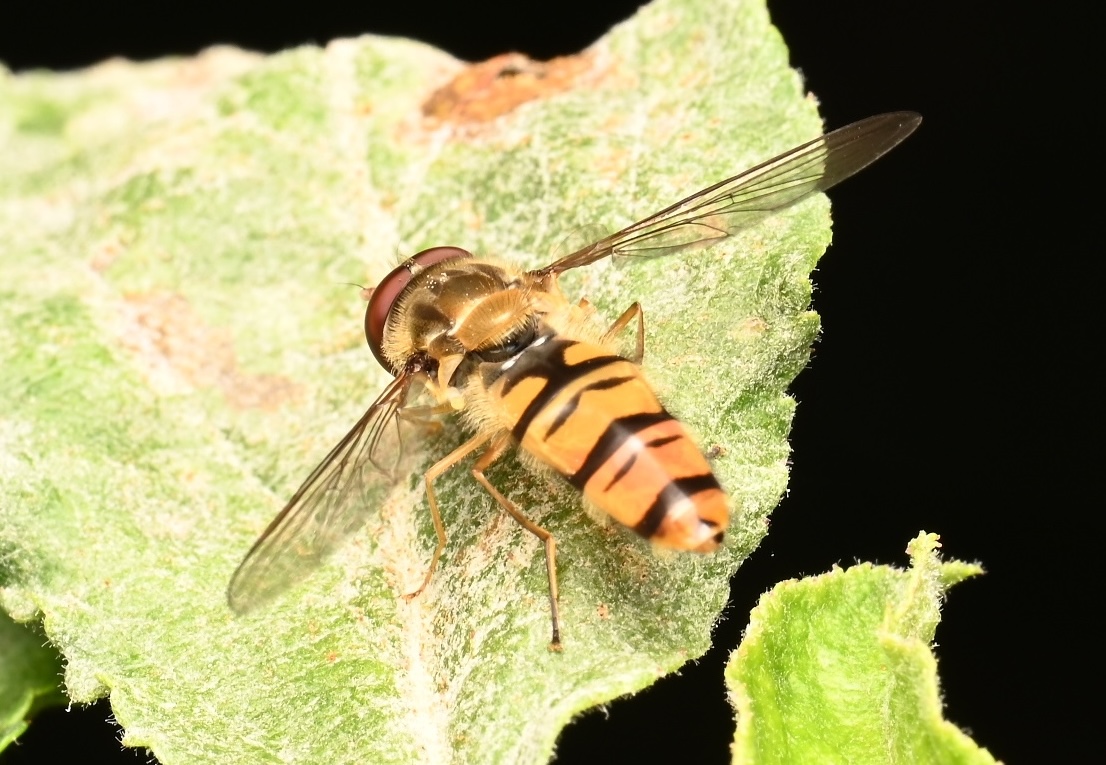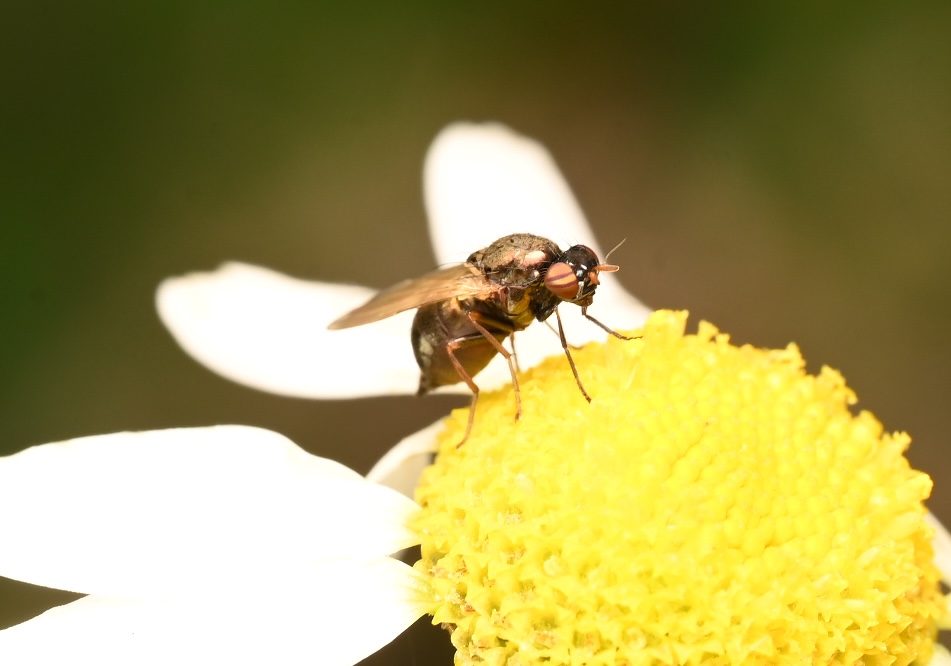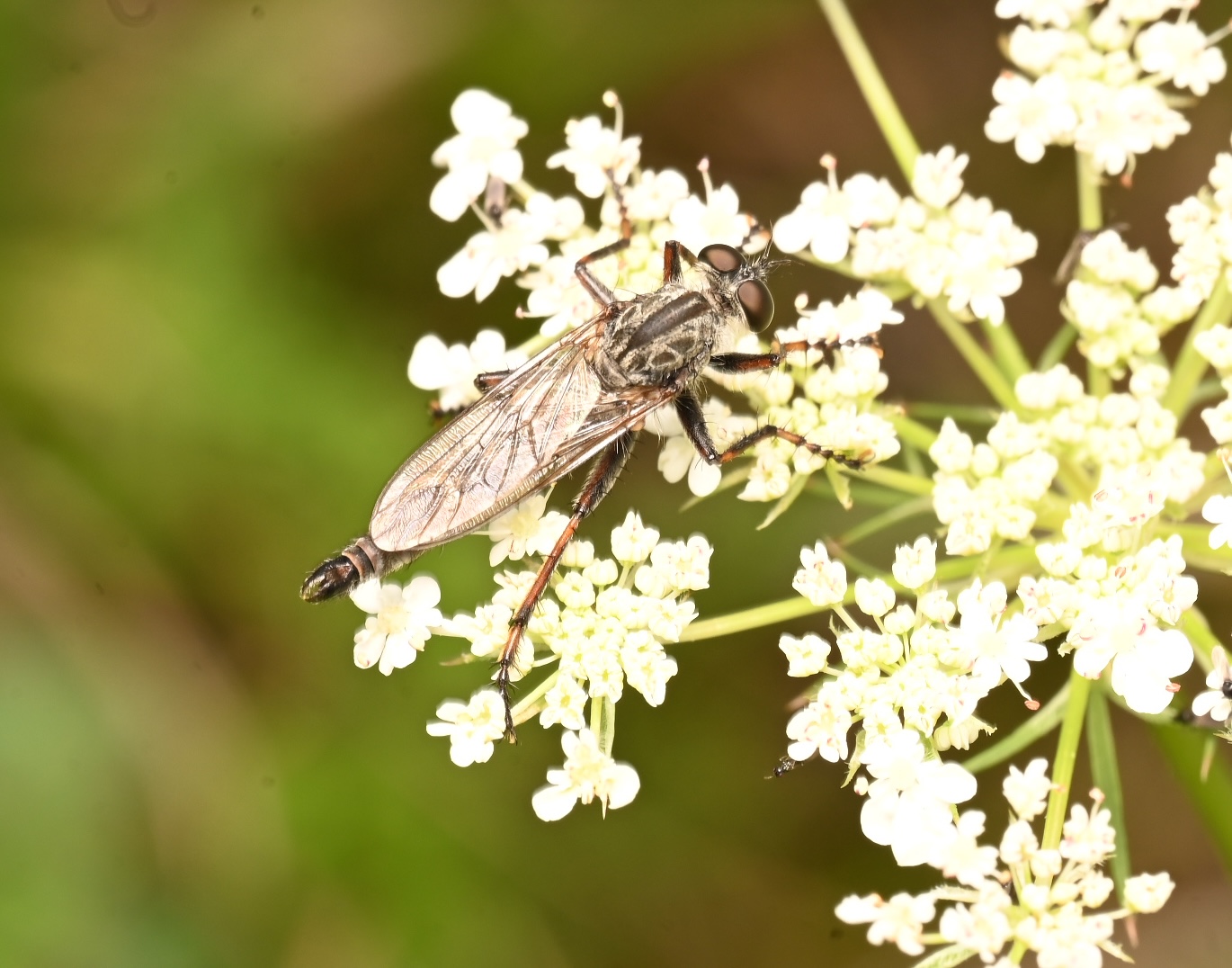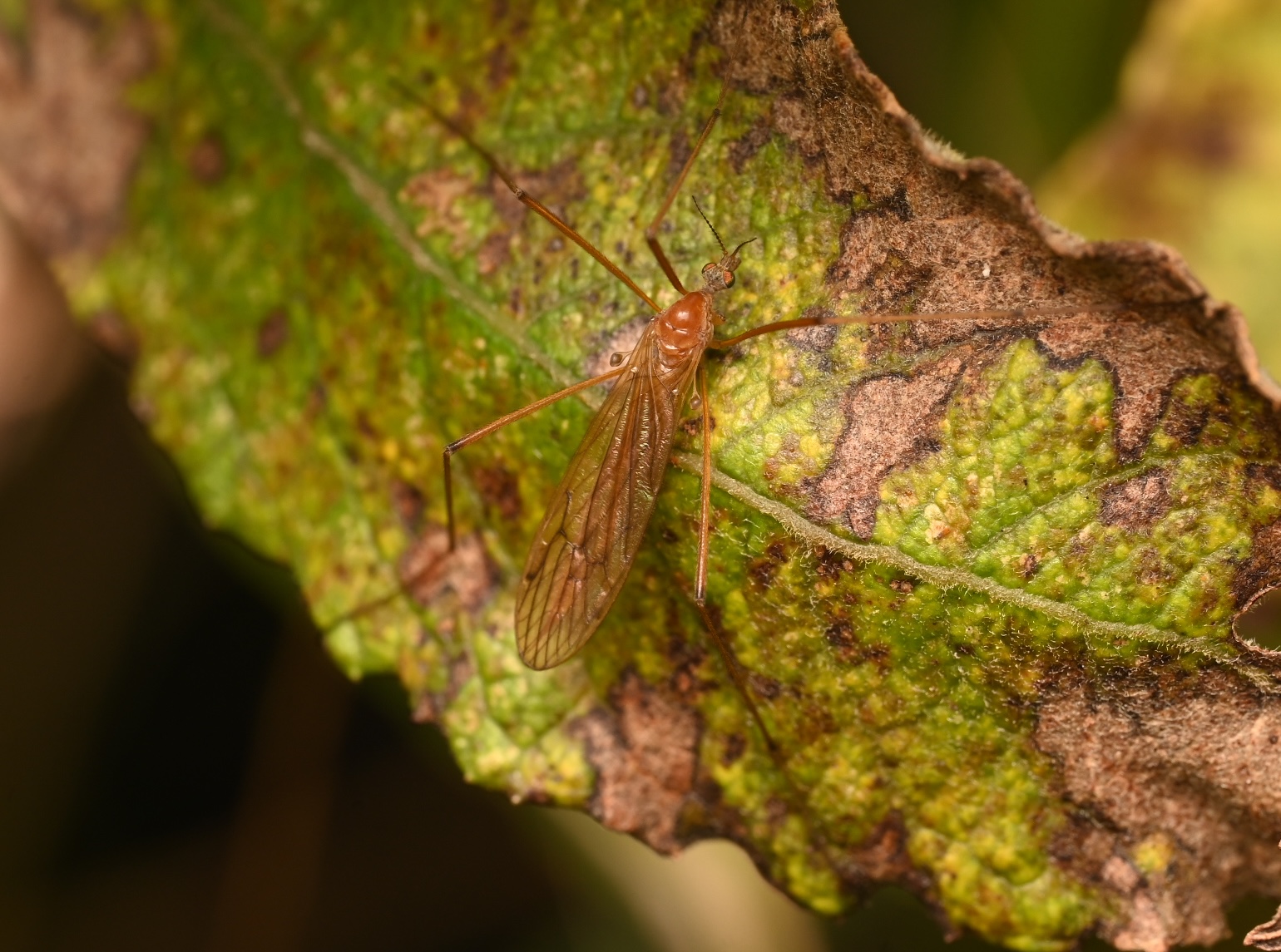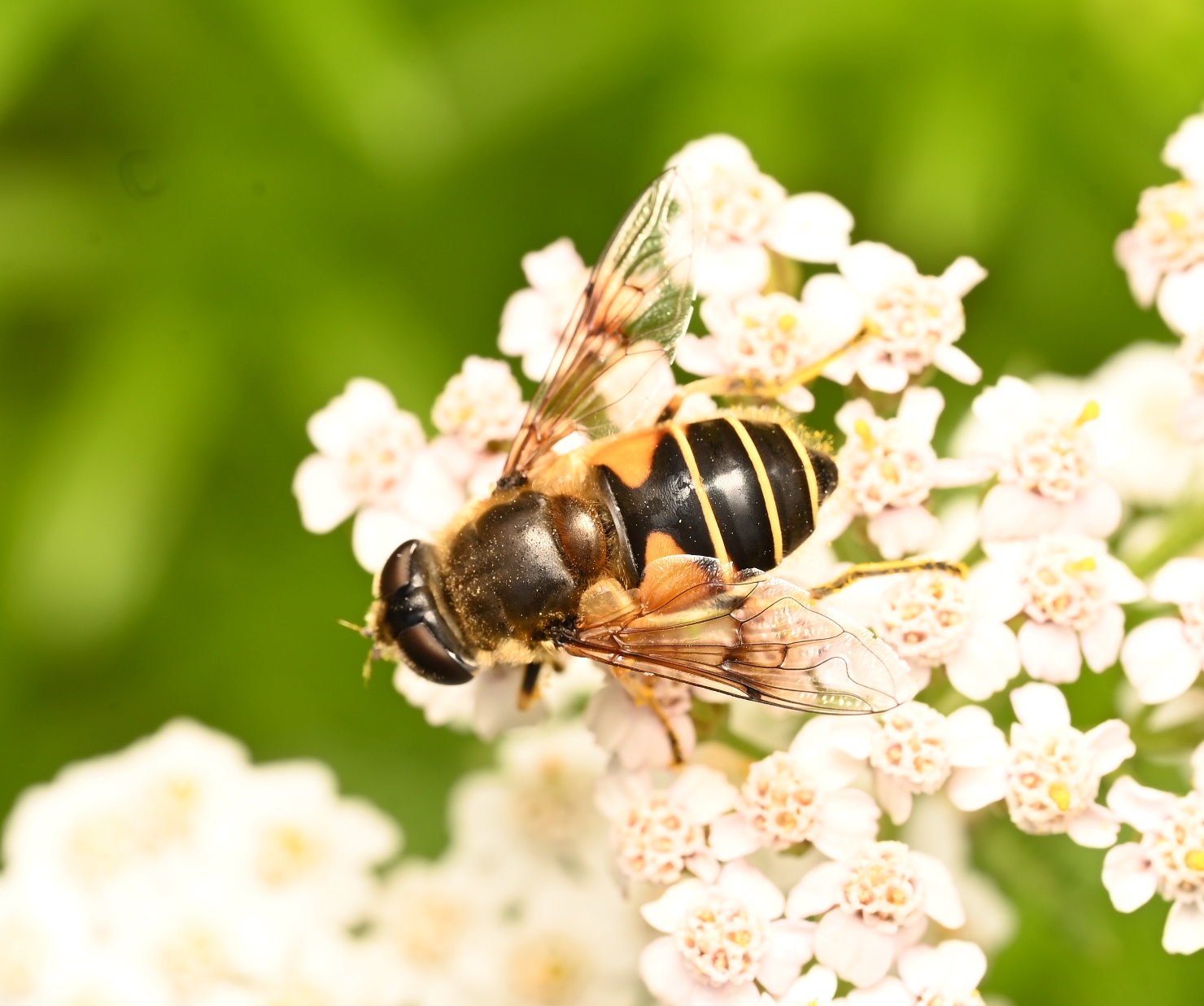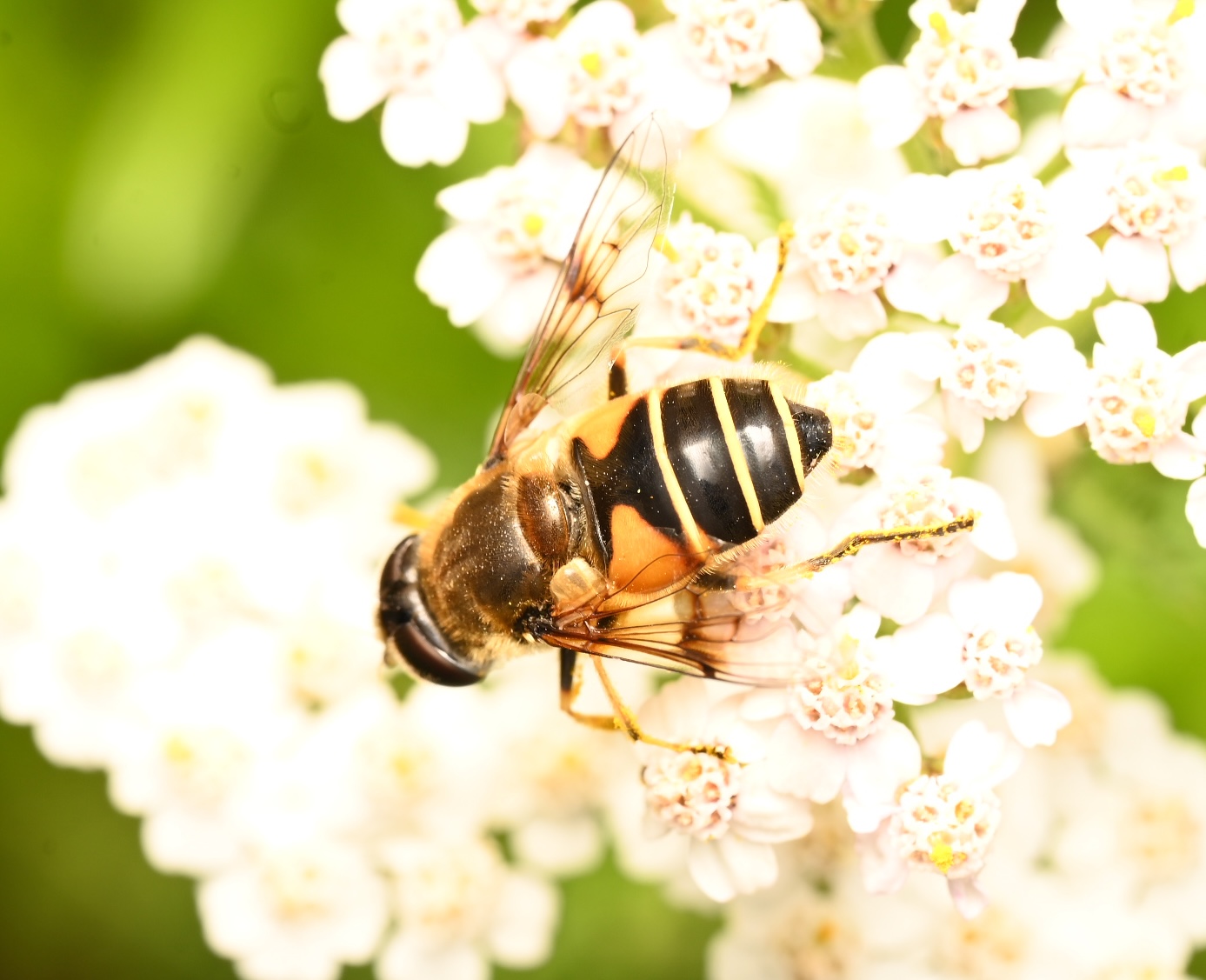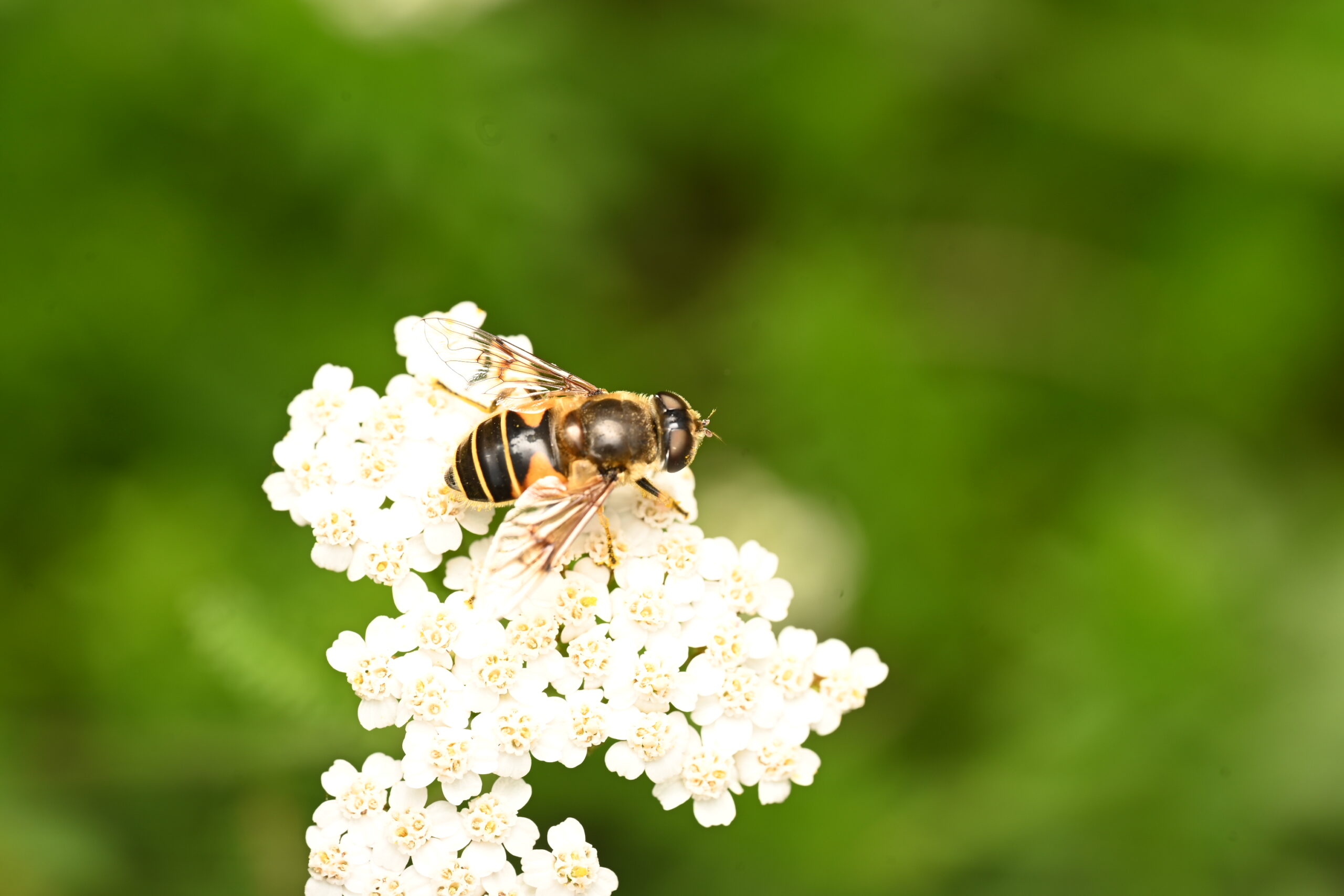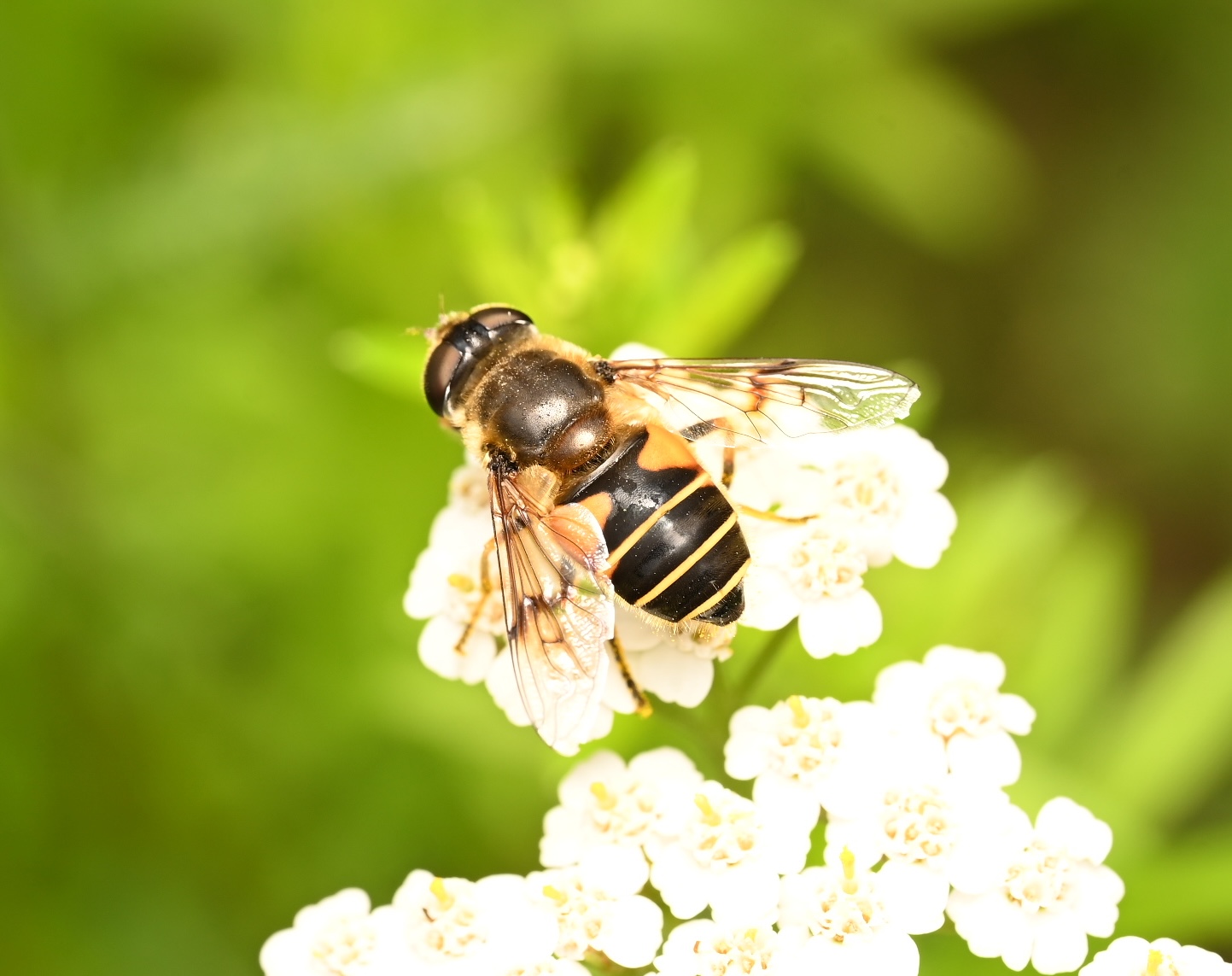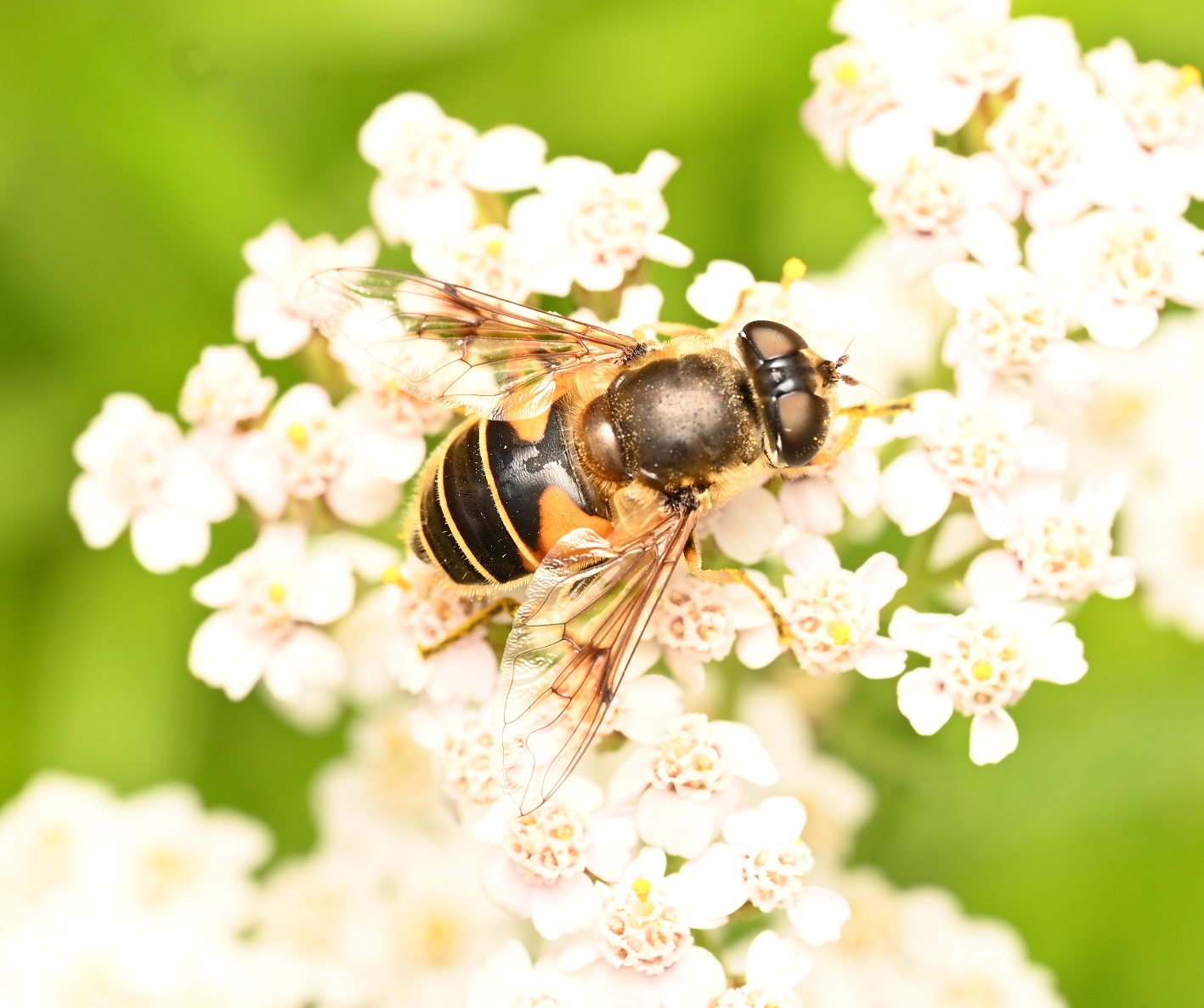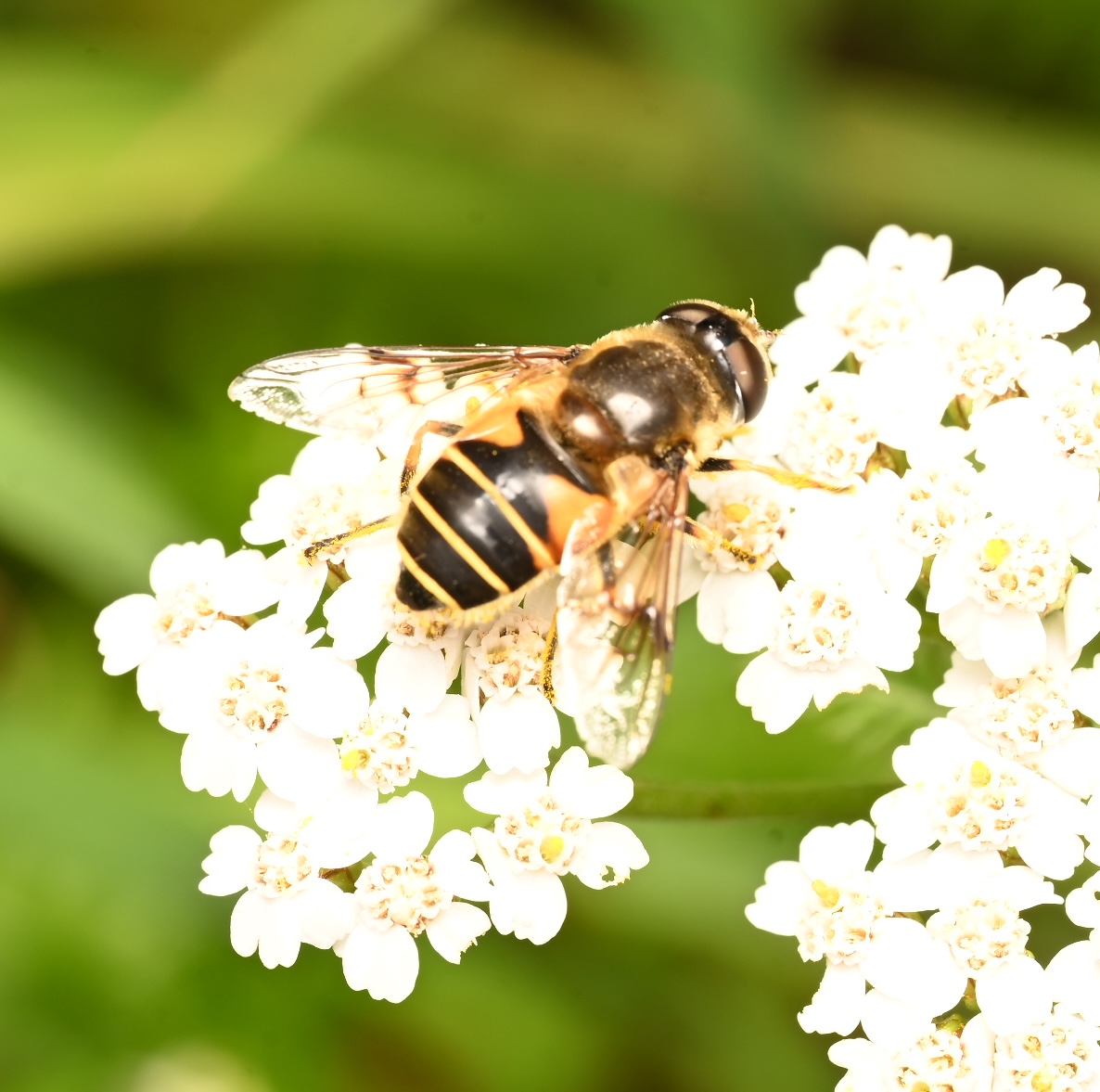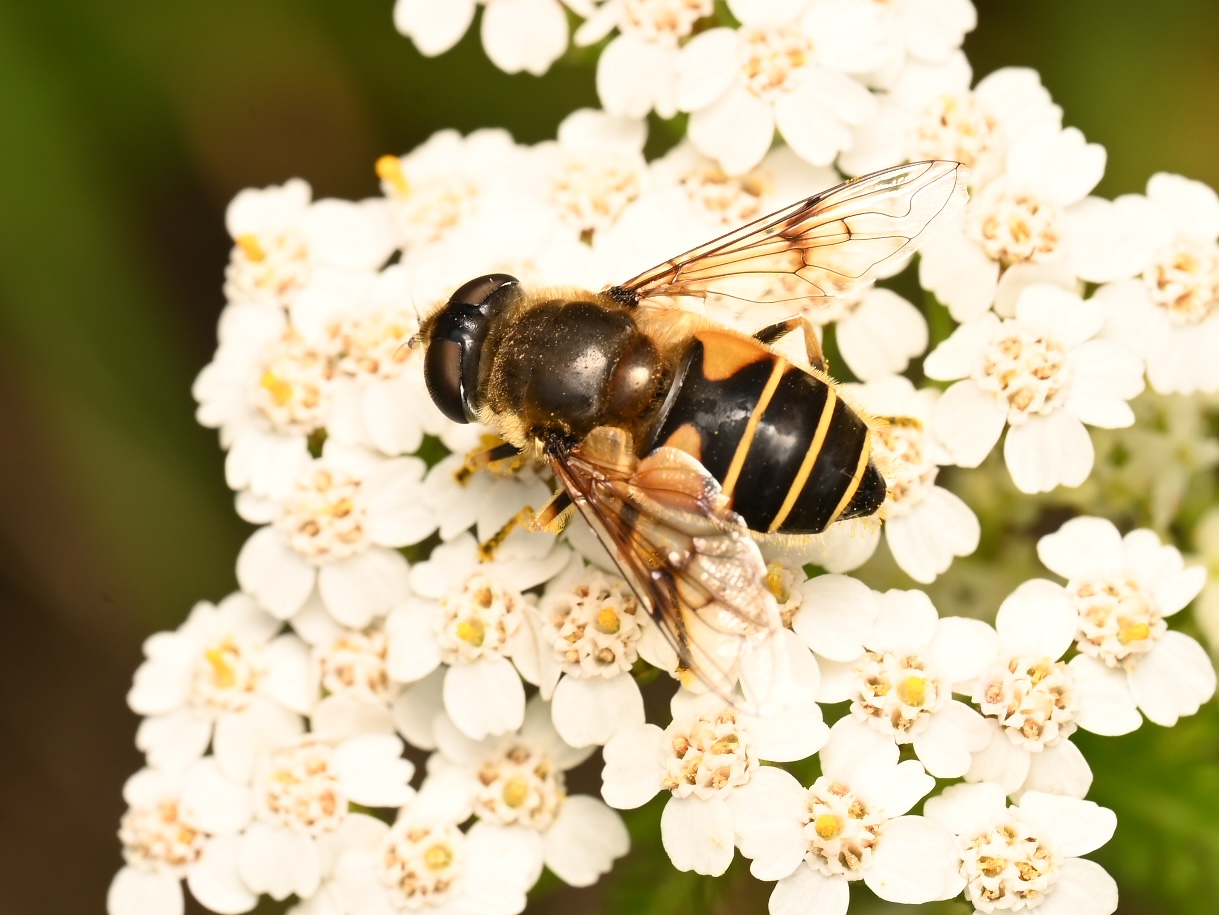
The stripe-winged dronefly (Eristalis horticola) is a robust, bee-mimicking hoverfly instantly recognizable by the distinctive dark stripe running down its face and the smoky dark clouding across its wings. Strongly tied to damp, boggy habitats, it thrives around acidic wet peat, valley mires, and wet heaths. Females frequently choose cattle-trampled mud or saturated peat at the water’s edge to deposit their eggs. Beneath the surface, the larvae feed on decaying organic matter and aquatic microorganisms. Active from April through October, with peak populations appearing around July, adults are frequent flower visitors, sipping nectar and gathering pollen. I encountered this sturdy, charming hoverfly exploring a nature reserve in Järfälla, Sweden.