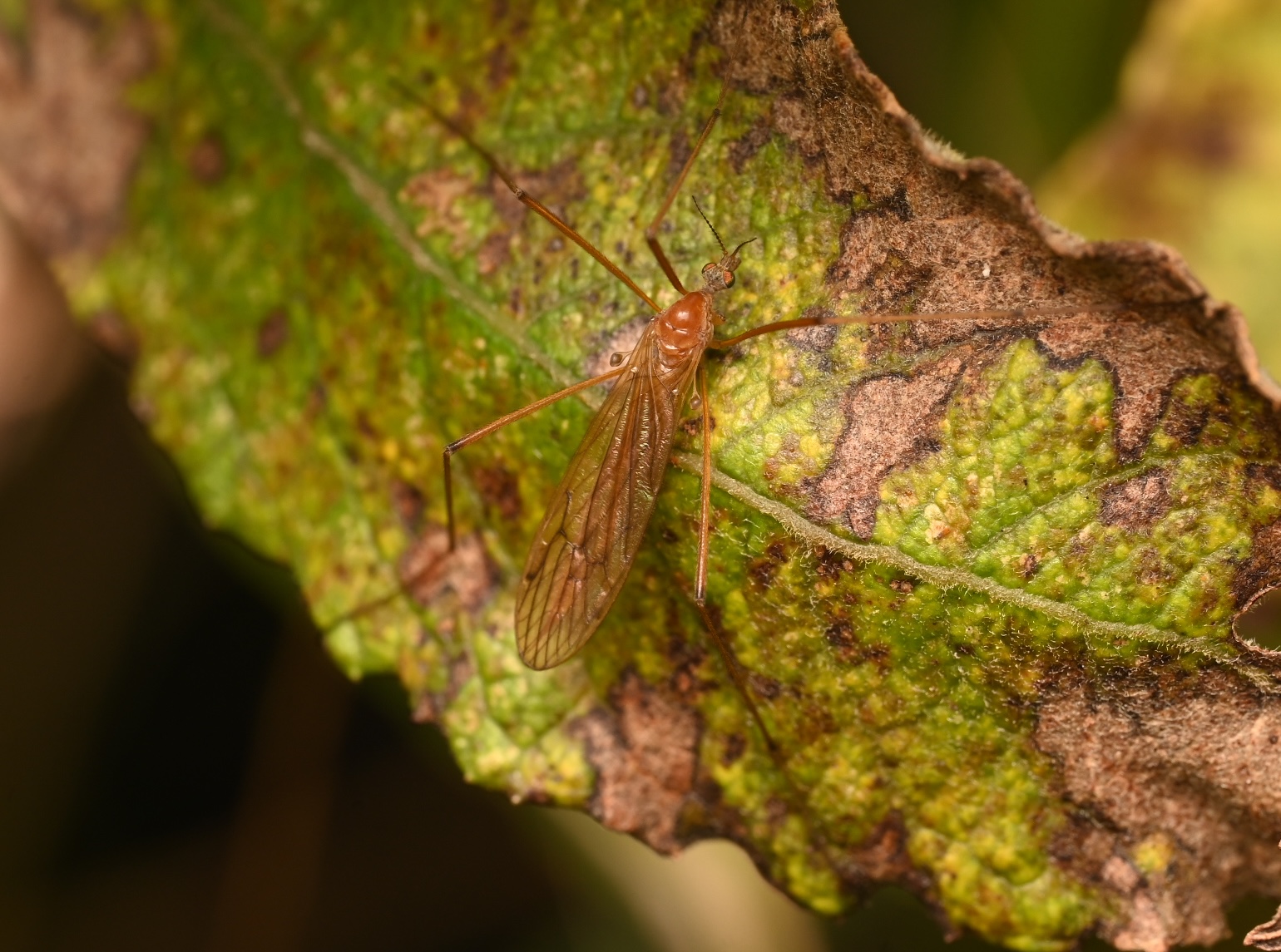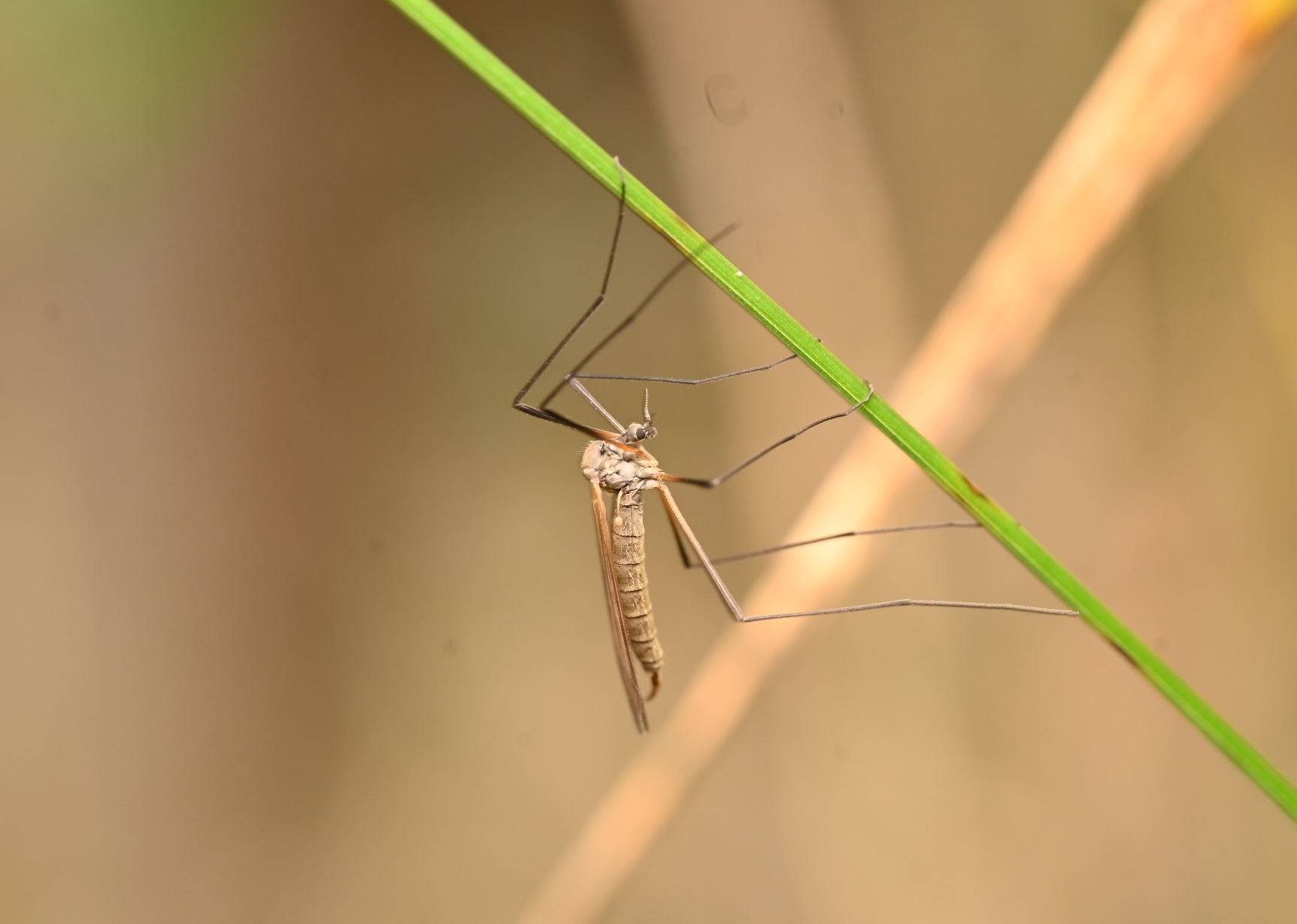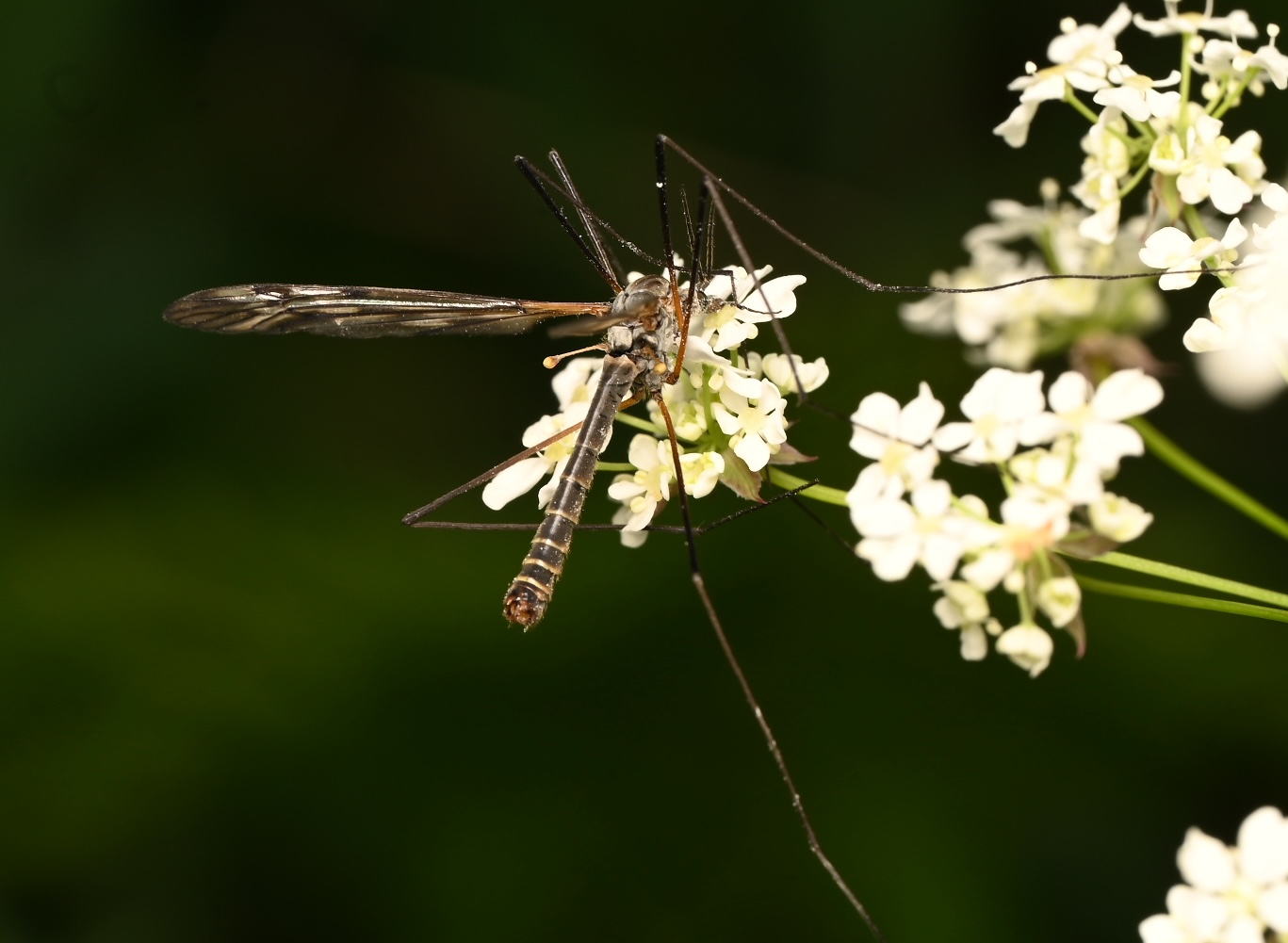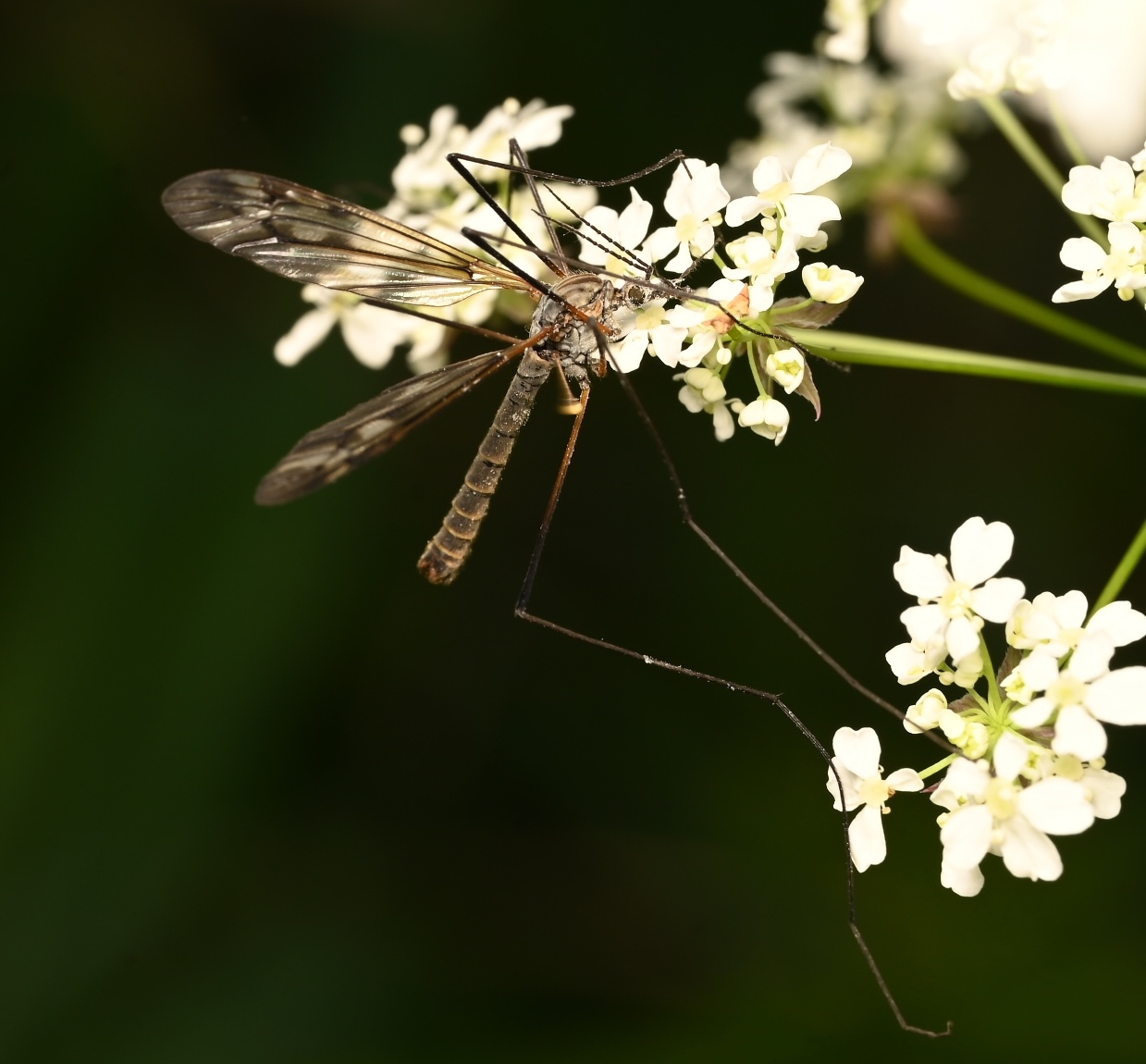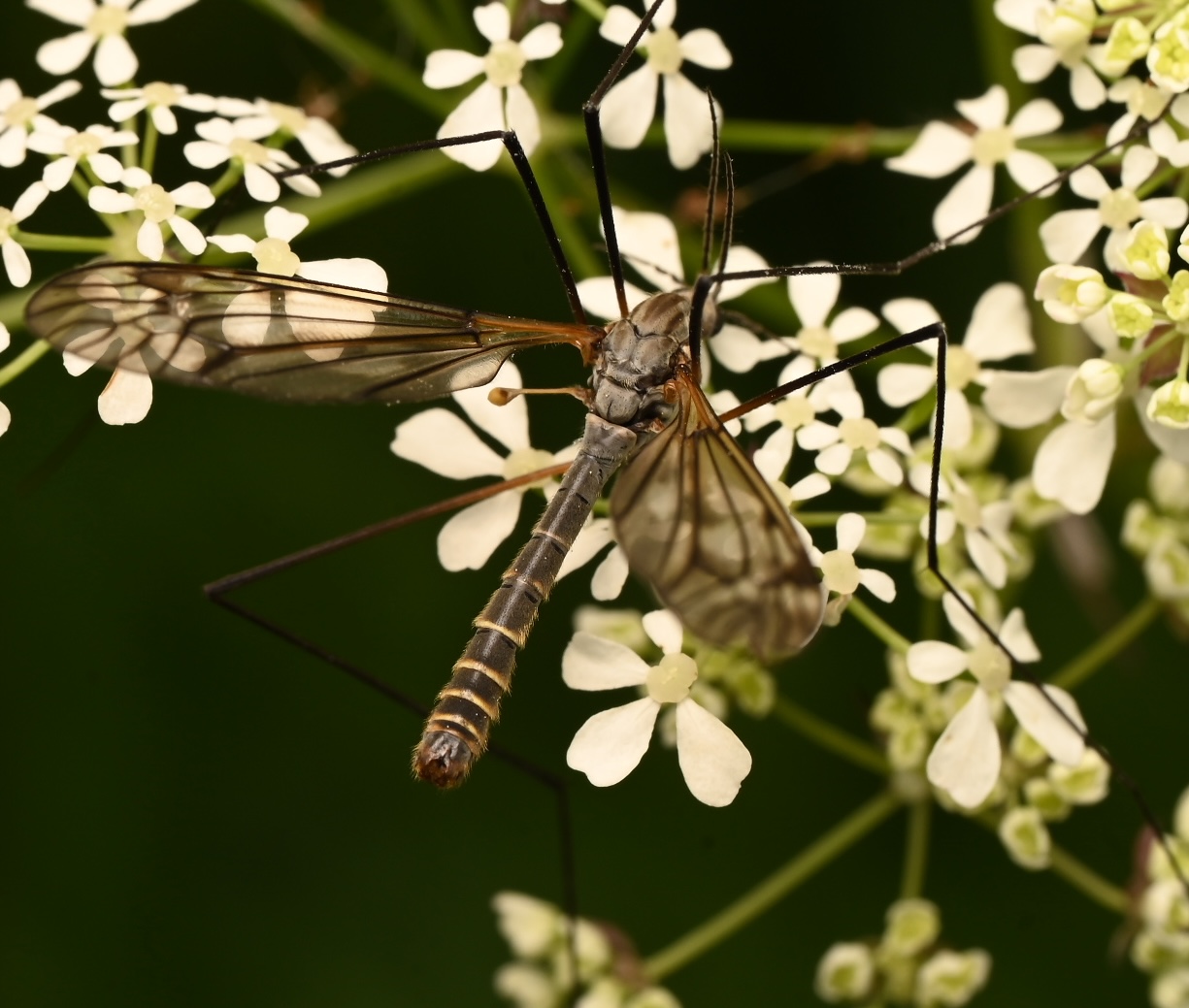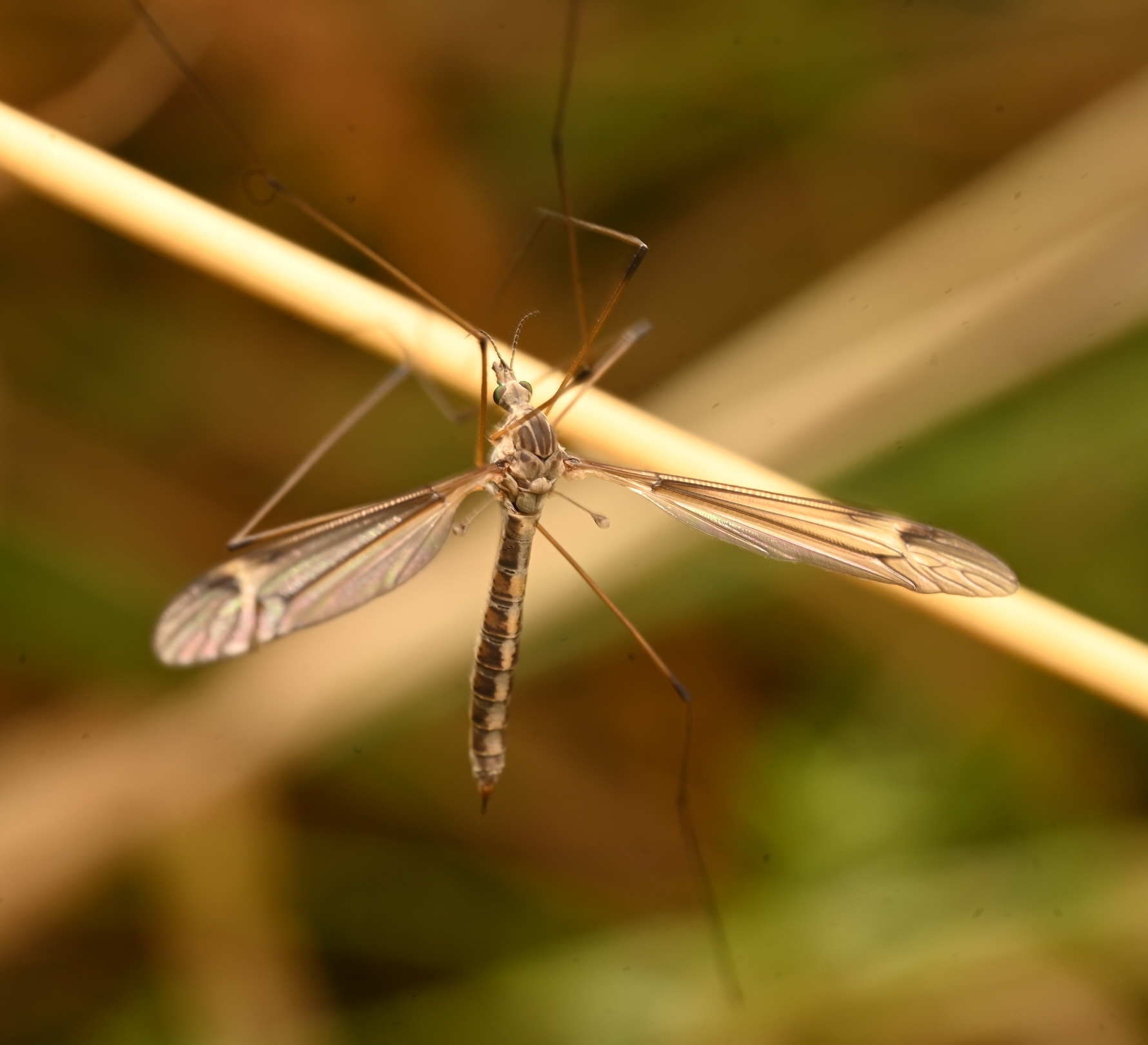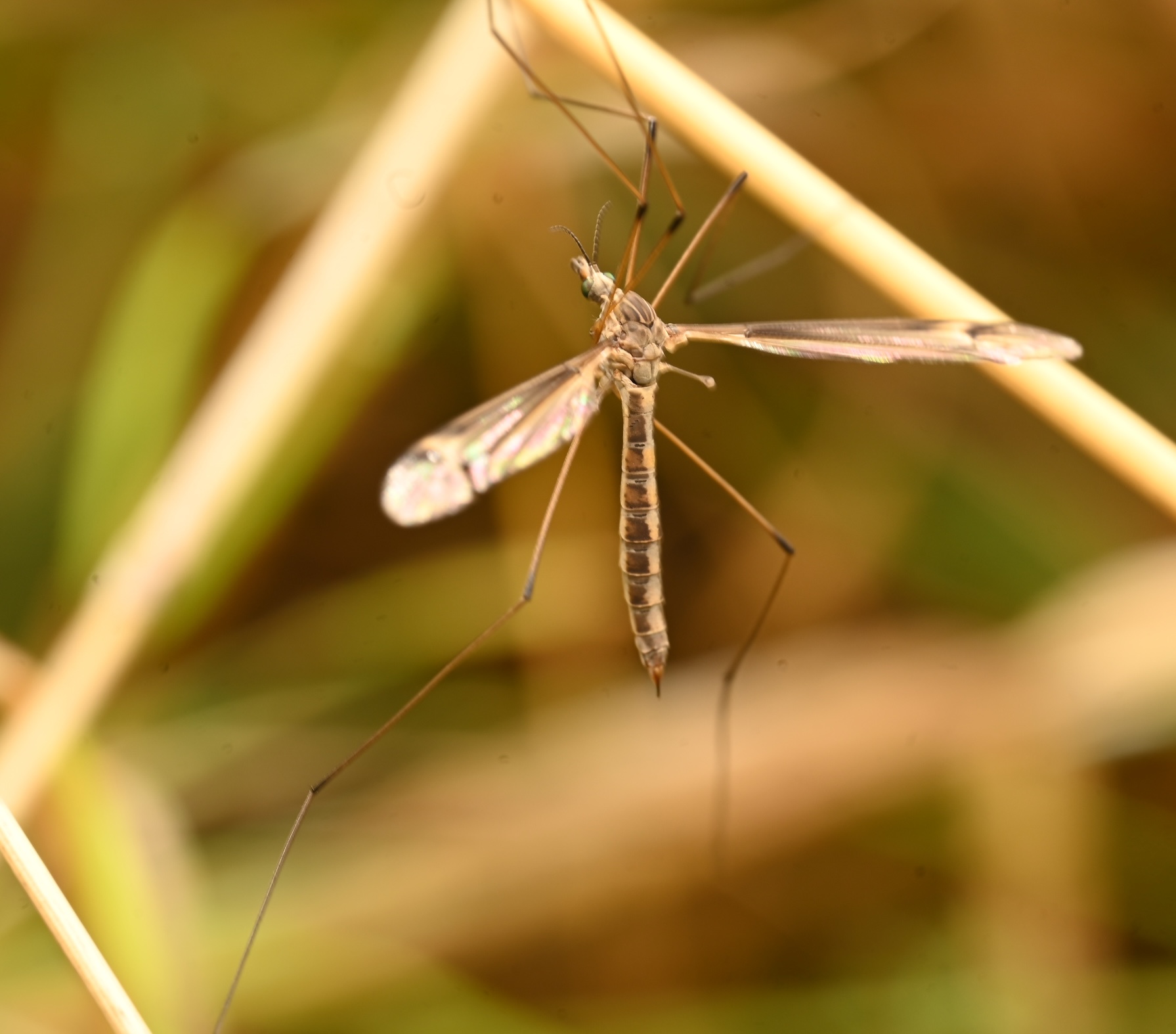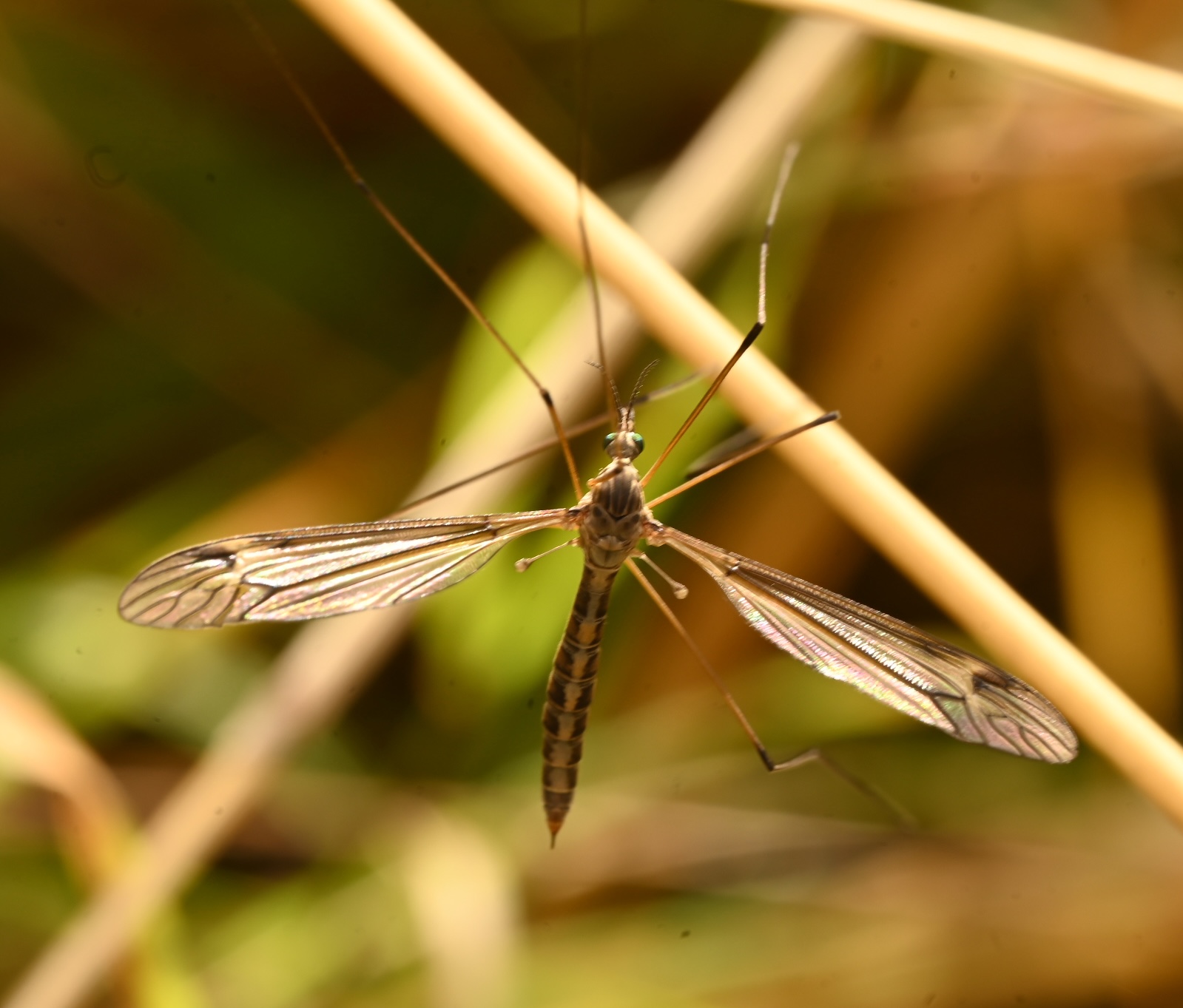
Meet the common lined crane fly (Tipula lateralis), a mid-sized and widespread Palaearctic species easily distinguished by a light-grey stripe down its abdomen and a bold black stripe running across its thorax right behind the eyes. Depending on the local climate, these leggy insects enjoy a remarkably long flight season, active from March all the way through October. While many crane fly larvae develop in damp soil, T. lateralis larvae lead a specialized semi-aquatic lifestyle, dwelling at the bottom of streams and ponds where they act as vital detritivores, breaking down decaying plant matter and algae. It’s easy to spot these skittish, clumsy insects bumping into vegetation across the meadows. Getting a good photo of them is a different story, though—they’re in constant motion and hard to approach. Even so, I’ve managed to pull it off a few times. In June 2026, during a bike trip, I photographed a male, and later in August, close to home, I managed to sneak up on a female. They look entirely different due to the lighting, but their similar size and a few key features convince me they belong to the same species.