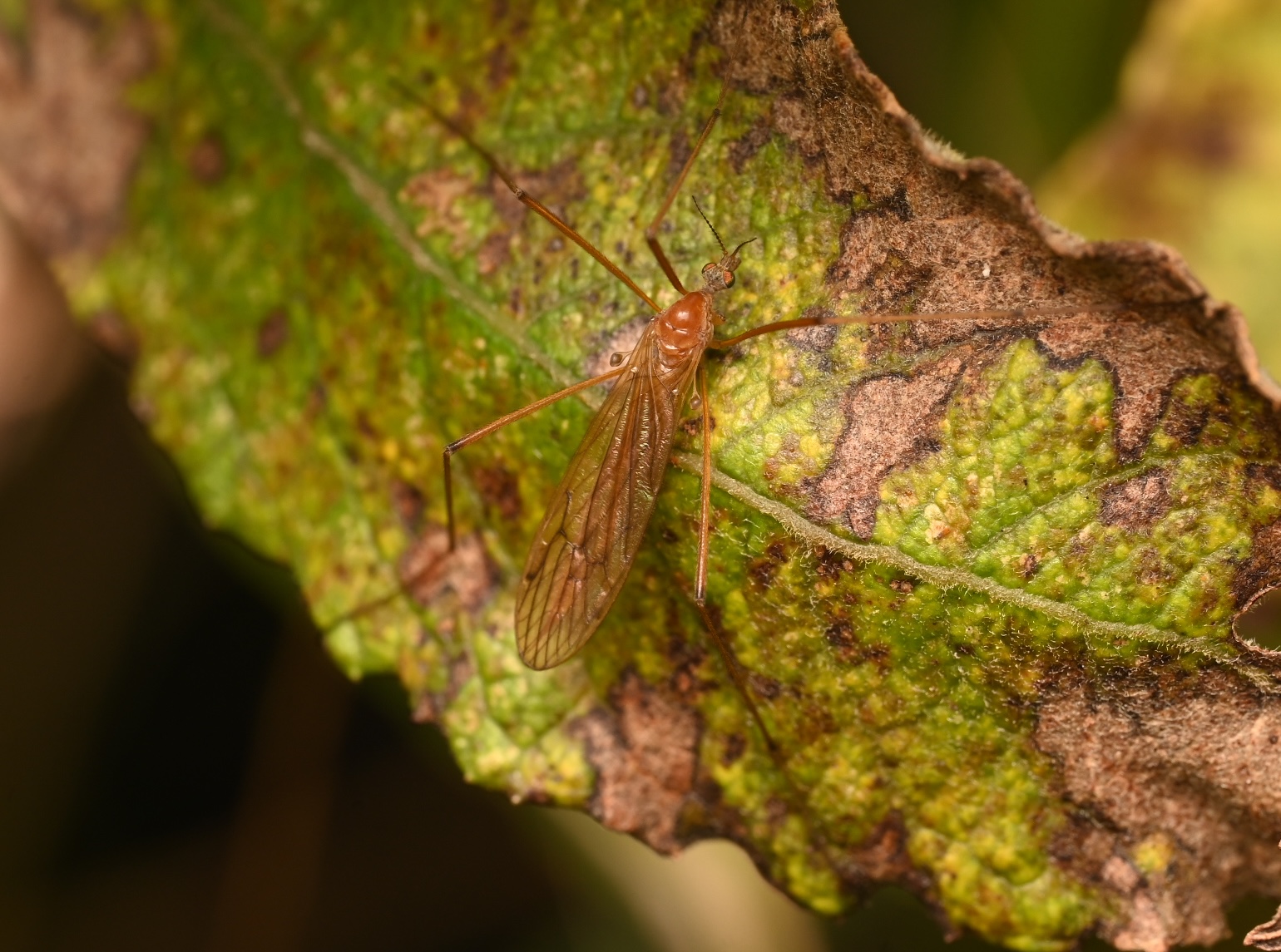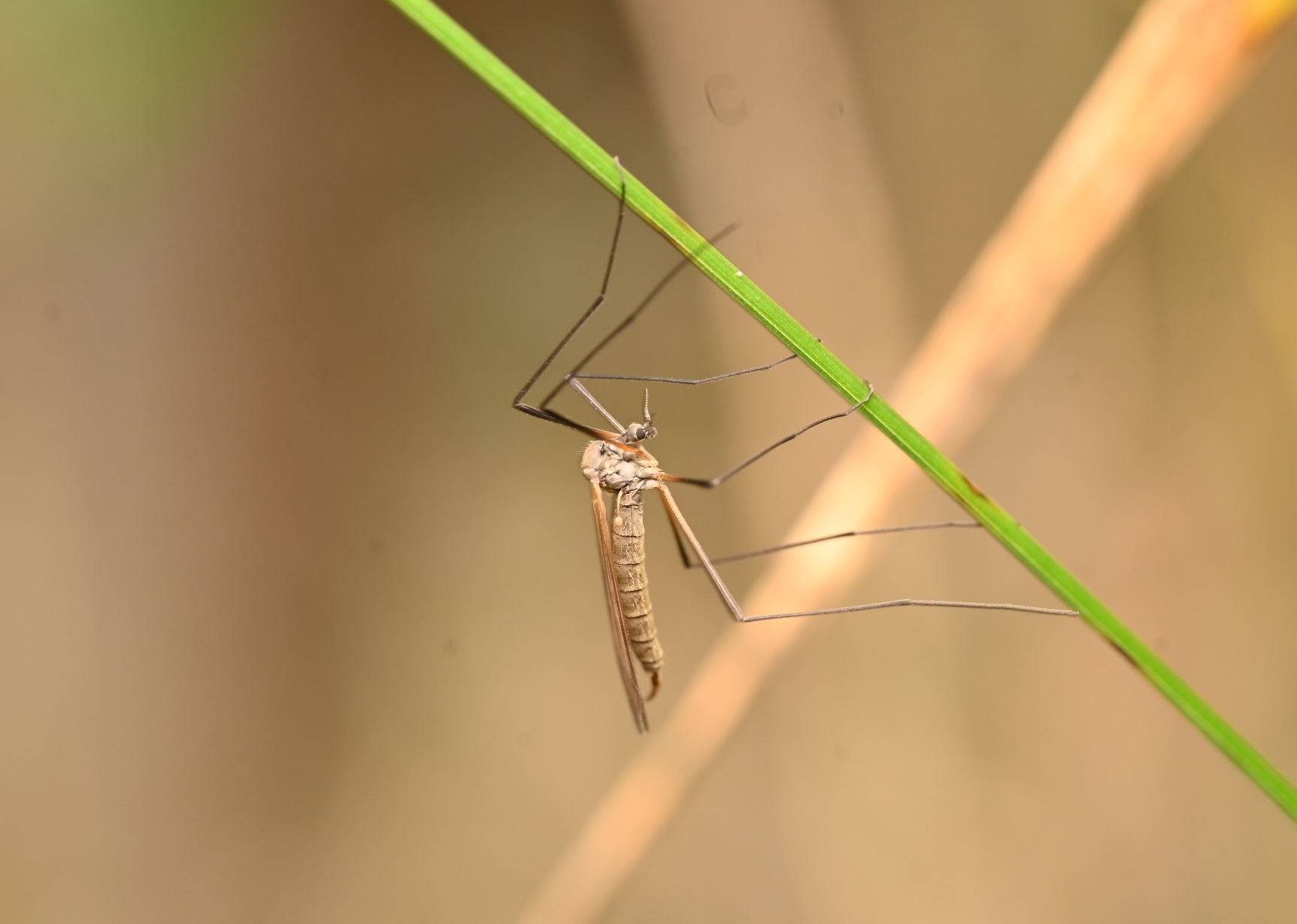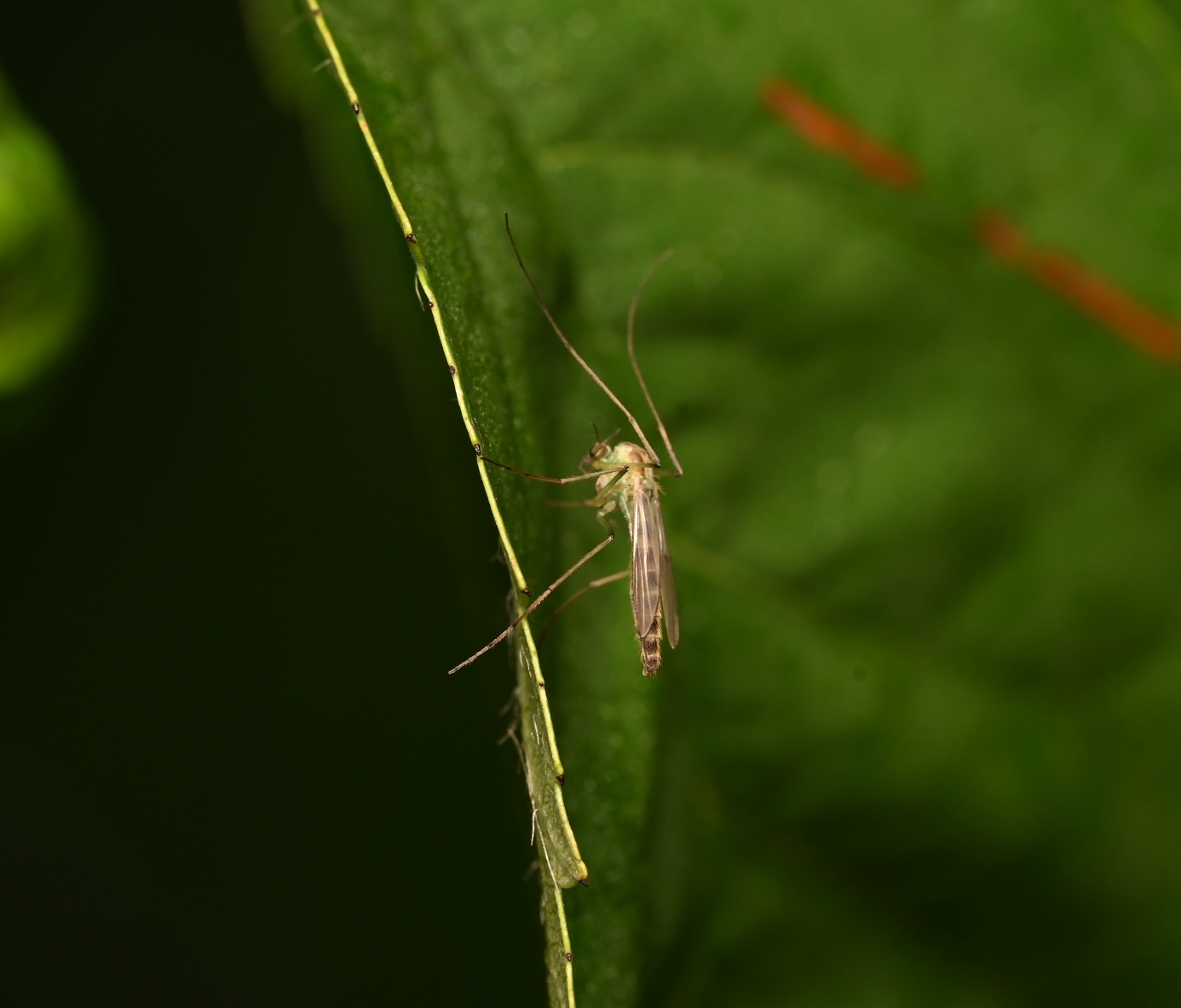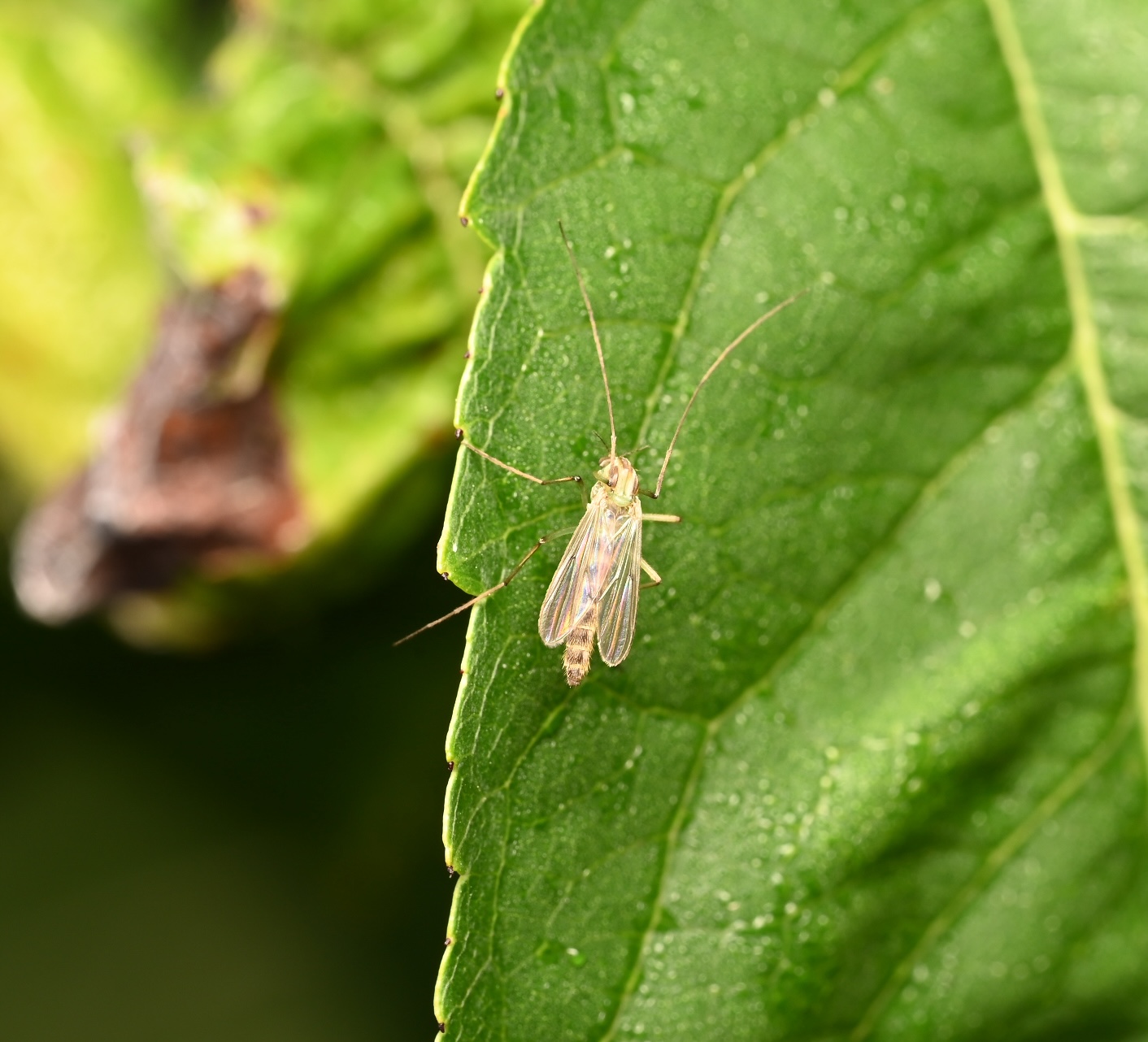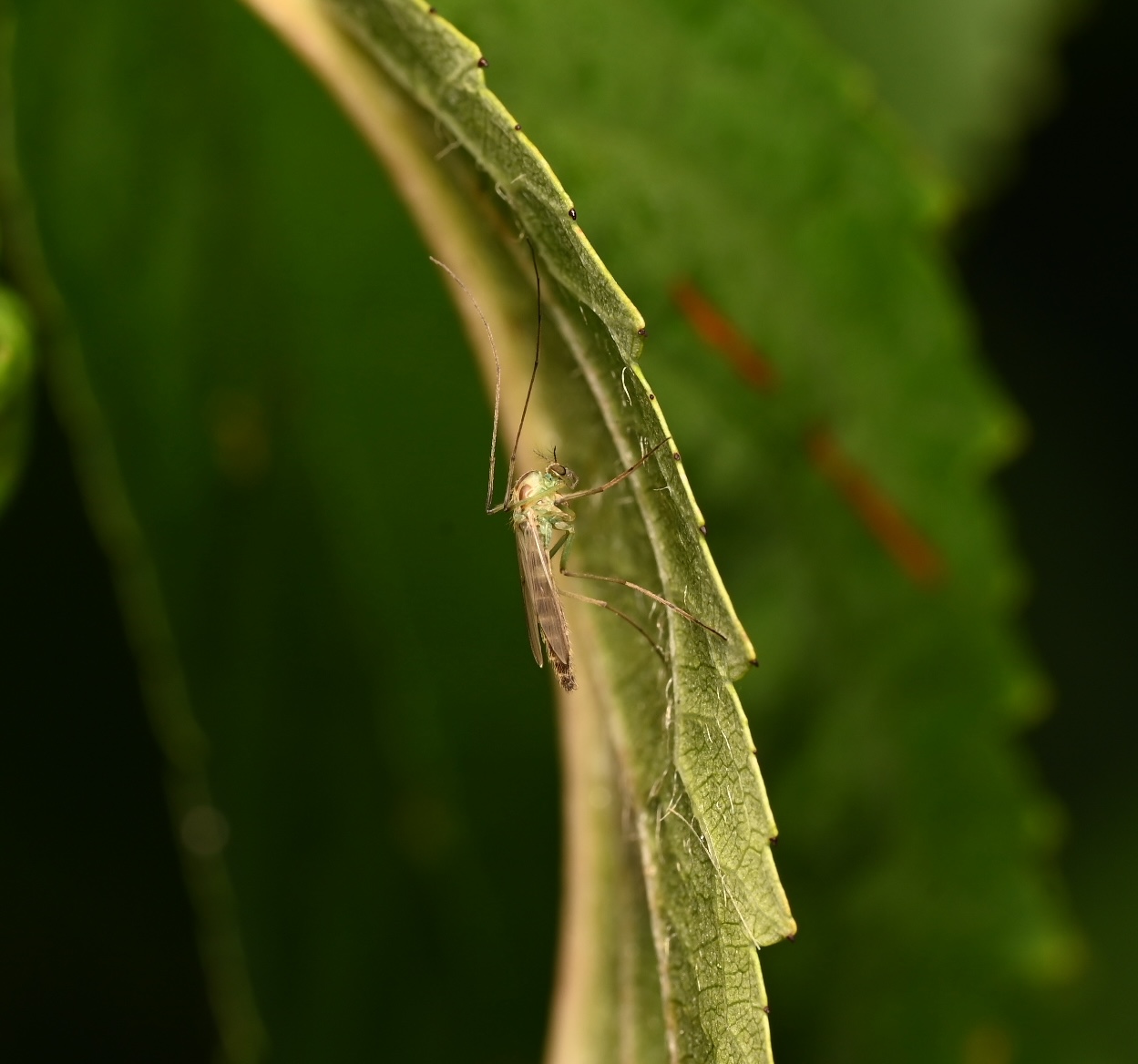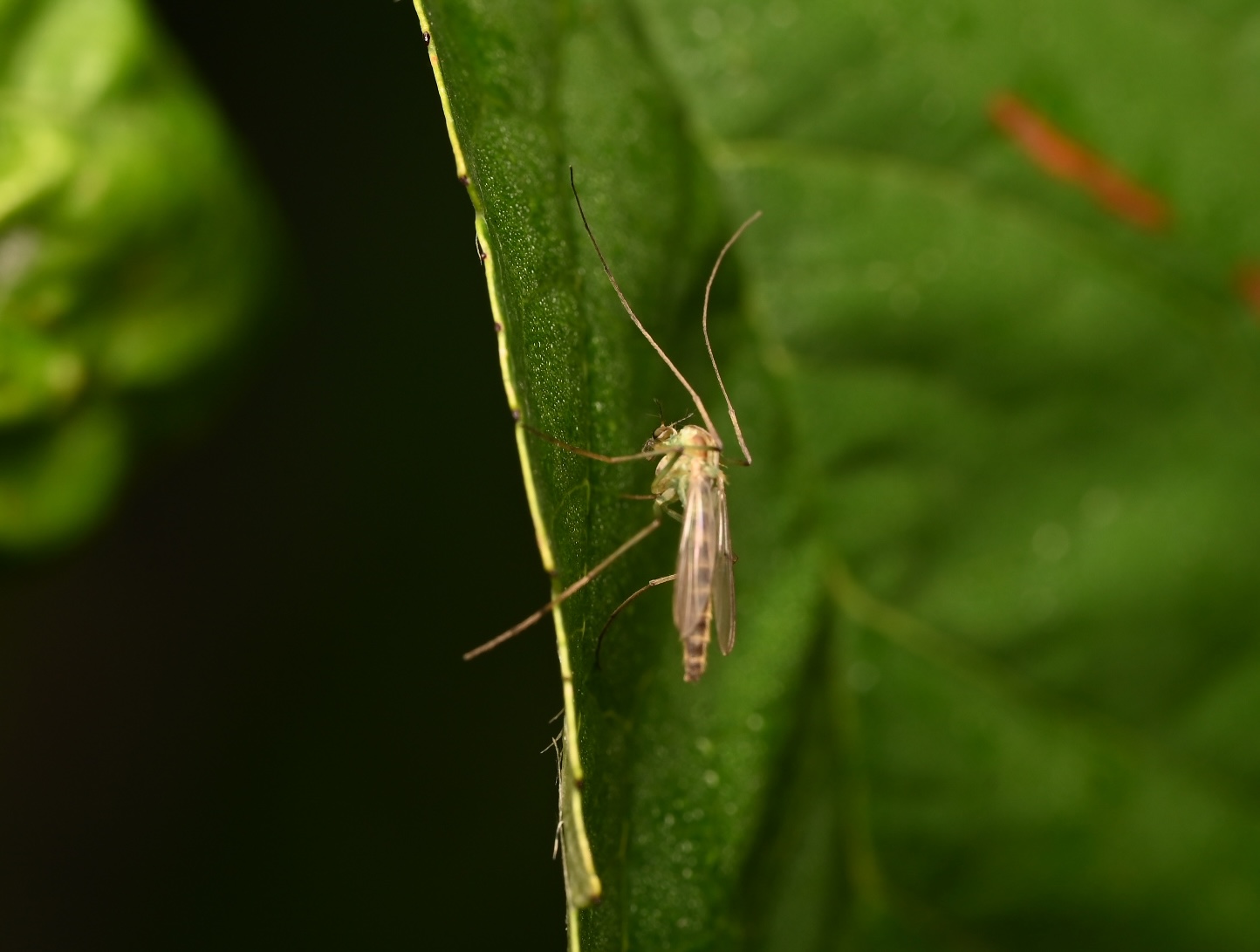
At first glance, midges in the genus Chironomus look almost identical to blood-thirsty mosquitoes—yet these gentle insects lack functional mouthparts and couldn’t bite you if they tried! Standing at from 5 to 13 millimeters long, they carry out a delightful signature trick: while resting, they raise their front legs into the air and gently vibrate them. In fact, their scientific name comes from the ancient Greek word for “one who moves the hands”! Beyond their harmless nature, these aquatic insects are scientific icons. While males sport magnificent, feathery antennae that act as acoustic sensors to “hear” the flight hum of females, scientists study their larvae for another reason entirely: their salivary glands contain giant, enlarged chromosomes that have unlocked key secrets in genetics. Telling individual species apart in the field is so complex that even experts often need DNA tests! During my visits to lakeside forests across Poland and Sweden, I’ve photographed several nonbiting midges, though identifying them down to the exact species remains a formidable challenge. Luckily, this handsome female stayed still long enough for me to capture her intricate details from multiple angles, adding a bit to my previous observations 🙂