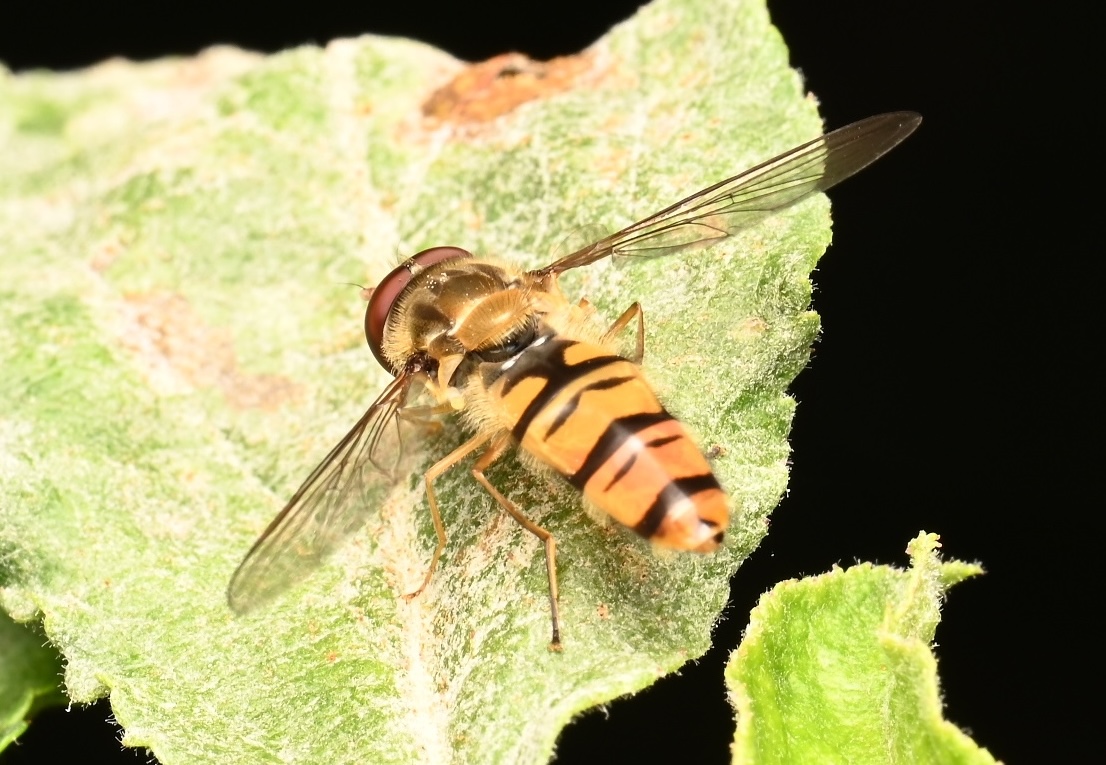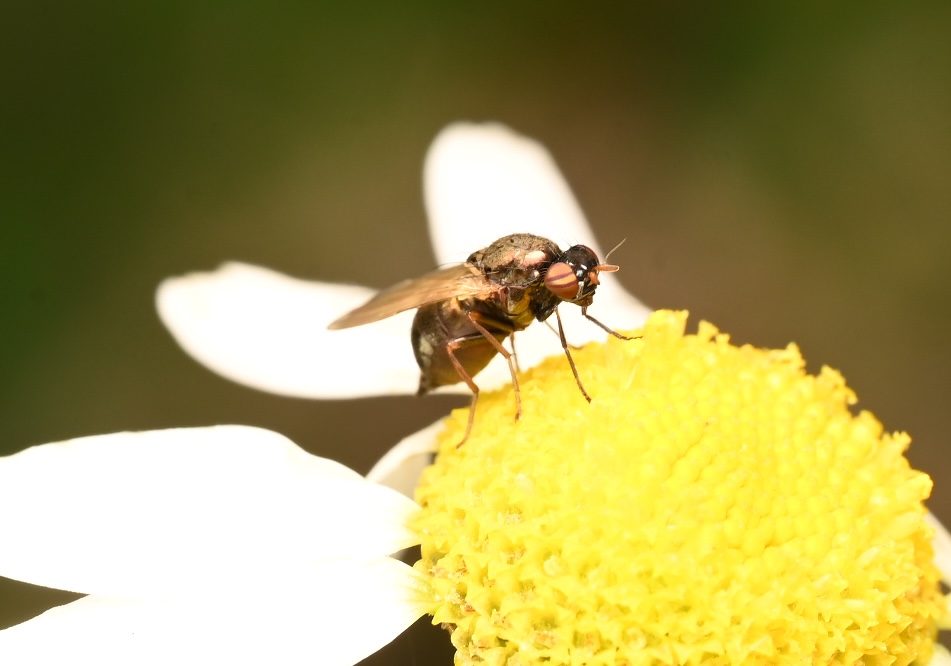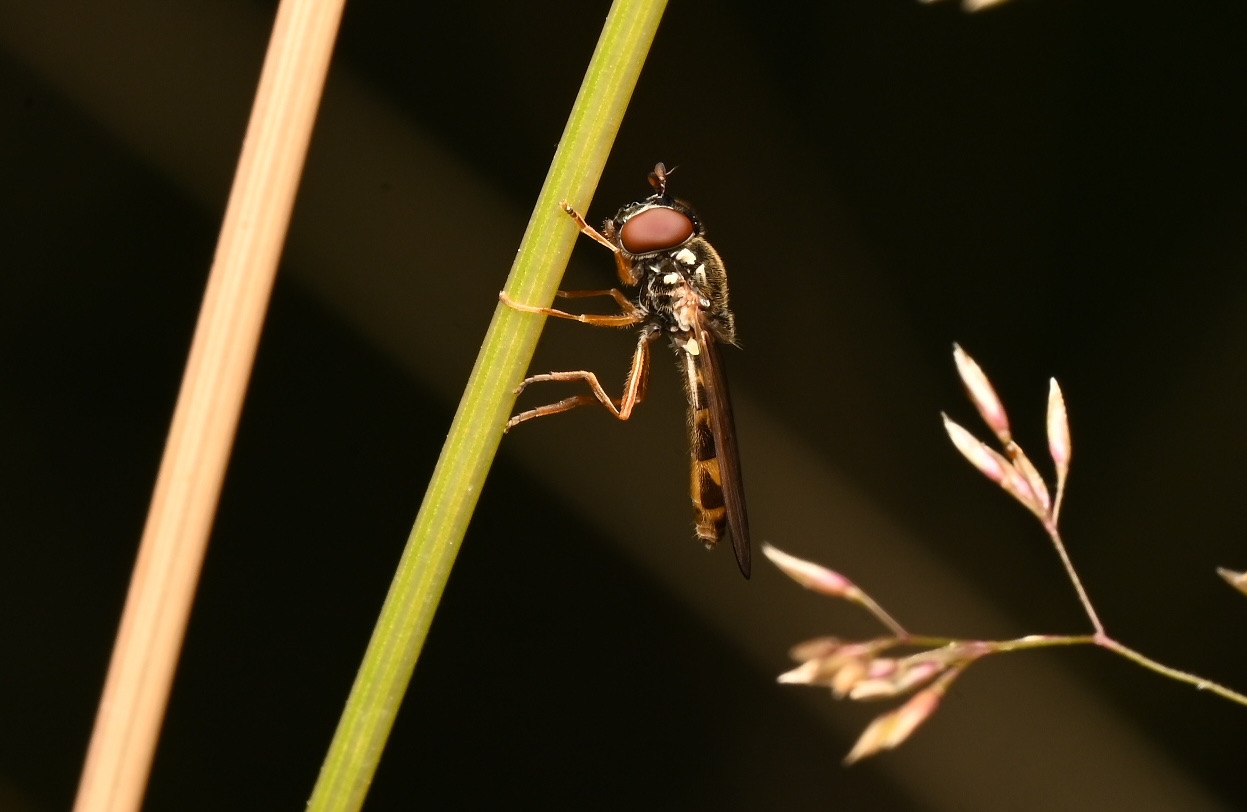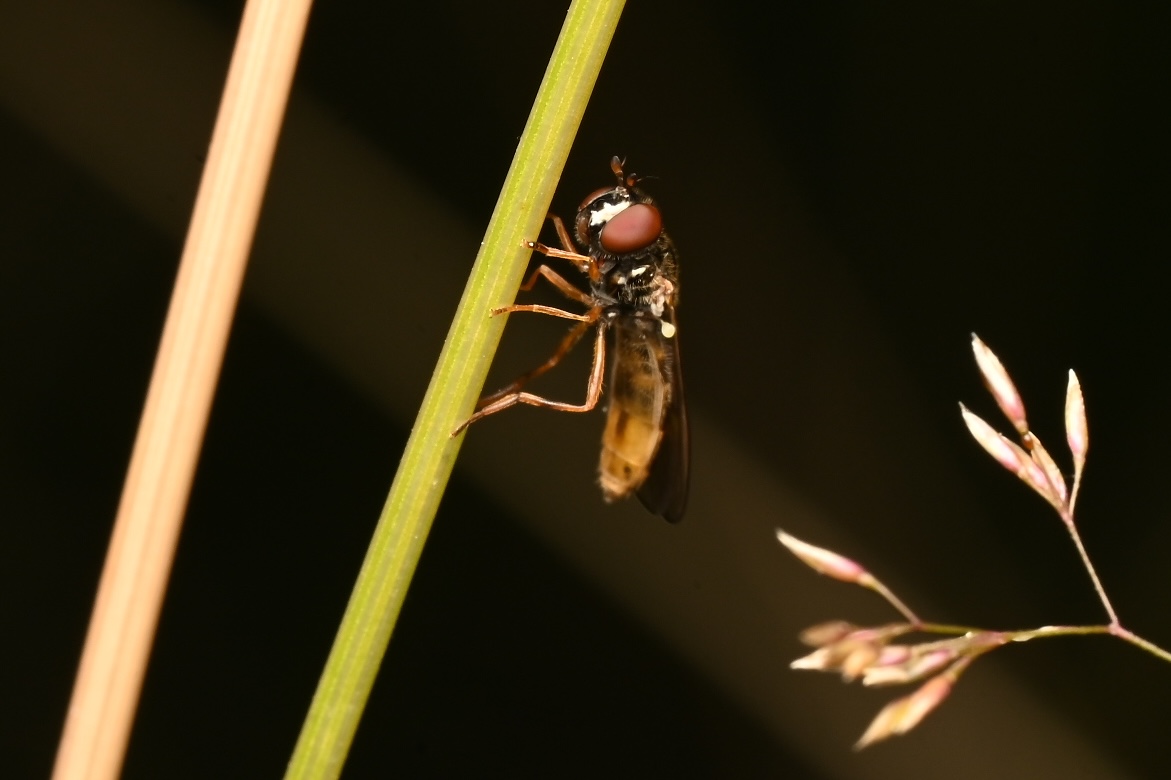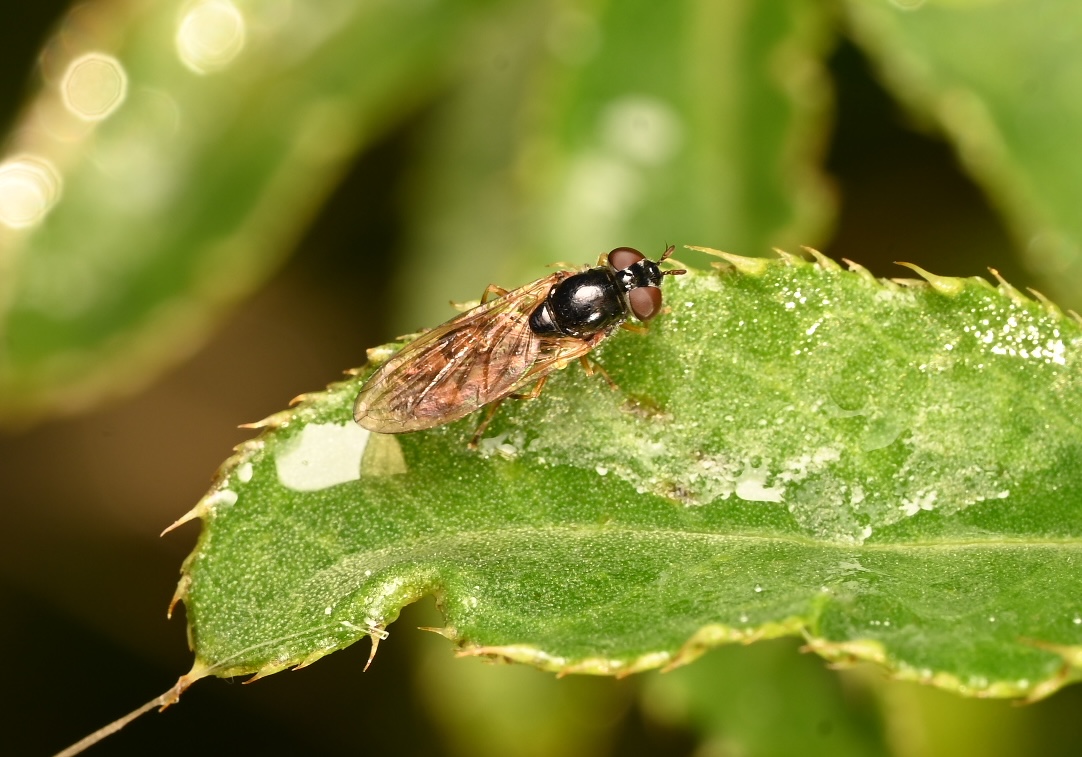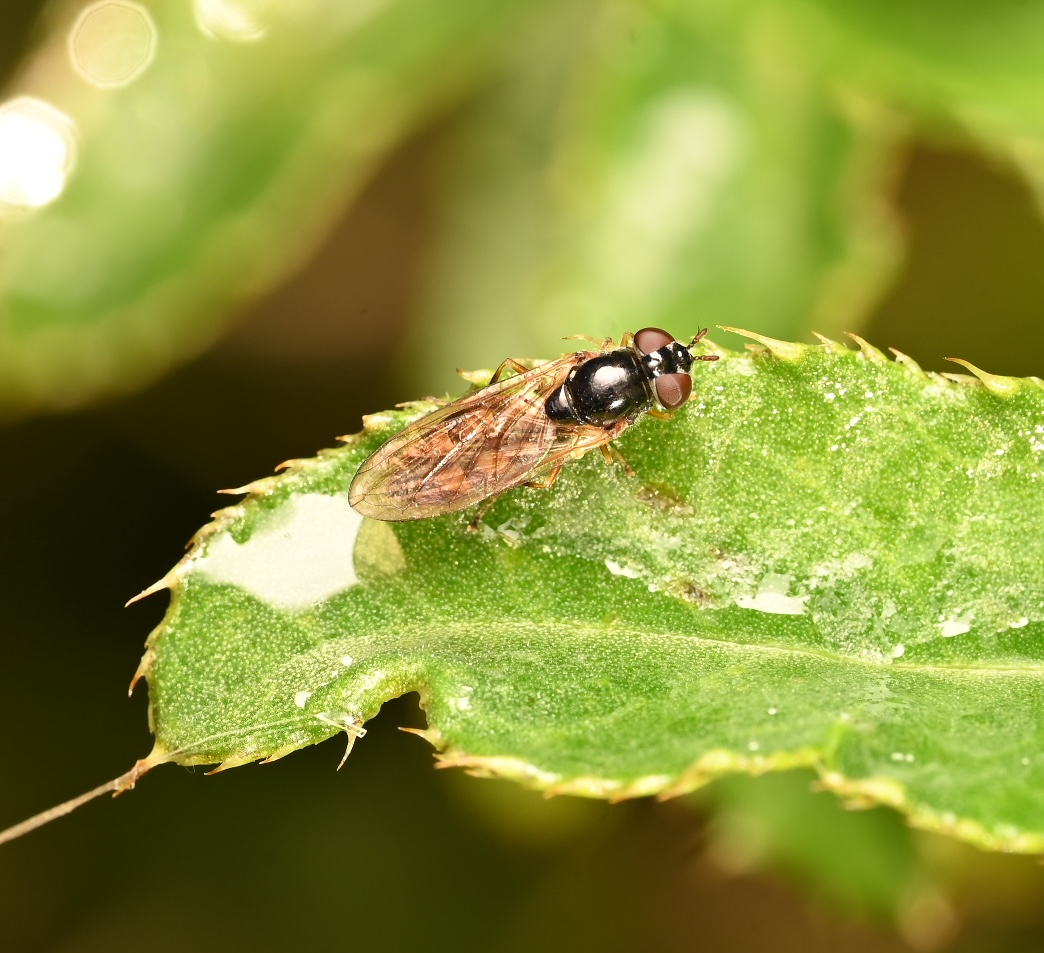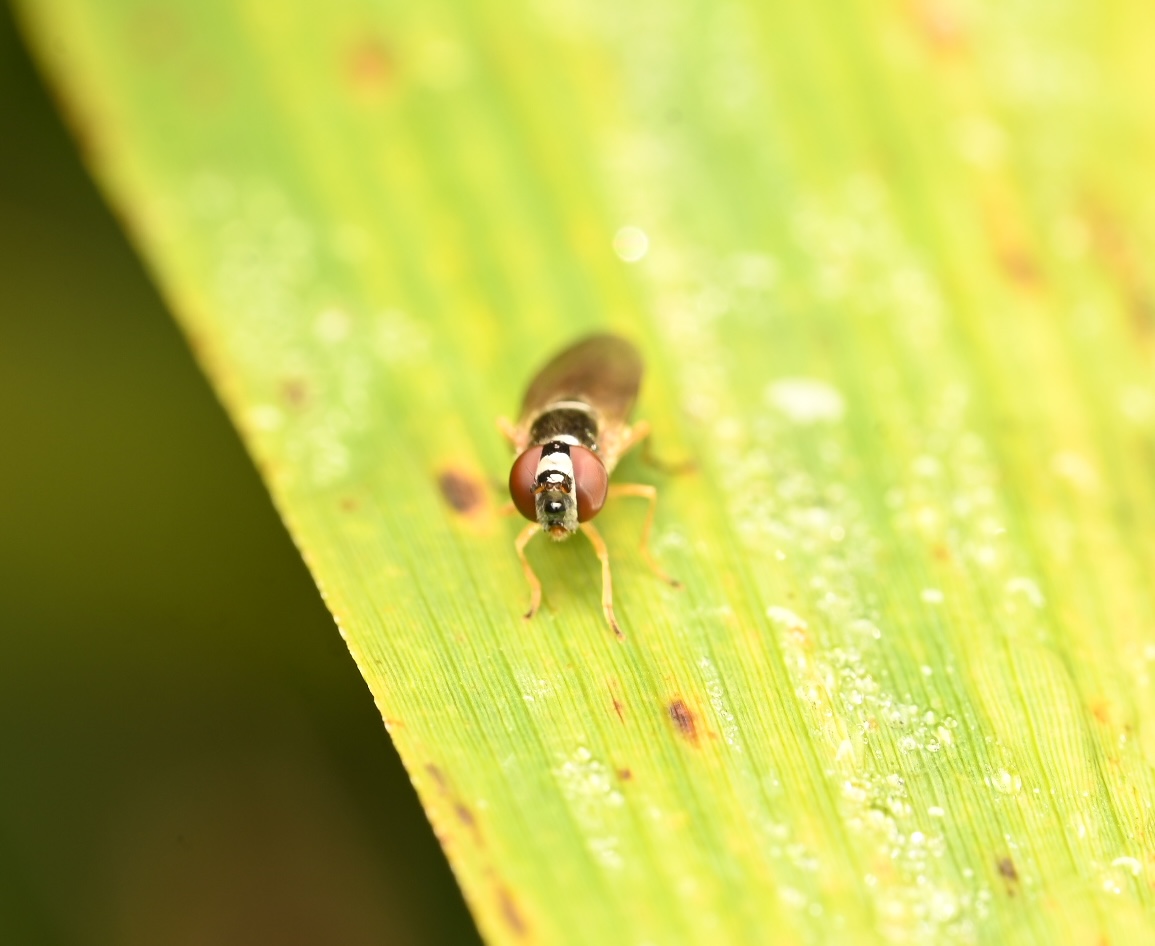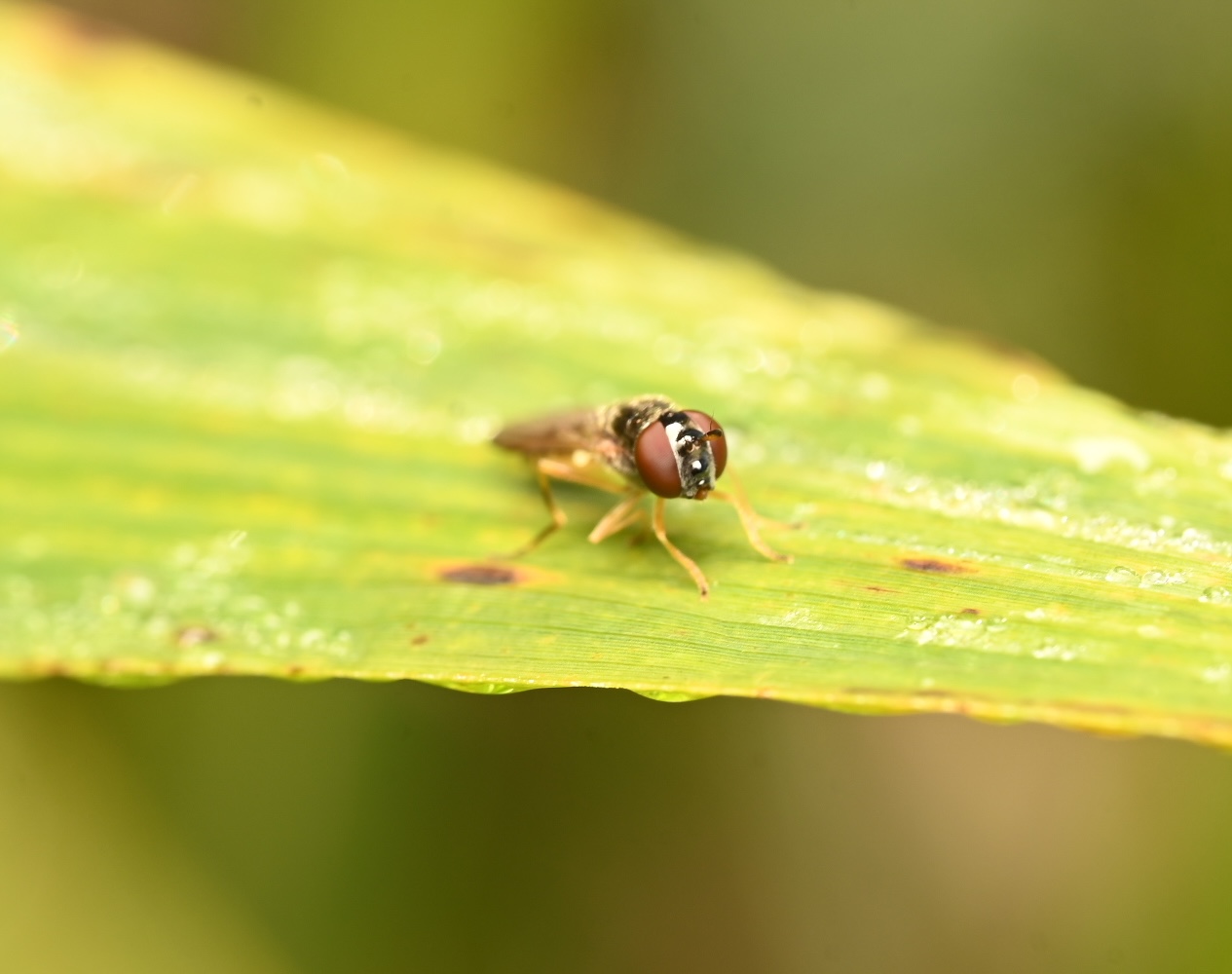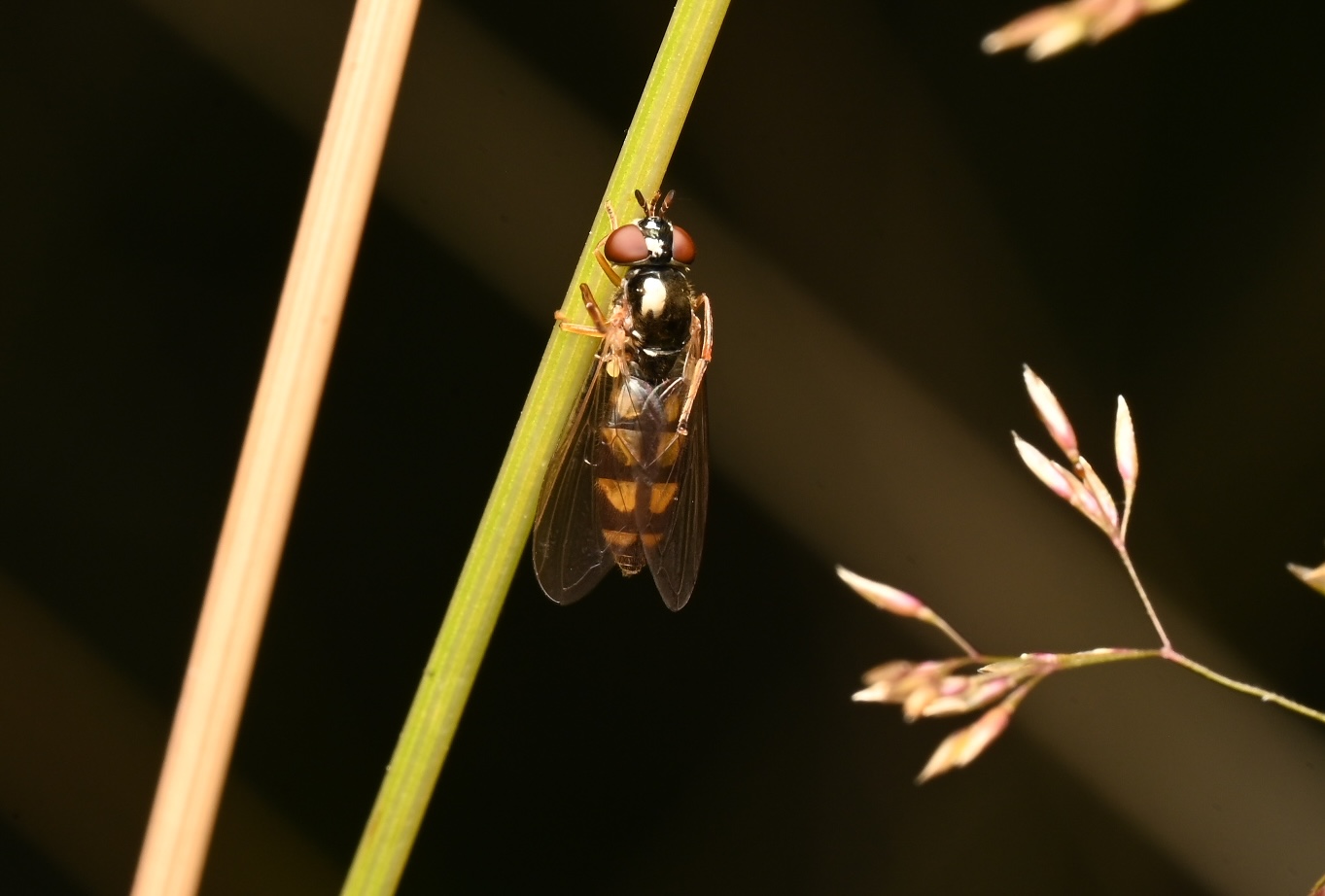
Dressed in clever yellow-and-black disguise, hoverflies (family: Syrphidae) are nature’s undisputed masters of visual trickery. By mimicking stinging bees and wasps, these completely harmless insects scare off hungry birds while quietly going about their daily work. Beyond their smart camouflage, hoverflies are ecological heavyweights—ranking right behind wild bees as the planet’s most crucial pollinators! Among these helpful flies is the variable duskyface (Melanostoma mellinum), a wonderfully compact and common species found across Europe, North America, and Asia. While the adults spend sunny days buzzing between yarrow blossoms and grass flowers for nectar and pollen, their stealthy larvae prowl low in the foliage, acting as natural pest controllers by devouring aphids. I’ve been lucky to catch these tiny, energetic pollinators during rare moments of stillness in urban parks and summer house gardens across Poland and Sweden. Getting up close with the camera revealed the remarkable, intricate details of their anatomy from every angle!