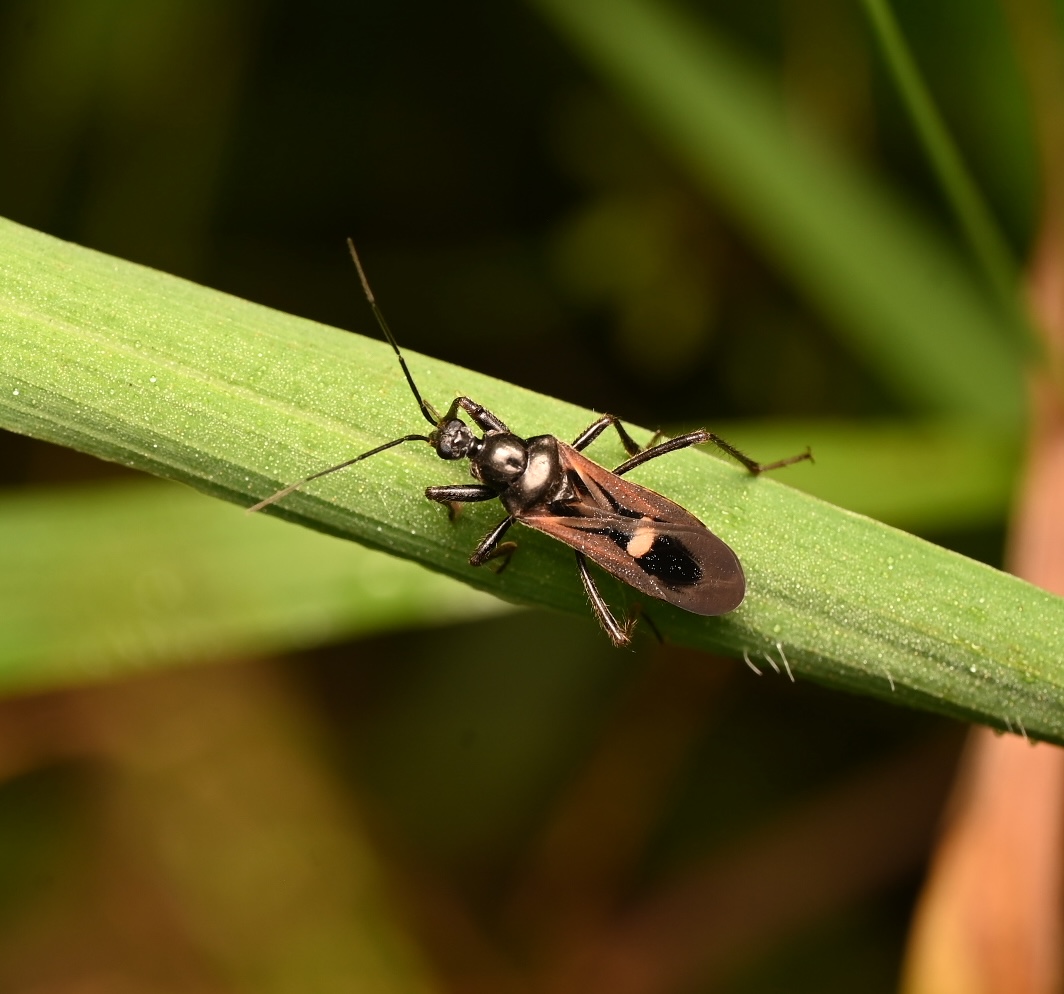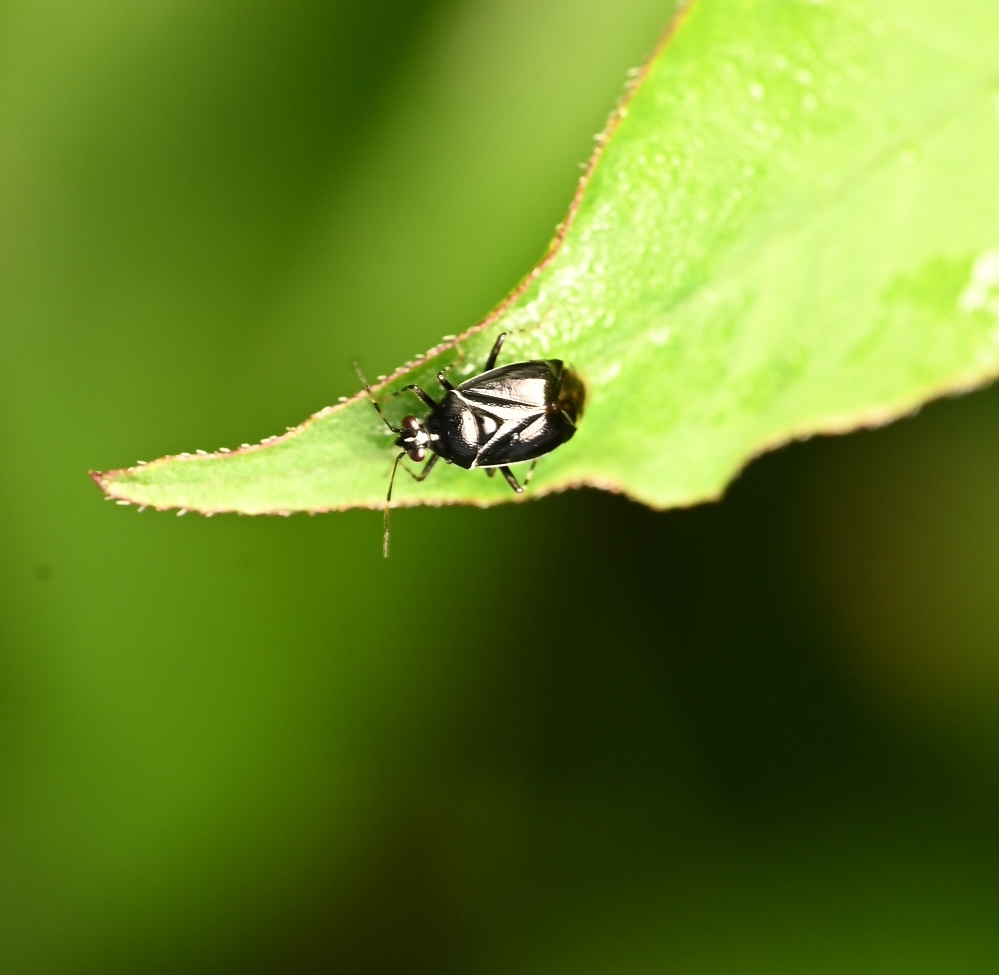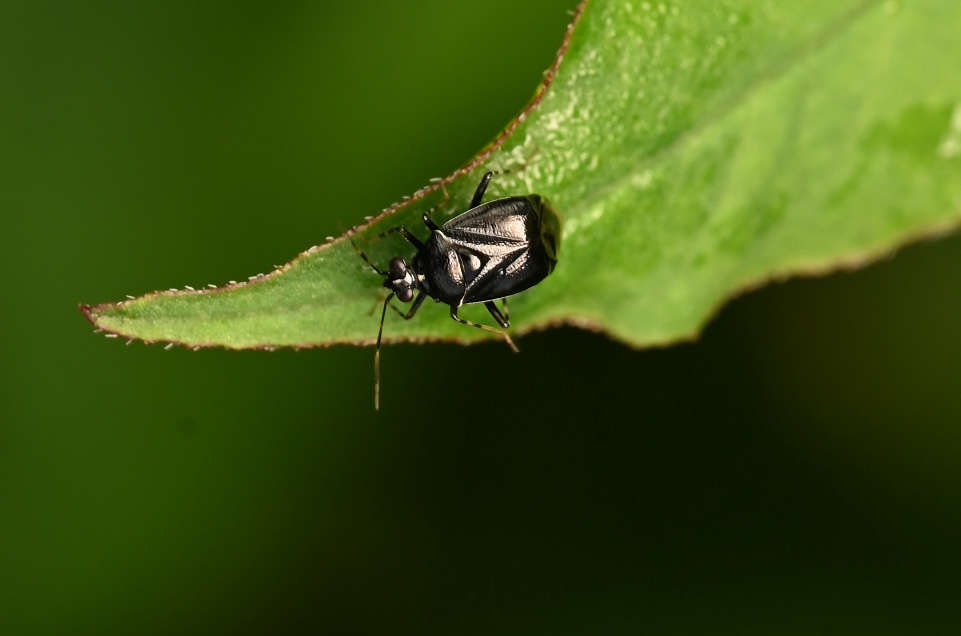
With more than 10,000 described species worldwide, plant bugs (Miridae) form the largest family of true bugs. Across Central Africa, dark or black mirids span both damaging herbivores and useful predators: while genera such as Helopeltis harm cacao, tea, and cotton by piercing young shoots and fruits and injecting saliva that causes dieback, other mirids feed on sap, buds, seeds, or pollen—or hunt aphids, mites, and insect eggs. Most are compact (typically under 12 mm), have four-segmented antennae, and carry a distinct triangular wing section called a cuneus, with several genera practicing ant mimicry (myrmecomorphy), especially as nymphs. I spotted this tiny, 5-mm black plant bug on a small meadow in Bunia, Democratic Republic of Congo. Pinning down the exact species wasn’t in the cards this time, yet even a small dark mirid is a great reminder of how ecologically varied this family is!