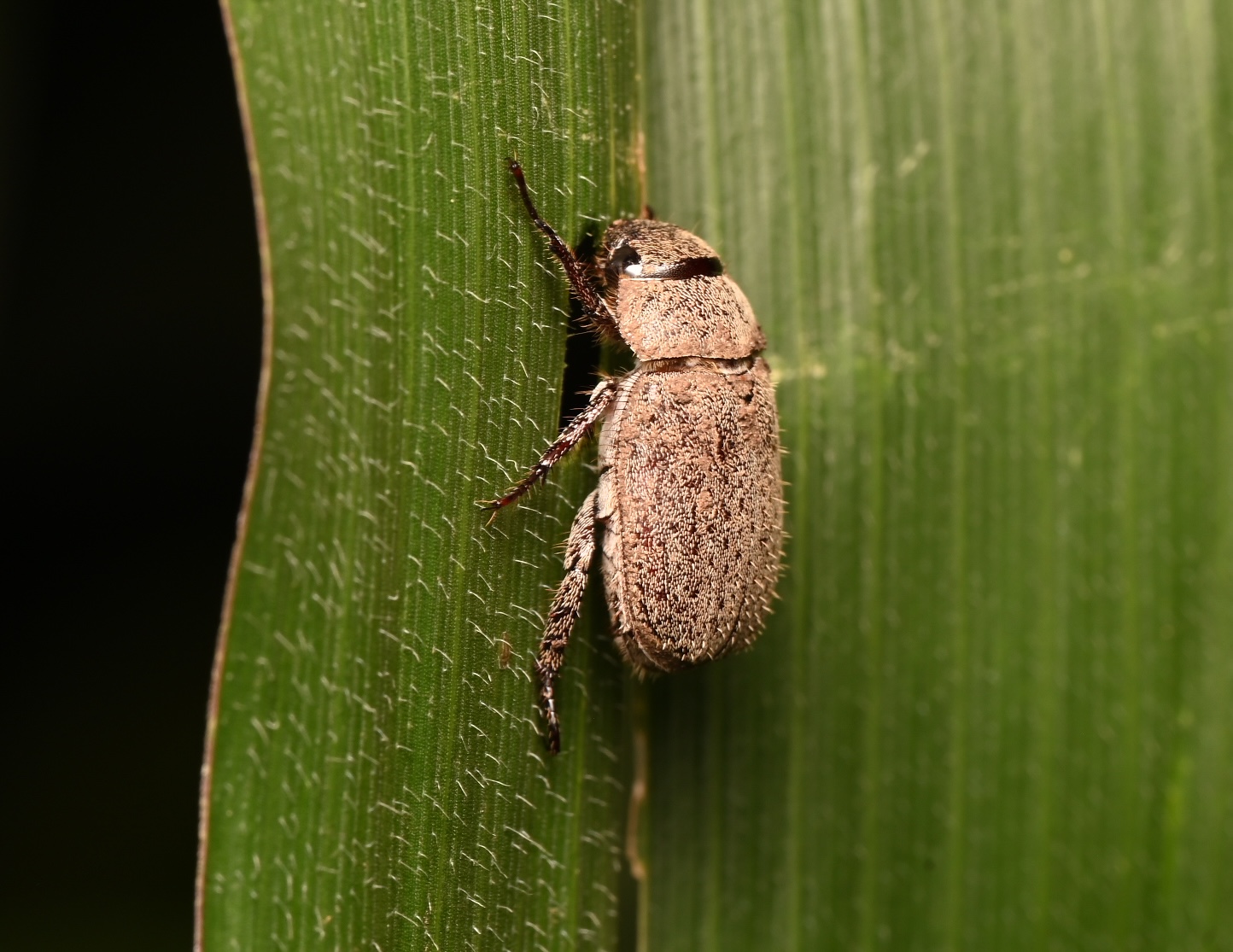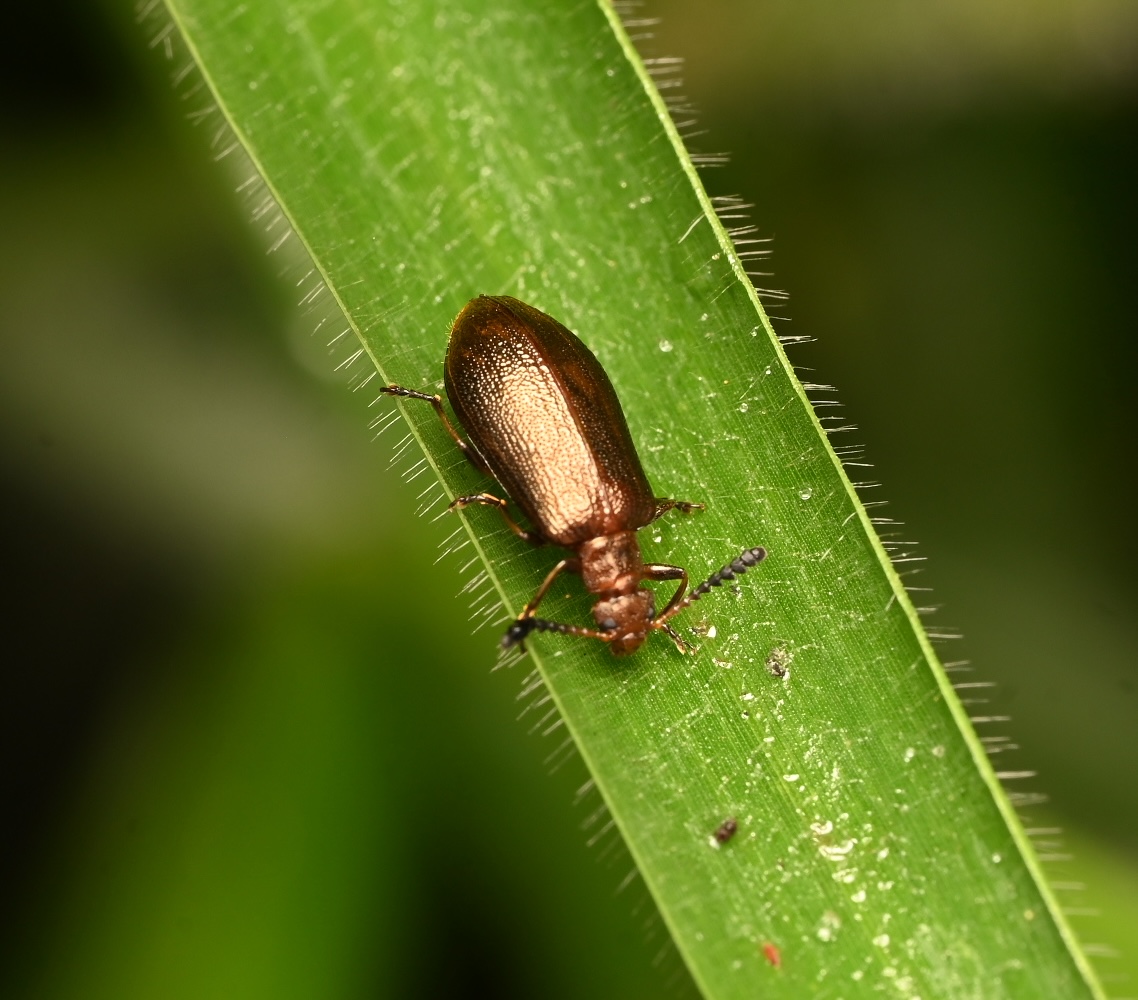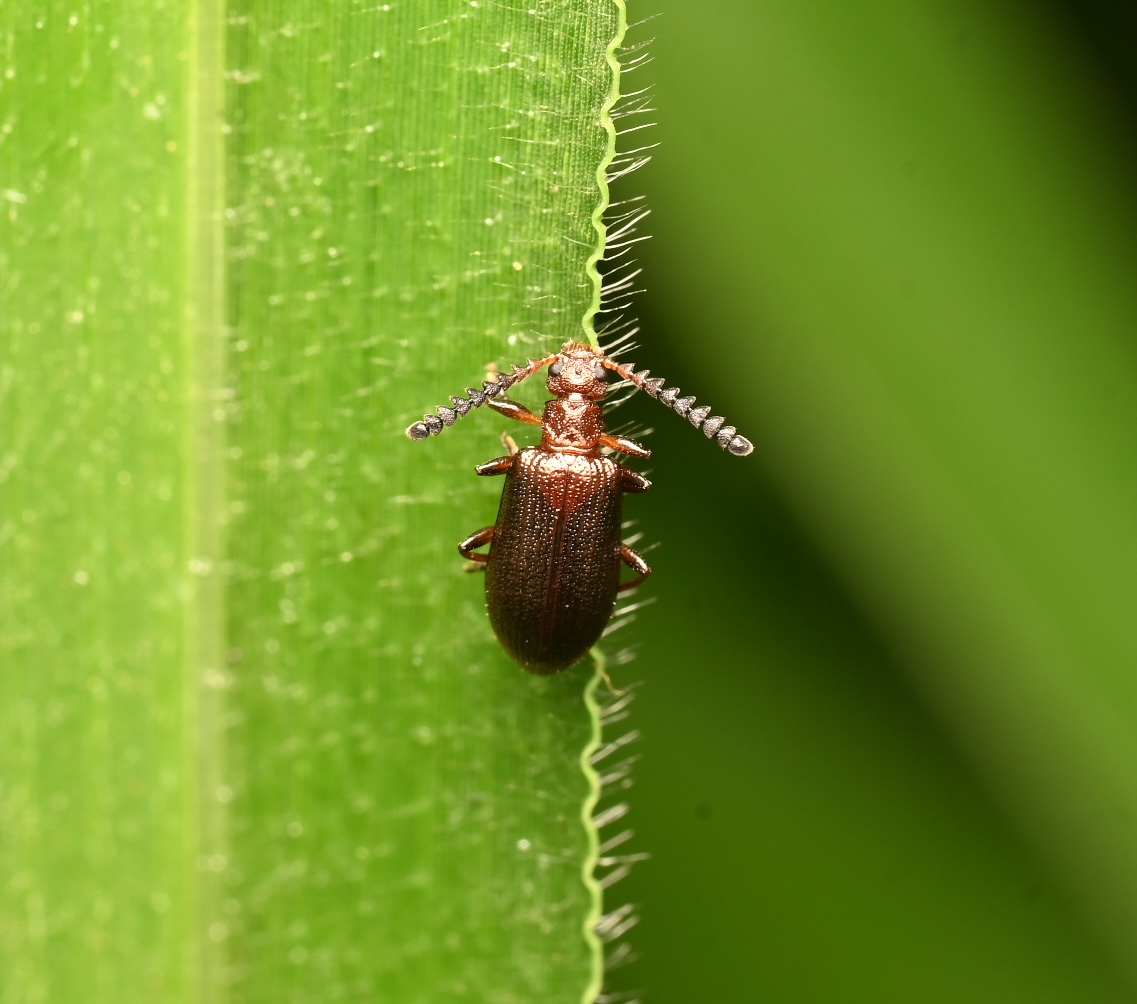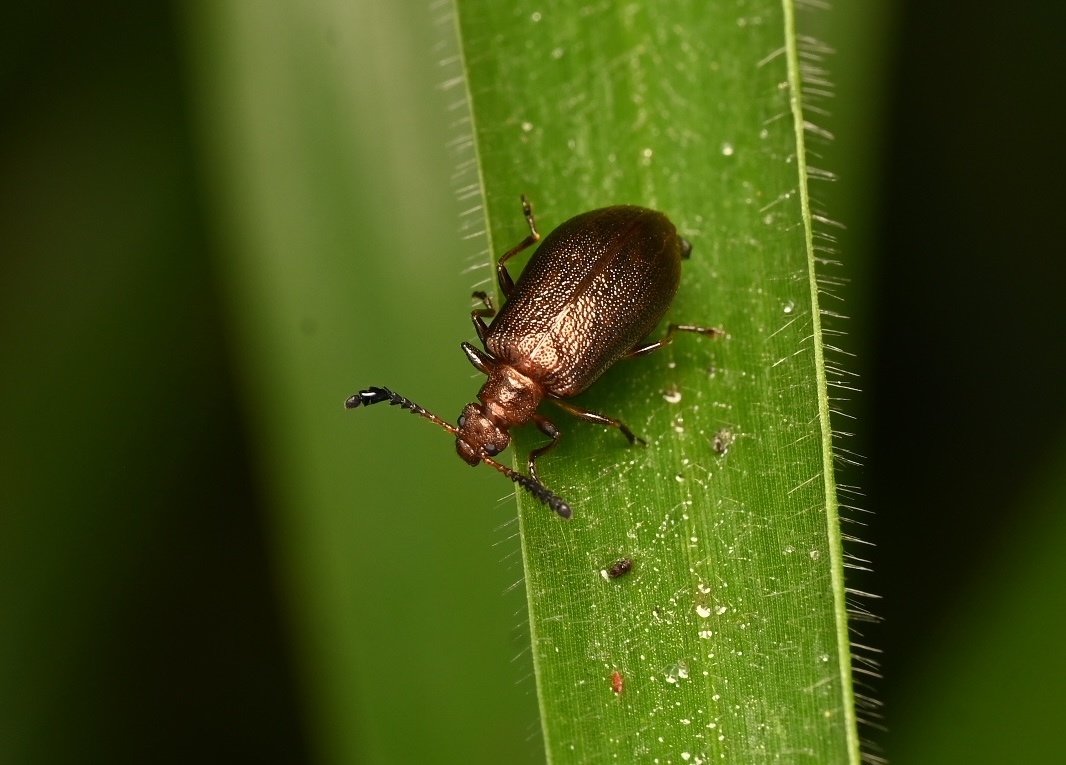
Spanning more than 20,000 to 30,000 described species worldwide, darkling beetles (family: Tenebrionidae) are a vast, often brown or black family that plays vital ecological roles across Central African forests, savannas, and farmland. Feeding largely on decaying plant matter, rotting wood, fungi, and organic debris, they help recycle nutrients back into tropical soils, while their larvae—often called mealworms or false wireworms—undergo complete metamorphosis. Instead of biting when threatened, many rely on playing dead or releasing foul-smelling defensive secretions. I spotted this brown beetle with thickened antennal tips on a small meadow behind my hotel in Bunia, Democratic Republic of Congo. While it shares some visual echoes with Luprops beetles from the Indian subcontinent, pinning down an exact identification remains tough given how under-documented Central African tenebrionids are!