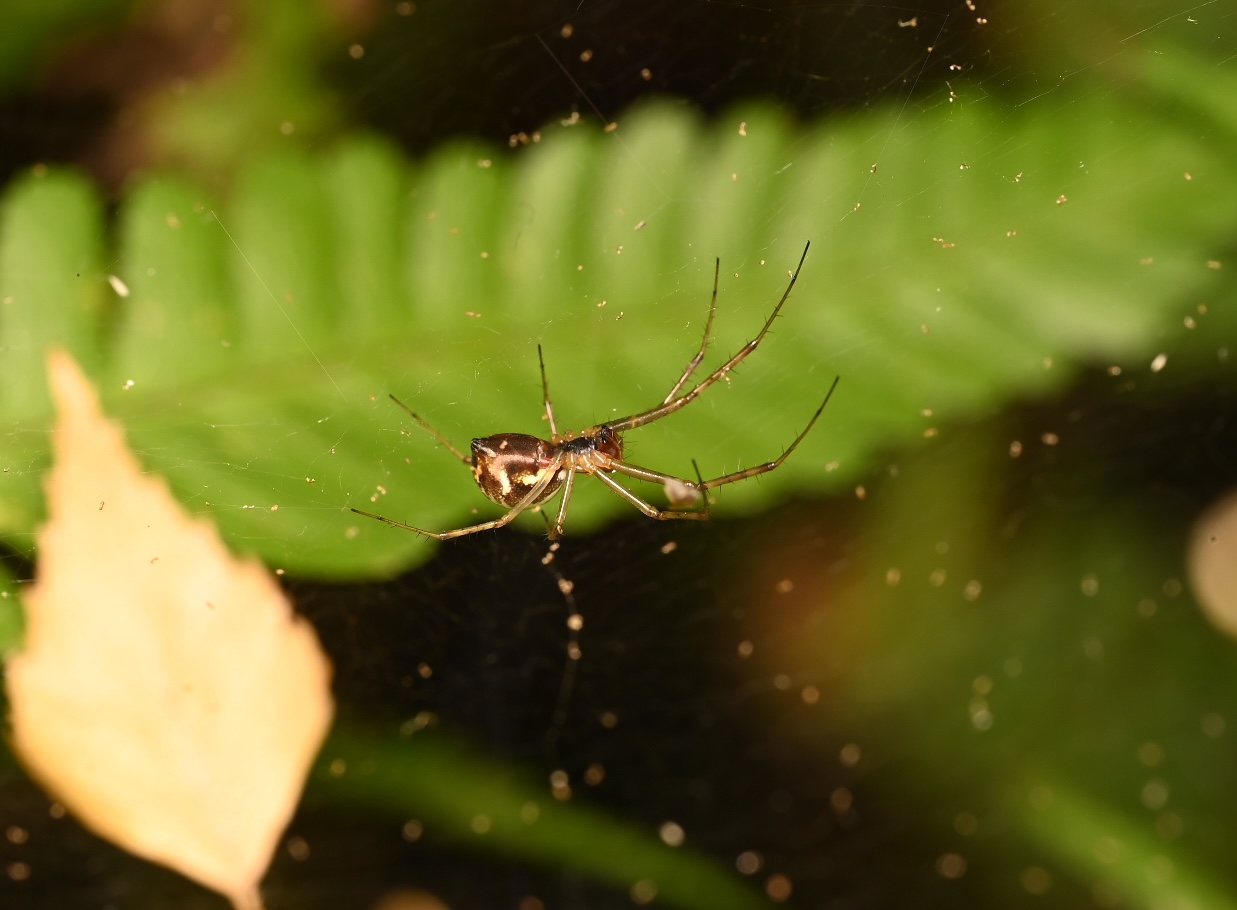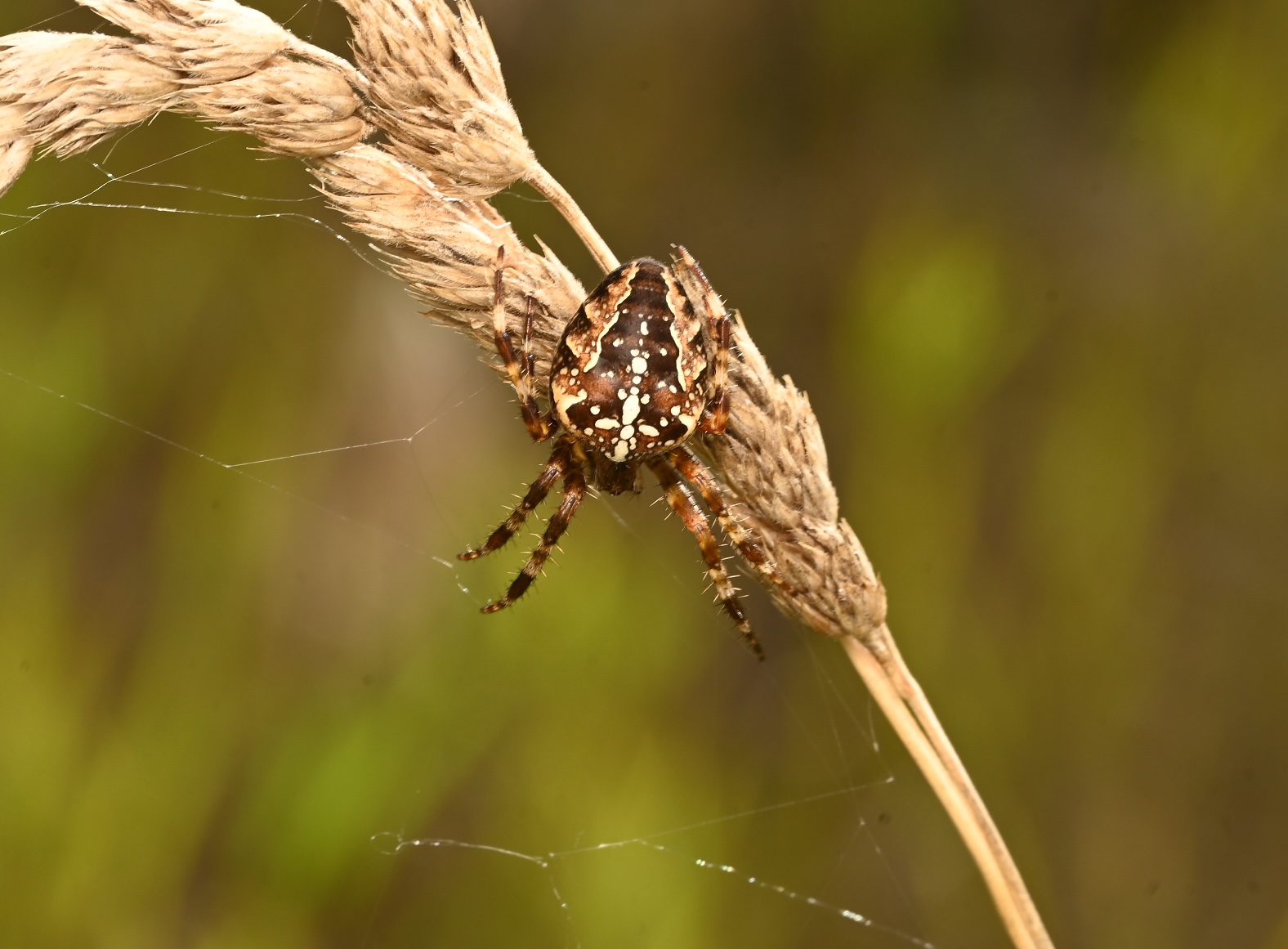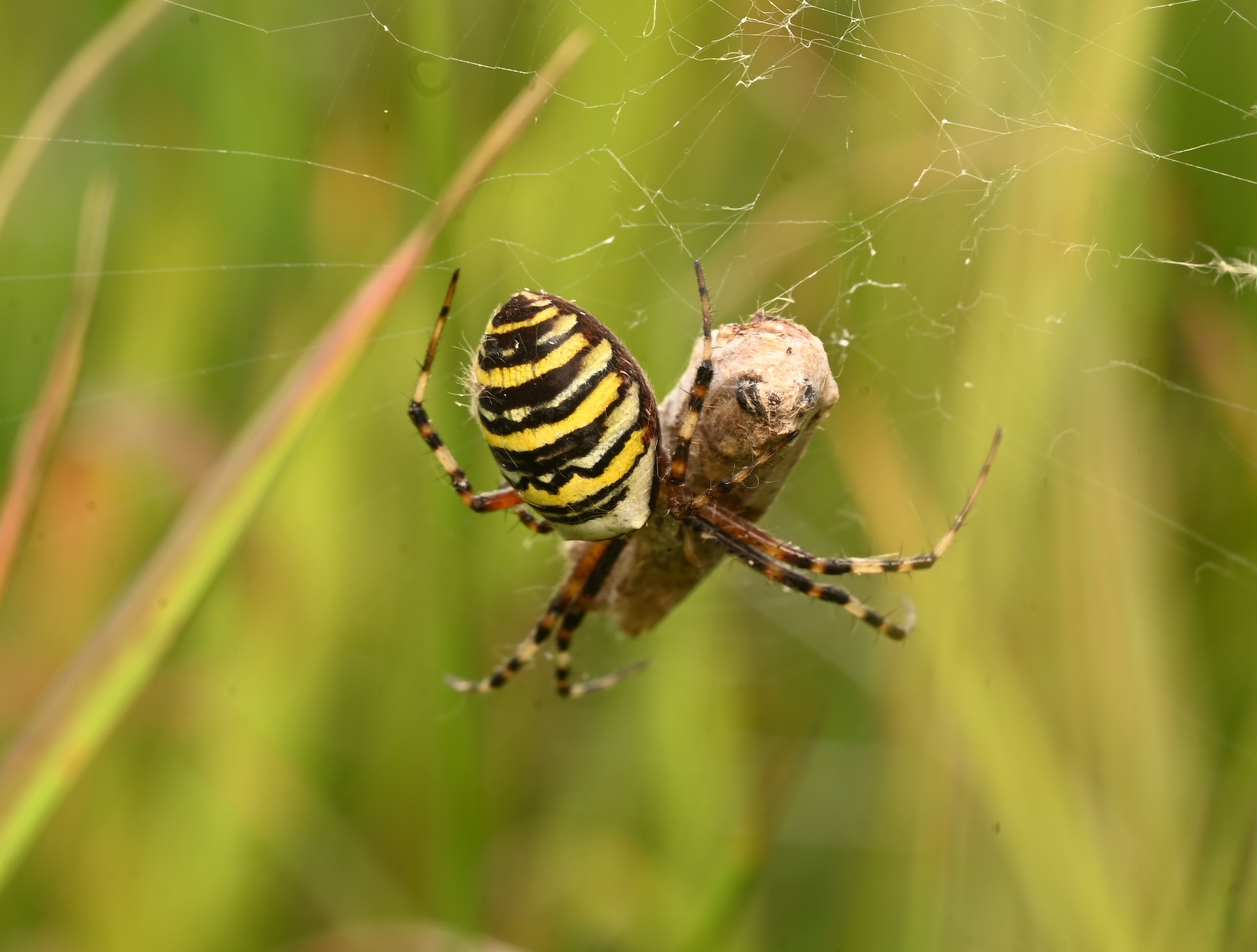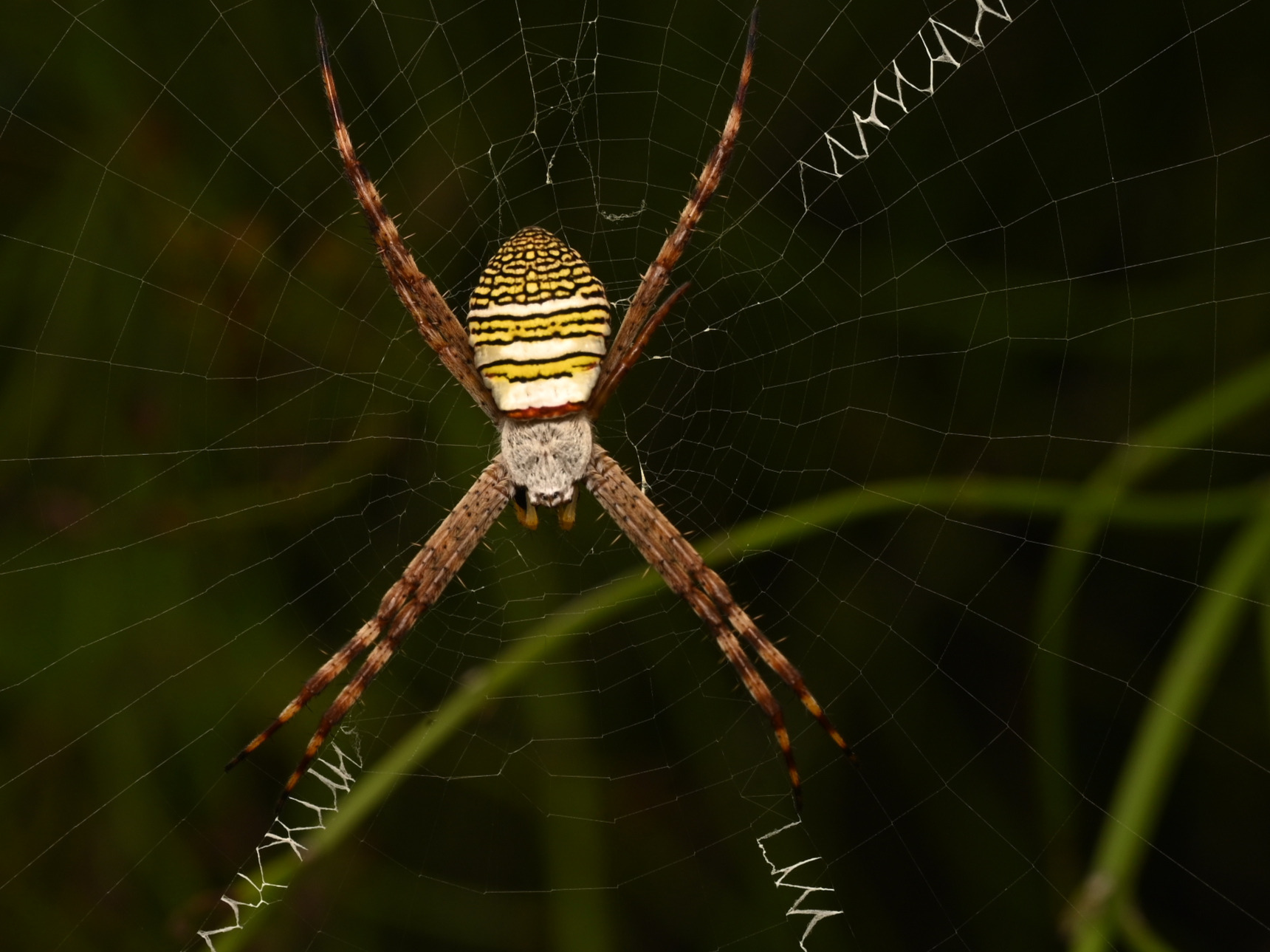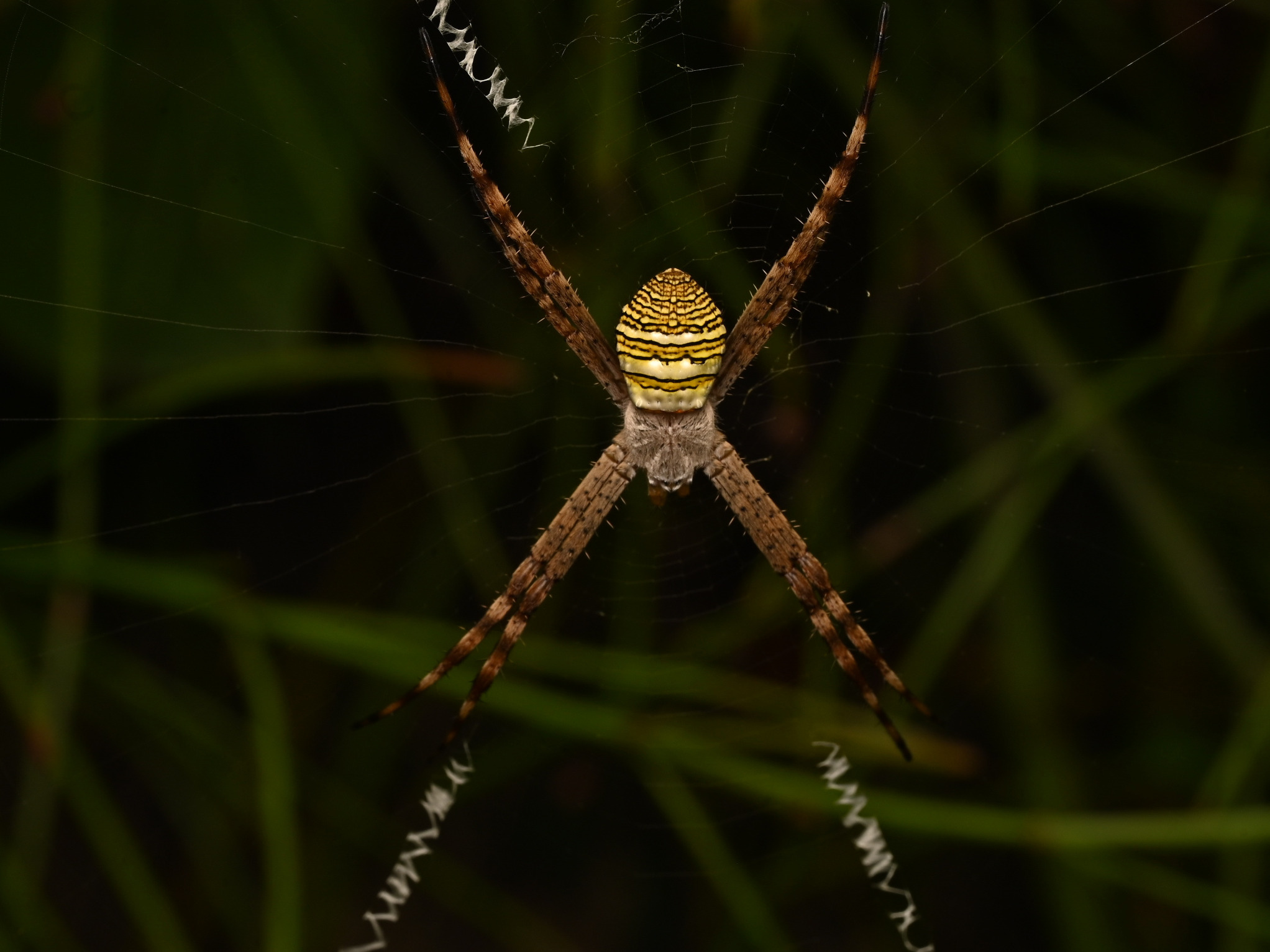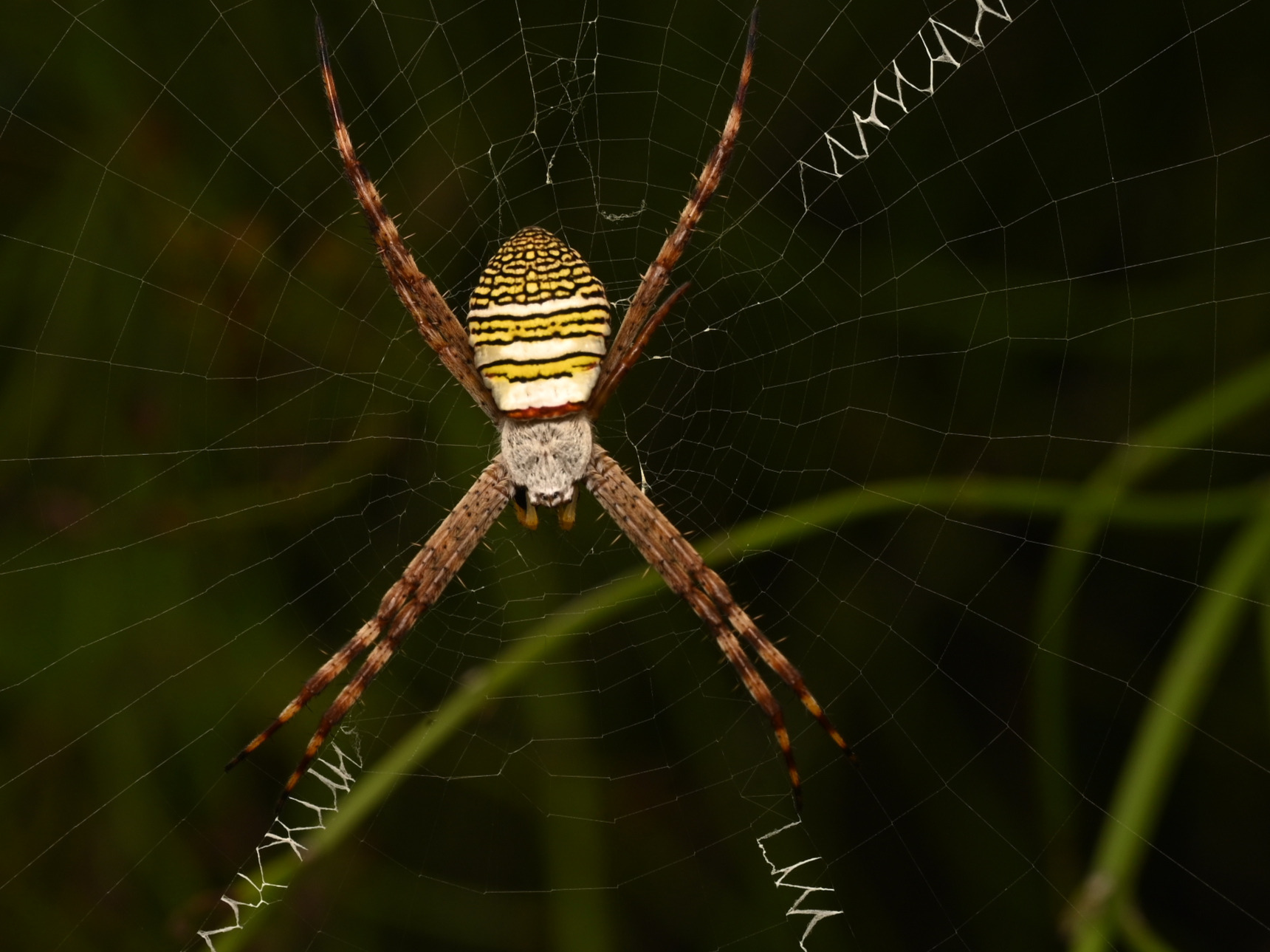
The oval St. Andrew’s cross spider (Argiope aemula) is a creature of fascinating, if ruthless, complexity. In a striking display of sexual cannibalism, the formidable female—who dwarfs her mate in size—typically consumes the exhausted male shortly after mating. Equally captivating is the spider’s web-building mastery. It spins a web adorned with bold, zigzagging decorative patterns, and then waits at the center with its legs joined in pairs, mirroring the iconic shape of a St. Andrew’s cross. Far from being just visual flair, these intricate web decorations (known as stabilimenta) are clever hunting tools designed to lure in unsuspecting prey. Remarkably, this spider can dynamically alter the size and design of its web decorations based on environmental cues or during times of scarcity, showcasing a sophisticated hunting strategy that maximizes its success in the wild. I had the pleasure of crossing paths with this spectacular female during a walk through a park in Okinawa.