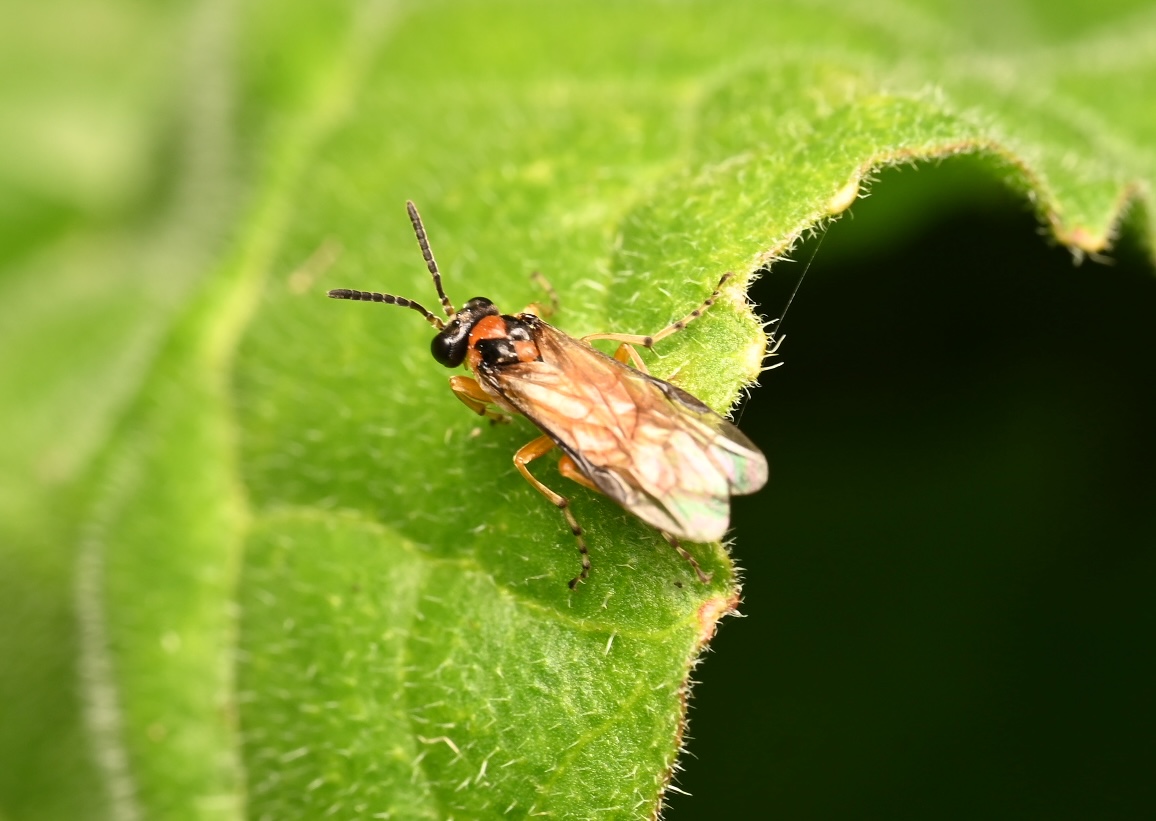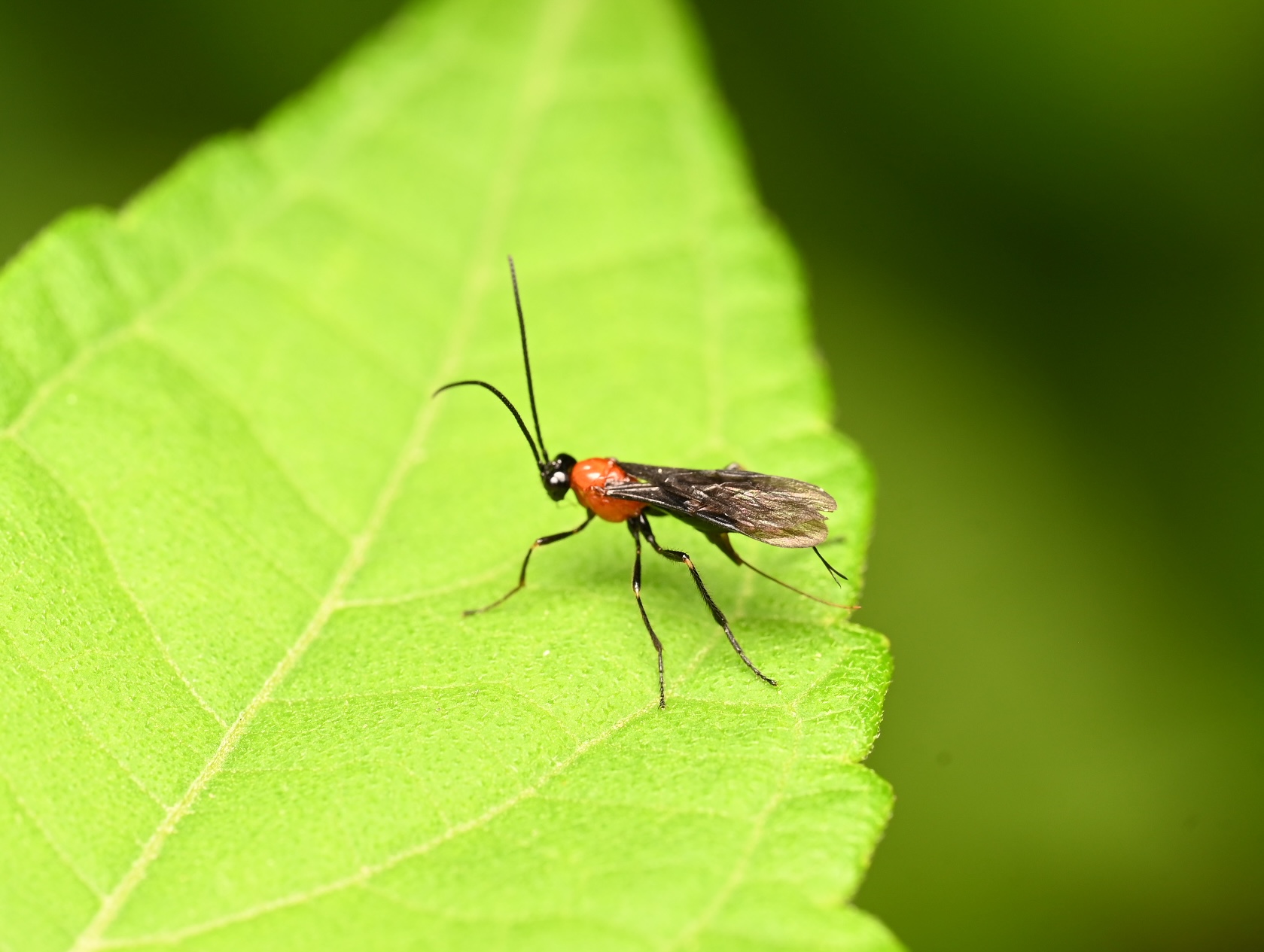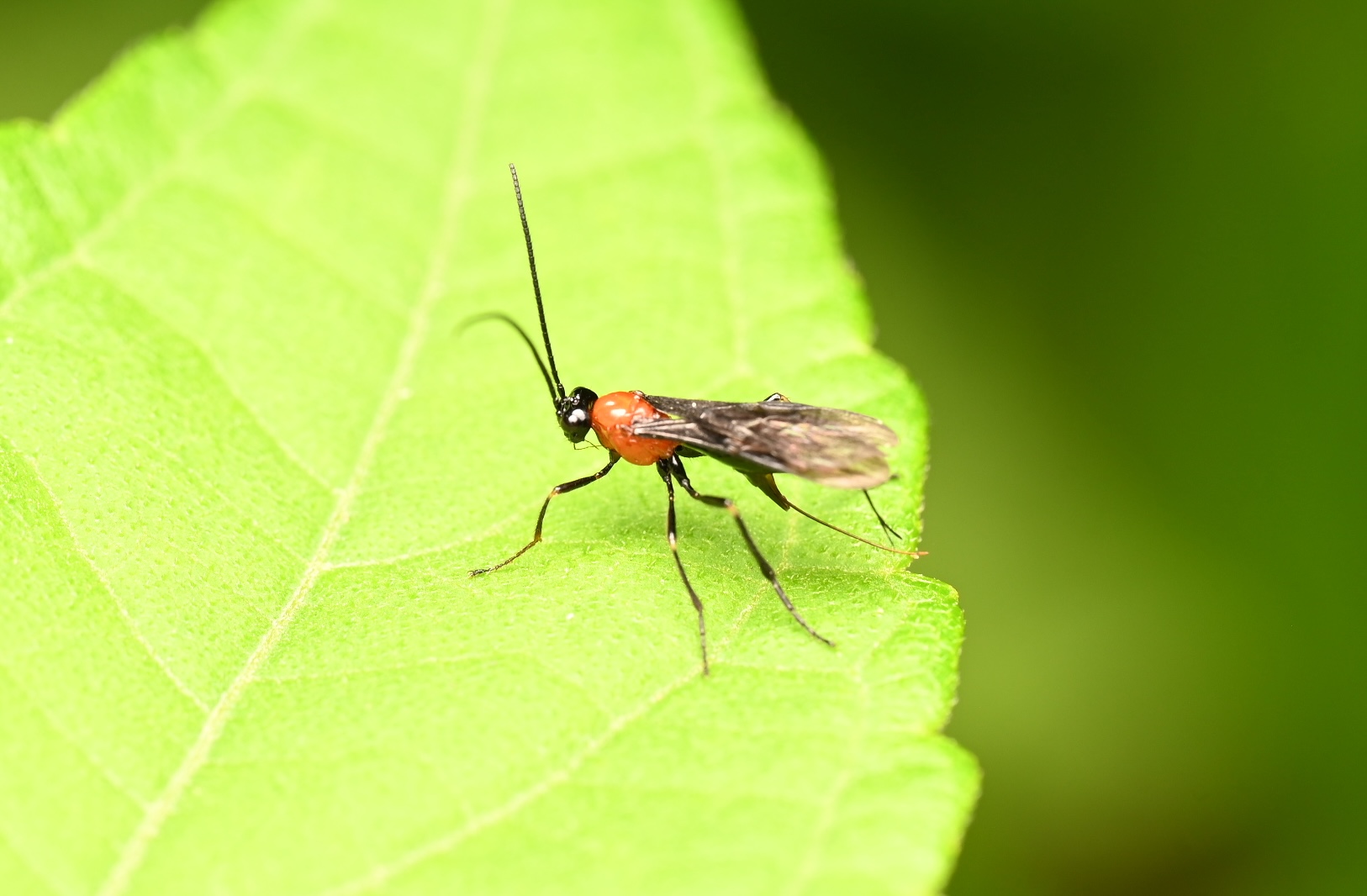
Bracon is a massive, cosmopolitan genus of parasitoid wasps (Braconidae) containing over 1,000 described species—and thousands more awaiting discovery. As idiobiont ectoparasitoids, females use long ovipositors to paralyze concealed hosts, such as beetle or moth larvae hidden inside stems, galls, or bark. Eggs are laid directly on the host’s surface, where the hatching larvae bite and scrape tissue externally through five distinct instars before spinning cocoons nearby. By targeting destructive plant-boring larvae across moths, beetles and flies species, these wasps serve as crucial biological control agents in forestry and agriculture. I encountered this elegant, tiny female wasp in Nanegalito, a small village nestled within Ecuador’s biodiverse Mindo Valley.