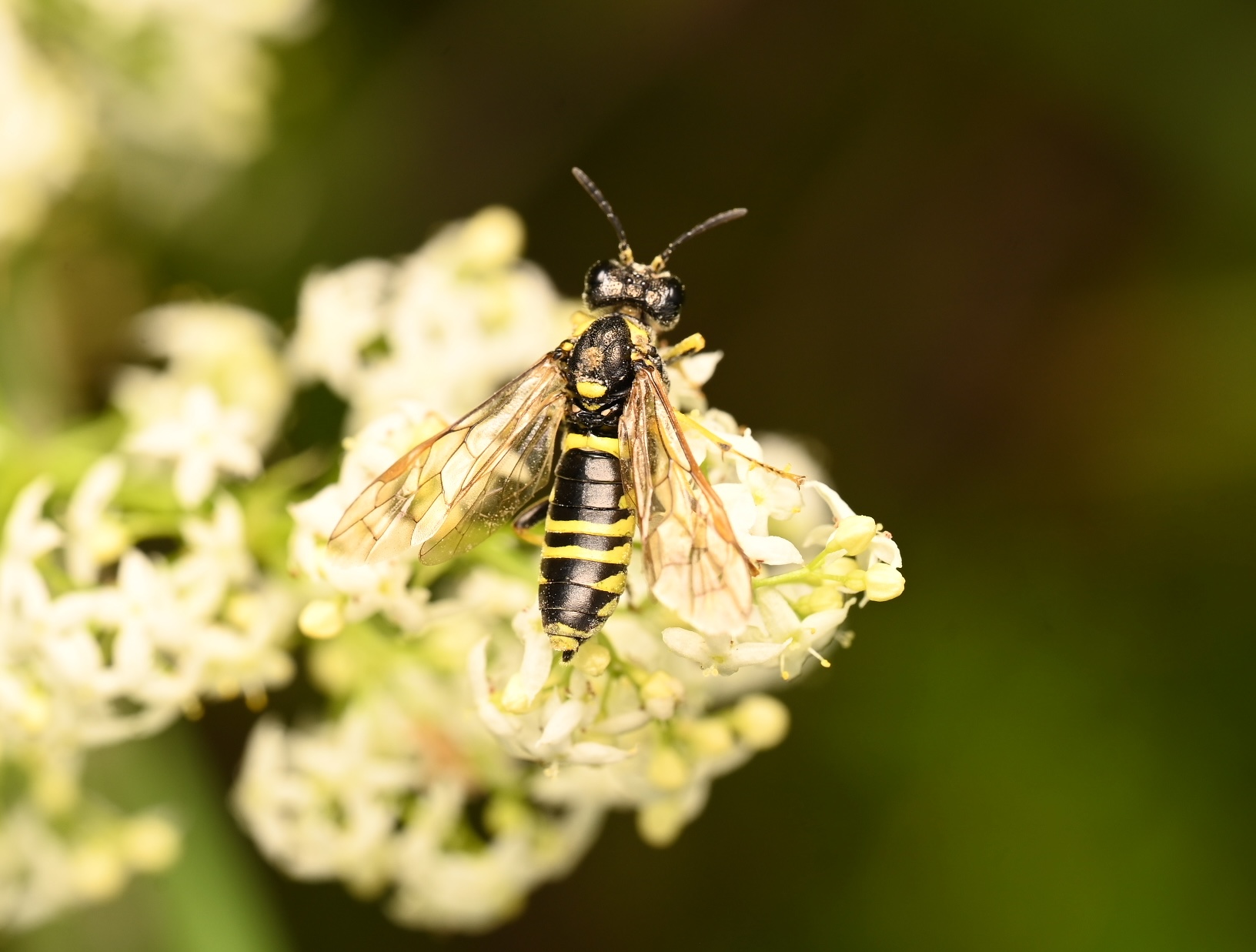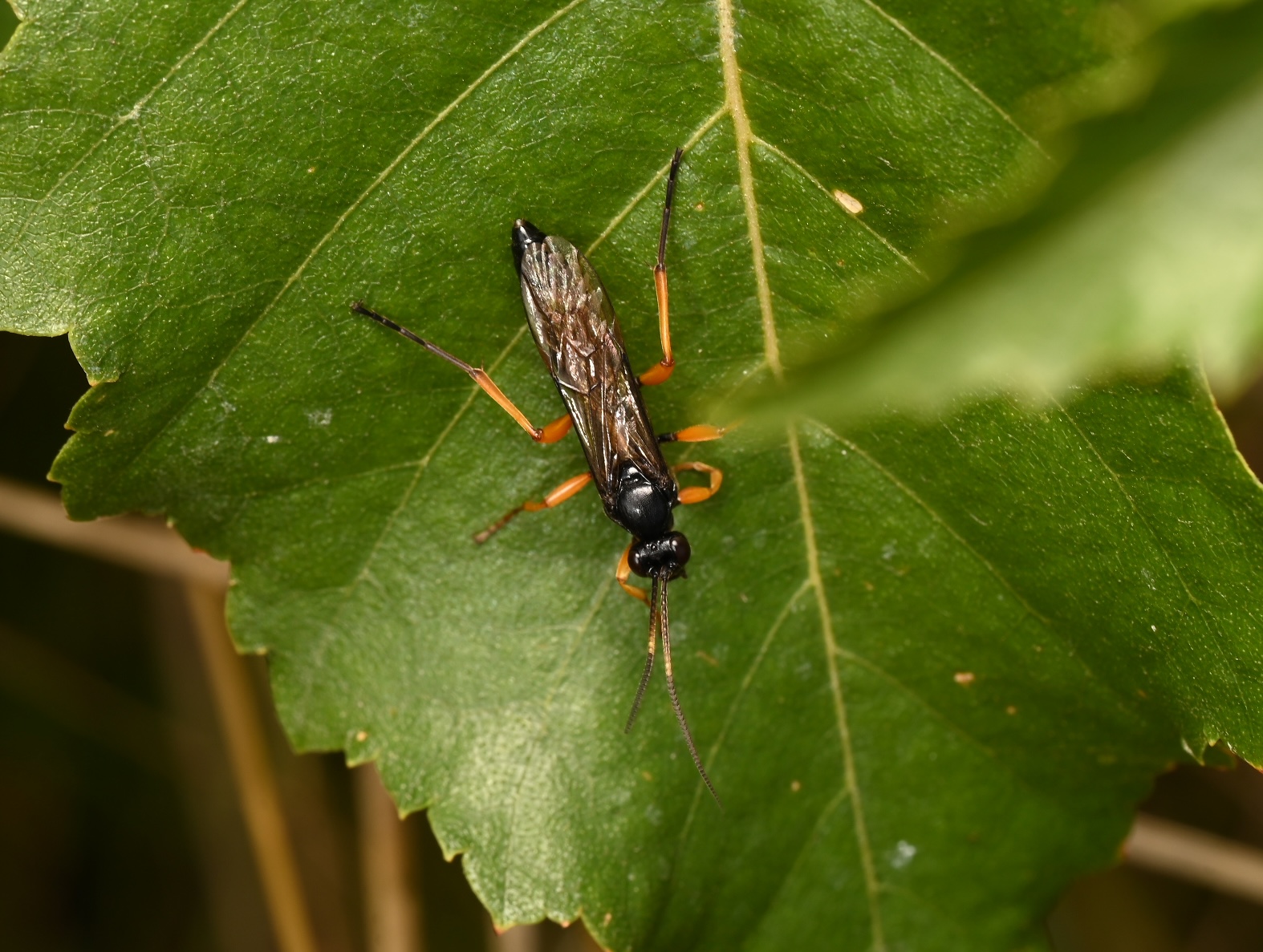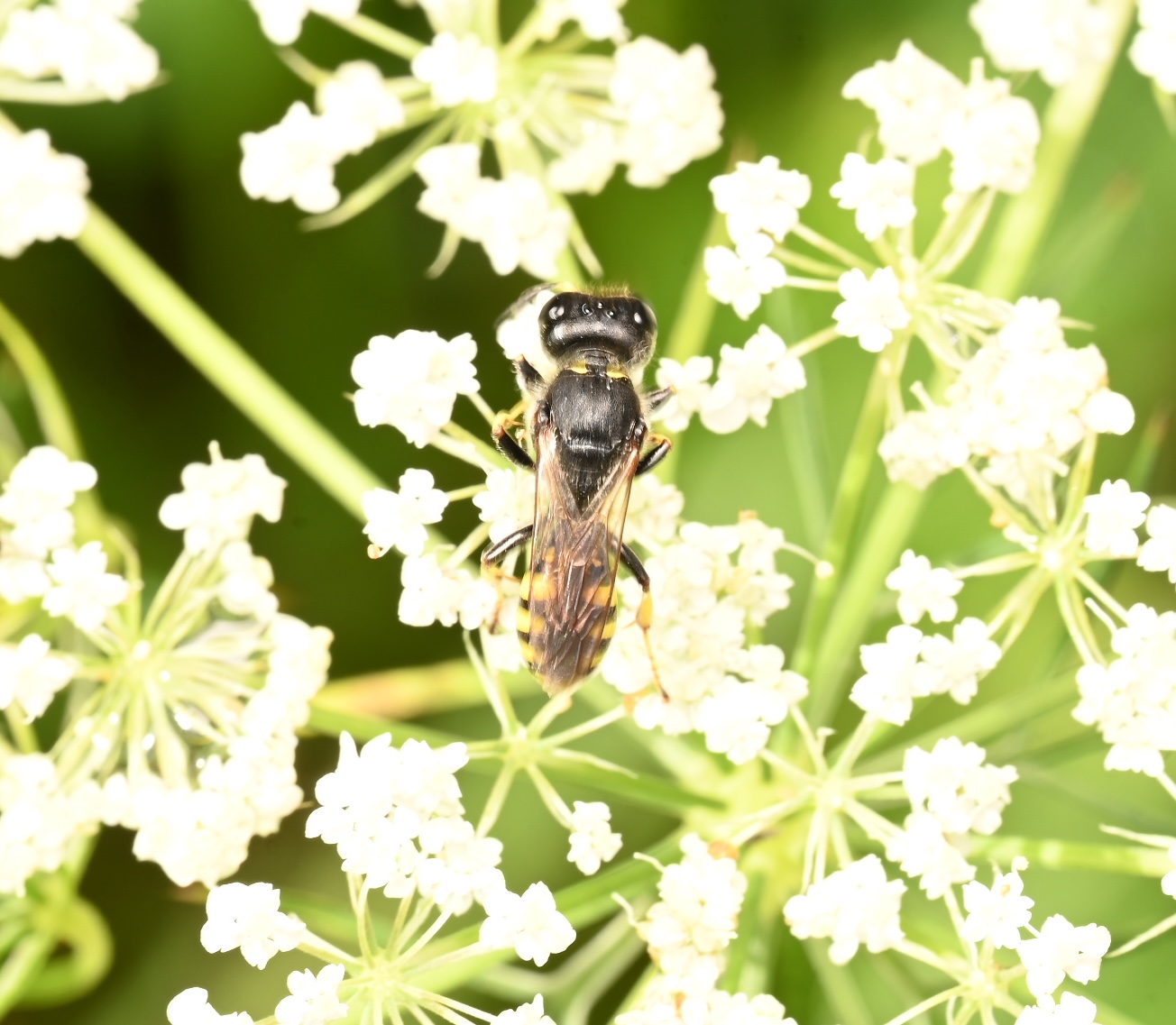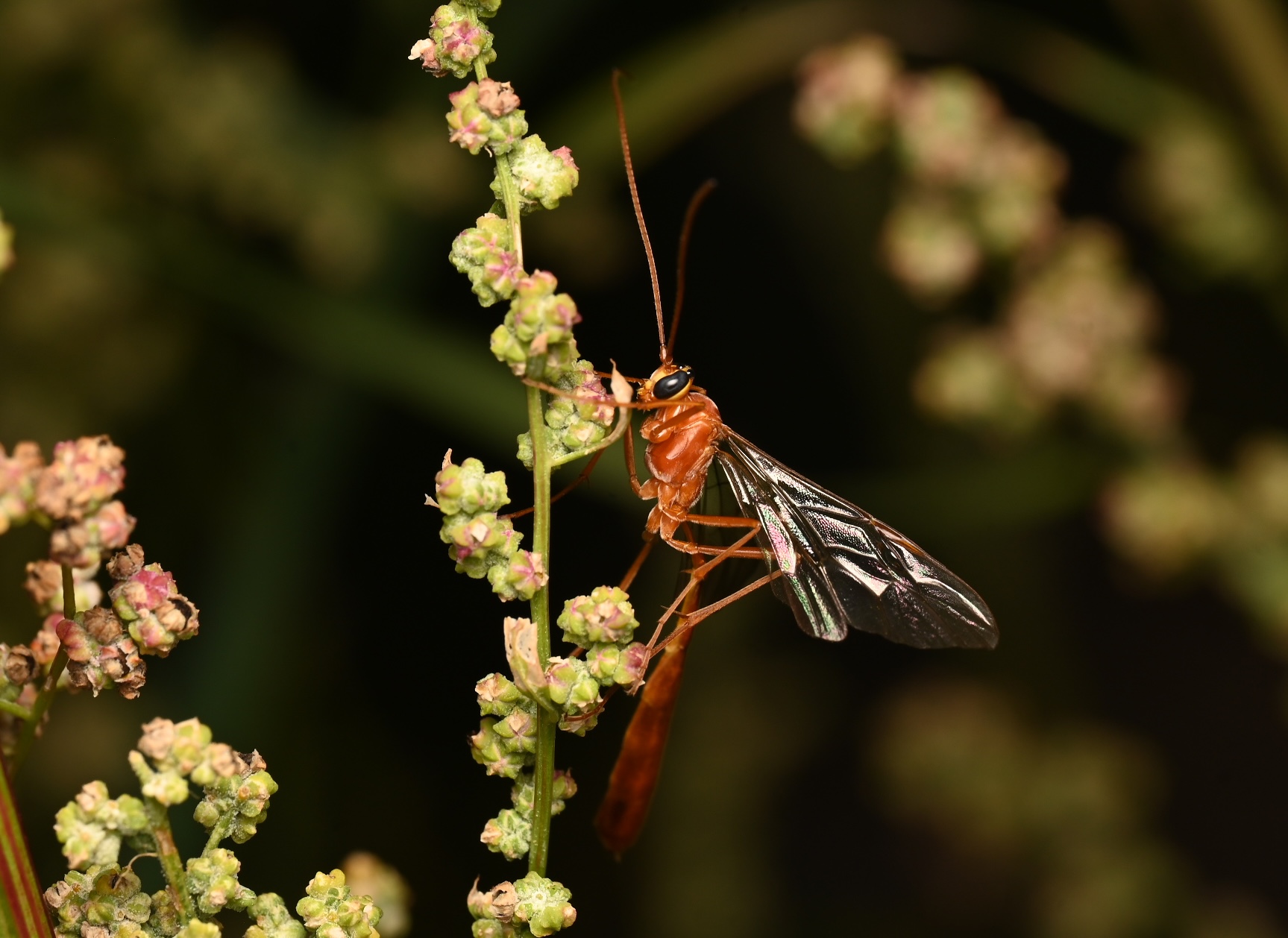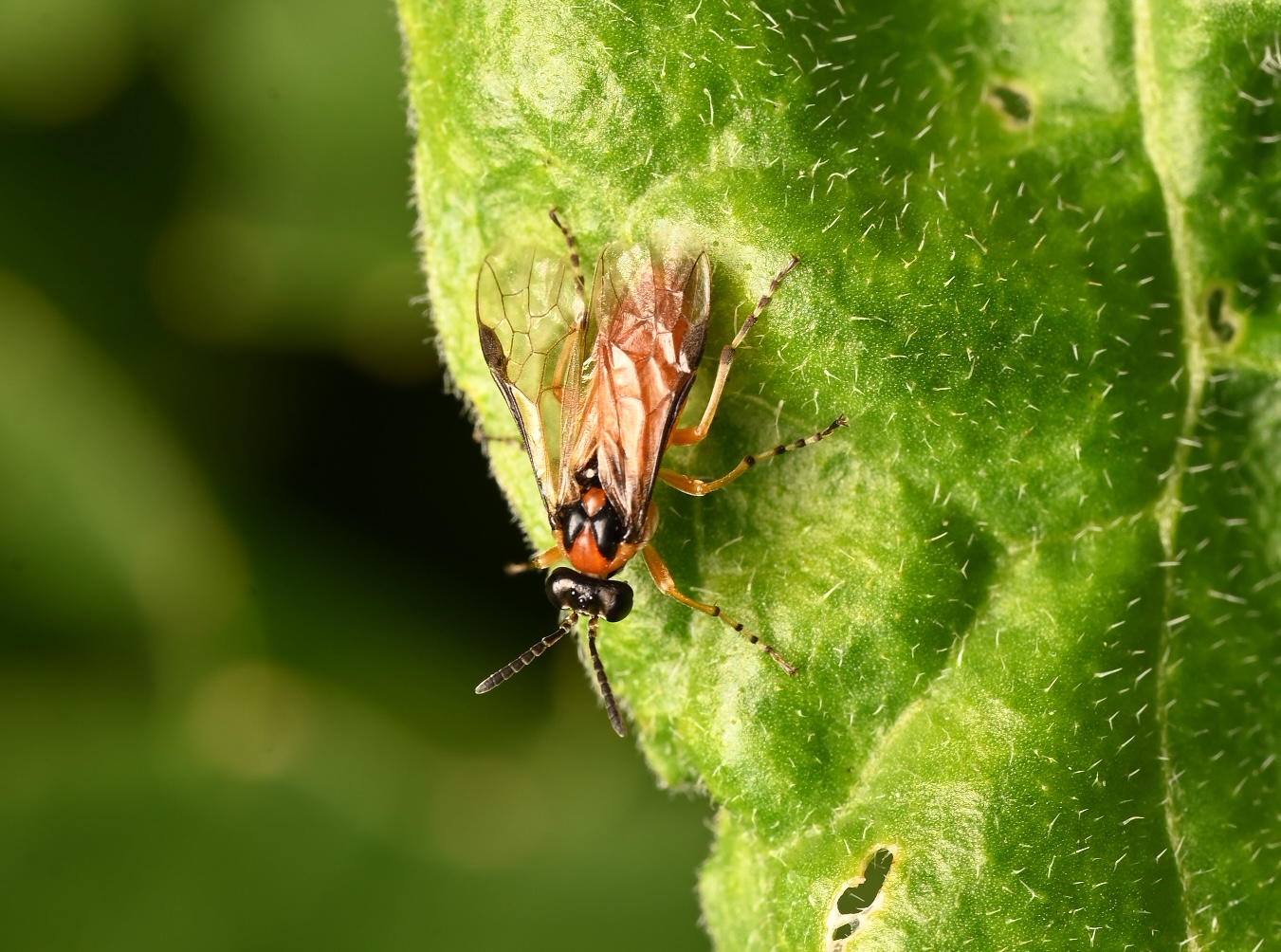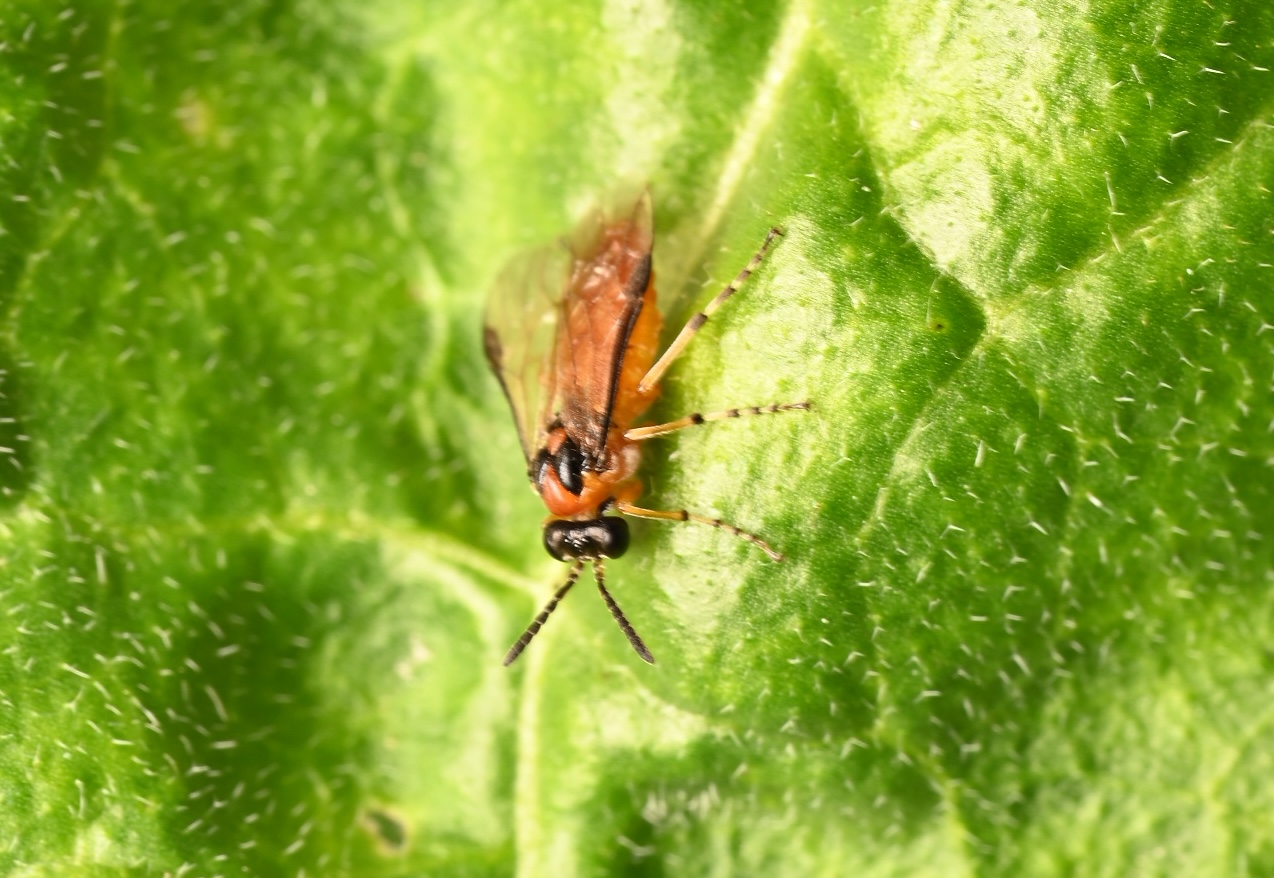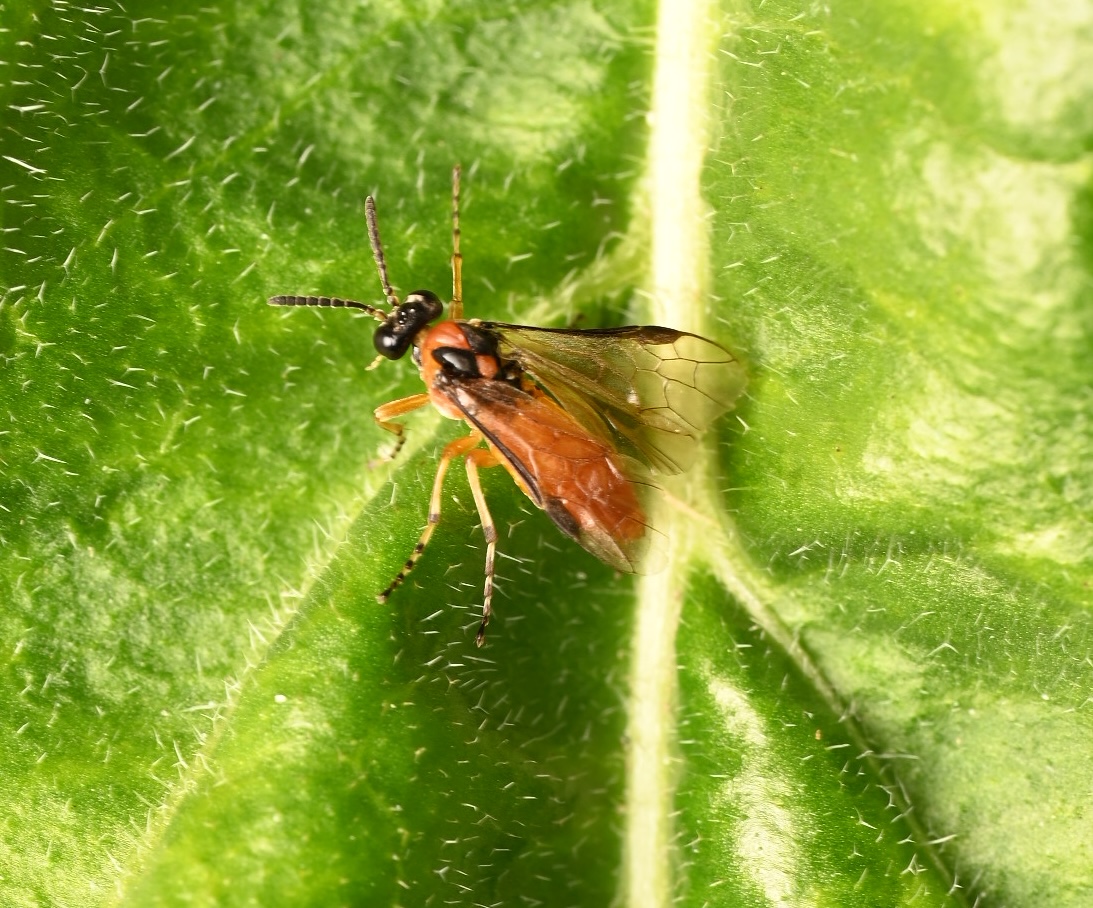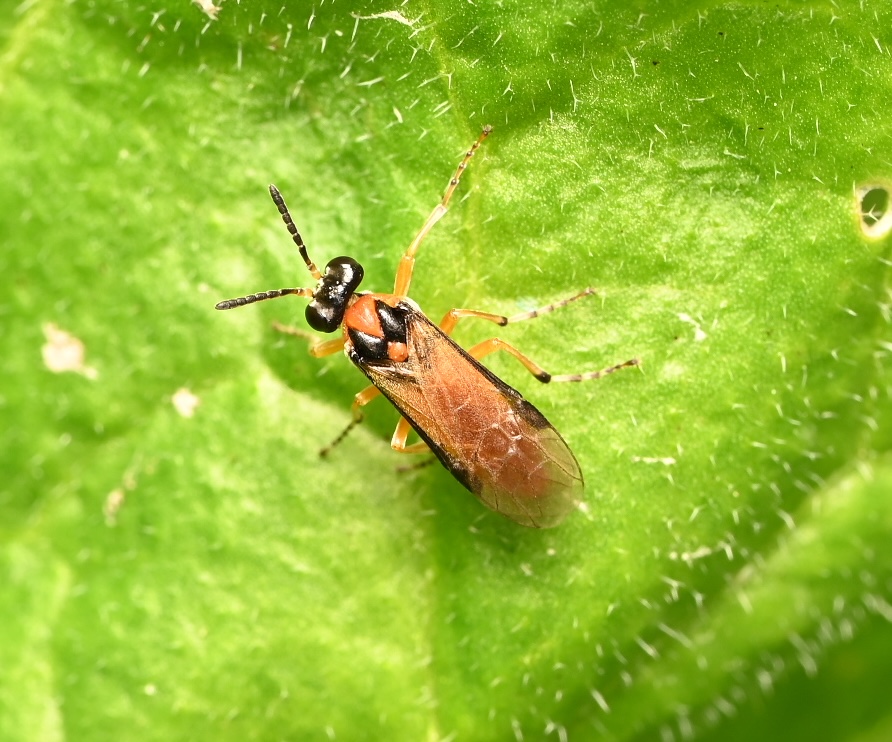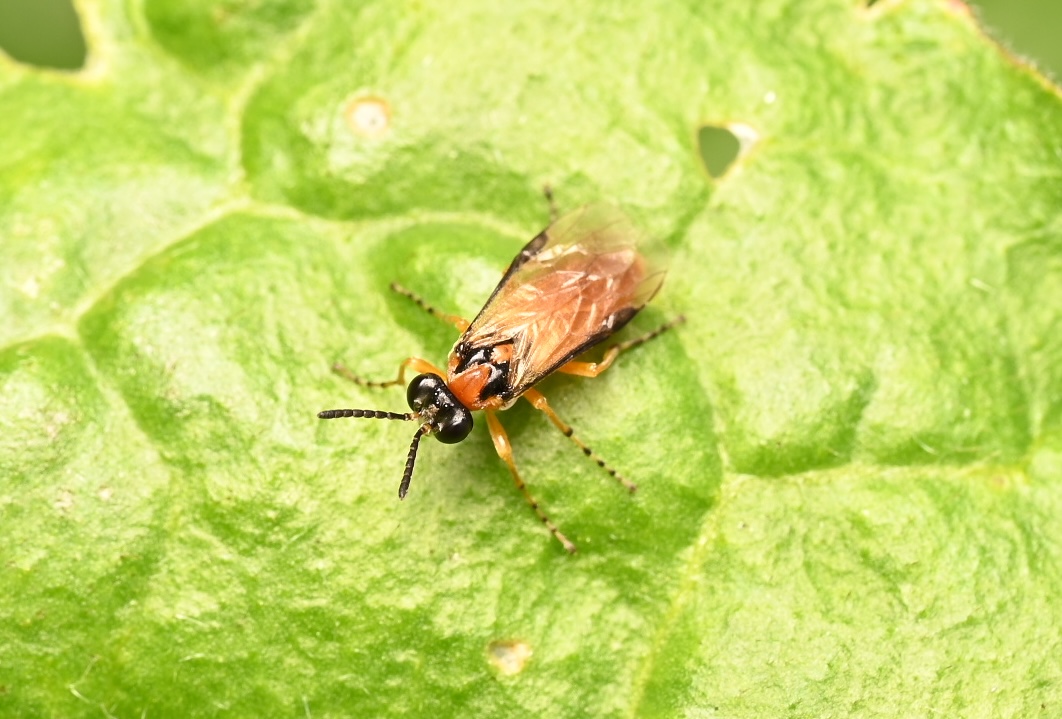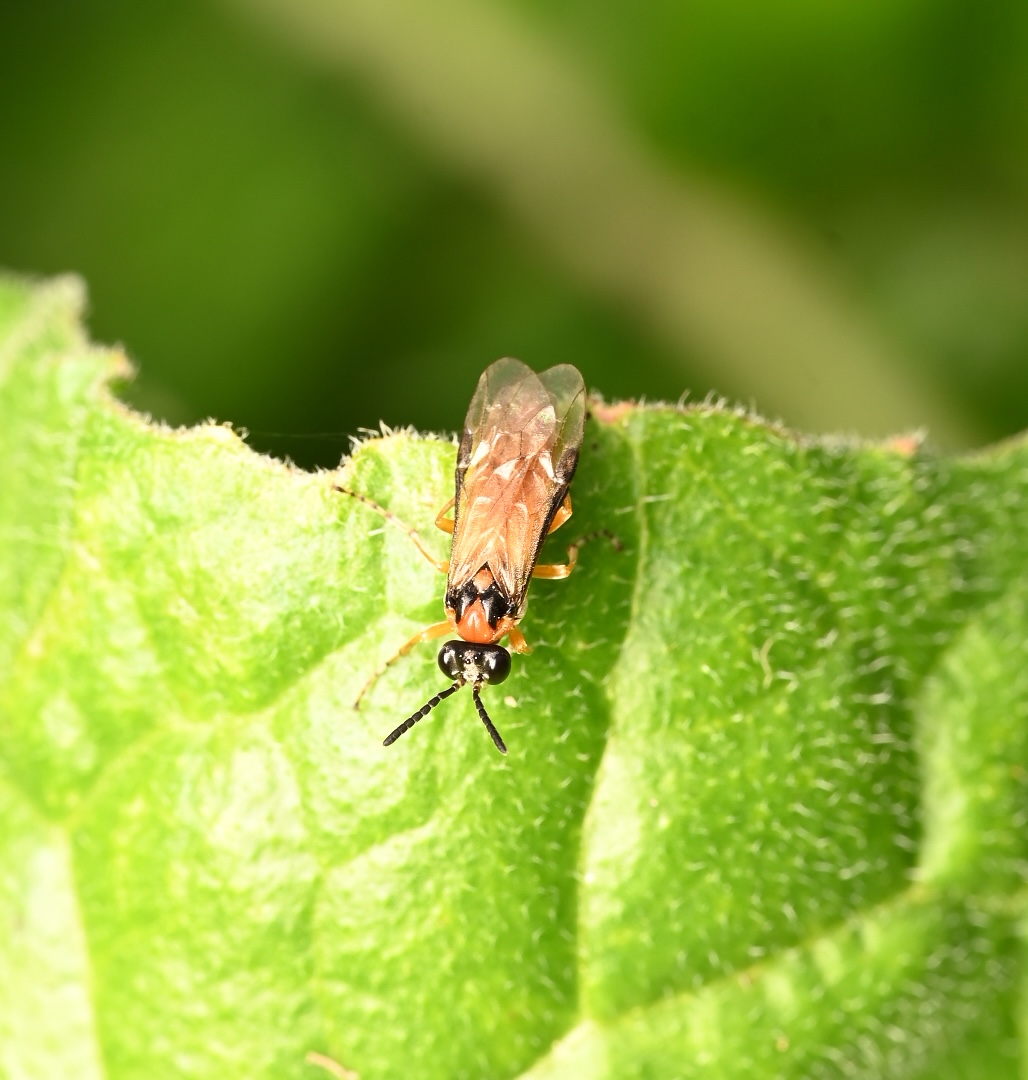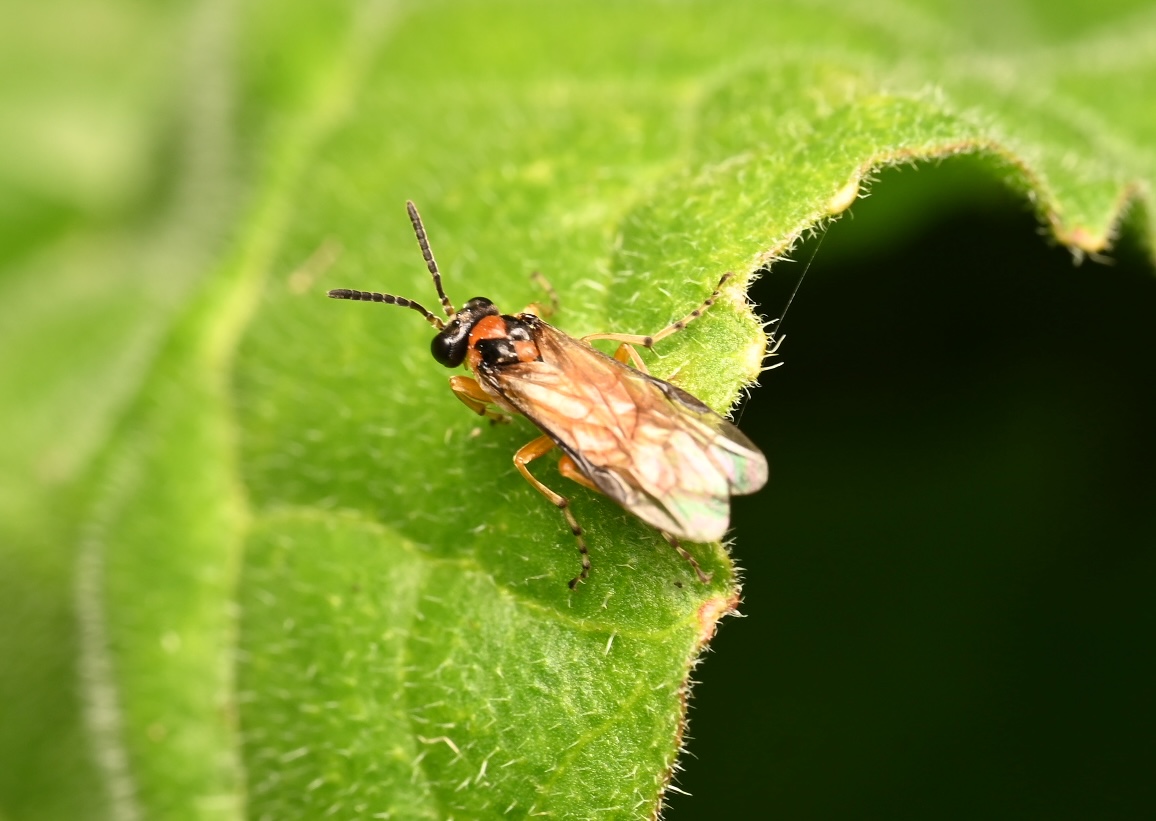
The turnip sawfly (Athalia rosae) is a striking orange-and-black insect renowned for its fascinating survival strategies, including chemical sequestration and long-distance migration. As larvae, they feed on brassicas—such as mustard and turnips—storing the plants’ toxic glucosinolates (mustard oils) inside their bodies to deter predators. As adults, they seek out mint-family plants to ingest specific bitter compounds called clerodanoids. Rather than providing nutrition, these chemicals render the sawflies unpalatable to predators and boost their mating success. Visually, adults sport a bright orange abdomen contrasted by a black head and distinct thoracic markings, cleverly mimicking stinging wasps. I encountered these tiny powerhouses in the summer of 2026 at a city park in Barkarby, just a few blocks from my apartment.