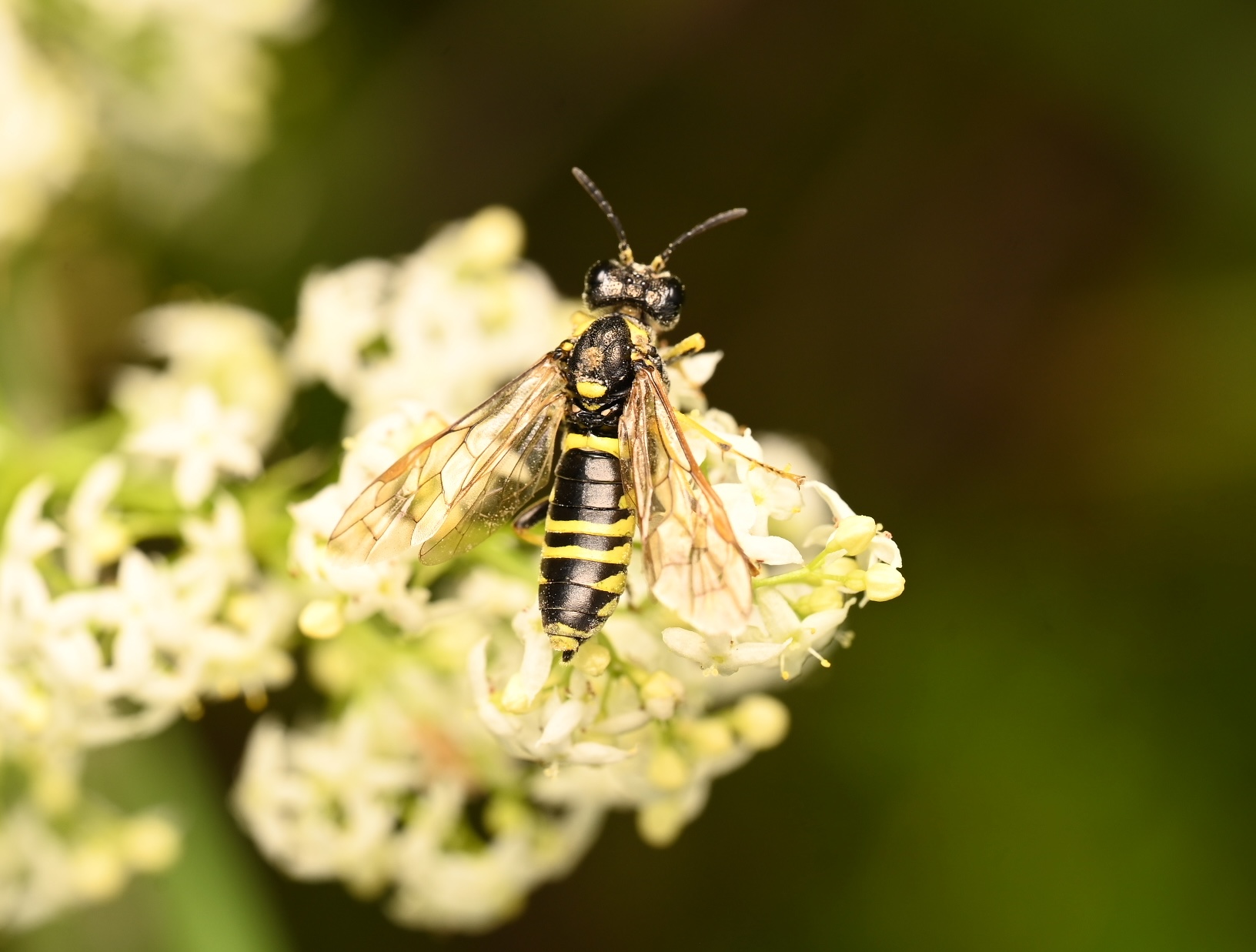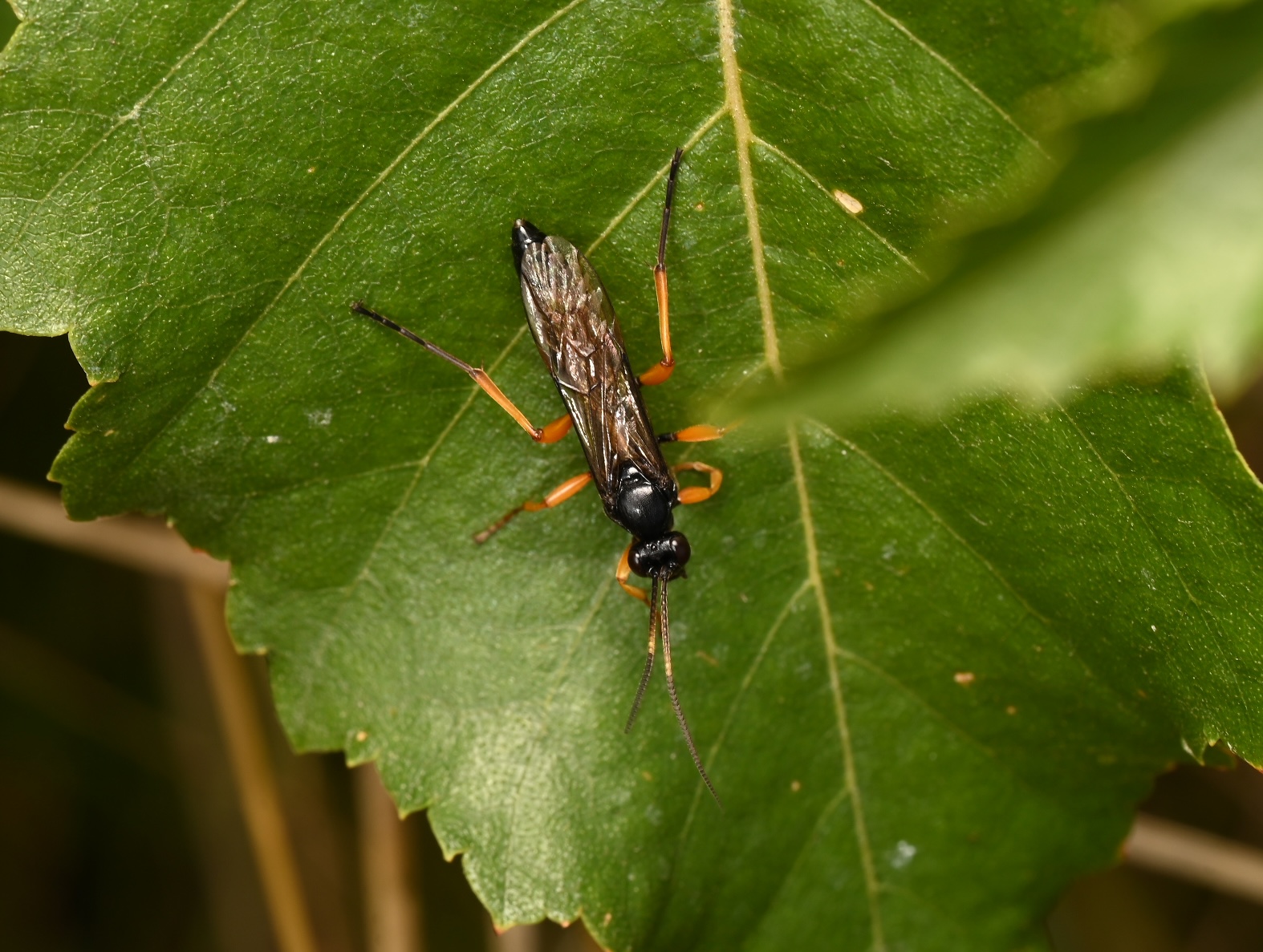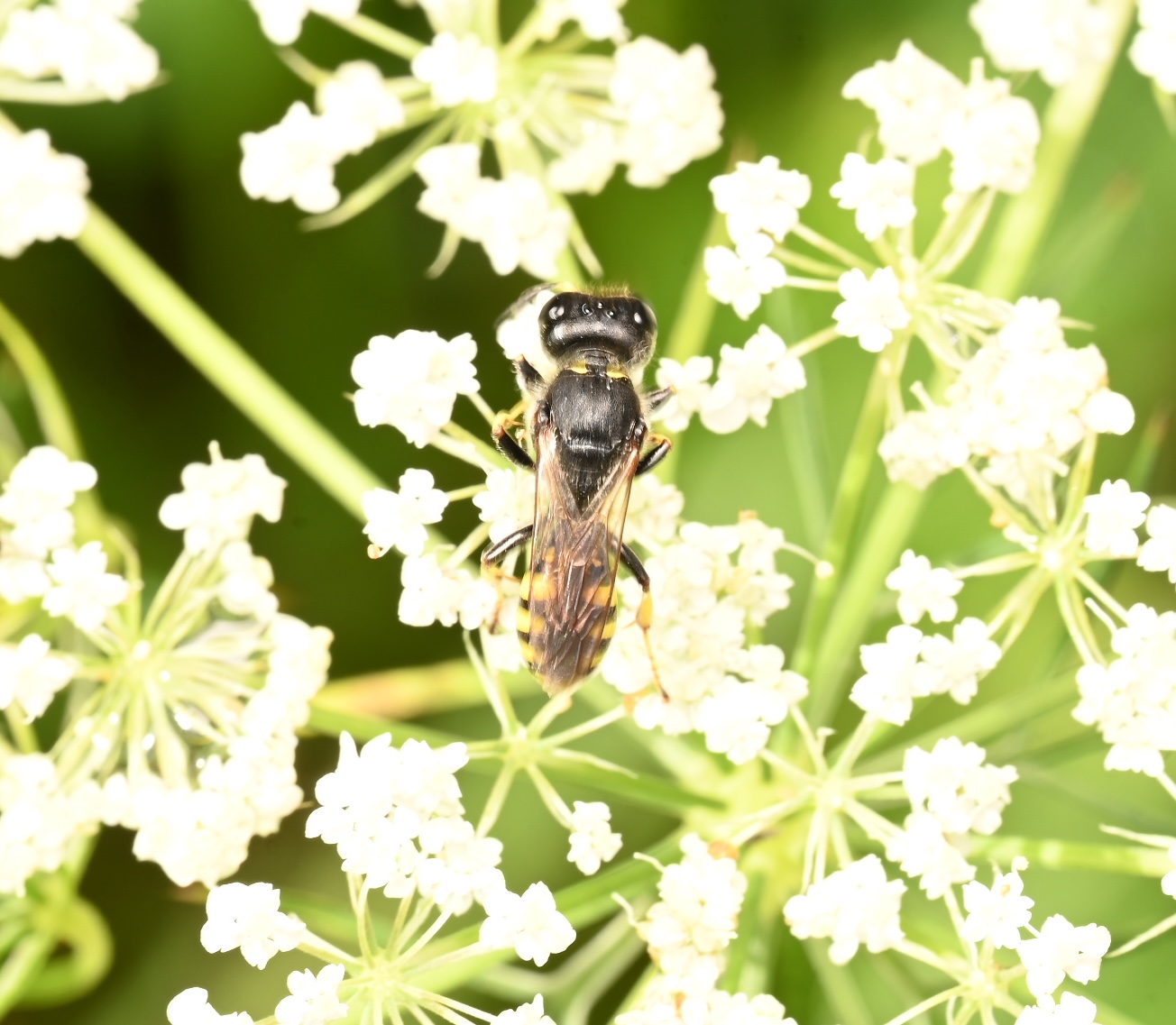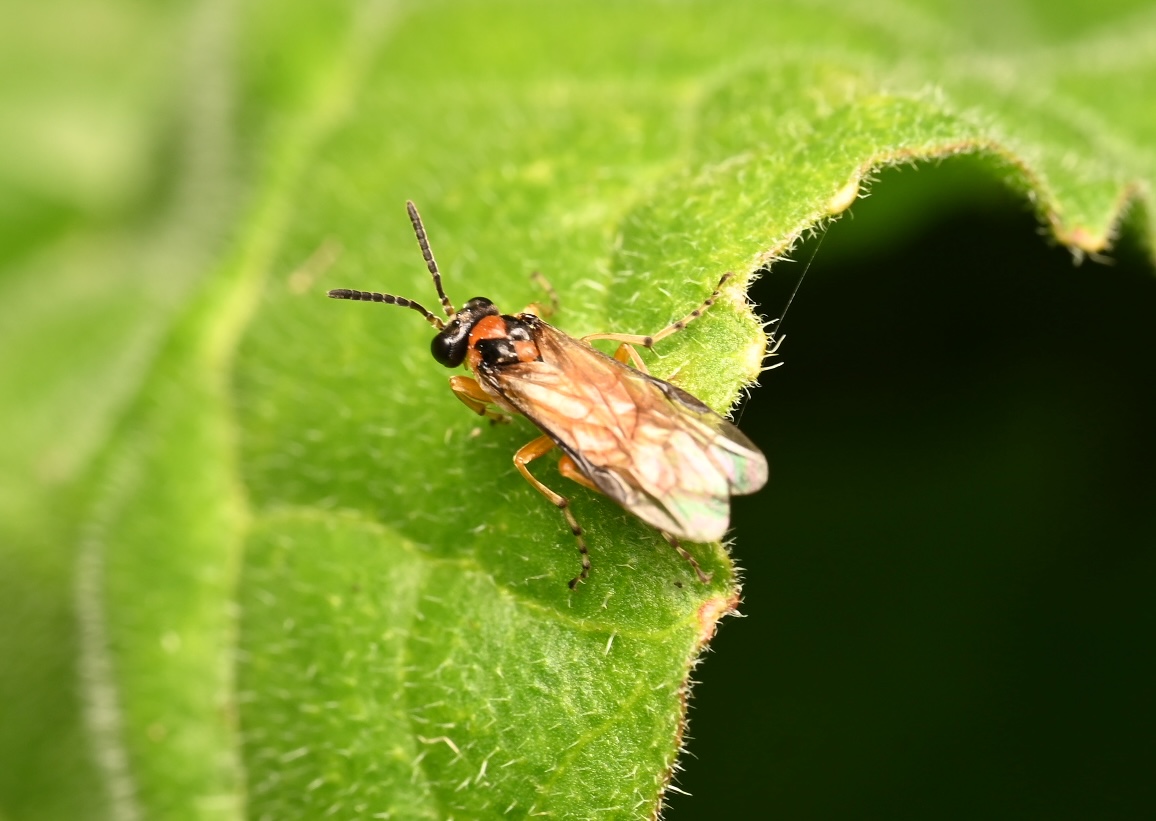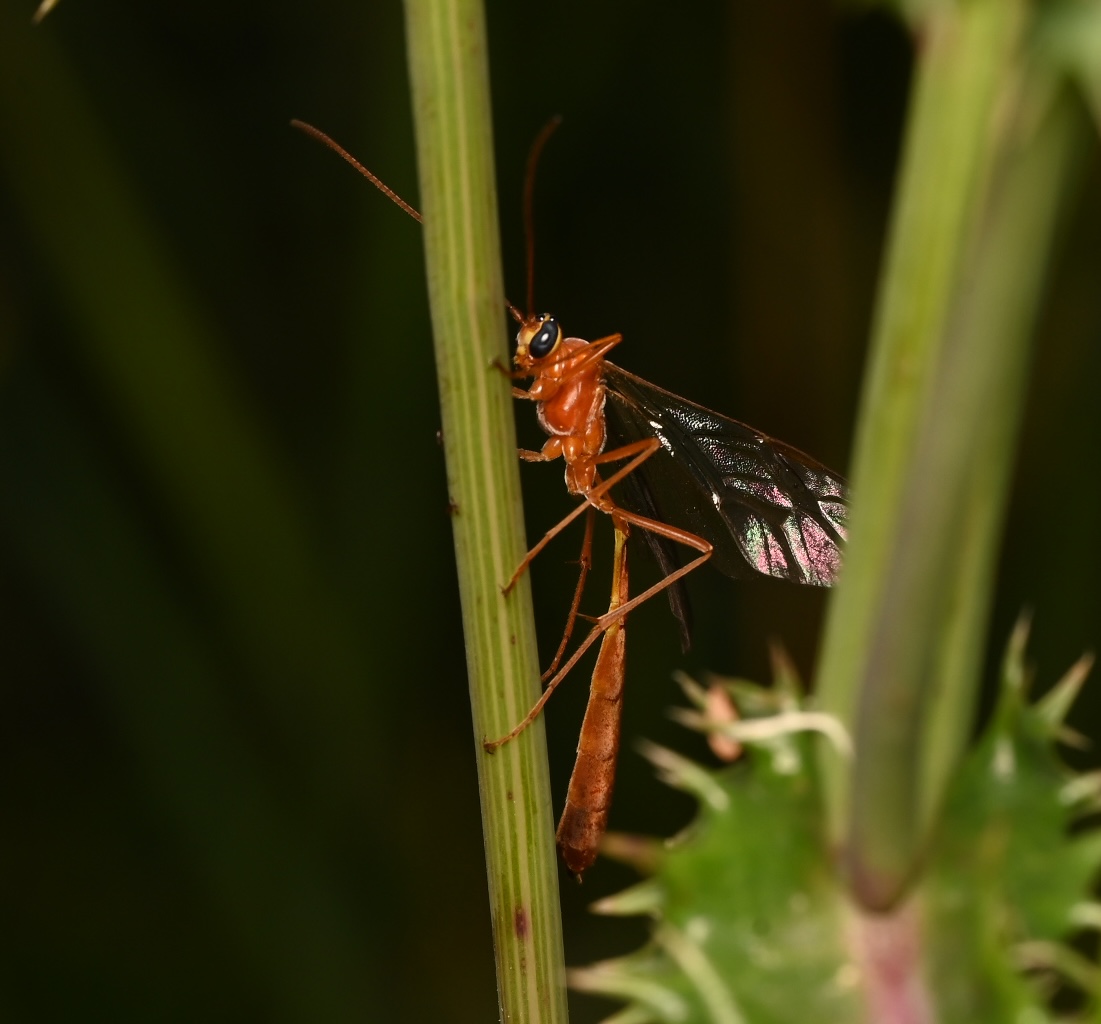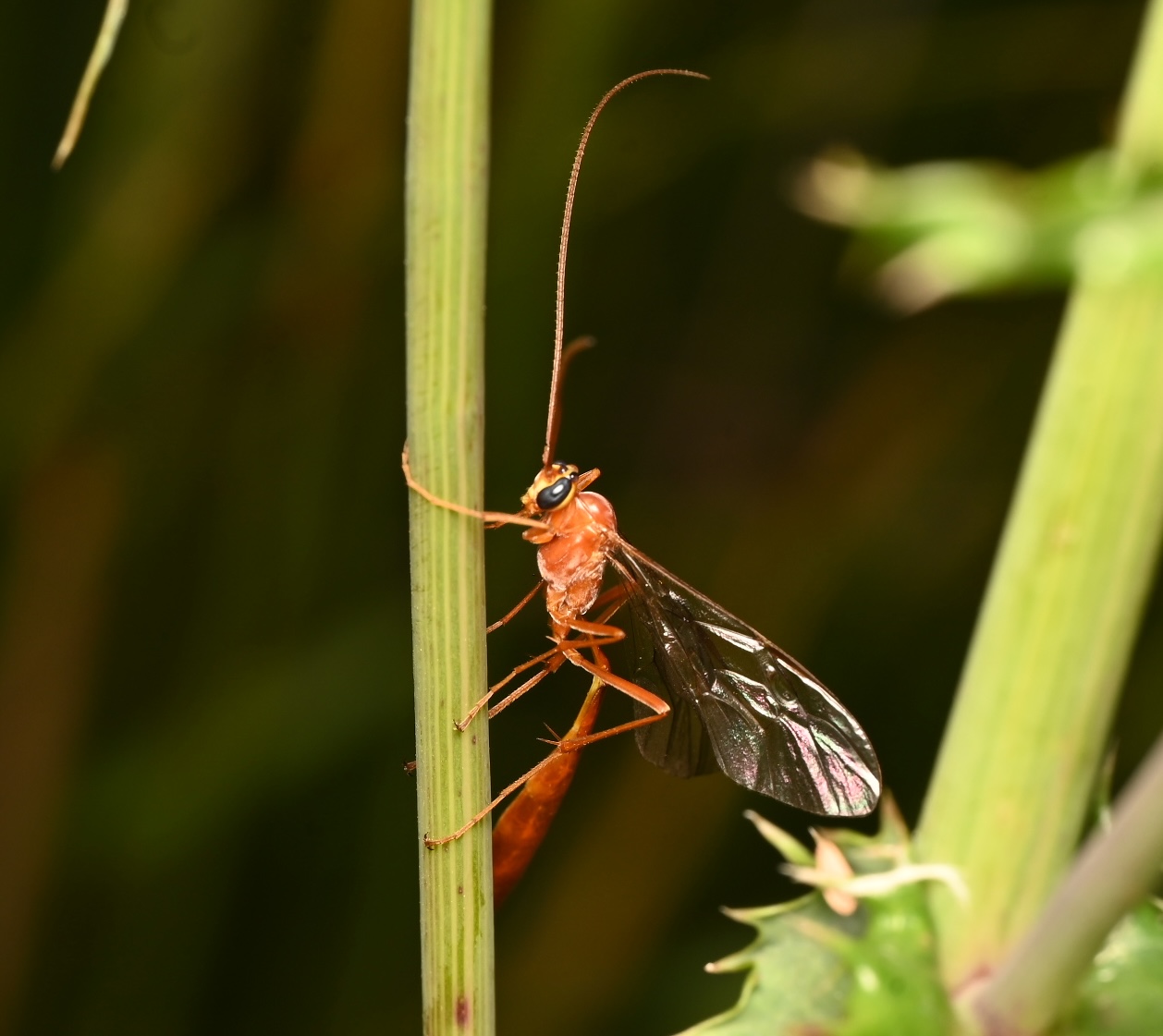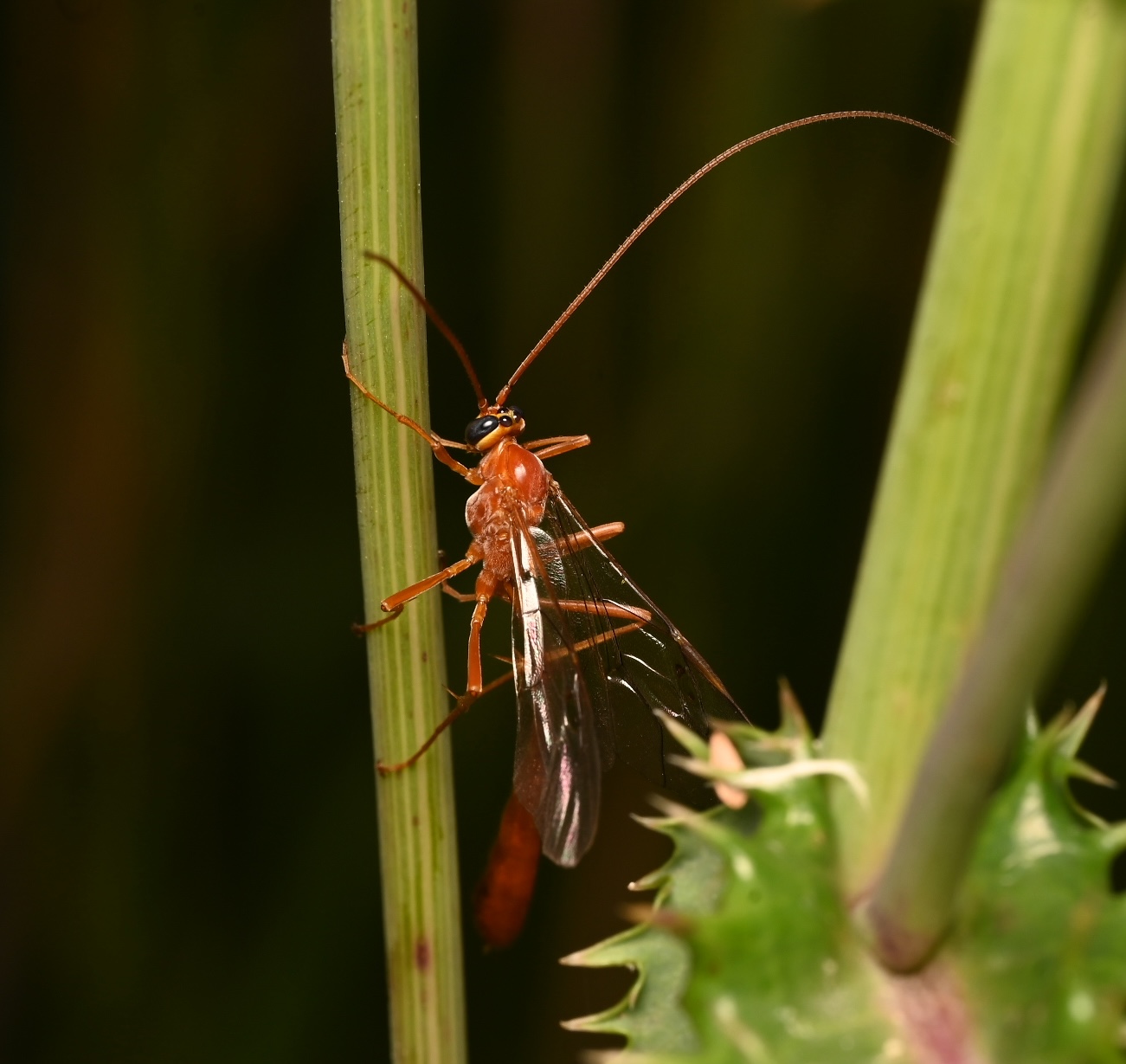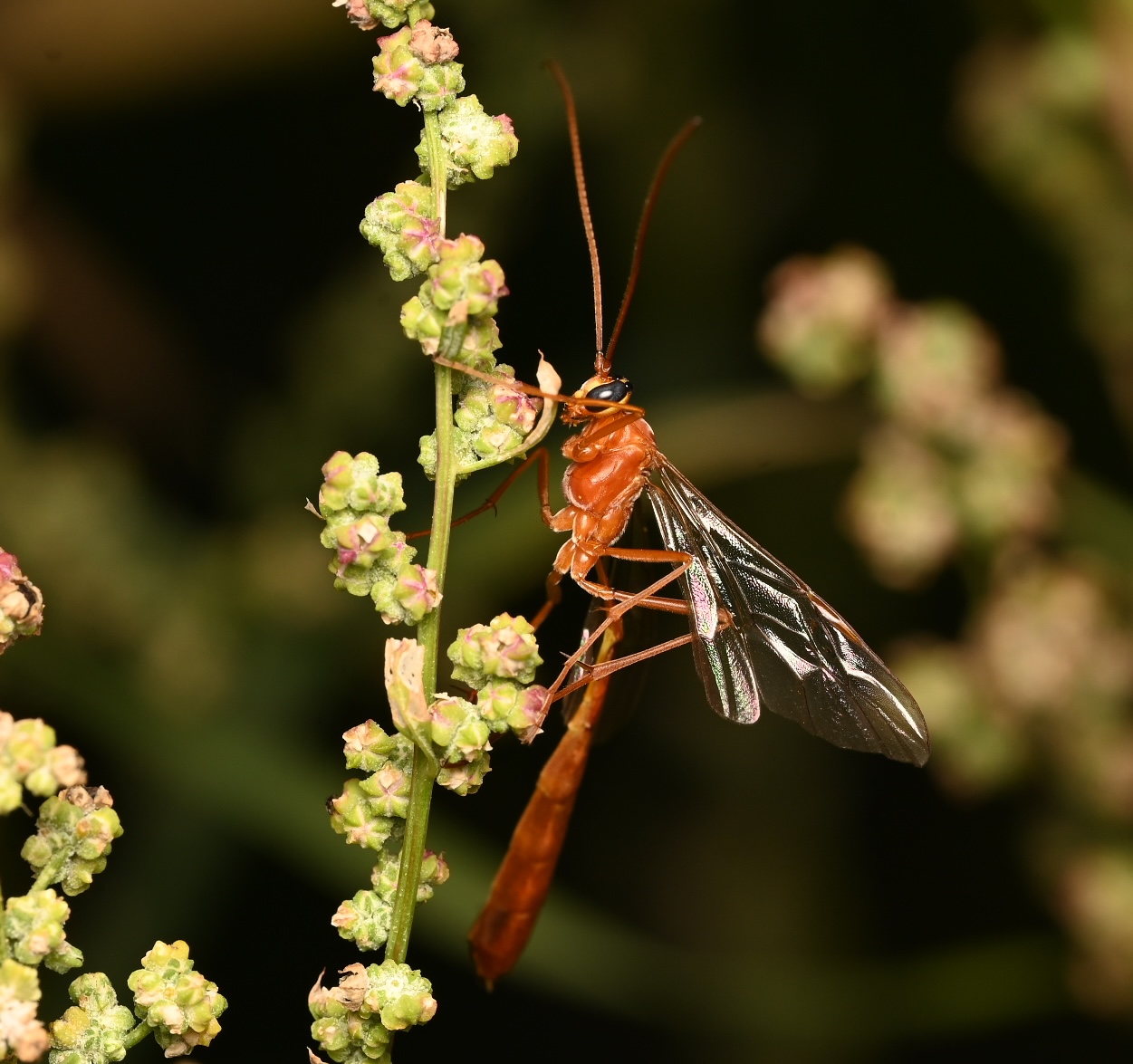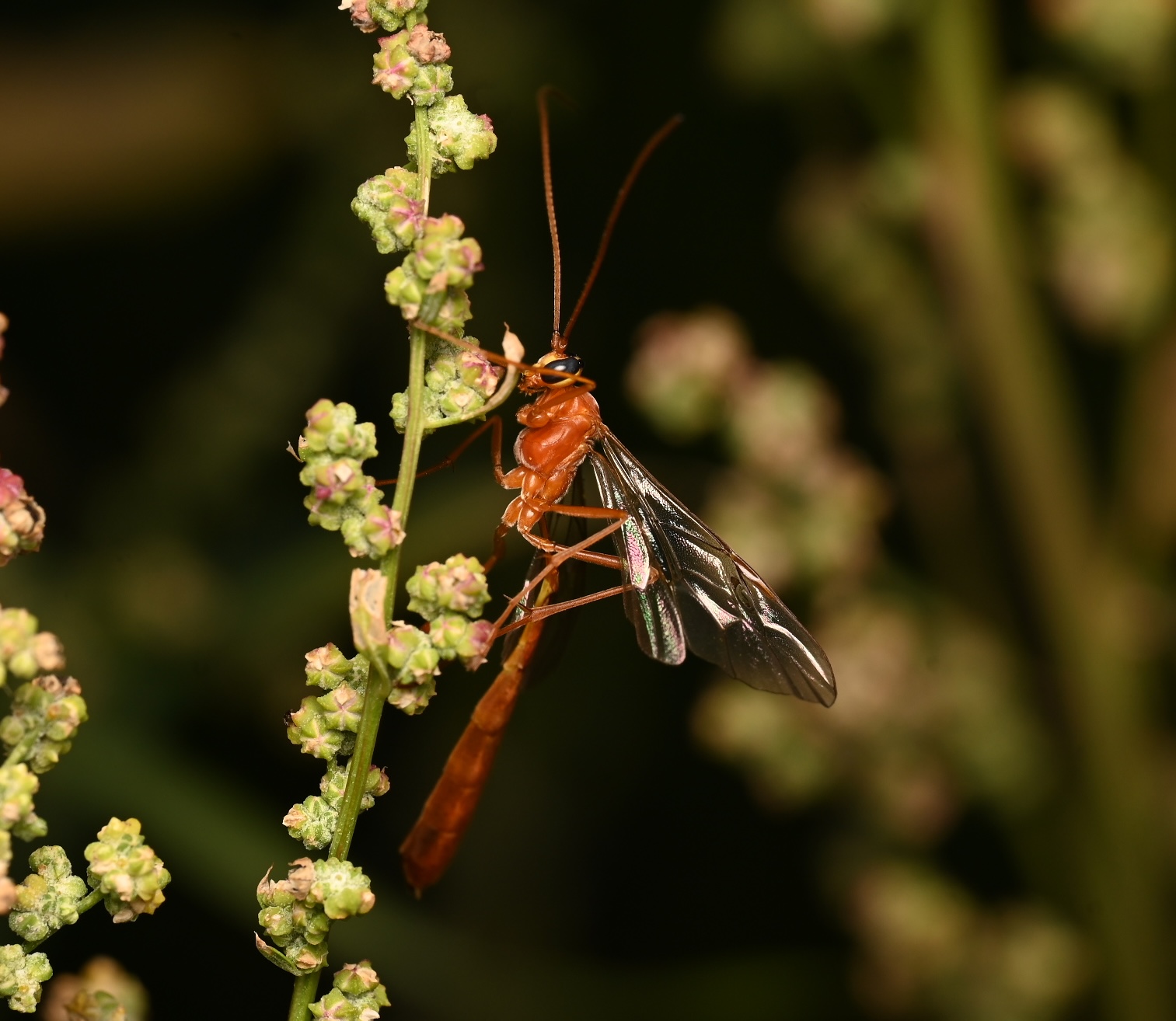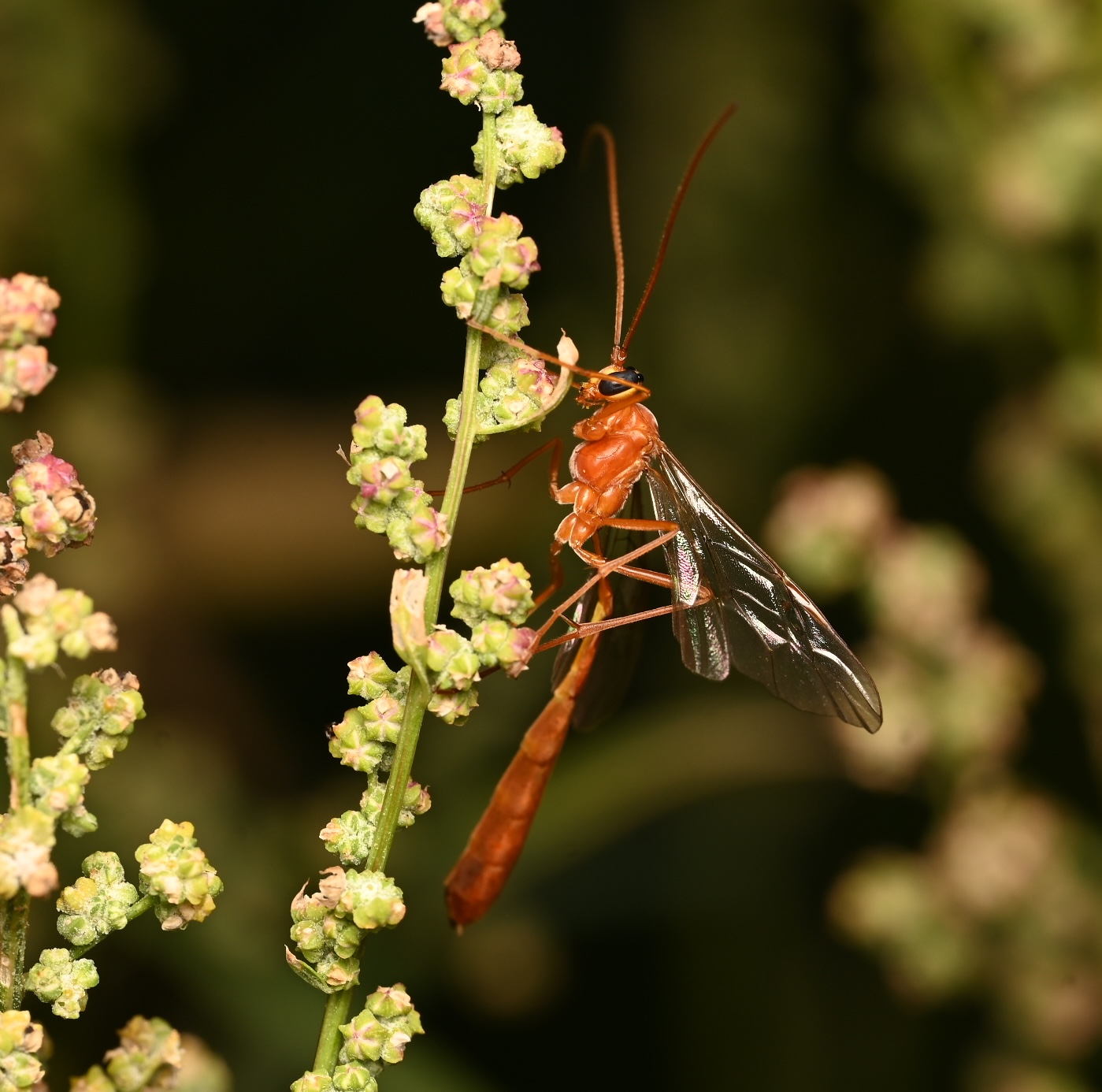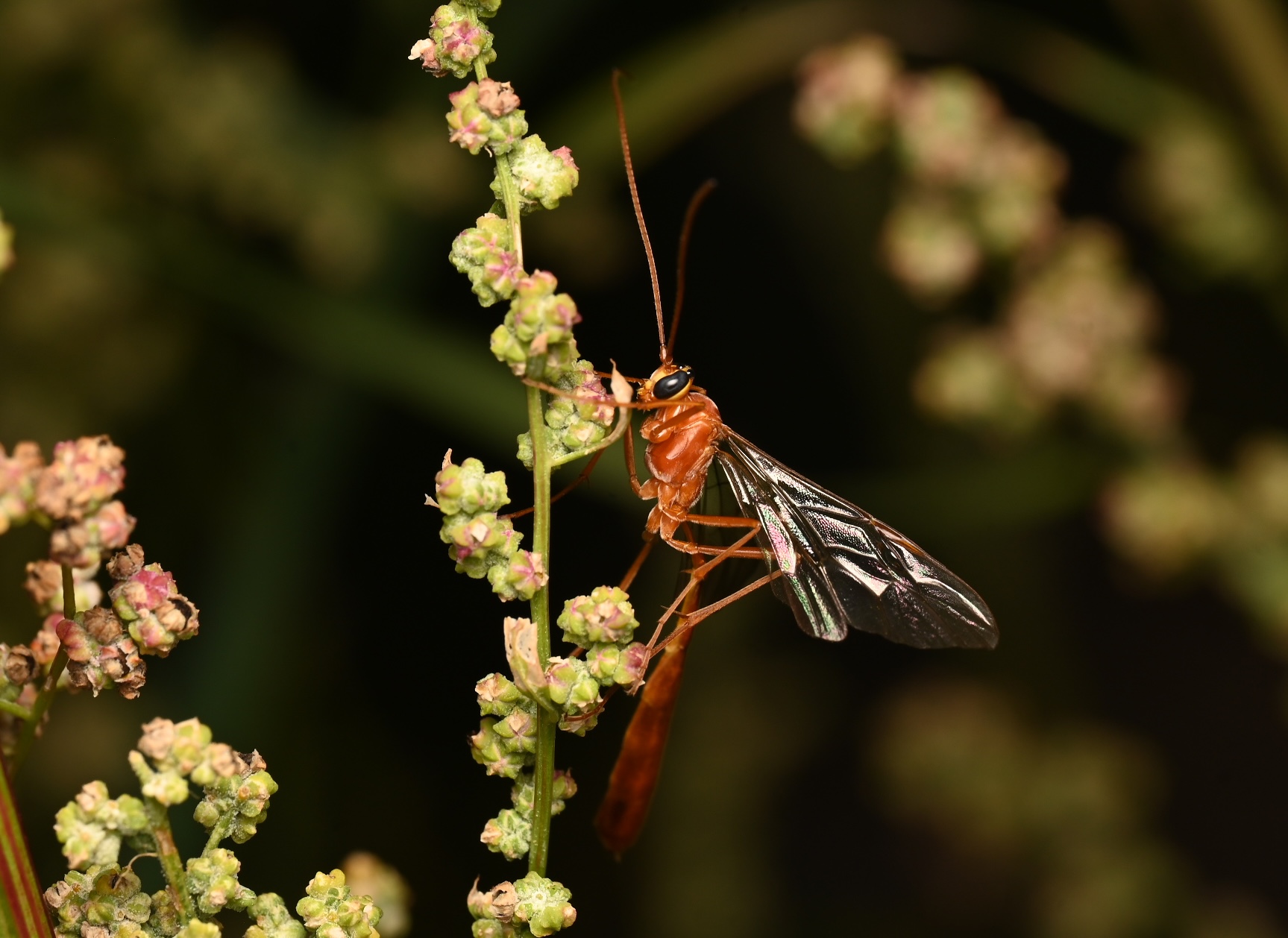
The sickle wasp (Enicospilus ramidulus) is a large, nocturnal parasitoid wasp reaching 3 to 4 centimeters in length, first described scientifically by Carl Linnaeus in his landmark 1758 Systema Naturae. A member of the Darwin wasp family (Ichneumonidae), it is easily recognized by its rusty-orange body and a narrow, laterally compressed abdomen that curves dramatically like a sharp blade. Strictly crepuscular and nocturnal, it uses oversized eyes fine-tuned for starlight and moonlight to navigate the dark. Females search out moth larvae to lay their eggs, serving as effective natural pest control in local ecosystems. Despite its formidable size and wasp classification, it lacks a functional stinger and poses no threat to humans. When I first saw it emerge from the dark forest canopy during an evening walk near my home in Barkarby, Sweden, I initially mistook it for a large orange crane fly. After patiently tracking its erratic flight through the gloom, I was rewarded with a close look at its mesmerizing eyes and the remarkable curvature of its abdomen.