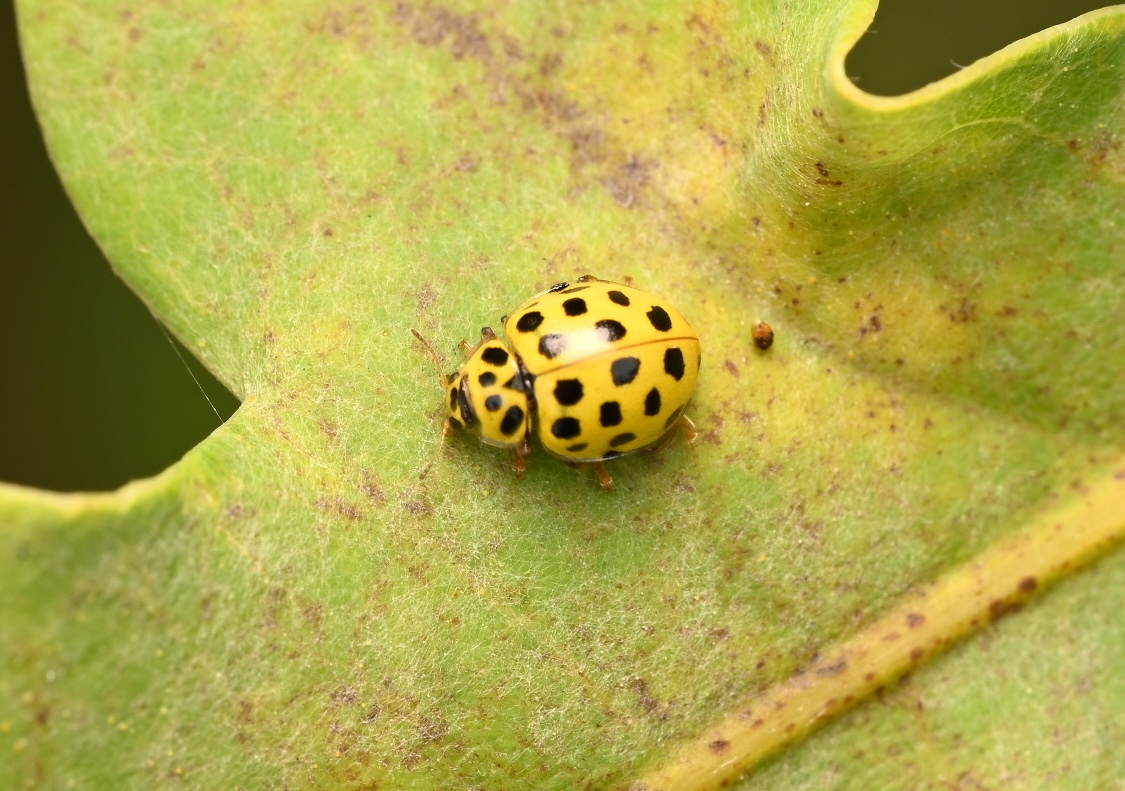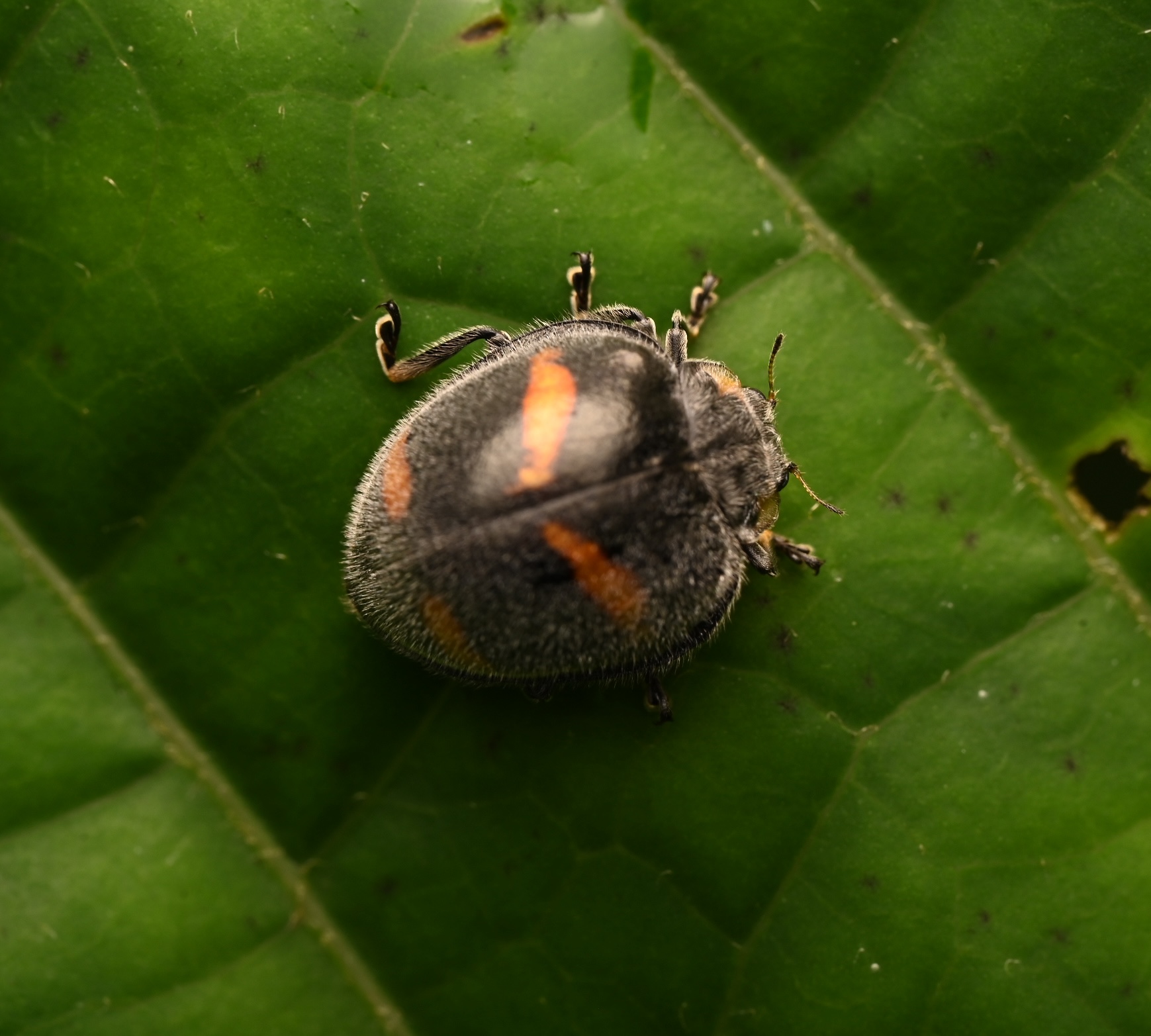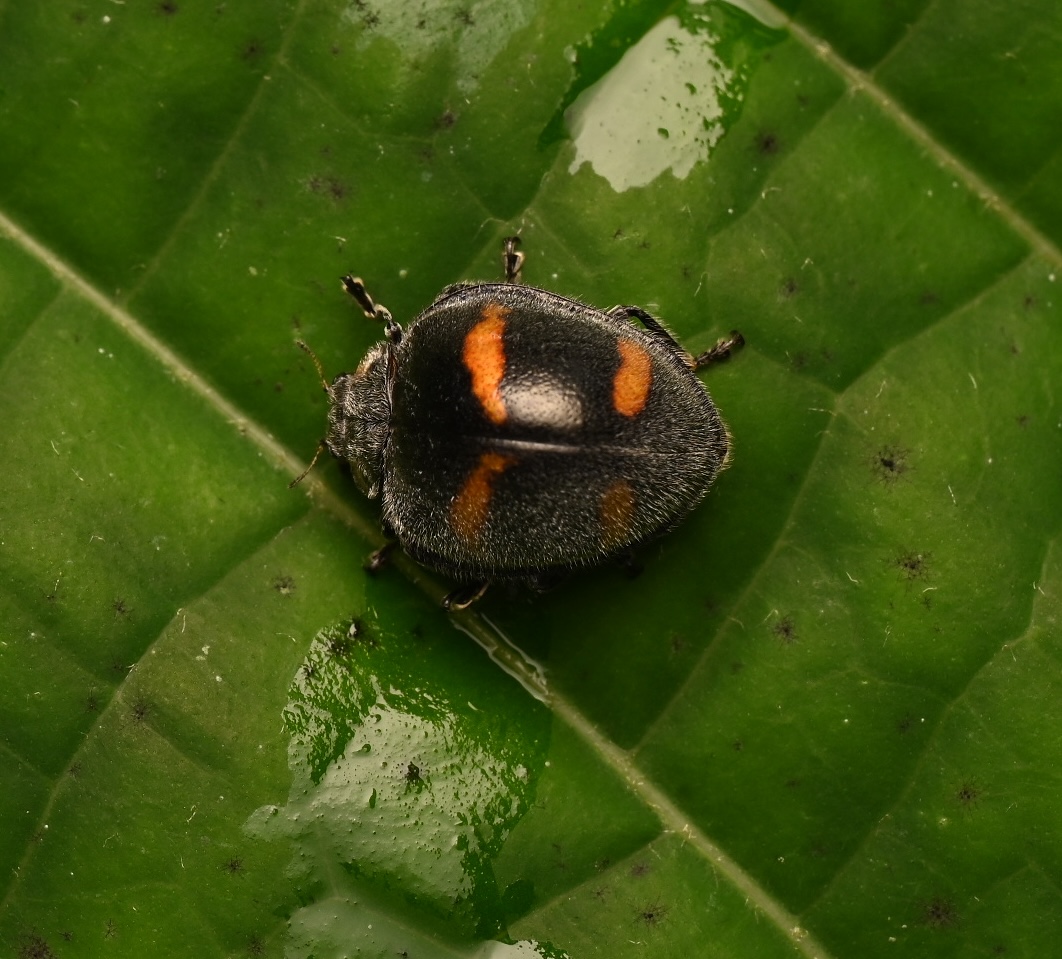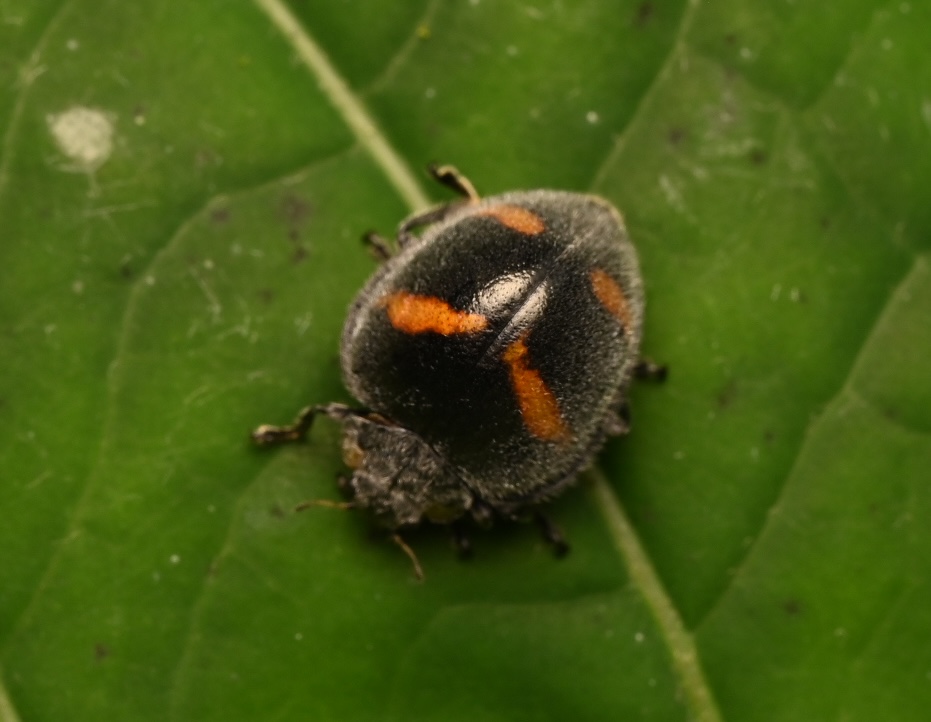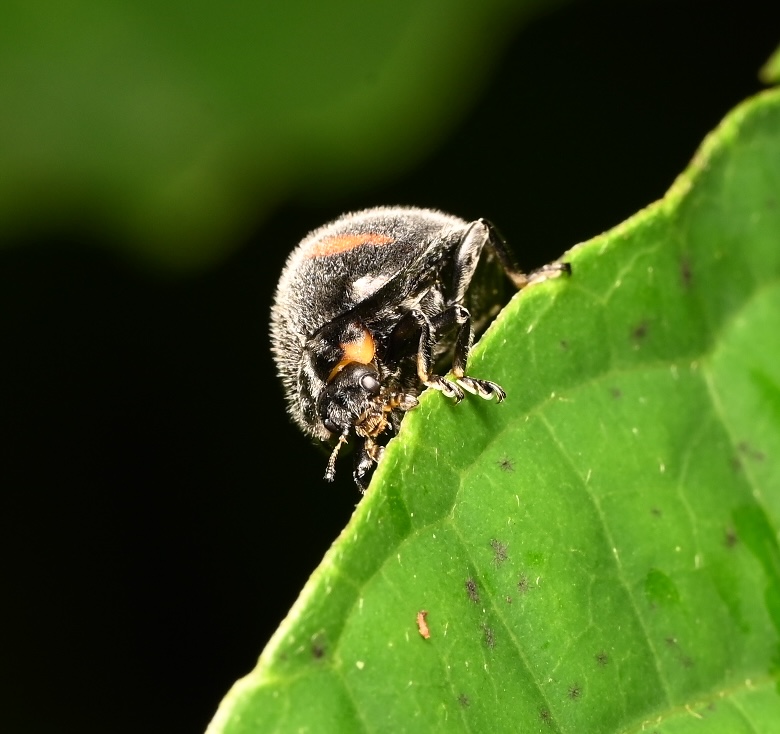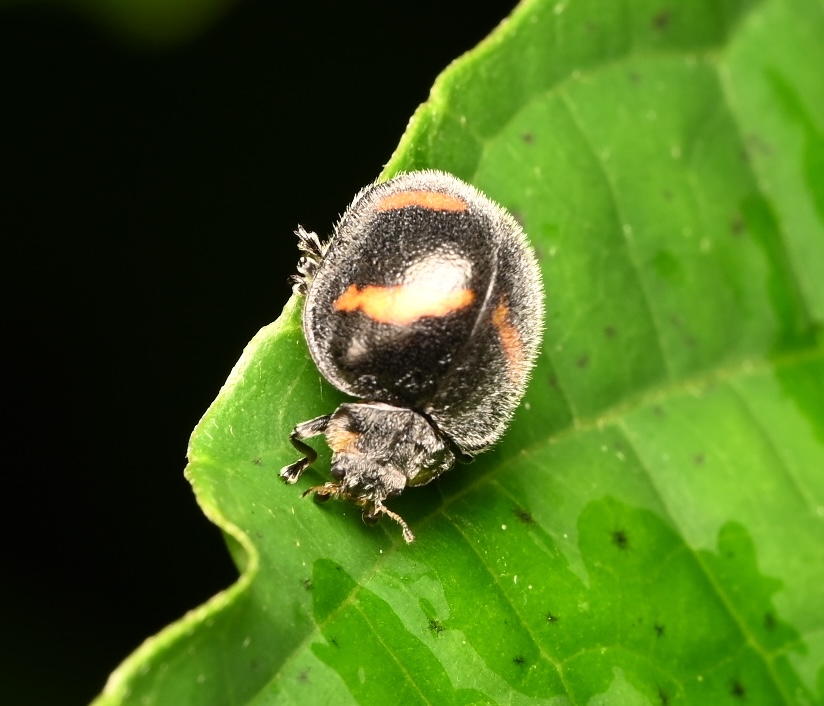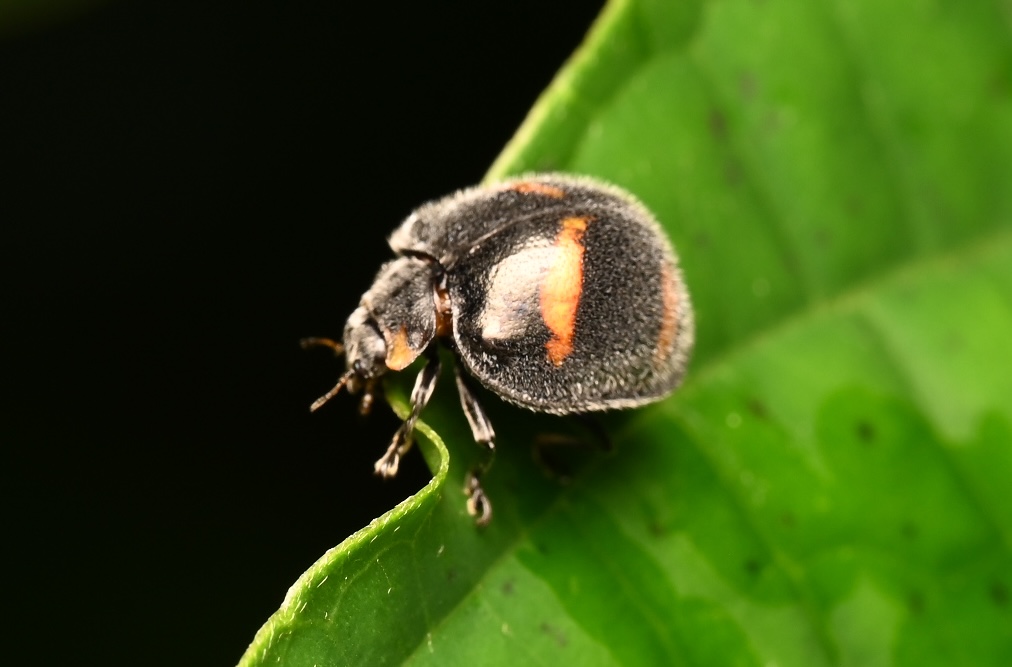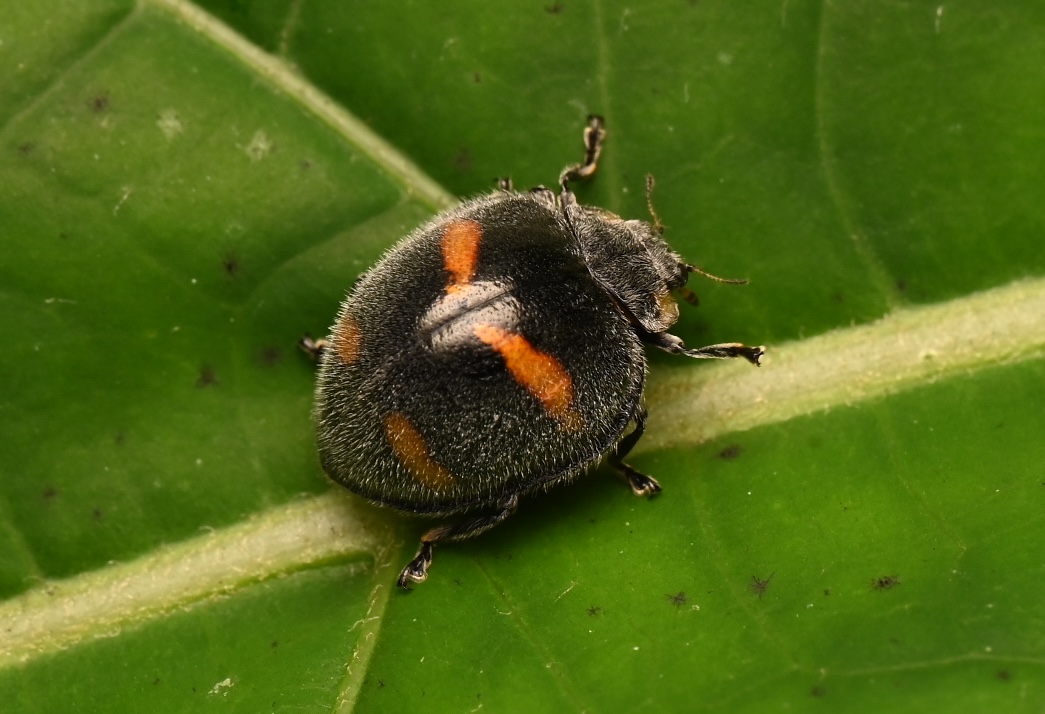
Epilachna convergens is a rare South American and Andean species of plant-eating ladybird beetle (Coccinellidae : Epilachninae). While most ladybugs are celebrated predators that devour aphids, Epilachna are notorious agricultural pests that skeletonize crop leaves, targeting squash, beans, potatoes, and tomatoes. Equipped with robust, toothed mandibles perfectly adapted for rasping and chewing plant tissue, they scrape away the soft underside of leaves right between the veins. Instead of consuming the entire leaf, they leave behind a distinct, transparent, lace-like skeleton. Their larvae are equally striking. While typical ladybug larvae look like tiny, smooth alligators, Epilachna larvae are covered in bands of stout, branched spines. This spiky armor acts as a fierce deterrent to predators. Furthermore, when threatened, both larvae and adults can exude oily, foul-tasting droplets from glandular hairs—a defense highly effective against predators like ants. I managed to spot this incredible little beetle in a lush city park within Puyo, a vibrant town nestled right at the threshold of the Ecuadorian Amazon rainforest.