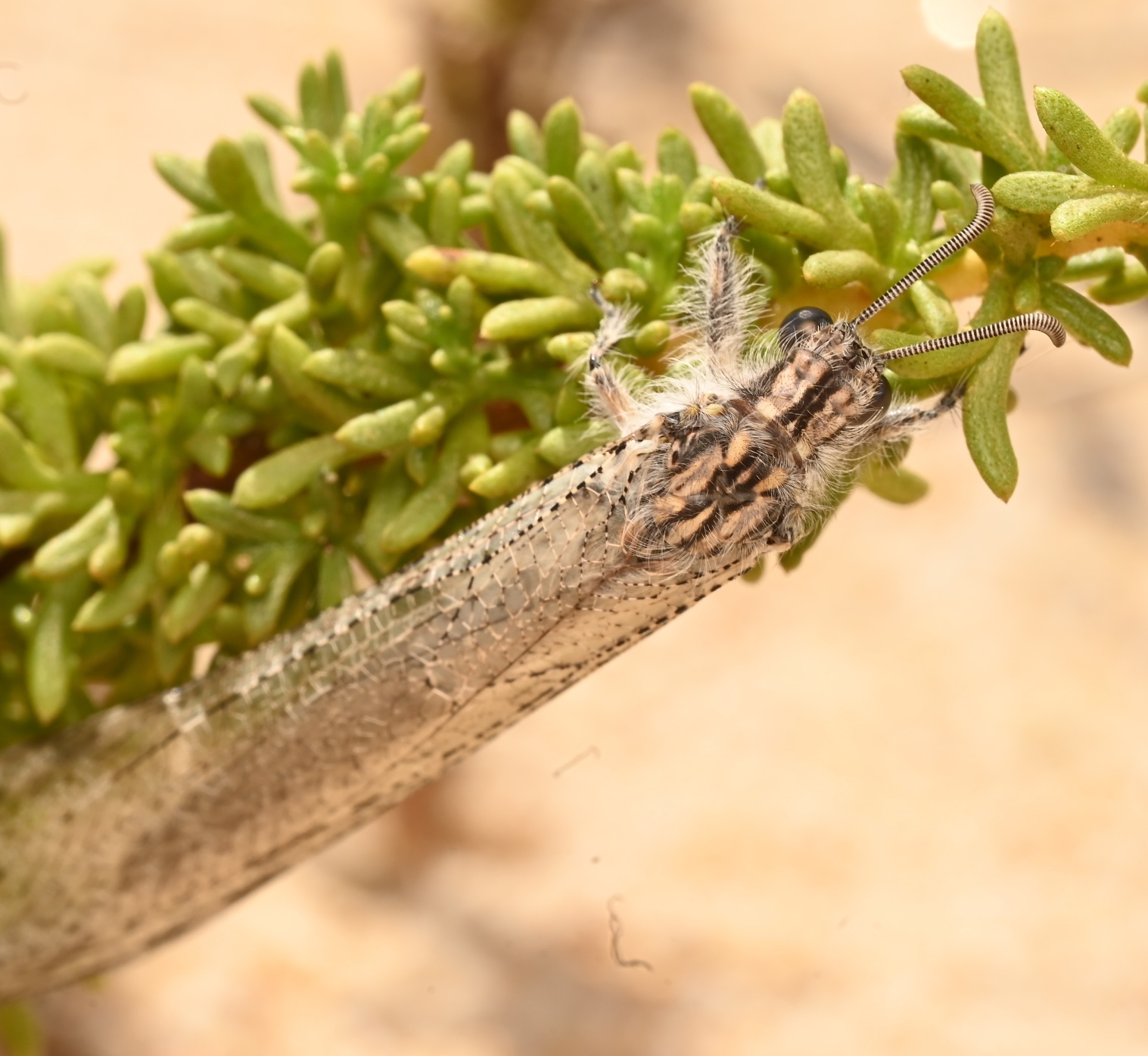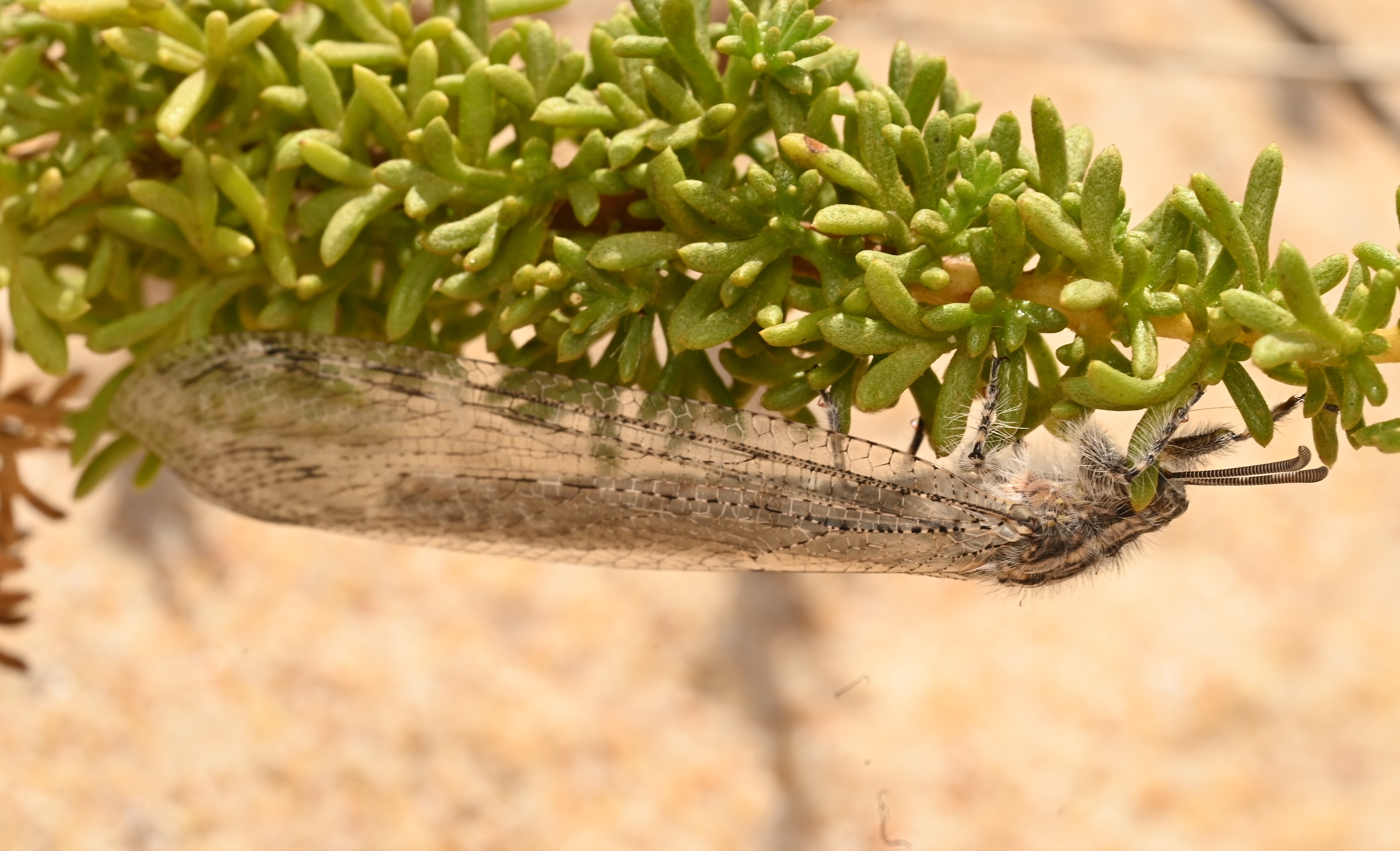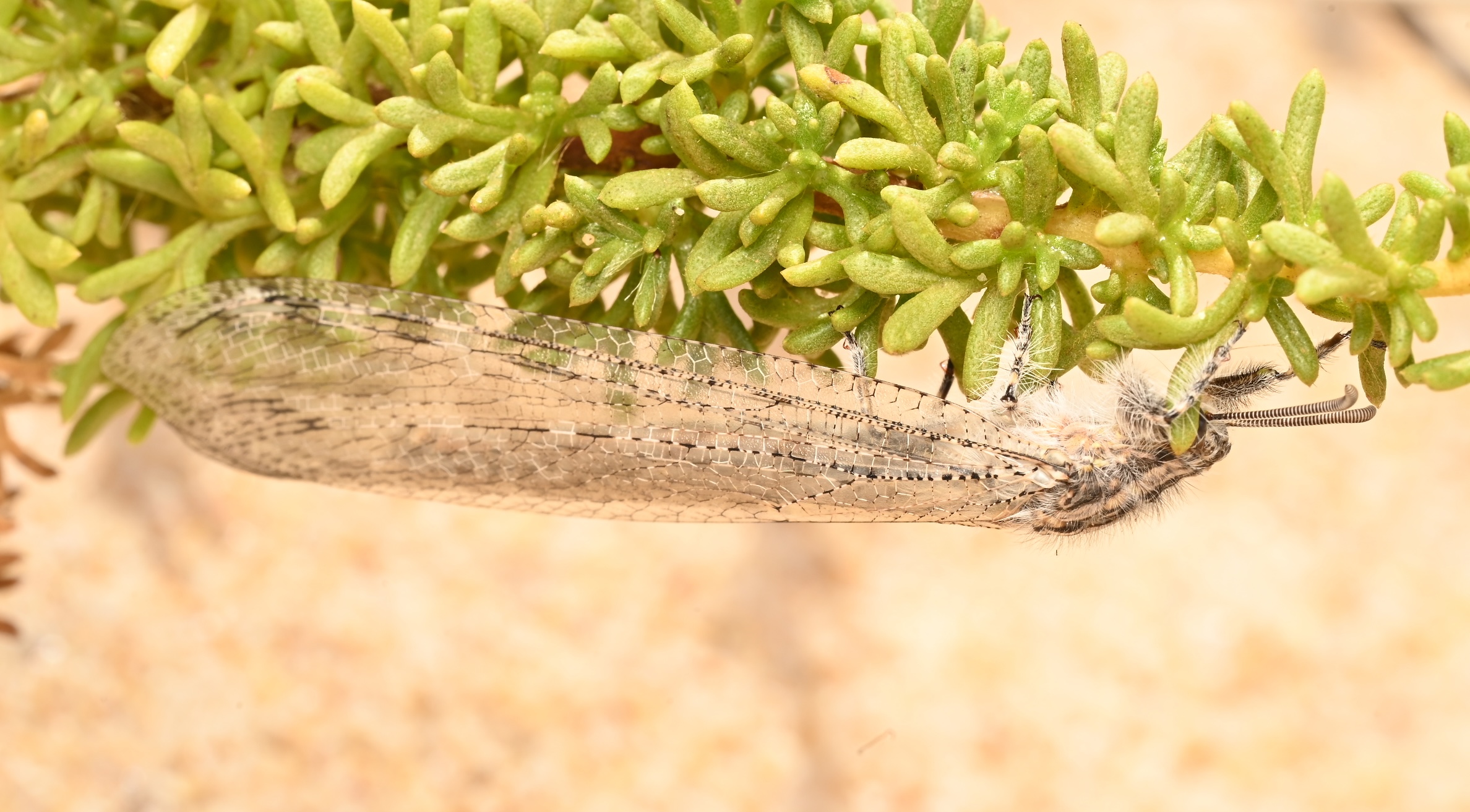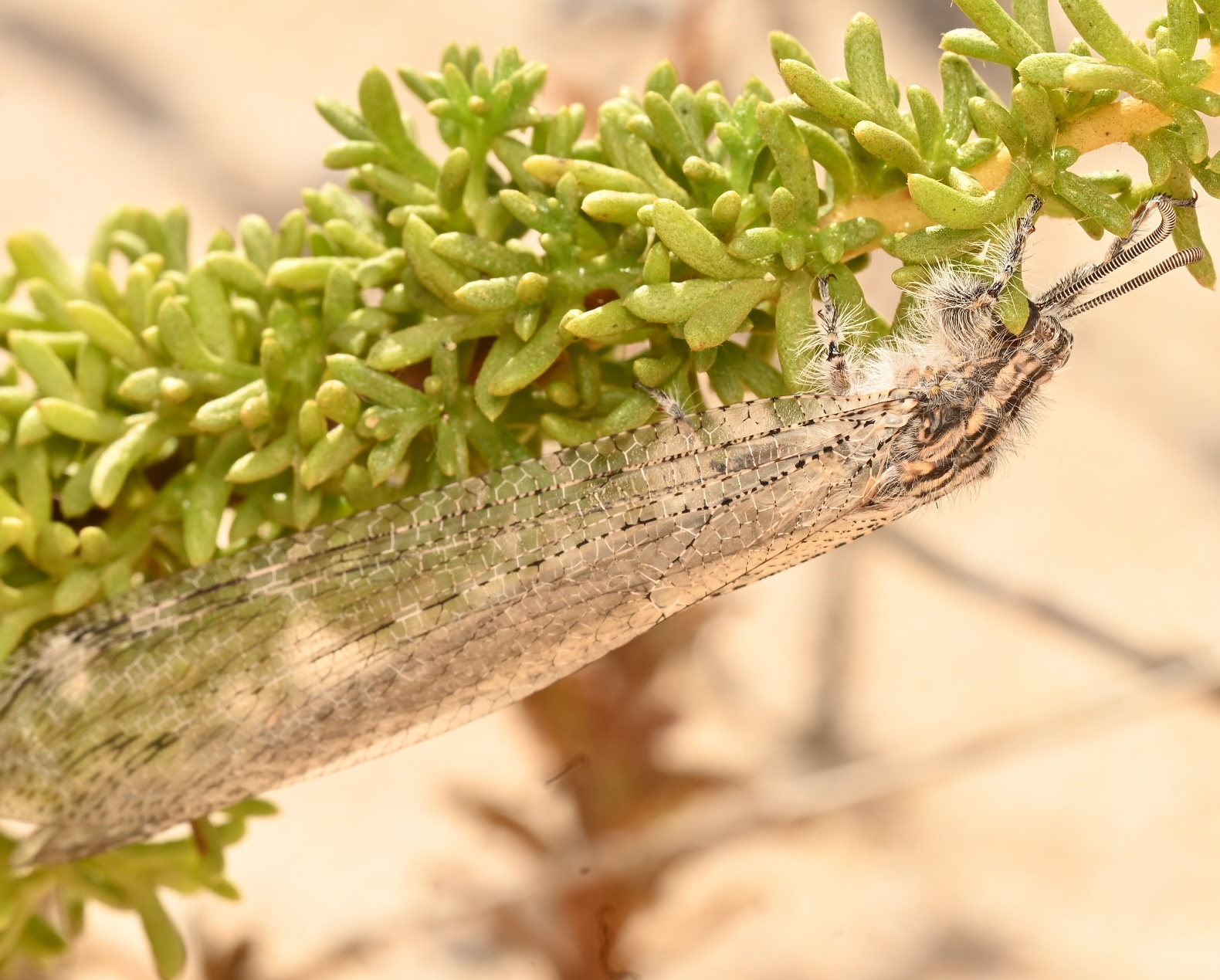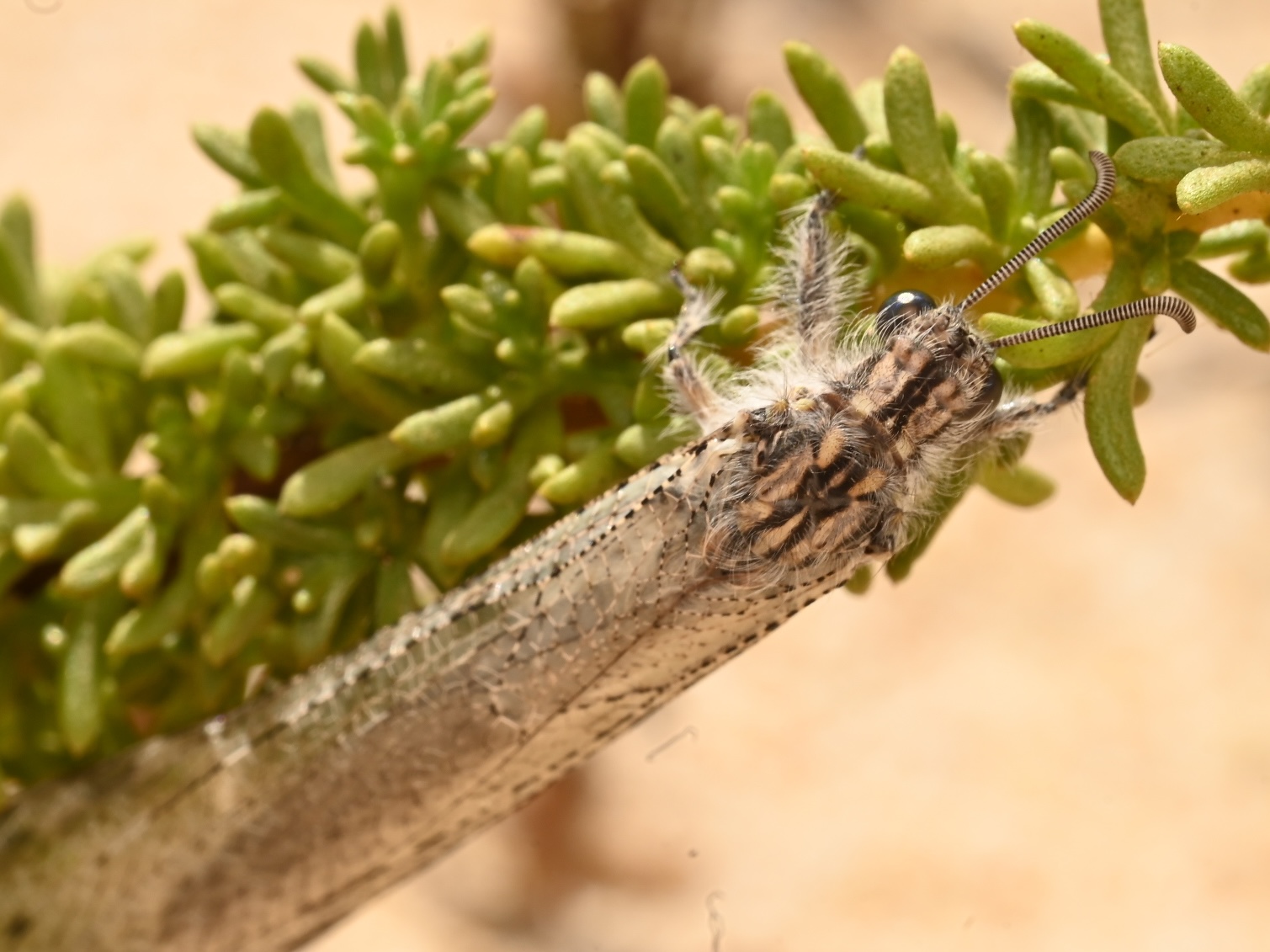
Antlions (family: Myrmeleontidae) are most famous for their bizarre larval stage. To capture prey, an antlion larva digs a steep, conical pit trap in loose sand and buries itself at the very bottom. Because they are physically incapable of moving forward, they must crawl backward in circles, flicking dirt upward to excavate their funnel traps. If an unlucky ant slips in and tries to escape, the larva rapidly hurls sand at the pit walls to trigger mini-landslides, knocking the prey back down into its massive jaws. They inject their catch with a paralyzing venom and digestive enzymes; once the prey’s internal organs liquefy, the larva drinks the fluids and tosses the empty husk out of the pit. Fascinatingly, these larvae lack an anus and cannot excrete solid waste, storing all metabolic bioproducts internally throughout their development. If food is scarce, they can prolong this predatory larval phase for up to three years. Following metamorphosis, they emerge as elegant, large, net-winged insects that feed on nectar and search for mates. I crossed paths with a magnificent adult antlion—measuring an impressive 5 to 6 cm—when it landed on a small bush along a sunlit Portuguese beach.