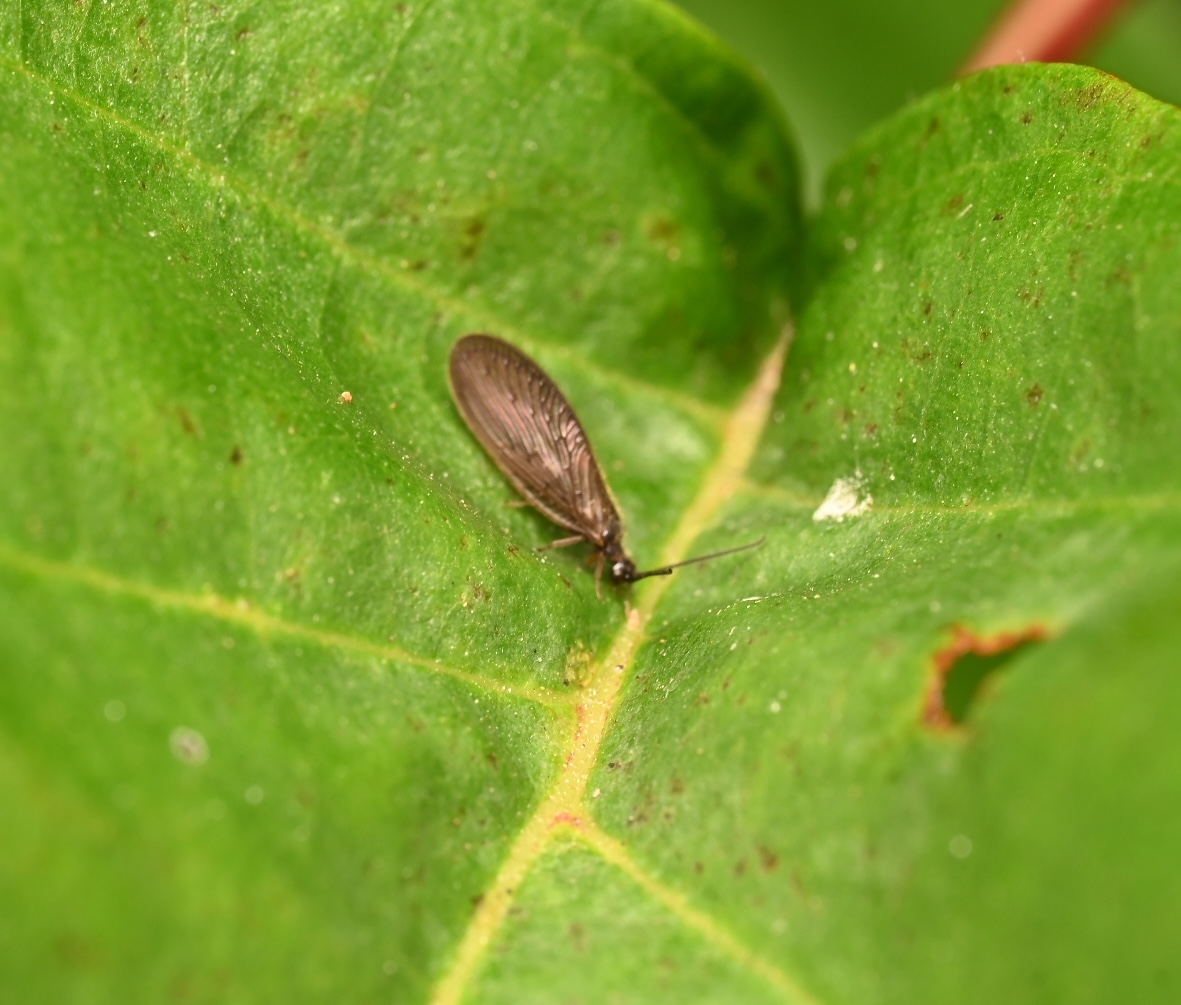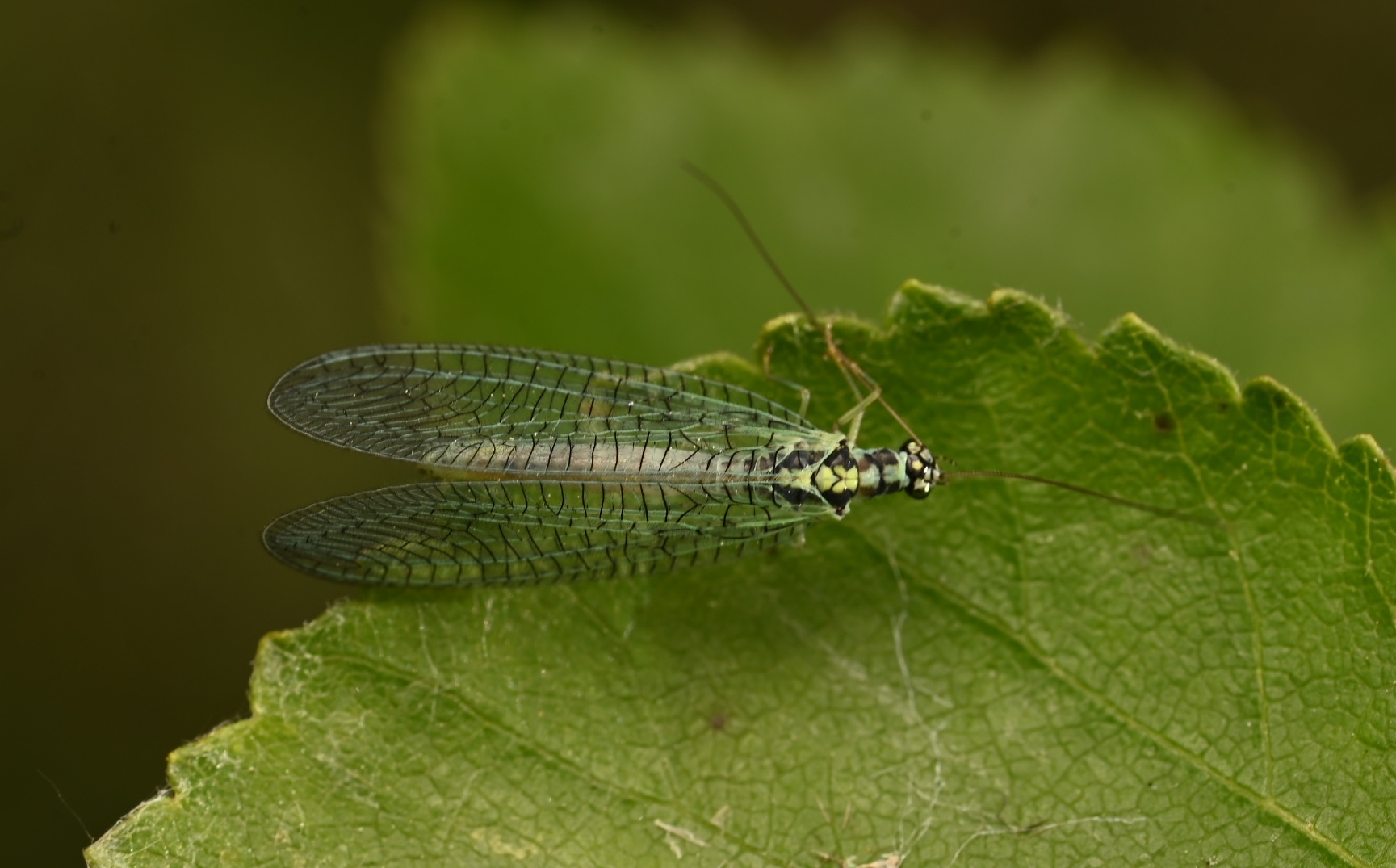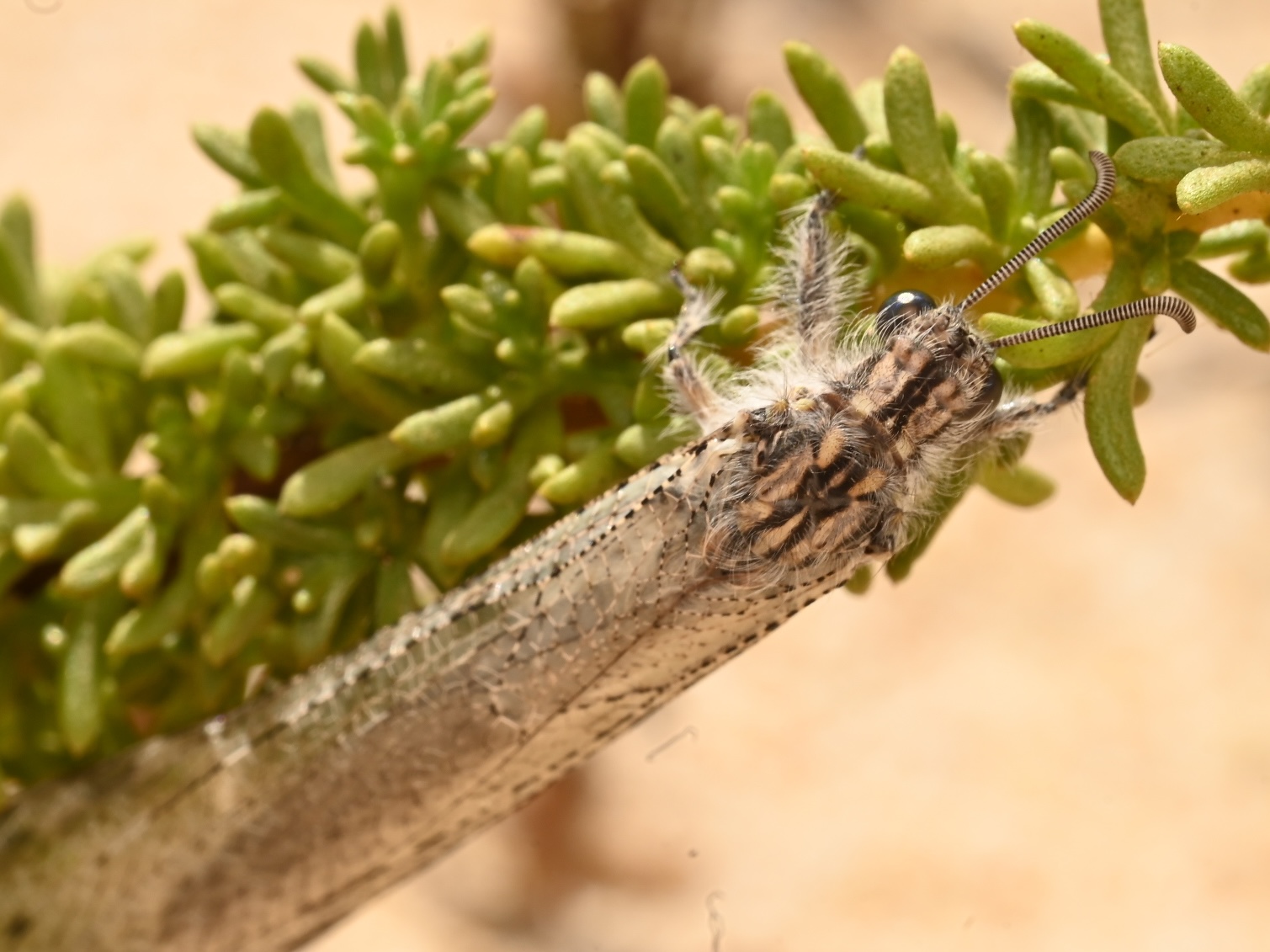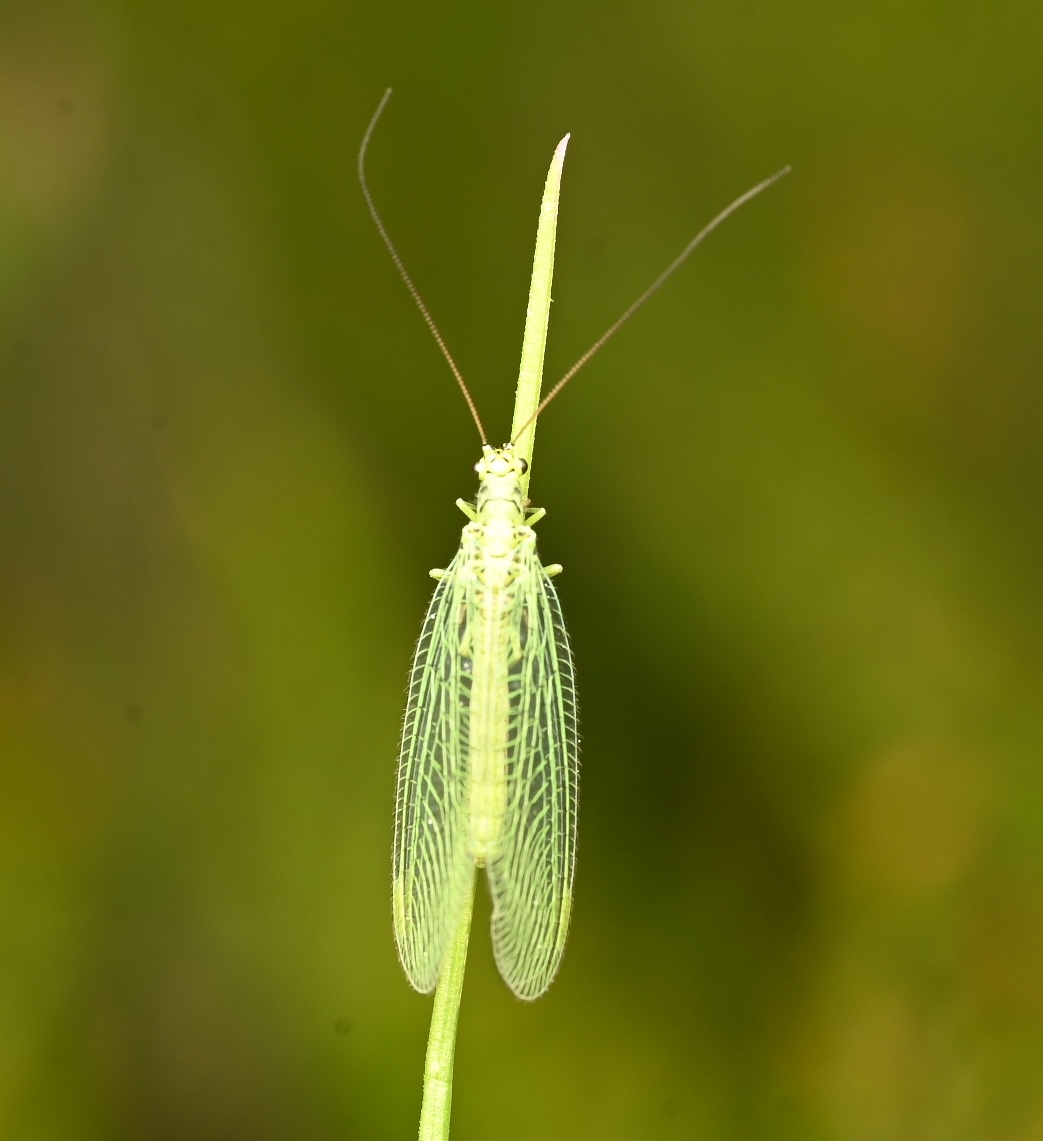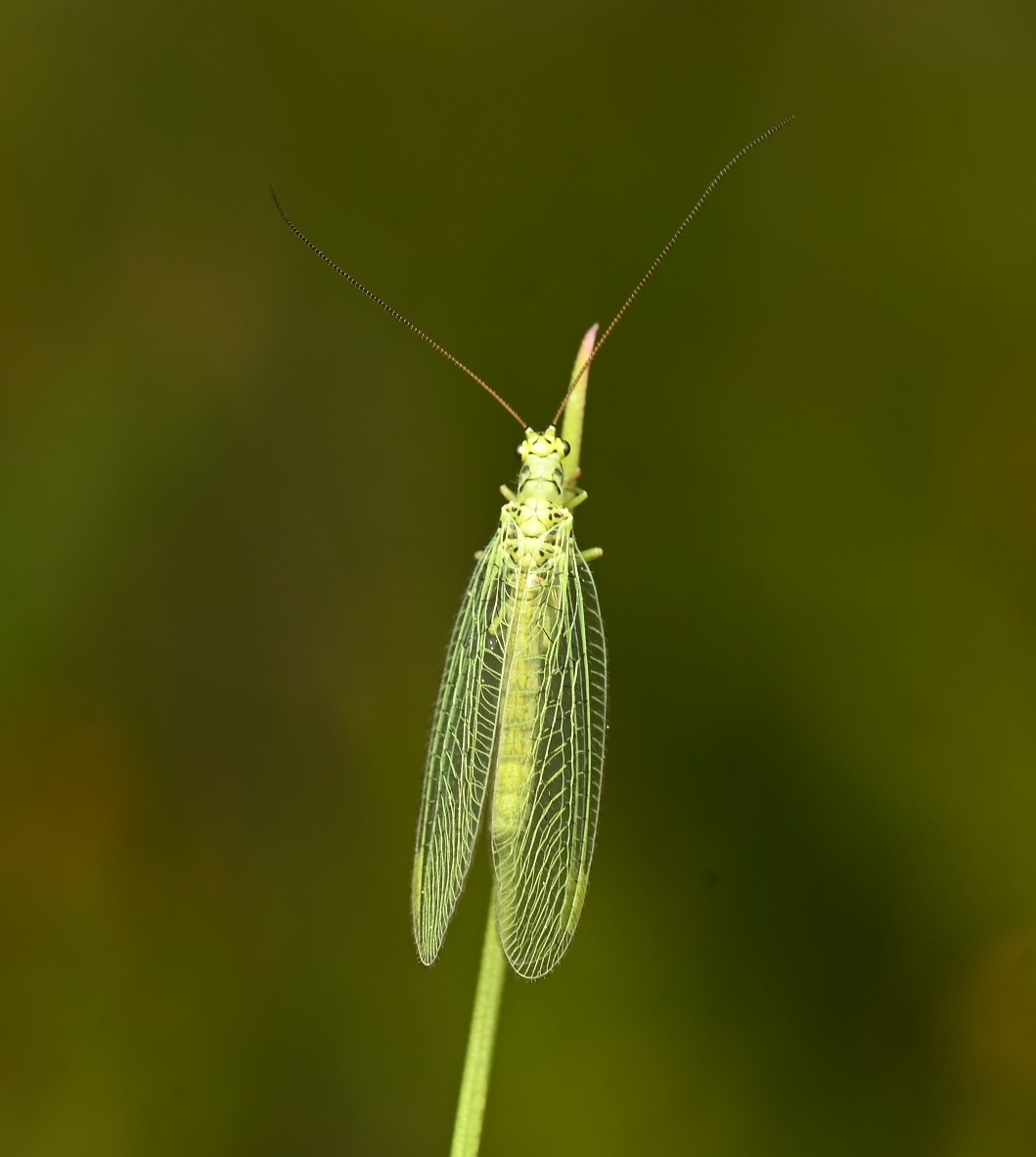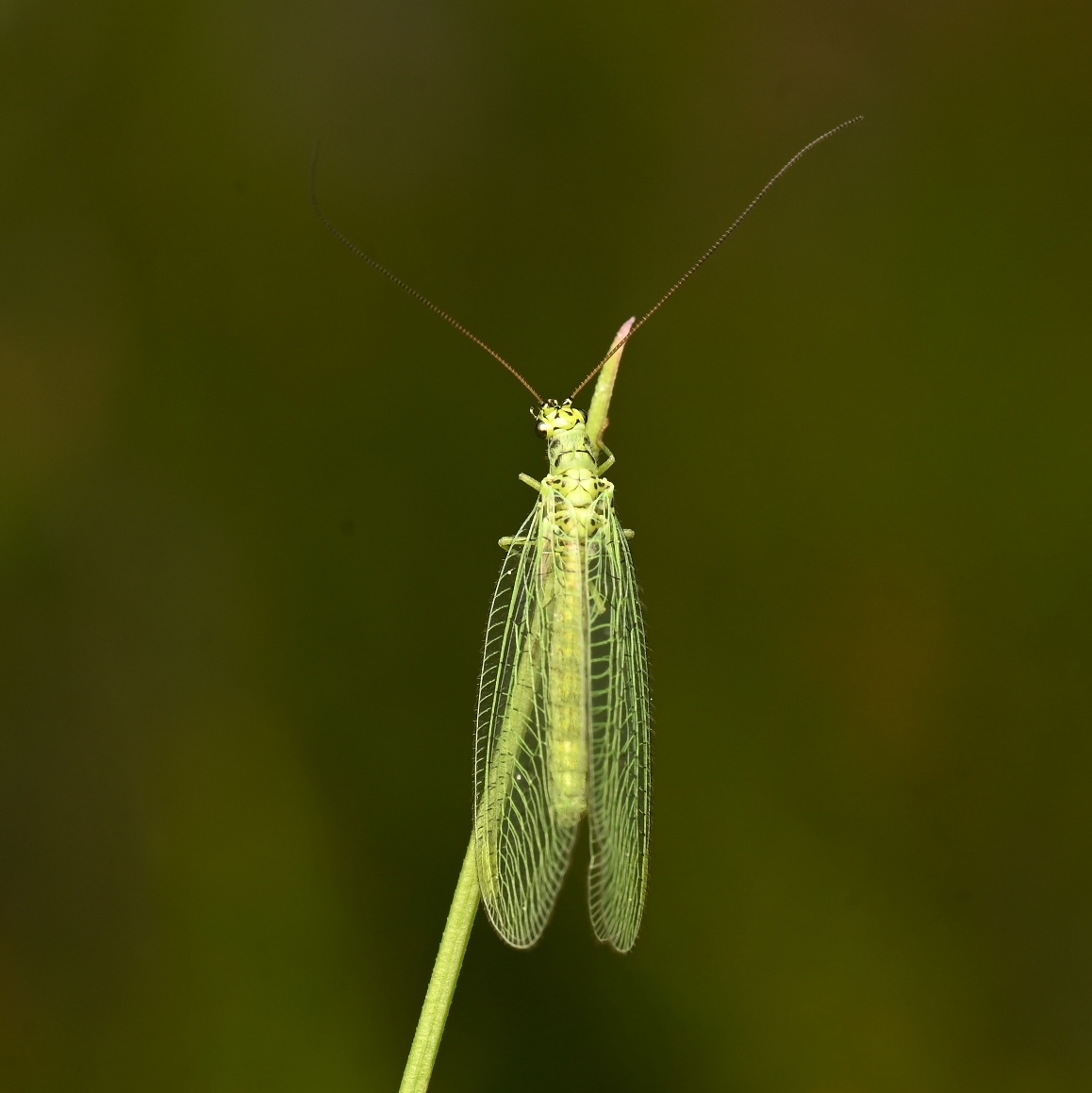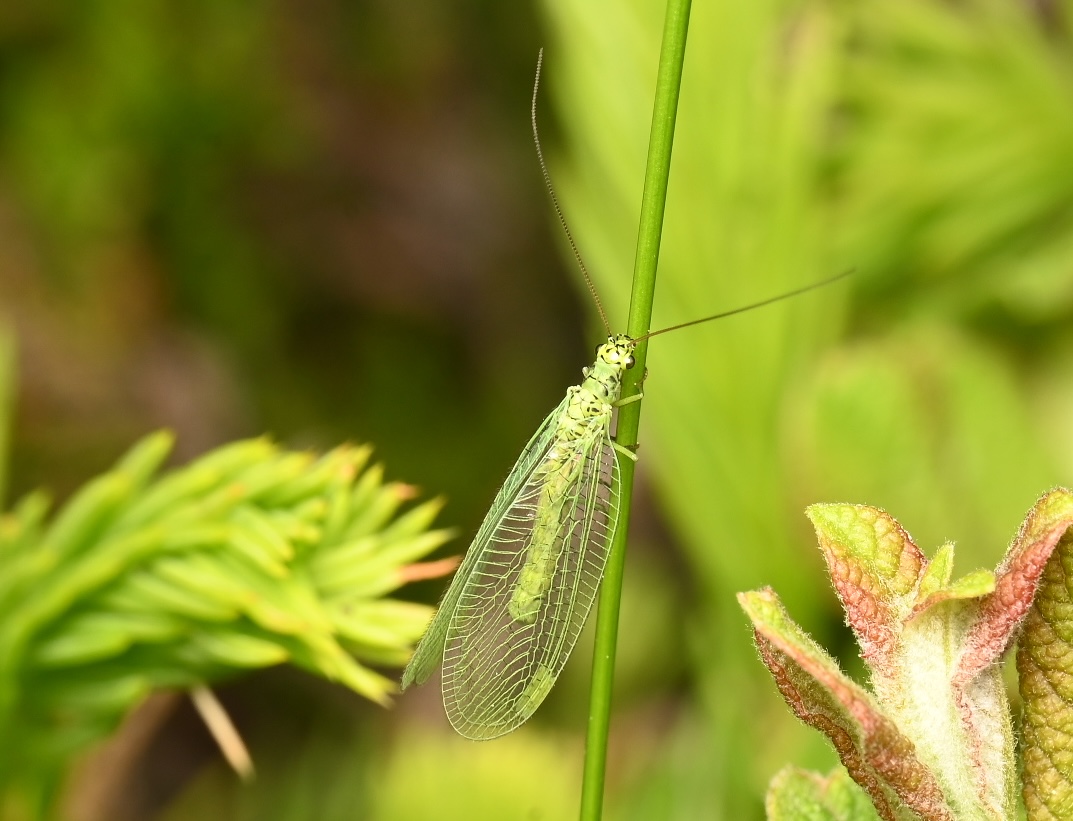
Chrysopa abbreviata is a delicate green lacewing easily identified by its vibrant green body, distinct black markings on its face and antennae, and intricate, translucent wings with a forewing length of 8 to 13 mm. While adults live a peaceful life feeding on nectar, pollen, and honeydew, their larvae are notorious for their eerie and voracious hunting behaviors. Armed with hollow, sickle-shaped jaws, these monsters of a horror movie impale soft-bodied insects like aphids and mites, injecting digestive enzymes to liquefy their insides before sucking them dry. To make things stranger, larvae of many Chrysopa species are “trash-packers”—they collect dead insect corpses, plant debris, and shed skins, piling the gruesome debris onto their own backs as a grotesque camouflage shield against predators. Once fully fed, they spin tiny, perfectly spherical silk cocoons on stems to undergo metamorphosis. During a cycling trip through Sweden in June 2026, I often saw these delightful insects drifting through the grass like a fleeting green mist. Because they blend so seamlessly into the surrounding foliage, however, capturing a clear photo required quite a bit of luck!