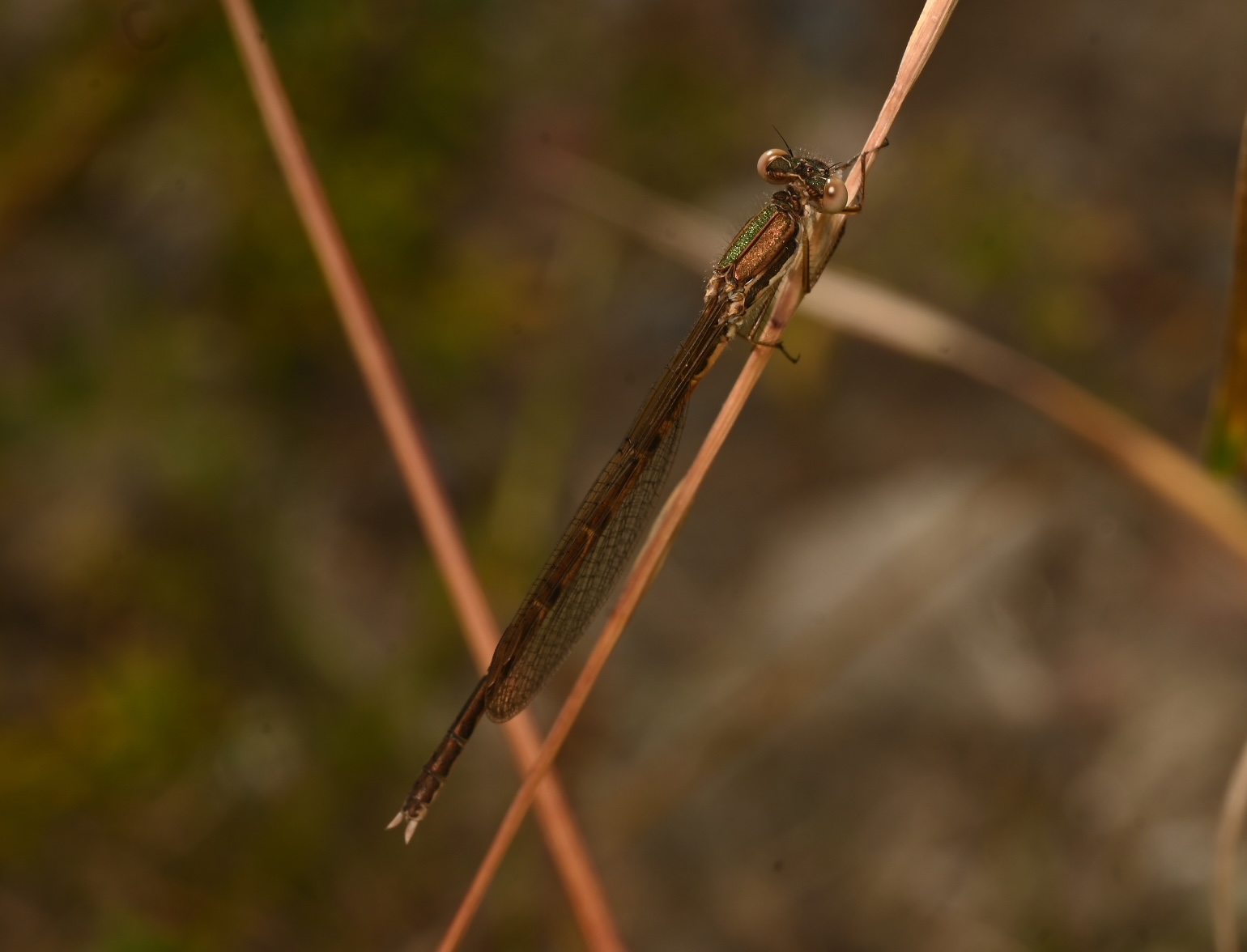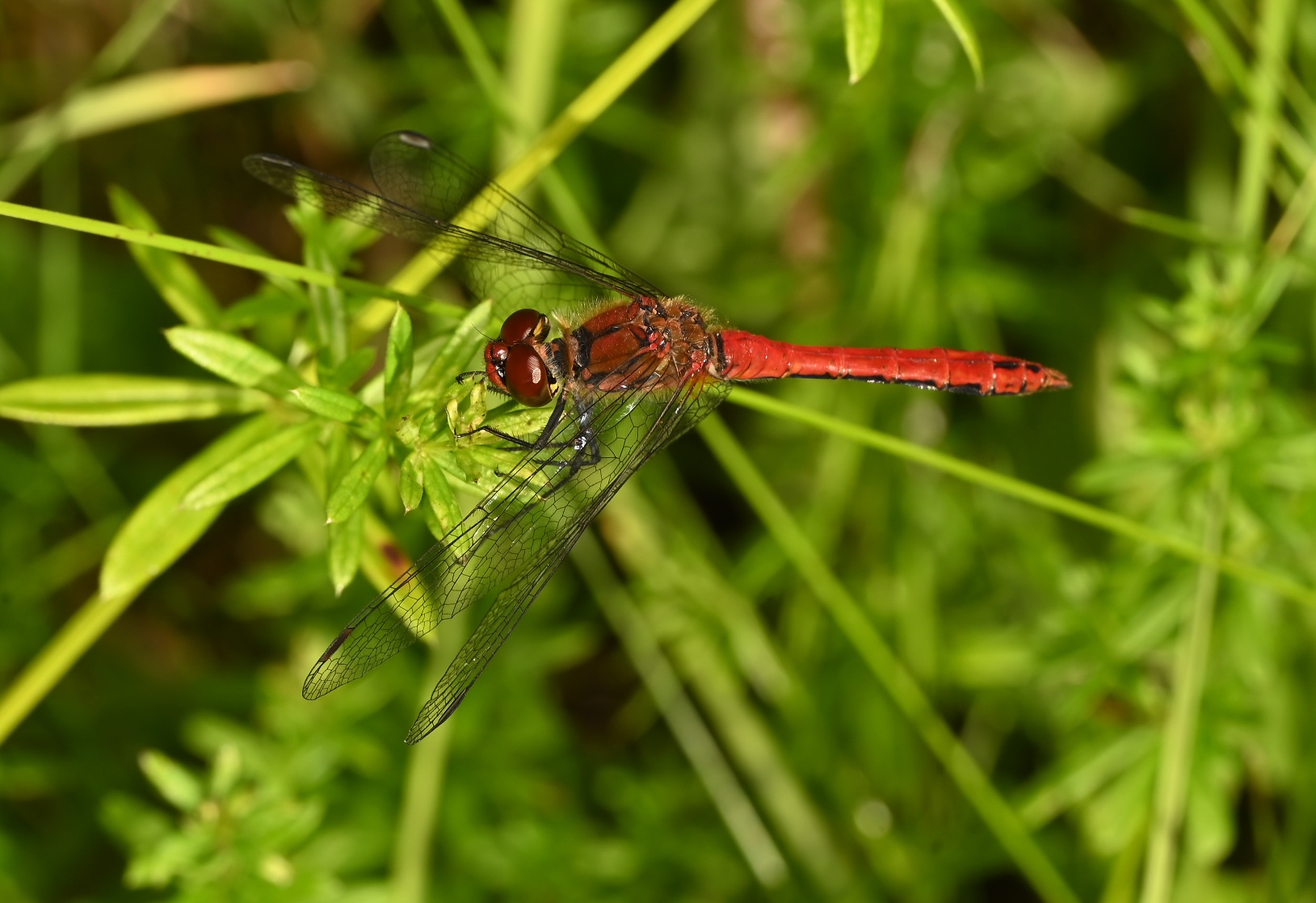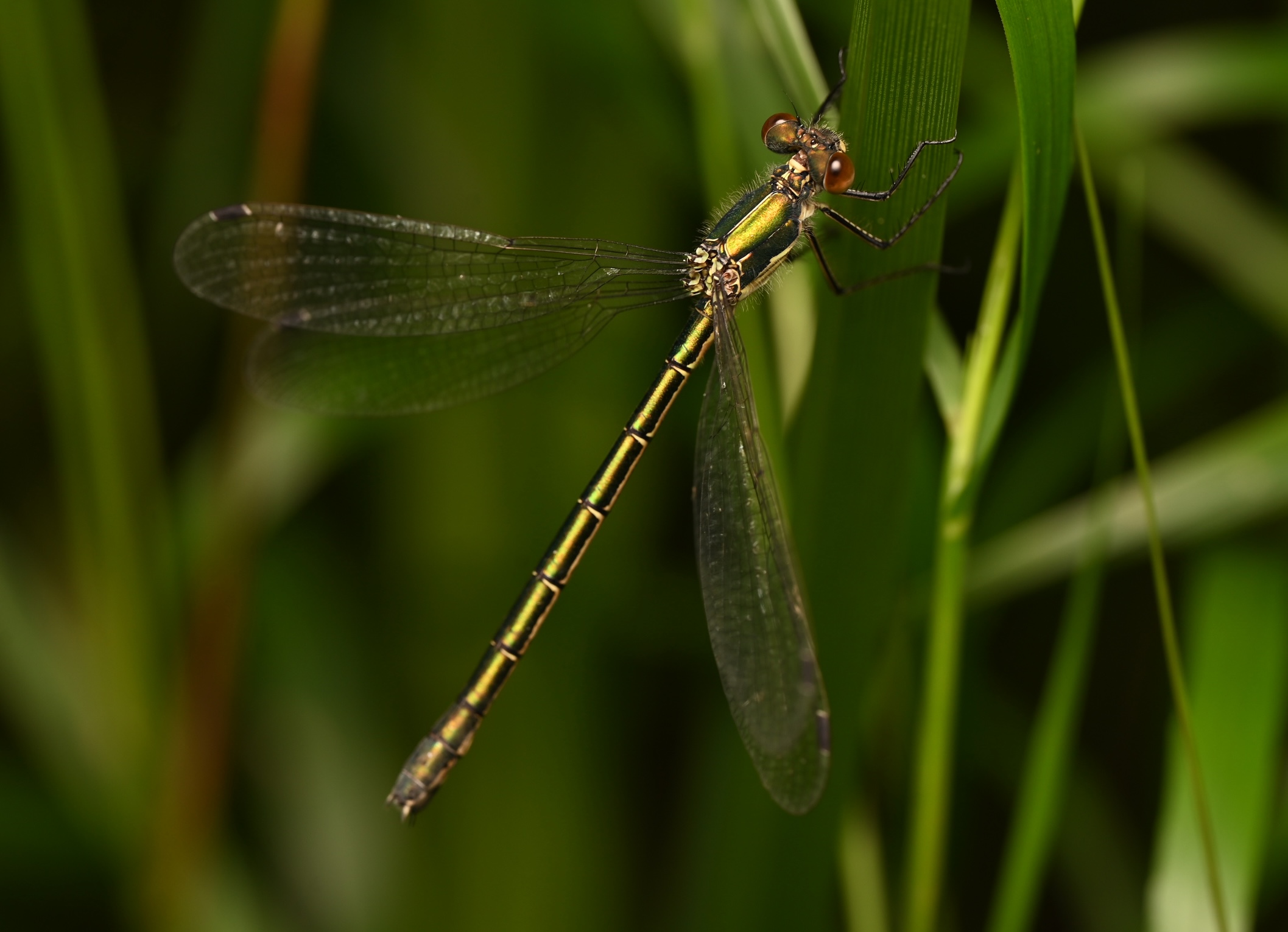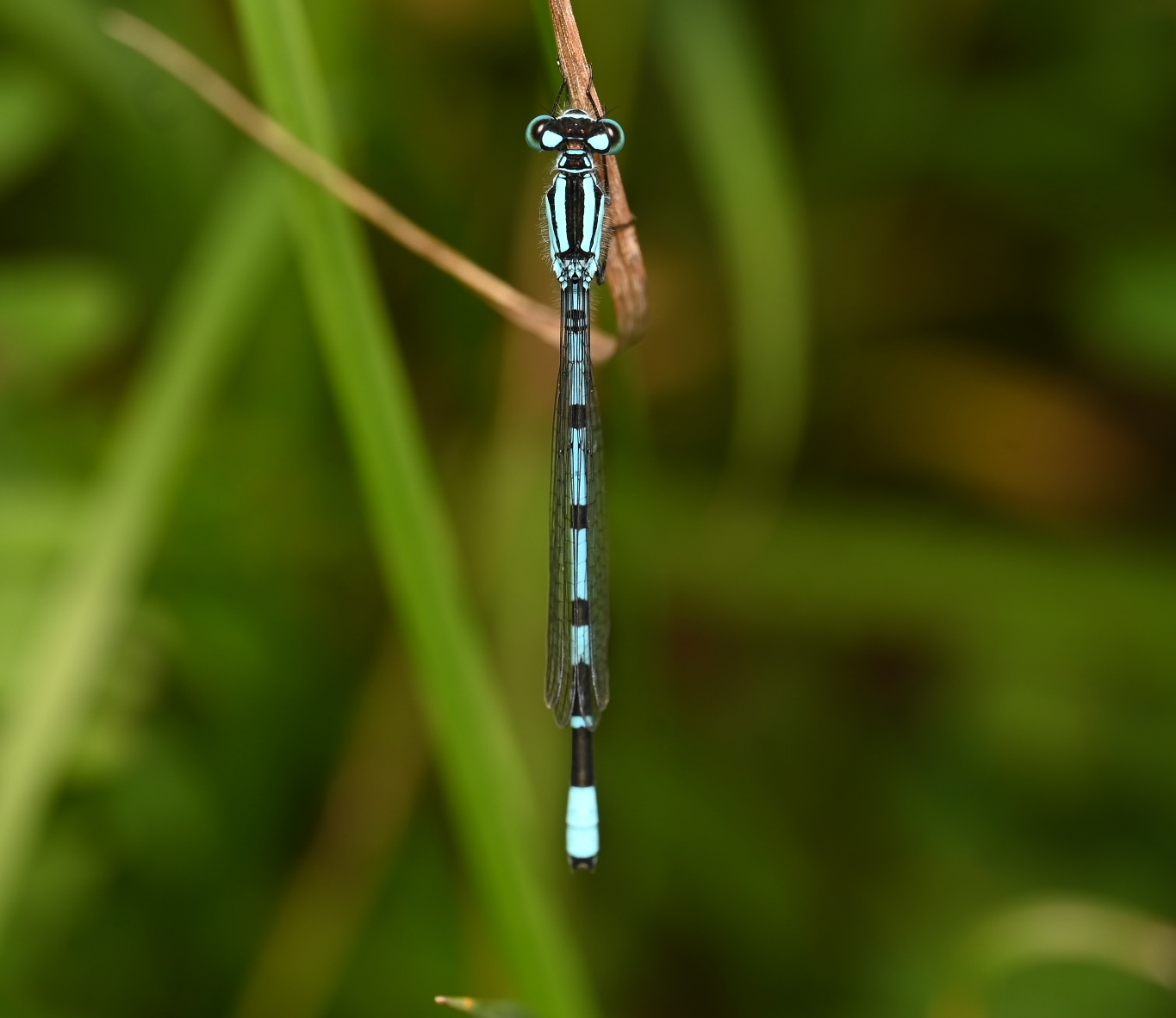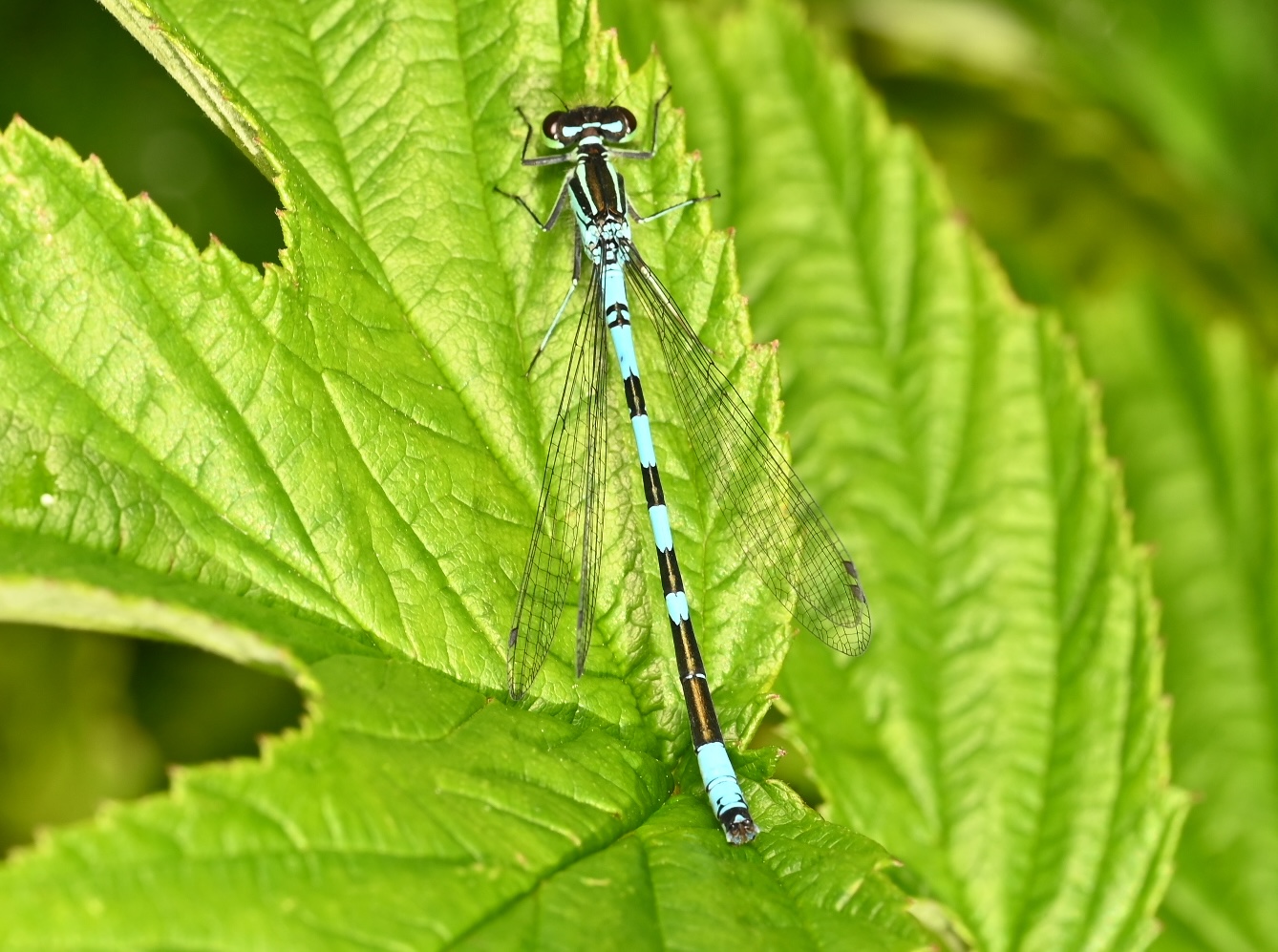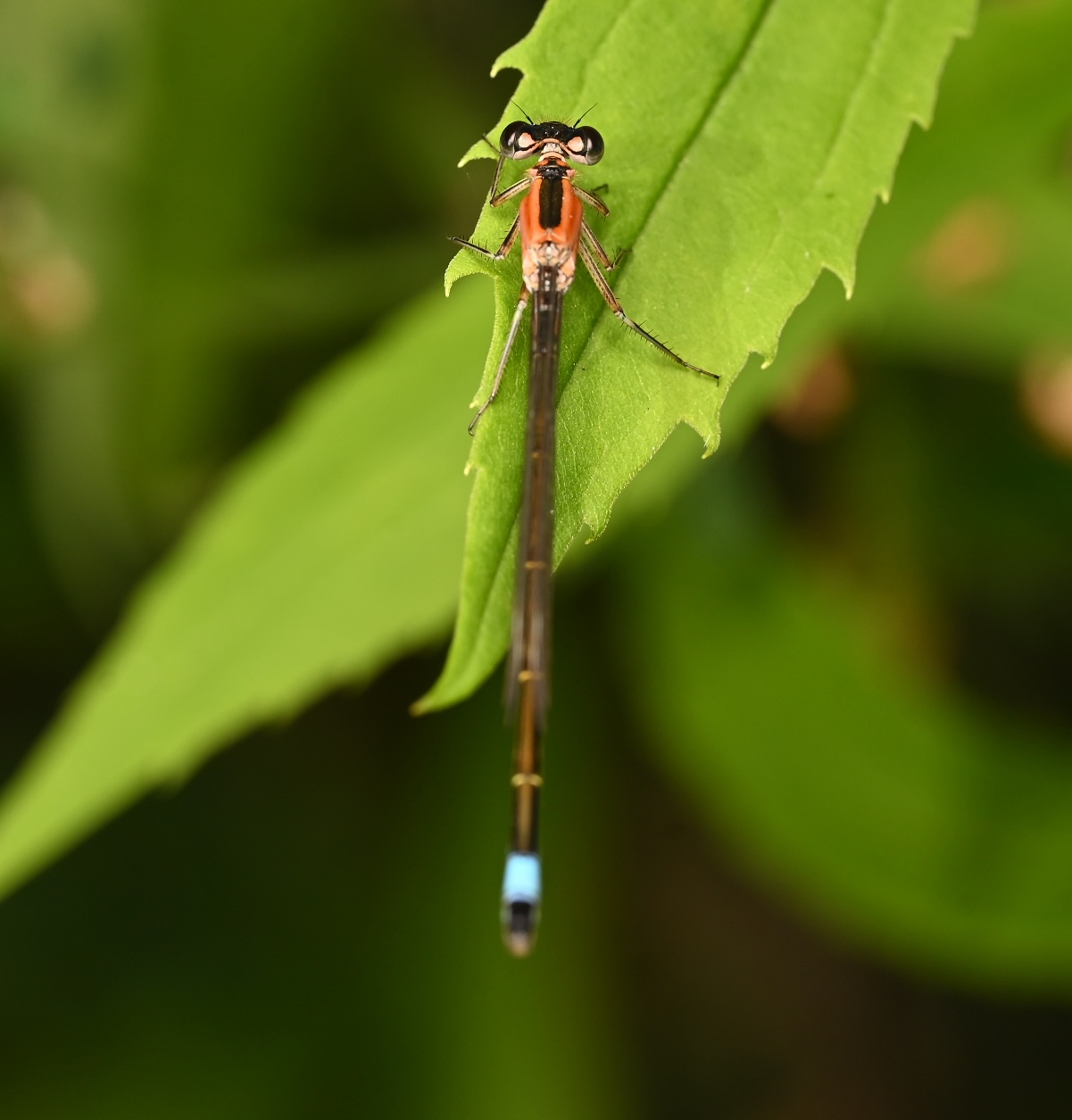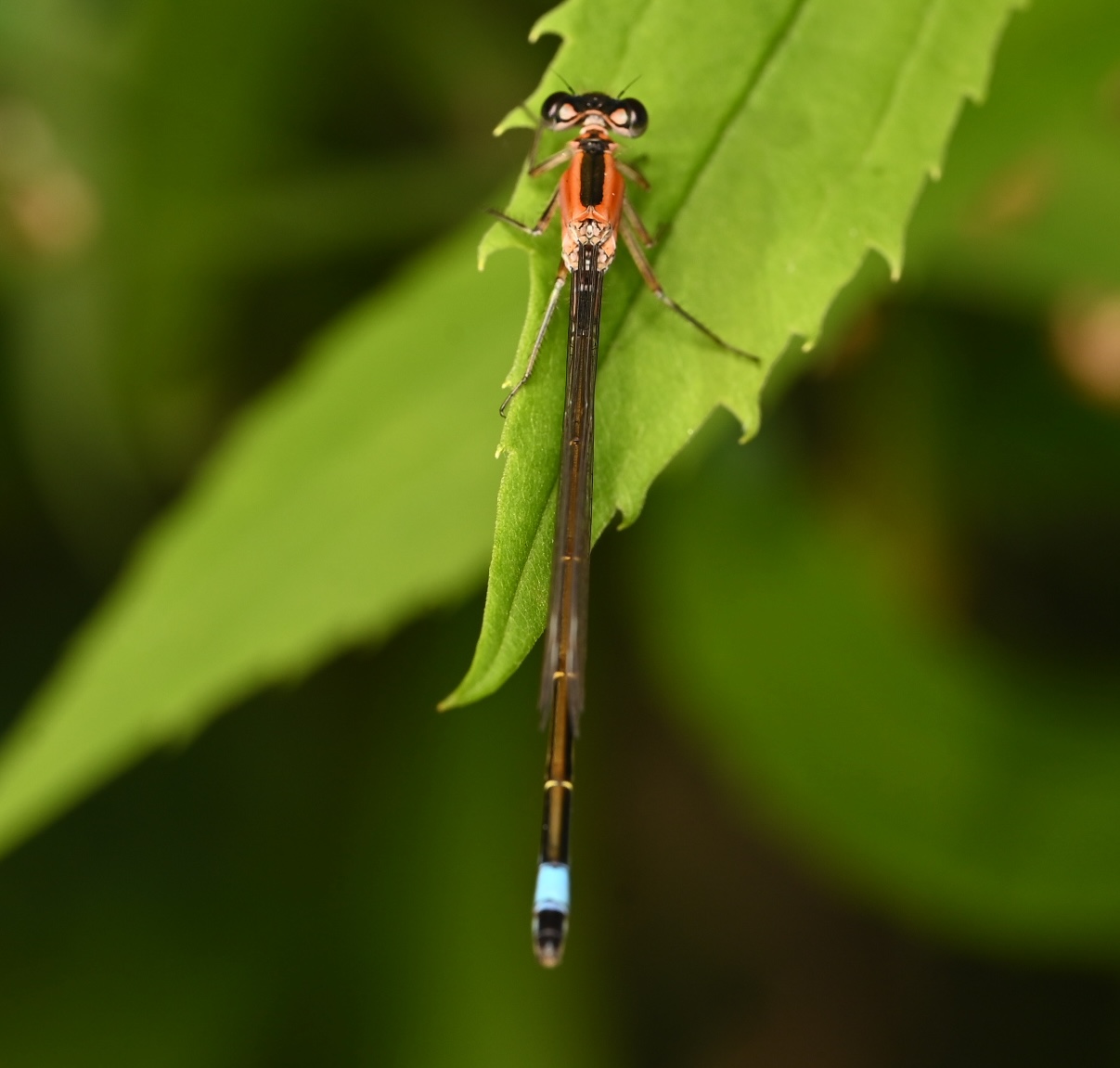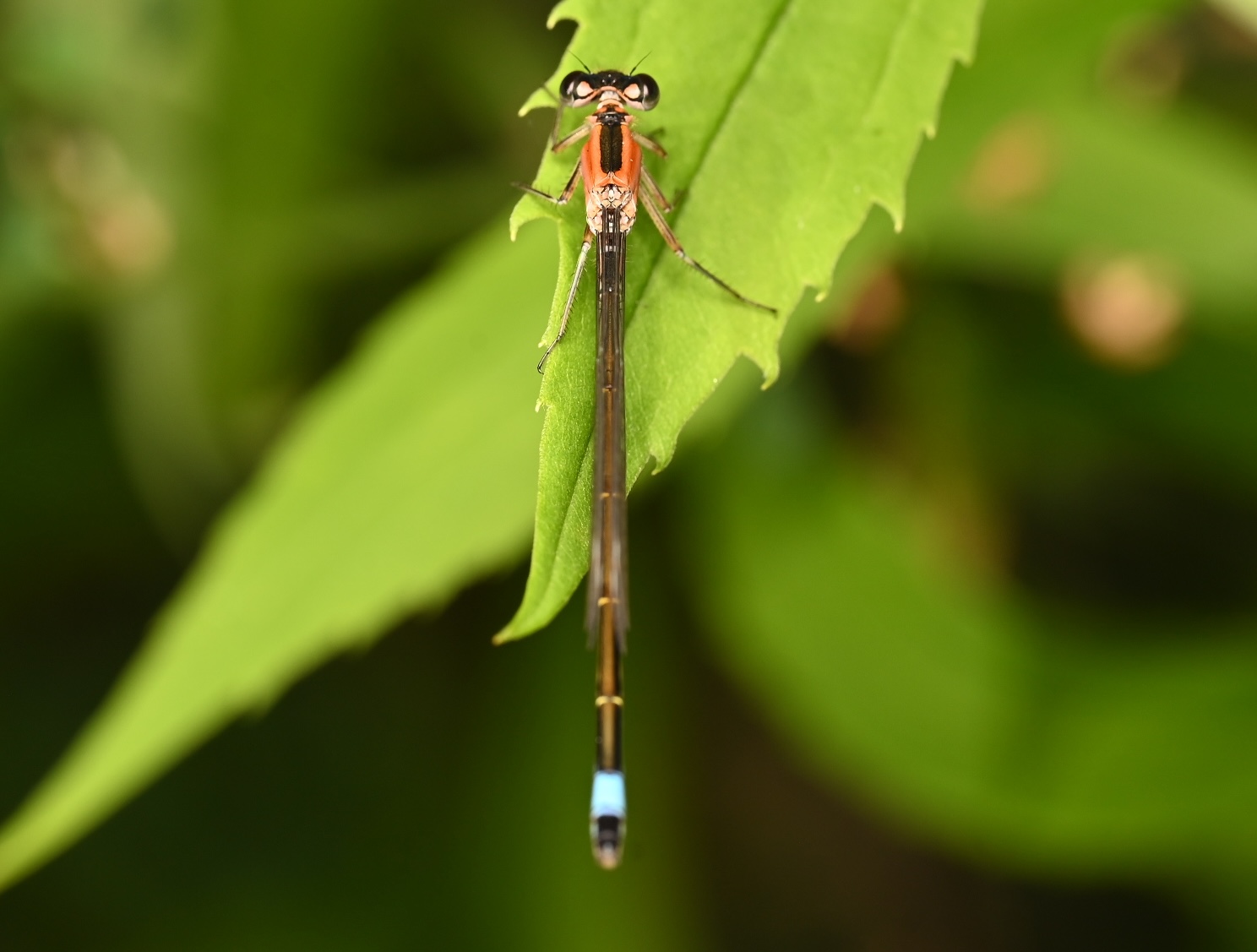
Meet the Blue-tailed damselfly (Ischnura elegans), one of Europe’s most common—yet utterly fascinating—odonates. Both males and females sport a brilliant, neon-blue splash exclusively on the eighth segment of their otherwise dark abdomen. This striking visual marker acts as a biological “tail-light” or lantern flashing in the vegetation. When it comes to females, things get colorful: they come in five distinct color variations! Some start life as a vibrant pink or violet before settling into brown or green, while others permanently mimic the male’s blue coloration as a clever stealth tactic to avoid unwanted mating harassment. Speaking of mating, they lock together to form a beautiful “heart” or wheel shape. These romantic marathons are incredibly long, lasting anywhere from three to six hours—a strategic window during which the male painstakingly clears out any rival sperm stored from the female’s previous encounters. I crossed paths with this delicately built female, renowned for its voracious appetite for flying insects, right in the garden of my family’s summer house in Serock, Poland.