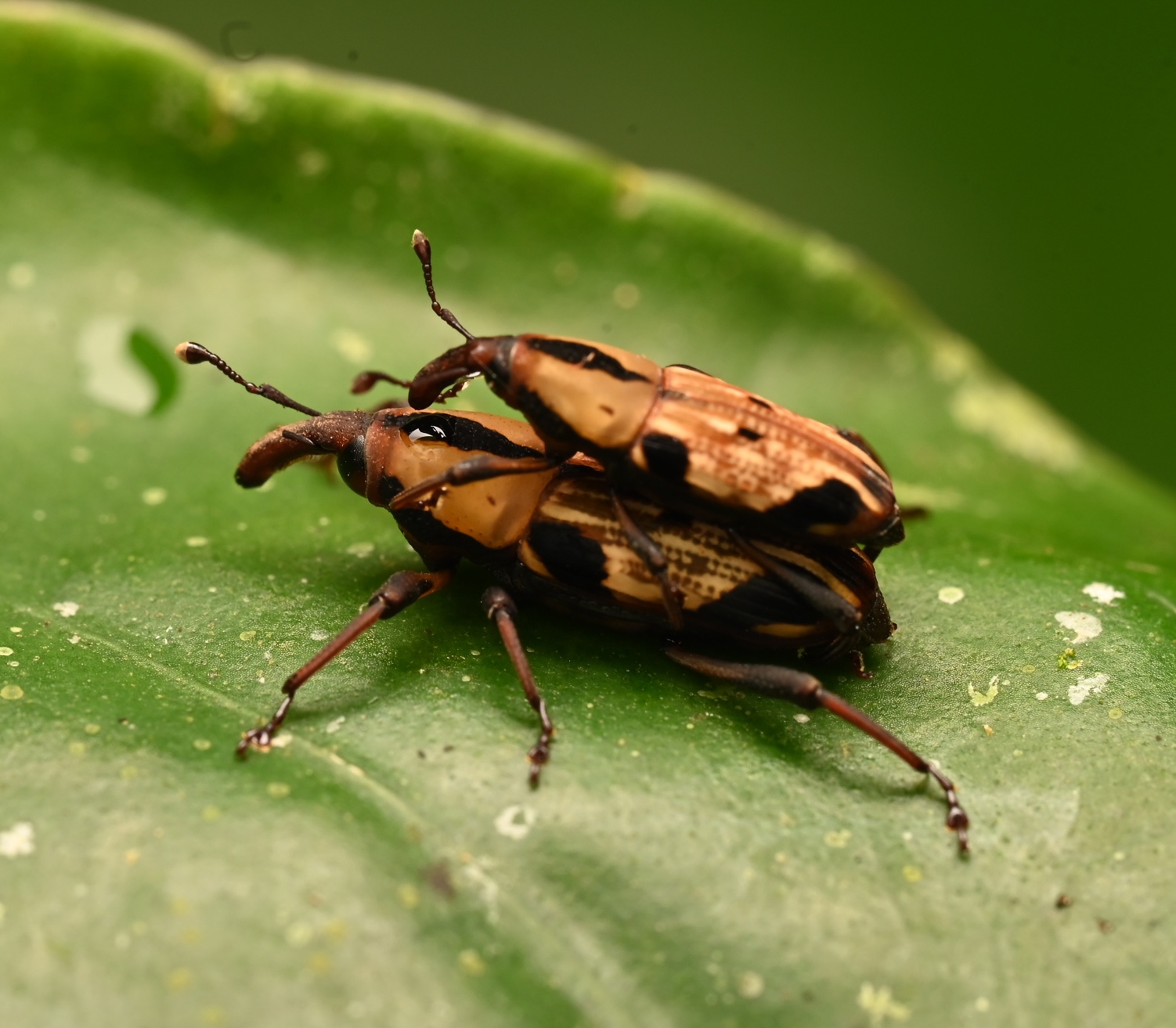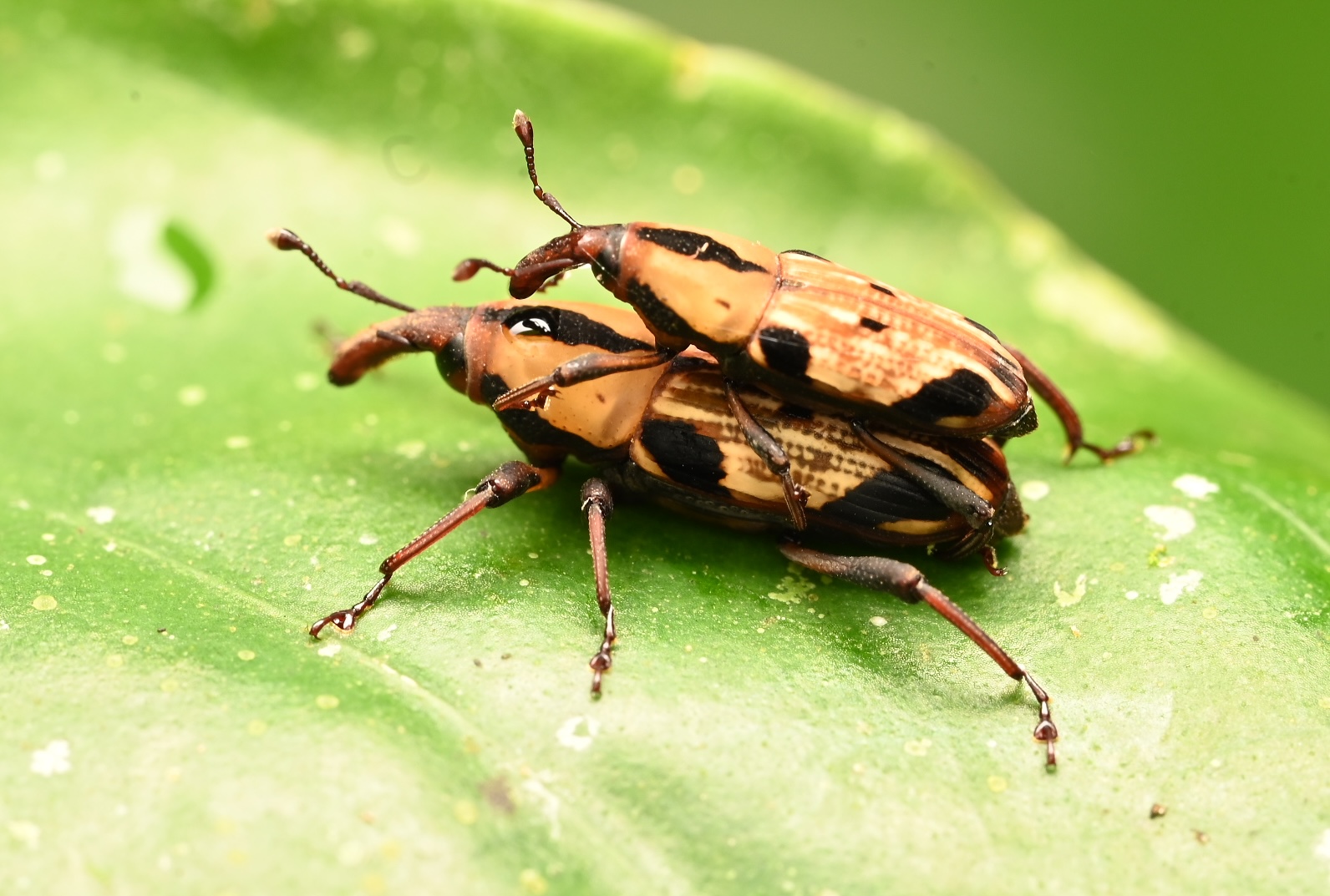
The genus Cactophagus belongs to the true weevil family (Curculionidae) and comprises beetles specialized in feeding on cacti. While adults feed superficially on external plant tissue, the larvae burrow deep inside the stems. This internal tunneling can severely damage the host cactus’s vascular system, occasionally causing the plant to collapse or die. Native to the Americas, these weevils thrive primarily in arid and semi-arid regions where cacti are abundant. While exploring a lush city park in Puyo, on the edge of the Ecuadorian Amazon, I caught two of these strikingly patterned beetles—likely Cactophagus laetus—in an intimate moment of mating.