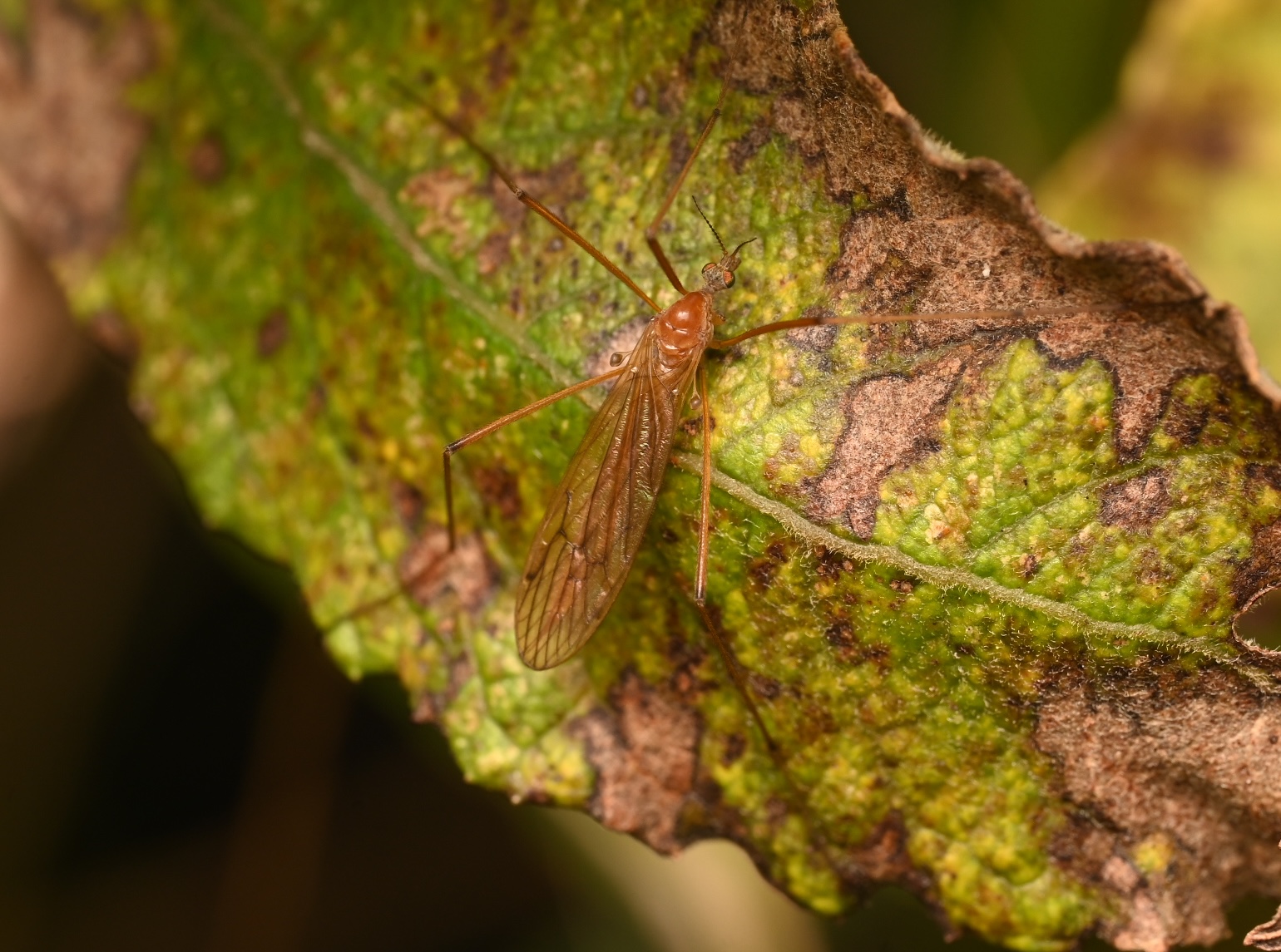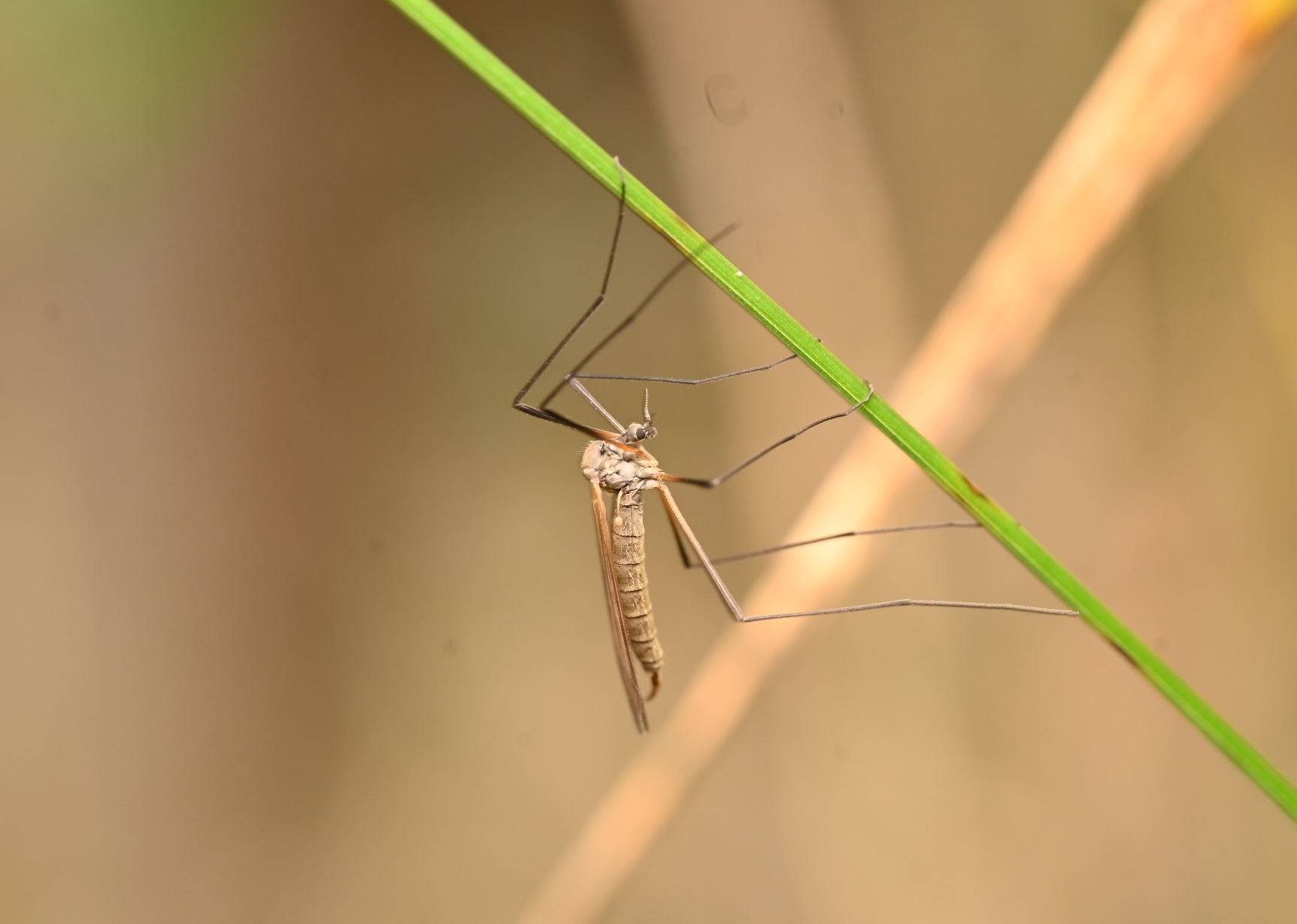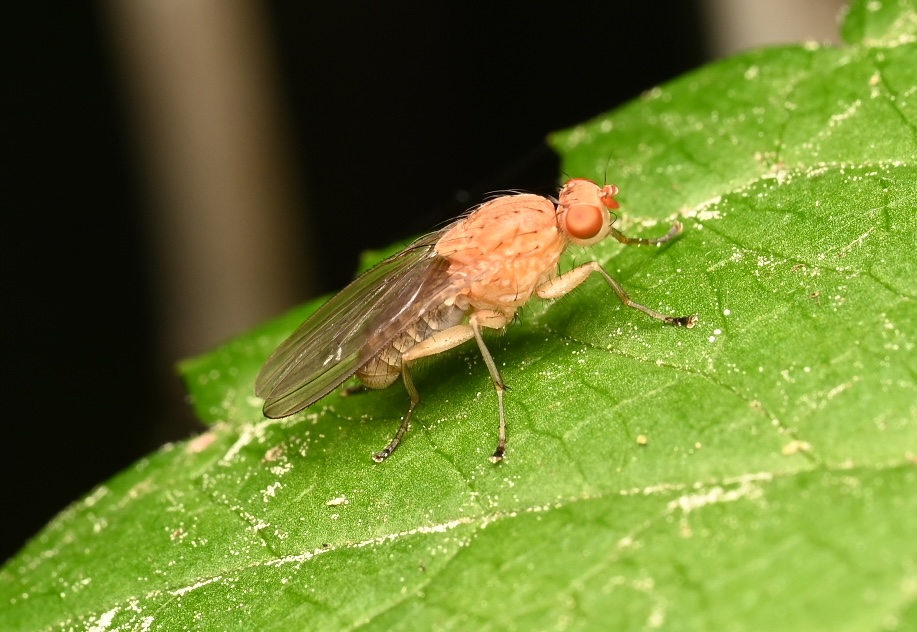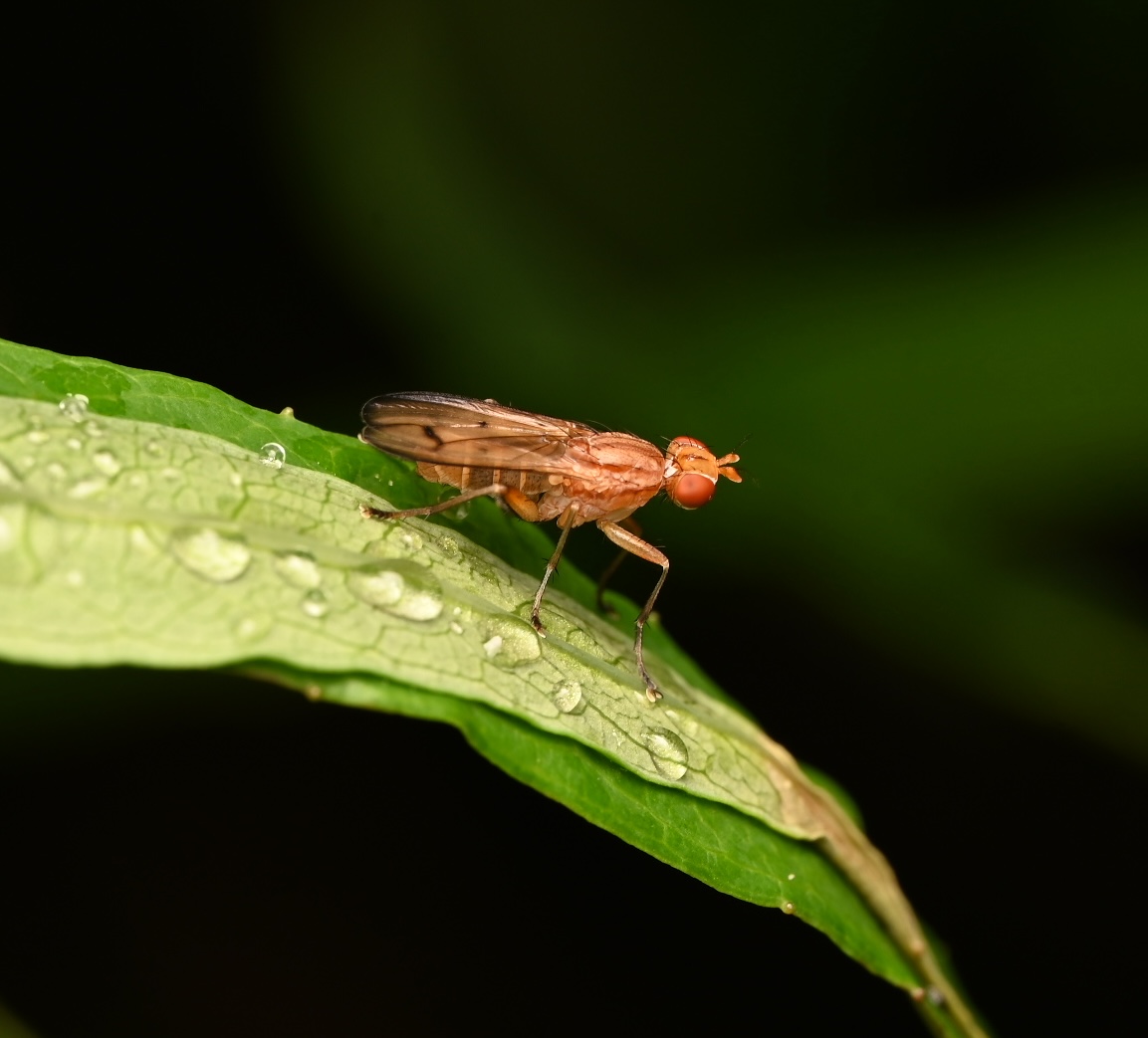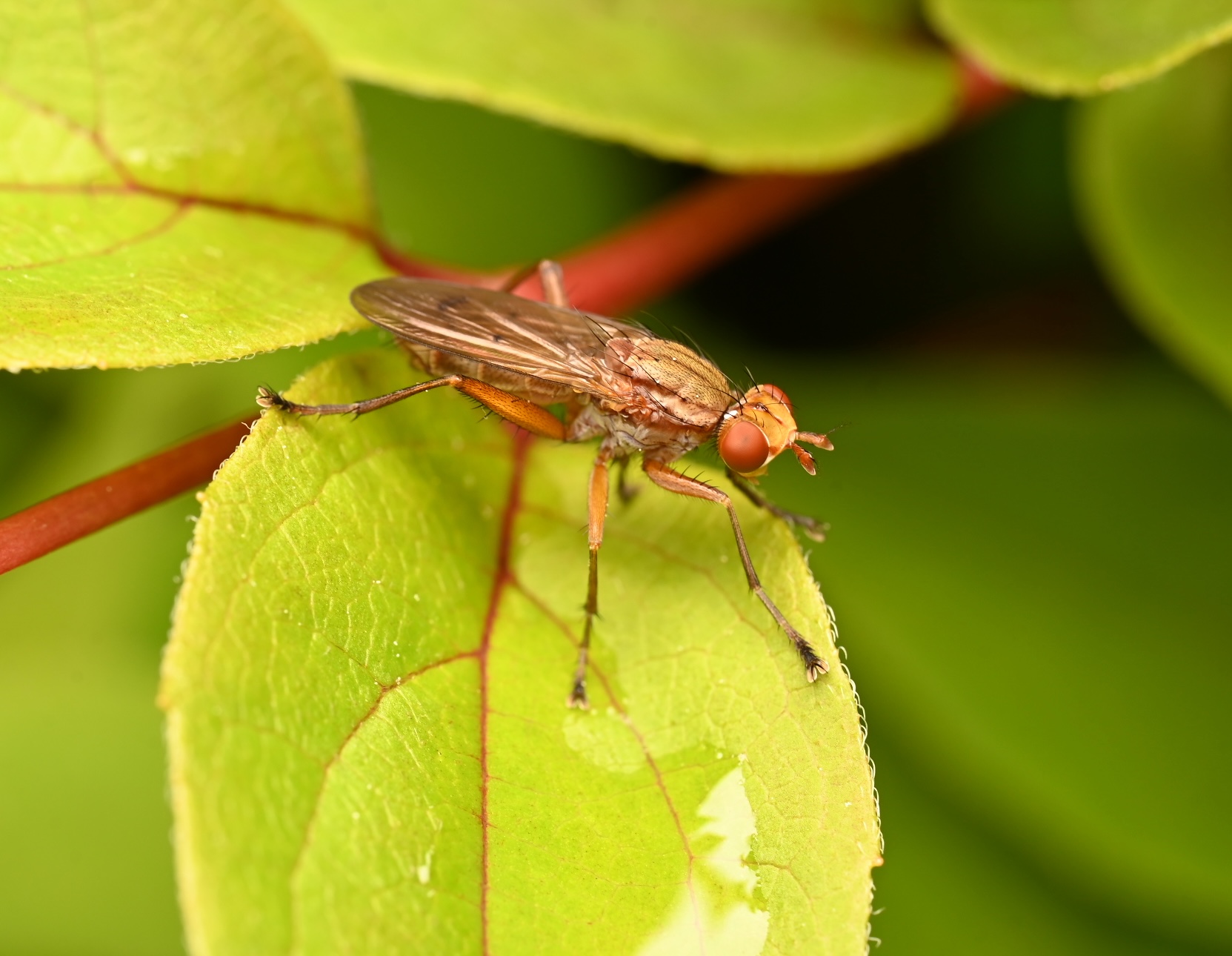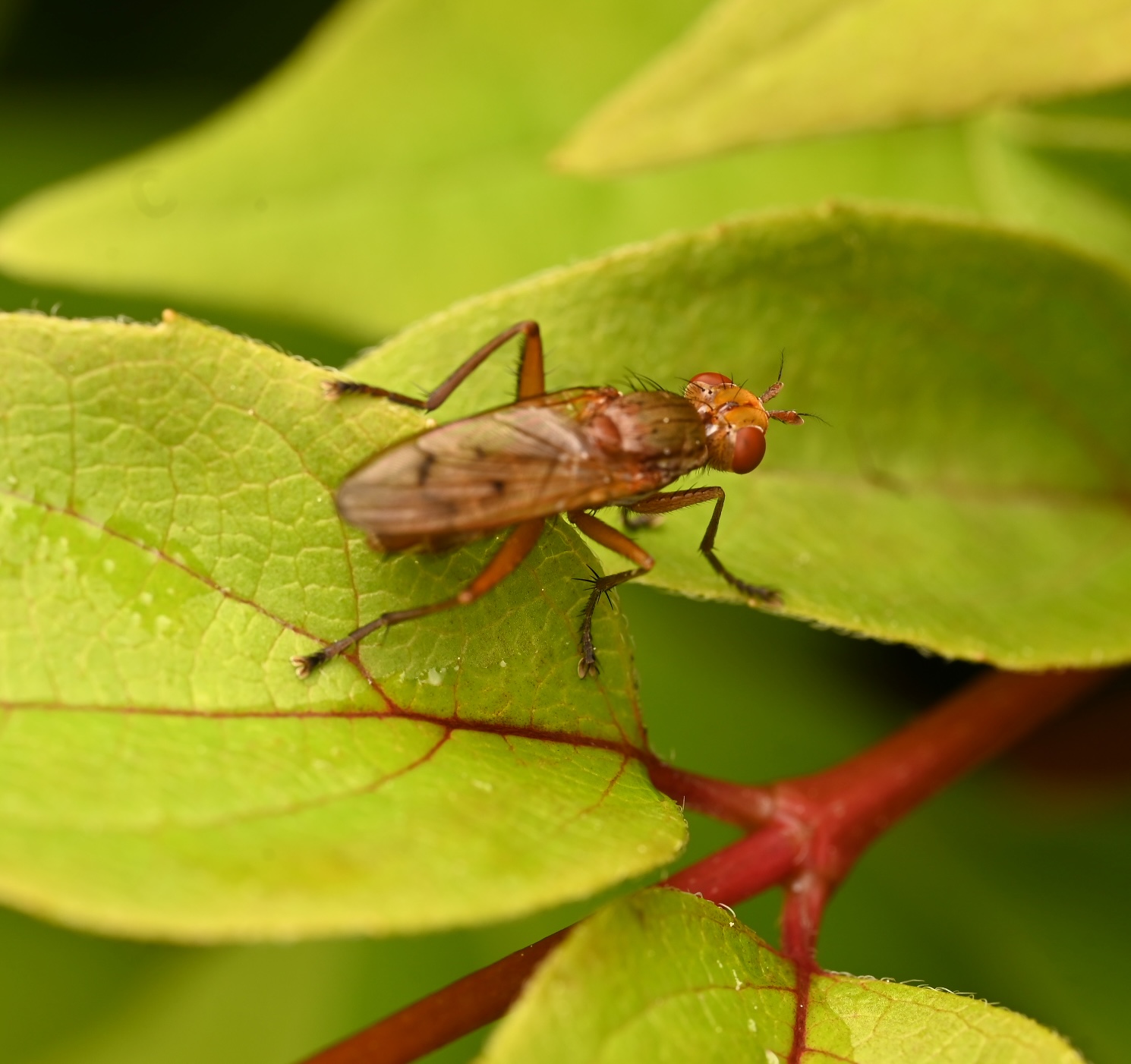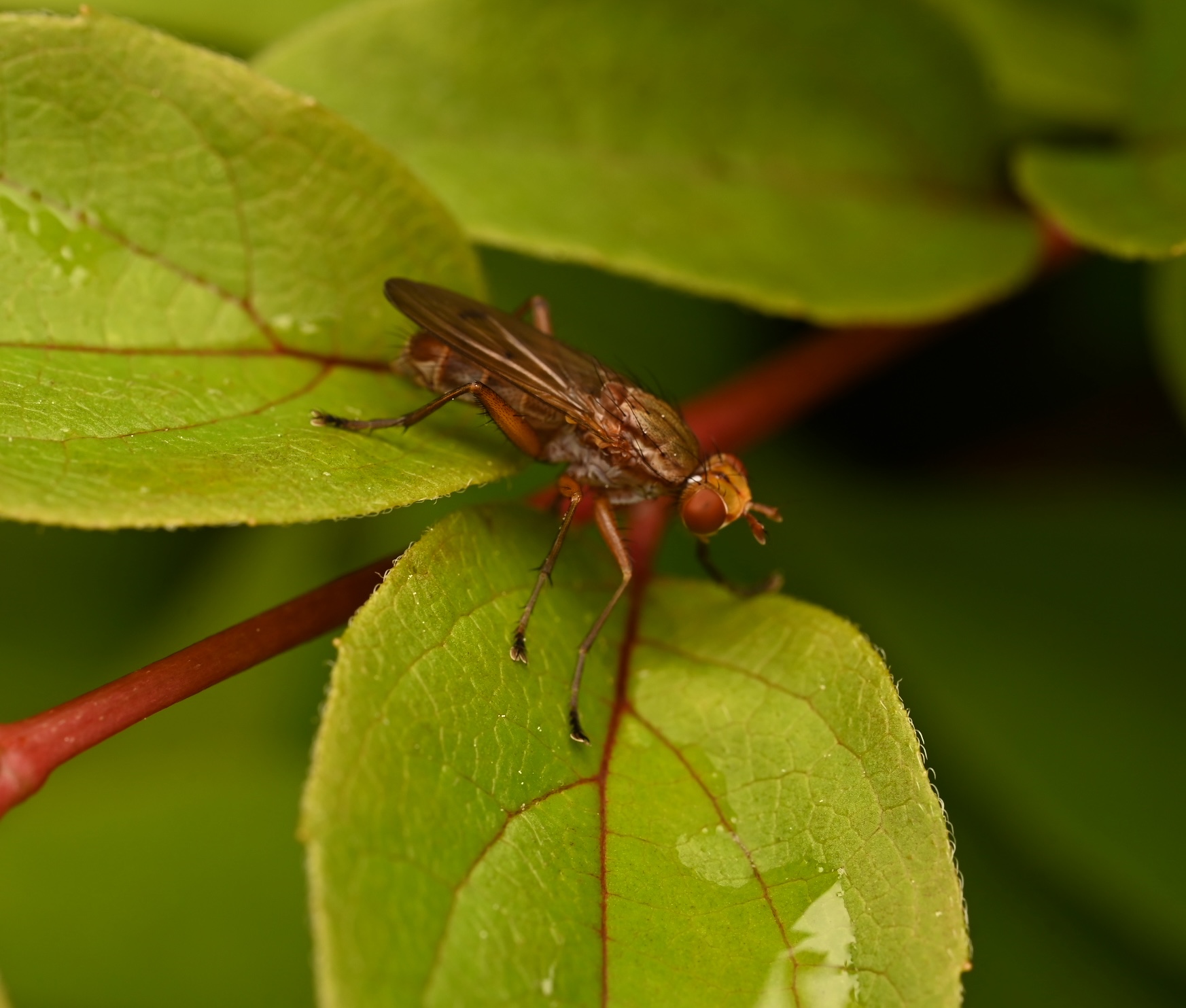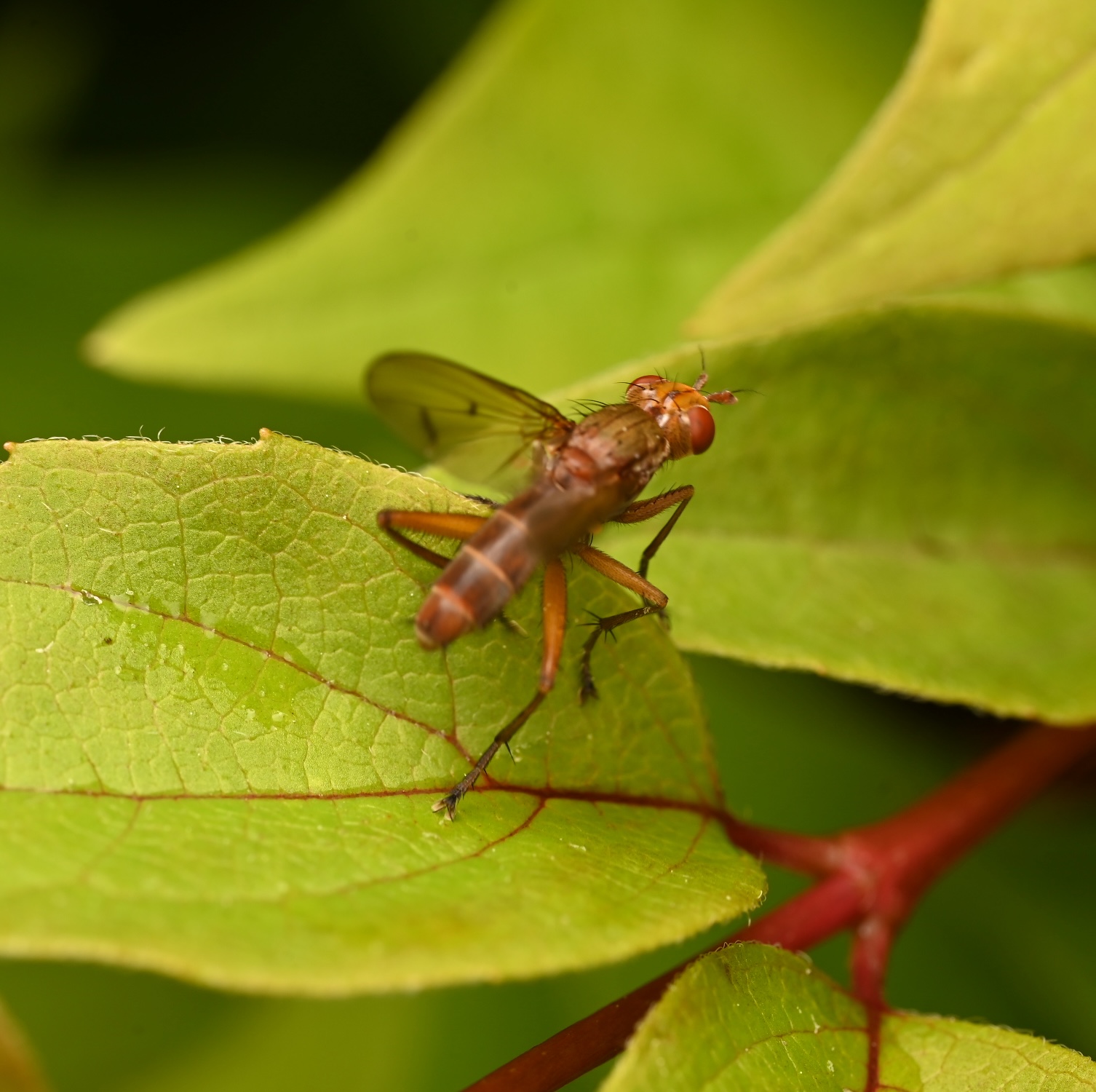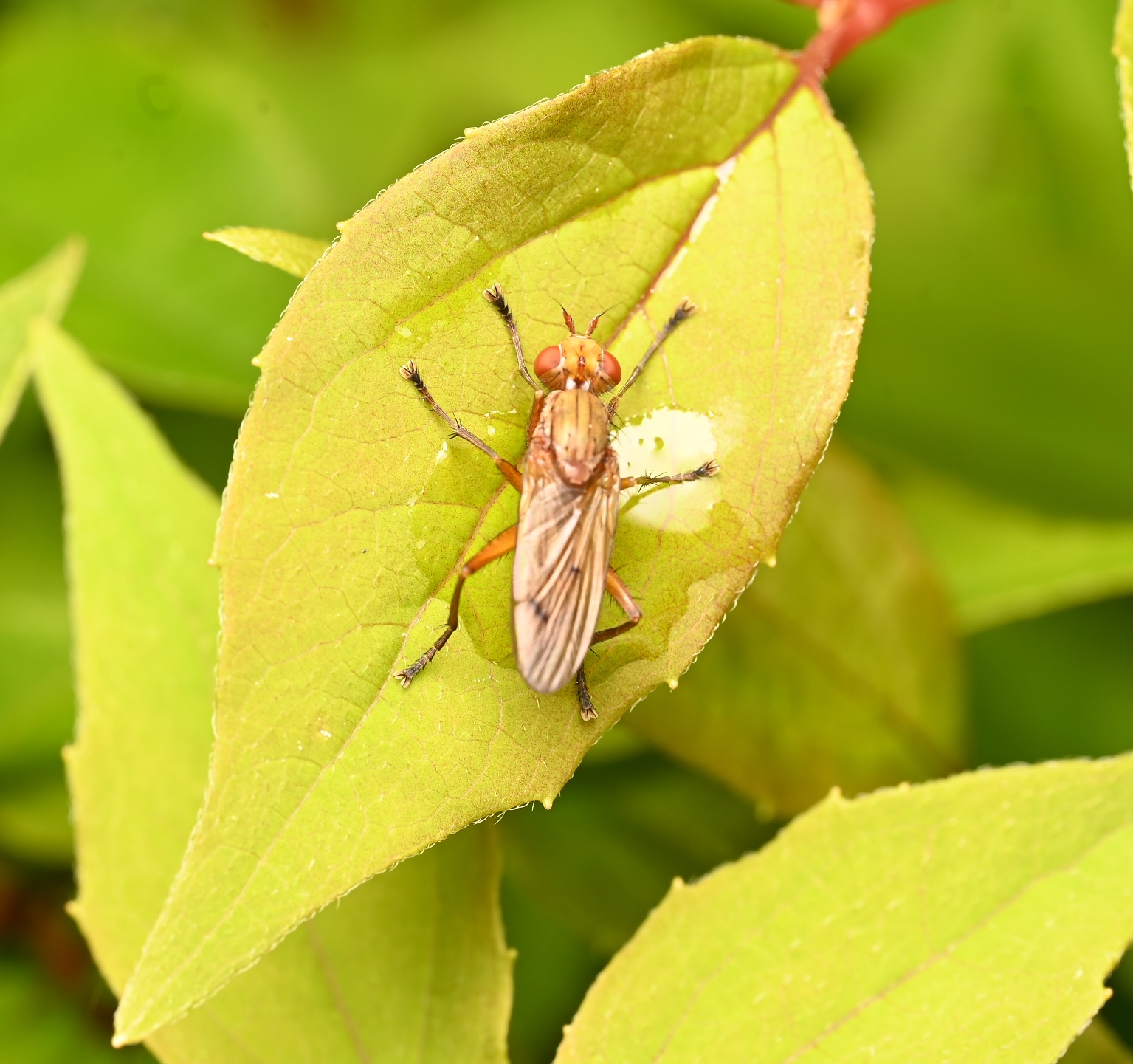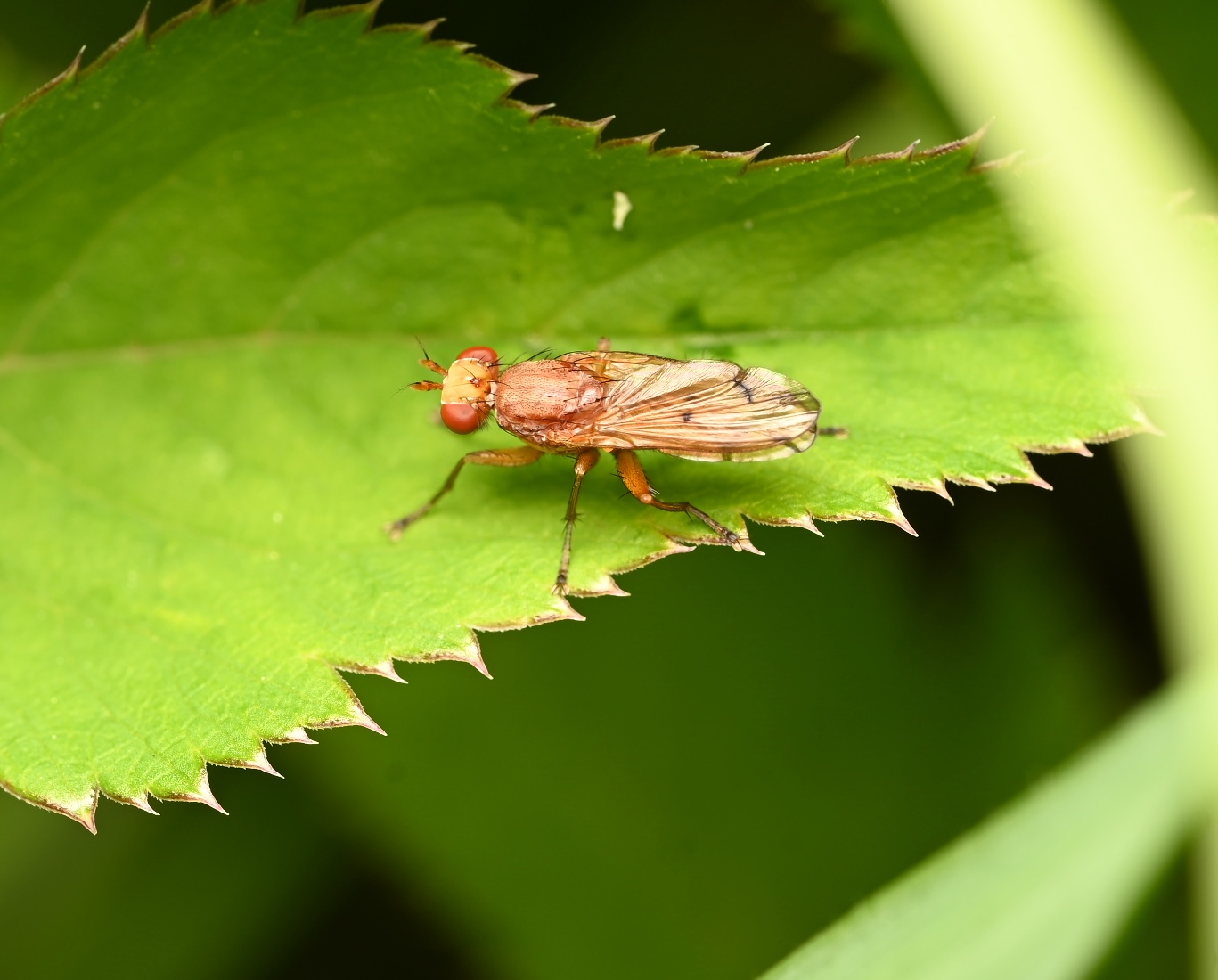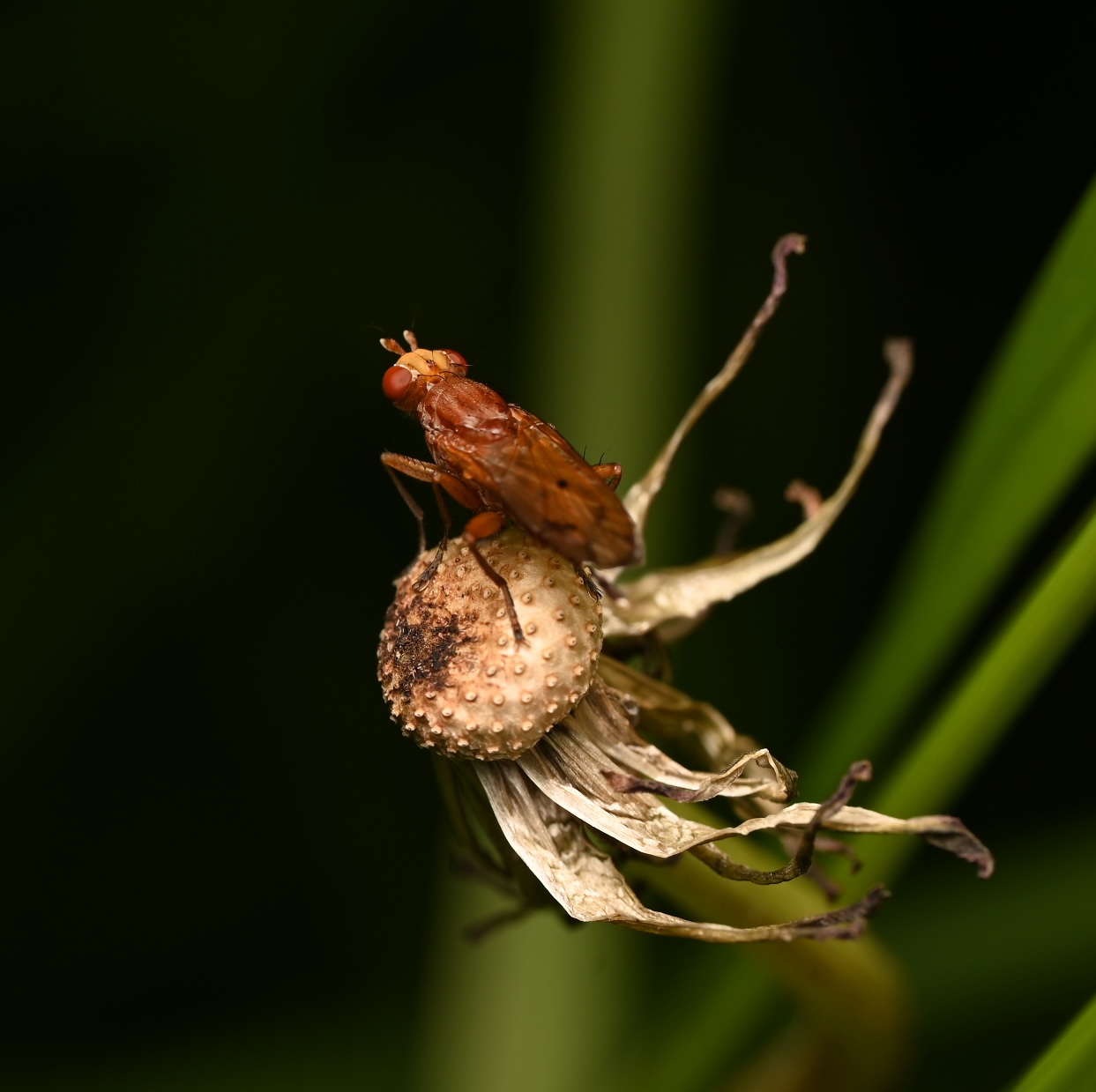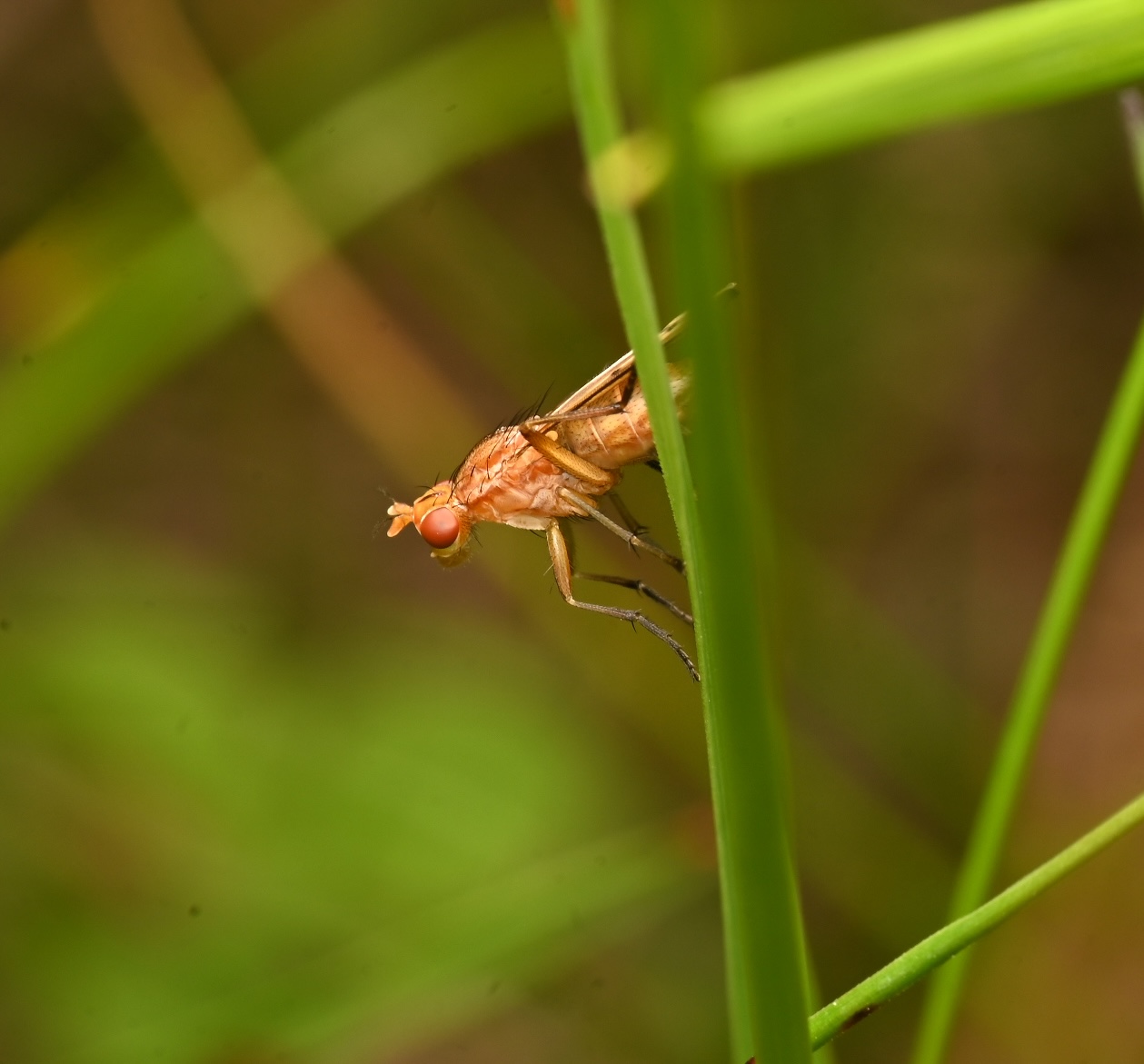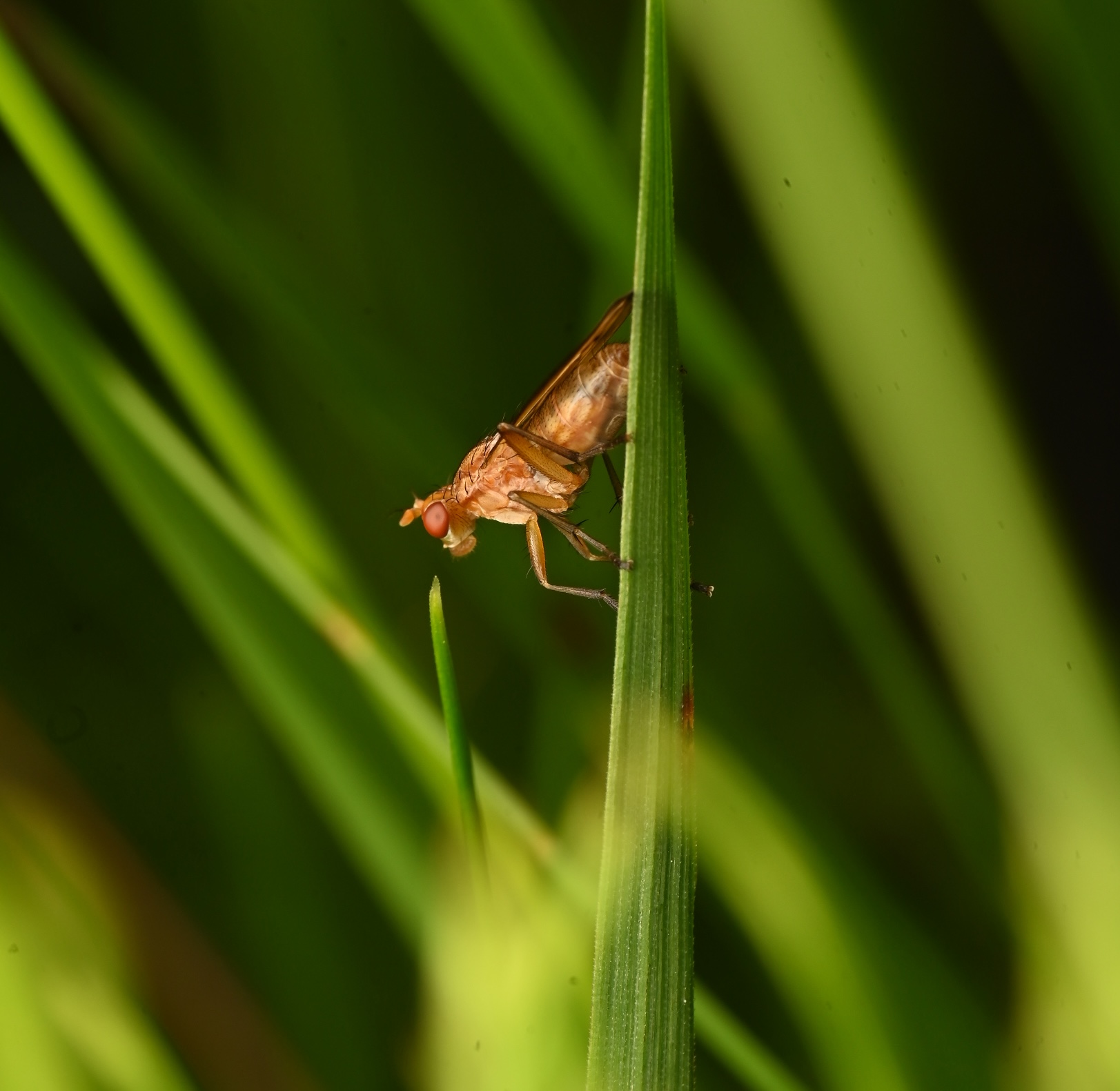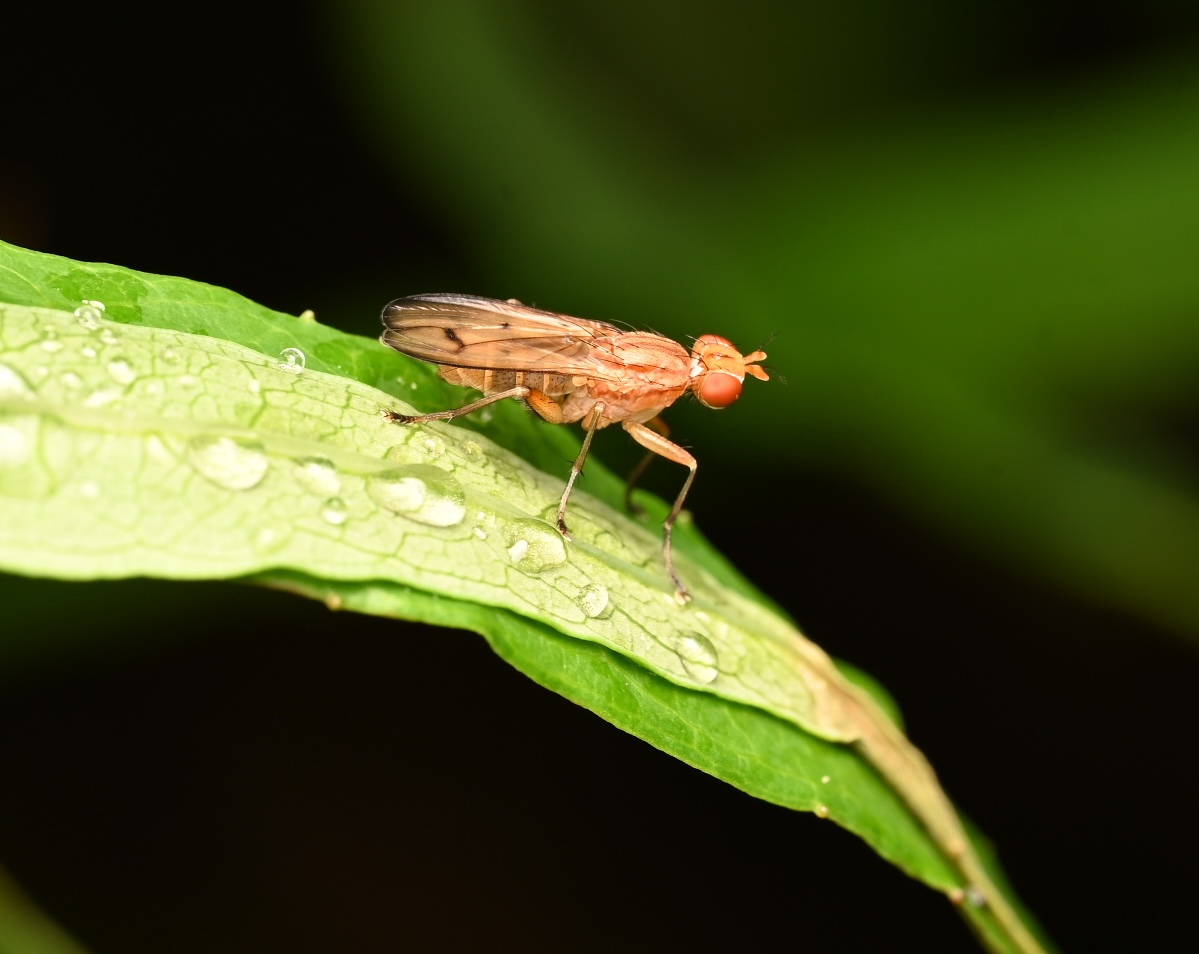
Meet the common buff snailkiller (Tetanocera ferruginea), a fascinating marsh fly belonging to the family Sciomyzidae. Native to wetlands across the Holarctic region, this species plays a crucial role in aquatic ecosystems due to its larvae, which are highly specialized predators of air-breathing freshwater snails. Remarkably, these subterranean larvae adapt their hunting strategies based on what is available; when presented with a diverse selection of prey, they selectively target a few large snails rather than wasting energy hunting many small ones—a masterclass in optimal foraging theory. Beyond its predatory prowess, this fly has recently stepped into the scientific spotlight. It was selected for the high-profile Tree of Life project, allowing researchers to fully sequence its 780-megabase genome, neatly mapped across seven chromosomal structures. During my long-distance bicycle tour along the coasts of Sweden and Finland in June 2026, I regularly encountered this striking, rust-colored fly, capturing it in a wonderful variety of natural lighting conditions against the lush wetland backdrops.