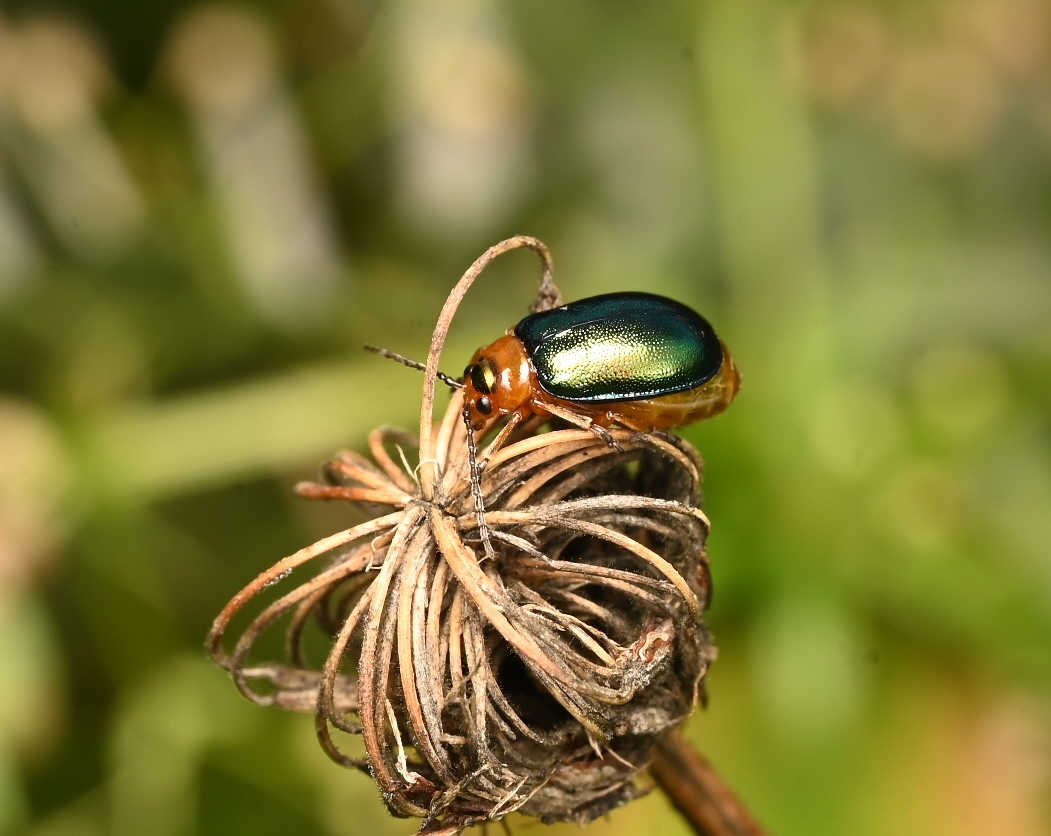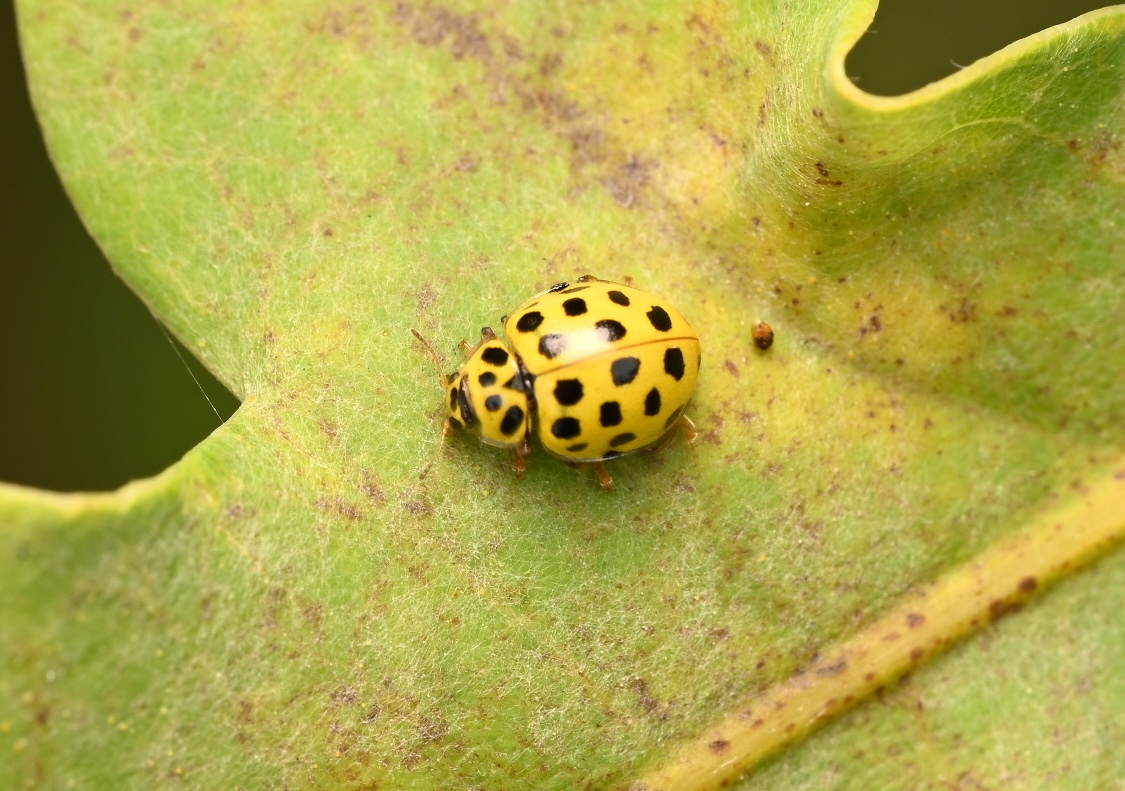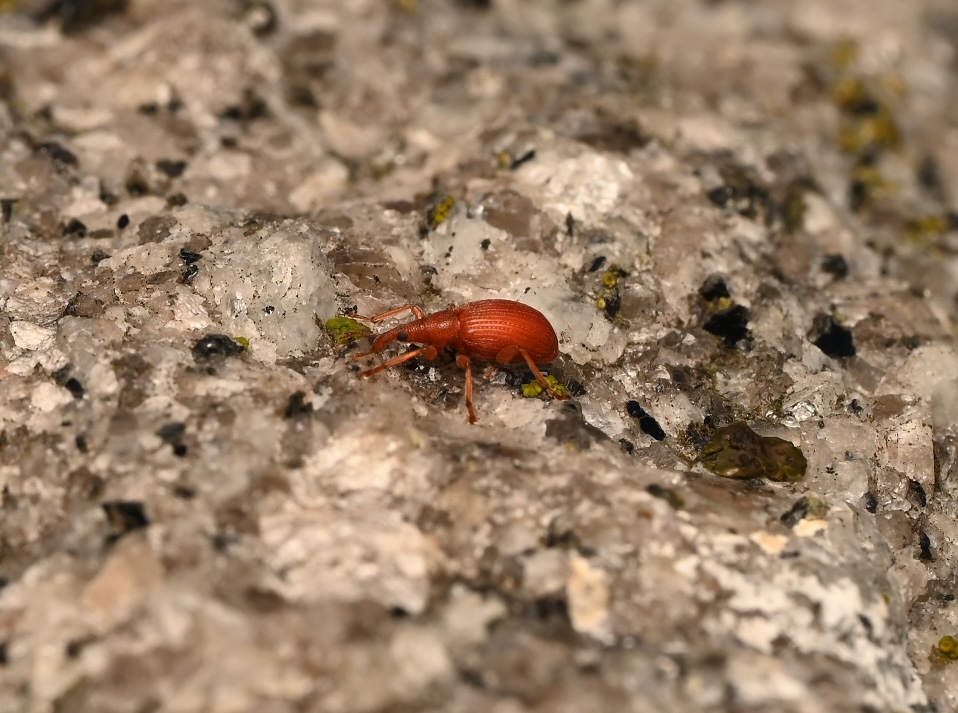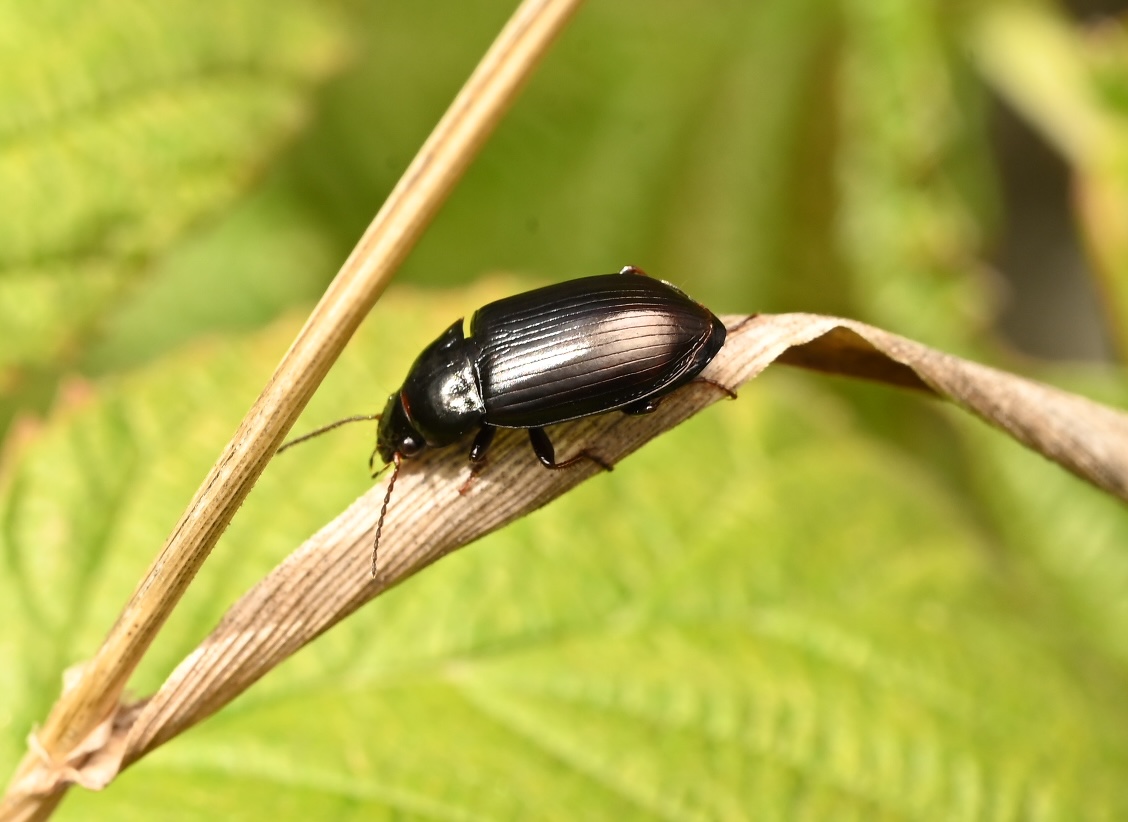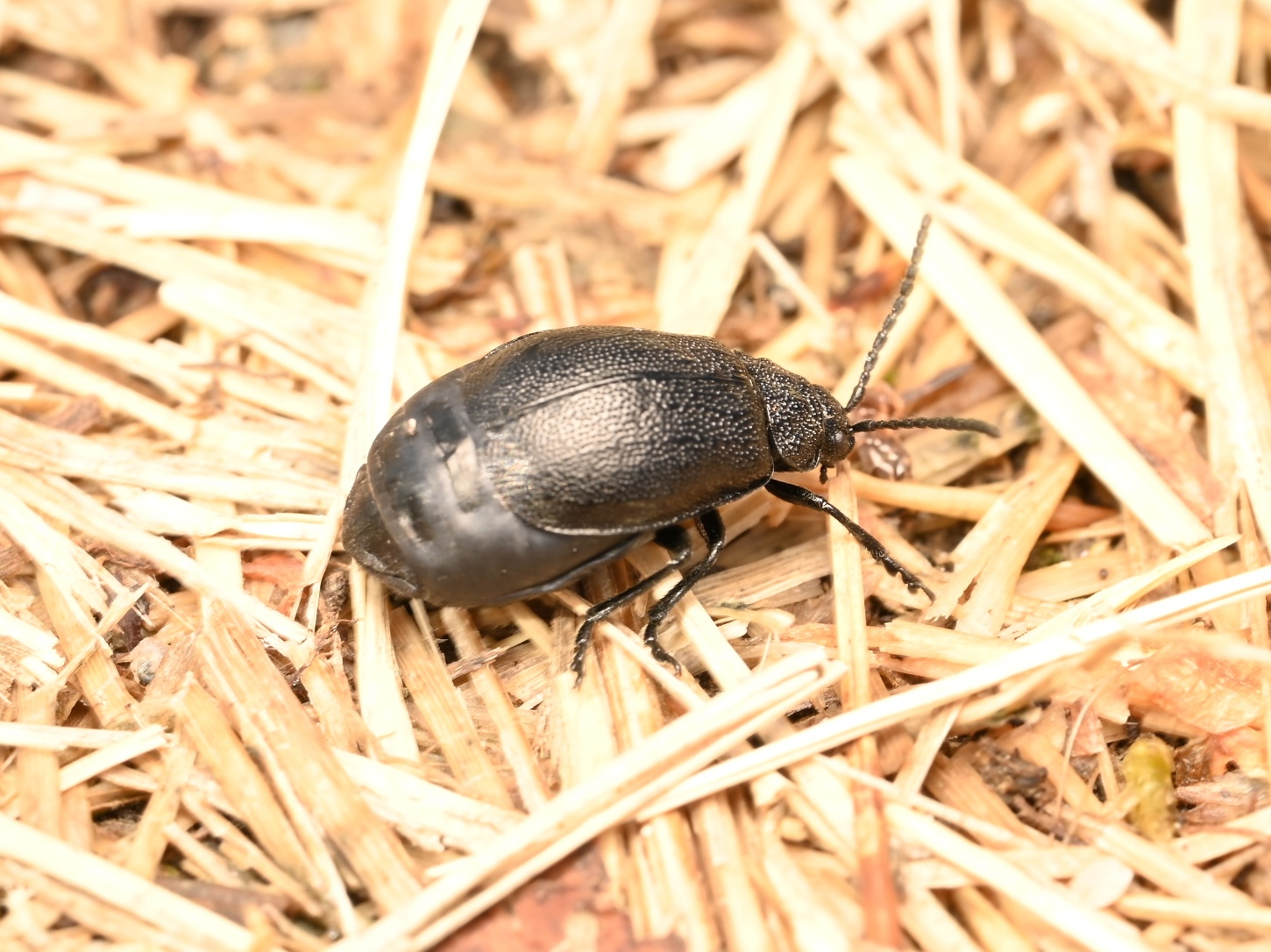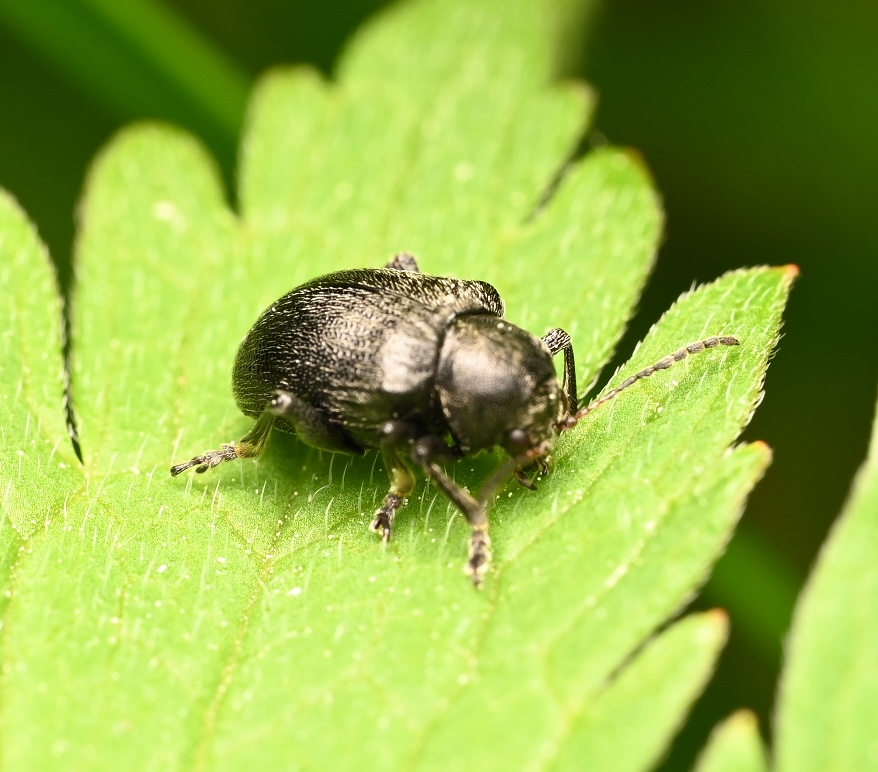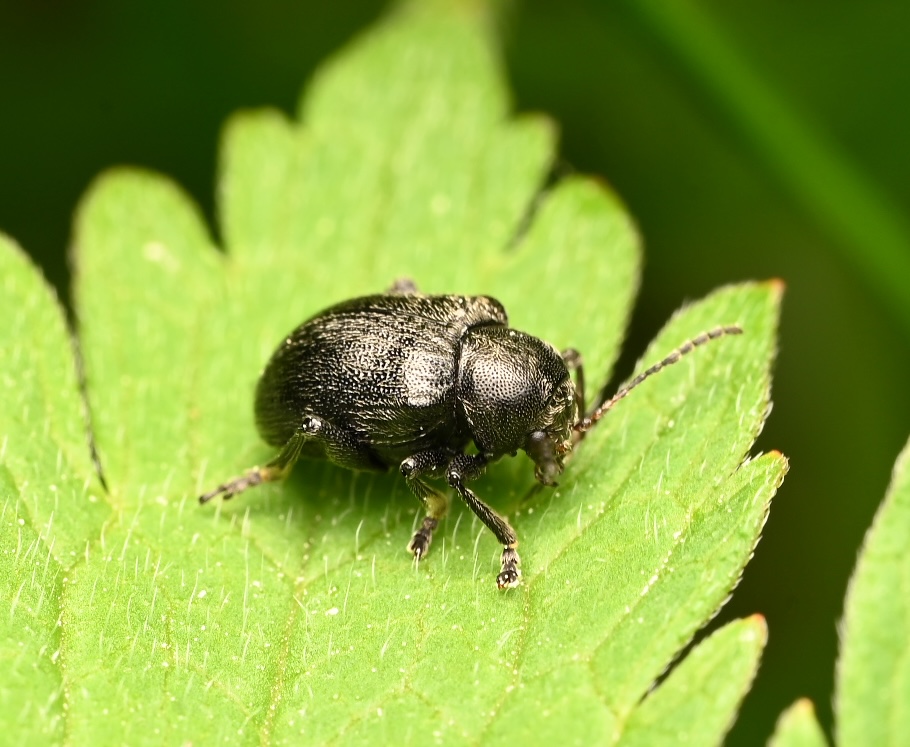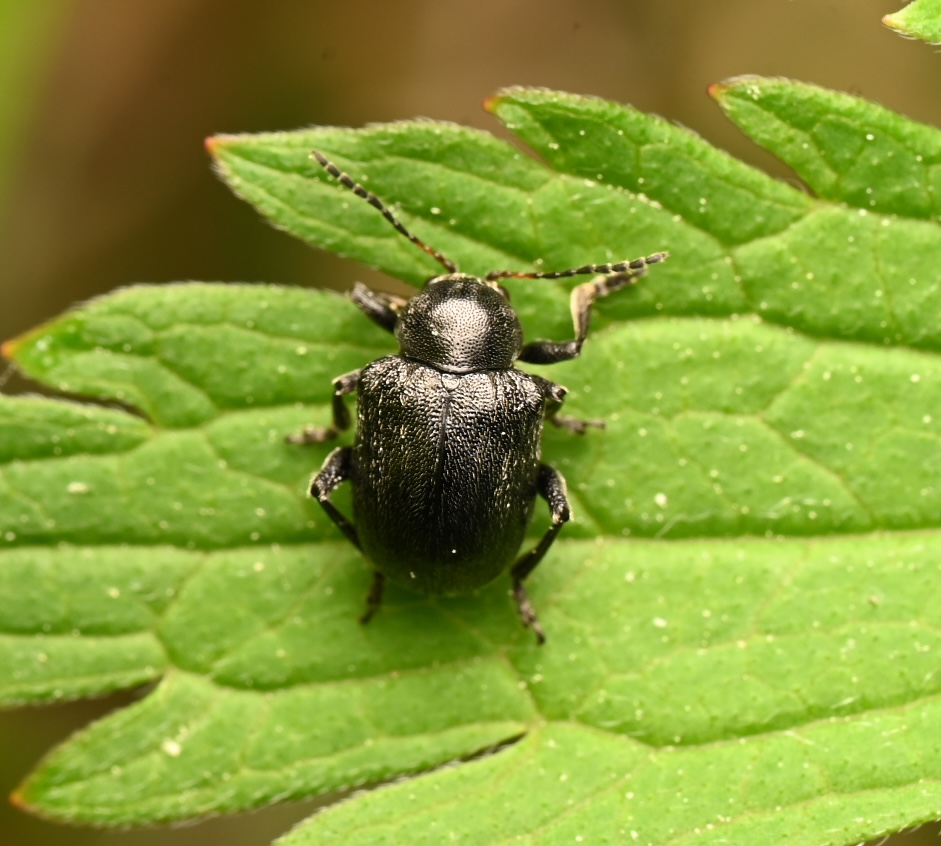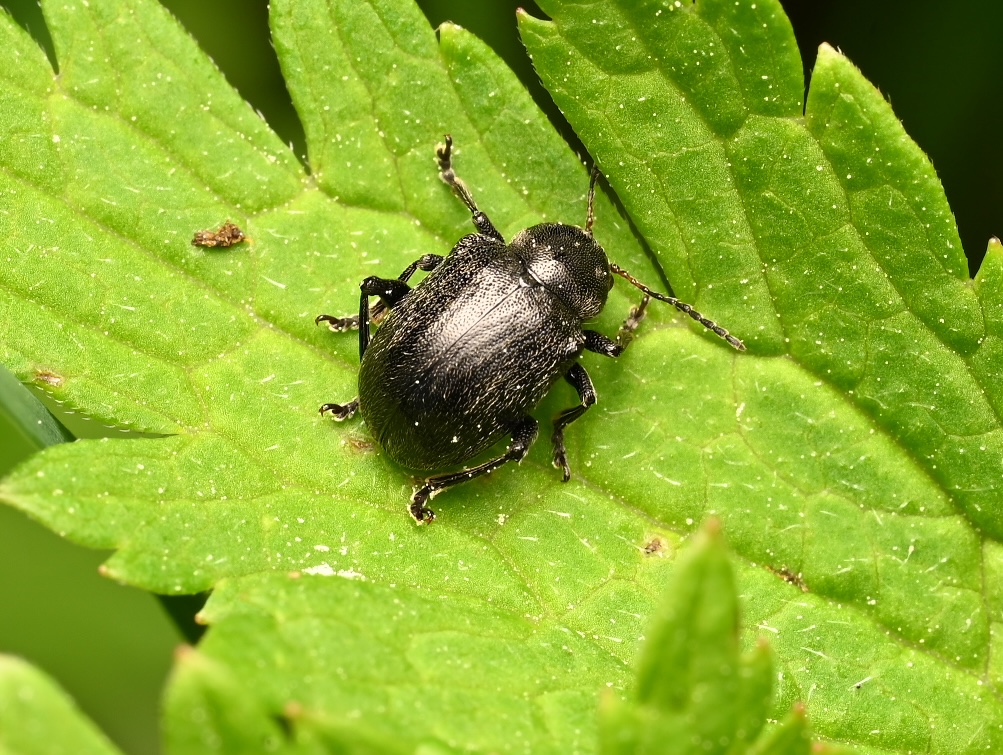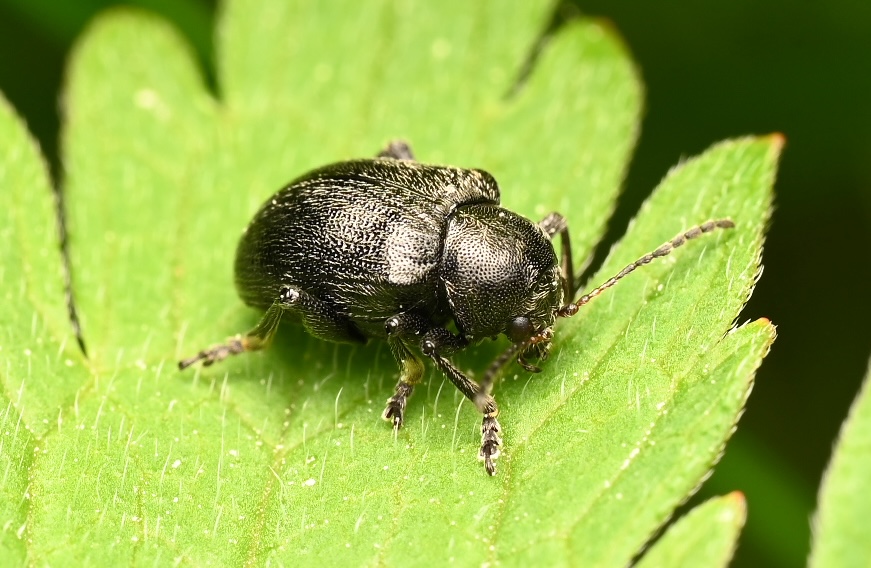
Meet the western grape rootworm (Bromius obscurus), a fascinating insect that stands as the sole representative of its genus. First described by the legendary taxonomist Carl Linnaeus in 1758, this Holarctic species is widely distributed across North America, Europe, and Asia. The adults leave behind a highly distinctive signature on the forest canopy: they chew long, linear slits into leaves that look remarkably like delicate chain-stitching, which can leave severely damaged foliage looking like lace. Their life cycle is split between two entirely different worlds. While the adults live above ground feeding on the leaves of grapes, roses, and fireweed, their larvae dwell in the subterranean dark, tunneling through and gnawing on root systems. Intriguingly, European populations of this beetle are entirely parthenogenetic—meaning females reproduce and lay viable eggs without any need for males—whereas North American populations reproduce sexually. I crossed paths with this historically significant and highly unusual beetle on several occasions while exploring northern Sweden in June 2026.